DRONES, BLACKOUTS, AND BROKEN PROMISES: Ukraine Faces Collapse Without Immediate Western Weapons
Executive Summary
The New Year Attack That Changed Everything: Russia’s Escalation Signals Desperation, Not Strength
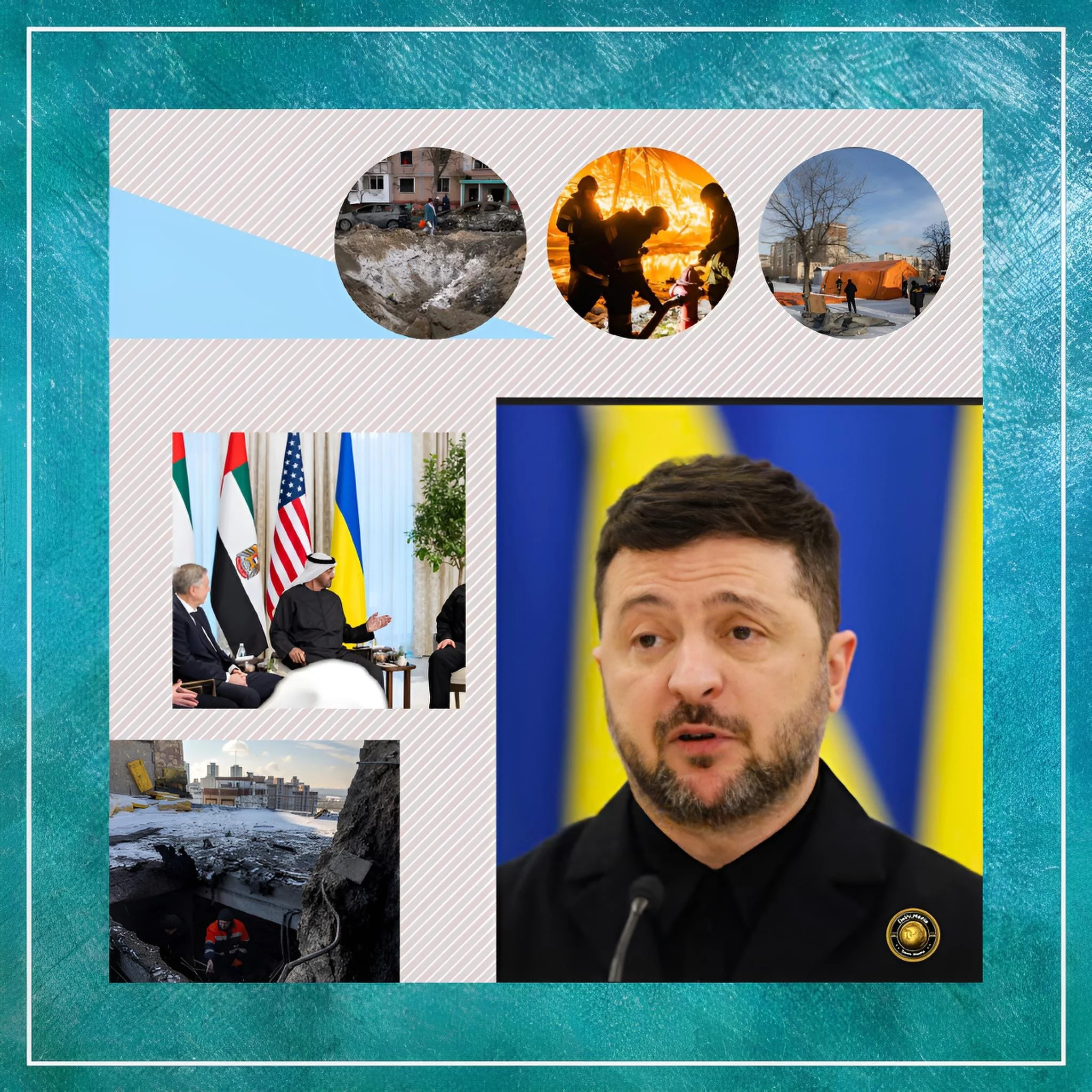
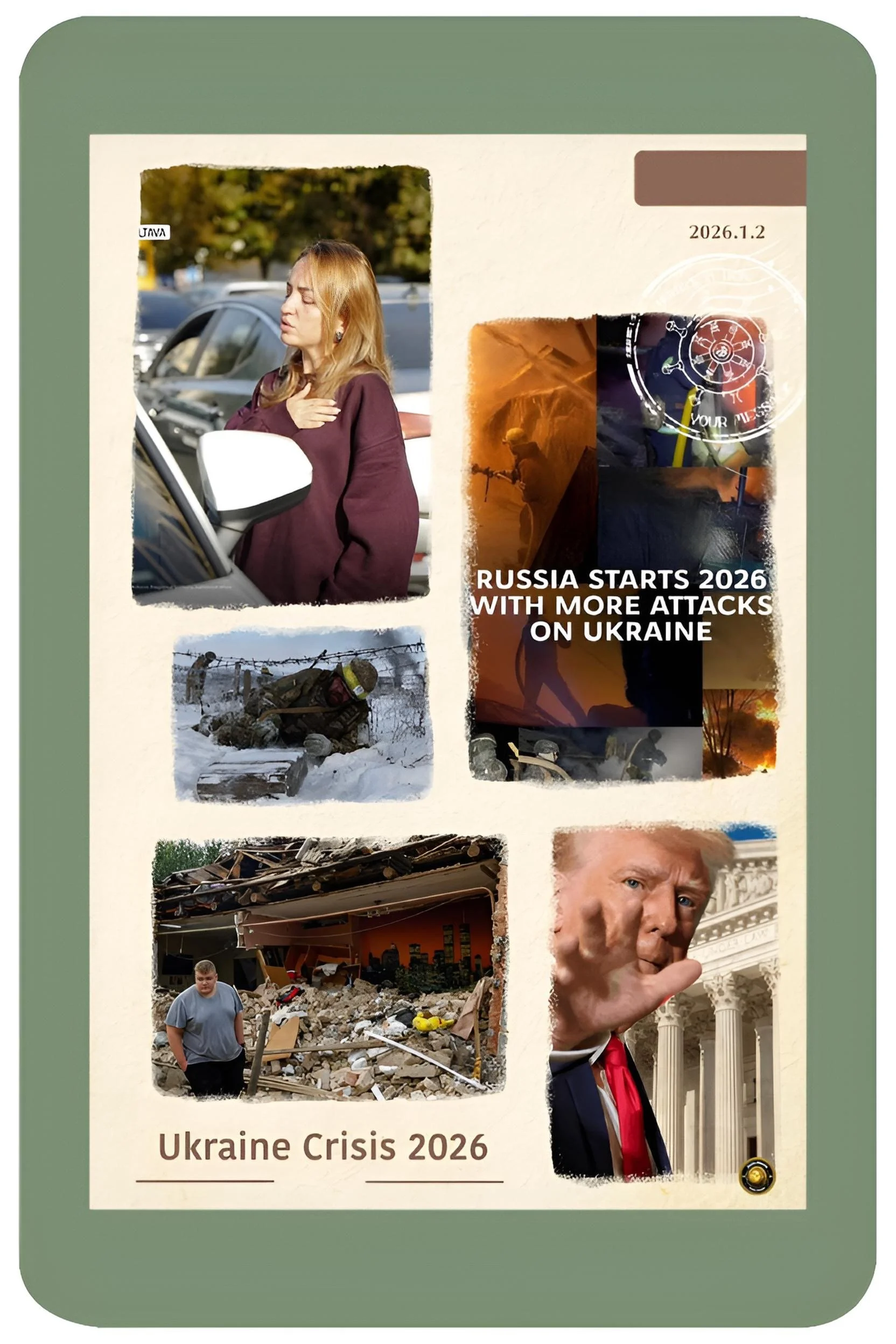
On the eve of 2026, Russia embarked upon one of its most intensive aerial bombardment campaigns against Ukraine, launching over two hundred attack drones on New Year’s Day in a calculated demonstration of renewed military ambition.
This assault, followed by subsequent waves of precision strikes targeting energy infrastructure across seven major regions, revealed a critical vulnerability in Ukraine’s defensive posture whilst simultaneously exposing the fundamental strategic bankruptcy of Russia’s attrition-based warfare doctrine.
The escalation arrives amidst fragmented international support, with the United States pursuing aggressive peace negotiations under a new Trump administration that has substantially reduced direct military aid, whilst Europe—led by Germany and France—accelerates the delivery of next-generation air defence systems designed to counter Russian tactical innovations.
The immediate humanitarian consequence is catastrophic: millions of Ukrainians face their most severe winter since 2022 without reliable electricity, heating, or water, whilst casualty rates on both sides have reached unprecedented proportions.
The window for Ukraine to achieve a defensible ceasefire position through military deterrence is narrowing, requiring immediate delivery of previously pledged advanced systems and unprecedented international solidarity on security guarantees.
Introduction
The Casualty Apocalypse: Why 2025 Was the Deadliest Year and 2026 Must Be Different
The Russia-Ukraine war has entered a qualitatively different phase as 2026 begins. What commenced in February 2022 as a presumed Russian lightning campaign—calculated to achieve regime change within ten days—has metastasised into a grinding attrition struggle characterised by technological adaptation, industrial exhaustion, and demographic catastrophe.
The recent drone strikes targeting Ukraine’s energy grid, combined with simultaneous diplomatic momentum toward ceasefire discussions, create an unusually precarious moment where military and political trajectories intersect. President Zelenskyy’s statement that “the killings must be stopped—there can be no pauses in protecting human life” encapsulates the fundamental paradox confronting Ukraine: securing peace whilst maintaining the minimum deterrent capability that alone renders such peace negotiations meaningful.
The January 2026 escalation is not random violence but rather a deliberate strategic communication. Russia seeks to demonstrate to both Kyiv and international mediators that the military-industrial capacity to inflict sustained punishment remains robust, that territorial acquisition continues at acceptable cost ratios, and that Ukraine’s defensive systems—despite Western investment—contain exploitable vulnerabilities.
Simultaneously, Zelenskyy’s public emphasis on air defence delivery timelines sends an unmistakable message to Western allies: immediate hardware transfers can prevent further civilian catastrophe and preserve Ukraine’s negotiating position.
Historical Context: From Invasion to Entrenched Conflict
From Regime Change Fantasy to Attritional Nightmare: How Putin’s War Became Unwinnable
Ukraine’s conflict with Russia predates the February 2022 full-scale invasion by eight years. The 2014 seizure of Crimea and sponsorship of separatist movements in the Donbas established a pattern of aggression that successive Western governments addressed through sanctions and diplomatic protest but not substantive military deterrence. When Putin launched his 2022 invasion, contemporary assessments by the Russian thinktank RUSI suggest he anticipated complete conquest within a fortnight, anticipating Ukrainian forces would either collapse or capitulate rapidly. This miscalculation fundamentally altered the conflict’s trajectory.
The initial phase lasted approximately fourteen weeks, characterised by Russian advances across multiple fronts whilst Ukrainian forces executed an extraordinary strategic reversal, abandoning territorial conquest in the Kyiv region to consolidate defensive positions in eastern Ukraine.
By mid-2022, the conflict had stabilised into positional warfare along a front line spanning over one thousand kilometres. Between 2022 and early 2025, military dynamics favoured neither side decisively. Ukraine executed successful counteroffensives in the Kharkiv and southern regions during 2022-2023 that reclaimed approximately one thousand square kilometres, yet Russian forces systematically reversed these gains through 2024-2025.
The war’s human cost has accelerated exponentially. Authoritative estimates from NATO indicate Russian casualties have reached approximately 1.1 million personnel, with fatalities alone estimated between 240,000 and 350,000. Ukrainian military losses, whilst significantly lower in absolute numbers, have nonetheless reached devastating proportions, with President Zelenskyy citing 46,000 battlefield deaths and 380,000 wounded as of late 2025. These casualty rates represent a 26 percent increase in civilian deaths during 2025 relative to 2024, signalling that Russia’s targeting strategy has shifted toward maximising civilian disruption rather than pursuing narrow military objectives.
Current Status: The Geometry of Defensive Disadvantage
Patriot Collapse: How Russia Broke Ukraine’s Most Advanced Defence System
As of January 2026, Russia occupies approximately twenty percent of Ukrainian territory, having consolidated control over the Donbas region and maintaining positions in Kherson, parts of Zaporizhzhia, and occupied sections of Luhansk and Donetsk.
The front line has solidified into attritional grinding, with neither Russian advances nor Ukrainian counteroffensives achieving territorial transformations beyond incremental gains measured in hundreds of meters. However, the qualitative nature of the conflict has transformed.
Russia has systematically transitioned from conventional mass-assault tactics—which produced catastrophic equipment losses and casualty ratios favourable to Ukrainian defenders—toward small-unit infiltration and probing operations designed to disperse Ukrainian forces and maximize casualty ratios.
This refinement indicates adaptation to technological reality: Ukraine’s anti-tank drone capabilities and artillery systems render massed armored formations suicidally vulnerable. Consequently, Russia has deliberately conserved heavy equipment (tanks and armoured personnel carriers declined substantially through 2025) whilst accepting extraordinary infantry losses. The mathematics are brutal: Ukraine’s smaller population cannot indefinitely absorb casualty rates exceeding eighty per square kilometre of territory seized.
Ukraine’s air defence architecture, conversely, has become paradoxically more robust in capacity yet vulnerable in critical performance dimensions.
The integration of NATO-standard systems—principally Patriot, NASAMS, IRIS-T, and German Gepard batteries—has substantially improved Ukraine’s ability to contest Russia’s aerial operations compared to the initial invasion period when exclusively Soviet-era systems were deployed. NASAMS systems alone have achieved confirmed intercepts of approximately 900 missiles and drones since November 2022, with single batteries destroying over 150 aerial targets. The integration of the German Skynex system represents a qualitative enhancement in short-range, rapid-engagement capabilities against drone swarms.
Yet this architecture contains a critical design flaw now ruthlessly exposed by Russian adaptation. The Patriot system, which serves as Ukraine’s primary long-range ballistic missile defence, relies upon a narrowly-focused phased array radar that, whilst technologically sophisticated, exhibits geometrically inherent blind spots. Russia has systematically mapped these vulnerabilities and, beginning in 2025, reprogrammed both Iskander and Kinzhal ballistic missiles to execute evasive maneuvers specifically targeting these radar gaps.
The consequence has been catastrophic: Patriot interception rates against ballistic missiles collapsed from 37 percent in August 2025 to merely 6 percent by September. This represents not a failure of hardware but rather a prediction of algorithmic adaptation that renders even the most advanced air defence systems vulnerable to determined technological revisionism.
Cause-and-Effect Analysis: Strategic Trajectories and Tactical Reversals
Three Paths Ahead: Ceasefire Surrender, Protracted Hell, or Technological Victory
The January 2026 escalation is causally connected to three intersecting developments.
First, the collapse of Patriot interception rates against ballistic missiles triggered urgent reassessment throughout NATO regarding the adequacy of existing air defence architectures.
This technological vulnerability created political space for French and Italian announcements regarding SAMP/T NG systems, which utilize fundamentally different radar architecture with 360-degree engagement capability and Aster 30 missiles demonstrating superior performance against the evasive maneuvers now endemic to Russian ballistic threats.
Second, diplomatic progress toward ceasefire negotiations under Trump administration mediation created temporal pressure on both belligerents. For Russia, demonstrating sustained capacity for infrastructure destruction serves to anchor negotiating positions at maximalist territorial demands; for Ukraine, each day of unchecked Russian attacks against civilians degrades public morale and creates international pressure toward unfavourable settlement terms. The New Year escalation, arriving days after Trump-Zelenskyy discussions at Mar-a-Lago, communicates Russian determination to negotiate from strength rather than necessity.
Third, Europe’s accelerating military support—particularly Germany’s €11.5 billion 2026 commitment and France’s unprecedented offer of 100 Rafale aircraft coupled with eight SAMP/T systems—represents a strategic bet that Ukraine’s 2026 military posture can be fundamentally reconstituted through advanced system deployment. This European initiative directly contradicts the Trump administration’s reduced aid trajectory, creating a de facto division of labour wherein the United States pursues diplomatic resolution whilst Europe underwrites military capacity sustaining Ukrainian deterrence.
The causal mechanism here is profoundly consequential: as U.S. military aid diminished through 2025 and into early 2026, European NATO members recognised that Ukrainian capacity collapse would impose unbearable security costs—Russian territorial consolidation in Ukraine would eliminate the strategic depth that Europe has relied upon for decades, placing NATO’s eastern flank in direct contact with Russian-controlled territory and Russian military doctrine emphasising hybrid warfare and proxies. Consequently, German, French, Italian, and Scandinavian governments have undertaken strategic pivots toward sustaining Ukraine independently of U.S. commitment levels.
The humanitarian consequence is grimly predictable. With approximately one million residents of Kyiv suddenly without electricity, heating, or water in sub-zero temperatures, with heating systems depending upon natural gas infrastructure now partially destroyed, and with children experiencing 16-17 hours of daily power cuts, Ukraine faces what UN assessments term the most severe winter since 2022.
The UN Human Rights Monitoring Mission reported that November 2025 alone witnessed 226 civilian deaths and 952 injuries, with 51 percent directly attributable to long-range missile and drone strikes on civilian infrastructure. These are not incidental casualties; they represent deliberate strategic targeting designed to fracture civilian resolve.
Latest Facts and Critical Concerns: The Window of Vulnerability
UKRAINE’S DEATH BY A THOUSAND CUTS: Why America’s Peace Push and Europe’s Slow Weapons Deliveries Are Racing Against Russia’s Demographic Collapse
Several developments of immediate strategic consequence require analysis. First, the Trump administration’s December 2025 offer of 15-year security guarantees to Ukraine—contingent upon territorial concessions and demilitarisation of contested zones—signals a fundamental American position: negotiated settlement, not military victory, remains the ultimate objective. The 20-point peace framework under negotiation appears to be approximately 90 percent “agreed upon” in principle, with the most significant outstanding disputes concerning the status of Russian-occupied territories and the territorial scope of demilitarised zones.
This creates acute pressure upon Ukraine. Putin has publicly insisted that Russia retains territorial claims extending beyond the four partially-occupied regions (Donetsk, Luhansk, Kherson, Zaporizhzhia) into Crimea, whilst also demanding Ukrainian withdrawal from areas of eastern Ukraine not yet occupied by Russian forces.
Ukrainian negotiators have publicly indicated willingness to contemplate demilitarised zones with international monitoring, but absolutely refuse recognition of Russian territorial claims as legitimate.
Second, the collapse of Patriot system performance against adapted Russian ballistic missiles creates a critical deterrence gap that European systems deliveries—even if accelerated—cannot immediately resolve.
The SAMP/T NG system, whilst demonstrating superior performance architecture against evasive threats, remains in developmental stages with initial Ukrainian deliveries anticipated only in late 2026 at the earliest. Meanwhile, Russia continues to attack Ukrainian energy infrastructure with daily frequency, utilising both saturation drone attacks and precision missile strikes designed to overwhelm whatever air defence exists at any given moment.
Third, U.S. commitment ambiguity generates profound strategic uncertainty. The Congressional allocation of $400 million annually for 2026-2027 through the Ukraine Security Assistance Initiative represents a dramatic reduction from historical aid levels (by comparison, the April 2024 supplemental appropriation alone authorised $14 billion in USAI funding). The Trump administration’s preference for indirect aid through NATO allies selling arms to Ukraine—via the Prioritized Ukraine Requirements List initiative that has mobilised $4 billion from 21 donor nations—suggests a calculation that burden-shifting toward Europe reduces U.S. fiscal exposure.
Fourth, casualty rates have achieved a level suggesting that Russia is deliberately accepting extraordinary human losses in exchange for territorial gain. BBC analysis indicates that 2025 was the deadliest year of the conflict, with Russian deaths and injuries totalling approximately 400,000 personnel annually—a pace utterly unsustainable by any historical precedent.
Demographic analysis reveals that volunteer recruits (those enlisting after 2022) now constitute one-third of Russian casualties, compared to 15 percent a year prior. This indicates that Russia has largely exhausted professional military cadres and is increasingly reliant upon conscripted or coerced recruits who lack combat preparation. Yet the Kremlin continues escalating rather than moderating, suggesting either extraordinary confidence in eventual Ukrainian collapse or calculations that time favours Russian demographics and military-industrial output.
Geopolitical and Military Strategic Implications: The 2026 Turning Point
THREE ROADS TO 2027: Why Ukraine’s Choice Between Surrender, Stalemate, and Victory Hinges on Weapons Arriving Before Diplomacy Collapses
The intersection of military, diplomatic, and industrial developments converging upon 2026 suggests three plausible scenarios, each with distinct geopolitical consequences.
Scenario One
Ceasefire Within Negotiated Framework. If Trump administration mediation succeeds in brokering a ceasefire agreement by mid-2026, the most probable framework would involve Ukrainian recognition of Russian control over annexed territories (Crimea, occupied portions of four eastern regions) and establishment of demilitarised zones under international monitoring in contested areas. This outcome would constitute a strategic defeat for Ukraine, permanently ceding approximately 20-22 percent of pre-invasion territory. However, it would also stabilise the front line, halt attrition, and permit Ukraine to redirect resources toward reconstruction and European integration.
The security guarantee framework would rest upon U.S. commitment (estimated as 15 years duration) combined with European underwriting through NATO membership or equivalently binding security arrangements. This scenario is currently most probable given the diplomatic momentum and Trump administration pressure toward settlement.
Scenario Two
Protracted Stalemate with Technological Refinement. If ceasefire negotiations collapse—as significant outstanding disputes regarding territorial scope remain unresolved—the war would continue into 2027 and beyond in attritional mode. Under this scenario, 2026 becomes pivotal for technological equilibration. The delivery of European air defence systems (SAMP/T NG, additional Patriot batteries, IRIS-T enhancements) combined with Ukrainian domestically-developed ballistic missiles (FP-7, FP-9 programmes anticipated operational by 2026) and promised fighter aircraft (100 Rafales, up to 150 Gripens) would fundamentally alter the battlefield. Russia would respond through further missile adaptation, increased drone production, and tactical refinement—a process that would continue the grinding attrition but potentially shift casualty ratios unfavourably for Russia as Ukrainian air power developed.
Scenario Three
Russian Offensive Collapse and Ukrainian Resurgence. The least probable but not impossible scenario involves Russian logistics failure, recruitment collapse, or political upheaval in Moscow forcing Russian force reductions or withdrawal from occupied territory. Indicators suggesting this scenario’s mounting probability include extraordinary casualty rates, increasing reliance upon coerced recruits, visible strain upon military-industrial production despite sanctions, and explicit statements from defence analysts that Russia’s equipment stockpiles will be exhausted by late 2026 or early 2027. However, Russia has sustained extraordinary losses before without experiencing systemic collapse, and the centrality of the war to Putin’s political legitimacy suggests that capitulation remains unlikely absent regime change.
The military technological dimension of 2026 will prove decisive under Scenarios Two and Three. If Rafale aircraft achieve operational status in Ukrainian service by late 2026, coupled with SAMP/T NG air defence systems achieving full deployment, the balance of air power would shift markedly.
Rafale aircraft armed with Meteor missiles (with engagement ranges approaching 200 kilometres) coupled with airborne early warning systems would enable Ukrainian air forces to contest Russian aerial operations in ways currently impossible. Similarly, the FP-7 ballistic missile, with 200-kilometre range and 150-kilogramme warhead, would provide Ukraine with precision strike capabilities against Russian rear area targets—military facilities, logistics nodes, and energy infrastructure—heretofore impossible to target at scale.
Future Developments: The Critical 2026 Window
Gripen in 2026, Victory in 2027? How New Aircraft Could Rewrite the War
Zelenskyy’s statement regarding air defence delivery urgency reflects a profound strategic reality: Ukraine cannot indefinitely absorb current Russian strike rates without catastrophic humanitarian consequence.
The UN has warned that continued energy infrastructure attacks pose severe risks, particularly for vulnerable populations (elderly, disabled, families with young children) during winter months. The convergence of military technological change and diplomatic pressure creates an unusually compressed timeline for strategic resolution.
The anticipated sequence of 2026 developments includes several key milestones. Germany’s pledge of additional Patriot spare parts and maintenance capability should sustain existing batteries through mid-2026 whilst newer systems are integrated.
The first SAMP/T NG systems, if delivered as planned by France and Italy, would provide air defence capabilities less vulnerable to Russian Iskander/Kinzhal adaptation by late summer 2026. The arrival of Gripen aircraft (potentially 14-16 airframes) would provide Ukraine with air-to-air combat capability presently lacking, enabling defence against Russian air operations without requiring direct aircraft engagement by legacy Ukrainian.
Critically, Ukraine must receive these systems with supporting ammunition, spare parts, and training infrastructure rapidly—not gradually. The current rate of Russian attacks against energy infrastructure, combined with the psychological exhaustion of civilian populations enduring extended power outages in winter, creates political pressure toward capitulation that only visible evidence of military reconstitution can counter. If Europeans deliver systems incrementally over 2026, the political consequences for Zelenskyy’s negotiating position will be dire, as Russian delegations will interpret delays as evidence of weakening Western commitment and can therefore maintain maximalist territorial demands.
Simultaneously, the Trump administration’s push toward settlement suggests that the diplomatic window may close by mid-2026. If Russia perceives that Ukraine’s military position is deteriorating—as current attrition rates suggest—the Kremlin has maximal incentive to accelerate offensives and force capitulation rather than negotiate.
Conversely, if 2026 military deliveries demonstrably improve Ukrainian air defence and offensive strike capability, Russia may be incentivised toward diplomatic settlement from a position of having achieved partial territorial objectives before Ukrainian technological reconstitution renders further advances untenable.
The humanitarian implications of this timeline are extraordinary. Unless air defence capabilities improve substantially before next winter (2026-2027), Ukraine faces another year of energy infrastructure destruction affecting millions of civilians.
Children will experience further educational disruption; disease vectors will proliferate in the absence of heated water; elderly and disabled populations will face existential threats from cold exposure. This is not abstract humanitarian concern; it is political reality that will determine whether Ukrainian publics accept ceasefire terms that Zelenskyy negotiates.
Conclusion
Diplomacy Without Deterrence Is Surrender: Why Air Defence Delivery Must Precede Ceasefire Talks
The Russia-Ukraine war has transitioned from a conflict of uncertain duration with potentially reversible territorial boundaries toward a grinding attrition struggle where the ultimate question is not whether Russia will succeed militarily but whether Ukraine can survive indefinitely at current casualty and infrastructure destruction rates.
The January 2026 escalation should not be interpreted as evidence of Russian strength but rather as desperate demonstration that capability persists—a message directed simultaneously toward Kyiv, Washington, and European capitals.
Zelenskyy’s explicit statement that “the killings must be stopped—there can be no pauses in protecting human life” and his urgent plea that air defence deliveries “cannot be delayed” represent more than rhetorical flourish.
They constitute a strategic ultimatum: without immediate, visible enhancement of air defence capability, Ukraine cannot maintain the minimum deterrent posture necessary to render ceasefire negotiations anything other than capitulation under duress.
A ceasefire negotiated from a position of technical military defeat, with energy infrastructure destroyed and civilian population exhausted, becomes a settlement that embeds Russian territorial acquisition and produces security arrangements incapable of deterring future Russian escalation.
The path forward requires four concurrent actions. First, European allies must accelerate delivery timelines for SAMP/T NG systems, Patriot spare parts, and advanced interceptor missiles, prioritizing operational deployment within summer 2026 rather than autumn or later. The diplomatic cover for this acceleration exists: Russian escalation against civilian infrastructure justifies extraordinary European initiative in defence of Ukrainian sovereignty.
Second, the Trump administration must reconcile its diplomatic objectives toward ceasefire with strategic recognition that sustainable peace requires credible Ukrainian deterrence. Accelerating air defence transfers through the USAI programme and lifting restrictions on ATACMS and other long-range strike systems would simultaneously strengthen Ukraine’s negotiating position whilst reducing the likelihood of Russian maximalist demands during ceasefire discussions.
Third, Ukraine must maintain public unity and military morale during the prolonged interval before 2026 weapons deliveries achieve operational status. This requires continued public commitment from allies, sustained intelligence sharing, and visible progress on equipment delivery timelines—not diplomatic silence that international observers interpret as wavering commitment.
Fourth, international institutions and civil society must document and publicise Russian targeting of civilian energy infrastructure with the same rigour applied to battlefield intelligence. The strategic rationale for Russian attacks—deliberately creating civilian suffering to fracture Ukrainian resolve—must be transparently communicated to international audiences; this is not incidental collateral damage but deliberate terror strategy masquerading as military necessity.
The stakes extend far beyond Ukraine’s borders. A Russian victory, even partial or negotiated, establishes precedent that territorial conquest through attrition remains strategically viable in the twenty-first century. It demonstrates that European military underwriting cannot indefinitely offset American wavering commitment. It signals to other authoritarian powers—China, Iran, North Korea—that prolonged hybrid warfare can exhaust democratic resolve through asymmetric casualty burdens.
Conversely, Ukrainian preservation through technological modernization and sustained Western solidarity would restore deterrent credibility, reinforce NATO cohesion, and demonstrate that determined resistance coupled with international support can defeat conquest through attrition.
The window for strategic resolution closes within months, not years. This is the imperative that must animate 2026 decision-making across NATO capitals, Washington, and Kyiv itself.