Minneapolis Massacre: When Deportations Became Political Warfare
Executive Summary
Federal immigration agents in Minneapolis have gone beyond arresting immigrants—they have become Donald Trump's personal force to intimidate his political enemies.
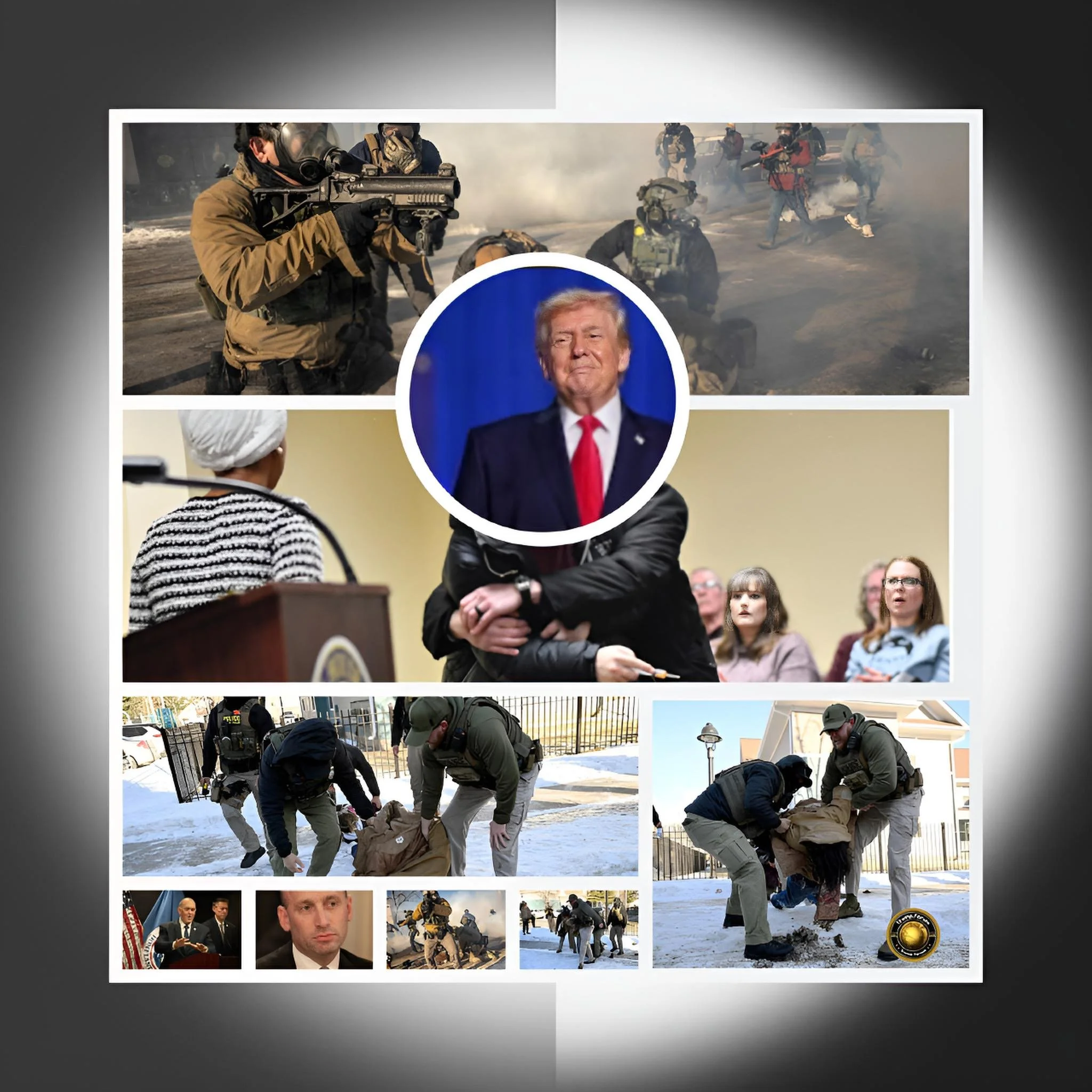
The killings of Renée Good and Alex Pretti, followed by the January 27, 2026, attack on Congresswoman Ilhan Omar, show how ICE operations target Trump's critics. What started as deportations has become a political weapon. Now even Republicans worry it could cost them the November 2026 elections.
Germany warns citizens about U.S. agent violence. Ecuador filed a formal diplomatic complaint. 60 big company CEOs demand the government calm down.
The Economist newspaper calls it Trump's "personal posse" and says it creates problems for America and increasingly for Trump himself. This approach helps Trump in the short term but creates big problems for American democracy and could hurt Republicans when voters go to the polls in 10 months.
Introduction
From Deportations to Political Weapon
In December 2025, President Trump sent 3,000 ICE and Border Patrol agents to Minneapolis, Minnesota. The government called it Operation Metro Surge—the biggest immigration operation ever. But it became much more than immigration enforcement.
On January 7, 2026, ICE agent Jonathan Ross shot and killed Renée Good, a 37-year-old mother of 3 children. Videos from The New York Times and ABC News show she drove away from agents, not toward them.
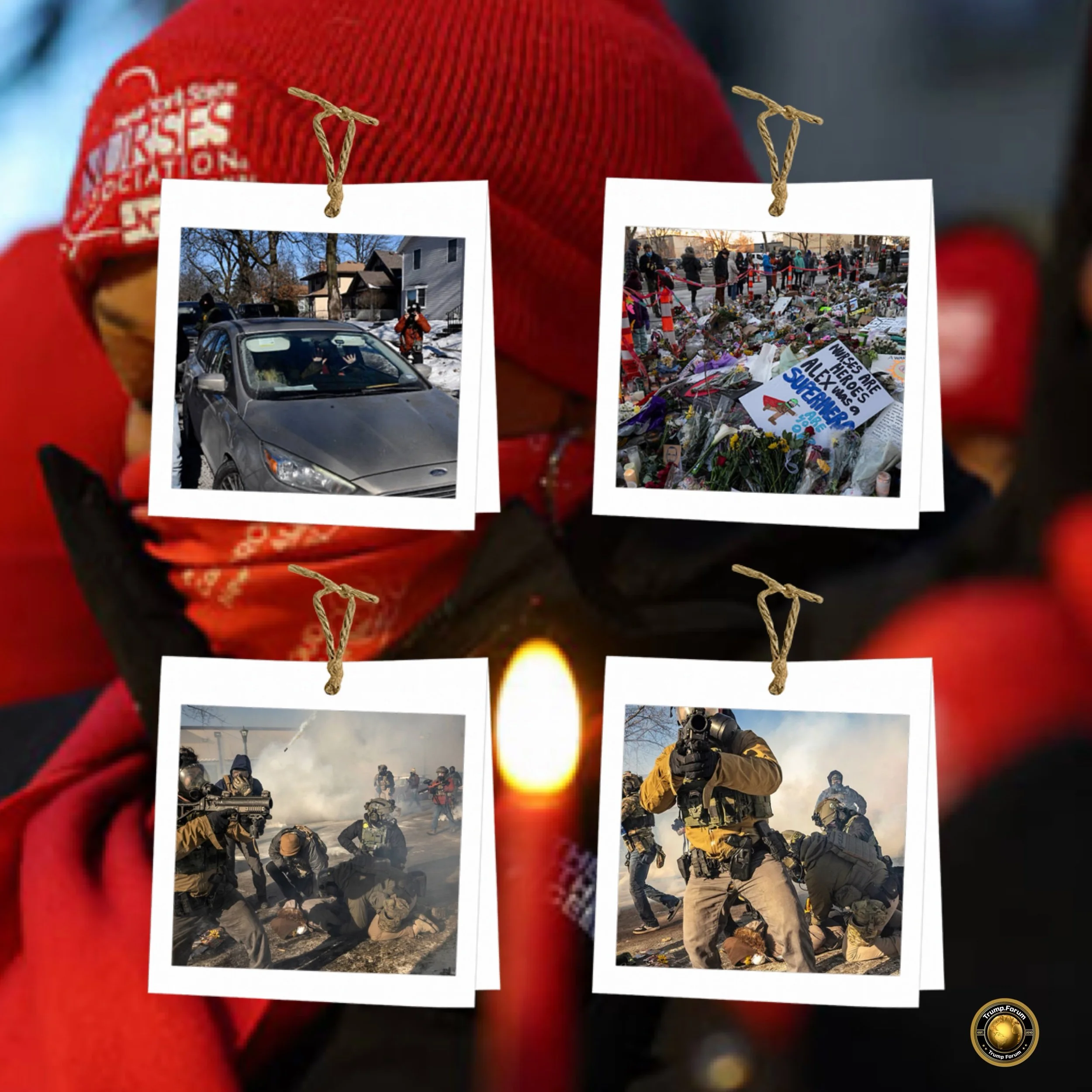
On January 24, 2026, 2 Border Patrol agents shot and killed Alex Pretti, a 37-year-old nurse filming federal operations. He had a legal gun permit and videos show he never reached for his gun.
On January 27, 2026, during a town hall meeting, a man rushed Congresswoman Ilhan Omar and sprayed her with a syringe containing apple cider vinegar.
The man, Anthony J. Kazmierczak, age 55, ran from the front row where he was sitting and attacked Omar right after she called for abolishing ICE and demanded that Homeland Security Secretary Kristi Noem resign or face impeachment because of the 2 killings.
According to court documents filed on January 29, 2026, by the FBI, Kazmierczak had told someone years ago that "Someone should kill that b****" when talking about Omar. As security guards dragged him away, he shouted: "She's not resigning. You're splitting Minnesotans apart."
Omar continued her speech after being sprayed. She told the crowd: "I'm a survivor, so this minor agitator won't intimidate me. Bullies don't win." The attack happened just hours after Trump criticized Omar at a rally in Iowa.
Ilhan Omar represents part of Minneapolis in Congress and has been Trump's target for many years. Many people now believe ICE operations target Trump's political enemies, not just immigrants.
History
How Immigration Became Trump's Personal Weapon
After the terrorist attacks on September 11, 2001, Congress created the Department of Homeland Security and gave ICE big powers to search people near borders without warrants. This border zone covers about 2/3 of Americans.
During Trump's first term from 2017 to 2021, he used ICE against protesters in Portland, Oregon, and Washington, D.C. When he returned to office in January 2025, he went much further.
ICE hired 12,000 new agents in just 4 months—doubling from 10,000 agents to 22,000 agents. Training dropped from 6 months to just 6 weeks. The agency offered $50,000 signing bonuses to attract people quickly.
Trump gave immigration powers to 5 other agencies that normally do not handle immigration: the Drug Enforcement Administration, U.S. Marshals, Federal Bureau of Prisons, Postal Inspection Service, and Bureau of Alcohol, Tobacco, Firearms and Explosives. Experts call this "blended federal law enforcement" and warn it creates long-term problems for public safety.
Congress also gave Trump $170 billion over 4 years for immigration enforcement—much more money than the FBI and DEA get.
This created what critics call a "presidential force" with more loyalty to Trump than to the law.
Current Status
Operation Metro Surge Faces International Crisis
ICE claims it arrested about 3,000 people in Minneapolis since December 2025. But a federal judge found that ICE violated 96 court orders in Minnesota just since January 1, 2026. The state of Minnesota sued the Trump administration, calling the operation a "federal invasion."
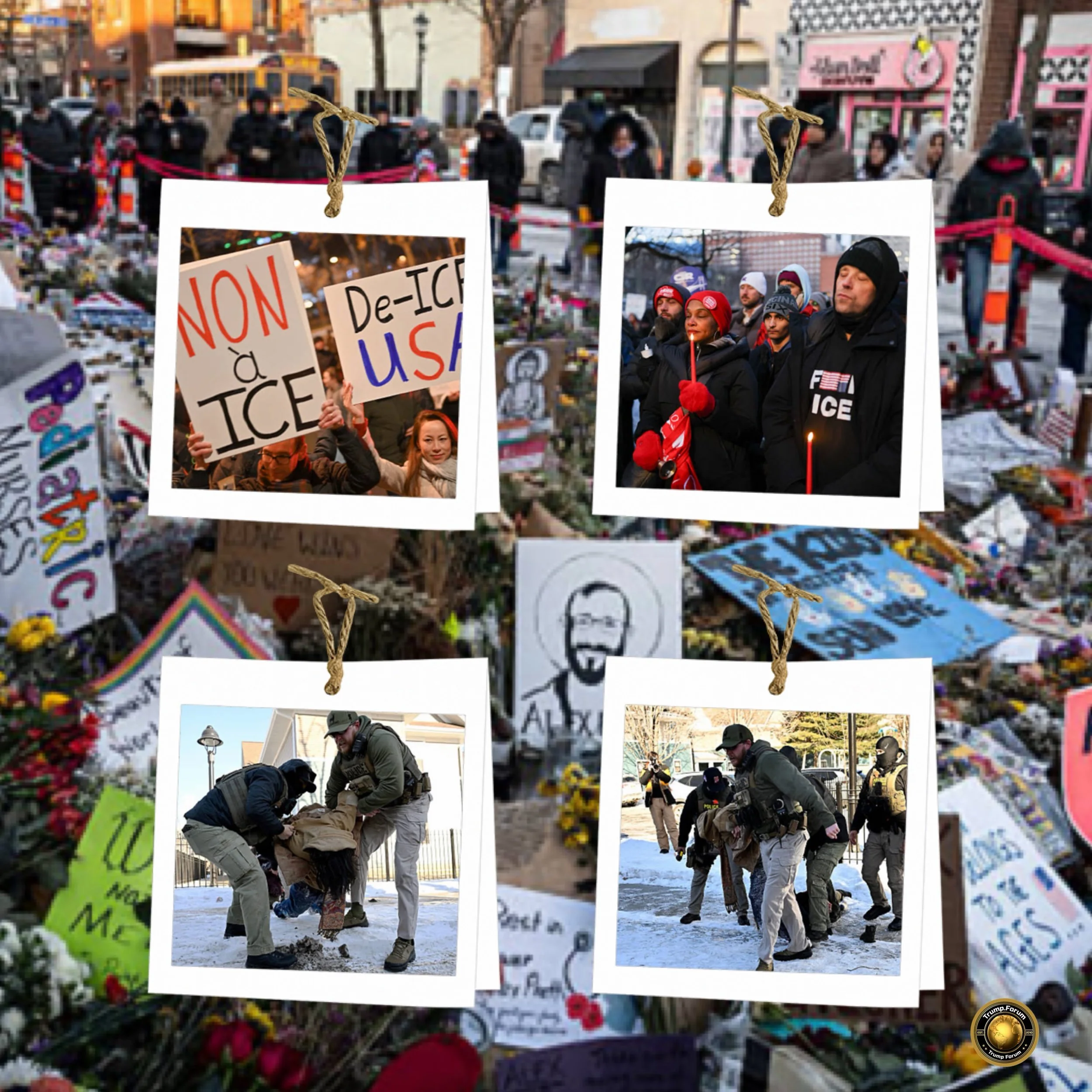
Al Jazeera news reported that Minneapolis residents say it feels like "an invasion" because federal agents significantly outnumber local police. Schools switched to remote learning because families were afraid to send children to school. Businesses closed. Thousands protested in the streets.
Trump sent Tom Homan, his "border czar," to fix things after the backlash. Homan replaced the aggressive commander Gregory Bovino and issued new guidance telling agents to avoid "agitators." He announced a partial "drawdown" but said ICE "will not leave Minnesota until the problem is solved."
Key Developments
Killings, Omar Attack, and World Reaction
The Good Killing
Videos show her car turning away, not toward the agent who shot her. The government called her a "domestic terrorist" but evidence contradicts this. No charges were filed against agent Jonathan Ross.
The Pretti Killing
Videos from multiple angles show Pretti filming federal operations when agents confronted him.
During a struggle, 1 agent shouted that Pretti had a gun. Then 2 agents shot him about 10 times.
Videos show he never reached for the gun on his waist. The government claims he was "brandishing" a weapon but BBC Verify analysis found no evidence of this. The 2 agents who shot him were put on paid leave but their names are being kept secret. No charges have been filed.
The Omar Attack
Kazmierczak sat in the front row of Omar's town hall on January 27. When Omar said "We must abolish ICE for good. Secretary Kristi Noem must resign or face impeachment," Kazmierczak rushed the stage with a syringe and sprayed her with apple cider vinegar.
Security tackled him. Federal prosecutors charged him on January 29 with assaulting a federal official. Separately, prosecutors in Kansas charged another man with making death threats against Omar on Facebook.
These 3 incidents caused major international and business reactions that shocked the Trump administration:
Germany Issues Travel Warning
On January 28, 2026, Germany's government issued an official travel advisory telling German citizens to be careful in Minneapolis and other American cities.
The warning said: "In Minneapolis and other cities, demonstrations sometimes lead to violent clashes with the migration and security authorities." It told Germans to "be vigilant and stay away from crowds where violence might occur."
This is extraordinary—Germany, a close U.S. ally, is warning its citizens about violence by the U.S. government in American cities.
Ecuador Files Diplomatic Complaint
On January 27, 2026, an ICE agent tried to enter the Ecuadorian Consulate in Minneapolis without permission. Video shows the agent opening the consulate door.
An employee told him: "This is the Ecuadorean consulate. You're not allowed to enter."
The agent replied: "If you touch me, I'll grab you."
Under international law called the Vienna Convention, embassies and consulates are legally considered the territory of that foreign country, and local police cannot enter without permission.
Ecuador's Foreign Ministry filed a formal complaint with the United States, calling it a violation of international law.
60 CEOs Demand De-escalation
On January 26, 2026, more than 60 chief executives of big Minnesota companies signed a letter calling for "immediate de-escalation."
Companies included Target, 3M, UnitedHealth Group, General Mills, Best Buy, Cargill, and Minnesota sports teams.
According to the Los Angeles Times, corporate leaders had been silent about Operation Metro Surge since December, but the Pretti killing pushed them to speak out.
However, many criticized the letter as too weak because it did not mention the victims by name or condemn the killings.
Latest Facts and Concerns
What Makes ICE Trump's Personal Posse
The Economist newspaper wrote on January 28, 2026, that "immigration agents have become Donald Trump's personal posse" and this is "a liability for America and, increasingly, for him."
What does "personal posse" mean? It means a group of armed people who are loyal to a leader personally rather than to the law or the Constitution.
Here are 5 ways ICE acts like Trump's personal posse instead of regular law enforcement:
Executive Loyalty Over Independence
More than 95% of ICE union members endorsed Trump in recent elections.
Tom Homan, the border czar, is Trump's personal appointee. Trump, Vice President JD Vance, and Secretary Noem have all defended the agents who killed Good and Pretti, even though videos contradict the government's story.
This sends agents a message: Trump will protect you no matter what you do.
Regular police departments are supposed to serve the community and follow the law, not protect officers who break rules.
Targeting Political Enemies
Operation Metro Surge sent 3,000 agents specifically to Minneapolis—represented by Ilhan Omar, whom Trump has attacked for years. The operation's timing matches Omar's increased visibility opposing ICE.
The attack on Omar happened during a speech calling for abolishing ICE, just hours after Trump criticized her at a rally.
While the attacker appears to be a private citizen, not a government agent, the incident occurred in a threat environment created by Trump's rhetoric and the saturation of federal agents in Omar's district.
Masks and Secret Identities
Agents operate with masks covering their faces so witnesses cannot identify them.
The government refuses to release the names of the 2 agents who shot Alex Pretti, even though they killed an American citizen.
When nobody knows who fired the shots, how can anyone be held accountable?
Defying Courts and State Police
A federal judge found ICE violated 96 court orders in Minnesota since January 1, 2026.
Minnesota police tried to investigate the Good and Pretti killings but federal agents blocked them from crime scenes, even though Minnesota police had warrants from judges.
Tom Homan told protesters to "protest Congress, not ICE," suggesting ICE answers only to the president, not to courts or state governments.
Military-Style Occupation
Three thousand tactical agents in unmarked vehicles, often masked, conducting street sweeps without coordinating with local police looks like a military occupation, not community policing. Al Jazeera and other international news outlets described it as an "invasion."
Schools closed, businesses shut down, and families avoided public spaces because they were afraid.
The Economist warned this creates "greater unease among law enforcement officials" because federal agents harass citizens without justification.
Why This Is a Liability for Trump
The word "liability" means something that causes problems or damage.
The Economist says ICE acting as Trump's personal posse is "a liability for America and, increasingly, for him." Why is this a problem for Trump?
Short-Term Gains, Long-Term Costs
In the short term, aggressive ICE operations make Trump look tough to his political base. Republican voters approve of deportations at about 70% according to polls. But in the long term, the violence and international embarrassment create bigger problems.
Independent Voters Disapprove
While 70% of Republicans support deportations, 55% of independent voters—who decide close elections—disapprove of ICE's violent tactics according to Pew polls. Independent voters do not like seeing American citizens shot by federal agents.
They do not like Germany warning people about U.S. government violence. They do not like foreign countries filing diplomatic complaints.
Republicans Getting Nervous
Senator Susan Collins, a Republican from Maine, publicly criticized ICE tactics as "excessive." This is unusual because Republicans normally support Trump's immigration policies.
When a Republican senator criticizes Trump's approach, it signals that vulnerable Republicans are worried about losing elections because of this issue.
Corporate Pushback
When 60 Fortune 500 CEOs demand de-escalation, it shows that even business leaders—who usually stay out of politics—think the situation threatens economic stability.
Businesses cannot operate normally when schools close, families stay home, and protests shut down streets.
International Damage
When close allies like Germany issue travel warnings about U.S. government violence, it damages America's international reputation.
When Ecuador files diplomatic complaints about ICE violating international law, other countries start to distrust the United States.
Foreign Policy magazine reported that foreign countries view ICE as "a militia 'which kills'" and worry about "spillover effects."
Cause-and-Effect
How Posse Deployment Backfires
Here is how the sequence of events creates political problems for Trump:
Trump attacks critics like Omar in speeches → ICE deploys 3,000 agents to Minneapolis → Agents operate with masks and ignore courts → Violence happens (Good and Pretti killed) → Public outrage and protests → Attack on Omar amplifies the story → International condemnation (Germany warning, Ecuador complaint) → Corporate pressure (60 CEOs demand change) → Republicans get nervous about November elections → Trump sends Homan to make adjustments → But Homan says ICE stays until "problem solved" → This maintains the posse model for future use.
This creates a feedback loop where Trump gains support from his base but loses support from independents and moderates. The 2026 midterm elections in November will test whether this trade-off helps or hurts Republicans.
The Omar attack specifically makes things worse for Trump because it proves critics right about federal force being politically weaponized.
Kazmierczak violent history toward Omar, combined with Trump's rally attacks hours before the assault and ICE saturation of her district, creates a story where federal operations appear designed to intimidate Trump's enemies.
Even if Kazmierczak acted alone, the incident happens in a threat environment that Trump created.
What Happens Next
Courts, Congress, and Elections
Whether this situation improves or gets worse depends on 3 things: courts, Congress, and the November 2026 elections.
Courts
Minnesota is suing the federal government, arguing Operation Metro Surge violates the Constitution.
The 8th Circuit Court of Appeals is reviewing the case. If judges rule in Minnesota's favor, they could order the government to stop these operations. But ICE has already violated 96 court orders in Minnesota. If the government ignores court orders, judges have limited ability to force compliance.
Congress
Congress controls how much money the government gives to ICE. The current funding expires on January 30, 2026.
Democrats are demanding major changes before they approve new funding: end roving patrols that stop people without reasonable suspicion, prohibit agents from wearing masks so citizens can identify them, require body cameras to document behavior, create independent investigators to review shootings, and make it easier to sue agents who violate rights.
But this requires enough votes in Congress. Whether Democrats can force these changes depends on how many Republicans break with Trump.
Elections
The November 2026 midterm elections are 10 months away. If voters are angry about what happened in Minneapolis, they might vote against Republicans. Foreign Policy magazine noted: "The Trump administration's mass deportation campaign has become a major domestic political issue in this midterm election year, and this latest killing promises to escalate the issue's importance even further." If Democrats win control of Congress, they can investigate ICE and force reforms. If Republicans keep control, ICE will probably continue operating the same way.
Political strategists think Minneapolis could hurt Republicans in November because independent voters—who decide close elections—disapprove of the violent tactics even if they support deportations in general.
The Most Likely Outcome
Tactical Changes, Same Strategy
The most probable outcome is that Trump makes small adjustments without changing the basic approach.
Tom Homan's new guidance—avoiding "agitators," targeting only immigrants with criminal records, replacing commander Bovino—addresses immediate political problems. But the core model remains: ICE as a presidential posse, loyal and armed, that can be deployed against Trump's enemies.
Homan made this clear when he said ICE is "not leaving Minnesota until the problem is solved." This means future operations will happen in different cities under similar rules. The posse stays intact.
Why Business Leaders Are Concerned
The fact that 60 Fortune 500 CEOs spoke out is unusual because major corporations usually avoid criticizing presidents. Why did they break their silence?
Employee Safety
Their employees are afraid to go to work when federal agents conduct street sweeps and violence breaks out.
Recruitment Problems
Talented people do not want to move to Minnesota when Germany is warning citizens about government violence there.
Customer Behavior
Customers avoid stores and shopping areas when protests and federal operations make streets unsafe.
Economic Instability
Businesses cannot plan or operate normally when schools close, families stay home, and chaos disrupts daily life.
According to the Los Angeles Times, "Minnesota business leaders clearly were becoming concerned that Trump's anti-immigrant surge threatened their ability to do well."
But critics noted the CEO letter was weak because it did not mention Good or Pretti by name or condemn the killings. Pastor Bardwell of Saviours Church in Minneapolis said: "It felt like nothing. We understand that if Trump is going to heed anyone, corporate leaders wield significant influence. We expect CEOs to articulate their positions clearly and leverage their power."
CNBC polled 34 corporate leaders. Only 1 out of 34 supported the expanded ICE presence in Minnesota. But most were afraid to speak publicly against Trump.
An Example: The Attack on Ilhan Omar
The Omar attack shows how the personal posse model creates danger. Here is what happened step by step:
For Years: Kazmierczak told people he wanted to harm Omar. An FBI witness said Kazmierczak stated "Someone should kill that b****" when talking about Omar years ago.
January 27, Afternoon: Trump attacked Omar at an Iowa rally.
January 27, Evening: Omar held a town hall in Minneapolis. She called for abolishing ICE and removing Secretary Noem because of the Good and Pretti killings.
Minutes Later: Kazmierczak, sitting in the front row, rushed the stage with a syringe and sprayed Omar with apple cider vinegar.
January 29: Federal prosecutors charged Kazmierczak with assaulting a federal official. A separate man in Kansas was charged with making death threats against Omar on Facebook.
This shows how Trump's rhetoric creates a threat environment. When the president attacks a congresswoman at a rally, and hours later someone attacks her at a town hall, and this happens while 3,000 federal agents saturate her district after killing 2 of her constituents—the pieces connect into a pattern where federal operations appear designed to intimidate Trump's critics.
Kazmierczak is not a government agent. But his attack happened in an environment Trump created: constant presidential attacks on Omar, federal saturation of her district, killings of people protesting ICE, and a message that Omar's opposition to ICE makes her an enemy.
Conclusion
Liability for Democracy and Trump's Political Future
Donald Trump's transformation of immigration enforcement into a personal posse offers short-term power but creates long-term problems for American democracy and his own political future.
For American Democracy
When federal agents kill citizens without facing charges, when allied countries warn about U.S. government violence, when courts cannot enforce their orders, and when political critics are attacked in threat environments created by presidential rhetoric—the country moves away from democracy toward authoritarian rule.
For Trump Politically
The Economist's assessment is clear: immigration agents acting as Trump's personal posse is "a liability for America and, increasingly, for him." The violence in Minneapolis helps Trump with his base but alienates independent voters, worries Republicans in competitive districts, triggers international condemnation, and creates corporate opposition. Whether this helps or hurts Trump depends on the November 2026 elections.
The deaths of Renée Good and Alex Pretti, and the attack on Ilhan Omar, are not isolated incidents. They are the predictable result of a system where agents know they will not face consequences, where the president defends them regardless of evidence, and where federal force targets the president's political enemies.
The question Americans face is whether democracy has the tools to fix this problem. Can courts force the government to follow the Constitution? Can Congress impose reforms? Can voters create consequences in the 2026 elections? Can international pressure and business concerns force change?
If the answer is no—if none of these things work—then what happened in Minneapolis will happen again in other cities. More people will be killed. No agents will be charged.
The personal posse will grow stronger. And violence without accountability will become the normal way America's government treats citizens who oppose the president.
The November 2026 midterm elections are 10 months away. Voters will decide whether ICE remains Trump's personal posse or whether American democracy reasserts control over federal force.
That decision will shape not just immigration policy but the fundamental character of American government for decades to come.