The Shifting Geopolitics of AI: The New Global Battleground for Power
Introduction
The artificial intelligence revolution has emerged as a pivotal arena in global geopolitics, creating new fault lines of power, dependency, and vulnerability.
As nations and corporations race to secure control over the physical infrastructure underpinning AI systems, the competition extends beyond software development to encompass critical components' entire global supply chain.
FAF examines how the scramble for semiconductors, critical minerals, data centers, and subsea cables is reshaping international relations and creating new geopolitical imperatives in a world increasingly dependent on AI technologies.
The New Geography of Power: AI’s Physical Infrastructure
The global AI revolution is fundamentally reshaping the geopolitical landscape, with control over physical infrastructure becoming as strategically crucial as military capabilities.
While discussions about AI often focus on algorithms and applications, the technology is deeply anchored in physical infrastructure worldwide.
This infrastructure forms a complex web of interdependencies that no single nation fully controls.
The backbone of AI technology depends on a global supply chain that includes advanced semiconductors, critical minerals, massive data centers, and an intricate network of subsea cables.
This physical infrastructure represents the new terrain for geopolitical competition, with nations racing to secure control over these essential components.
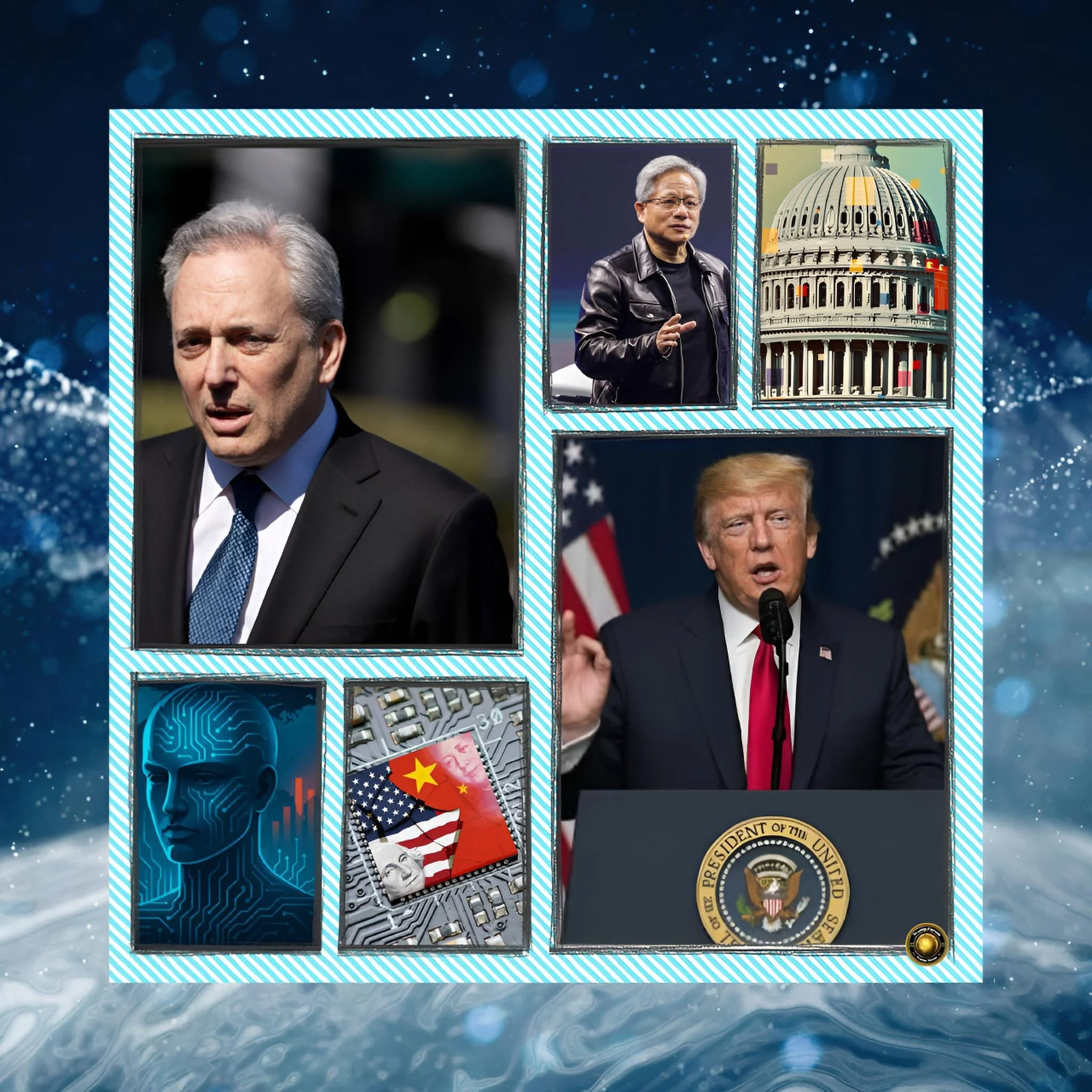
As Jared Cohen, president of global affairs at Goldman Sachs and former member of the State Department’s Policy Planning Staff, noted in his discussions on the geopolitics of AI, these physical elements have become the modern equivalent of oil in the 20th century.
Whoever controls them gains a significant strategic advantage in the global power hierarchy.
Unlike previous technological revolutions, the AI infrastructure is characterized by extreme concentration in some geographical regions, creating vulnerabilities and dependencies that have profound implications for national security and economic prosperity.
This concentration led to what Cohen describes as the end of the “geopolitical honeymoon” of the early Internet era, when technology was primarily seen as a unifying force rather than a dividing one.
The Global AI Supply Chain: Concentration and Vulnerability
The AI supply chain exhibits a remarkable concentration, with specific components dominated by a handful of countries and companies.
Taiwan, through TSMC, South Korea, through Samsung, dominate advanced chip manufacturing, while the United States leads in chip design. China, meanwhile, has established dominance in processing critical minerals essential for these technologies.
This concentration creates strategic chokepoints that geopolitical tensions, trade disputes, or natural disasters can disrupt.
The vulnerability is magnified by many of these components crossing multiple national boundaries during production, making the supply chain susceptible to disruption at numerous points.
As nations become increasingly aware of these vulnerabilities, they adopt strategies to reduce dependencies and secure their positions in the AI economy, fundamentally altering long-established global trade and cooperation patterns.
The Semiconductor Battleground: Power Through Chips
Semiconductors have emerged as the most contested element in the AI supply chain, with their manufacture and distribution becoming central to geopolitical strategy.
These tiny components, essential for all modern technology, from smartphones to advanced AI systems, are now considered critical to national security and technological sovereignty.
The Concentrated Landscape of Chip Production
The semiconductor industry is characterized by extreme specialization and concentration. Only three companies – TSMC, Samsung, and Intel – can manufacture the most advanced chips for cutting-edge AI applications.
Taiwan’s dominance in this sector, particularly through TSMC, has made the island a focal point of geopolitical tension between the United States and China.
This concentration results from both economic and technological factors. Fabricating AI chips requires the most advanced manufacturing processes available, with costs estimated at around $15 billion per facility.
These enormous capital requirements have driven significant consolidation in the industry, with the number of companies fabricating chips declining from approximately 100 two decades ago to around 30 today.
National Security Implications of Chip Dependencies
The strategic importance of semiconductors has led countries to view chip supply as essential to economic prosperity and national security.
Recent supply chain disruptions have underscored this reality, as chip shortages affected industries ranging from automotive manufacturing to consumer electronics.
These disruptions have accelerated efforts by major powers to secure their semiconductor supply chains through various policy interventions.
The United States has implemented the CHIPS and Science Act to boost domestic manufacturing and reduce dependency on foreign producers.
Meanwhile, China has invested heavily in developing its semiconductor industry under initiatives like “Made in China 2025”.
These parallel efforts reflect a growing recognition that semiconductor self-sufficiency is a prerequisite for technological leadership and national security.
The AI Chip Race: Computing Power as a Strategic Asset
As AI applications become more sophisticated, the demand for specialized AI chips has skyrocketed.
Companies like Nvidia have emerged as leaders in AI chip technology, with tech giants like Google, Microsoft, and OpenAI investing billions in AI infrastructure dependent on these advanced chips.
The race for AI chip dominance is not merely commercial but geopolitical. The United States has imposed export controls limiting China’s access to high-end AI chips, potentially slowing China’s AI advancement and giving Western nations a competitive edge.
This restriction highlights how semiconductor technology has become a tool in broader strategic competition, with access to advanced chips determining a nation’s ability to develop cutting-edge AI capabilities.
Critical Minerals: The Foundation of the AI Supply Chain
Beneath the sophisticated semiconductor manufacturing processes lies an even more fundamental geopolitical contest – the race to secure critical minerals essential for chip production and other AI infrastructure components.
These minerals form the physical foundation of the entire AI ecosystem.
The Concentration of Critical Mineral Production
Critical mineral production and processing are highly concentrated geographically. China dominates the processing of many vital minerals, accounting for 100 percent of refined natural graphite and dysprosium, 70 percent of cobalt, and nearly 60 percent of lithium and manganese.
Other significant producers include Australia (lithium and iron ore), Chile (copper), the Democratic Republic of Congo (cobalt), and South Africa (platinum and iridium).
This concentration creates strategic vulnerabilities for nations dependent on these minerals for their technology industries.
The US Department of Energy has identified several minerals as critical for energy needs and vulnerable to supply shocks, including lithium, nickel, cobalt, dysprosium, iridium, neodymium, praseodymium, and terbium.
Geopolitical Strategies for Mineral Security
Nations respond to these vulnerabilities by developing comprehensive strategies to secure critical mineral supplies.
China has pursued both domestic production increases and global investments. It has doubled the domestic production of light rare earth elements in Inner Mongolia and Sichuan while investing heavily in global lithium assets in places like Zimbabwe, Namibia, and the “Lithium Triangle” of Argentina, Bolivia, and Chile.
The United States and its allies are countering with their approaches. The US has emphasized the importance of cooperation with like-minded partners to build more resilient global supply chains.
The concept of “friend-shoring” – relocating supply chains to politically friendly countries – has gained traction as a strategy to reduce dependencies on geopolitical rivals.
The Economic-Security Tradeoff
Building more diverse and resilient critical mineral supply chains involves significant economic tradeoffs.
While such efforts may incur short-term and medium-term economic costs, they can provide long-term security and environmental and financial benefits by reducing the potential for critical minerals to be used for geopolitical advantage.
The Trump administration’s recent executive order classifying previously non-critical minerals like potash, copper, and gold as critical minerals demonstrates how the definition of “criticality” is expanding in response to geopolitical concerns.
This expansion reflects a growing recognition that mineral security is fundamental to technological leadership in the AI era.
Data Centers: The Engines of AI Power
Data centers represent another critical dimension of AI infrastructure geopolitics. These facilities house the computational power that drives AI systems, and their location, energy requirements, and security have significant geopolitical implications.
The Surging Energy Demand for AI
The electricity demand from data centers worldwide is projected to double by 2030 to around 945 terawatt-hours, slightly more than Japan’s current electricity consumption.
AI will be the most significant driver of this increase, with electricity demand from AI-optimized data centers projected to quadruple by 2030.
This surge in energy demand is reshaping energy markets and infrastructure planning. In the United States, power consumption by data centers is expected to account for almost half of the growth in electricity demand between now and 2030.
Remarkably, the US economy is set to consume more electricity in 2030 for processing data than for manufacturing all energy-intensive goods combined, including aluminum, steel, cement, and chemicals.
The Geopolitics of Data Center Location
Geopolitical considerations increasingly influence the location of data centers. Access to abundant, reliable, and preferably clean energy is becoming a critical factor in data center siting decisions.
Nations with abundant renewable energy resources may gain competitive advantages in attracting these facilities.
Major technology companies are responding to the energy challenge with unprecedented investments. Amazon now expects about $75 billion in capital spending in 2024, up from $48 billion in 2023, with the majority directed toward data centers.
Microsoft and Google are similarly engaged in massive spending on AI infrastructure.
Energy Security and Climate Considerations
The enormous energy demands of AI data centers are creating new energy security concerns.
Technology companies are exploring unconventional strategies, including nuclear power, to meet these demands, raising additional environmental considerations.
The intersection of AI infrastructure and climate goals presents both challenges and opportunities.
While AI data centers consume substantial energy, they also represent potential drivers for clean energy investments and innovations in energy efficiency. Resolving this tension will significantly influence the future geography of AI power.
Subsea Cables: The Hidden Backbone of AI
Perhaps the least visible but equally critical component of AI infrastructure is the global network of subsea cables that transmit data across oceans.
These cables, no thicker than garden hoses, carry up to 95% of global internet traffic and are essential for functioning AI systems operating across borders.
The Strategic Importance of Subsea Cable Networks
The global subsea cable network comprises approximately 700,000 nautical miles of cables buried beneath the ocean floor.
These cables are predominantly owned and operated by major technology companies. Google and Meta are the heaviest investors, followed by Microsoft and Amazon.
The strategic importance of these cables has grown as global data flows have increased exponentially with the rise of AI.
Despite alternatives like satellite networks (such as Elon Musk’s Starlink), subsea cables regarding data capacity and reliability for AI applications remain unmatched.
Geopolitical Tensions Over Cable Routes
Geopolitical considerations are increasingly affecting the routing of subsea cables. For example, cables cannot be laid along cost-effective routes in the Asia-Pacific region due to international disputes over the South China Sea.
Such tensions force companies to choose longer, more expensive routes that may cross multiple jurisdictions.
Subsea cables' vulnerability to physical attack or sabotage has also emerged as a national security concern.
As AI becomes more central to economic and military systems, protecting these cables becomes increasingly essential for national security.
The End of the “Geopolitical Honeymoon”
The increasing geopolitical significance of subsea cables represents what experts like Jeremy Ghez and Olivier Chatain describe as the end of the “geopolitical honeymoon” of the early internet era.
While technology once united the world and interdependence was viewed as a source of stability, geopolitical rivalries have become technological rivalries.
This shift is evident in how nations approach the development and protection of digital infrastructure.
What were once purely commercial decisions about where to lay cables are now influenced by strategic considerations about data security, sovereignty, and potential vulnerabilities in case of conflict.
National Strategies for AI Dominance
As awareness of AI’s geopolitical significance has grown, nations have developed comprehensive strategies to secure advantages in the AI economy. These strategies reflect different approaches to achieving technological leadership while managing dependencies and vulnerabilities.
The US Approach: Alliances and Export Controls
The United States has adopted a multi-faceted approach to securing its position in the AI economy.
This includes domestic investments through initiatives like the CHIPS Act, the formation of technological alliances with like-minded nations, and export controls to limit China’s access to advanced AI capabilities.
A key element of the US strategy is “friend-shoring” – relocating supply chains to politically friendly countries to reduce dependencies on geopolitical rivals.
This approach acknowledges that complete self-sufficiency is unrealistic while seeking to minimize vulnerabilities associated with dependencies on potential adversaries.
China’s Push for Technological Self-Sufficiency
China has pursued an aggressive strategy of technological self-sufficiency, particularly in semiconductors and AI applications. Under initiatives like “Made in China 2025,” China has invested heavily in developing domestic capabilities across the AI supply chain.
China’s approach includes domestic production increases and global investments to secure access to critical minerals and technologies.
The country has doubled its domestic production of light rare earth elements and invested heavily in global lithium assets to secure its position in the critical minerals supply chain.
The Emergence of “Swing States” in AI Geopolitics
Beyond the US-China competition, a “geopolitical swing states” group is increasingly vital in AI geopolitics. These nations, which include India, Vietnam, Turkey, and other emerging economies, are becoming essential players in the AI supply chain and are being courted by both the United States and China.
The choices made by these swing states will significantly influence the future shape of the global AI economy.
Their decisions about where to align their technology ecosystems will affect the relative strength of the major powers and the overall resilience of global AI infrastructure.
The Future of AI Geopolitics: Trends and Implications
The geopolitics of AI infrastructure is still evolving, but several trends are becoming clear. These trends significantly affect global power dynamics, economic development, and international security.
The Trend Toward Fragmentation and Regionalization
One clear trend is moving from a globally integrated AI infrastructure toward more regionalized or fragmented systems.
This “great divorce” between the US and China-centered technology ecosystems is gathering speed, with implications for global trade, investment, and technological development.
This fragmentation extends beyond hardware to include standards, regulations, and data governance regimes.
The result may be the emergence of distinct AI ecosystems with limited interoperability, creating new challenges for companies operating globally and for international cooperation on AI governance.
The Intensifying Competition for Resources
Competition is intensifying for the resources needed to power AI infrastructure. These include critical minerals, land for data centers, energy resources, and skilled labor. Nations with abundant resources in these areas may gain competitive advantages in the AI economy.
The environmental implications of this resource competition are significant. The massive energy demands of AI data centers create tensions with climate goals while extracting critical minerals, which raises environmental justice concerns in mining regions.
The Emerging Security Dimensions of AI Infrastructure
As AI becomes more central to economic and military systems, the security of AI infrastructure is becoming a national security priority. This includes protecting physical infrastructure like subsea cables and data centers from attack or sabotage and securing supply chains from disruption.
Integrating AI into military systems adds another dimension to this security challenge. The nation that controls semiconductor manufacturing will have significant advantages in military AI applications, creating new incentives for securing control over the AI supply chain.
Conclusion
Navigating the New Landscape of AI Geopolitics
The geopolitics of AI infrastructure represents a fundamental shift in global power dynamics. Control over the physical components that power AI systems—from semiconductors and critical minerals to data centers and subsea cables—is becoming as strategically important as traditional power metrics.
This shift creates challenges and opportunities for nations, companies, and the international system.
For nations, the challenge is to secure advantages in the AI economy while managing dependencies and vulnerabilities. For companies, the challenge is to navigate an increasingly fragmented global landscape while maintaining access to key markets and resources.
The challenge for the international system is to develop governance frameworks that can prevent destructive competition while promoting innovation and shared benefits.
As Jared Cohen observed, the AI revolution is deeply intertwined with geopolitics. The infrastructure that powers the AI economy crisscrosses the entire globe, creating complex interdependencies that no single nation fully controls.
Understanding these interdependencies and their geopolitical implications is essential for navigating the new landscape of global power in the AI era.