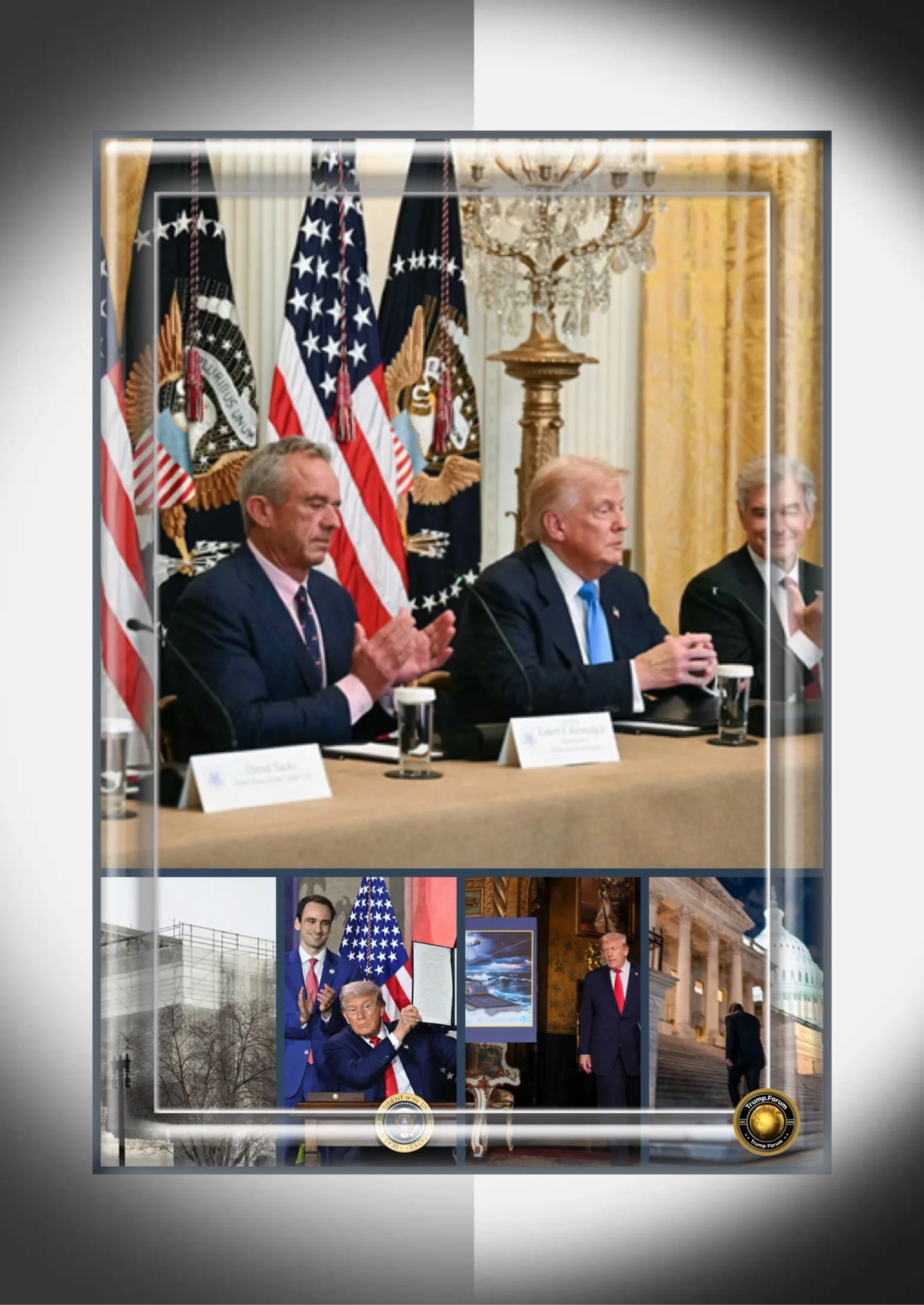
The Imperial Gamble: Trump Bets Everything on Beating History in 2026
Executive Summary
Unprecedented Executive Power Meets Unprecedented Unpopularity—The Collision Course Ahead
As President Donald Trump enters his second year in office, the contours of his second administration are crystallising with unmistakable clarity.
Unlike his first term, when institutional guardrails and unfamiliar advisers tempered his more audacious impulses, Trump now operates within a streamlined apparatus of ideological loyalists engineered for the precise execution of his mandate.
The year 2026 will witness the convergence of three transformative forces: an aggressive domestic agenda centred upon affordability and immigration enforcement, a precarious foreign policy landscape beset by unresolved conflicts, and a midterm electoral reckoning that will determine whether the Republican Party can defy historical precedent. His impending attendance at the World Economic Forum in Davos—his first in-person appearance in over six years—signals a paradoxical posture: outward engagement with global capital whilst simultaneously demanding that global forums abandon their commitments to climate action, diversity, and international development.
The question animating 2026 is not whether Trump will exercise power, but whether the mechanisms that have historically constrained the presidency will continue to erode.
Introduction
Loyalists, Not Guardrails: How Trump 2.0 Shattered the Constraints of the Presidency
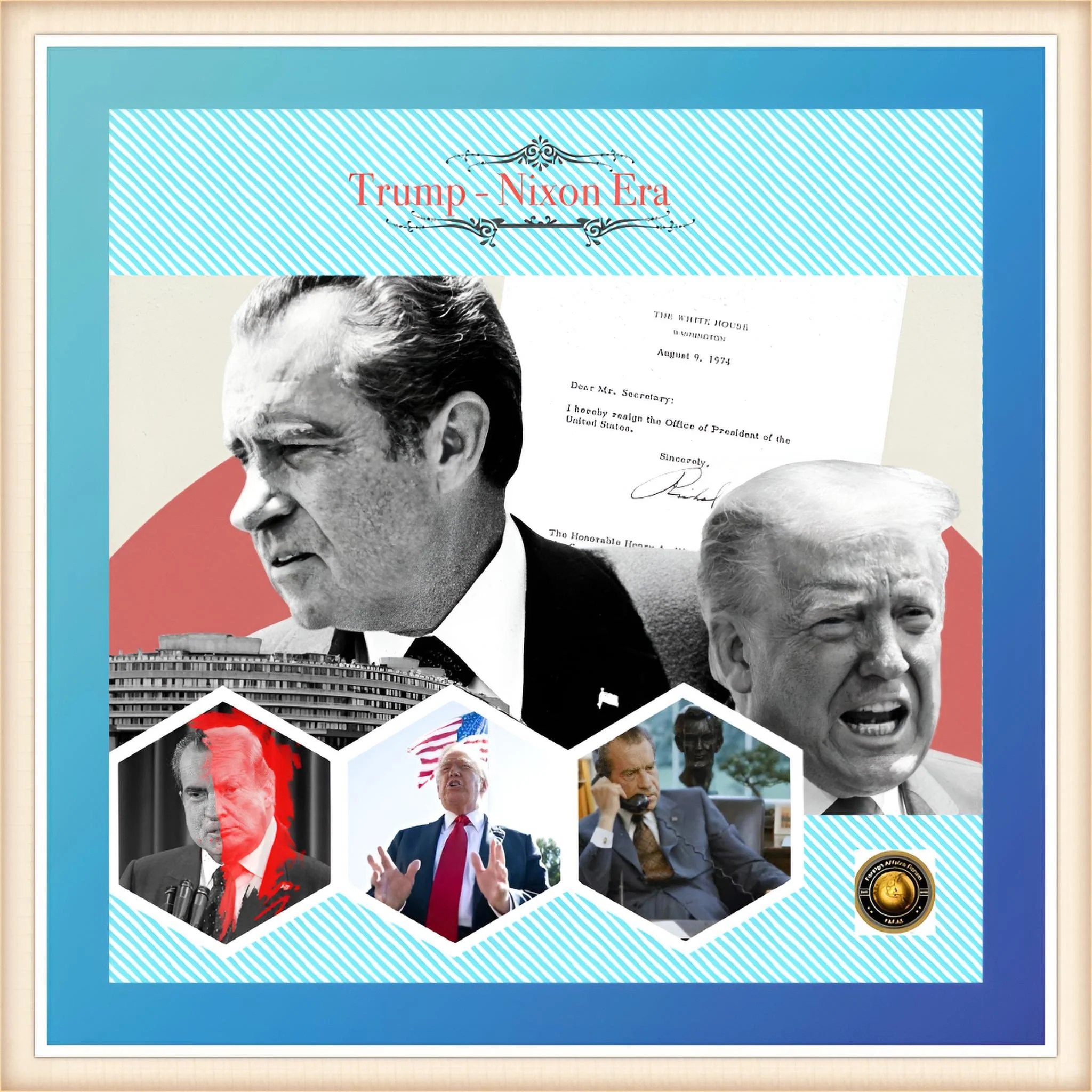
The architecture of Trump’s second presidency differs fundamentally from his first. Where his inaugural administration contained internal sceptics who occasionally applied restraint to his more incendiary proposals, his current government constitutes what Peter Baker, the chief White House correspondent for the New York Times, has characterised as an “imperial presidency”—a reconfiguration that concentrates unprecedented authority in the executive whilst systematically dismantling mechanisms of institutional accountability.
Trump’s second term represents not a recalibration but an acceleration, one in which the guardrails have been methodically removed and replaced with machinery designed to execute the most ambitious elements of the Heritage Foundation’s Project 2025.
As 2026 unfolds, the administration will navigate a labyrinth of interconnected challenges: a sputtering economy burdened by inflationary pressures exacerbated by tariff policies, a precarious housing market wherein price deflation threatens existing homeowners even as affordability remains elusive, and a foreign policy tableau characterised by frozen conflicts, fragile ceasefires, and the persistent challenge of great-power competition.
The year ahead will test whether Trump’s particular brand of executive authority can deliver tangible results to ordinary Americans grappling with the cost of living, or whether the administration’s policies will intensify the very economic anxieties it purports to alleviate.
Historical Context and Current Status
From Chaos to Command: Trump’s First Year Exposed the Weakness of Constitutional Restraints
To understand 2026, one must first comprehend the trajectory of Trump’s first year. Between his January 2025 inauguration and the year’s terminus, the Trump administration executed at a velocity that surprised even seasoned observers.
The administration signed more than 170 executive orders, with particular emphasis upon immigration enforcement, energy deregulation, and the systematic dismantling of diversity, equity, and inclusion (DEI) programmes across the federal government. By the Heritage Foundation’s own accounting, the Trump team accomplished or placed in motion approximately half of the 2,000-plus policy objectives enumerated in Project 2025, the most comprehensive conservative governing manifesto ever assembled.
Treasury data indicates the administration claims 687,000 private sector jobs created in its first year, though labour economists contest both the attribution and the statistical foundation of such figures. What remains incontestable is that Trump executed his campaign promises with a directness that confounded critics who had anticipated legislative gridlock.
The most consequential of these initiatives addressed the southern border. The Trump administration, through a combination of executive orders and bureaucratic restructuring, implemented what officials characterise as a “mass deportation” campaign.
The Department of Homeland Security has projected nearly 600,000 removals by year’s end, a figure that would dwarf the 400,000 deportations achieved during the Obama administration’s peak enforcement year. To accomplish this, the administration has fashioned third-country asylum agreements with nations ranging from Honduras and El Salvador to more improbable partners such as Palau, a Pacific island nation of 350,000 people.
These arrangements permit the United States to deny asylum to migrants who have transited through other countries, effectively closing pathways to refuge that have served as safety valves for Central American and Haitian displaced persons.
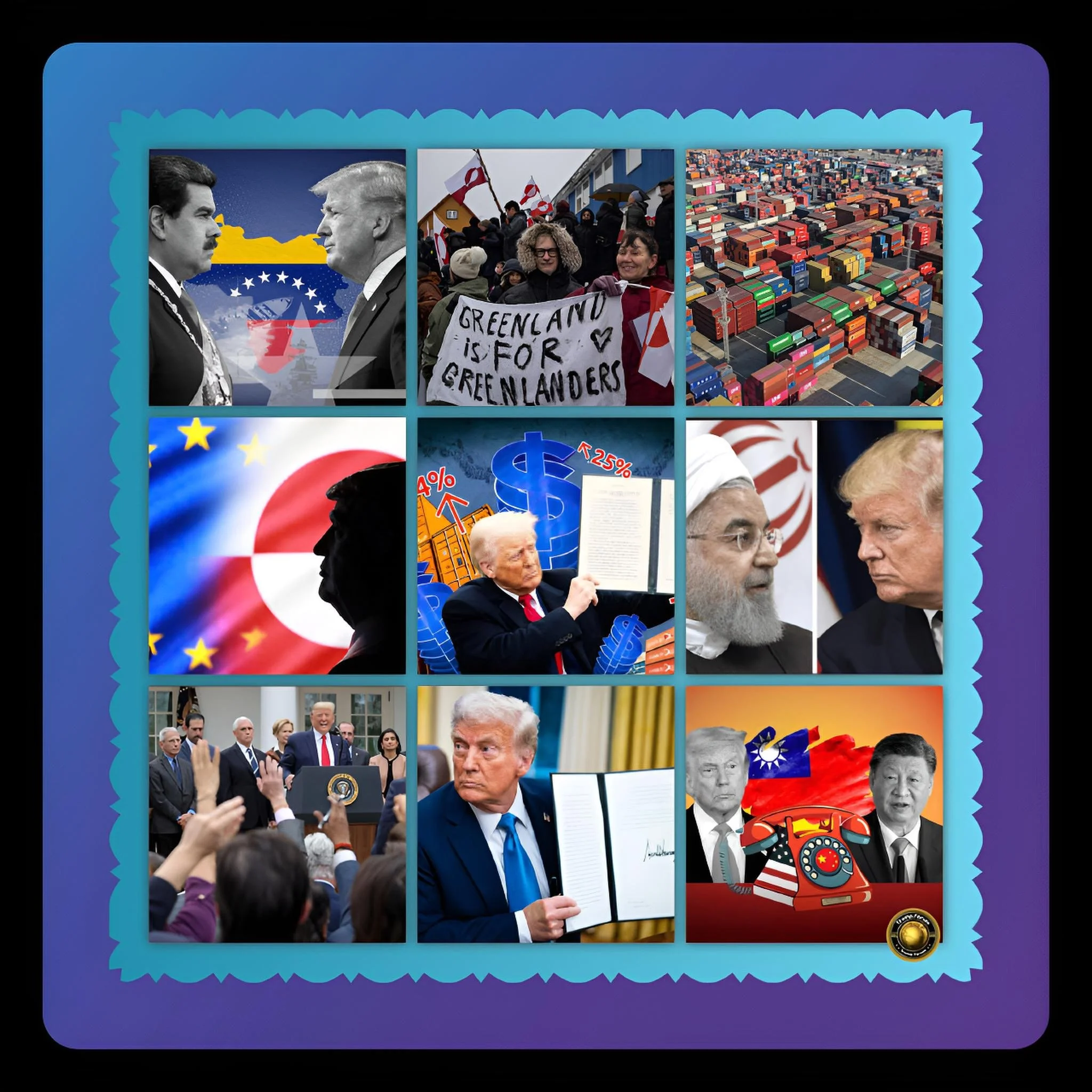
Simultaneously, Trump’s trade policy has undergone serial recalibration. Having initially threatened 25 per cent tariffs on Canadian and Mexican imports and vastly higher tariffs on Chinese goods, the administration has executed a series of tactical retreats and strategic pauses. Most recently, on New Year’s Eve 2025, Trump delayed implementation of tariffs on upholstered furniture, kitchen cabinets, and vanities—items originally scheduled to face 30 to 50 per cent duty increases.
These reversals expose a fundamental tension within the Trump worldview: his conviction that protectionist trade barriers are necessary to restore American manufacturing capacity conflicts with the observable reality that tariffs increase consumer prices and business costs, thereby undermining his political objective of demonstrating economic competence to voters anxious about affordability.
The Tax Policy Centre estimates that Trump’s tariff regime will reduce average household real income by approximately $2,100 to $3,100 in 2026 alone, depending on which tariff rates ultimately take effect.
On the foreign policy front, Trump’s first year yielded both headline successes and accumulating liabilities.
The Gaza ceasefire, implemented in October 2025, represents a tangible victory—though one now threatened by the implementation challenges that have begun to manifest.
The administration’s attempts to broker a peace settlement between Ukraine and Russia, by contrast, have confronted Russian intransigence and the fundamental incompatibility of Kyiv’s security concerns with Moscow’s maximalist territorial demands.
Trump’s relationship with Iran has evolved from his first term’s maximum pressure campaign into something more ambiguous: whilst the administration struck Iranian nuclear facilities in June 2025 in response to Iranian attacks on Israel, it has since warned Iran against further uranium enrichment whilst maintaining diplomatic channels.
Key Developments and Latest Factual Concerns
The Four Crises Converging on Trump’s 2026: Affordability, Immigration, Tariffs, and Foreign Policy Collapse
The tapestry of 2026 will be woven from four principal threads: the affordability imperative, the immigration enforcement juggernaut, the tariff regime’s continued volatility, and the unresolved foreign policy quagmires inherited from 2025.
The Affordability Conundrum
The Housing Trap: Trump Wants Cheaper Mortgages AND Higher Home Values—Something Must Give
Trump’s political vulnerability resides precisely where one might expect: the lived experience of ordinary Americans. Whilst official unemployment figures remain favourable by historical standards, wage growth has failed to keep pace with the cost of essential services, particularly housing, healthcare, and childcare. In his December prime-time address, Trump announced that 2026 would witness “the most aggressive housing reform plans in American history,” yet the administration has provided remarkably few specifics regarding the mechanisms by which it would accomplish this transformation.
National Economic Council Director Kevin Hassett has indicated that the focus will centre upon regulatory streamlining and incentives to states that facilitate rapid housing construction. The administration has mooted the concept of 50-year mortgages to reduce monthly payments, though economists note that such instruments would impose substantially greater lifetime costs upon borrowers.
The housing market crisis presents Trump with a peculiar dilemma. The administration wishes to expand homeownership and reduce monthly mortgage payments for prospective buyers; simultaneously, Trump has acknowledged that he desires to prevent existing homeowners—a constituency disproportionately composed of older Americans and more conservative voters—from experiencing depreciation in their home values.
These objectives are fundamentally irreconcilable. Policies that increase housing supply and moderate prices necessarily depress the equity accumulated by existing homeowners, particularly those who purchased during the low-interest-rate period of 2020-2021.
This contradiction exposes the tension between Trump’s electoral coalition, which includes both struggling renters seeking affordability and affluent homeowners seeking to preserve their accumulated wealth.
Immigration: Enforcement Meets Economic Reality
Mass Deportation Meets Labour Shortage Reality: The Administration’s Colliding Imperatives
The second pillar of Trump’s 2026 agenda involves the acceleration and consolidation of immigration enforcement machinery.
The administration has already implemented expanded expedited removal protocols, workplace raids, and international deportation partnerships. Yet the consequences of mass deportation are beginning to manifest in unexpected places. Child care facilities, construction industries, and agricultural sectors dependent upon immigrant labour are reporting difficulty recruiting and retaining workers. A labour shortage in essential services creates a paradox: the administration simultaneously pursues policies designed to constrain immigration whilst confronting evidence that labour force growth depends upon immigrant inflows.
The third-country asylum strategy represents perhaps the administration’s most legally vulnerable innovation. Previous iterations of such agreements, implemented during Trump’s first term, faced immediate legal challenges from immigrant advocacy groups, and lawsuits challenging the current framework are anticipated to materialise.
The administration has justified these arrangements as necessary to prevent the “abuse” of the asylum system, contending that individuals who have transited through other nations have foregone opportunities to claim protection elsewhere. Critics counter that such logic ignores the reality of migration—that individuals fleeing persecution often lack meaningful alternatives and that gateway countries cannot unilaterally impose obligations upon persons with no prior connection to their territory.
The Tariff Quagmire
Trapped by Tariffs: How Trump’s Trade War Sabotages His Own Affordability Message
Trump’s trade policy enters 2026 in a state of perpetual flux. The administration has oscillated between maximalist tariff threats and tactical retreats with a consistency that has generated profound uncertainty within business communities, construction industries, and agricultural sectors.
The Tax Policy Centre estimates that current tariff policies will reduce real income for the average taxpayer by $2,100 to $3,100 in 2026, representing a material erosion of purchasing power precisely when the administration requires tangible evidence of rising living standards. Moreover, construction industries dependent upon imported building materials face substantially elevated costs, which perversely undermines the administration’s housing affordability agenda.
The American Progress organization estimates that Trump’s current tariff regime could result in 450,000 fewer new homes being constructed through 2030 owing to elevated material costs.
Foreign Policy: Between Resolution and Ruin
Ukraine and Gaza in Freefall: Trump’s Peace Plans Confront Unyielding Adversaries
Trump’s foreign policy inheritance consists of three unresolved conflicts that threaten to undermine his electoral strategy. The Ukraine war, approaching its fourth anniversary, remains glaciated in territorial stalemate.
Trump’s optimistic pronouncements regarding the possibility of near-term peace negotiations have been repeatedly contradicted by Kremlin intransigence. Russia continues to demand NATO renunciation of Ukrainian membership, severe constraints on Ukrainian military capacity, and full control of the Donbas region—positions that Kyiv has rejected as incompatible with its national security.
The most recent diplomatic initiative, conducted at Mar-a-Lago in late 2025, yielded initial optimism that quickly evaporated when the Kremlin denied responsibility for a drone attack upon Putin’s residence, reasserting maximalist positions.
The Gaza ceasefire, meanwhile, teeters upon an increasingly precarious fulcrum. Israel and Hamas both accuse one another of violations, with hundreds of Palestinians dead since the October 2025 truce commenced despite supposed confidence-building measures.
The implementation of the agreement’s second phase requires Hamas to disarm, an objective the organisation has explicitly rejected on the grounds that it retains a “right to armed resistance against Israeli occupation.” The administration has warned that any renewed escalation would trigger American military intervention, yet the mechanisms by which such a commitment could be credibly enforced remain murky.
Cause-and-Effect Analysis
The Architecture of Contradiction: How Trump’s Policies Undermine Each Other
The interconnected pathologies that will animate 2026 reveal a deeper structural problem within the Trump administration’s governing philosophy: the tendency to pursue incompatible objectives simultaneously and to expect executive authority to transcend economic reality.
The tariff policy exemplifies this dynamic. Trump views tariffs as instrumentalities of industrial renewal and geopolitical advantage, tools through which the United States can coerce trading partners into more “reciprocal” relationships and rebuild American manufacturing. Yet tariffs function simultaneously as a consumption tax upon every American household, an elevation of business input costs that pressures profit margins and employment, and a signal of unpredictability that discourages long-term capital investment.
The tariff delays announced at year’s end reflected not policy recalibration but rather political desperation: Republicans cognizant of midterm vulnerabilities implored the administration to moderate tariff escalation, recognising that elevated prices for building materials, furniture, and appliances would undermine the “affordability” message upon which 2026 electoral prospects depend.
The immigration enforcement campaign similarly generates contradictory consequences. Mass deportation appeals potently to Trump’s electoral base, who perceive immigration as the root cause of wage stagnation, housing scarcity, and cultural displacement. Yet the demographic reality is inexorable: the American labour force is contracting due to population ageing and declining birth rates. Sectors critical to economic function—from agriculture to healthcare to child care—depend upon immigrant labour to maintain service delivery and suppress cost escalation.
The administration’s expedited deportation machinery therefore risks generating a perverse outcome: labour shortages that translate into wage inflation precisely when the administration requires evidence of falling living costs.
The affordability agenda reflects a similar contradiction. Trump wishes to expand homeownership by reducing monthly mortgage payments whilst preserving home values for existing homeowners and simultaneously constraining supply-side increases in housing stock through tariff-induced elevation of construction material costs.
The confluence of these incompatible objectives portends an outcome wherein housing remains unaffordable, homeowners perceive no benefit from the administration’s policies, and prospective homebuyers continue to face economic barriers to ownership.
Future Steps: The Trajectory of 2026
Midterm Massacre Looms: Trump’s All-In Bet on Davos, Debt Ceiling, and Desperate Affordability Push
The calendar year 2026 will unfold across several critical junctures, each carrying implications for both policy and politics.
Trump’s attendance at the World Economic Forum in January signals the administration’s intent to maintain engagement with global economic elites whilst simultaneously projecting American nationalist priorities.
The administration has successfully pressured the World Economic Forum to deemphasise discussions of climate change, diversity, and international development—thematic reorientation that reflects the administration’s determination to use all available platforms to advance its policy preferences.
The G20 presidency, which the United States assumes in 2026, will be hosted in Miami at a Trump-owned property, further evidence of the “imperial presidency” dynamic that Peter Baker has documented.
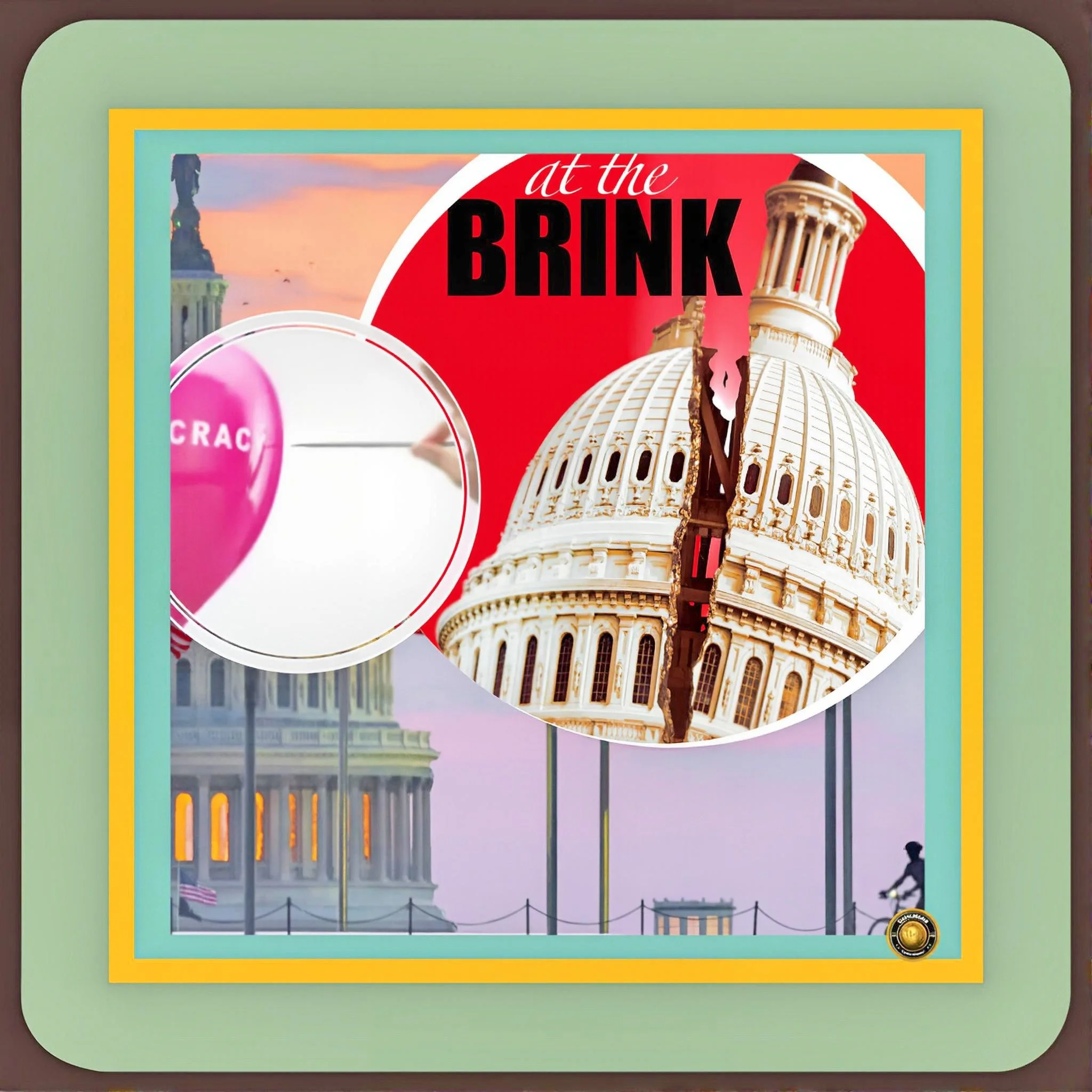
The legislative calendar will require the administration to negotiate a continuing resolution to avert government shutdown by 30 January, extend Affordable Care Act subsidies before their expiration, and navigate Republican fractious negotiations regarding the debt ceiling. Whilst Trump has ruled out requesting a second reconciliation package (the legislative vehicle through which the administration accomplished its 2025 tax cuts and other major initiatives), the administration remains engaged on Capitol Hill regarding trade policy, tariffs, and healthcare affordability.
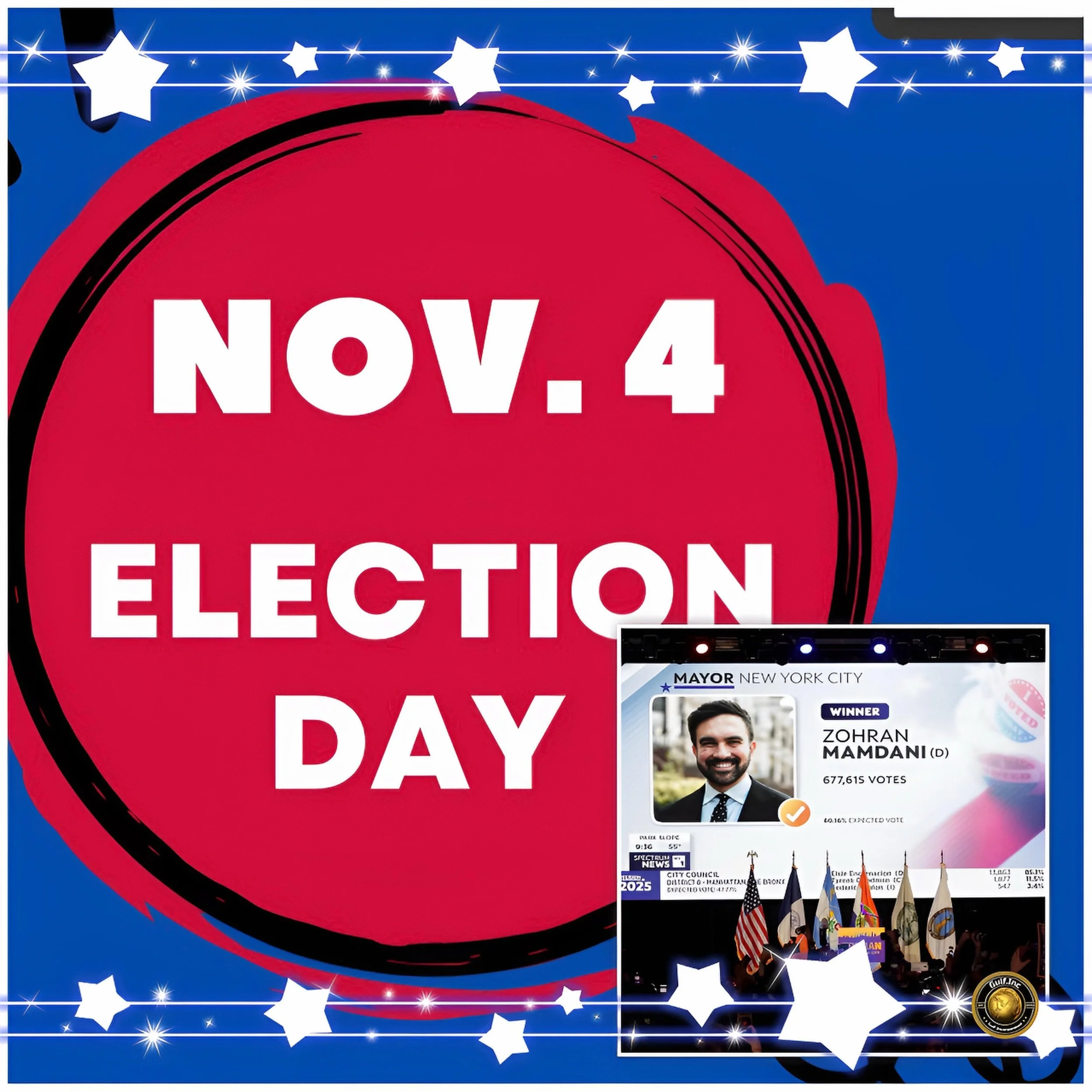
Most consequentially, 2026 will witness sustained focus upon the midterm election campaign.
The historical pattern is unambiguous: the party occupying the White House during a sitting president’s first or second term invariably experiences erosion of congressional support in the subsequent midterm election. Only Jimmy Carter, in 1978, managed to avoid this pattern in recent history.
Trump’s approval rating currently stands at 36 per cent—the lowest approval rating of any newly inaugurated elected president after their first year in office. White House chief of staff Susie Wiles has signalled that the administration will pursue an unconventional strategy of “nationalising” the 2026 midterms by placing Trump himself on the ballot, effectively converting the election into a referendum on Trump rather than a traditional midterm contest in which local and congressional factors predominate.
This strategy carries enormous risk. If Trump’s approval remains depressed, a nationalised midterm campaign will mobilise Democratic opposition and reinforce the message that 2026 represents an opportunity to constrain Trump’s power and moderate his most ambitious designs. Conversely, if Trump successfully reframes the midterms around “affordability” and can demonstrate tangible improvements in living costs between now and November 2026, he may overcome the historical pattern.
The window for demonstrating such improvements is narrow: economic data from the first half of 2026 will largely determine whether voters perceive the administration as addressing their economic anxieties or exacerbating them.
Analysis and Implications
Imperial Power, Impotent Popularity: Will Trump’s Unchecked Authority Survive 2026?
The deeper significance of 2026 extends beyond the immediate policy agenda to fundamental questions about the American constitutional order and the durability of presidential authority.
Peter Baker’s characterisation of Trump’s second term as an “imperial presidency” merits careful examination. Trump enters 2026 with less institutional resistance than any president in modern history. Congressional Republicans have proven largely unwilling to challenge his authority, even when his policies contradict their districts’ economic interests.
The Supreme Court, despite striking down certain aspects of Trump’s tariff authority in lower court proceedings, has largely deferred to executive discretion in trade matters.
Most significantly, Trump has installed loyalists throughout the federal government—in the Justice Department, the FBI, and the intelligence agencies—thereby dismantling the “deep state” guardrails that constrained him during his first term.
This reconfiguration has generated a paradox: Trump wields unprecedented unconstrained power, yet he remains consistently unpopular. His 36 per cent approval rating represents the weakest standing of any modern elected president after their first year in office. This disconnect between power and popularity reveals a fundamental instability.
The mechanisms that have historically constrained presidential authority—congressional oversight, independent agencies, the judiciary—are eroding. Yet public opinion has not conferred legitimacy upon the expanded executive authority Trump is now exercising. The question animating 2026 is whether this equilibrium proves sustainable or whether forces will emerge to reassert constraints upon executive prerogative.
The global dimension of this transformation deserves attention. Trump’s 2025 National Security Strategy deliberately downplayed great-power competition with China and Russia, reorienting American priorities toward the Western Hemisphere and reducing commitments to traditional alliances. Yet the strategy simultaneously commits the United States to maintaining military deterrence in the Indo-Pacific, supporting Ukraine (however inconsistently), and countering China’s technological and economic ascendance.
These commitments prove difficult to reconcile with Trump’s expressed preference for reduced foreign entanglements and greater “burden-sharing” by allies. The consequence is likely to be a foreign policy characterized by unpredictability, tactical shifts, and periodic crises as adversaries test the limits of American commitment and allies struggle to calibrate their own strategies in the absence of clear American intentions.
Conclusion
March Forward or Collapse Inward: 2026 Will Determine Whether Trump’s Imperial Presidency Survives
As 2026 unfolds, Trump faces a stark choice between two trajectories. The optimistic scenario for the administration envisions successful implementation of housing reform initiatives that expand supply and moderate prices, immigration enforcement that occurs without catastrophic labour shortages or humanitarian backlash, tariff negotiations that yield reciprocal trade arrangements without significant consumer cost elevation, and foreign policy settlements that prevent Ukrainian collapse and Gaza re-escalation whilst maintaining American credibility with allies.
Simultaneously, the administration hopes that visible improvements in living standards—whether genuine or merely perceived—will persuade voters that Trump’s unconventional methods produce results, thereby defying the historical pattern of midterm losses.
The darker scenario envisions an economy burdened by tariff-induced inflation, a labour market convulsed by mass deportation, a housing market wherein affordability remains elusive despite regulatory streamlining, and foreign conflicts that deteriorate despite intensive diplomatic engagement.
In this trajectory, Trump’s approval rating remains depressed, Republican turnout declines, and Democrats regain control of at least one chamber of Congress, thereby imposing renewed constraints upon presidential authority.
The most likely outcome probably occupies the uncertain middle ground—mixed results on the administration’s policy agenda, modest deterioration in the midterm political environment for Republicans, but retention of at least one congressional chamber by the GOP.
Such an outcome would extend the extraordinary concentration of executive authority that characterizes Trump’s second term, yet without providing sufficient validation to sustain it indefinitely.
What appears incontestable is that 2026 will represent a pivotal juncture in the evolution of American political institutions. If the constraints that historically limited presidential authority continue to erode, the presidency itself will be fundamentally transformed—for Trump’s successors as well as for his own second term.
PWhether this transformation proves durable or whether it represents a temporary aberration dependent upon Trump’s particular personality and circumstances will not become clear until well beyond 2026.
What is clear is that the year ahead will determine much of the trajectory of American politics and governance for years to come.