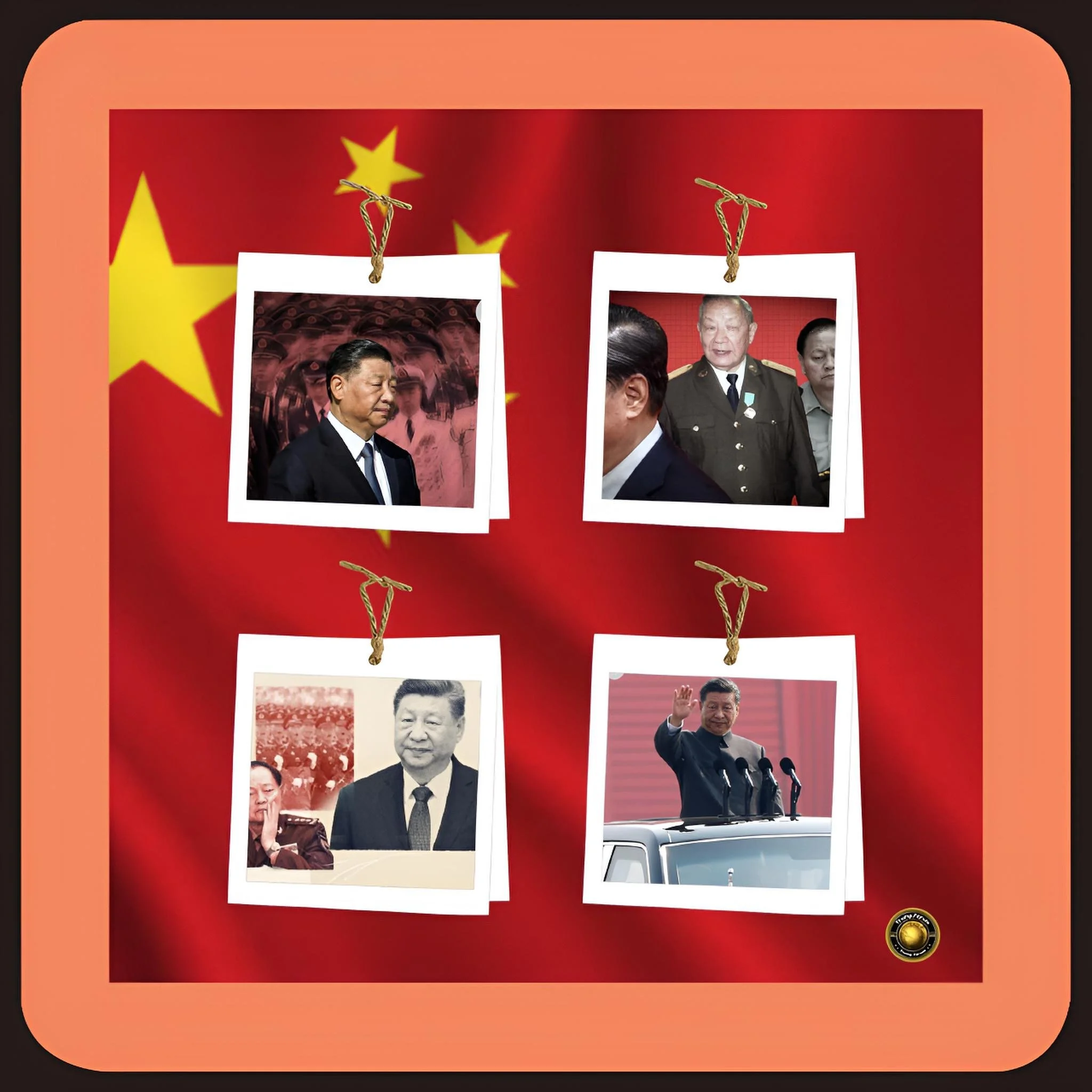
The Unraveling of China's High Command: Xi Jinping's Purge of Military Elites and Its Implications for Taiwan and Global Security
Executive Summary
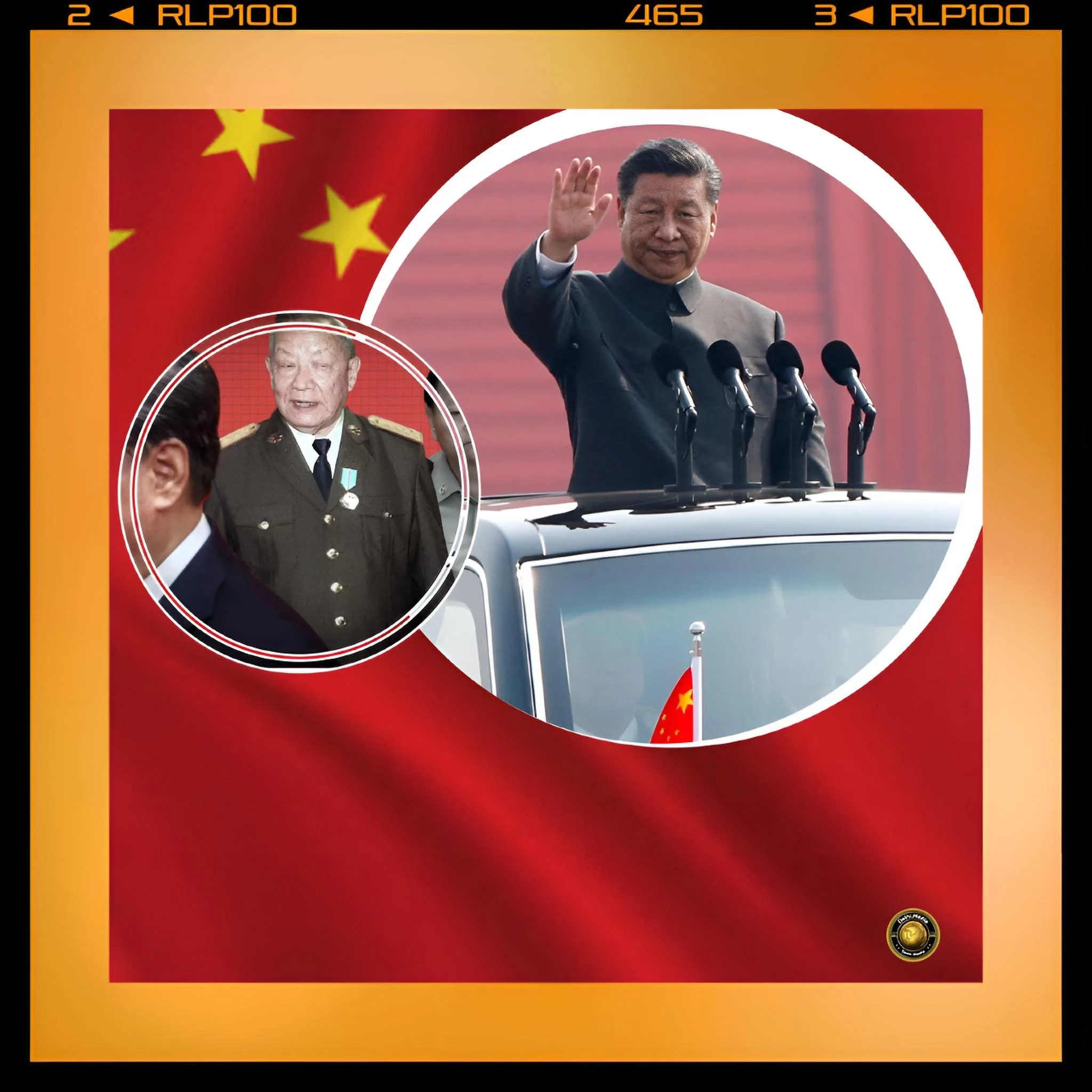
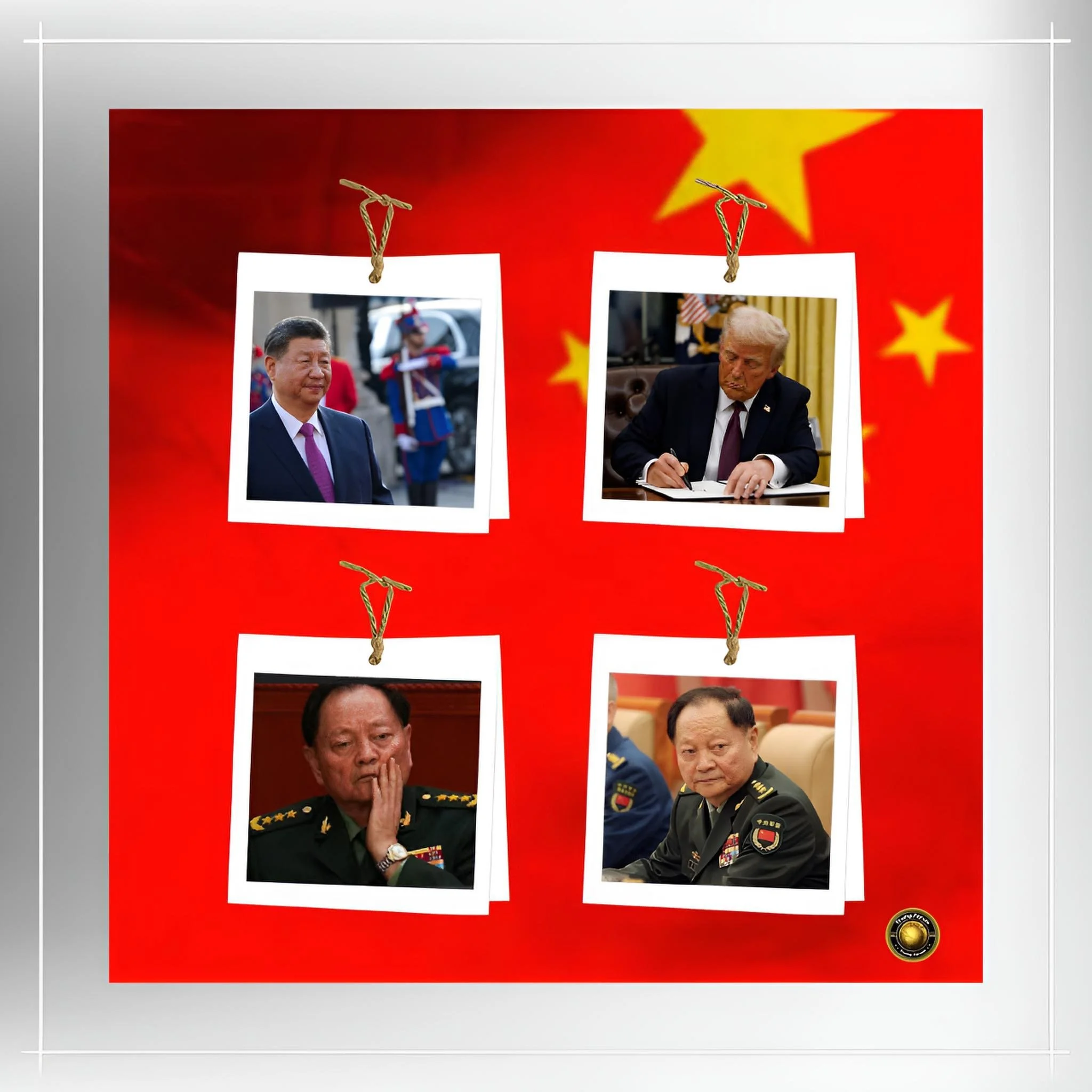
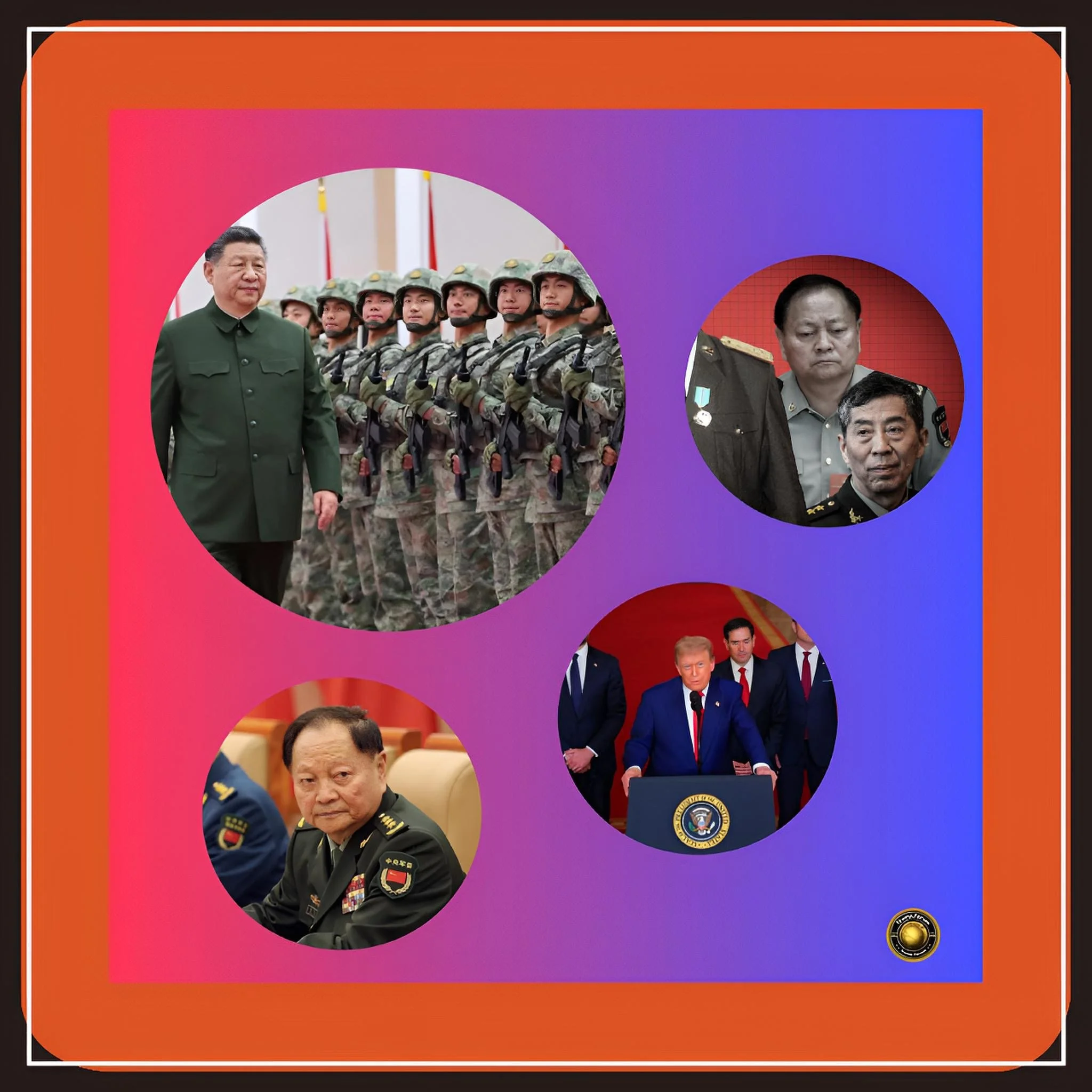
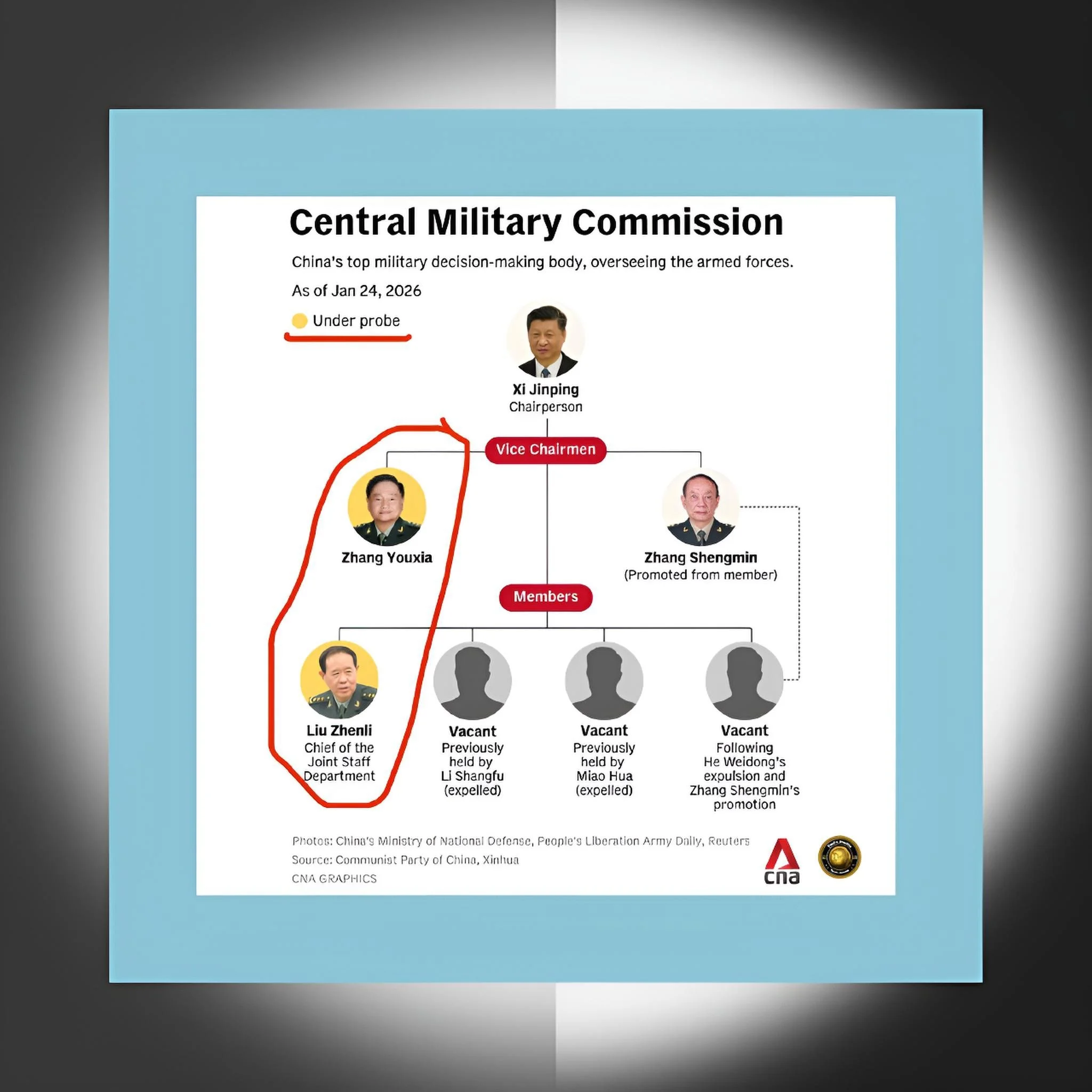
On January 24, 2026, Chinese authorities announced investigations into Central Military Commission Vice Chairman General Zhang Youxia and Chief of Staff Liu Zhenli, marking the culmination of a sweeping purge within the People's Liberation Army that fundamentally exposes the psychological and institutional costs of Xi Jinping's consolidation of power.
Unlike the disciplined execution of Operation Absolute Resolve, wherein the United States demonstrated institutional cohesion and unified command to capture Venezuelan President Nicolás Maduro, China's military apparatus reveals a trajectory of internal disarray, political paranoia, and operational dysfunction.
Zhang Youxia's downfall—despite being the son of a Maoist-era PLA founder and a decorated combat veteran—illuminates the existential contradiction at the heart of Xi's governance model: the systematic elimination of capable officers in pursuit of absolute loyalty paradoxically weakens the very military instrument required to achieve Xi's geopolitical ambitions.
This transformation parallels Stalin's Great Purge of 1936–1938, wherein ideological conformity superseded military competence, ultimately crippling institutional effectiveness.
For Taiwan, this presents a circumscribed window of strategic reprieve as the PLA redirects resources toward internal discipline rather than sustained coercive operations, yet the long-term trajectory suggests a potentially more formidable but less predictable threat as Xi rebuilds the command structure with ideologically vetted successors.
Introduction
China's military purge, centered on the removal of senior leaders including Zhang Youxia and Liu Zhenli, represents not merely a personnel reshuffle but a systemic interrogation of institutional loyalty and command authority.
The timing—January 2026, at the inception of the final annual training cycle before Xi's declared 2027 deadline for PLA readiness to invade Taiwan—suggests that Zhang's purge stemmed not from personal corruption but from professional disagreement with Xi's accelerated timeline for joint operations training.
This investigation examines the historical antecedents, operational mechanisms, and strategic consequences of Xi's military purges, juxtaposing them with the institutional clarity demonstrated by the United States military in Operation Absolute Resolve.
The contrast between these two military establishments illuminates fundamental differences in organizational health, personnel management, and strategic coherence at the apex of authoritarian versus democratic institutions.
Historical Parallels and the Cycle of Purges
The Architecture of Stalin's Great Purge and Xi's Emulation
Stalin's Great Purge of 1936–1938 eliminated over 30,000 military officers, including Marshal Mikhail Tukhachevsky, the architect of Soviet deep battle and maneuver warfare doctrine. These eliminations occurred on fabricated charges of treason, espionage, and Trotskyism, targeting not external enemies but the Communist Party's own elite.
The pattern followed a logic of recursive paranoia: Stalin purged potential rivals, then purged those who had carried out the initial purges, creating a self-perpetuating cycle of institutional terror that left the Red Army severely compromised at the moment Germany prepared to invade in 1941.
Xi Jinping's campaign exhibits striking parallels. Since his consolidation of power following the 19th Party Congress in 2017, Xi has orchestrated successive waves of purges targeting military elites, defense officials, and most strikingly, his own handpicked subordinates. Scholars have identified this pattern as "Stalin Logic"—the inevitable progression from purging external opponents to purging internal allies once the leader construes loyalty as the sole criterion for advancement.
The Asia Society Policy Institute characterized Xi's logic as follows: a leader's promotion to higher-ranking positions under Xi carries not assurance of security but rather growing risk of investigation and removal.
The Rocket Force as the Purge's Epicenter
Beginning in 2023, Xi's purge disproportionately targeted the Rocket Force, which manages China's strategic nuclear deterrent and conventional missile arsenal.
Former Rocket Force Commander and Political Commissar were removed alongside Former Defense Minister Li Shangfu and his predecessor Wei Fenghe, all implicated in procurement corruption. Intelligence reports alleged mishandling of liquid-fueled missile fuel and silo malfunctions that could prevent intercontinental ballistic missile launches.
Two consecutive Rocket Force commanders—Li Yuchao and Wang Houbin—have been purged, suggesting either pervasive corruption or systemic failures in the strategic weapons domain that extend deeper than publicly acknowledged.
This concentration of purges in the Rocket Force is strategically irrational from a military standpoint. These systems require sustained technical expertise, institutional continuity, and reliable command structures.
Continuous leadership disruption compromises the reliability of China's nuclear deterrent and conventional strike capabilities, yet Xi's logic subordinates operational readiness to political loyalty.
The removal of General Wang Zhongcai, Eastern Theater Command's naval commander and architect of the PLA Navy's modernization, further exemplifies the cost of prioritizing conformity over competence.
Current Status: The Zhang Youxia Purge as a Watershed Moment
The Disagreement Over Timeline and Strategy
Official Chinese statements and analysis of PLA Daily editorials reveal that Zhang Youxia and Liu Zhenli's removal stemmed from substantive disagreement with Xi over the methodology and timeline of PLA modernization, specifically regarding joint operations training.
Zhang advocated for a phased approach, with full joint operational capability achievable by 2035, whereas Xi demanded readiness by 2027—a deadline framed as essential to the PLA's centenary and implicitly tied to unification with Taiwan.
The divergence crystallized around differing visions of military development. Xi prioritized speed and scale, emphasizing military struggle as a standalone strategic objective. Zhang, conversely, favored a focused and deliberate approach, embedding military struggle within the framework of comprehensive joint training initiatives.
This was not abstract doctrinal debate but operational reality: Zhang implemented the 2023 on-site conference on basic training and the 2024 on-site conference on combined training, establishing progressively more integrated training models. However, neither Zhang nor Liu had finalized a joint training model as of January 2026—a critical deficiency if Xi's 2027 invasion capability target were genuinely achievable.
Signals of Open Defiance
The political indicators surrounding Zhang's purge reveal escalating tension between him and Xi. During the 2025 Two Sessions—the critical period for drafting the 15th Five-Year Plan—Xi unusually invited speakers from outside the CMC and senior command institutions, signaling distrust of the military's leadership.
More significantly, when Xi departed the closing session of the Two Sessions, Zhang Youxia stood with his back to the supreme leader—a gesture politically explosive in the context of Xi-era hierarchical norms. Furthermore, neither Zhang nor Liu mentioned the "CMC chairman responsibility system" in their routine individual speeches at the Two Sessions, despite previous years of public affirmation.
This silence, in the context of a system where such ritualistic loyalty declarations serve as basic political signals, suggested either significant disagreement or deliberate opposition to Xi's preeminent authority.
The official accusation that Zhang and Liu "trampled" (not merely "undermined") the CMC chairman responsibility system signals direct defiance rather than passive obstruction.
The language describing damage to "combat capability development" was absent from the case against former CMC Vice Chairman He Weidong, indicating that Xi viewed Zhang and Liu's conduct as having direct negative impact on PLA military functionality—a charge that would normally be contradictory in a leader concerned primarily with political loyalty.
Impact on Military Readiness and Taiwan
Quantifiable Deterioration in Operational Capability
Taiwan's Ministry of National Defense reported that PLA aircraft sorties and naval vessel deployments reached record highs in 2025, with 5,446 detected sorties and 2,613 naval vessels operating around Taiwan. However, the growth rate decelerated sharply compared with 2024. Median line crossings increased by 122.6 percent in 2025 versus 180.3 % in 2024.
Notably, PLA activity in the second half of 2025 fell below that of the first half—a reversal of previous patterns wherein activity peaked in the second half.
This deceleration coincides temporally with the March 2025 disappearance and subsequent removal of He Weidong, and reflects resource reallocation toward joint training initiatives rather than sustained gray-zone coercion.
The number of joint combat readiness patrols remained static at 40 in both 2024 and 2025, indicating no acceleration in integrated operations despite Xi's declared urgency regarding 2027 readiness.
The Recruitment Problem and the Cascade Effect
The purges create a pernicious cascade: mid-level and junior officers who owed their careers to the purged generals face existential uncertainty. Loyalties within the PLA run deeply through networks of personal patronage. Officers who advanced through promotions granted by Zhang Youxia, He Weidong, or other senior figures removed in recent years must now demonstrate loyalty to Xi while their former benefactors face investigation.
This creates a bifurcation in command structures: those whose patrons remain in power retain institutional credibility, while those whose patrons have been purged become liabilities.
Unlike the United States military, where professional advancement operates through institutionalized mechanisms divorced from personal patronage networks, the PLA's hierarchical structure valorizes personal loyalty. The removal of a senior patron thus creates organizational voids that cannot be readily filled through meritocratic promotion.
Instead, Xi must either promote untested loyalists, thereby degrading military competence, or retain subordinates who may harbor resentment toward the new leadership. Either path compromises institutional functionality.
The Paranoia Imperative and the Path to Further Purges
Historical precedent suggests that Xi's purges will not cease but rather accelerate. Stalin found that initial purges did not eliminate disloyalty but rather multiplied opportunities for accusation. Officers became ever more paranoid, less willing to speak truthfully to their superiors, and more susceptible to false denunciation.
The removal of an officer who had previously carried out earlier purges signaled to all survivors that no prior loyalty or service was sufficient protection. Xi faces the identical dilemma: having removed Zhang Youxia, a figure he had personally promoted to CMC Vice Chairman and had entrusted with overseeing military training reform, Xi must now demonstrate that further purges are necessary and justified, lest subordinates conclude that their own positions are secure.
Military analysts and historians observe a self-reinforcing cycle: each purge reveals networks of alleged corruption or disloyalty, providing justification for further purges.
Unless Xi halts this cycle, the PLA will experience progressive degradation of institutional effectiveness, with capable officers increasingly reluctant to take initiative or voice professional concerns, and with leadership positions populated by ideologically vetted apparatchiks rather than combat-experienced or strategically sophisticated commanders.
Cause and Effect Analysis: Psychological and Institutional Implications
The Burden of Absolute Power and the Paranoia Calculus
Xi's consolidation of power has proceeded along a trajectory of accelerating personalization of authority. Unlike Deng Xiaoping's framework of collective leadership and institutional checks, Xi's system concentrates decision-making in the paramount leader, reducing countervailing voices and institutional restraint.
This concentration creates a paradox: as Xi's formal authority has expanded, his subjective security has contracted. The removal of allies signals not confidence but escalating fear that even trusted subordinates harbor secret reservations or competing loyalties.
The psychological toll on military leadership is incalculable. Senior officers in their sixties and seventies, accustomed to decades of institutional authority and presumptive security, now face abrupt investigation and removal on charges of "serious violations."
Those remaining in office must expend cognitive and political resources on demonstrating loyalty rather than on strategic planning, military innovation, or operational readiness. The energy devoted to survival politics is energy diverted from military effectiveness.
Contrast with the United States Military: Institutional Versus Personalistic Command
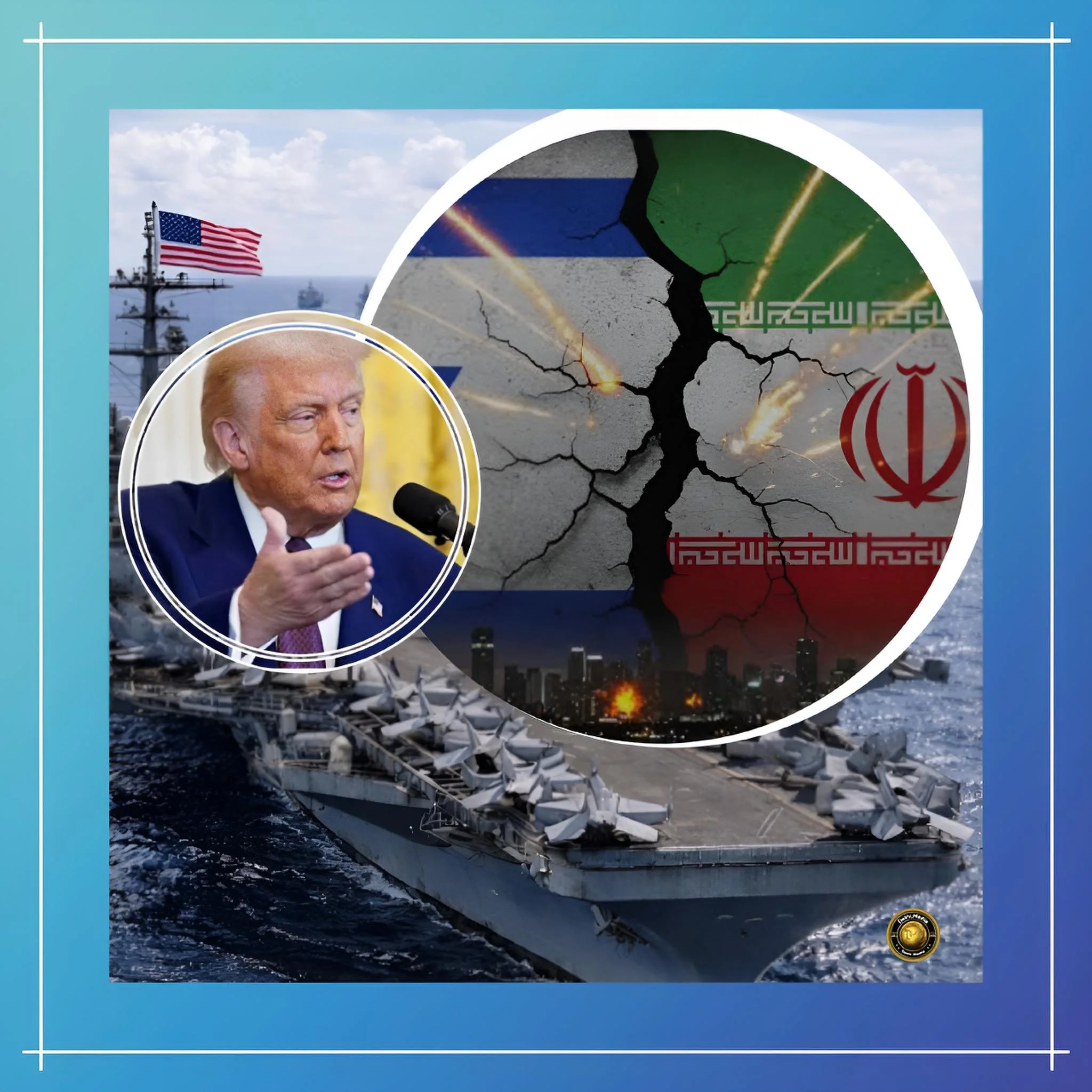
Operation Absolute Resolve, executed on January 3, 2026, provides a vivid institutional contrast.
The operation involved 150 aircraft, Delta Force commandos, CIA intelligence operatives, and support elements executing a complex raid to capture Maduro at his fortified compound in Caracas. Trump gave the order at 23:46 VET on January 2; operations commenced at approximately 02:00 VET on January 3; at 05:21 VET, Trump announced Maduro's capture.
The operation succeeded not through the brilliance of a single leader but through institutional mechanisms that permit professional judgment, clear chain of command, and seamless coordination across military branches and intelligence agencies. General Dan Caine, Chairman of the Joint Chiefs of Staff, coordinated the operation and had spent months planning and rehearsing every element.
The 160th Special Operations Aviation Regiment provided specialized helicopter transport. The Delta Force, trained for precisely such missions, executed the raid. The CIA had provided intelligence through a source close to Maduro and months of surveillance.
Most critically, this institutional apparatus functioned without paranoia. No participant in Operation Absolute Resolve feared that revealing technical information to superiors might expose them to investigation or punishment. No junior officer hesitated to voice concerns about operational risks.
The command structure permitted and expected subordinates to exercise professional judgment. When one helicopter was damaged by Venezuelan ground fire, it continued on its mission—not because the pilot feared reprisal for turning back, but because the mission and the institutional culture prioritized the objective.
The contrast with Xi's PLA is stark. A Chinese general participating in a major operation would be acutely aware that any operational failure or even perceived shortcoming in demonstrating enthusiasm might invite investigation.
The burden of surviving within a paranoid chain of command exceeds the burden of executing the military operation itself. This psychological weight translates into measurable institutional dysfunction: delayed decision-making, reluctance to take initiative, and conservative risk assessments that favor political survival over strategic effectiveness.
The Question of Mutiny and Internal Collapse
Scholars including those at the Jamestown Foundation and the Asia Society Policy Institute have noted that if Xi fails to restrain his purges, he risks precipitating military mutiny or covert resistance. However, the historical record suggests otherwise.
Stalin's Great Purge did not result in mutiny; rather, it resulted in an army so thoroughly permeated by fear that when Germany invaded in 1941, the Red Army suffered catastrophic losses in the initial phases, not through organized resistance but through paralysis and incompetence.
Similarly, Mao Zedong's succession of purges did not produce unified resistance but rather cascading waves of denunciation and factional conflict. The Cultural Revolution, launched in 1966, devastated the Party and military apparatus through a decade of chaos, yet Mao's authority was never directly challenged by organized military opposition. Instead, the system imploded through institutional disintegration.
Xi's purges may thus result not in mutiny but in gradual military decay—a slow-moving institutional collapse wherein the apparatus continues to function formally but with diminishing coherence, reliability, and effectiveness.
This trajectory is more insidious than dramatic resistance because it is difficult to counteract and because the decay becomes apparent only when the military is called upon to execute major operations under stress.
Future Steps and Strategic Trajectories
Succession Planning and the Installation of Loyalist Cadres
Xi's next move will likely involve the promotion of carefully vetted successors to replace Zhang Youxia and the other purged officials. These successors will likely be younger, without independent power bases, and selected primarily for demonstrated loyalty rather than combat experience or strategic sophistication.
Such appointments serve Xi's immediate political interests but compromise the PLA's long-term institutional health.
The removal of Wang Zhongcai, the Eastern Theater Command's naval commander who had modernized the PLA Navy's operational doctrines, illustrates this dynamic. Wang was replaced by officers closer to Xi's political circle but potentially less experienced in naval strategy.
Over time, the PLA's officer corps will be populated by political appointees rather than professionals selected through rigorous meritocratic advancement.
Taiwan's Strategic Calculus and the Window of Opportunity
Taiwan faces a paradoxical situation. In the near term—perhaps the next 12–24 months—the PLA is weaker operationally and strategically. Demoralized leadership, disrupted command structures, and resource reallocation toward internal discipline rather than operational readiness suggest that Xi is not contemplating major military escalation against Taiwan imminently.
The 2027 invasion capability target, which appeared ambitious even before the purges, now appears strategically infeasible given the degradation of the joint training apparatus and the leadership vacuum in the Rocket Force and Eastern Theater Command.
Taiwan should utilize this window to accelerate military modernization, deepen defense technology partnerships with democratic allies, and solidify civil defense preparations.
However, the long-term trajectory is concerning. As Xi rebuilds the PLA command structure with loyalist cadres, those officers will face intense pressure to demonstrate effectiveness and resolve.
An officer appointed to lead the Rocket Force or the Eastern Theater Command, aware that his predecessor was purged for insufficient enthusiasm for Xi's Taiwan timeline, will be incentivized to pursue aggressive operations to signal loyalty.
In this context, the risk of military escalation driven by internal political pressures rather than strategic rational calculation increases.
Implications for Global Strategic Competition
China's institutional dysfunction creates both risks and opportunities for the broader international order. In the near term, a destabilized Chinese military may act cautiously to consolidate its reformed command structures. However, as the purge cycles continue and as Xi consolidates power further, the risk of miscalculation or escalation driven by internal political dynamics increases.
A PLA officer seeking to demonstrate loyalty to Xi might pursue military operations that appear strategically unjustifiable from a rational calculation perspective but make sense within the logic of internal political survival.
The United States and its allies should prepare for a period of heightened unpredictability rather than strategic clarity. The institutional transparency and clarity of democratic military command structures, exemplified by Operation Absolute Resolve, contrasts sharply with the opacity and political turbulence characterizing Xi's PLA.
This asymmetry in institutional predictability favors democracies in strategic competition but raises the risks of miscalculation in crisis scenarios where clear communication and mutual understanding of intentions become critical.
Conclusion
Xi Jinping's ongoing purge of the People's Liberation Army represents the application of what scholars term "Stalin Logic" to the military apparatus of a major global power.
The removal of General Zhang Youxia—a decorated combat veteran, the son of a PLA founder, and a figure whom Xi had personally elevated to the CMC—exposes the ultimate contradiction of authoritarian rule: the systematic elimination of capable officers in pursuit of absolute loyalty paradoxically weakens the very instruments of state power that the leader seeks to perfect.
The contrast with Operation Absolute Resolve illuminates the institutional health gap between democracies and authoritarian systems.
The United States military successfully executed a complex, high-risk operation precisely because institutional mechanisms permitted professional judgment, clear communication, and freedom from paranoia. The PLA, by contrast, faces progressive institutional decay driven by political purges that subordinate competence to conformity.
For Taiwan, the present moment represents a circumscribed window of strategic reprieve as the PLA redirects resources and attention toward internal discipline. However, this reprieve should not breed complacency.
The long-term trajectory—Xi's rebuilding of the command structure with ideologically vetted but operationally less experienced successors, and the increasing pressure on those successors to demonstrate effectiveness and loyalty—suggests a medium-term risk of escalation driven by internal political dynamics rather than strategic calculation.
The fundamental instability at the heart of Xi's system—the paradox of concentrated power generating concentrated paranoia—will likely persist and deepen. Unless Xi reverses course, the PLA will experience progressive institutional degradation, with strategic consequences for Taiwan, the Indo-Pacific region, and the broader international order.
The question is not whether the purges will cease but rather how deeply institutional decay must proceed before the consequences become undeniable.