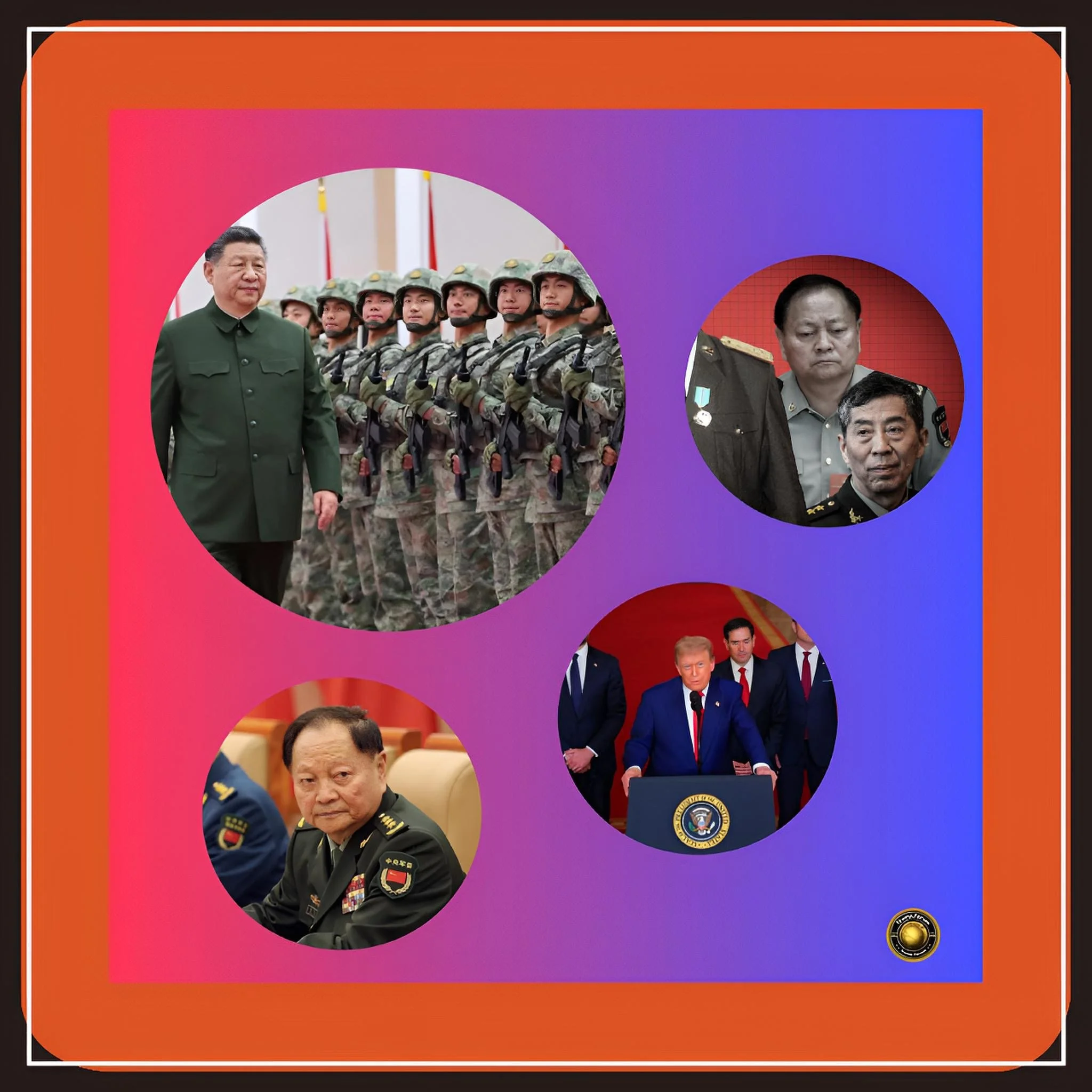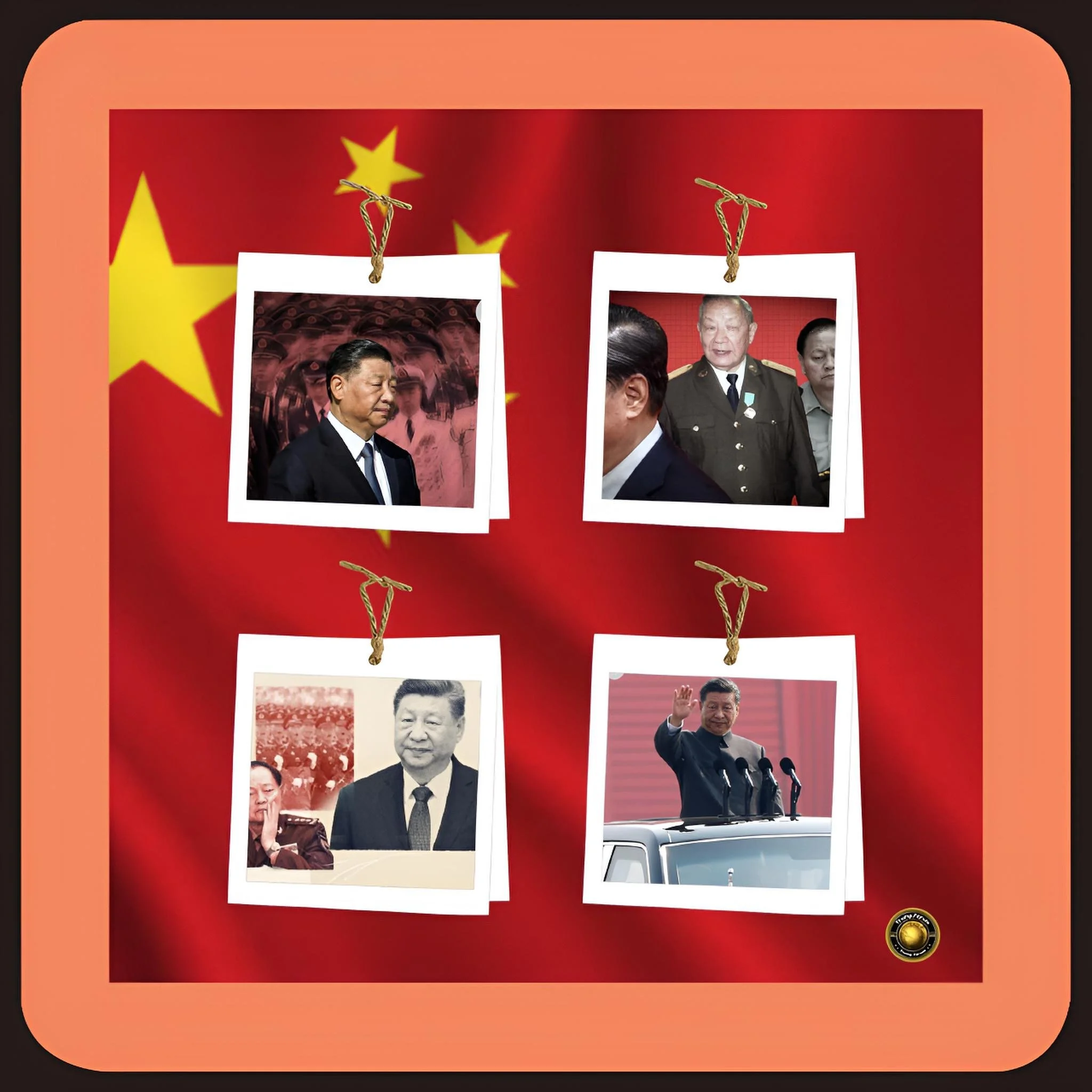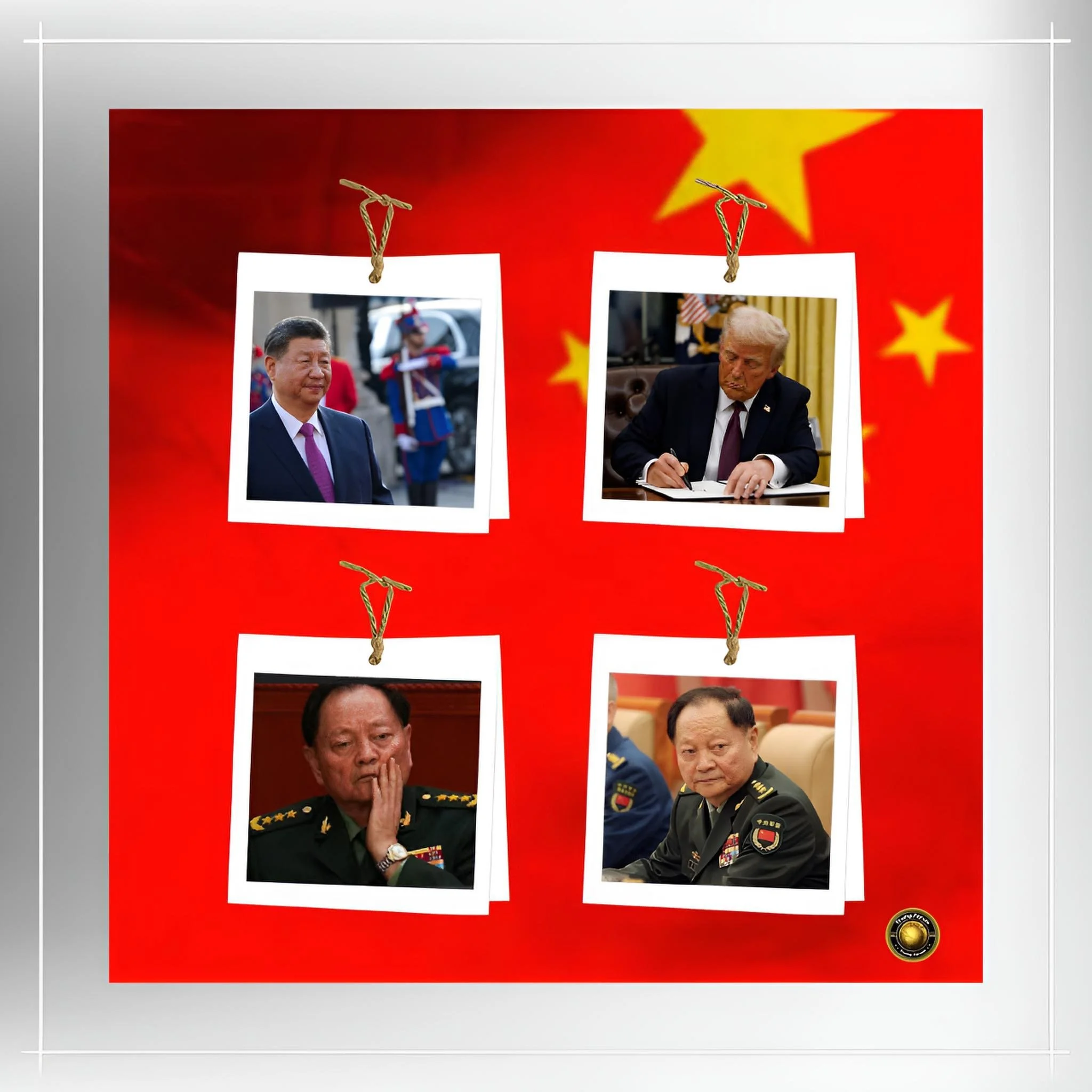
Xi Jinping's Military Purge: Consolidating Absolute Power While Hollowing Out Strategic Judgment
Executive Summary
The January 2026 announcement that Zhang Youxia, China's highest-ranking active military officer and longtime confidant of President Xi Jinping, was under investigation for "serious violations of discipline" represents the culmination of an unprecedented military restructuring that extends far beyond conventional corruption remediation.
Since mid-2023, over 60 senior military leaders and defense officials have been removed, arrested, or placed under investigation, reducing the 7-member Central Military Commission to a body comprising only Xi Jinping himself and Zhang Shengmin, a political commissar with limited operational experience.
This purge, the largest since the alleged coup attempt of the 1960s, reveals a strategic paradox that should trouble both regional allies and distant observers: Xi has achieved almost total consolidated control over the military apparatus while simultaneously eliminating the very institutional capacities required to successfully execute complex military operations—most notably, a potential invasion of Taiwan.
The short-term effect is to reduce the likelihood of military adventurism; the medium-to-long-term consequence may be to increase the risk of catastrophic miscalculation from an emboldened leader whose circle of counsel has been systematically reduced to voices affirming his predetermined objectives.
Introduction and Historical Context
Xi Jinping's relationship with the People's Liberation Army has been defined since his assumption of power in 2012 by a central obsession: ensuring that military leadership remained subservient to his political authority while simultaneously undertaking the technological and operational modernization necessary to create a force capable of challenging American military dominance in the Western Pacific.
This dual objective—securing absolute political control while achieving military modernization—has produced a trajectory of purges and reforms that distinguishes Xi's tenure from previous eras of party leadership.
The reform program commenced with the assertion of the "chairman responsibility system," whereby all military decisions, whether operational, personnel, or disciplinary, required Xi's explicit personal approval.
This represented a radical centralization of authority compared to the previous system, wherein the CMC chairman nominally held supreme authority but the vice chairmen and general staff officers exercised substantial autonomous decision-making power on operational and strategic matters.
The corruption investigations that Xi initiated as the public rationale for military purges were, in fact, grounded in legitimate institutional concerns.
Following the Russian Federation's full-scale invasion of Ukraine in February 2022, intelligence assessments conducted across the Western alliance revealed that Russian military effectiveness had been severely constrained by endemic corruption—procurement fraud, theft of military resources, falsification of readiness reports—that had persisted for decades without institutional mechanisms to correct it.
Xi, observing these documented failures, resolved that the People's Liberation Army would not suffer similar institutional degradation.
The investigation that commenced in mid-2023 into the PLA Rocket Force—which oversees China's nuclear weapons and long-range conventional strike systems—exposed genuine corruption networks involving widespread embezzlement, falsification of procurement documentation, and diversion of military resources.
This discovery, which appeared to shock Xi, who had believed his mid-2010s purges had resolved similar problems, triggered a widening investigation that would eventually extend to the highest echelons of the military.
The trajectory of these investigations, however, reveals a pattern that transcends ordinary anti-corruption enforcement. Of the 6 generals who were appointed by Xi himself to the Central Military Commission in 2022, only 1 remains in position as of late January 2026.
This progression suggests that the investigations have evolved from corruption remediation to something closer to systematic purging of potential rivals and institutional voices capable of challenging Xi's preferred strategic direction.
History and Evolution of the Purges
The removal of specific military figures illuminates the strategic logic underlying these investigations.
Li Shangfu, who served as Defense Minister and CMC member, was arrested in mid-2023 on corruption charges related to defense procurement. While corruption allegations against Li were substantively grounded, his dismissal also coincided with Xi's effort to eliminate potential centers of authority outside his direct control.
Subsequently, Admiral Miao Hua, who served as the PLA's chief political commissar (the position responsible for ensuring party discipline throughout the military), was removed from office in November 2024 after months of investigation.
Miao, who had been personally elevated to the CMC by Xi when both served together in Fujian Province, would have been expected to retain Xi's confidence. Yet Miao's removal signaled that proximity to Xi and prior personal relationships offered no immunity from investigation if Xi perceived potential institutional challenges to his authority.
General He Weidong, the third CMC vice chairman and a member of the Politburo, disappeared from public view in March 2025 and was formally removed in October 2025 after an investigation into "serious violations of discipline." He, like Zhang Youxia, had been considered close to Xi and was instrumental in the military restructuring efforts that Xi had promoted.
By January 2026, the pattern had become explicit: Xi was eliminating every CMC member of consequence except those who had served primarily as party disciplinarians rather than operational commanders.
The removal of Zhang Youxia, announced on January 24, 2026, represented the most significant of these dismissals.
Zhang, 75 years old, was a combat veteran of the 1979 Sino-Vietnamese War and had accumulated decades of military experience that made him nearly irreplaceable as an operational strategist.
Both Zhang and Xi were sons of revolutionary generals who had fought alongside one another during the civil war, creating a personal bond that had appeared unique in its durability. Xi had retained Zhang as CMC vice chairman in 2022 despite his exceeding normal retirement age, apparently viewing him as indispensable to military modernization efforts.
The Wall Street Journal reported that Zhang was being investigated for allegedly leaking information regarding China's nuclear weapons to the United States—an allegation of such seriousness that it would ordinarily justify immediate removal and criminal prosecution.
However, multiple analysts have suggested that the official corruption narrative obscures the deeper strategic logic.
The PLA Daily editorial announcing the investigation emphasized that Zhang had "seriously trampled on and damaged the chairman responsibility system," a formulation suggesting that Zhang's actual offense was wielding military authority independent of Xi's direct control—a circumstance that Xi apparently found intolerable.
Further evidence for strategic disagreement emerges from assessments by China specialists that Zhang, unlike Xi, had emphasized the importance of genuine combat readiness and professional military standards over the intimidatory military demonstrations that Xi had increasingly favored.
Zhang's emphasis on realistic assessment of military capability—including honest appraisal of the PLA's readiness to execute complex operations—may have placed him in conflict with Xi's preferences for a more assertive display of military power designed to coerce Taiwan's political surrender.
Current Status of the Central Military Commission
As of January 31, 2026, the Central Military Commission has been reduced to a body of extraordinary weakness in institutional terms. Xi Jinping serves as chairman.
Zhang Shengmin, a political commissar whose primary responsibility has been to oversee corruption investigations and ensure party loyalty throughout the military, serves as the sole active vice chairman.
All other CMC positions remain unfilled or are occupied by officials in caretaker status. This situation represents the nadir of institutional capacity at the apex of China's military hierarchy.
The CMC is theoretically responsible for all operational planning, strategic decision-making, and personnel management across the entire People's Liberation Army apparatus—a force exceeding 2 million active-duty personnel and responsible for nuclear weapons command and control.
The reduction of the CMC to Xi plus a single political commissar means that virtually all detailed operational matters have devolved to lower-ranking deputies, creating a command structure characterized by diffused authority and unclear lines of responsibility.
Key Developments
The Strategic Divergence Thesis
The most plausible explanation for the removal of Zhang Youxia and Liu Zhenli, according to several independent analysts, involves fundamental disagreement regarding Taiwan strategy.
Prior to his removal, Zhang Youxia had overseen military modernization efforts and was reportedly advocating for a more cautious approach to military operations against Taiwan. Observers have noted that he emphasized genuine combat readiness, realistic appraisal of force capabilities, and the importance of thorough training cycles to ensure that complex operations could be executed with reasonable expectation of success.
By contrast, Xi appeared to be favoring an increasingly assertive posture toward Taiwan—one centered on military intimidation designed to psychologically coerce Taiwan's political leadership into accepting unification on Beijing's terms, rather than necessarily preparing for an actual military operation.
The timing of Zhang's removal is instructive. By January 2026, the critical window for the 2027 military readiness targets that Xi had established had narrowed considerably.
The modernization objective set by Xi envisioned the PLA being prepared to execute a Taiwan operation by the end of 2027—a deadline that would represent the culmination of Xi's strategic vision and, potentially, a legacy-defining achievement.
The last opportunity to conduct the comprehensive training cycle necessary to synchronize different military branches and regional commands for such an operation was in 2026.
By removing Zhang and simultaneously appointing new commanders to the Eastern Theater Command (which oversees Taiwan operations) and Central Theater Command in December 2025, Xi appears to have calculated that he required complete control over the final stages of preparation for this potential operation.
Any military commander exercising genuine professional judgment might counsel against pursuing a Taiwan operation if he assessed the PLA as unready—a counsel that Xi appeared increasingly unwilling to tolerate.
The unusual speed with which Zhang and Liu were removed from public visibility and formally announced as under investigation—within 4 days of their last public appearance—suggests that Xi anticipated potential resistance within the military to his decisions and moved preemptively to prevent any collective pushback.
This differs from previous purges, where months typically elapsed between an official's disappearance and public announcement of charges.
Cause and Effect
The Paradox of Control and Capability
The fundamental paradox created by Xi's military purges emerges from the tension between 2 competing objectives. First, Xi has achieved his apparent goal of absolute consolidated control over military decision-making.
Through the CMC restructuring, Xi has eliminated virtually all independent centers of military authority. No senior general now commands enough institutional power to mount a challenge to Xi's authority or to mobilize military resources against his wishes.
This represents the most complete centralization of military control in the post-1978 reform era and rivals the degree of personal control exercised by Mao Zedong in his final years.
However, this consolidation of political control has been achieved at the cost of institutional degradation of military command capacity. The reduction of the CMC to Xi plus a political commissar means that the apex of military decision-making lacks the diversified expertise and institutional memory necessary to manage complex wartime operations.
A functioning 7-member CMC theoretically brings together expertise in land, sea, air, nuclear, logistics, personnel management, and party discipline. A CMC consisting of Xi and a political commissar lacks redundancy, institutional memory, and the capacity to identify blind spots in strategic planning.
More significantly, the removal of experienced generals with independent judgment has created an environment wherein military officers face overwhelming incentive to tell Xi what he wishes to hear rather than what he needs to know.
The removal of Zhang Youxia—Xi's longtime confidant and someone who had served for decades—sends a powerful message to the remaining officer corps: even proximity to Xi and decades of service offer no protection if you voice disagreement with the chairman.
This creates a silence effect throughout the military, wherein younger officers ascending to vacant positions understand that their safety depends on demonstrating unwavering loyalty and affirming Xi's strategic preferences rather than exercising professional military judgment.
Analysts have explicitly warned of the risk this poses. As one specialist noted, if Xi becomes convinced that the PLA is ready to invade Taiwan at a moment when it is objectively not ready for such an operation, there will be no senior figure in the military with sufficient authority and confidence to counsel restraint.
The absence of what the Chinese themselves term "telling truth to power" creates conditions for catastrophic miscalculation.
Furthermore, the purges have disrupted the training and operational continuity necessary for military readiness. While the PLA has demonstrated ability to execute large-scale exercises around Taiwan even amid the leadership chaos of early 2026, larger questions persist regarding whether the force can successfully execute a complex amphibious invasion operation requiring coordination across the army, navy, air force, rocket force, and extensive logistical support.
Such an operation requires meticulous planning, exhaustive rehearsal, and the capacity of commanders at various levels to adapt to unexpected circumstances.
An officer corps characterized by recent mass turnover, fear of political repercussions for independent judgment, and uncertainty regarding command relationships may struggle to achieve the level of coordination and operational flexibility such an operation would demand.
Latest Facts and Concerns
The Taiwan Dimension
As of late January 2026, Taiwan faces an environment of heightened military pressure alongside uncertain assessment of Beijing's near-term intentions.
The PLA has escalated military activity around the island, with incursions into Taiwan's air defense identification zone increasing by over 60% compared to 2024 levels.
The PLA has conducted exercises simulating a blockade of Taiwan, precision strikes against targets on the island, and even decapitation operations against Taiwan's political leadership. Taiwan's defense ministry characterizes these developments as reflecting Beijing's ongoing preparation for military action.
However, analysts have noted that the leadership chaos in Beijing complicates prediction of Chinese intentions. In the near term (2026), the turbulence created by the purges likely reduces the probability of an invasion attempt.
The reorganization of the command structure, appointment of new theater commanders, and uncertainty regarding their capabilities and intentions all suggest that Xi would face significant practical obstacles to launching a major operation in 2026.
The 2027 modernization deadline remains intact as a potential decision point, but the completion of the training cycle required to execute a Taiwan operation is uncertain given the current disruptions.
Taiwan's Defense Minister Wellington Koo has publicly characterized recent military leadership changes in Beijing as "abnormal" but emphasized that the military threat level has not diminished.
Taiwan has established a joint command structure with the United States designed to defend against potential Chinese military action in the 2027 timeframe.
However, Taiwan's own military preparedness is constrained by domestic political obstacles: the opposition-controlled legislature has repeatedly blocked defense budget increases and weapons purchases, limiting Taiwan's ability to offset the advancing capabilities of Chinese forces.
The Trump administration's approach to Taiwan differs markedly from that of the Biden administration. Trump's 2025 National Security Strategy frames Taiwan's importance in transactional terms—semiconductors, maritime commerce, island chain geopolitics—rather than emphasizing democratic values or mutual defense commitments.
This framing may encourage Xi to believe that the cost of American military intervention would be higher and the probability of such intervention lower than previous administrations had suggested.
Analysts have noted that Xi might never have a moment when Washington appears so reluctant to defend Taiwan as during the Trump presidency, potentially accelerating Beijing's timeline for action.
Future Steps and Scenario Analysis
Three plausible scenarios characterize potential future trajectories for China's Taiwan policy.
In the first scenario, Xi, recognizing the institutional challenges created by the military purges, delays any major military action against Taiwan until 2028 or beyond, allowing time for new military commanders to develop operational familiarity and for the corrupted and demoralized officer corps to reconstitute itself around the new leadership structure. In this scenario, Beijing relies on continued military intimidation, economic coercion, and political subversion to gradually erode Taiwan's resistance to unification.
This approach would minimize the risk of catastrophic miscalculation while allowing Beijing to pursue its strategic objective through gray-zone coercion. This scenario appears most likely given the current institutional dysfunction.
In the second scenario, Xi, interpreting the apparent reluctance of the Trump administration to defend Taiwan as an opportunity, accelerates his timeline and orders the military to prepare for an invasion attempt in 2027 despite the acknowledged readiness concerns.
New military leaders, lacking the institutional authority or confidence to counsel against such a decision, affirm Xi's strategic judgment.
The operation is launched, possibly with initial tactical success but facing unexpected operational difficulties and potentially resulting in higher costs to the PLA than anticipated.
This scenario carries the highest risk of regional destabilization and potential direct conflict between Chinese and American forces.
In the third scenario, which multiple analysts have characterized as likely, the purges accomplish their political objectives (consolidating Xi's control) while the PLA gradually establishes new command relationships, recruits experienced younger officers into vacant positions, and begins the process of rebuilding institutional capacity.
Over a period of 5 to 10 years, the PLA becomes a more disciplined, more loyal, and more capable force—one that Xi can trust to execute his strategic preferences. At that point, Taiwan faces a more dangerous adversary: not merely a military with advanced technologies and numerical superiority, but one directed by commanders selected explicitly for their willingness to implement Xi's strategic vision without independent judgment or institutional resistance.
Conclusion
Global Implications and Strategic Uncertainty
Xi Jinping's military purges represent a turning point in Chinese governance and regional security dynamics. Domestically, the purges demonstrate Xi's determination to maintain absolute personal control over the state apparatus, using anti-corruption investigations as a mechanism for removing potential rivals and institutional sources of constraint on his authority.
This represents a departure from the collective leadership models that had characterized post-Mao China and a return toward more personalized autocratic governance.
Regionally, the purges create short-term constraints on Chinese military adventurism while potentially increasing long-term risks. Taiwan can likely breathe more easily in 2026, but only because the leadership chaos in Beijing creates near-term obstacles to complex military operations.
However, the elimination of voices within the Chinese military that might counsel caution or voice realistic appraisals of military capability creates conditions for Xi to overestimate the PLA's readiness or to convince himself of the success of an operation that is objectively likely to fail.
Globally, the purges should concern democratic nations that depend on stability in the Western Pacific. A China led by Xi with a military stripped of independent judgment and experience is a China more likely to misread signals from Taiwan or the United States, more likely to interpret diplomatic ambiguity as opportunity, and more likely to make decisions based on political legacy considerations rather than realistic assessment of strategic capability.
The parallels to Putin's purges of Russian military leadership before the Ukraine invasion are imperfect but not entirely reassuring: Xi has arguably created an even more personalized decision-making structure than Putin had, with fewer institutional mechanisms to constrain decisions once made.
For Western leaders visiting Beijing in search of "dependability," as Britain's Prime Minister Keir Starmer was doing in January 2026, the military purges offer a sobering lesson.
An autocrat with concentrated power who has systematically eliminated institutional constraints on his decision-making is not the source of dependability. He is a source of unpredictability. Xi's ability to consolidate power through these purges demonstrates his dominance over the party and military apparatus.
It does not demonstrate that his decisions regarding Taiwan or regional security will prove wise or that the institutions he has hollowed out will be capable of implementing those decisions successfully.
Global security is not enhanced by the concentration of power in the hands of a single leader whose authority cannot be questioned from within the military itself. It is diminished.