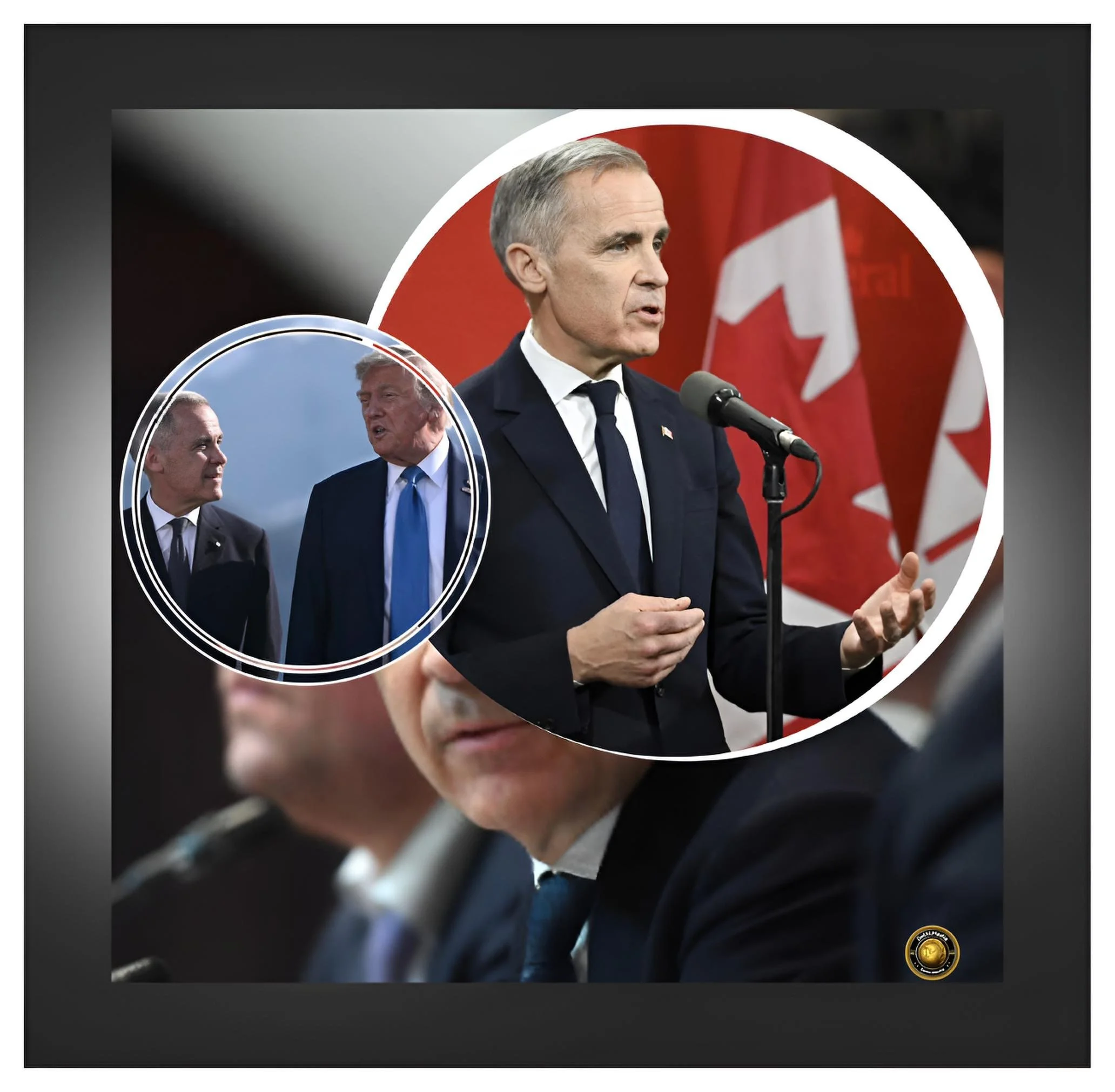
Mark Carney's Middle-Power Gambit: Can Canada Outrun Its Own Vulnerabilities
Executive Summary
Mark Carney has articulated one of the clearest middle-power doctrines of the post-Cold War era, arguing at Davos that the rules-based order has suffered a rupture and that countries like Canada must build new coalitions rather than wait for restoration of a fading system.
Within days, however, the conceptual elegance of his vision collided with a harsh stress test: open American encouragement of Alberta separatism and the threat of a 100% tariff on all Canadian exports should Ottawa finalize a trade agreement with China.
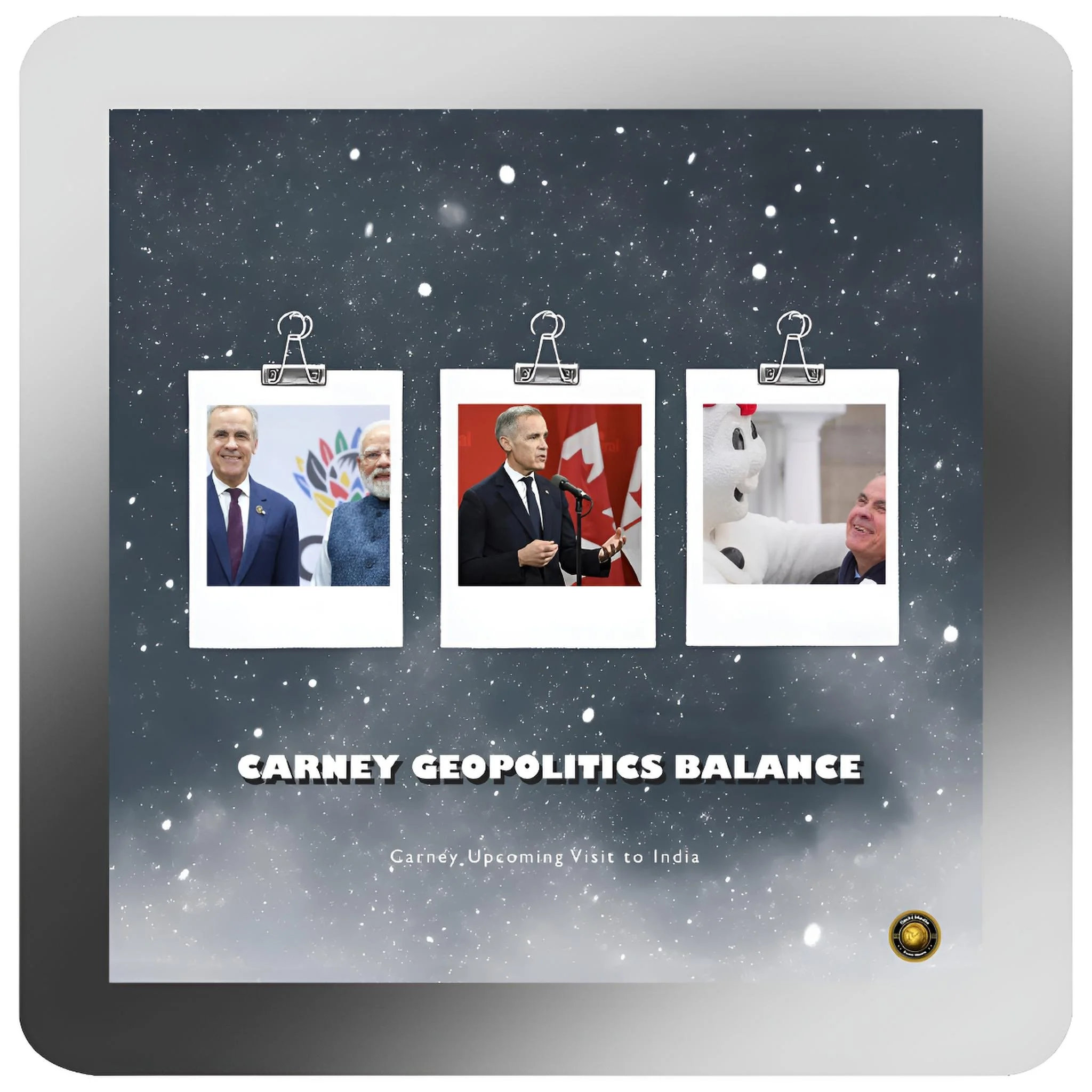
This episode exposes both the promise and fragility of Carney's strategy, highlighting how interlocking pressures from Washington, Beijing, and domestic centrifugal forces can compress Canada's room for manoeuvre to a narrow and dangerous corridor. His planned outreach to India, framed as diversification and hedging, risks becoming another flashpoint with the United States, where Donald Trump has already denounced what he calls problematic arrangements with New Delhi.
The core question is whether Carney's middle-power playbook can be operationalized fast enough—through coalition-building, economic re-shoring, and institutional innovation—to prevent Canada from being turned into the very "drop-off port" and proxy battleground Carney warns against.
Introduction
A Theory Meets A Trap
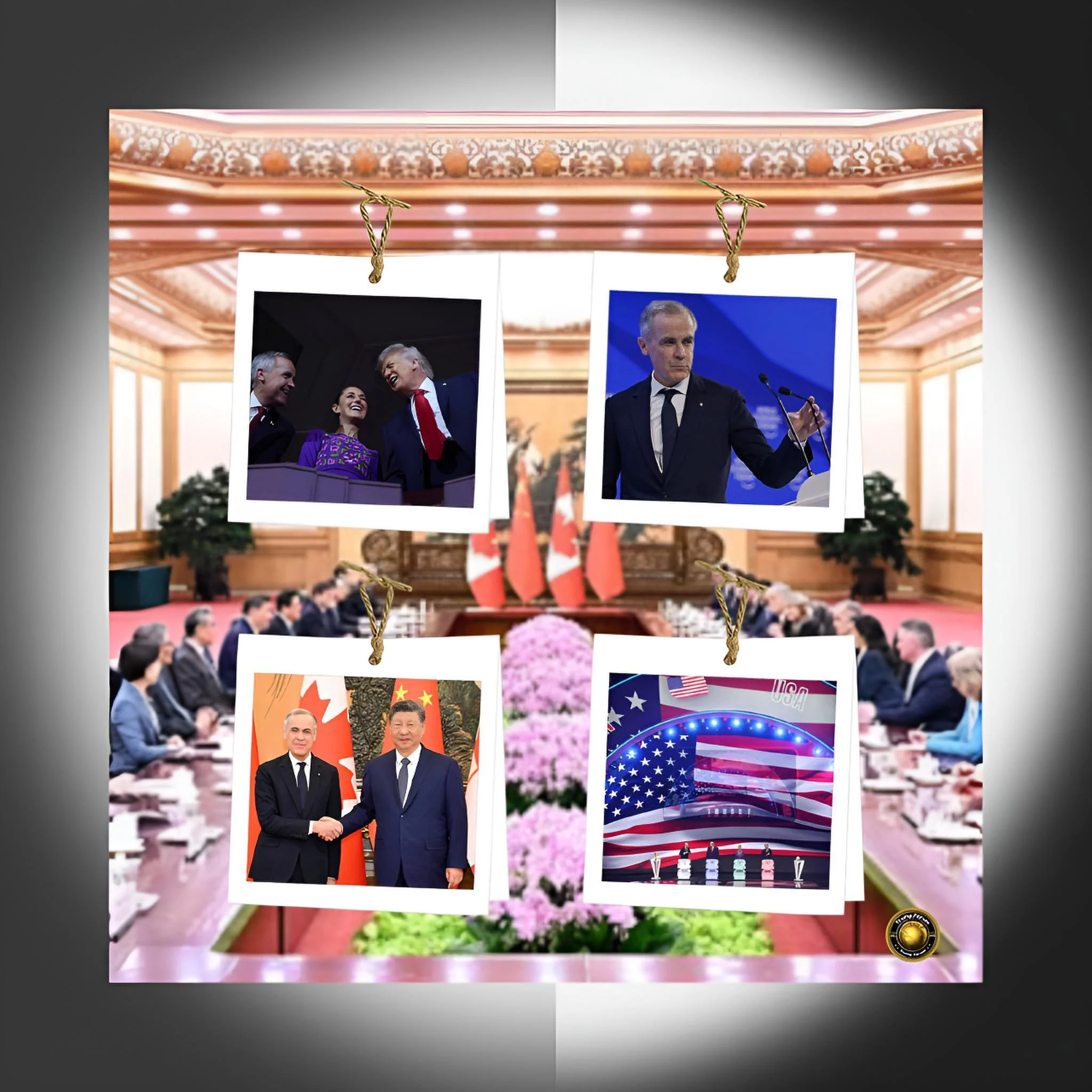
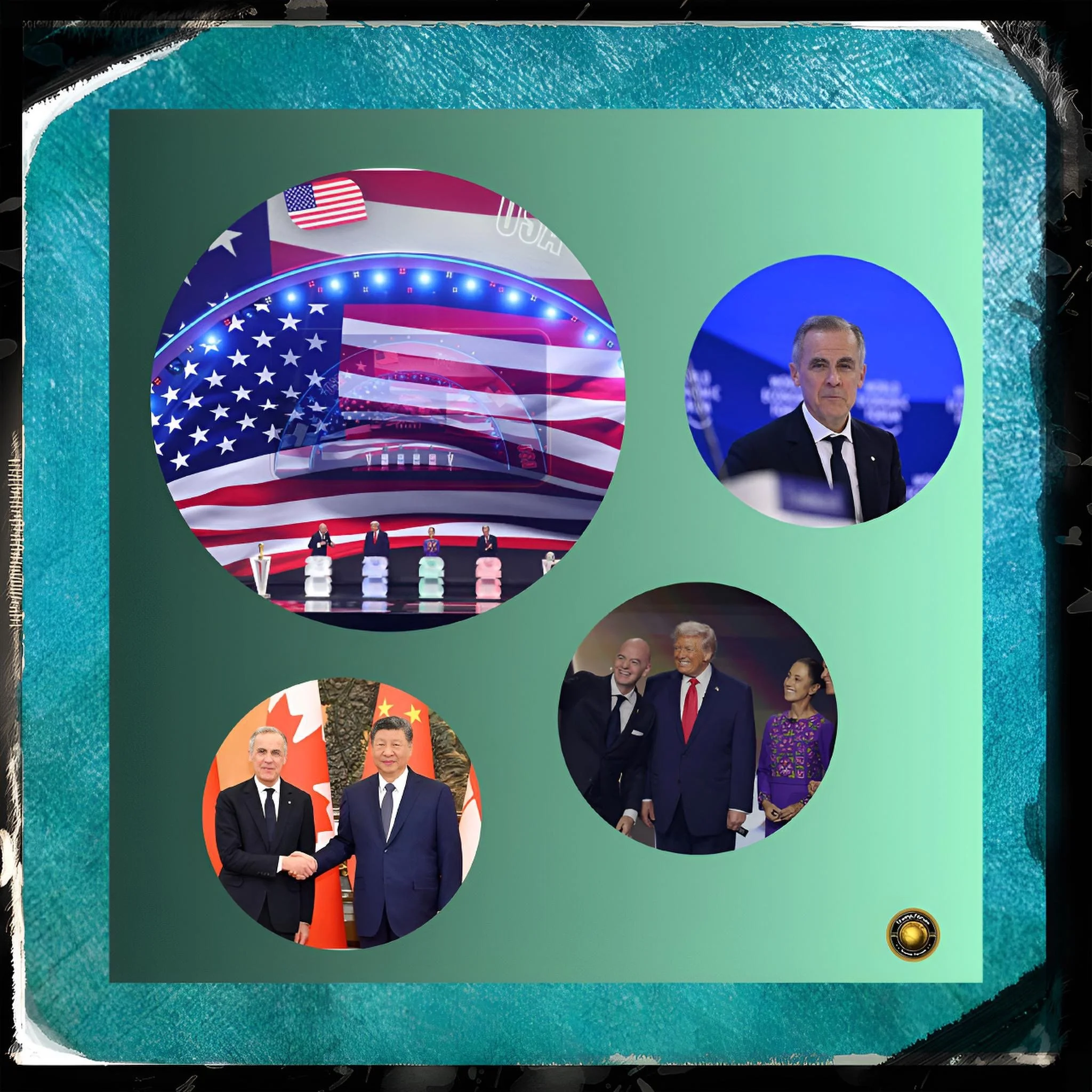
At Davos 2026, Carney dispensed with diplomatic euphemism and declared that the post-Cold War rules-based order has not gently evolved but rather undergone a rupture.
He urged middle powers to abandon nostalgic invocations of institutions that no longer function as advertised and to accept that economic integration is now routinely weaponized as coercion by great powers.
His central motif—that if middle powers are "not at the table, they are on the menu"—captured a sense of urgency that resonated well beyond Canada's borders.
Yet the sequence of events that followed—Scott Bessent's remarks inviting Alberta to "come on down" to the United States and Trump's tariff ultimatum over a potential China deal—illustrated that Canada is already on several menus at once.
Carney now confronts not a theoretical challenge but a lived experiment in whether middle-power agency can withstand simultaneous pressure from allies, rivals, and internal fissures.
History And Current Status
From Rules Comfort To Coercive Exposure
For three decades after the Cold War, Canada prospered under a rules-based order underpinned by U.S. security guarantees, predictable trade regimes, and multilateral institutions in which Ottawa punched above its material weight.
NAFTA and later the USMCA entrenched deep economic interdependence with the United States, while the WTO and a network of free trade agreements gave Canada diversified, rules-anchored access to global markets.
This architecture allowed successive Canadian governments to pursue values-laden foreign policies on climate, human rights, and peacekeeping, buffered by an environment in which the costs of displeasing Washington were relatively contained.
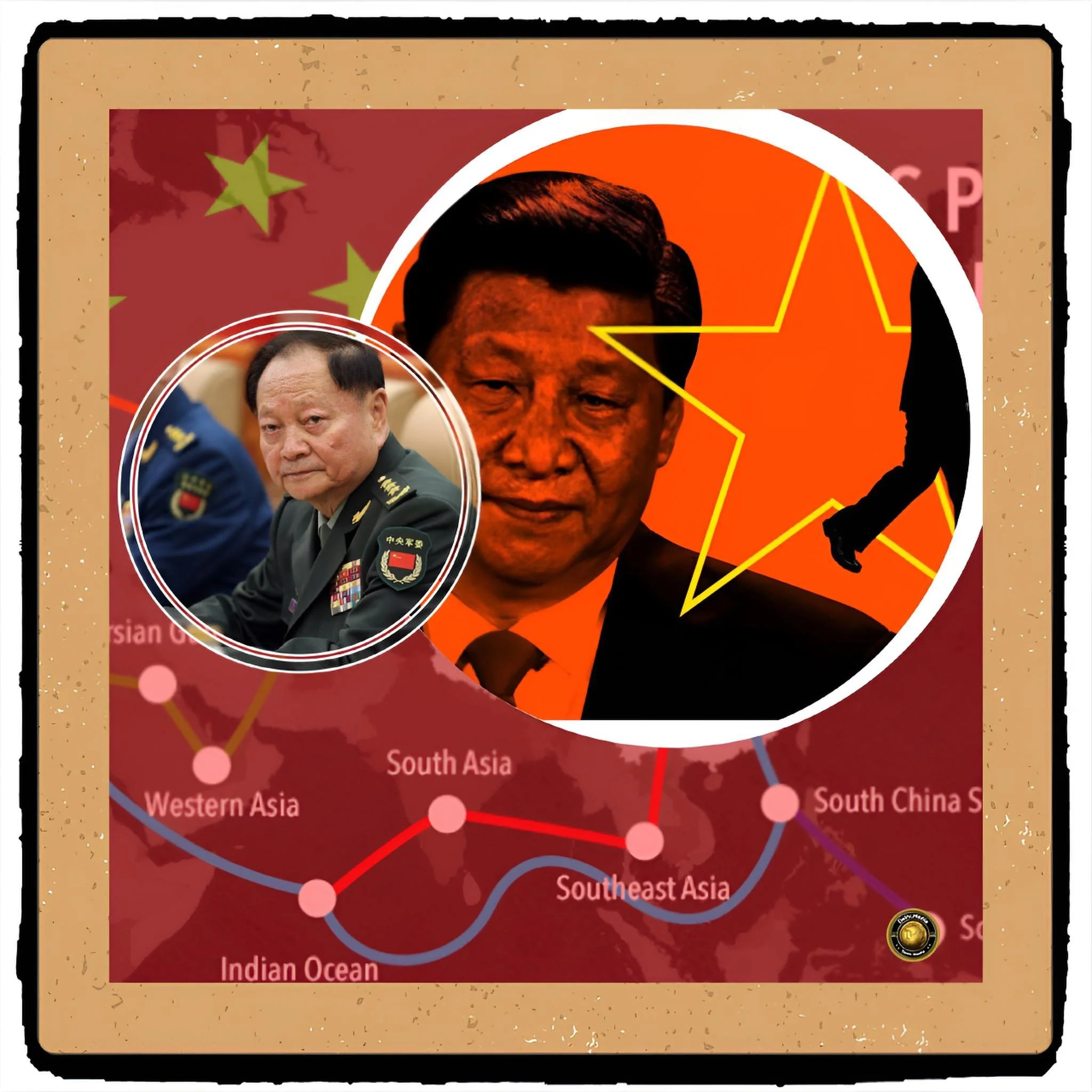
That world has eroded as tariffs, sanctions, and investment screening have become primary tools of statecraft in the U.S.-China rivalry, with middle powers increasingly targeted by secondary pressure campaigns.
By early 2026, Canada finds itself tightly coupled to the U.S. market—with nearly 90% of exports dependent on USMCA compliance—cautiously re-engaging China after years of diplomatic freeze, and tentatively exploring India as an alternative pillar while each move triggers new vulnerabilities.
Key Developments
Davos Doctrine Meets North American Disruption
Carney's Davos address crystallized his middle-power doctrine around three imperatives: naming the end of the rules-based order, acting consistently toward allies and rivals, and building new institutions that function as described.
He framed "variable geometry" coalitions—different configurations of states for different issues—as Canada's path to retain agency in a world where great powers can afford unilateralism but middle powers cannot.
The week around Davos, however, saw three destabilizing moves.
First, Scott Bessent, the U.S. Treasury Secretary, publicly praised Alberta's resource wealth and suggested the province should "come on down" to the United States, implicitly legitimizing secessionist sentiment.
Second, Trump used Truth Social to threaten an immediate 100% tariff on all Canadian goods if Ottawa concluded a trade deal with China, insisting that China would "consume Canada entirely" and that he would not allow Canada to become a "drop off port" for Chinese products.
Third, U.S. political commentary escalated, with right-wing figures and administration officials casting Alberta as a strategic prize for U.S. energy security and Arctic access.
Against this backdrop, Carney's reported decision to freeze any formal trade agreement with China while planning a high-profile outreach to India reflects both adaptation to U.S. red lines and an attempt to preserve his broader diversification narrative.
Latest Facts And Concerns
Tariffs, Secession, And Indian Diversification
Trump's threat of a 100% tariff on Canadian exports, if enacted, would impose harsher restrictions on Canada than on some Chinese goods and could disrupt supply chains structured around USMCA preferences
Trade lawyers have noted that Article 32.10 of the USMCA contains clauses allowing termination if a member signs a free trade deal with a "non-market economy," suggesting that a Canada-China agreement could be used as a pretext to challenge USMCA itself.
The Alberta separatist movement, once marginal, now operates in a context where senior U.S. officials describe Alberta as a "natural partner" and openly discuss its resources and Arctic access as assets for U.S. strategic competition with China and Russia.
This external encouragement of secession complicates Carney's domestic management of Western alienation, pipeline disputes, and equalization politics, all of which are already politically combustible.
At the same time, Carney's interest in deepening ties with India—where Trump has criticized major economic packages as problematic—invites the risk that any Canada-India arrangement will be framed in Washington as another circumvention channel, despite India's positioning as a counterweight to China.
Cause-And-Effect Analysis
How Great-Power Coercion Shrinks Middle-Power Autonomy
The emerging pattern demonstrates a clear causal chain: as Carney articulates a doctrine of middle-power autonomy, great powers respond by raising the costs of that autonomy through targeted coercion.
Trump's tariff threat is not merely a trade measure; it is a pre-emptive veto on Canada's attempt to diversify away from U.S. over-dependence via closer economic ties with China.
By tying the threat to the specter of Canada becoming a conduit for Chinese goods, Washington links Canada's domestic trade choices directly to the larger U.S.-China rivalry, effectively securitizing Canadian trade policy
Simultaneously, rhetorical support for Alberta secession functions as leverage over Ottawa: it signals that deviation from U.S. preferences might be punished not only economically but also through the destabilization of Canada's territorial integrity.
The cumulative effect is to narrow Canada's feasible policy set: overt engagement with China risks tariffs; visible over-alignment with India may be politicized in U.S. domestic debates; and any attempt to assert energy or Arctic autonomy may be refracted through the lens of Alberta's status.
In this environment, Carney's call for consistent standards toward allies and rivals becomes strategically costly, because criticizing U.S. economic intimidation would itself invite further coercion.
Future Steps
Operationalizing The Middle-Powers Playbook
For Carney's strategy to survive, Canada must translate rhetoric into institutional and material buffers that reduce unilateral leverage by any single great power.
First, Ottawa is likely to double down on "variable geometry" coalitions with like-minded middle powers—such as the EU, Japan, South Korea, Australia, and potentially India—focusing on issue-specific compacts in critical minerals, clean energy, and digital standards that make economic coercion more expensive.
Second, Canada will need to accelerate domestic resilience: investment in value-added processing of its resources, diversification of export infrastructure away from a single southern border, and the build-out of east-west connectivity that limits any one province's vulnerability to external political courting.
Third, Carney will have to craft a narrative at home that links national unity, especially with Alberta, to global leverage—framing Alberta's resource wealth and Arctic access as Canadian bargaining chips that lose value if fractured.
Finally, Canada must play a subtle but firm game with Washington: emphasizing its role as a reliable security ally and energy partner while insisting that a suffocated, dependent Canada is a strategic liability for the United States in the long-term contest with China.
Conclusion
Understanding The New World Is Not Enough
Carney has diagnosed the new world with unusual clarity for a sitting head of government, and his Davos speech offers a coherent script for middle powers seeking to escape pure client status.
The events that immediately followed show, however, that intellectual lucidity does not automatically confer strategic insulation: great-power coercion, domestic fragmentation, and alliance asymmetries can overwhelm even the best-articulated doctrines.
Whether Carney survives politically and whether his strategy endures will turn on his capacity to convert middle-power theory into hard power, institutional innovation, and public narratives that make economic diversification and national unity mutually reinforcing rather than competing objectives.
In that sense, the next phase of his premiership will be judged less by what he proclaims at Davos than by what Canada can withstand in Washington, manage in Alberta, negotiate in Beijing, and construct with New Delhi and other partners.