Can Canada Survive Without the United States, and Likewise: A Geopolitical and Economic Assessment of the Trump-Carney Chaos
Executive Summary
Canada stands at a critical inflection point in its relationship with the United States.
The accession of Mark Carney to the Prime Minister's office in March 2025, coinciding with Donald Trump's return to the presidency, has precipitated a fundamental rupture in the continental trade architecture that has defined North American economic integration for 4 decades.
FAF analysis examines whether Canada possesses the structural capacity to achieve meaningful economic autonomy from the United States, whilst simultaneously assessing the reciprocal dependencies that constrain American leverage over its northern neighbor.
Introduction
The Trump-Carney dynamic represents far more than a clash of personalities or negotiating styles. It constitutes a pivotal moment in which long-standing structural dependencies are being interrogated with unprecedented intensity.
Since the Free Trade Agreement of 1988 and its successor, the North American Free Trade Agreement (1994), Canada has progressively deepened its integration with the United States economy.
This integration has been asymmetrical, with Canada's economic orientation toward American markets accelerating whilst American reliance upon Canadian inputs has remained modest by comparison. Yet this apparent imbalance obscures a more complex interdependence wherein certain American industries—particularly energy, automobiles, and advanced materials—have become critically dependent upon Canadian supply chains.
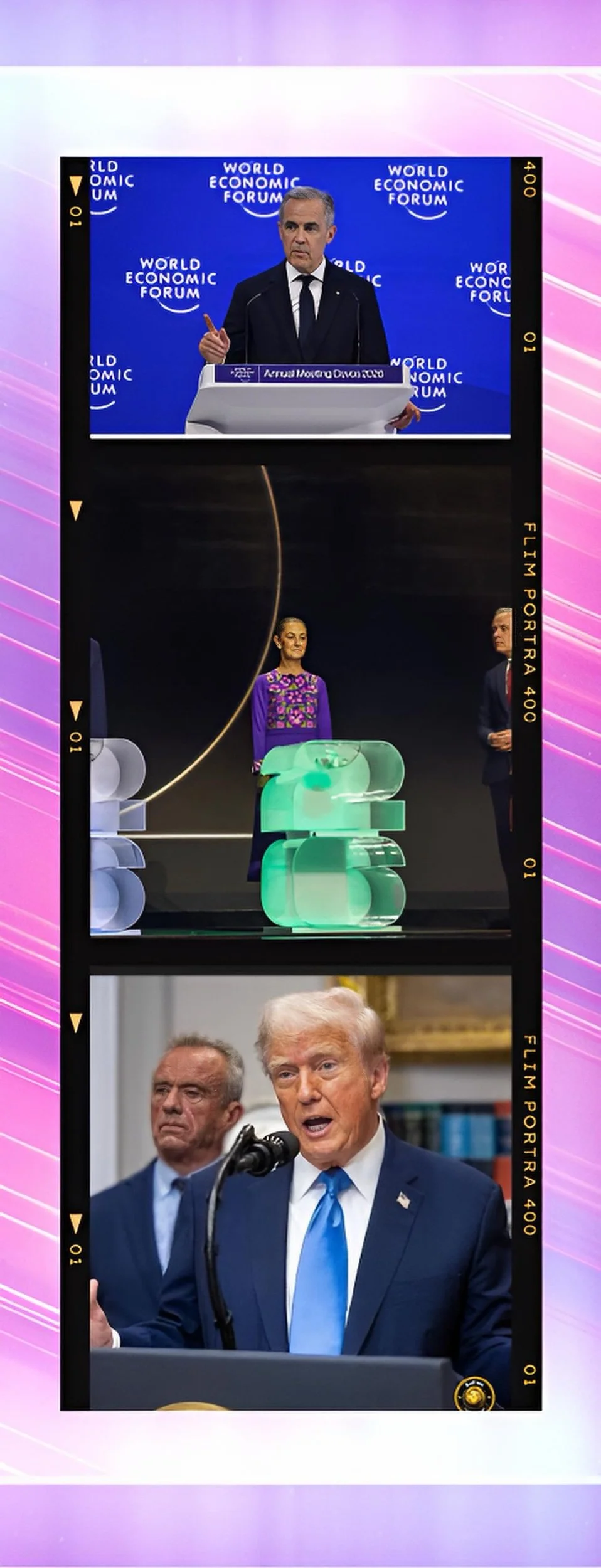
The arrival of Carney, a cosmopolitan central banker educated at Oxford and Harvard, who successfully steered both the Bank of Canada and subsequently the Bank of England through the 2008 financial crisis and Brexit respectively, signals a recalibration of Canadian statecraft. Carney's Davos speech in January 2026 articulated an explicit strategy of economic diversification predicated upon the thesis that "middle powers must unite" against the coercive deployment of tariff leverage by hegemonic powers.
This formulation directly repudiated the implicit assumption of Canadian political economy since the Reagan-Mulroney accord: that deep continental integration was compatible with political sovereignty.
Historical Context and the Architecture of Dependence
The genesis of Canada's acute vulnerability to American tariff threats traces to the deliberate construction of continental trade architecture in 1988.
When Prime Minister Brian Mulroney and President Ronald Reagan executed the Canada-United States Free Trade Agreement, Canadian exporters dispatched 75% of merchandise to American markets. By 2026, this proportion has risen to 80%, even as absolute trade volumes have surged. More consequentially, trade as a proportion of Canadian gross domestic product has expanded from approximately one-third of economic activity to two-thirds, rendering the Canadian economy fundamentally hostage to American demand fluctuations and policy capriciousness.
The differential vulnerability asymmetry is profound and irreversible in the short term. Whilst 80% of Canadian exports traverse southward, only 3% of total American economic activity derives from Canadian trade, a disparity that translates into vastly unequal negotiating leverage.
For context, Michigan—America's most Canada-dependent state—derives merely 11% of its economic activity from bilateral trade, whereas Ontario, Canada's industrial heartland, is existentially dependent upon integrated North American automotive and petrochemical supply chains that cannot be rapidly reconfigured.
The financial architecture that emerged post-1988 reinforced these asymmetries. Canadian financial markets, equity valuations, and currency dynamics became increasingly synchronized with American conditions.
When the Bank of Canada initiates monetary policy adjustments, the transmission mechanisms operate overwhelmingly through capital markets that price Canadian assets against American risk premiums and interest rate expectations.
Current Status and the Tariff Crisis
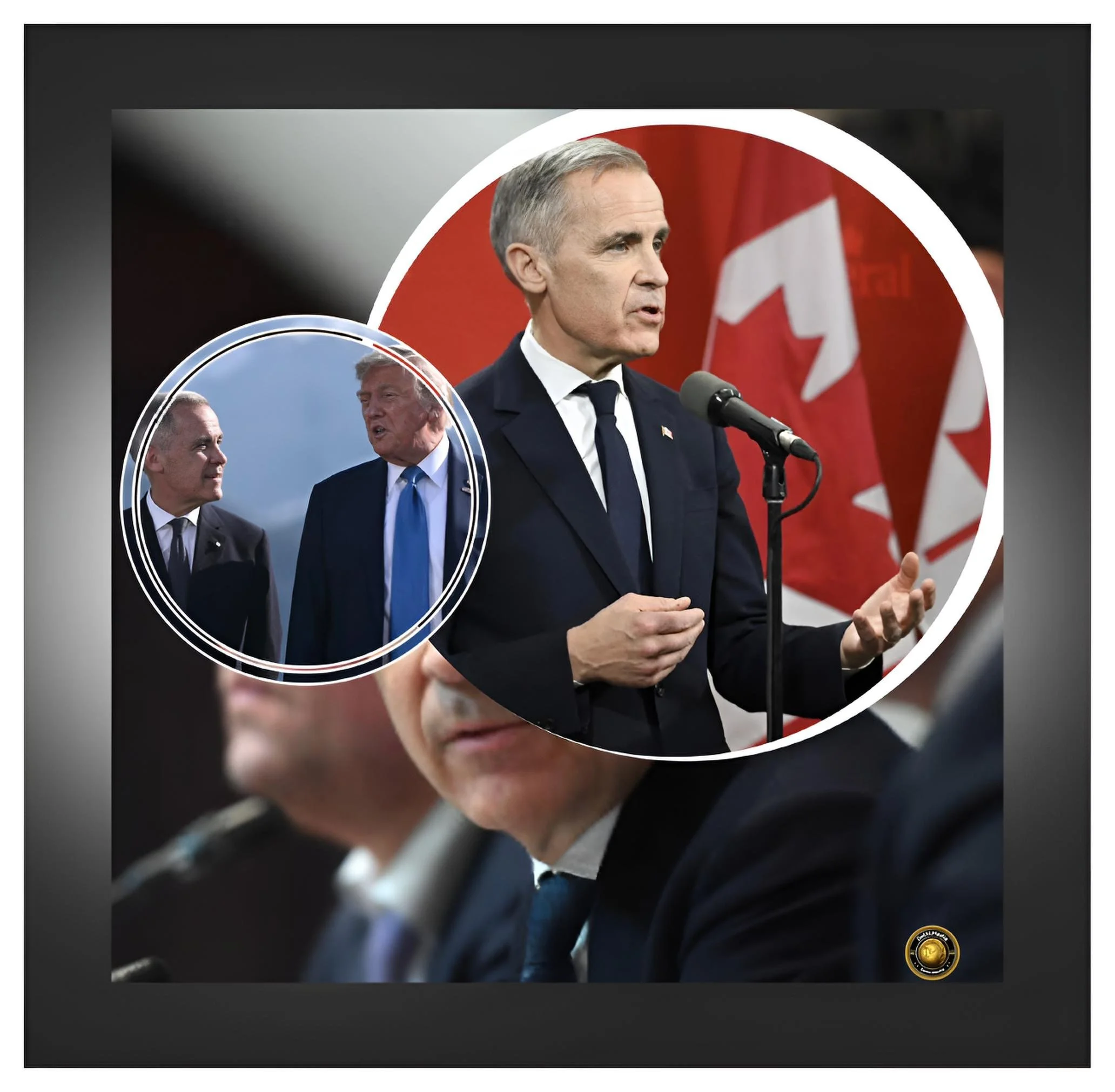
The proximate cause of the Trump-Carney chaos originated in Trump's unilateral imposition of 25% tariffs on Canadian goods in February 2025, a threat he had articulated during the 2024 election campaign. The tariffs were announced with deliberate theatrical menace: Trump explicitly suggested that Canada might become the "51st state," a formulation he has since walked back in conversation with Carney. The initial 30-day exemption period provided minimal breathing room for negotiation.
By March 2025, when the tariffs came into force, the Canadian economy was already experiencing sharp contractions in output-sensitive sectors including petrochemicals, lumber, steel, and automobiles.
The United States-Mexico-Canada Agreement (USMCA), negotiated by Trump himself during his first administration and implemented in July 2020, provides crucial insulation. Approximately 85% of Canada-United States merchandise trade flows under USMCA rules of origin, which exempts USMCA-compliant goods from tariffs.
As a consequence, the effective average tariff rate on Canadian goods entering the United States peaked at approximately 6%, substantially lower than the 25% headline rate that would prevail absent USMCA protection.
This exemption has functioned as a tariff rate negotiating floor that constrains Trump's ability to inflict maximum damage whilst simultaneously rendering the 2026 USMCA review—scheduled for July 1, 2026—the pivotal moment for continental trade relations over the subsequent 16 years.
The Carney ascendancy altered the political economy of this negotiation in subtle but consequential ways. Trudeau, Trump's predecessor interlocutor, had become an object of ridicule in Trump's rhetorical apparatus, denigrated as a "governor" rather than a prime minister and subjected to open mockery regarding his perceived weakness.
Carney, by contrast, brings institutional gravitas: his tenure as Governor of the Bank of Canada during the 2008 financial crisis, his subsequent leadership of the Bank of England through Brexit, and his measured, technically proficient demeanor constitute a form of political capital unavailable to his predecessor.
Trump's reference to Carney as the "prime minister" rather than provincial administrator signals recognition of a more formidable negotiating counterpart.
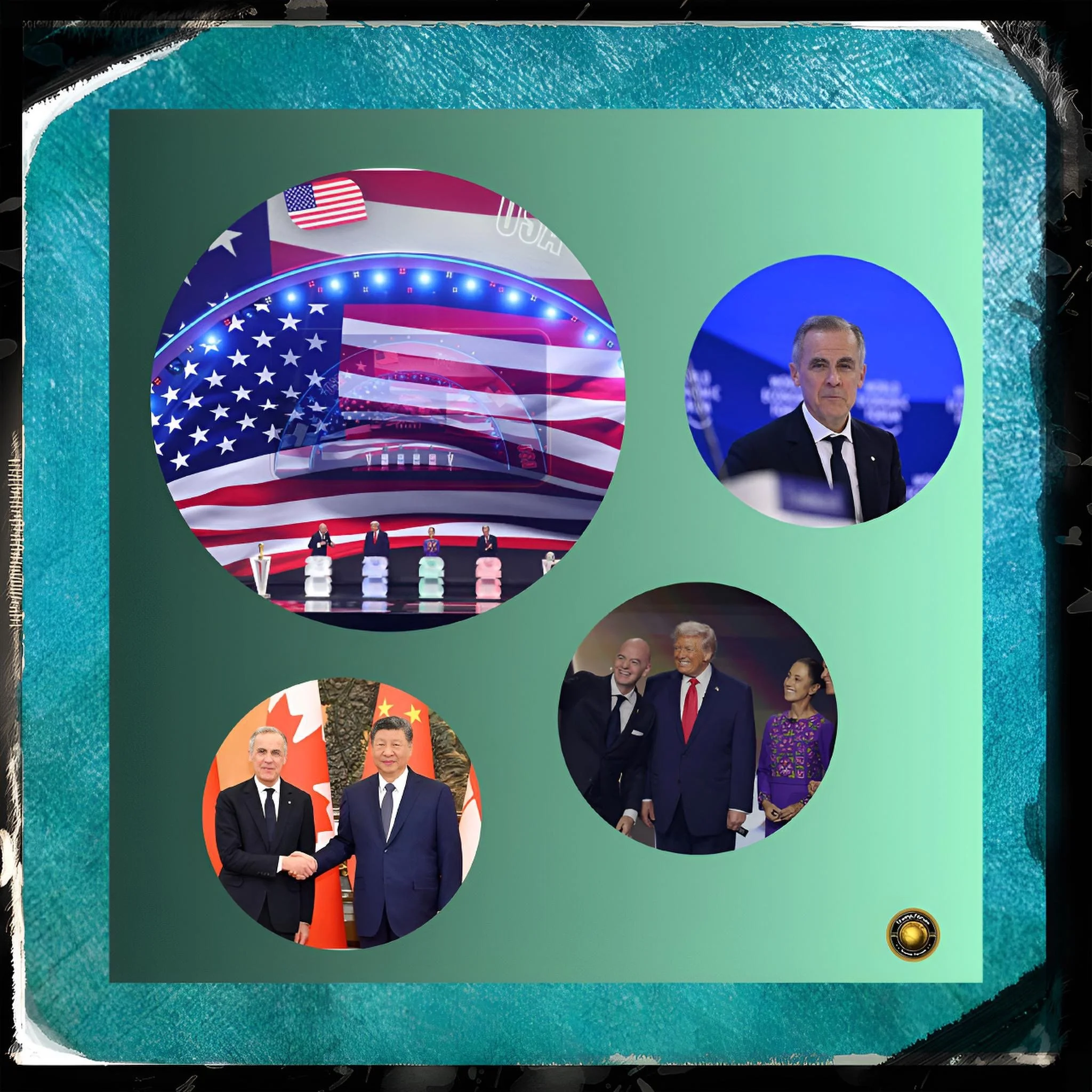
Yet Carney's accession has triggered unexpected escalations. In January 2026, Carney delivered a speech at the World Economic Forum in Davos that articulated a systemic critique of American economic coercion. He warned that "middle powers must unite" lest they be conscripted as components of an American-dominated order.
He announced that Canada would pursue 12 new trade agreements with non-American partners, including expanded engagement with India, the Association of Southeast Asian Nations (ASEAN), and the MERCOSUR bloc. This explicit disavowal of continental dependence triggered Trump's threat of 100% tariffs on Canadian goods if Canada "makes a deal" with China, and subsequently a 50% tariff threat on Canadian aircraft (specifically targeting Quebec's Bombardier and Georgia's Gulfstream, which Canada had declined to certify).
Treasury Secretary Scott Bessent explicitly warned Carney that his Davos comments constituted a strategic blunder that could prejudice the USMCA review.
Carney's response—a public statement that he had "meant what he said" at Davos and that he had explicitly conveyed this position to Trump—demonstrates a calculated escalation in which Carney is gambling that American structural dependence on Canadian energy and integrated manufacturing chains will ultimately constrain Trump's ability to sustain maximum pressure.
Key Developments and the Diversification Imperative
The Trump-Carney chaos unfolds against a backdrop of Canadian strategic repositioning that predates Carney's arrival.
During 2025, Canadian policymakers and corporate leaders began articulating the necessity of trade diversification with unprecedented urgency. Carney's government announced 12 new trade agreements concluded over the preceding 6 months, a cadence of trade negotiations that had been absent during the Trudeau period.
The Canada-India energy partnership, finalized in January 2026, exemplifies this reorientation.
Canada exported approximately 84,000 barrels per day of crude oil to India during 2025, a figure that is poised to expand substantially as Canada increases liquefied natural gas (LNG) and liquefied petroleum gas (LPG) exports to Indian refineries. India, as the world's fastest-growing major energy consumer—projected to account for one-third of incremental global energy demand over the next 2 decades—represents precisely the demographic and economic complementarity that Carney's strategy envisions.
The Trans Mountain Expansion (TMX) pipeline, recently completed, now enables western Canadian crude to transit to Pacific ports, facilitating exports to Asian markets that had previously been foreclosed by lack of infrastructure.
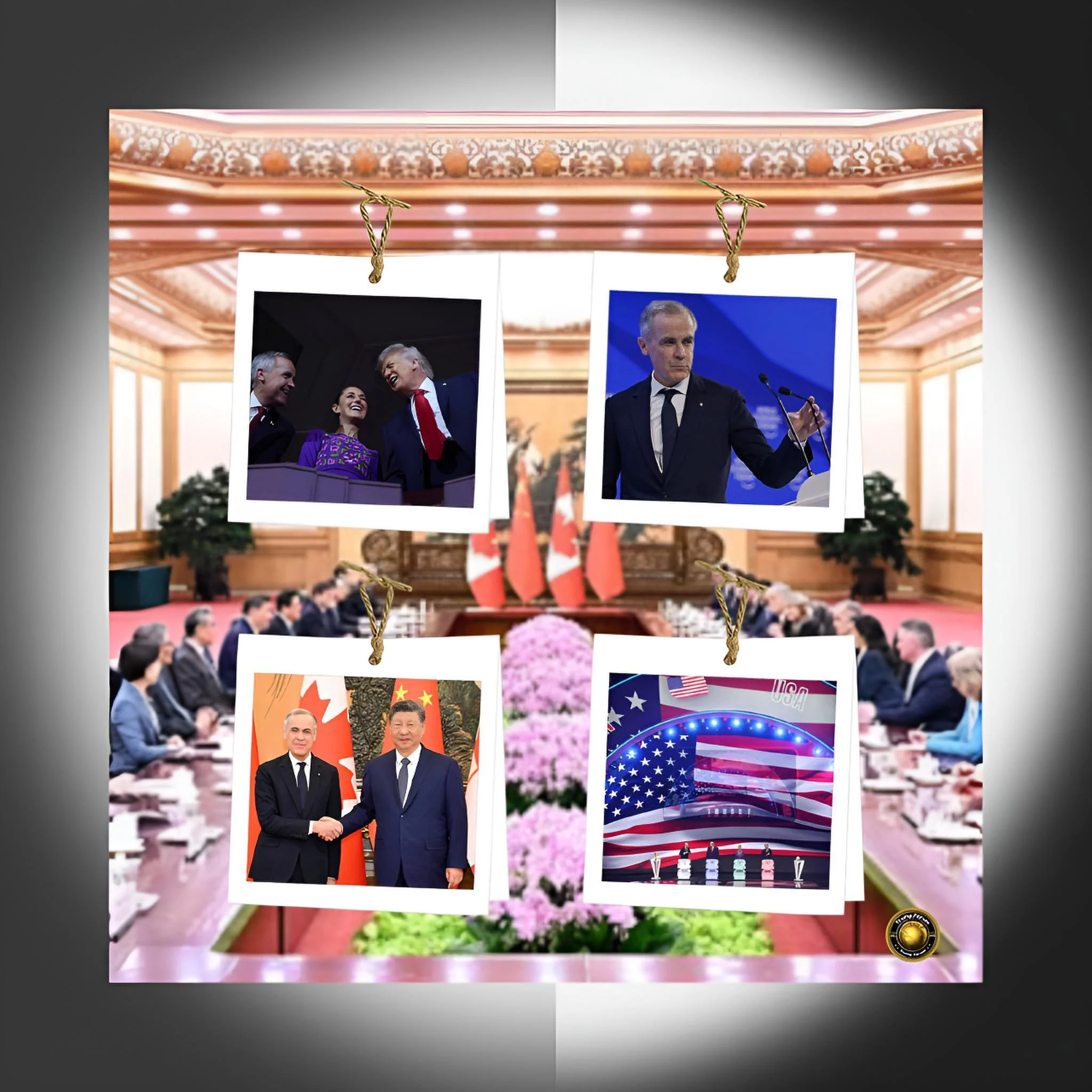
The China deal, valued at approximately $118 billion in LNG commitments, signals an even more dramatic reorientation. For decades, Canadian natural gas exports have flowed exclusively to the United States, where abundant North American shale resources have suppressed prices relative to international benchmarks.
The China agreement represents a structural break with this historical pattern. Whilst the geopolitical implications of expanded Chinese engagement warrant caution, the energy economics are compelling: liquefied natural gas prices in Northeast Asian markets command premiums of $10+ per unit relative to U.S. Henry Hub prices, presenting arbitrage opportunities that could generate billions in additional Canadian wealth.
Canada's engagement with regional trade blocs also deserves scrutiny. Canada is a member of the Comprehensive and Progressive Agreement for Trans-Pacific Partnership (CPTPP), an arrangement comprising 12 economies including Australia, Japan, Vietnam, and Singapore.
The CPTPP, which Canada joined in 2018, provides preferential access to approximately 40% of global gross domestic product and encompasses some of the world's most dynamic growth markets. Additionally, Canada has initiated negotiations with the Association of Southeast Asian Nations (ASEAN) bloc and launched exploratory discussions with individual ASEAN members including Indonesia and the Philippines.
Perhaps most consequentially, Carney has articulated an explicit target: Canada will endeavor to double its trade with non-American partners by the 2030s, aiming to reduce the American proportion of Canadian exports from 80% to approximately 60% over the next decade. This represents a profound structural reorientation.
Yet these diversification initiatives confront formidable headwinds. Whilst Canadian exporters achieved a 13% increase in non-American trade during the first 10 months of 2025, this growth must be contextualized against 80 years of infrastructure investment, supply chain development, and institutional integration oriented exclusively toward American markets. The capacity to reorient production suddenly and comprehensively is substantially constrained by fixed capital stock, regulatory frameworks, and labor market geography.
Latest Facts and Concerns
The Recession Threshold
As of January 2026, Canada's economy is experiencing palpable strain. The Bank of Canada has undertaken successive interest rate reductions in response to deteriorating business confidence and labor market weakness.
Whilst Canada technically avoided a technical recession (defined as consecutive quarters of negative growth), Oxford Economics projects GDP expansion of merely 0.9% for 2026, a growth trajectory that is materially below trend and will generate substantial unemployment increases absent significant fiscal stimulus.
A critical concern involves sectoral concentration of tariff impacts. Steel, aluminum, automobiles, and lumber—sectors representing approximately 15% of Canadian merchandise exports—face targeted American tariffs, generating acute localized disruptions. In Ontario, home to approximately 125,000 automotive workers, integrated supply chains with Michigan and Ohio create a situation in which tariff escalation could trigger rapid disinvestment.
The Canadian dollar has depreciated materially, declining to 1.45 against the U.S. dollar by March 2025, representing its weakest valuation since April 2020. Market analysts attribute approximately 2% of this depreciation to a "Trump tariff risk premium," which would dissipate were the administration to commit to sustained tariff exemptions.
However, Bank of Canada rate reductions, implemented to cushion tariff shock, exacerbate currency weakness by reducing yield differentials that typically attract foreign capital to Canadian fixed-income securities.
A final systemic concern warrants emphasis: Canadian corporate executives report that approximately 30% of cross-border manufacturing enterprises are actively contemplating relocation of production to the United States.
This represents a fundamental challenge to Carney's diversification strategy. If tariff uncertainty persists through the July 2026 USMCA review, the calculus of enterprise location could shift decisively toward American production. Firms that have constructed North American supply chains over decades will not lightly abandon these networks, but sustained uncertainty imposes substantial carrying costs.
Cause-and-Effect Analysis
American Dependence and Canadian Vulnerability
The causal nexus between Canadian vulnerability and American dependence warrants rigorous examination. Trump's ability to threaten tariffs derives from asymmetric trade vulnerability: Canada depends on American markets far more than America depends on Canadian suppliers. Yet this formulation is incomplete and obscures critical counter-dependencies.
The United States produces approximately 16% of the aluminum it consumes, with Quebec accounting for a substantial portion of remaining import requirements.
A 50% tariff on Canadian aluminum would impose substantial costs on American aerospace manufacturers, automobile producers, and beverage container manufacturers. Whilst American firms might eventually shift procurement patterns or develop alternative sourcing, the transition costs would be considerable and the price implications for American consumers would be acute.
Similarly, Canada supplies approximately 4 million barrels of crude oil per day to the United States, representing the single largest source of American petroleum imports and constituting the entirety of the bilateral trade surplus that Canada maintains with the United States.
American refineries in the Gulf Coast and Midwest have integrated their operations around Canadian crude supply, with specific refinery configurations tailored to the sulfur content and viscosity profile of western Canadian bitumen. Alternatives exist, but displacement would require capital investments and would impose cost penalties for extended periods.
Less visible but equally consequential are integrated automotive supply chains. Components traverse the Canada-United States border up to 8 times during the manufacturing process, with particular concentration in Ontario-Michigan trade flows.
Whilst automotive production could theoretically be reshored entirely to the United States, the resulting cost structures would be substantially higher, and the technical expertise concentrated in Ontario provides competitive advantages in components production that American manufacturers would find difficult to replicate rapidly.
These structural dependencies do not provide Canada with leverage equivalent to what it might desire, but they do constrain Trump's strategic options.
Carney appears to be constructing a negotiating posture predicated on the thesis that America cannot sustain maximum tariff pressure without incurring political and economic costs that would ultimately redound to Trump's disadvantage. This represents a bet on Trump's rationality and his sensitivity to domestic political economy considerations.
The converse causal mechanism—American influence over Canadian outcomes—is likewise structured by these dependencies. By threatening tariffs on Canadian energy, minerals, and manufactured goods, Trump can depress Canadian export demand, curtail investment, and trigger currency depreciation. The currency depreciation itself constitutes a form of American monetary transmission that constrains Canadian autonomous policy space.
Were the Bank of Canada to maintain interest rates at elevated levels to defend the currency, economic contraction would accelerate; conversely, were the Bank to cut rates aggressively to stimulate growth, currency weakness would impose inflationary pressure on the economy through higher import prices. This represents a form of policy trilemma that constrains Canadian macroeconomic autonomy.
Future Steps and the July 2026 USMCA Inflection Point
The trajectory of Canada-United States relations will be determined substantially by the USMCA review scheduled for July 1, 2026.
Article 34.7 of the agreement mandates a formal review at the 6-year mark, with three possible outcomes.
First, all parties could agree to extend the USMCA for an additional 16 years without substantive modification, continuing the agreement until 2042.
Second, the parties could agree to a revised agreement with material modifications to tariff schedules, rules of origin, or sectoral coverage. Third, should agreement prove impossible, the USMCA would enter an annual review cycle for a 10-year period, with termination occurring in 2036 absent renewed consensus.
Trump has explicitly stated his intention to "reassess" USMCA and to pursue sectoral concessions on automobiles, steel, and aluminum.
The Trump administration has indicated a preference for bilateral arrangements with Canada and Mexico rather than trilateral negotiations, a preference that reflects Trump's belief that bilateral dynamics preclude Canada and Mexico from "ganging up" against American interests.
For Carney, the negotiating strategy appears to involve several components.
First, demonstrating that diversification is achievable, even if at modest initial scale, so as to signal that Canada possesses alternatives to total dependence on American markets.
Second, leveraging American structural dependence on Canadian energy and integrated manufacturing to constrain the severity of permanent tariff increases.
Third, constructing a domestic political coalition supportive of USMCA extension by demonstrating that the alternative—annual reviews and ultimate expiration—would be economically catastrophic.
Fourth, building multilateral pressure from American border states whose economies are deeply integrated with Canada, particularly Michigan, Ohio, and the northwestern states dependent on Canadian energy.
This strategy confronts substantial obstacles. Trump's negotiating approach privileges asymmetric outcomes and demonstrates limited patience for extended negotiations. Additionally, Carney's minority government status constrains his political maneuvering space.
The resignation of former Deputy Prime Minister Chrystia Freeland from the House of Commons in January 2026, coupled with anticipated byelections, has reduced the Liberal government to a precarious position in which defections could result in loss of parliamentary confidence.
Concerning the substantive content of USMCA renegotiation, particular pressure points can be anticipated.
The Trump administration will almost certainly demand increased content requirements for automobiles, reflecting an objective to constrain Mexican production of low-cost vehicles and to favor American and Canadian assembly. Additionally, the administration may seek to impose permanent tariffs on steel, aluminum, and lumber, justified on national security grounds.
Canada will likely resist these demands but may seek tradeoffs in sectors where it possesses comparative advantage, such as energy and critical minerals. India, through the bilateral energy partnership, provides Canada with an implicit alternative to total continental integration.
Conclusion
Capacity and Reality
The fundamental question—can Canada survive without the United States?—admits of a nuanced response. In the abstract, Canada possesses sufficient endowments of natural resources, human capital, and institutional capability to construct a diversified, multi-directional trade system.
The precedent of Australia, which has successfully maintained substantially different export compositions to the United States, China, India, and Europe, demonstrates that geographic proximity to a hegemonic power need not preclude economic diversification.
Yet the Canadian case differs materially from the Australian precedent. Australia's geographic distance from the United States afforded it greater latitude to pursue independent trade policies without incurring the infrastructure switching costs that Canada faces.
Conversely, Canada's 40 years of deep continental integration means that the inherited capital stock—pipelines, refineries, supply chain networks, and institutional frameworks—are oriented overwhelmingly toward American markets. Redirecting these assets is technically feasible but will require capital expenditure and entail transition costs.
Likewise, the question of whether the United States can survive economically without Canada admits of a similarly complex response. The United States does not confront the structural vulnerability that Canada faces, but it confronts real, albeit manageable, costs.
American producers of aerospace components, refined aluminum, vehicles, and refined petroleum products would face significant cost adjustments were they suddenly deprived of Canadian supply. American consumers would face price increases across multiple categories. These are not existential challenges, but they are material considerations that constraint Trump's ability to sustain maximum pressure indefinitely.
The Trump-Carney chaos ultimately reflects a collision between two incompatible premises. Trump operates from an assumption that American economic supremacy is sufficient to subordinate Canadian interests entirely. Carney, conversely, asserts that Canada possesses sufficient alternative options that continued total dependence is neither economically optimal nor politically sustainable.
The July 2026 USMCA review will constitute the inflection point at which these competing assumptions are tested against economic and political reality.
The most probable outcome is a renegotiated USMCA that preserves the broad framework of free trade on USMCA-compliant goods whilst imposing selective tariffs on sensitive sectors, coupled with Canadian acceleration of diversification initiatives.
Recession may be circumvented through a combination of fiscal stimulus and negotiating success, but Canada will emerge from this period with a substantially less integrated continental economy and with materially elevated structural vulnerabilities to American economic coercion.
The mouse has learned that its elephant neighbor is capable of doing far more damage than previously imagined.
The elephant, for its part, has discovered that the mouse possesses unexpected leverage. This realization, occurring belatedly, will shape North American geopolitics for decades to come.