China’s 2026 Dilemma: Should Beijing Play It Safe or Take a Chance?
Summary
What's the Real Situation in China Right Now?
Picture a student who got excellent grades in one semester. The student is now wondering: should I study the same way and keep doing well, or should I take more difficult classes and risk failing? This is basically where China and its leader, Xi Jinping, find themselves in 2026.
For the past year, China has had real success. When President Trump returned to the White House in January 2025, he launched a major trade war. He imposed very high tariffs and special taxes on goods from China. These taxes made Chinese products more expensive to buy. America said, "We will put a 145% tax on Chinese goods," which is enormous. China fought back by raising its own taxes on American things like chicken, corn, and soybeans.
But here is what makes China smart: instead of fighting back too hard, they compromised. In November 2025, China and the United States reached a deal. China stopped the taxes it had planned on American farm products. America lowered some tariffs on Chinese goods. Both sides saved money, and their economies stayed stable.
Meanwhile, China sold so many goods to other countries that it recorded a $1 trillion trade surplus. That is a profit of one trillion dollars! Most countries would be happy with that kind of success.
Also, America under Trump is doing something strange for a mighty nation. America is leaving international organizations. Trump says he wants to pull America out of the United Nations human rights work, stop helping refugees, and withdraw from the World Health Organization.
America is also attacking smaller countries. Trump sent military forces to Venezuela, Iran, Syria, and other places. He is showing off American military power, but he is no longer leading the world through international organizations. He is just doing what benefits America right now, without thinking about the rest of the world.
This gives China an opportunity. China can say to other countries: "America is no longer helping you. America only cares about itself.
We, China, will be your friend and partner." China is actually doing this through significant projects, including the Belt and Road Initiative and the Global Governance Initiative.
Three Big Temptations for Xi Jinping in 2026
But success can sometimes make leaders too confident.
Think about a company that had an excellent year. The company might think, "We are so successful now, maybe we should take bigger risks." China faces three temptations like this.
Temptation Number One: Using Trade as a Weapon
China did very well in the trade war, and now Chinese leaders might think, "We can push even harder." China is very good at making electric vehicle batteries, solar panels, and computer chips. America needs these things. Chinese officials think maybe they should use this power to get even better deals from America and other countries.
This sounds reasonable, but it is dangerous. Here is why: If China keeps pushing with bigger demands, America might get angry and fight back with military force, not just tariffs.
Trump has shown he is willing to use bombs and soldiers, not just trade arguments. Also, if trade really breaks into two groups, one led by America and one led by China, this hurts everyone, including China.
The world trades together because everyone benefits. If the world splits into two separate trading systems, Chinese companies lose customers and make less money. China's own economy slows down.
Think of it like a village. If the town stays together as one community, everyone buys and sells with everyone else, and everyone gets rich. But if half the city refuses to trade with the other half, everyone in the village gets poorer. China would be poorer too.
Temptation Number Two: Attacking Taiwan
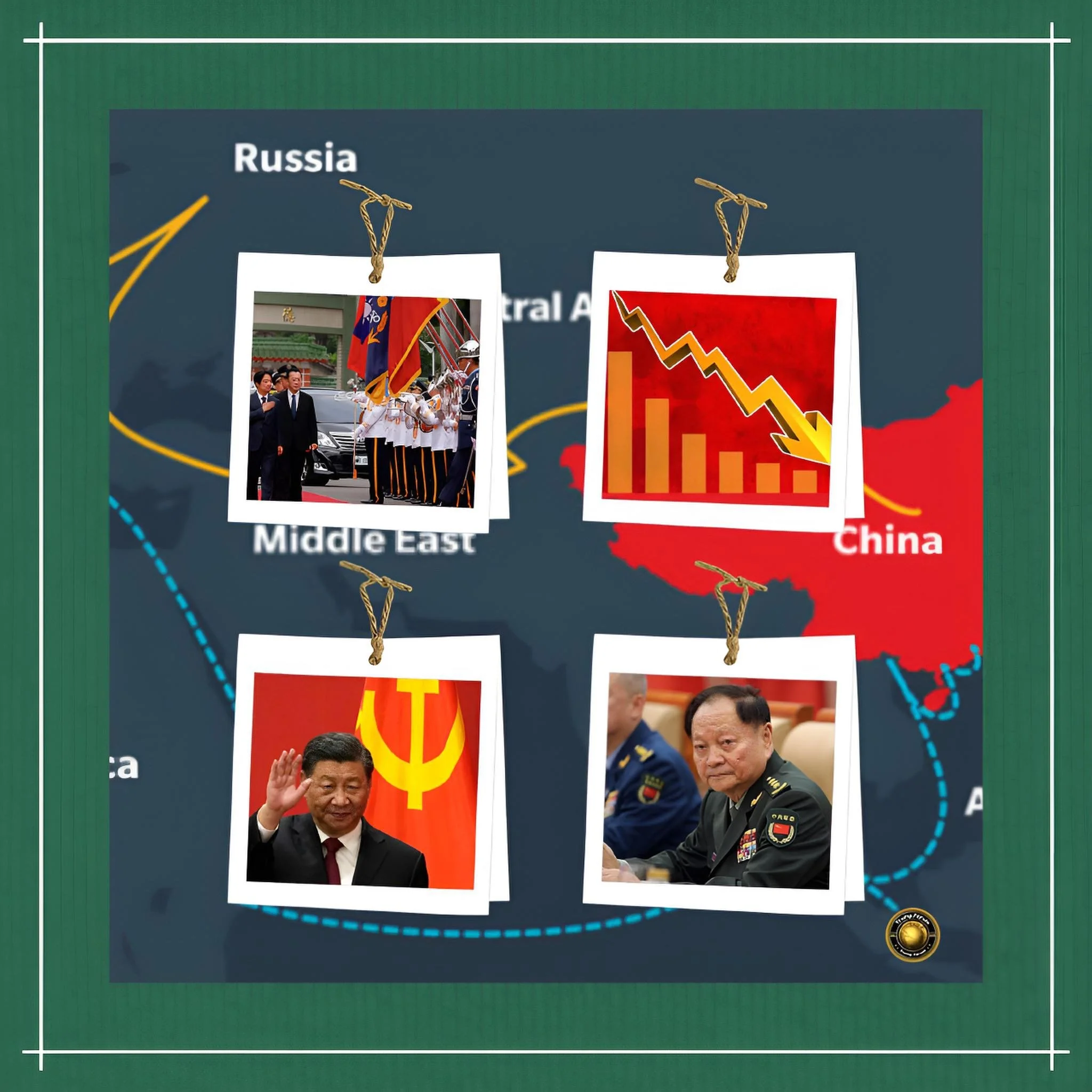
The most dangerous temptation is Taiwan. Taiwan is an island off the coast of China with its own government and army. Beijing says Taiwan is part of China, but Taiwan's government says it is independent. This argument has been going on for 70 years.
Xi Jinping has told his military generals: "Be ready to take Taiwan by force by 2027."
The military readiness date means Chinese soldiers are training, buying weapons, and practicing invasions. In 2025, China conducted many military exercises near Taiwan. Chinese Air Force planes flew near Taiwan almost every day. There are now 60% more Chinese aircraft flying near Taiwan than a few years ago.
Chinese submarines, ships, and special forces are training to attack Taiwan.
Some people in China think 2026 is a good time to attack because America is busy with other problems and less organized than it used to be. But attacking Taiwan would be a disaster. Here is the calculation: if China successfully invaded and took over Taiwan, the global economy would lose about $10 trillion. That is 10% of the world's total income in one year. For China itself, 25 to 35% of its economy would be destroyed during the war. That is like a working family losing one-third of their income for several years.
Besides the money problem, Taiwan would not surrender easily. Taiwan has 23 million people who do not want to be part of China's communist government. If China attacks, the Taiwanese people would fight back hard.
Wars take longer and cost more than generals predict. America might also send its military to help Taiwan. If America joins the fight, China's economy would be damaged even further, as other countries would stop trading with China and stop investing there.
Even though China's military is stronger than Taiwan's, the total cost of winning would be too high. It would be like spending $1 million to win $100. It does not make sense financially or politically.
Right now, Taiwan is improving its defense capabilities. Taiwan is buying American weapons and building its own missiles.
Taiwan's military is small but very motivated to protect its island home. Also, China's own generals are probably not as confident as they tell Xi Jinping they are.
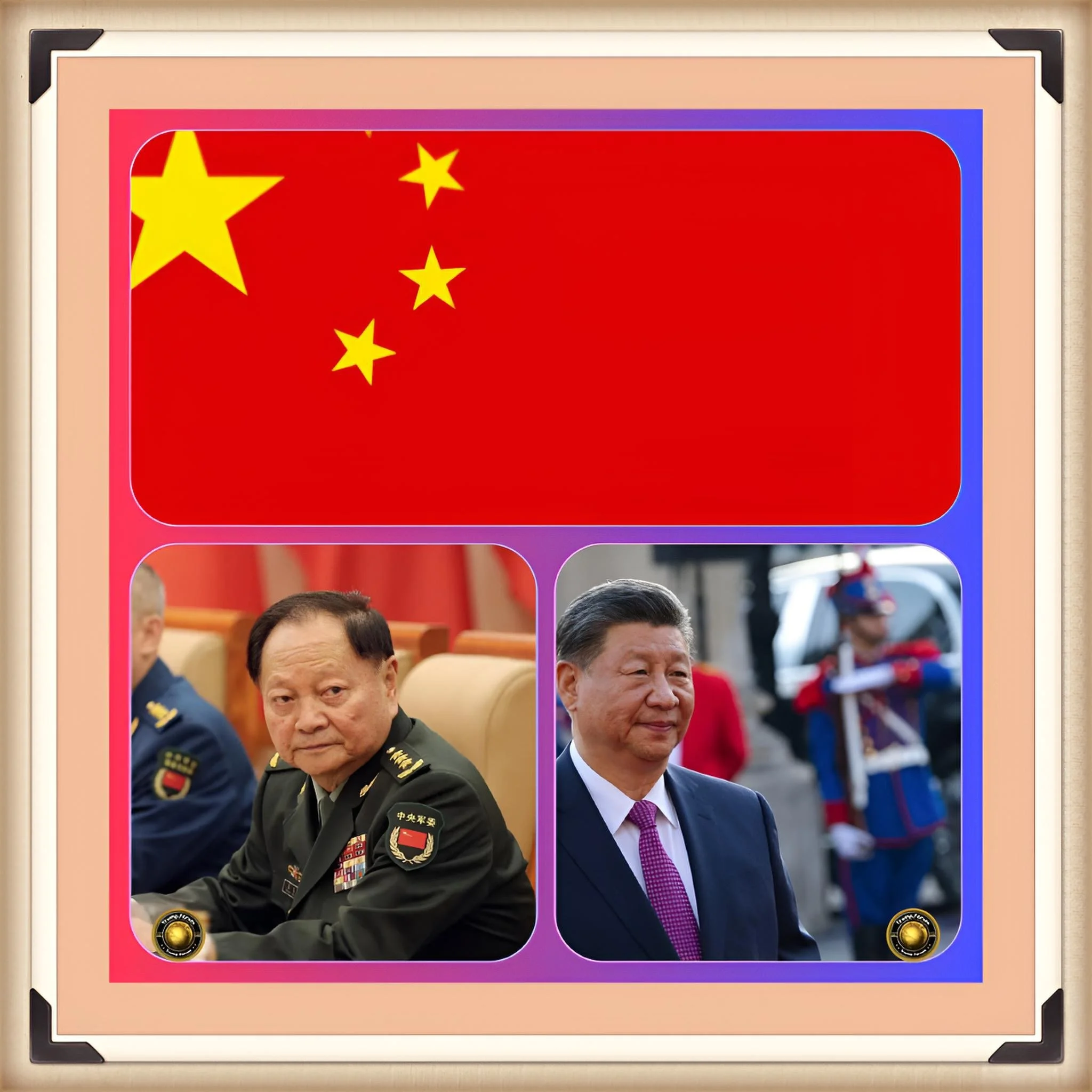
When Xi fired many generals in January 2026 for corruption, he was effectively saying, "I do not trust you." If generals do not feel trusted, they might not fight as hard or as smart as they should.
Temptation Number Three: Reshaping the World Order Too Aggressively
Here is something most people do not know about China: China is actually proposing new ideas for how the world should be organized. Instead of America and Europe making all the rules, China is saying the world as a whole should have a vote on how things work.
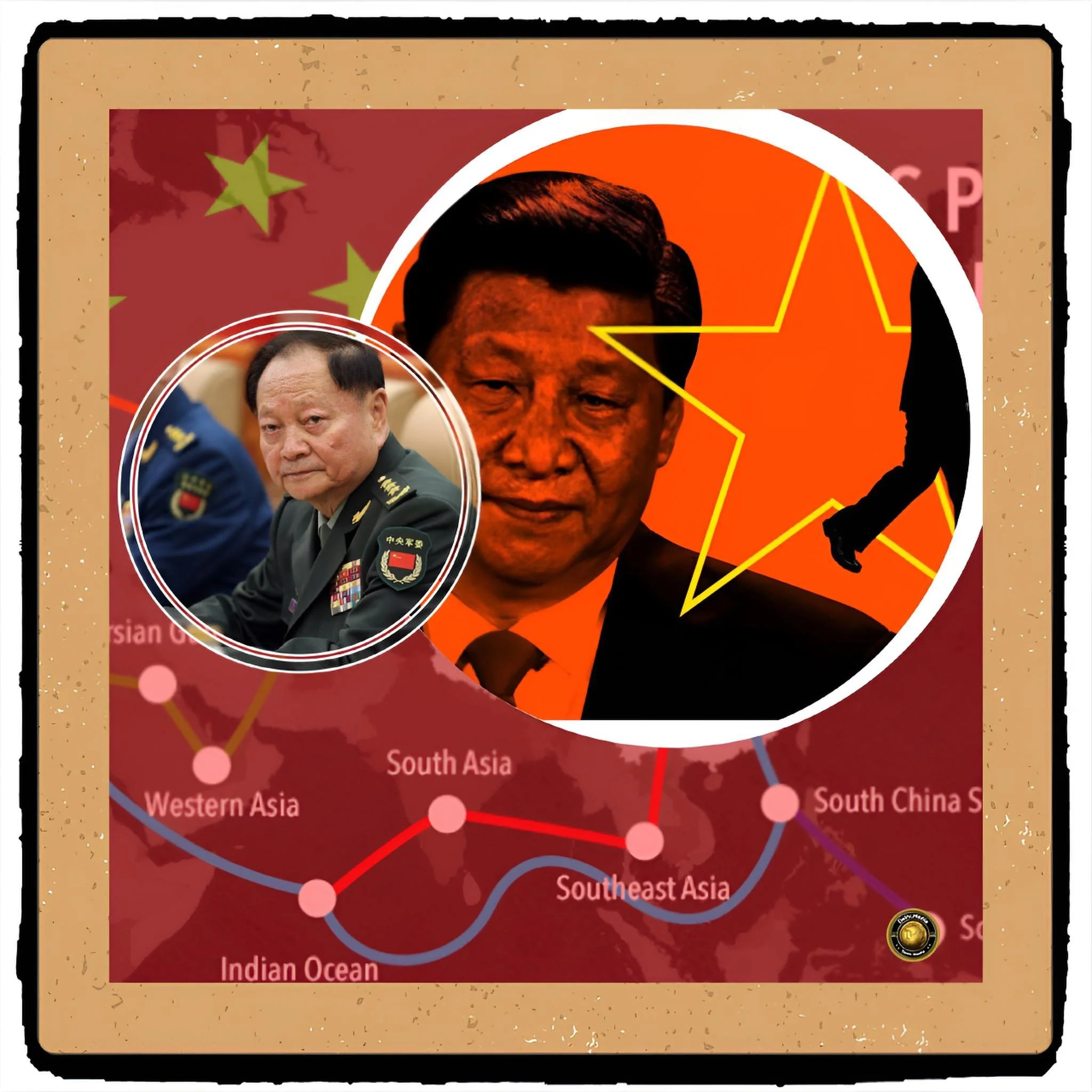
This is called the Global Governance Initiative. China is also proposing initiatives such as the Global Security Initiative and the Global Development Initiative. These are not just words.
Over 140 countries have said they like these ideas. Why? Because many countries in Africa, South America, and Asia feel that America and Europe have too much power. These countries think China's ideas are fairer because they accord equal respect to every country.
China is also investing heavily in the Belt and Road Initiative. This is a project where China builds roads, railroads, and ports in other countries. As of 2026, China has invested or promised $1.4 trillion in these projects. Last year, China spent $128 billion on new construction. This is the most money China has ever spent in one year on these projects.
The temptation here is to speed up these projects and try to bind more countries to China before other countries compete. But this carries a hidden danger: if China lends too much money to poor countries and those countries cannot repay the loans, they get angry with China.
They feel like China is controlling them, not helping them. Also, the more China pushes its alternative systems, the more America and Europe will organize against China. Instead of a single world system, we get two competing systems, which is bad for everybody, including China.
Why Internal Pressure Makes Everything More Dangerous
To understand why 2026 is such a dangerous moment, you need to know about China's problems at home.
China's economy is slowing down. For many years, China's economy grew 10% every year. Now it is increasing by about 5%. That might sound okay, but it is not OK when your whole political system depends on faster and faster growth to keep people happy. Imagine if your salary grew 10% every year. You would be pleased. Now imagine it only grows 5 percent. You would feel disappointed, even though you are still getting more money.
Also, many young Chinese people cannot find good jobs. Even people with college degrees are struggling to find work. Chinese cities have a substantial real estate crisis. Many buildings were built but never sold. Families lost money when property prices fell. Prices have been flat for years now, not growing.
The Chinese government solves these problems by making people feel proud of being Chinese. This is called nationalism. When people are proud of their country and their leader, they complain less about economic problems. Xi Jinping uses this tool. He tells Chinese people stories about how China is becoming great again after 100 years of weakness at the hands of foreign powers. He talks about taking back Taiwan, building Chinese space stations, and making Chinese technology the best in the world. These stories make people feel excited about China's future, even if their own bank account is not growing.
But this strategy has a risk. Once you tell people they should be proud and aggressive, it becomes harder to tell them to be patient and cautious. If Xi decides not to attack Taiwan in 2026 or 2027, some Chinese people might ask: "Why not? You said Taiwan is ours. You said we are strong enough. Why are you being weak?"
Also, Xi Jinping fired many military generals in January 2026. He said they were corrupt, but actually he was mainly proving that he controls the military and they cannot ignore his orders. But when you fire people for not being loyal enough, it makes everyone nervous. Officers know that Xi does not fully trust them. When people are nervous, they sometimes make aggressive moves to prove they are good at their jobs. This is human nature.
The "Fire Horse" Year of 2026
Something interesting is happening in Chinese culture. 2026 is the "Year of the Fire Horse" according to the Chinese zodiac calendar. This symbol means passion, independence, and rapid change.
In Chinese thinking, a leader who does dramatic things in a Fire Horse year looks bold. A leader who does nothing looks weak. This might seem unimportant, but it matters. Cultural symbolism influences how politicians think about action.
How Mistakes Happen in Wars
Here is the scary part: even smart leaders can make terrible mistakes that lead to unnecessary wars. This happens not because leaders are crazy, but because of a process called miscalculation. Let me explain how this could happen with China and Taiwan:
First, Chinese planners might think China's economy is more stable than it actually is. They see the trade surplus and think "We can handle a war." But in reality, a war would cause Chinese money to flee the country, stocks would fall, and customers would stop buying Chinese goods. The economy would get much worse than expected.
Second, Chinese planners might think Taiwan would surrender quickly. They might say, "The people of Taiwan are tired of living separately. Once we start a military operation, they will give up quickly and accept unification." But this is wrong. Taiwan has its own government, its own democracy, and its own sense of being a separate nation. Most young Taiwanese were born after 1949 and have never been part of communist China. They would fight.
Third, Chinese planners might think America would not fight. They might think, "Trump does not care about Taiwan. He only cares about making money. He will let us take Taiwan to avoid a war." But this is probably wrong too. Trump has shown he is willing to use military force. Also, Taiwan is important strategically for America. If China controls Taiwan, China controls more of the Pacific Ocean. America cannot allow that.
Fourth, once a war starts, it takes on its own momentum. A general might plan to do just a small operation, but then something goes wrong. The small operation gets bigger. Before long, it becomes a massive war. This happened many times in history.
Why Xi Should Resist Taking Action
Even though Xi Jinping faces pressure to do something aggressive, he should resist. Here is why:
First, his own power is not as stable as it looks. Yes, he fired the generals and controls the government. But if a war goes badly, his people might blame him. If China's economy collapses because of a war, people will be angry with him. His reputation for smart leadership would be destroyed.
Second, his economy really cannot handle a war. Already 5 percent growth is not enough to keep society stable. If growth fell to 2 percent because of a war, unemployment would rise, young people would get angrier, and the Communist Party's claim to good leadership would fail.
Third, there are other ways to eventually get Taiwan without war. If China is patient, Taiwan's population is getting older. Taiwanese young people might eventually become more connected to mainland China through business and family relationships. Or Taiwan might get weaker and weaker while China gets stronger. One day, maybe in 20 years, unification might happen peacefully because it makes sense. Patience can work.
Fourth, Trump's presidency is temporary. In 4 years or 8 years, Trump will be gone. The next American president might be much more tough on China. If China attacks Taiwan while Trump is president, a future president will organize countries against China and impose punishments that last for decades.
Finally, China's new ideas about world governance are actually quite clever and attractive. If China keeps developing these ideas peacefully, China can become more powerful and influential without fighting. This is smarter than using military force.
What 2026 Means for the World
The world is watching Xi Jinping in 2026. If he can keep control of his military, keep growing the economy at 5 percent, and keep pushing China's global initiatives peacefully, then China becomes even more powerful without creating enemies. That is smart strategy.
But if Xi feels pressured by his economy problems, by the cultural timing of the Fire Horse year, or by confidence from military success in 2025, he might take a risk. He might test America with Taiwan. He might push too hard on trade. He might try to reshape the world's institutions too quickly.
These risks are real because success sometimes makes leaders overconfident. The best historical policy, the one that actually works long-term, is the strategy that Deng Xiaoping invented decades ago: patience. Patience means doing what strengthens you without taking huge risks. Patience means letting time work in your favor instead of forcing the issue now.
The world will be more peaceful and more prosperous in 2026 if Xi Jinping remembers that China's greatest advantage is not military or economic power, but the fact that time is on China's side. By 2040 or 2050, China might naturally be so powerful and so integrated into world institutions that America has to accept China's leadership. That is worth waiting for. That is worth practicing patience for.
If Xi Jinping can remember this simple wisdom, 2026 will be a good year for China and for the world. If he forgets it, 2026 could be the year that leads to the biggest catastrophe of the 21st century: a war over Taiwan that costs the world 10 trillion dollars and changes everything.