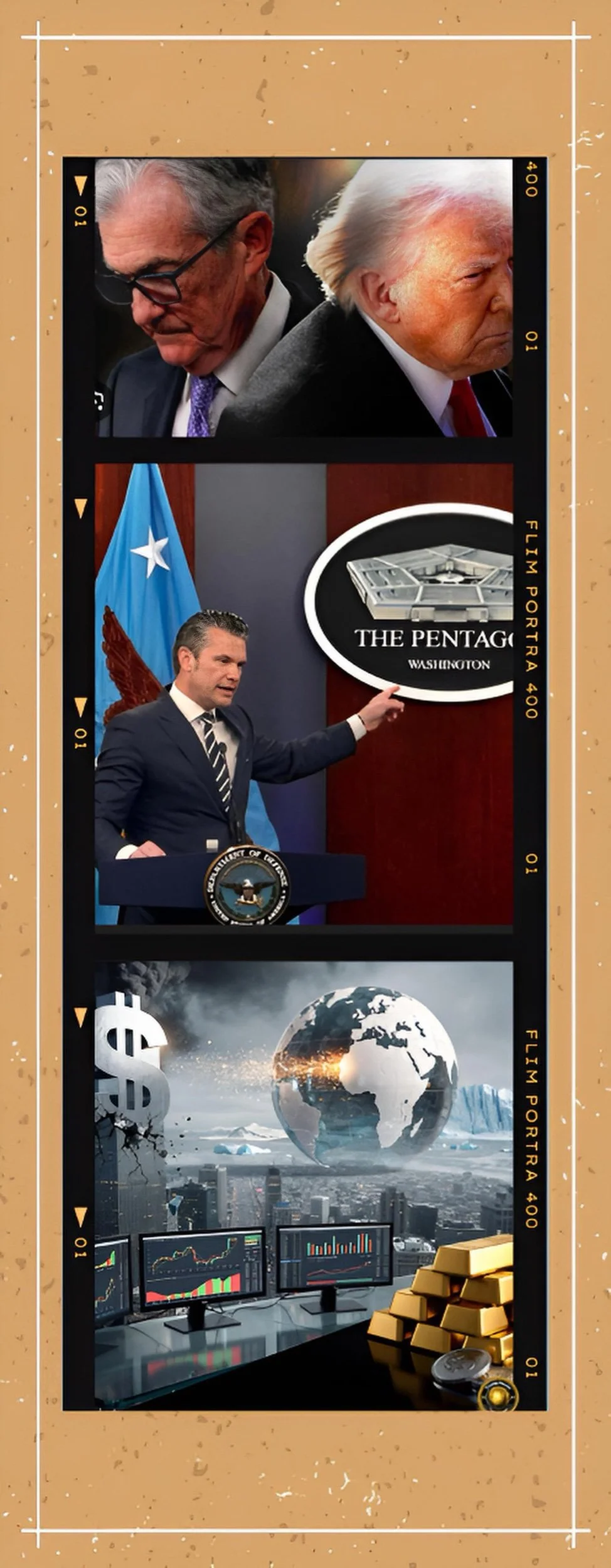
The Pentagon's New Defense Strategy and the Flight of Capital: How America's Shift Away from Global Leadership Could Reshape Financial Flows
EXECUTIVE SUMMARY
Strategic Reorientation and the Stability of American Financial Hegemony
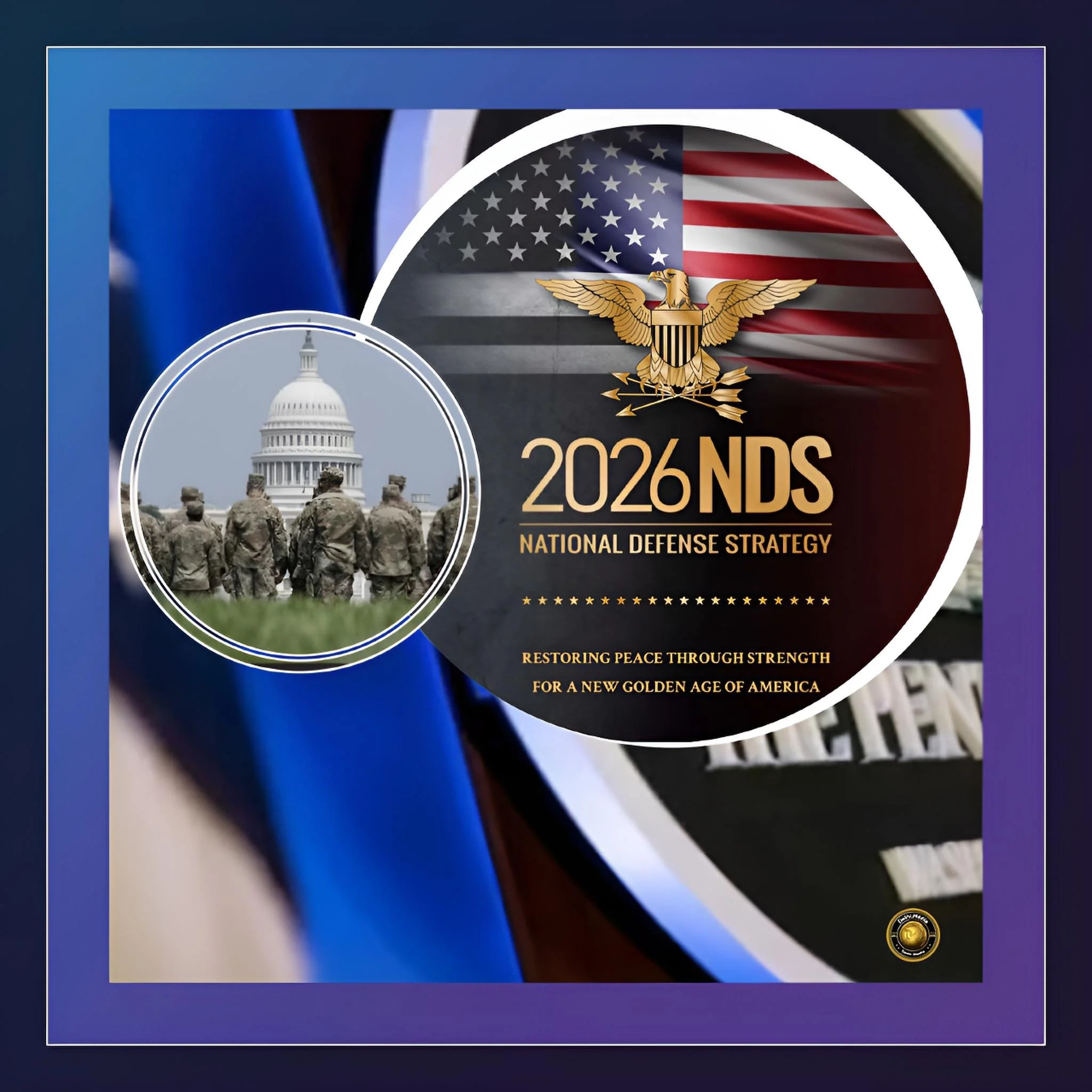
The 2026 National Defense Strategy represents a fundamental restructuring of American grand strategy that carries profound implications for global capital flows and the stability of dollar-denominated assets.
By explicitly elevating homeland defense and Western Hemisphere dominance while reducing commitments to traditional alliance structures, the strategy signals to foreign investors that the United States is transitioning from a status as the central guarantor of a rules-based global order toward a more narrowly defined, nationally-focused security posture.
This recalibration does not mechanically trigger immediate, wholesale liquidation of American assets by foreign holders, but it substantially increases the probability of gradual portfolio rebalancing, accelerated reserve diversification away from dollar assets, and heightened vulnerability to capital flight episodes during future periods of geopolitical turbulence.
The structural depth of American financial markets and the continuing absence of viable alternatives to dollar-denominated safe assets will likely constrain the speed and magnitude of any coordinated sell-off.
Nevertheless, the strategy marks an inflection point in the long-term trajectory of dollar dominance, and the cumulative effect of repeated policy shocks combined with this strategic messaging could materially weaken America's financial privilege and increase borrowing costs across the economy.
INTRODUCTION: DEFENSE DOCTRINE AS FINANCIAL SIGNAL
National defense strategies are conventionally understood as military planning documents designed to guide force structure, operational priorities, and resource allocation for the Department of Defense. However, modern financial markets interpret defense strategies as signals about state capacity, policy predictability, regime stability, and the likelihood of future policy shocks.
The 2026 National Defense Strategy is unusual in the explicitness with which it announces a departure from the post-1945 consensus that American power should operate in service of a universal, rules-anchored international system. Instead, the document openly prioritizes narrowly construed American interests, emphasizes unilateral capabilities over alliance commitments, and signals acceptance of spheres-of-influence logic in which great powers exercise regional dominance.
This strategic reorientation carries financial implications because it alters the calculation that has underpinned the extraordinary privilege enjoyed by American financial assets in global portfolios.
For decades, foreign investors treated United States Treasury securities, dollar deposits, and dollar-denominated equities as uniquely safe because they believed the United States was committed to maintaining a stable, open, predictable system from which those assets derived their value.
The 2026 strategy suggests that Washington is less committed to such maintenance and more willing to prioritize short-term national advantage even at the cost of system stability. This perception shift, working alongside existing trends toward reserve diversification and heightened geopolitical risk, creates conditions for a transition in how foreign investors price American assets.
HISTORY AND CURRENT STATUS OF FOREIGN CAPITAL HOLDINGS
The architecture of American financial dominance was constructed deliberately after 1945. The Bretton Woods system, the dollar's role as the international reserve currency, and the establishment of American military presence across the globe all served to make dollar-denominated assets the default safe haven for global wealth.
This system persisted through the end of the Cold War and into the 21st century despite periodic shocks including the Vietnam War, stagflation in the 1970s, the 2008 financial crisis, and repeated episodes of American political dysfunction.
The stability of this arrangement rested on what economists call the "exorbitant privilege" of the dollar: the fact that the United States could finance persistent current-account deficits by issuing liabilities denominated in its own currency, with the rest of the world eager to accumulate these liabilities as reserve assets. This privilege allowed the United States to consume more than it produced and to finance military operations globally without facing the balance-of-payments constraints that bind other nations.
Foreign central banks accumulated Treasury securities as their primary reserve asset. Sovereign wealth funds invested in American equities and corporate debt. Private institutions treated the United States as the repository of safety, legality, and return.
By the early twenty-first century, foreign holdings of American assets had grown to extraordinary magnitude. Foreign official holdings of Treasury securities exceeded three trillion dollars. Foreign central banks held the preponderance of their reserves in dollar form. The dollar's share of global official reserves stood at approximately sixty percent. Foreign direct investment in the United States reached trillions.
This created a structural situation in which the United States was deeply dependent on continued foreign capital inflows to finance government deficits and maintain asset prices, even as most American policymakers spoke as though the United States was self-sufficient and independent.
The period from 2015 through 2025 witnessed the first visible cracks in this arrangement. China, the largest holder of Treasury securities outside the American system, began a gradual but persistent reduction in its Treasury exposure, cutting holdings from a peak of approximately $1.3 trillion to levels approaching $700 billion by early 2026.
India, Brazil, Russia (before sanctions), and other states undertook similar diversification, increasing gold reserves and non-dollar foreign assets. Central banks began discussions of alternative international payment systems and reserve currencies. The share of dollars in global official reserves, while remaining dominant, began a slow decline.
Simultaneously, American political dysfunction accelerated. Partisan polarization intensified, government shutdowns became recurring events, and the 2024-2025 period witnessed unprecedented volatility in markets responding to policy brinkmanship over tariffs, debt ceilings, and international commitments.
Episodes in which Trump administration officials threatened extreme tariff increases or dramatic revisions of alliance commitments produced sharp but reversible capital outflows, with foreign investors temporarily rotating out of dollar assets and into euros, yen, or other havens.
Each such episode reinforced the perception among some foreign investors that American policy had become less predictable and potentially more reckless.
KEY DEVELOPMENTS SHAPING CAPITAL-FLOW RISK IN 2026
Several interconnected developments establish the context into which the 2026 National Defense Strategy is introduced. First, the trend toward reserve diversification by non-Western central banks had become unmistakable by early 2026. India announced plans to reduce the share of its reserves held in dollars and increase gold accumulation.
Saudi Arabia, long aligned with the United States, began more explicitly hedging its dollar exposure. Brazil and other emerging markets undertook similar moves. Official statements from these central banks frequently cited "diversification" and "reducing concentration risk," but the underlying motivation appeared to reflect concerns about currency devaluation, sanctions risk, and long-term American fiscal sustainability.
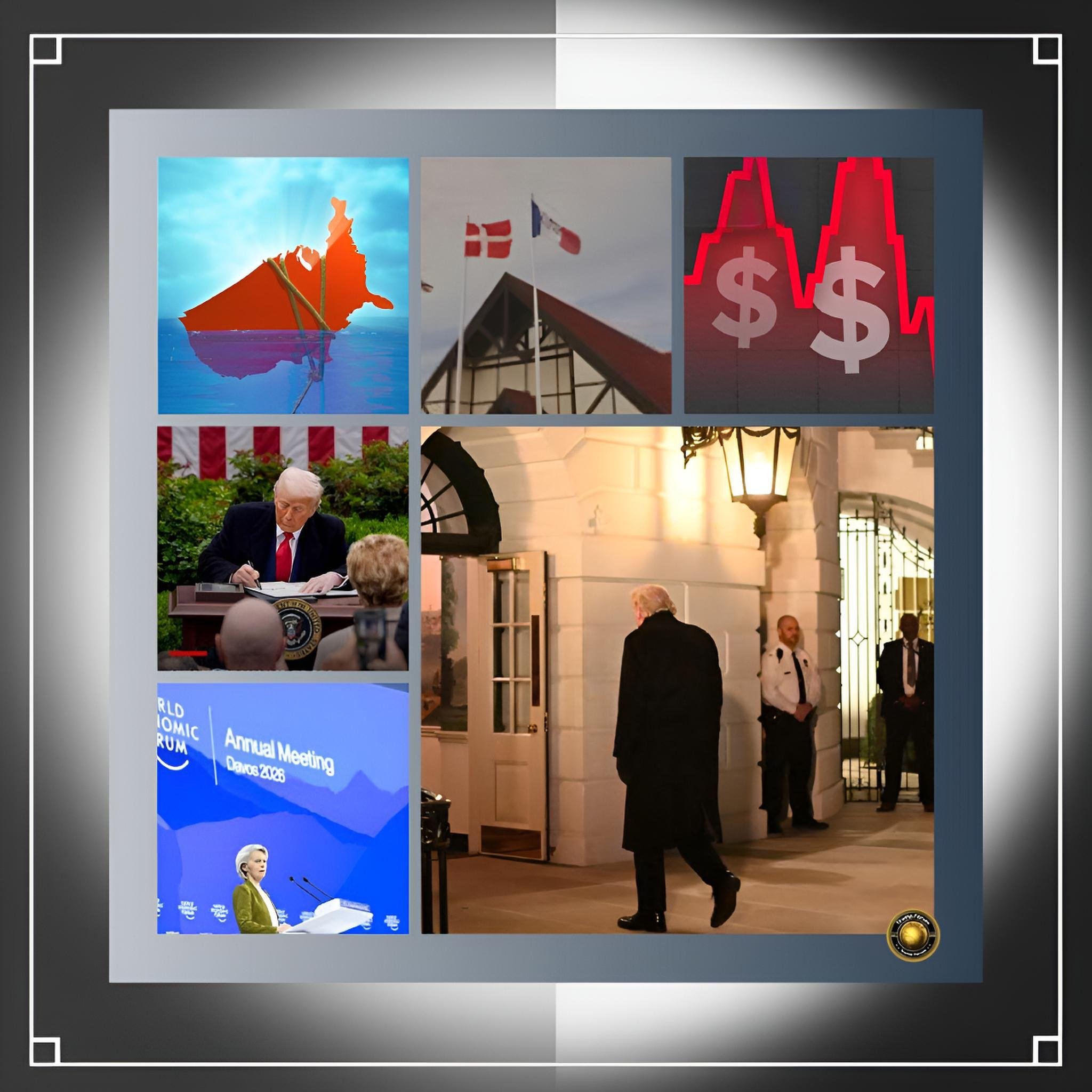
Second, the episode of "sell America" trading that occurred in late January 2026 demonstrated the speed with which international capital can exit American assets when investors perceive policy recklessness. When the Trump administration threatened extreme tariffs against European allies and engaged in dramatic public negotiations over Greenland, markets responded sharply.
The dollar index fell, Treasury yields spiked, equity prices declined, and capital visibly rotated into European bonds, the euro, and other non-dollar assets. Though this episode proved temporary—markets recovered once administration officials signaled retreat—it established a template: foreign investors now possessed a concrete playbook for rapid portfolio repositioning if American policy became sufficiently threatening to their interests.
Third, structural vulnerabilities in American public finances became more visible as debt-ceiling discussions and fiscal negotiations absorbed political attention. The trajectory of American government debt relative to gross domestic product had long concerned foreign investors, but by 2026, the question had shifted from "whether" fiscal adjustment would be necessary to "when and how dramatically." Foreign investors understood that any sharp fiscal consolidation—whether through spending cuts, tax increases, or financial repression—could materially impact asset valuations.
The Trump administration's embrace of tariff-driven growth models, which economists warned could prove inflationary and destabilizing, added to the perception that American macro-economic policy might prove less technocratic than in earlier decades.
Fourth, the development of alternative payment systems and regional security arrangements accelerated. The European Union's efforts to establish payment mechanisms independent of the dollar, China's Belt and Road Initiative creating alternative financial corridors, and regional swap lines among Asian central banks all represented gradual decoupling from dollar dependence.
While these remained marginal relative to the dollar system's scale, they represented long-term trends that would eventually reduce the dollar's monopoly role.
THE 2026 STRATEGY: WHAT CHANGED AND WHY IT MATTERS FOR CAPITAL FLOWS
The 2026 National Defense Strategy introduces several conceptual shifts that directly impact how foreign investors should rationally adjust their exposure to American assets.
The most important shift concerns the redefinition of American strategic interest away from global guardianship and toward hemispheric dominance. By elevating homeland defense and Western Hemisphere dominance to paramount status while explicitly characterizing support for distant allies as secondary and conditional, the strategy communicates that the United States is no longer committed to the system-maintenance function that earlier security strategies emphasized.
The Biden administration's 2022 National Defense Strategy, by contrast, had embedded military strategy within a broader commitment to defending the rules-based international order, supporting alliances, and maintaining American-led multilateral institutions.
That strategy explicitly linked American security to global stability and assumed that American prosperity depended upon maintaining open markets, free navigation, and institutional frameworks that benefited all advanced economies. The security architecture was, in that framing, a public good that the United States provided but from which all benefited.
The 2026 strategy severs this linkage. It asserts that American security is primarily a matter of homeland defense and hemispheric dominance, and that American power is most efficiently deployed to these ends. Global commitments are reduced to "critical but more limited" support, suggesting that they are no longer core to American strategic calculation. This is consequential because it undermines the narrative that American financial privilege—the dollar system,
Treasury market dominance, and exorbitant privilege—serves a mutually beneficial purpose. If the United States is no longer committed to system maintenance, then those financial privileges appear increasingly as extractive rather than mutually beneficial.
The strategy's explicit embrace of burden-shifting to allies constitutes a second significant signal. By demanding that Europe assume "primary responsibility" for its own defense, that South Korea and Japan do more for regional security, and that Taiwan develop independent defensive capabilities, the strategy signals that the United States will not reliably intervene in distant theaters.
This matters for capital flows because it increases the perceived probability of future geopolitical shocks in regions where American investors have substantial exposure. If Taiwan's military situation deteriorates without American support, US technology sector valuations will suffer. If Europe faces a major security crisis that forces military escalation, European assets will experience volatility that American investors will want to avoid. Foreign investors, conversely, must now ask whether their holdings of American assets will be protected if geopolitical conditions in their region deteriorate.
The strategy's softening toward China constitutes a third signal that affects capital-flow expectations. By abandoning language treating China as a strategic challenger and embracing frameworks of "peaceful coexistence" and "deterrence through strength," the strategy appears to signal American acceptance of a bifurcated world in which China exercises dominance in Asia while the United States maintains dominance in the Western Hemisphere.
This spheres-of-influence model creates uncertainty about American responses to future Chinese actions—potentially triggering either American military intervention in Taiwan or other regions, or alternatively, American acquiescence to Chinese expansion. Both scenarios carry asset-price implications that foreign investors must now contemplate.
CAUSE-AND-EFFECT ANALYSIS: FROM STRATEGIC DOCTRINE TO CAPITAL FLOWS
The causal chain from defense strategy to capital flight operates through several intermediate mechanisms. The first link concerns the updating of expectations. Foreign investors, upon reading the 2026 strategy, rationally update their beliefs about the probability and severity of future American policy shocks. If the United States is less committed to alliance maintenance and global order-provision, then the probability of tariff disputes with allies, withdrawal of security guarantees, use of financial sanctions, or dramatic policy swings increases.
Historical experience demonstrates that American policymakers in administrations that emphasize unilateral action are indeed more willing to deploy economic coercion, withdraw from commitments, and prioritize short-term advantage over system stability.
The second link concerns portfolio adjustment. Once investors update their beliefs about shock probability upward, they rationally adjust portfolios to reflect higher risk premia on American assets. This adjustment takes multiple forms.
Central banks may decide that new Treasury purchases should be allocated differently, with a larger share going to non-dollar alternatives. Sovereign wealth funds may reduce their equity exposure to American firms, particularly those dependent on access to Asian markets or vulnerable to Chinese retaliation. Private institutional investors may demand higher yield premiums for holding dollar-denominated assets, raising American borrowing costs.
The third link concerns potential feedback effects. As foreign demand for Treasury securities declines, Treasury yields must rise to attract remaining investors, increasing American government borrowing costs. As foreign demand for American equities declines, equity valuations may face downward pressure.
Rising asset prices and declining asset valuations feed back into consumer and business confidence, potentially reducing American growth rates and validating the expectations that drove the capital outflows in the first place.
The fourth link concerns contagion and panic dynamics. Financial markets are characterized by non-linear dynamics in which marginal changes in conditions can trigger sudden, large-scale re-positioning. If foreign investors gradually reduce exposure to American assets but then experience a shock—a major military confrontation in the Taiwan Strait, a serious US-Europe trade war, or a revealed fiscal crisis—the marginal sellers can rapidly become a stampede.
At that point, the gradual diversification of the preceding years transforms into rapid capital flight, asset prices fall sharply, and the United States faces a sudden deterioration in its financing conditions.
The 2026 strategy does not itself constitute such a shock. Rather, it establishes background conditions that make such shocks more likely and make the market response more severe when they occur.
Investors who might otherwise believe in American exceptionalism and resilience are now primed to expect policy recklessness. When policy recklessness then occurs—as it historically has—the market response will be more dramatic than it would have been absent the strategic signal provided by the 2026 document.
LATEST FACTS AND DOMINANT CONCERNS AMONG FOREIGN INVESTORS
Recent data and commentary reveal several specific concerns that foreign investors are articulating in response to the 2026 strategy. First, there is explicit discussion among central banks about reserve composition and the appropriate level of dollar exposure.
Japanese, Swiss, and Scandinavian central banks have begun publishing research questioning whether their current dollar allocations remain optimal given American political risks. Saudi Arabia's central bank has publicly stated its interest in diversifying away from dollar dependence. These are not hypothetical discussions; they represent actual policy deliberation by major holders of global reserves.
Second, commentary from international financial institutions highlights the potential for sustained capital flight if American policy becomes sufficiently disruptive. Economists at major investment banks have published analyses of the potential impact of a "loss of reserve currency status" for the dollar, calculating that such a transition could increase American borrowing costs by 2-3% points over a period of years. While such an outcome is not the base-case expectation, its probability is no longer negligible.
Third, there is visible movement toward de-dollarization among significant American allies. European officials have begun more earnest discussions about establishing payment systems that do not depend on dollar intermediation. The European Central Bank has accelerated efforts to strengthen the euro's international role. These are longer-term trends, but they are moving faster than they were five years ago.
Fourth, private investors are explicitly positioning for "sell America" scenarios. A notable increase in the volume of put options on dollar-denominated assets indicates that investors are hedging against dollar depreciation. Spreads on dollar assets relative to other major currencies have begun widening, suggesting investors are demanding compensation for perceived risks.
These are not large enough to constitute a crisis, but they are measurable and accelerating.
IMPLICATIONS FOR ALLIED STATES AND STRUCTURAL INVESTORS
Foreign investors fall into several categories, each responding differently to the strategic signal of the 2026 document. Central banks and reserve managers are the most sensitive to strategic signaling about American reliability, because their explicit mandate is to hold safe assets and preserve capital over long horizons.
For these institutions, the 2026 strategy confirms trends that were already visible—that the United States is less reliably committed to system maintenance—and justifies accelerating the diversification that began years ago. Major central banks will likely increase gold holdings, expand non-dollar reserve currencies, and reduce their concentration in Treasury securities.
Close American allies present a more complicated picture. Japan, the United Kingdom, Canada, and Australia have substantial holdings of American assets and are security-dependent on American commitments. These states face a dilemma: reducing their dollar exposure would hedge political risk but would damage their alliance relationships and potentially harm their own prosperity.
The likely response is selective diversification—maintaining close alliance relationships and substantial dollar holdings while at the margins reducing concentration and beginning to build alternative safe-asset capacity. This gradual repositioning will not produce immediate capital outflows but will contribute to slower growth in foreign demand for American assets over years.
European states present a third category. European central banks have reduced their dependency on American security guarantees over decades and have stronger alternative institutional frameworks (the EU, the ECB) than most other regions. European investors also have the option of denominating and investing in euros rather than dollars.
The 2026 strategy may accelerate European efforts to develop autonomous capabilities and reduce dollar dependence. This is particularly significant because European holdings of American assets are enormous; even modest reallocation would constitute substantial capital outflows.
Institutional investors—pension funds, insurance companies, sovereign wealth funds—respond primarily to return considerations but are increasingly factoring geopolitical risk into their calculations.
The 2026 strategy's signal that American policy has become less predictable will lead these institutions to demand higher risk premiums for American assets and to increase diversification into alternative jurisdictions. This will not be visible in single quarters but will accumulate over years.
FUTURE STEPS AND POTENTIAL POLICY RESPONSES
The administration could adopt several measures to offset the negative capital-flow signals generated by the defense strategy. Clear communication that fiscal policy will remain sustainable, that the Federal Reserve will maintain independence from political pressure, and that the United States remains committed to the rule of law and predictable legal frameworks would all reassure foreign investors. If the administration couples the new defense strategy with transparent, competent macro-economic management, the damage to American financial privilege can be substantially mitigated.
Conversely, if the administration combines the new defense strategy with tariff regimes that harm allies, with threatened default on government debt, or with politicized use of financial sanctions against friends as well as rivals, then the capital-flight risk escalates materially. Each such move would validate the signal sent by the strategy and accelerate the portfolio adjustments of foreign investors.
The Treasury Department and Federal Reserve face particular importance in this scenario. By maintaining institutional credibility, insisting on the independence of monetary policy from political pressure, and clearly communicating fiscal sustainability plans, these institutions can partially offset the negative signals from defense and diplomatic channels.
The Federal Reserve's communication strategy in particular will matter significantly; if markets believe the Fed is being politicized or pressured to monetize government debt, capital flight risk increases sharply.
Allies themselves will pursue several strategies. European institutions will accelerate de-dollarization efforts and strengthen euro-based payment systems. Asian democracies will expand swap lines and regional financial cooperation to reduce dollar dependence. Sovereign wealth funds will continue gradual reallocation away from dollar concentration.
These moves are neither dramatic nor overtly hostile, but they represent rational responses to the strategic signal that American reliability has declined.
CONCLUSION: A SHIFT IN THE ARC OF AMERICAN FINANCIAL DOMINANCE
The 2026 National Defense Strategy does not, in its own right, trigger capital flight from the United States.
The structural depth of American financial markets, the absence of viable alternatives to dollar assets, the continued centrality of the United States to global prosperity, and the continued security dependence of many foreign states on American commitments all combine to prevent an immediate exodus.
Foreign investors will continue to hold substantial dollar assets, and the United States will continue to enjoy significant financial privilege.
However, the strategy marks an inflection point in the long-term trajectory of American financial dominance. By explicitly signaling that the United States is less committed to system maintenance, more focused on narrow national advantage, and more willing to deploy economic coercion even against allies, the document alters the expectations that underpin foreign confidence in American assets.
This shift in expectations, combined with existing trends toward reserve diversification, creates conditions for a slow but persistent erosion of American financial privilege.
The magnitude of this erosion will depend on subsequent American policy choices. If the administration manages macro-economic policy competently, respects the independence of financial institutions, and avoids egregious policy shocks, the erosion will be gradual and may be partially offset by continuing structural advantages. If, conversely, the administration deploys economic coercion recklessly, allows politicization of monetary policy, or experiences major fiscal or geopolitical crises, the erosion could accelerate and capital flight could become a genuine constraint on American power.
In the decades ahead, historians will likely identify the 2026 National Defense Strategy as a pivotal moment in the transition from American financial hegemony toward a more multipolar system. Not because the strategy itself triggered collapse, but because it announced the end of American commitment to the premises upon which financial hegemony rested. Capital follows that kind of signal slowly, but it does follow.
The question is not whether the shift will occur but whether American policymakers will take steps to manage it gracefully or whether the transition will occur chaotically, through episodes of panic and capital flight that damage American prosperity in the process.