How America is Changing Its Military Priorities: What the Pentagon's New 2026 Strategy Means
EXECUTIVE SUMMARY
Pentagon Puts Homeland First, Tells Allies They Are on Their Own
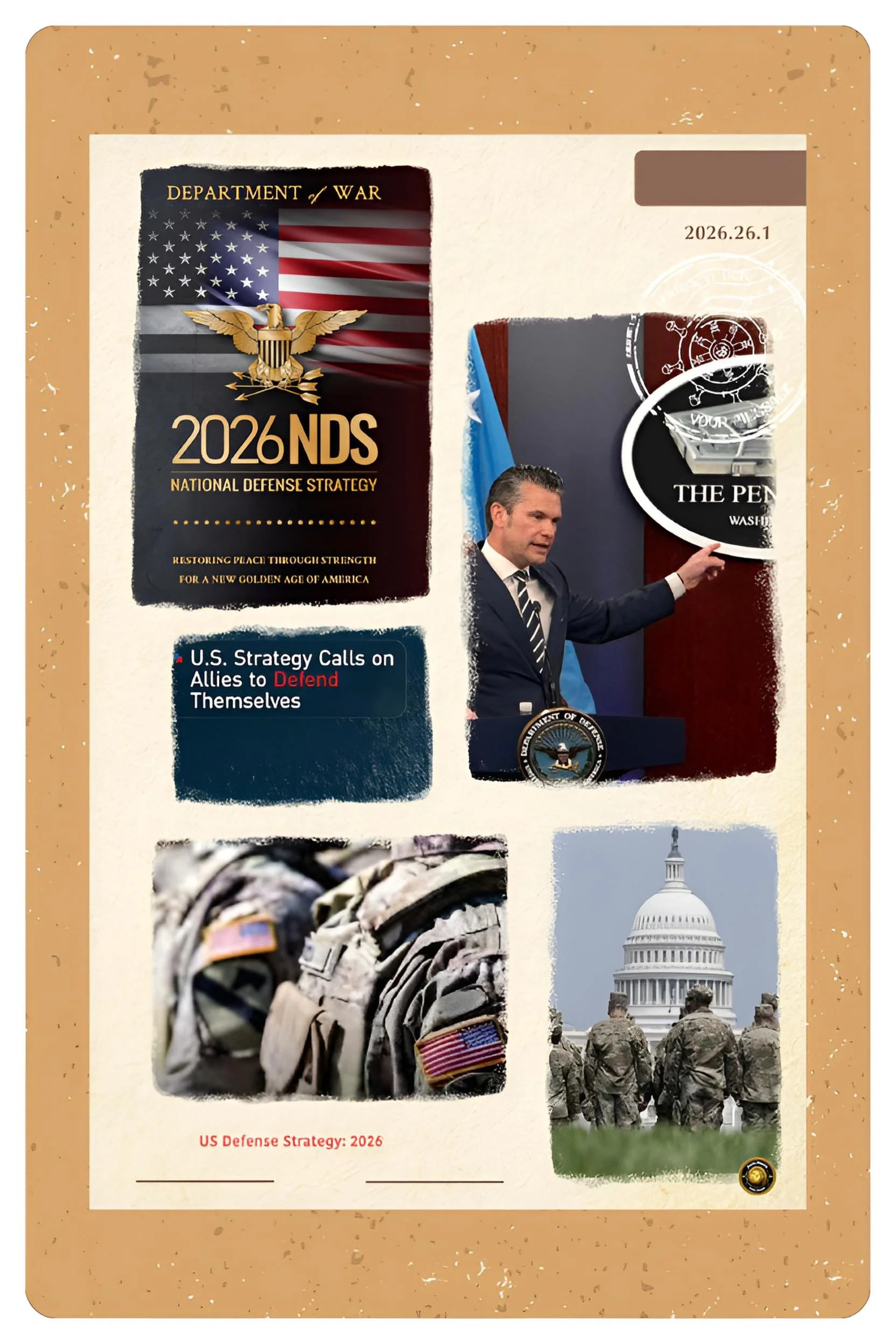
On January 23, 2026, the Pentagon released a new plan called the 2026 National Defense Strategy that changes how America will use its military. The most important change is this: the Pentagon now says protecting America at home is more important than protecting American interests around the world.
The new strategy also tells American allies in Europe and Asia that they need to spend more money on their own defense and cannot count on the United States to help them as much as before. The strategy also changes how the Pentagon views China. Instead of treating China as America's biggest threat, the strategy says China is important but can be managed. This is a huge change from what President Biden's Pentagon said just four years ago.
The strategy also brings back the Monroe Doctrine, which is an old American idea about keeping outside powers out of countries in North and South America. This article explains what these changes mean for America, its allies, and the world.
INTRODUCTION
Trump Corollary to the Monroe Doctrine.
Every four years, the Pentagon writes down its plans for what the American military will do. This plan is called the National Defense Strategy. It tells military leaders, Congress, and the world what America thinks is dangerous and what the military will protect.
The 2026 National Defense Strategy is different from the old plans in important ways. It focuses on protecting America's borders and the Western Hemisphere instead of protecting countries far away. It also stops treating China as the biggest threat to America. Instead, the Pentagon says protecting America's southern border from drugs and illegal border crossings is more important than controlling what happens in Asia or Europe.
WHAT CHANGED SINCE THE LAST STRATEGY?
Four years ago, President Biden's Pentagon said that China was the biggest threat to America. The 2022 strategy spent many pages explaining how China was growing stronger and might take over areas of Asia that America cared about. That strategy also said that Russia was very dangerous, especially after Russia attacked Ukraine. The Pentagon said America needed to work with allies in Europe to stop Russia.
The old strategy also talked about climate change as a serious problem that would make the military's job harder. For example, climate change causes flooding that can damage American military bases. Rising sea levels can affect where ships can go.
The 2026 strategy changes almost all of these ideas. Now, the Pentagon says the most important thing is protecting America at home. The strategy mentions climate change nowhere, even though the climate is changing faster than four years ago. The strategy barely talks about Ukraine, and when it does, it says Europe—not America—should be responsible for helping Ukraine defend itself against Russia.
THE NEW MILITARY PRIORITIES: FOUR THINGS THE PENTAGON WILL FOCUS ON
The 2026 strategy lists four main things that the Pentagon will focus on, in this order:
First priority: Defend the American homeland.
This means protecting America's borders, especially the southern border. The Pentagon will work with border control agencies to stop illegal border crossings. The Pentagon says this is military work, not just police work. The strategy also includes protecting America from missiles and drones. The Pentagon is building something called the "Golden Dome" to protect American airspace from missiles.
Second priority: Stop China from becoming too powerful in the Indo-Pacific.
The Indo-Pacific is the ocean area between India and the Pacific Ocean, including countries like Japan, the Philippines, Taiwan, and others. The Pentagon says it will deter China—meaning it will show China that attacking America or its friends would not work. But the strategy says America will do this "through strength, not confrontation." This is different from the old way of talking. It suggests that America is trying to get along with China while still being strong.
Third priority: Make American allies pay more for their own defense.
The Pentagon says that Europe can defend itself from Russia without as much American help. The strategy says South Korea can defend itself from North Korea without as much American help. The strategy is basically telling America's friends around the world: "America will still help you, but you need to help yourselves much more than before."
Fourth priority: Make more weapons and military equipment in America.
The Pentagon wants to rebuild America's ability to make weapons and military equipment quickly. This is because America might need to make weapons faster if there is a war.
HOMELAND FIRST: WHY THE PENTAGON IS LOOKING INWARD
The most important change in the 2026 strategy is that the Pentagon now says protecting America at home is more important than protecting American interests overseas. This is a big deal. For seventy years, America's military has been spread all around the world. America has troops in Europe, Asia, the Middle East, and many other places. The idea was that American troops overseas would stop bad things from happening before they could hurt America.
The new strategy says this is backwards. The Pentagon thinks America has not paid enough attention to its own borders and its own defense. The strategy says that drugs and illegal immigrants crossing America's southern border are serious threats to American security. The Pentagon will now send soldiers to help with border control. This is unusual because the military usually does not do police work. But the Trump administration thinks the southern border is a military problem, not just a police problem.
The Pentagon also wants to build better air defense for America. Right now, there are missiles and drones from other countries that could fly to America and cause damage. The Pentagon is building the "Golden Dome," a system to protect America from these threats. The Golden Dome would shoot down missiles and drones before they could hit American cities.
BRINGING BACK THE MONROE DOCTRINE FOR THE WESTERN HEMISPHERE
The 2026 strategy brings back an old American idea called the Monroe Doctrine.
The Monroe Doctrine was written in 1823. At that time, European countries had colonies in North America and South America. The Monroe Doctrine said that America would not allow European countries to take over new colonies in the Americas.
The Monroe Doctrine meant that the Western Hemisphere was America's area, and other powerful countries should stay out.
The 2026 strategy brings this idea back but calls it the "Trump Corollary to the Monroe Doctrine."
The Pentagon says it will make sure that no other big country—especially China—can have military bases or control important things in North and South America. The Pentagon says it will control important places like the Panama Canal (which connects the Atlantic and Pacific Oceans), the Gulf of Mexico (which the Trump administration now calls the "Gulf of America"), and Greenland (a big island that belongs to Denmark but that the Trump administration is interested in).
The Pentagon also says it will fight drug cartels in the Western Hemisphere. The strategy says the military can attack drug cartels anywhere in the Americas. This could mean American soldiers could be fighting in many countries in Central and South America to fight drugs and gangs.
WHAT THIS MEANS FOR COUNTRIES THAT ARE ALLIED WITH AMERICA
The 2026 strategy changes what American allies in Europe and Asia can expect from America. This worries many of these countries.
In Europe, countries like Poland, Germany, and France are worried. The strategy says NATO can defend itself from Russia without as much American help. But many European leaders think that America's help is very important. Russia has attacked Ukraine and is very close to some European countries. These European countries are now thinking: "If America helps less, how can we defend ourselves?"
The strategy also says that ending the war in Ukraine is "Europe's responsibility first and foremost." This means America is telling Europe: "You solve the Ukraine problem. America will not keep spending money to help Ukraine indefinitely."
Taiwan is very worried. Taiwan is an island near China. China says Taiwan belongs to China and might try to take it by force. America has promised to help Taiwan defend itself. But the 2026 strategy does not mention Taiwan at all. This silence worries Taiwan's government. Taiwan is now spending much more money on its own military because Taiwan thinks America might not help as much as Taiwan hoped.
South Korea is also concerned. South Korea faces North Korea, which has nuclear weapons. America has troops in South Korea and has promised to protect South Korea. But the 2026 strategy says South Korea should be able to defend itself from North Korea without as much American help. South Korea is now wondering if America will pull troops out.
Japan is also affected. The strategy says countries in Asia should do more to defend themselves. Japan is now spending more money on its military.
THE STRATEGY SAYS LESS ABOUT CHINA, MORE ABOUT GETTING ALONG WITH CHINA
The 2026 strategy is much softer on China than the Biden strategy was. Biden's Pentagon said China was "the most consequential challenge to U.S. security." The Trump Pentagon now says China is important but can be managed.
The 2026 strategy says America will try to get along with China. It says America wants "stable, fair, and respectful relations with China." The strategy says America will have military talks with China to prevent accidents or misunderstandings. This sounds friendly, but the strategy also says America will build up military strength in the Pacific Ocean to deter China.
One strange thing about the 2026 strategy is that it never mentions Taiwan by name. Taiwan is the island near China that China might attack. But the strategy does not talk about defending Taiwan. This worries Taiwan very much.
The strategy says America's goal is not to control what China does but to stop China from controlling the Indo-Pacific area. In other words, America wants to make sure China does not become so strong that China can do whatever China wants. But the strategy sounds like America is okay with China being powerful, as long as America is also powerful in the area.
WHAT WORRIES EXPERTS ABOUT THIS STRATEGY
Some people who study military strategy are worried about the 2026 strategy.
One worry is that the strategy says one thing but might do another. For example, the strategy says homeland defense is the top priority. But the Pentagon has not said if it will move soldiers home from Asia or Europe. If the Pentagon does not move soldiers, then the strategy is just words and does not really change anything.
Another worry is about the "Golden Dome" missile defense system.
Experts say this system might not work very well. The system is supposed to shoot down missiles when they are launched.
But most missile defense systems shoot down missiles when they are in the middle of their flight. Shooting them when they are launched might be too difficult with today's technology.
A third worry is that the strategy might make America's allies less sure that America will help them.
For seventy years, America's allies knew that America would come help them if they were attacked. Now, those allies are wondering if America is still a reliable ally. If America's allies do not trust America anymore, it will be much harder for America to work with them.
A fourth worry is that the strategy might not be clear enough about what America will actually do. The strategy talks about defending the Western Hemisphere, but what does that mean? It is not clear exactly where America will fight and where America will not fight.
WHAT HAPPENS NEXT
The 2026 strategy is now written, but the real test is whether the Pentagon actually changes what it does.
The strategy will mean nothing unless the Pentagon moves money from overseas to homeland defense.
strategy will mean something only if the Pentagon moves troops.
The strategy will mean something only if America stops giving as much military help to countries like Taiwan and Ukraine.
In the next few months, the Pentagon will make decisions about how to move soldiers and money. These decisions will show whether the strategy is real or just words. American allies in Europe and Asia are watching carefully to see what America actually does, not just what the strategy says.
The 2026 National Defense Strategy tells the world that America is changing how it thinks about defense. America is looking more at home and less at the world. America is telling its allies that allies must do more for themselves. This is a big change, and it will take time to understand what this change really means.