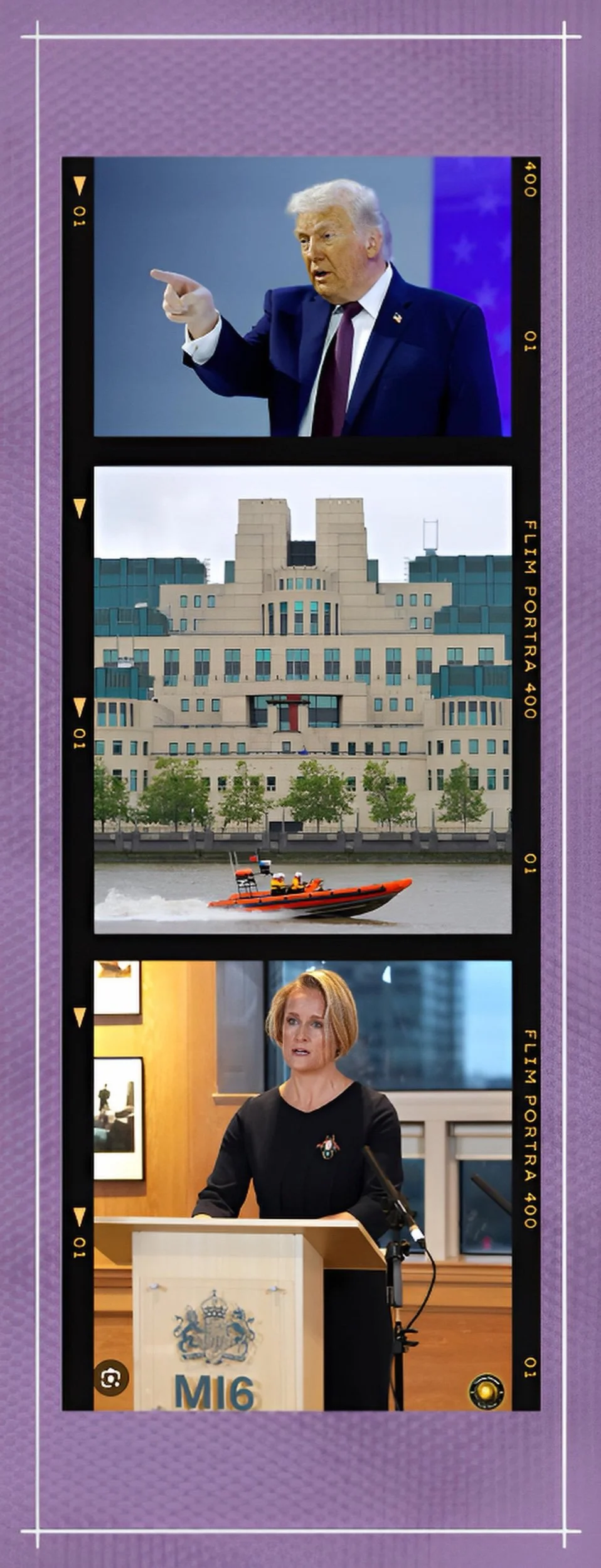
MI6 Gets Its First Female Chief: How Blaise Metreweli Is Preparing Britain's Spy Agency for War in Europe
Summary
A New Leader for Dangerous Times
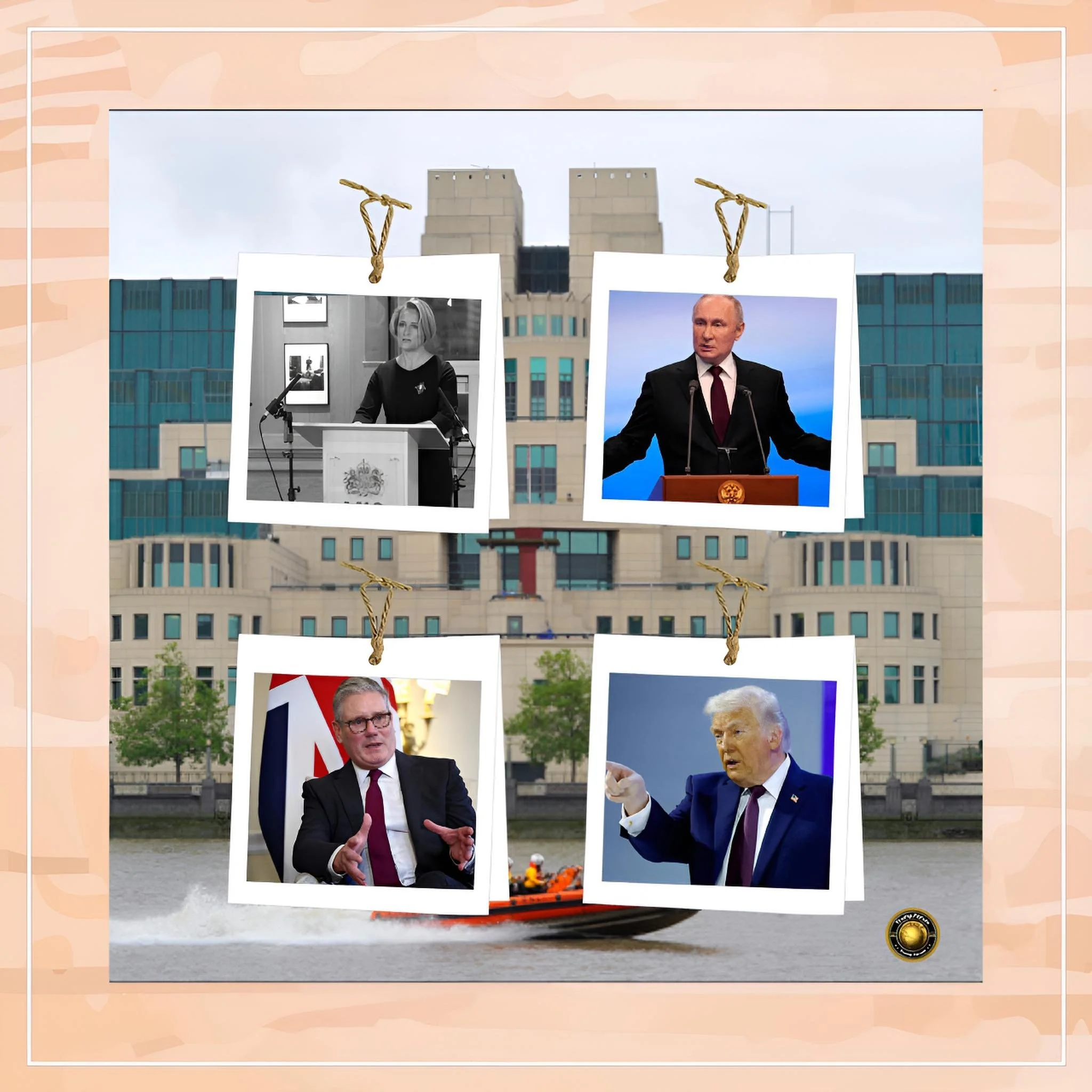
In October 2025, something historic happened. A woman named Blaise Metreweli became the head of Britain's Secret Intelligence Service, known as MI6.
This might sound like just another news story about diversity and progress in a large organization. But it is actually much more important than that. Metreweli is not just the first woman to lead MI6 in its 116-year history.
She is also the youngest person ever chosen for this job. More importantly, she is bringing an entirely new way of thinking about how Britain's spies should operate in a world that is changing faster than anyone expected.
The timing matters. Metreweli took control of MI6 just as Europe is becoming a more dangerous place. Russia has invaded Ukraine and is not stopping. Russian agents are attacking Europe in sneaky ways—hacking computers, blowing up rail lines, and trying to kill business leaders who support Ukraine.
Meanwhile, the head of the United States, Donald Trump, has been saying things that scare America's allies. He suggested that NATO countries, including Britain, did not fight hard enough in Afghanistan. This has made many people worry: Can we still trust America to protect us?
Into this stressful situation comes Metreweli.
At 47, she is young enough to understand modern technology but experienced enough to run one of the world's most essential spy organizations. Her background is unusual for someone in her position.
She studied anthropology at Cambridge University. Later, she studied psychology and artificial intelligence.
This mix of subjects tells us something important about how she thinks: intelligence work needs to understand people, technology, and how these two work together.
The Old Way and the New Way
To understand why Metreweli's appointment matters so much, it helps to know how MI6 worked before.
For most of its history, MI6 was very traditional. Spies were often upper-class men from elite universities. They learned languages, studied history, and recruited foreign spies who would give them secrets. They worked in secret, never talking to the public. When people did see MI6 mentioned in newspapers or movies, it was usually presented as mysterious and glamorous—like James Bond films—but definitely not something ordinary people should know about.
Sir Richard Moore, the MI6 boss before Metreweli, started changing this. He told people that MI6 was looking for diversity. He said MI6 should hire women, people from minority backgrounds, and digital experts. He even started talking publicly about MI6's work in ways that previous leaders would never have done. He left an all-male club in London after it refused to accept women as members.
These changes were important, but Moore was still working within the old framework. He was still trying to be more modern while keeping the basic structure of the organization mostly the same.
Metreweli is different. She is not just adding modern things to the old way. She is saying that the old way has become too slow and too limited for the threats Britain faces today. She is saying that MI6 needs to be completely reorganized around technology. When she gave her first speech as MI6's leader in December 2025, she said something that sounded shocking to people who knew the old MI6: she said MI6 officers need to be "as fluent in Python as we are in multiple languages." Python is a computer programming language. Metreweli was saying that being good at writing computer code should be as important as being good at learning Russian or Arabic.
This is a huge change. It means that MI6 should hire software engineers, data scientists, and artificial intelligence specialists. These are people who would normally work at companies like Google or Facebook, not at a secret government agency. It means that MI6's culture needs to change so that these technical people feel comfortable working there. And it means that traditional spies—the people who recruit foreign agents and secretly gather information—need to learn about technology in ways they never had to before.
Why Technology Matters in Modern Spying
Why is Metreweli pushing this change so hard? To understand this, you need to know what is happening in the world right now. Russia is fighting a war in Ukraine, but it is also attacking Europe in ways that are not traditional warfare. Russian agents are hacking electricity grids and water systems to make them stop working. They are cutting undersea cables that carry internet data between countries.
They are using false information and lies on social media to make people distrust their governments. They are trying to kill or hurt people who support Ukraine—including the boss of a company that makes weapons for Ukraine. They are using special agents to blow up military bases and sabotage train tracks.
All of these attacks need a different kind of spy work than the traditional Cold War spy work that MI6 was originally designed for. You cannot recruit a human spy to stop a cyberattack.
You cannot trick an enemy general with clever deception when the attack is coming from a computer in Moscow. You need to understand computers, understand networks, and understand how to spot patterns in massive amounts of data that might show you where an attack is coming from or what might happen next.
This is where artificial intelligence comes in. Modern computers can look at millions of data points and find patterns that humans would never spot. They can predict what might happen next based on what has happened before. But these computer systems need people to understand how they work, how to make them better, and whether they are giving reliable answers. This is why Metreweli is saying that MI6 needs to be staffed with people who understand both technology and intelligence work.
Metreweli explained this in her December 2025 speech. She said that artificial intelligence, genetic engineering, and quantum computers are "rewriting the reality of conflict." She gave examples. A robot designed to help in factories can also be used as a weapon in battle.
A medical discovery that can cure disease might also be used to create a new kind of weapon. She said the real question is not "Who has the most powerful technology?" but rather "Who knows how to use it wisely?" This is a question that only humans can answer.
The Russian Threat: More Than Soldiers
Russia is not waiting for MI6 to figure out all this technology stuff. It is attacking now. And the attacks are getting worse. In 2024, there were lots of Russian hybrid attacks on Europe. In 2025, there were fewer incidents. Some people thought maybe Russia was taking a break. But experts think Russia was just testing to see what it could get away with. Now in 2026, everyone expects the attacks to get much worse.
Here is a list of the kinds of attacks Russia has been doing:
Russia hacked into a company in Germany that is making weapons for Ukraine. The company's CEO survived an assassination attempt. In France, Russian agents placed severed pig heads near mosques to cause anger between religious groups. In Poland, Russia sabotaged railway lines. In Denmark and Norway, Russian drones were seen near airports. In the ocean, Russian ships cut underwater cables that carry electricity and internet data.
Russia is also spreading lies on social media designed to make Europeans distrust each other and to make them less willing to support Ukraine.
What makes these attacks so difficult to deal with is that Russia can deny having anything to do with them. Maybe the hacking came from criminals, not the government. Maybe the drone pilots were just some group that nobody knows about. Maybe the sabotage was done by local people who are angry, not by Russian agents. This "you cannot prove it was us" quality is exactly what Russia wants. It means that European countries cannot treat these attacks as acts of war. They cannot get NATO to help them fight back.
They are stuck trying to figure out how to respond to attacks that are serious but that they cannot even officially prove came from Russia.
Britain's Military Problem: Not Enough Money, Not Enough Soldiers
While Metreweli is trying to modernize MI6 and prepare for Russian attacks, Britain's military is facing a serious crisis. The head of Britain's armed forces, Sir Richard Knighton, told the government that the military is short about 28 billion pounds (roughly 38 billion dollars) over the next four years.
This is a huge problem. Britain promised to increase military spending to 2.5% of its national income by 2027. It also promised to increase it further to 3% in the 2030s. But the military says these promises are impossible to keep because everything costs more than expected.
The situation is even worse than the money numbers suggest. Britain's regular army only has about 70,000 trained soldiers. This is the smallest number since the time of Napoleon, nearly 200 years ago. In addition, Britain has promised to send soldiers to Ukraine if there is a peace agreement between Ukraine and Russia.
The government thinks it can send about 7,500 soldiers. But if Britain sends 7,500 soldiers to Ukraine, there will not be very many soldiers left to protect Britain or to help defend other NATO countries.
This money and soldier shortage affects MI6 too. If the military cannot afford to do what MI6 recommends, then MI6's intelligence becomes less useful. If MI6 warns that Russia might attack a Baltic country, but Britain cannot send soldiers to help defend that country, then what good is the warning?
Trump's Comments and the NATO Crisis
In January 2026, President Donald Trump said something that shocked Europe. He said that NATO countries, including Britain, had not really fought in Afghanistan. He said they "stayed a little back, a little off the front lines." This is not true. Britain lost 457 soldiers in Afghanistan. Britain sent more than 150,000 soldiers to Afghanistan at different times during the war. Some of the hardest fighting happened in a place called Helmand province, where British soldiers did most of the combat.
When Trump said these things, Prime Minister Keir Starmer was furious. He said Trump was being disrespectful to British soldiers who died fighting. Leaders of France, Italy, and other countries were also angry. They said Trump was wrong about the facts and was being unfair to his allies.
But the real danger of Trump's words was not just about being unfair to the past. His words made everyone wonder: Does America still promise to help if Russia attacks a NATO country? NATO works based on the idea that if Russia attacks one country, all the other countries promise to fight back together. This promise is called Article 5. Trump seemed to be saying that America might not keep this promise. He seemed to be saying that Americans are tired of paying money to protect Europe.
This is a huge problem for Britain and all of Europe. If America does not promise to protect them, then they need to protect themselves. But they have been relying on America for protection for more than 70 years. They are not sure they can protect themselves on their own. This is why Metreweli's modernization of MI6 is so important. Britain needs intelligence so good that it can warn about Russian attacks before they happen. Britain needs to understand what Russia is planning so that it can react quickly. Britain does not have enough soldiers to fight Russia in a big war, so Britain needs to be so smart about spying that it can prevent a war from happening in the first place.
Britain and France Join Together on Nuclear Weapons
In July 2025, Britain and France made a historic agreement. For the first time, the two countries agreed to coordinate their nuclear weapons. This is a very big deal. Each country has always said that its nuclear weapons are independent. That means each country makes its own decision about whether to use them. But now Britain and France are saying that they will talk to each other before using their nuclear weapons. They are saying that they will make decisions together.
Why does this matter? It matters because it is a sign that Europe is starting to prepare for the possibility that America might not help them if Russia attacks. Nuclear weapons are the biggest deterrent. They say to an enemy: "If you attack us, we will hurt you so badly that you will regret it forever." If America's nuclear weapons cannot be trusted, then Europe needs its own nuclear weapons that can be trusted. Britain and France have nuclear weapons. So they are saying: "If Russia attacks, we will punish Russia, even if America does not help."
France has also been working with Germany to build new military equipment together. Germany and France are planning to build new tanks and new long-range weapons systems. They are sharing technology and costs. This is also a sign that Europe is preparing to defend itself without always relying on America.
Metreweli's First Speech: A Warning About War
In her first public speech on December 15, 2025, Metreweli said something that sounded scary to many people. She said that Britain is operating in "a space between peace and war." She did not mean that Britain is actually fighting a war with Russia right now. She meant that Britain is in a situation where it is not at peace like it used to be, but it is not in a full war like World War II either. She meant that there is a constant threat, a constant attack, coming at Britain from Russia and from other bad actors. But these attacks are designed not to look like war, so that NATO countries cannot officially fight back.
She also talked about the kinds of attacks that are happening. She said that Russia is testing NATO by attacking in small ways. Russia is trying to see if NATO will fight back. Russia is trying to see if the countries of NATO trust each other and will work together. If Russia thinks that NATO will NOT fight back, or if Russia thinks that NATO countries do not trust each other, then Russia might decide to attack in a bigger way.
Metreweli said that MI6 needs to be ready to fight in this in-between space. It needs to understand where attacks are coming from. It needs to warn the government before attacks happen. And it needs to help Britain fight back in smart ways that do not start a big war but that show Russia that attacks on Britain will not work.
She also talked about technology again. She said that discoveries in medicine, artificial intelligence, and biology will change everything about how conflicts happen in the future. She said that machines and robots will be very important in future wars. But she said that humans will always be more important than machines. She said that people are the ones who decide what to do with technology. Machines just help people decide better.
Why Does This Matter to Ordinary People?
You might be wondering: "This is about spies and military stuff. Why should I care?" Here are some reasons why this matters to regular people.
First, if there is a war between Russia and NATO, it would be catastrophic. Millions of people could die. Europe would be destroyed. The world economy would collapse. So anything that stops a war from happening is very important. Metreweli's job is to help stop that war by knowing what Russia is planning before Russia attacks. Good intelligence can prevent war.
Second, Russia is already attacking the things you use every day. Russian hackers attack electricity systems, water systems, and the internet. If Russia succeeds in shutting down these systems, you might not have electricity in your home. You might not have clean water. You might not be able to use the internet. MI6's job is to stop these attacks from happening. So even if you do not think about spies very much, you are affected by MI6's work every day.
Third, disinformation and fake news are coming from Russia. Some of the lies you might see on social media are coming from Russia trying to confuse people and make them distrust their governments. MI6's job is to figure out where these lies are coming from and warn people so they do not believe the lies. This is important for democracy.
Finally, the changes that Metreweli is making to MI6 represent a bigger change in how Britain sees itself in the world. For many years, Britain relied on America to protect it. Now Britain is learning that it needs to protect itself. It is hiring software engineers and data scientists. It is working more closely with France. It is building new weapons with other European countries. These changes are preparing Britain for a future where Europe is more independent and more willing to defend itself.
Conclusion
Ready for What Comes Next
Blaise Metreweli is leading MI6 at a crucial moment. The world is more dangerous than it was a few years ago. Russia is more aggressive. America's commitment to Europe is uncertain. The weapons and tactics of war are changing. Technology is becoming more important. And Britain needs to be ready for all of this.
Metreweli's approach is to make MI6 smarter, faster, and more technological. She wants MI6 officers to understand computers as well as they understand languages. She wants MI6 to use artificial intelligence to find patterns in data that humans cannot see. She wants MI6 to work closely with other European spy organizations so that Europe can defend itself. And she wants MI6 to warn Britain before bad things happen, not after.
The people she is hiring will be different from the spies of the past. They will include software engineers, data scientists, and artificial intelligence experts. They will work in offices full of computers, not just in secret meetings with agents. But they will still do the important work of understanding what other countries are thinking and planning.
Will Metreweli's changes be enough to keep Britain safe? Nobody can know for sure. But what is clear is that she understands the seriousness of the situation. She understands that the old ways of doing intelligence are not enough for the threats of today. And she is willing to make big changes to try to protect Britain and Europe from the dangers that are coming.
The story of Metreweli and MI6 is not really about a woman becoming the boss of a spy organization, although that is historic and important. It is about how Britain is preparing for a future where it needs to take more responsibility for its own defense. It is about how technology is changing warfare and spying. And it is about how Britain's relationships with America and with Europe are changing in ways that nobody fully expected a few years ago.
The decision Metreweli makes in the next few years will shape Britain's security for decades to come. Her success or failure will matter not just for Britain, but for all of Europe.