Britain's Intelligence System Adapts to Europe's Instability: Blaise Metreweli's Strategic Reorientation of MI6
Executive Summary
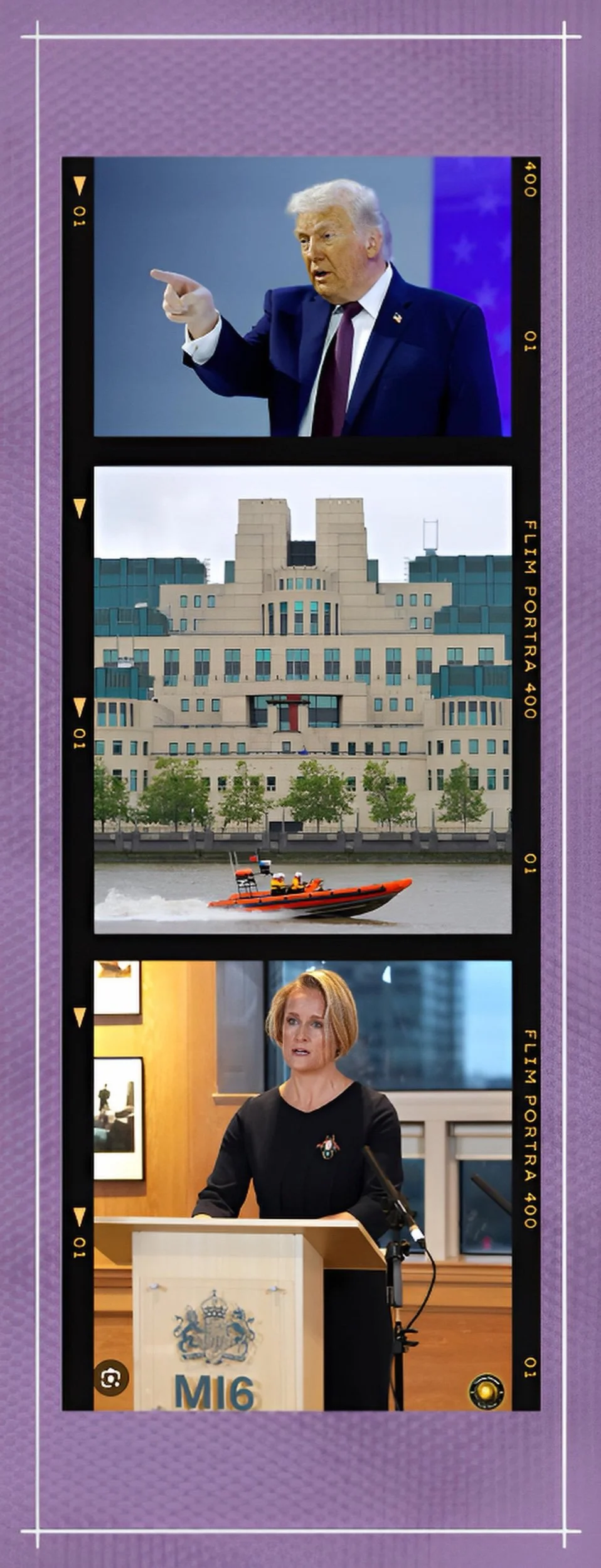
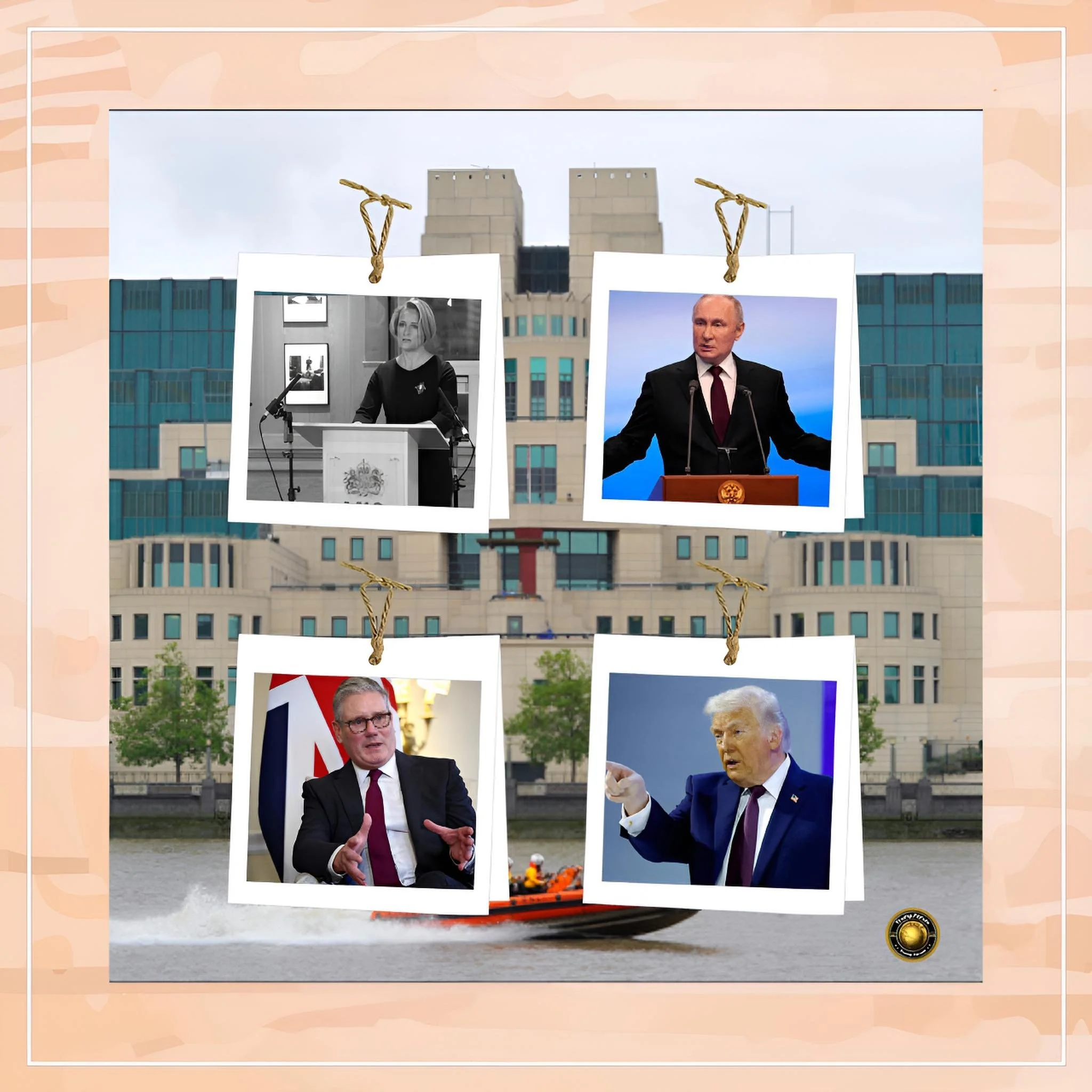
In October 2025, Blaise Metreweli became the first woman to lead MI6 in its 116-year history, inheriting an organization confronting an era of hybrid warfare and transatlantic uncertainty. Her strategic reorientation fundamentally repositions British foreign intelligence to operate in what she termed the "space between peace and war"—a continuous spectrum of sabotage, cyber operations, disinformation, and gray-zone conflict where traditional thresholds of armed aggression no longer apply.
This transformation addresses three interlocking crises: Russia's escalating hybrid warfare campaign across Europe, uncertainty in the transatlantic partnership under the Trump administration, and the technological disruption of intelligence tradecraft itself.
Metreweli's vision centers on technological mastery combined with human judgment, organizational integration across Britain's fragmented intelligence community, and strategic autonomy independent of American support.
The success of her reorientation will determine whether Britain maintains strategic relevance in an era of multipolar competition and algorithmic warfare.
The Hybrid Warfare Crisis: Understanding the New Threat
Europe faces the highest threat level since the Cold War, driven by Russia's systematic sabotage campaign operating below conventional military thresholds.
An Associated Press investigation documented 145 distinct incidents across Europe since 2022, with attacks nearly tripling between 2023 and 2024—escalating from 12 documented cases to 34.
These incidents span critical infrastructure: undersea communication cables, gas pipelines, railway networks, military installations, and defense contractors.
What distinguishes this campaign is its operational structure and psychological dimensionality. Rather than deploying trained intelligence officers, Russia employs locally recruited operatives—often individuals with criminal histories—to execute discrete tasks under remote GRU direction.
This architecture achieves multiple objectives simultaneously: deniability, preservation of intelligence resources, distributed attribution burden, and psychological effects disproportionate to physical damage.
A single arson attack forces emergency responses, diverts investigative resources, generates public anxiety, and creates political pressure to reduce Ukraine support. Russia weaponizes the logic of counterintelligence—making investigation more costly than the original attack.
The psychological component is equally consequential. Metreweli explicitly identified Russia's deployment of "propaganda and influence operations that crack open and exploit fractures within societies."
Disinformation campaigns amplify grievances around energy costs and refugee populations. Drone incursions create visual demonstrations of NATO vulnerability.
These operations generate continuous background insecurity without triggering Article 5 collective defense responses, creating a strategic sweet spot where Russia inflicts costs on the West without escalation.
NATO has recognized the severity. At its June 2023 Vilnius summit, member states agreed to treat certain sophisticated cyberattacks on critical infrastructure equivalently to armed attacks, potentially triggering collective defense mechanisms.
By 2025, NATO characterized sabotage threats as "record high" and formally designated Russia's campaign as a serious security challenge.
Yet European responses remain fragmented. Each state conducts separate investigations, implements unilateral defensive measures, and negotiates individually with the United States for intelligence support.
This fragmentation creates structural vulnerability—precisely what Russia exploits. The operational advantage lies with the aggressor; the West is perpetually reactive.
Metreweli's Strategic Vision: Human Agency in the Grey Zone
Blaise Metreweli's appointment signals fundamental strategic reorientation. Her background—anthropology from Cambridge, career in human intelligence operations across the Middle East and Europe, leadership of MI6's technology and innovation division—provides distinctive analytical framework.
Anthropology emphasizes understanding social behavior through observation, cultural context, and sustained engagement. This perspective informs her strategic conception.
In her December 15, 2025 inaugural address—MI6 chiefs rarely speak publicly—Metreweli articulated a vision centered on human agency within transformed security environment. "In an age of uncertainty, one constant remains: the choices made by human beings still determine the shape of the world," she stated, before elaborating that while "technology can illuminate possibilities: but information requires judgement; complexity demands clarity; and only people can decide which path to follow."
This framing resolves apparent tension between technological emphasis and human intelligence investment. Metreweli is not proposing MI6 become a technology company employing spies; rather, as conflict becomes more algorithmic and technology-mediated, human judgment becomes more—not less—critical. Algorithms detect patterns; humans understand context.
Drones execute with precision; humans decide which targets matter. Artificial intelligence processes information at scale; humans determine truth, meaning, and appropriate action.
This reframing justifies several operational priorities. First, deep specialization in languages, cultures, and technical domains. MI6 officers must engage in what Metreweli termed "immersion...in complex technical and historical detail" sufficient to detect nuance and understand what motivates human choice in specific contexts.
Second, respect-based recruitment and engagement. Metreweli recounted meeting a long-serving agent and asking why that agent continued to work with MI6 despite extraordinary personal risk. The agent's response—"Your values. Your integrity and respect. None of us have a future without them"—shaped her approach.
This framing suggests MI6 will emphasize that working as an agent is partnership rooted in shared values rather than transactional exchange. This approach is more demanding but generates durable relationships with higher-quality intelligence.
Third, operational agility. Metreweli stated that "intelligence must drive action. Action must deliver advantage. And advantage must serve Britain's security and prosperity."
This suggests departure from purely intelligence collection toward what she termed "SOE instincts"—a reference to the Special Operations Executive that conducted sabotage during World War II. MI6 will not merely report what adversaries are doing; it will take action to disrupt operations, support proxy forces, and shape the battlefield.
Technological Transformation: AI as Augmentation, Not Replacement
While Metreweli emphasizes human agency, her strategic approach places technological advancement at the center of operational capability. This apparent contradiction resolves through recognition that technology is the medium through which human judgment now operates. The scale of information, complexity of systems, and speed of operations all exceed human cognitive capacity without technological augmentation.
MI6 has aggressively adopted artificial intelligence for intelligence analysis. The agency is "using AI, including generative AI, to enable and improve intelligence activities—from summarization to ideation to helping identify key information in a sea of data." Large language models assist officers in understanding criminal vernacular and extremist communications.
AI systems identify patterns in vast datasets invisible to unaided analysis. Counter-weapons proliferation operations combine "human skills with AI and bulk data to identify and disrupt the flow of weapons to Russia for use against Ukraine."
However, Metreweli has been explicit that AI augments rather than replaces human capability. "AI is a domain in which we will excel, using the technology to augment, not replace, our human skills.
Every digital trace, every byte of data, every algorithmic decision has implications for the safety of the lives of the courageous people who work with us as officers and agents." This reflects growing recognition that artificial intelligence is most powerful when embedded within human decision-making rather than autonomous.
The practical implication is ambitious. Metreweli declared that MI6 officers must "become as comfortable with lines of code as we are with human sources, as fluent in Python as we are in multiple other languages."
This requires comprehensive reskilling where traditional case officers must develop proficiency in programming, data science, and systems thinking. The agency must recruit data scientists alongside intelligence officers and create organizational structures enabling genuine collaboration.
The recruitment challenge is substantial. Britain's AI talent, particularly in machine learning, is heavily concentrated in London and Cambridge technology companies offering substantially higher salaries and greater flexibility.
Competing requires appealing to sense of service and opportunity to work on consequential national security problems. Metreweli's emphasis on "strong purpose" and "belief in the positive power of human connection" reflects this recognition.
Beyond generative AI, Britain invests heavily in quantum technologies that will eventually render current encryption obsolete while enabling new cryptanalytic capability.
The UK is "leading research in quantum encryption, which is leading to real-world advances in quantum computing for encryption and decryption, as well as unjammable navigation systems." This frontier is critical—it determines whether intelligence agencies can protect their communications while breaking adversary communications.
Institutional Integration: Breaking Down Stovepipes
Strategic reorientation cannot succeed within fragmented organizational structures. Hybrid warfare blurs boundaries between military and civilian, kinetic and cyber, foreign and domestic—requiring breakdown of intelligence stovepipes.
Historically, MI6 (foreign intelligence), MI5 (domestic security), and GCHQ (signals intelligence) operated separately. This Cold War separation reflected jurisdictional clarity but creates vulnerability to operations spanning multiple domains.
A Russian sabotage network operates partly on foreign soil, partly within British territory, and partly through electronic communications. No single agency has complete visibility.
Metreweli addressed this directly: "The risks I have set out require us to work ever more closely with our colleagues in MI5, GCHQ and in defence and diplomacy...in the digital battleground, no single organisation can prevail alone."
She emphasized that "MI6's inbuilt strength is our partners and our people" and outlined an "open and connected" partnership approach.
Parallel institutional reforms underscore this reorientation. In December 2025, Britain launched a Military Intelligence Service (MIS), consolidating all intelligence units from the Royal Navy, Army, and RAF under single command for the first time.
This reform accelerates information flow across services, enables joint operations planning, and ensures intelligence remains operationally relevant. Creation of the Defense Counter-Intelligence Unit addresses a critical vulnerability: hostile intelligence activity against the Ministry of Defense rose more than 50 % in the past year, reflecting intensity of Russian, Chinese, and Iranian operations targeting British military capabilities.
RAF Wyton intelligence fusion center—described as "football-pitch-sized"—brings together "top-secret intelligence from across the Five Eyes partnership," enabling real-time shared understanding. This facility facilitates rapid cross-organizational collaboration that hybrid warfare demands.
These reforms are culturally challenging. Intelligence organizations develop distinct cultures over decades. MI6 officers operate independently, safeguard secrets through compartmentalization. GCHQ's specialists work through different tradecraft.
MI5's counterintelligence professionals manage informants and surveillance. Forcing these communities to share information, coordinate operations, and collectively assess threats requires breaking deeply embedded habits.
Metreweli's leadership will be tested on managing this cultural transition without losing institutional capability.
The Transatlantic Partnership Under Strain
Britain's intelligence reorientation unfolds within dramatically transformed transatlantic context. The Trump administration, taking office in January 2025, fundamentally recalibrated American strategic priorities and alliance approaches. The implications for Britain and MI6 are substantial.
Trump's 2025 National Security Strategy reflects assessment that American power, while globally preeminent, is finite and must concentrate on highest priorities.
The strategy emphasizes "unchallengeable American power in the Western Hemisphere" as prerequisite for global leadership, and explicitly states that "the United States needs a major make-over." Critically, the strategy describes American objectives in Europe using "support"—not "lead" or "guarantee."
This linguistic choice signals that the United States expects European nations, including Britain, to assume primary responsibility for Euro-Atlantic security.
For MI6, this shift has multiple consequences. The Five Eyes intelligence-sharing arrangement, formalized in the 1946 UKUSA Agreement and expanded to include Canada, Australia, and New Zealand, has been the crown jewel of British intelligence capability.
Five Eyes provides Britain access to American signals intelligence, satellite imagery, and cyber capabilities that the UK could not afford independently. The partnership has endured because both nations viewed it as strategically valuable and shared democratic values.
However, the Trump administration's transactional approach to alliances creates uncertainty.
Officials have signaled concern about intelligence sharing with allies whose strategic alignment is questionable. During the previous Trump administration, the threat of reduced intelligence sharing forced Britain to reverse its decision permitting Huawei technology in UK telecommunications.
Prime Minister Keir Starmer appears aware of this vulnerability: he has explicitly stated that Britain must prioritize defense, security, and intelligence cooperation with the United States.
The practical risk is that the United States could restrict intelligence sharing regarding Ukraine, Russia, or other domains where Trump perceives British policy as misaligned.
In February 2025, Trump briefly cut off intelligence sharing with Ukraine following a contentious meeting with President Zelensky, demonstrating willingness to weaponize intelligence cooperation.
Metreweli's strategy addresses this through emphasis on "strategic autonomy"—capability to operate effectively without full dependence on American intelligence. In her speech, she discussed China as "a central part of the global transformation taking place this century" and emphasized that MI6 must "continue to inform the government's understanding of China's rise."
This reframing suggests Britain is positioning itself to maintain strategic judgment regarding the Indo-Pacific even if American support is constrained.
More broadly, Metreweli emphasized that "MI6's inbuilt strength is our partners," explicitly including "the E3, the EU, NATO, those across the Middle East, the Indo-Pacific and beyond." The reference to the "E3" (France, Germany, and Britain) signals interest in strengthening European intelligence coordination independent of Five Eyes.
This is a long-term hedge. Britain is unlikely to abandon Five Eyes, but it is simultaneously positioning itself to maintain intelligence capabilities and diplomatic influence even if American support becomes less reliable.
European Security and MI6's Operational Role
The broader European security crisis directly informs MI6's strategic reorientation. From MI6's perspective, Europe is increasingly the principal theater where Britain's security is directly affected. The Ukraine war, approaching its third year, shows no signs of resolution. Russia continues to bombard Ukrainian cities while simultaneously conducting hybrid warfare across European NATO members.
Metreweli stated that she "find[s] it harrowing that hundreds of thousands have died...because of Putin's historical distortions and his compromised desire for respect." This emotional register—rare for intelligence leaders—signals the depth of British concern about the European security environment.
Her anthropological background likely informs this assessment: she is describing Putin's actions as rooted in psychological and identity factors rather than merely rational strategic calculation.
MI6's European role encompasses multiple functions.
(1) It collects intelligence on Russian military capabilities, logistics, and intentions.
(2) It works with allied intelligence services to warn of Russian operations, coordinate counter-sabotage activities, and share intelligence with Ukrainian forces.
3) It monitors the political dimensions of European governments—identifying Russian influence operations, assessing sustainability of European Ukraine support, and evaluating NATO cohesion.
(4) It engages with resistance networks within Russia, supporting efforts to undermine Putin's control and present alternatives.
Metreweli's emphasis on listening and respect in human intelligence operations has particular relevance to these tasks.
Russian opposition figures, Ukrainian resistance networks, and European political leaders are not targets to be coerced but human beings whose choices determine outcomes. Understanding their perspectives, concerns, and calculations is essential to influencing behavior consistent with British interests.
Strategic Risks and Institutional Challenges
Metreweli has articulated a compelling strategic vision, but vision alone does not constitute strategy. Her reorientation faces multiple implementation risks.
First, institutional inertia.
Intelligence organizations change slowly. Cultures developed over decades do not transform based on new leadership's rhetoric. MI6 must recruit, retain, and promote officers equally comfortable with code and tradecraft.
This transition period will create friction between traditional spies and technical specialists, between compartmentalized operations and integrated warfare.
Second, technological risk.
The emphasis on artificial intelligence assumes Britain can attract world-class AI talent competing against private sector technology companies. It also assumes MI6 can operate AI systems securely without compromise by hostile intelligence services. Given sophistication of Chinese and Russian cyber operations, this assumption warrants scrutiny.
Third, transatlantic uncertainty.
The durability of Five Eyes under Trump administration conditions is genuinely uncertain. If intelligence sharing becomes more restricted, Britain may find itself with less capability than anticipated. The hedge toward European partnership is appropriate but cannot fully substitute for American capabilities.
Fourth, alliance sustainability.
The strategy relies on NATO cohesion, European political will to support Ukraine, and allied intelligence cooperation. Russian hybrid warfare is specifically designed to fracture these relationships. If European states conclude that Ukraine support costs exceed benefits, or if NATO unity erodes, the intelligence picture changes substantially.
Finally, political risk.
Metreweli has taken the unusual step of making public speeches and engaging with media regarding intelligence strategy.
This transparency serves important purposes—demonstrating oversight, building public trust, attracting talent. But it creates political exposure. If MI6 operations suffer setbacks or intelligence assessments prove incorrect, Metreweli will face direct accountability in ways previous chiefs largely avoided.
Conclusion
Despite these risks, Metreweli's strategic reorientation is well-founded. The threat environment has indeed shifted toward hybrid warfare, gray-zone competition, and technology-mediated conflict. British intelligence must adapt to remain relevant and effective. The emphasis on human agency, values-based legitimacy, and technological mastery reflects sophisticated understanding of contemporary security challenges.
Her reorientation addresses three fundamental imperatives.
First, understanding hybrid warfare requires integration across intelligence stovepipes—MI6, MI5, GCHQ, and defense intelligence must operate as unified whole rather than separate fiefdoms.
Second, strategic autonomy requires that Britain develops indigenous intelligence capabilities, particularly in technical domains like AI and quantum computing, rather than relying entirely on American support.
Third, operational impact requires that intelligence not merely inform decision-makers but actively disrupt adversary operations and support British strategic objectives through covert action.
Over the next five years, Metreweli's strategic reorientation will be judged on whether British intelligence can anticipate Russian operations, maintain alliance cohesion, preserve strategic autonomy, and provide insights necessary for effective British statecraft in an era of unprecedented complexity.
The stakes are substantial—not merely for Britain, but for NATO cohesion, European security, and the sustainability of the transatlantic partnership in an age of multipolar competition and algorithmic warfare.