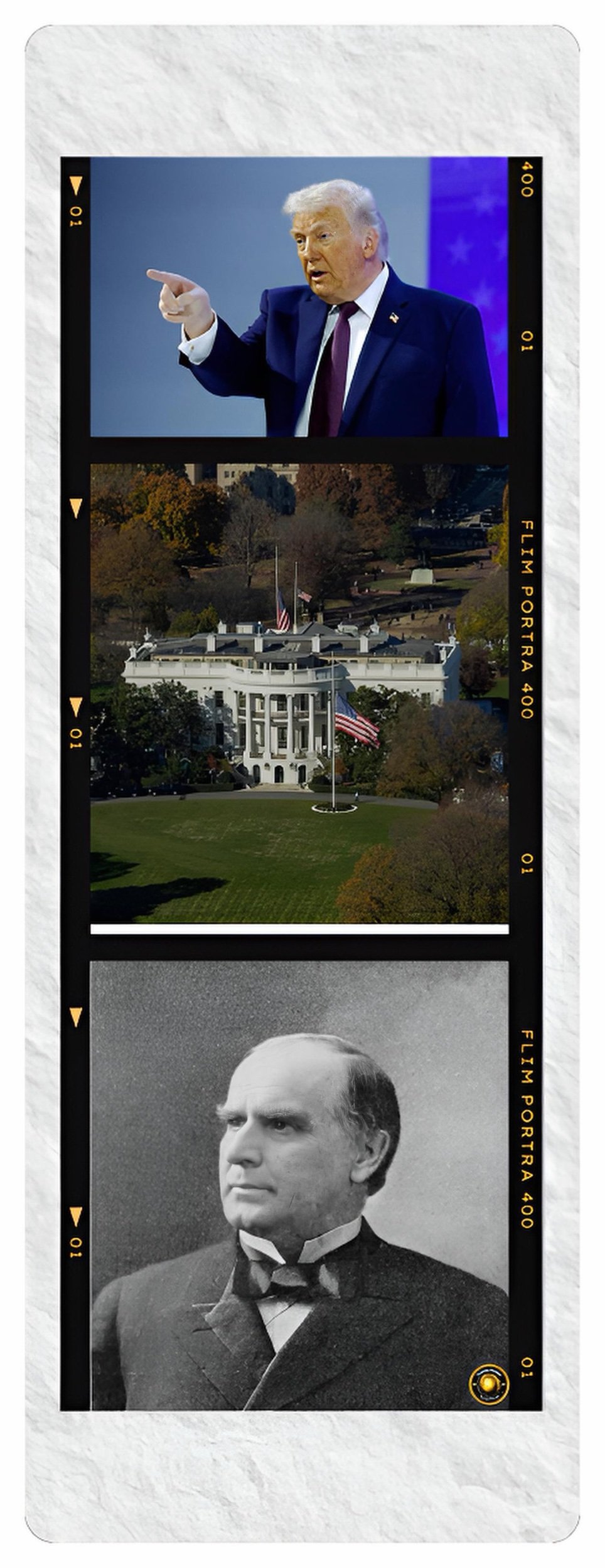
Trump's Love of McKinley: Why a President from the 1800s Explains Trump's Foreign Policy Today
Summary
Understanding an Unusual Historical Obsession
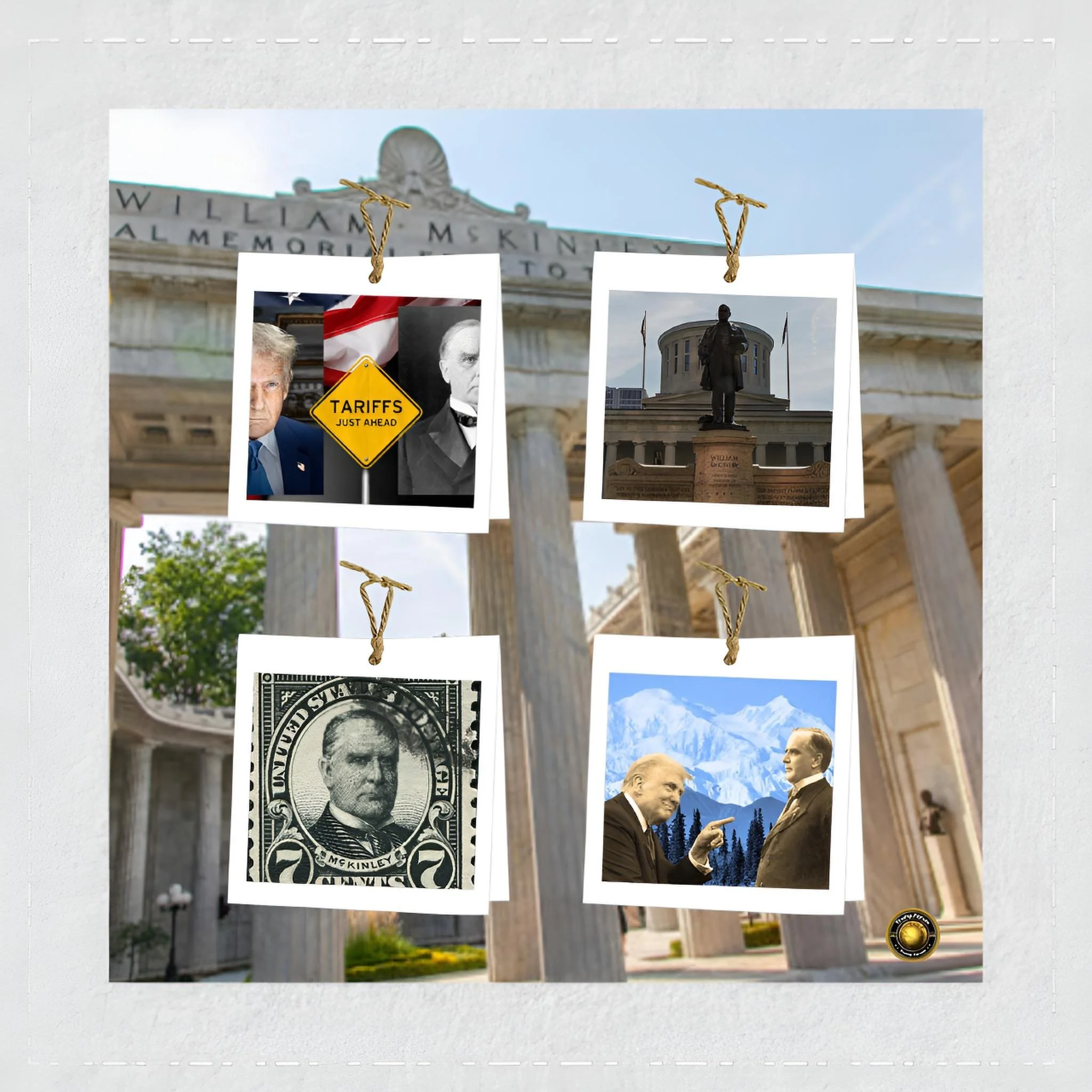
Donald Trump frequently praises William McKinley, who was president from 1897 to 1901. Trump has called McKinley a great president, has renamed Mount Denali back to Mount McKinley to honor him, and repeatedly invokes McKinley when justifying his economic and military policies.
Trump says McKinley "made our country very rich through tariffs" and frames McKinley as a model for how to run America. But here is the problem: Trump's picture of McKinley is not accurate. McKinley's actual record shows that his policies caused economic damage, led to the deaths of hundreds of thousands of people, and even McKinley himself realized his approach was wrong before he died.
By understanding what McKinley actually did and comparing it to Trump's version of McKinley, we can understand what Trump is really trying to do with American foreign policy—and why it is dangerous.
Introduction
A Historical Model for Modern Policy
When you ask why Trump admires McKinley so much, there is an obvious answer: Trump likes tariffs (taxes on imported goods), and McKinley liked tariffs. Trump says he will make America rich by imposing high tariffs, just like McKinley did in the 1890s. Trump also likes the idea of America taking territory and expanding its control—acquiring Greenland, retaking the Panama Canal, annexing Canada—and McKinley expanded American territory by seizing Hawaiian islands and fighting a war to take the Philippines from Spain.
But Trump's admiration for McKinley goes deeper than just copying his economic and military policies. Trump admires McKinley because McKinley represents a model of presidential power without limits. McKinley did what he wanted without worrying about international law or what other countries thought. He took territory through military force.
He imposed tariffs so high that they hurt American workers and consumers. He ruled without the constraints of international institutions or agreements. For Trump, who believes the United States should act according to its own interests without regard for international opinion, McKinley is a historical hero.
Trump has said he wants America to return to the 1890s and 1900s as a "golden age" of American capitalism and power. In his view, those were days when America was truly great—when it had high tariffs, expanded territory, and no international organization telling it what to do.
Trump wants to recreate this golden age. But the actual 1890s and 1900s were nothing like the fantasy version Trump imagines. Understanding the real McKinley and the real 1890s explains why Trump's plan for America is dangerous.
Who Was William McKinley and What Did He Actually Do?
William McKinley was president for only four years (1897-1901) before being assassinated. But in that short time, he fundamentally changed what America is and how it operates in the world. To understand Trump's McKinley obsession, you need to understand what McKinley actually did.
McKinley's Tariff Policy: The Economic Damage
McKinley is famous for imposing very high tariffs—taxes on imported goods. Before he became president, Congress had already passed the McKinley Tariff of 1890, which raised taxes on foreign goods to about 50 percent. This was extremely high. When McKinley became president in 1897, he signed the Dingley Tariff, which kept tariffs at about 50 percent. These were the highest tariffs America had ever imposed.
Here is what happened: prices went up. Americans had to pay more for clothing, food, tools, and other imported goods. Because more expensive imported goods meant domestic companies could charge more too, even goods made in America got more expensive. People complained a lot about the rising cost of living.
The Republicans suffered politically. In the 1890 midterm elections, Republicans lost almost half their seats in Congress. McKinley himself lost his own congressional seat because voters blamed him and his tariffs for inflation. The Republican Party was defeated in 1892 when Grover Cleveland, a Democrat, won the presidency. One reason: people blamed the high tariffs for economic problems.
Most importantly, historians have studied what actually caused economic growth in the 1890s, and they found something surprising: the tariffs did not cause the prosperity. What actually created growth was technology (railroads, electricity, telephones), immigration that provided cheap labor, British investment in America, and new land being opened up for farming.
The tariffs may not have helped the economy at all. And the evidence is clear: the tariffs hurt regular working people by raising prices. Manufacturers and big businesses got rich, but workers suffered.
Trump's argument that tariffs made America rich is simply not true historically. Tariffs may have helped specific industries and wealthy people, but they caused inflation and hurt ordinary Americans. This is exactly what happened in the 1890s. And this is what is happening again in 2026 as Trump imposed tariffs he called "Liberation Day."
McKinley's War With Spain: The Beginning of American Imperialism
In 1898, McKinley started a war with Spain. The war was very short—only ten weeks—but it had huge consequences. The war was supposedly about freeing Cuba from Spanish rule. Spain had brutally mistreated Cubans who wanted independence. But once the war started, McKinley's real goals became clear: he wanted to take Spanish territories and turn America into an imperial power.
McKinley sent the American Navy to attack Spain's fleet in the Philippines (which Spain controlled). The American commander, Commodore George Dewey, completely destroyed the Spanish fleet. This meant America now controlled the Philippines—a group of islands on the other side of the world that had nothing to do with Cuba or America's stated reason for war.
McKinley could have stopped there. But he did not. He sent more than fourteen thousand American soldiers to the Philippines. In the peace treaty ending the war with Spain, McKinley took Puerto Rico and Guam, and he bought the Philippines from Spain for twenty million dollars (worth about five hundred million dollars today).
At the same time, McKinley annexed Hawaii. American businessmen who had planted sugar on Hawaii wanted to take over the islands. McKinley supported this. In 1898, Congress voted to annex Hawaii. But here is the important part: nobody asked the Hawaiian people if they wanted to be part of America.
The Hawaiian queen, Liliuokalani, did not want it. About thirty-eight thousand Hawaiians signed a petition saying they did not want annexation. Their wishes were ignored. McKinley just took Hawaii without permission.
The Philippine-American War: The Hidden Catastrophe
This is the part of McKinley's record that Trump does not talk about. After McKinley took the Philippines, Filipinos who wanted independence fought back against American rule. They expected America to help them gain freedom from Spain. Instead, America just replaced Spain as the foreign power controlling their country.
The fighting that followed was brutal and lasted for years. It started in 1899 and did not end until 1902—and even then, some Filipinos continued fighting until 1913. This was a long, destructive war.
The death toll was catastrophic. Between two hundred thousand and two hundred fifty thousand Filipinos died. Most of them were not soldiers—they were ordinary people, farmers, and families. They died from combat, starvation, disease, and cholera. American soldiers burned villages, destroyed crops, and forced Filipino civilians into camps. This was not a war between armies—it was the American military crushing a population that wanted to be independent.
Americans also died. About four thousand American soldiers were killed and three thousand more were wounded. But that is far less than the Filipino death toll.
The war destroyed Filipino culture. American authorities banned teaching the Filipino language. They prohibited traditional Filipino practices. They imposed Protestant Christianity. Hawaiian culture experienced the same destruction. Traditional Hawaiian customs were banned. Hawaiian health, economy, and political power declined under American rule.
This is what imperialism actually means: military occupation, cultural destruction, and the deaths of hundreds of thousands of people. Trump never mentions any of this when he praises McKinley. He only talks about McKinley "expanding" American territory. He does not talk about the human cost of that expansion.
Why Trump Is So Attracted to McKinley
Trump admires McKinley for several reasons, and understanding these reasons explains what Trump is trying to do today.
Economic Policy: Tariffs Without Understanding Consequences
Trump genuinely believes that tariffs made America rich in the 1890s and will make America rich again today. He has said multiple times that the 1880s and 1890s were when "we were proportionately the richest" because of high tariffs. Trump quotes McKinley saying that tariffs made "the lives of our countrymen sweeter and brighter."
But this ignores historical reality. Historians studying this period have found that tariffs did not cause the prosperity—technology and immigration did. And the tariffs caused problems: inflation, recession, and political backlash. Trump ignores all of this because he wants to use McKinley as an excuse for his own tariff policies.
Imperial Expansion: Territory as a Symbol of Power
Trump wants to acquire Greenland, retake the Panama Canal, and possibly annex Canada and other territories. He looks at McKinley and sees a president who simply took what he wanted: Hawaii, the Philippines, Puerto Rico, Guam. Trump admires this. He wants to do the same thing.
For Trump, acquiring territory is not about practical benefits. Greenland is not strategically necessary. The Panama Canal already serves American interests without American ownership. Canada is already economically integrated with America. But Trump wants these territories anyway because possessing them would prove that America is powerful and great.
McKinley represents what Trump wants to be: a president who exercises power without limitation, who takes what he wants, and who does not care what other countries or international law say. This is the appeal.
Power Without Constraint: The Ideological Core
Most importantly, Trump admires McKinley because McKinley exercised power without institutional or legal constraint. McKinley did not ask international permission to annex Hawaii. He did not worry about whether Spain had legal rights in the Philippines. He simply took what he wanted using American military power.
Trump and his closest adviser, Stephen Miller, explicitly reject the idea that international law or international institutions should constrain American power. Miller has said that the world is "governed by strength, that is governed by force, that is governed by power. These are the iron laws." He dismisses international law as "international niceties." This reflects McKinley's approach: power is what matters, not law or morality.
For Trump, McKinley represents a president who was not limited by institutional rules or international agreements. Trump wants that kind of unlimited power. So McKinley is his historical model.
The Problem: Historical Distortions That Hide Real Consequences
Trump's version of McKinley is not historically accurate. Trump ignores or distorts several crucial facts about McKinley's actual record.
Tariffs Caused Problems, Not Prosperity
Trump attributes American prosperity in the 1890s to McKinley's tariffs. But historians who study this period have concluded that tariffs had little to do with growth. Real economic historians say that technological innovation, immigration, capital investment, and new agricultural lands explain the 1890s prosperity. The tariffs did not cause it.
Moreover, the tariffs caused immediate problems. Prices went up. Workers suffered. Farmers struggled. The political consequences were severe: Republicans lost elections specifically because voters blamed them for the high tariffs. This happened in 1890 and again in 1892.
Trump's plan to impose high tariffs ignores this history. He is repeating a policy that did not work in the 1890s and will not work today.
McKinley Changed His Mind About Tariffs
Here is something else Trump does not mention: McKinley himself abandoned protectionism. By 1900-1901, McKinley realized that tariffs were not a good policy. In a speech in Buffalo in September 1901, McKinley said he wanted "reciprocity"—trade agreements where countries reduce tariffs together—and he argued that America should open its markets because American manufacturers were producing more than Americans could consume.
McKinley wanted to export to other countries, which meant those countries needed to be able to buy American goods. That is hard when America is imposing 50 percent tariffs on their goods.
In other words, McKinley realized his original tariff policy was wrong. He was moving toward free trade when he was assassinated. Trump ignores this evolution and pretends McKinley was always a protectionist.
The Human Cost of Imperialism: Two Hundred Thousand Deaths
Trump talks about McKinley "expanding" American territory as though it was a great accomplishment. He does not mention that the Philippines expansion killed between two hundred thousand and two hundred fifty thousand people. Most were innocent civilians—farmers, families, children.
When Trump talks about wanting to acquire Greenland or retake the Panama Canal, he is using McKinley as a model without acknowledging the violence and suffering that McKinley's imperialism produced.
If America actually tried to take Greenland from Denmark by force, thousands of people could die. Trump does not seem to care about this because he does not acknowledge that McKinley's imperialism killed anyone.
Understanding McKinley's actual record means understanding that imperialism is violent and destructive. Trump refuses to make this connection.
McKinley's World Versus Trump's World: Why the Context Has Changed
McKinley operated in a very different world than Trump does today. This is important to understand because it explains why trying to repeat McKinley's approach is dangerous.
In the 1890s, imperialism was normal. Britain, France, Germany, and other European countries were all taking over territory in Africa, Asia, and elsewhere. Nobody thought this was unusual. International law barely existed. There were no international institutions to stop imperialism. Power was the only rule.
Trump is trying to repeat this approach in 2026. But the world has changed fundamentally since 1901. After World War II, the world decided that territorial conquest and imperialism should be forbidden.
The United Nations Charter says that countries cannot conquer other countries. NATO members are supposed to be allies, not territories to be conquered. International agreements say that every country has the right to be independent.
This does not mean the post-1945 world was perfect. But it did mean that the strong imperial powers agreed not to use force to conquer territory. It meant that America could be powerful without being imperial—by having allies, by controlling trade, by having influence through institutions. This actually worked better for America than imperialism would have.
Trump is trying to go backward to the pre-1945 world of imperial conquest. But that is exactly the world that led to World War II and the deaths of tens of millions of people. Going backward to that model is dangerous.
The Actual Costs of Imperial Policy
If Trump continues on the McKinley path, several bad things will happen:
Economic Damage
High tariffs cause inflation and hurt ordinary Americans. When prices go up for food, gas, clothes, and other goods, poor and middle-class people suffer most.
They have less money to spend on other things. Businesses cannot find cheap inputs to make products. Supply chains break. Jobs are lost. This is what happened in the 1890s, and it is what is happening in 2026 as Trump's tariffs take effect.
Loss of Allies
America's strength has always come from having allies—countries that cooperate with America because they trust America and benefit from the relationship. If Trump threatens to conquer Greenland from Denmark, or use military force against Canada, or seize resources from other countries, allies will stop trusting America. They will build their own weapons and armies. They will not cooperate with America. America will become isolated.
This is already happening. European countries are building independent military capabilities because they do not trust Trump.
Japan and South Korea are hedging their security bets. China sees Trump focused on the Western Hemisphere and is taking advantage to expand in Asia. Russia is moving closer to China. By trying to act like McKinley in the imperial age, Trump is losing the alliances that actually make America powerful today.
Great Power War
The pre-1945 world that McKinley represented was a world of constant war between great powers. Countries fought each other to control territory and resources. Millions died. This is what Trump's return to McKinley-style imperialism risks recreating.
If America claims the Western Hemisphere as its exclusive sphere of influence (like Trump's "Donroe Doctrine"), this gives Russia permission to claim Eastern Europe, China permission to claim Asia, and India permission to claim South Asia. The result is multiple great powers fighting each other for control. This is exactly the world that produced World War I and World War II.
What Trump Gets Wrong About the "Golden Age"
Trump says he wants to return to the "golden age" of the 1890s. But that "golden age" was not actually golden for most people.
The 1890s had extreme inequality. Billionaires like Andrew Carnegie and John D. Rockefeller accumulated incredible wealth while workers labored twelve-hour days in dangerous factories for poverty wages.
Children worked in mills and mines. There was no safety regulations, no minimum wage, no weekends, no health insurance. People died from treatable diseases because they could not afford doctors. This was the Gilded Age—glittering on the surface for the wealthy, but ugly and brutal for ordinary people.
Trump's vision of returning to the 1890s is really a vision of returning to the time when rich people could do whatever they wanted without regulation or constraint. He talks about it as a "golden age," but for most Americans, it was a time of suffering and hardship.
Conclusion
The Danger of Resurrect a Failed Past
Trump's obsession with McKinley reveals what he wants to do: return America to an imperial model of power that the world rejected after World War II because it led to catastrophe. McKinley's tariffs caused economic problems and political backlash. McKinley's imperialism killed hundreds of thousands of people. McKinley himself realized his tariff policy was wrong before he died.
Yet Trump invokes McKinley to justify contemporary policies—high tariffs that will cause inflation, and imperial expansion that will violate international law and destroy alliances.
Trump is trying to make America great again by going backward to a model that has already failed. The McKinley approach did not create lasting prosperity. It created economic damage, violence, and suffering. When America tried to sustain an empire through military force in the twentieth century, it led to devastating wars in Korea, Vietnam, and the Middle East. The lesson of history is that empires are expensive, destructive, and ultimately fail.
The post-1945 American strategy—building alliances, leading through institutions, exercising power through influence rather than conquest—actually worked better for America than imperialism ever did. It made America richer, more secure, and more powerful. Trump is throwing this away to chase the fantasy of the 1890s.
The result will not be American greatness. It will be American isolation, economic damage, loss of allies, and increased risk of great-power war. Trump's McKinley fantasy is not golden. It is dangerous.