Trump and the Empire Dream: Understanding America's Dangerous New Direction
Summary
What Is Happening?
Donald Trump is behaving like a nineteenth-century empire builder, not a twenty-first-century president. In the first few weeks of 2026, his administration did something very unusual: it tried to take over territories that do not belong to the United States. Trump threatened to seize Greenland (which belongs to Denmark), take back the Panama Canal (which was given to Panama in 1999), acquire Canada as a new American state, and invade Venezuela to control its oil. These are not jokes or negotiating tactics. Trump has threatened military force, imposed punishing tariffs on allies, and ordered military operations in Venezuela. This report explains why Trump is acting like this, what it means for America, and why these moves are likely to backfire badly.
Introduction
A Strange Pattern
When historians and foreign policy experts look at Trump's actions, they usually ask one simple question: "Who benefits from this?" This question normally has a clear answer. Countries do things because someone powerful gains something valuable. But Trump's recent moves do not fit this pattern. They cost money, damage America's friendships with other countries, and do not produce clear benefits.
For example, Trump seized control of Venezuela's oil using the military. But Venezuela's oil is very expensive to extract, and the world has plenty of oil. Taking control of it makes America less secure, not more. Trump is threatening military force to take Greenland from Denmark. But Denmark is America's ally in NATO, and taking Greenland would destroy this friendship while giving America something it does not really need. Trump is demanding the Panama Canal back. But the canal works fine right now, and America gets all the benefits without having to run it.
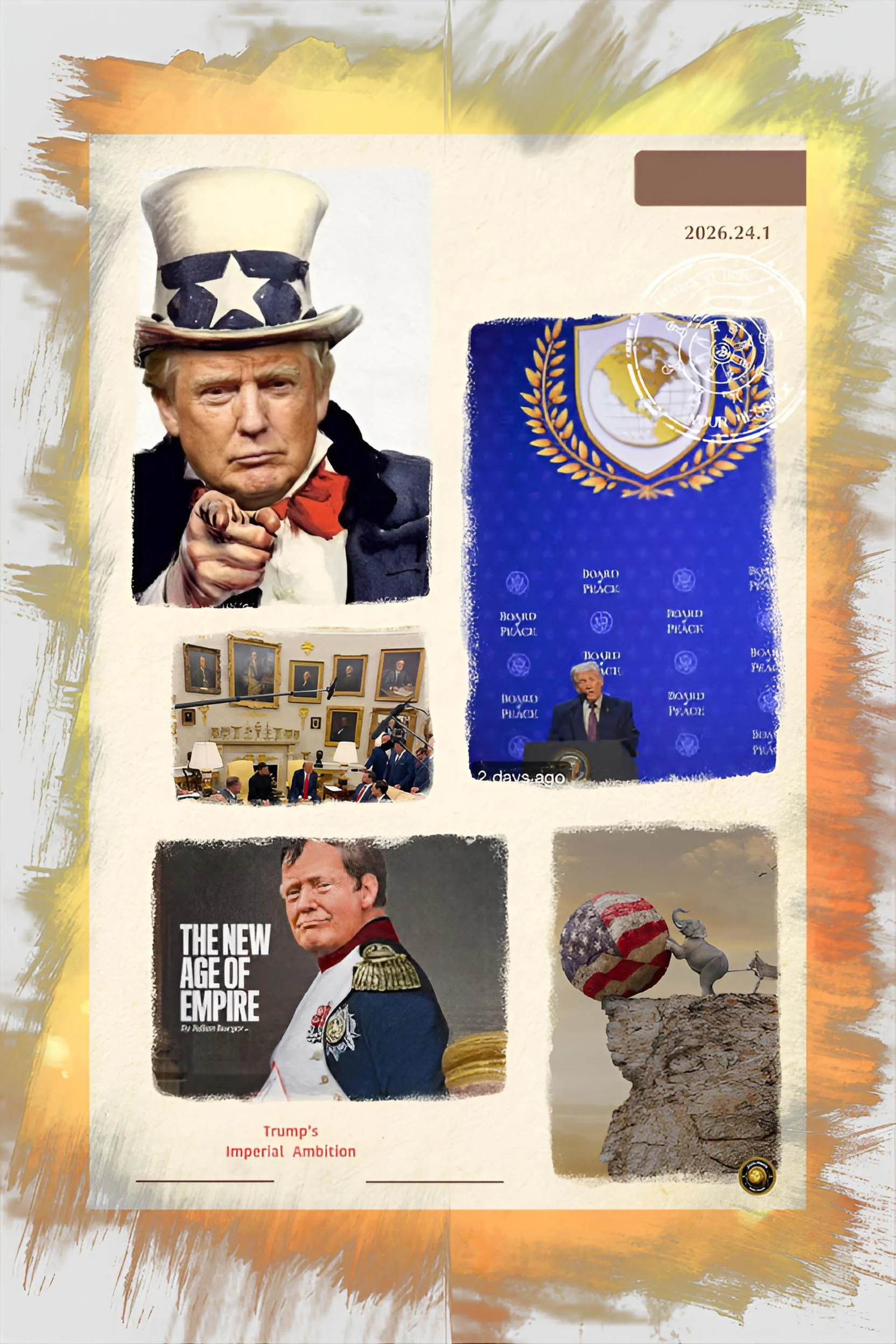
Yet Trump keeps pushing forward. Why? The answer is not about practical benefits. It is about something deeper: Trump's obsession with power, territory, and proving that America is still great and dominant. This is what experts call "imperial aesthetics"—the look and feel of empire, even when it does not make practical sense.
What Has Trump Actually Done?
Understanding Trump's actions requires looking at specific examples of what his administration is doing right now, in 2026.
Venezuela: Invasion for Oil
In January 2026, Trump sent American military forces into Venezuela. They captured the president, Nicolas Maduro, and brought him to New York to face trial. Trump then announced that America would "run" Venezuela while Venezuelan President Maduro was captured. More importantly, Trump said the United States would take 30 to 50 million barrels of Venezuelan oil. The money from selling this oil would go to America and American companies, not to Venezuela.
This is occupation and theft dressed up as law enforcement. Trump's official reason was that Maduro was involved in drug trafficking. But Trump's own statements made clear: the real reason was the oil. "Having a country that has got oil is a big advantage to the United States," Trump said. He promised that American oil companies would invest billions in Venezuela to pump more oil.
The practical problem is this: Venezuelan oil is terrible oil. It is very heavy and very hard to process. It sells for much less money than regular oil. Fixing Venezuela's broken oil system would take ten years and cost billions of dollars that American companies have not volunteered to pay. Global oil prices are already stable. America does not need Venezuelan oil to be secure.
But Trump got something else: he showed other countries that America will use its military to take what it wants. He demonstrated power. That is what mattered to him.
Greenland: The Arctic Territory Trump Wants
Greenland is the world's largest island. It has about forty-five thousand people and belongs to Denmark. Greenland has minerals under the ground—rare earth elements that are valuable for electronics and technology. It is also positioned in the Arctic, which is becoming strategically important as ice melts.
Trump has said repeatedly that America needs Greenland for security. But when Denmark said no—firmly and repeatedly—Trump escalated. In January 2026, Trump's son, Donald Jr., visited Greenland as a political signal. Trump then announced that he would put tariffs (taxes) on goods from eight European countries, including Denmark. These tariffs would start at 10 percent in February and go up to 25 percent by June unless Denmark agreed to sell Greenland to America.
This is economic blackmail. Trump is punishing Denmark (an American ally) to force it to give up territory. It is unprecedented. Tariffs are supposed to protect American industries, not coerce allies into giving up territory.
Denmark said no. Greenland's political leaders said no. But Trump did not stop. He negotiated a "framework" deal in late January that officials describe vaguely as involving "military basing rights" or "mineral access." The actual details were kept secret, but the message was clear: Trump will keep pushing until he gets what he wants.
Panama Canal: Reclaiming Lost Territory
Trump believes America made a terrible mistake when it gave the Panama Canal to Panama in 1999. The canal is a shipping route connecting the Atlantic and Pacific Oceans. It is incredibly valuable. About seventy percent of the goods using it go to or come from the United States.
Trump claims that China is now running the canal (which is not true) and that Panama is overcharging American ships (which economists dispute). But his real reason for wanting it back is symbolic: Trump wants to "take back" territory that America previously controlled. He sees this as correcting a historic American "loss."
When Panama resisted, Trump said he would send the military to take the canal. American military planners actually created plans for military operations to seize it. Panama's president quickly agreed to concessions on Chinese investment. But Trump has not stopped threatening. He wants the canal back, period.
Canada: Making It American Territory
Trump has suggested that Canada should become the fifty-first American state. He has threatened 25 percent tariffs on Canadian goods. He has called the U.S.-Canada border an "artificially drawn line"—implying that it should not exist.
Canada is already deeply integrated with America through trade and military alliances. But Trump sees borders as negotiable and views Canadian sovereignty as an obstacle rather than a negotiated agreement between friends.
Why Is He Doing This?
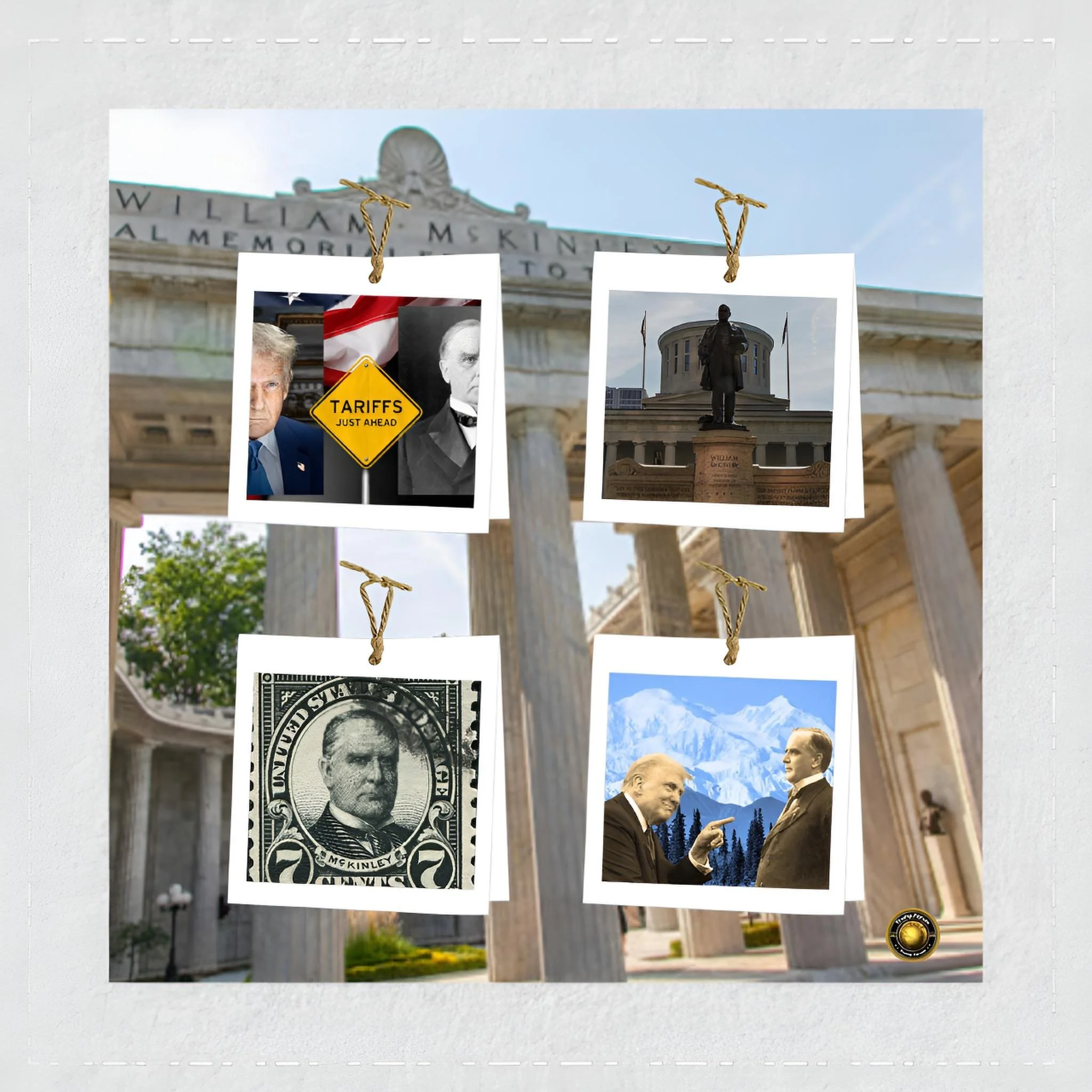
The simple answer is that Trump is not thinking like a modern statesman—he is thinking like a nineteenth-century imperialist. In the eighteen hundreds, powerful countries simply took territory and resources from weaker countries. They called this "Manifest Destiny"—the idea that expansion was natural, inevitable, and right.
Trump uses similar language. He has spoken about "the spirit of the frontier" and described Americans as "explorers and pioneers." He has promised to eventually plant the American flag on Mars. His National Security Strategy explicitly invokes the language of American expansion and imperial dominance.
But there are deeper reasons for Trump's imperial obsession:
Personal Brand and Legacy
Trump cares deeply about his place in history. He wants to be remembered as a great president who made America powerful again. Acquiring territory—especially "taking back" the Panama Canal or obtaining Greenland—would be accomplishments he could point to as uniquely his own. He could claim credit for something no other president achieved.
Business Interests
Trump still owns businesses around the world. He has not separated his personal financial interests from his role as president. This creates conflicts of interest. For example, Trump agreed to a $400 million luxury jet from Qatar while simultaneously making Middle East policy that benefits Qatar. If American companies get access to Venezuelan oil, or if American investors can acquire mineral rights in Greenland, Trump's business partners and associates could profit.
Ideology
Trump and his closest adviser, Stephen Miller, genuinely believe that nineteenth-century imperialism is good policy. They are not being cynical. They actually think that great powers should dominate their regions without constraint. Miller has explicitly stated that Greenland "should be part of the United States." These are deeply held beliefs, not temporary negotiating tactics.
Domestic Political Support
Trump's supporters love this stuff. When Trump talks about "taking back" territory and "making America great again" through territorial expansion, his voters cheer. Cable news networks give him endless airtime. The rhetoric generates excitement and validates his supporters' belief that America is weak and that Trump will restore it.
How This Is Supposed to Work: The Monroe Doctrine 2.0
The Trump administration's National Security Strategy introduces something called the "Trump Corollary" to the Monroe Doctrine. The original Monroe Doctrine (1823) said that European powers should not try to colonize anything in the Western Hemisphere. Trump's version says that the entire Western Hemisphere is America's exclusive zone of influence. No other powerful countries are allowed to have influence there. China, Russia, and Europe must all stay out.
This sounds like strategy, but it is actually quite dangerous. If America gets to claim the Western Hemisphere as its exclusive zone, then what stops Russia from claiming exclusive control over Eastern Europe? What stops China from claiming exclusive control over Asia? What stops India from claiming exclusive control over South Asia?
This idea of "spheres of influence"—where great powers get to control their regions without interference from other great powers—is how the world worked in the eighteen hundreds and early nineteen hundreds. It led to wars, colonialism, and enormous human suffering. The United States actually spent billions of dollars and sacrificed thousands of soldiers after World War II to build a system where this did not happen. Trump is throwing that system away.
The Real Cost to America
Trump's imperial adventure is costing America a lot, and not in good ways.
Allies Are Abandoning the United States
America's power has always depended on alliances. Friendly countries provide military bases, intelligence sharing, coordinated military operations, and economic partnership. Trump is destroying these alliances through economic coercion (tariffs), military threats, and general rudeness.
European countries that have been America's closest allies for seventy years are now asking: can we really trust America anymore? If Trump can threaten tariffs to force Denmark to give up territory, cannot he threaten us too?
Japan, South Korea, and Australia are developing independent military capabilities because they cannot rely on America. European countries are building their own military and intelligence systems. This is very expensive and makes everyone less secure.
Enemies Are Getting Stronger
Instead of weakening America's enemies, Trump's actions are making them stronger. Russia sees American allies becoming nervous and unreliable. Russia is getting closer to China. China sees Trump focused on the Western Hemisphere and takes this as permission to expand in Asia. China is also getting closer to Russia.
Before Trump took office, Russia and China were allies but not friends. Now they are genuine partners, coordinating military activities, sharing technology, and supporting each other against the United States.
The Dollar Is Losing Power
America has a special advantage: the dollar is the world's most important currency. Most international trade happens in dollars. Countries keep their savings in dollars. This gives America enormous power because it can control international finance.
But Trump's approach is making countries nervous about the dollar. If America will use tariffs against allies, who trusts America to manage the global financial system fairly? Countries and companies are starting to develop alternatives to the dollar. China is creating payment systems that do not use dollars. The Euro is gaining importance. This will weaken America's long-term power.
America Is Now Less Safe
Ironically, Trump claims he is making America safer through imperialism. But the opposite is true. When America was embedded in alliances and institutions, other countries followed American rules and aligned with American interests. Now that Trump is breaking those alliances, other countries are building alternatives.
The Liberal International Order that Trump dismisses actually made America much safer. It was easier to prevent wars when countries negotiated through institutions rather than through military confrontation. Trump's rejection of this order means more military confrontation and more instability.
The Specific Example: Why Greenland Does Not Make Sense
To understand how flawed Trump's thinking is, consider Greenland specifically.
Trump says America needs Greenland for security. He argues that Greenland is strategically positioned to watch Russia and China in the Arctic. But here is the problem: America already has this capability. The United States has military bases in Iceland, Alaska, and numerous other places. The U.S. Navy has submarines that can monitor the Arctic. America does not need to own Greenland to do this.
Trump also says Greenland has valuable minerals. This is true. But Denmark and Greenland control those minerals, and American companies can buy them through trade. Owning the territory does not give America cheaper access to minerals because the minerals have to be extracted, processed, and transported—and these costs are determined by the global market, not by who owns the land.
Furthermore, taking Greenland would cost America its alliance with Denmark. Tariffs would hurt American consumers and American companies. The broader damage to American credibility with allies would far outweigh any benefit from Greenland's minerals or strategic position.
But Trump wants it anyway because it satisfies his sense of power and dominance. That is imperial aesthetics: the appearance of power without the reality of benefit.
The Pattern That Keeps Repeating
Trump follows the same pattern in every case:
First, he makes a demand that seems unreasonable (give us Greenland, give us the Panama Canal, integrate with America).
Second, the target country says no. This is normal diplomacy.
Third, Trump escalates. He threatens military force or tariffs.
Fourth, the target country still says no (or says no in firmer terms).
Fifth, Trump negotiates for something less than what he originally wanted, presents this as a victory, and then continues to press for the original goal.
This pattern creates what experts call a "permanent crisis environment." Every relationship becomes uncertain and conditional. America's allies cannot plan for the future because they do not know what Trump will demand next. This uncertainty is actually very dangerous because it can lead to miscalculation and military conflict.
Looking Forward
What Happens Next?
If Trump continues on this path—and there is every reason to believe he will—several things are likely to happen:
More Military Interventions
Trump has threatened military action against Mexico (to fight cartels), Colombia (to fight drug trafficking), and Cuba. He ordered the Venezuela operation. More military interventions are likely. Each one will further damage America's image and credibility.
Conflict with China Over Taiwan
Trump is focused on the Western Hemisphere, but he also wants to contain China. Eventually, these two goals will conflict. Taiwan is important, and China has been steadily building military capacity to eventually control Taiwan. When Trump has to choose between hemispheric dominance and containing China, the results could be catastrophic.
NATO Alliance Breaking Apart
Trump has made clear that American military support for European NATO allies is conditional. Europeans are responding by building independent military capacity. Over time, NATO will become a weaker alliance, European countries will do their own thing, and America will have less influence over European security.
The World Fragmenting Into Competing Blocs
Instead of one world order dominated by America, the world will likely split into multiple competing regions. Russia will dominate Eastern Europe. China will dominate Asia. America will try to dominate the Western Hemisphere. India will dominate South Asia. Each region will develop its own rules, and there will be less cooperation on global problems like climate change, disease, and terrorism.
Why This Was Such a Mistake
The genius of American strategy after World War II was that it did not rely on direct domination. Instead, America built institutions and alliances that made other countries want to follow American leadership. This was much cheaper than maintaining an empire through military force. It was also much more effective.
Trump is throwing this away. He is returning to an eighteenth and nineteenth-century model of empire that requires constant military force, occupying territory, and extracting resources. This model failed every time it was tried because it is inefficient and expensive.
Moreover, Trump's model does not fit the world we live in now. Global challenges like climate change, pandemics, artificial intelligence, and resource scarcity do not respect sphere-of-influence boundaries. These challenges require cooperation, not competition. By destroying the institutions and alliances that enable cooperation, Trump is making the world less safe.
Conclusion
The Look Without the Substance
Trump likes the look of empire. He likes the idea of American dominance, territorial acquisition, and dictating terms to other countries. But he is pursuing this look without understanding the substance of how power actually works in the modern world.
Real power comes from having allies who want to work with you, from institutions that distribute costs and benefits fairly, from influence over the rules that shape global affairs, and from reputation as a reliable partner. Trump is systematically destroying all of these.
What he is getting in return is not real power but theater: tariffs that hurt American consumers, military operations that alienate allies, territory that is not really valuable, and enemies that are getting closer together.
America will not emerge stronger from this. America will emerge weaker, more isolated, and less able to protect itself. The irony is that Trump claims he is restoring American greatness, but his approach is accelerating American decline.
The world of 2030 will likely look very different than the world of 2020. Other powers will have stronger alliances with each other. American dominance will be much less complete. American influence will be much harder to project. And American security will be much less assured.
That is the real cost of imperial aesthetics: the dream of nineteen-century dominance in a world that requires twenty-first-century cooperation.