Macron’s Davos Speech 2026: What it means to Europe and the World
Executive Summary
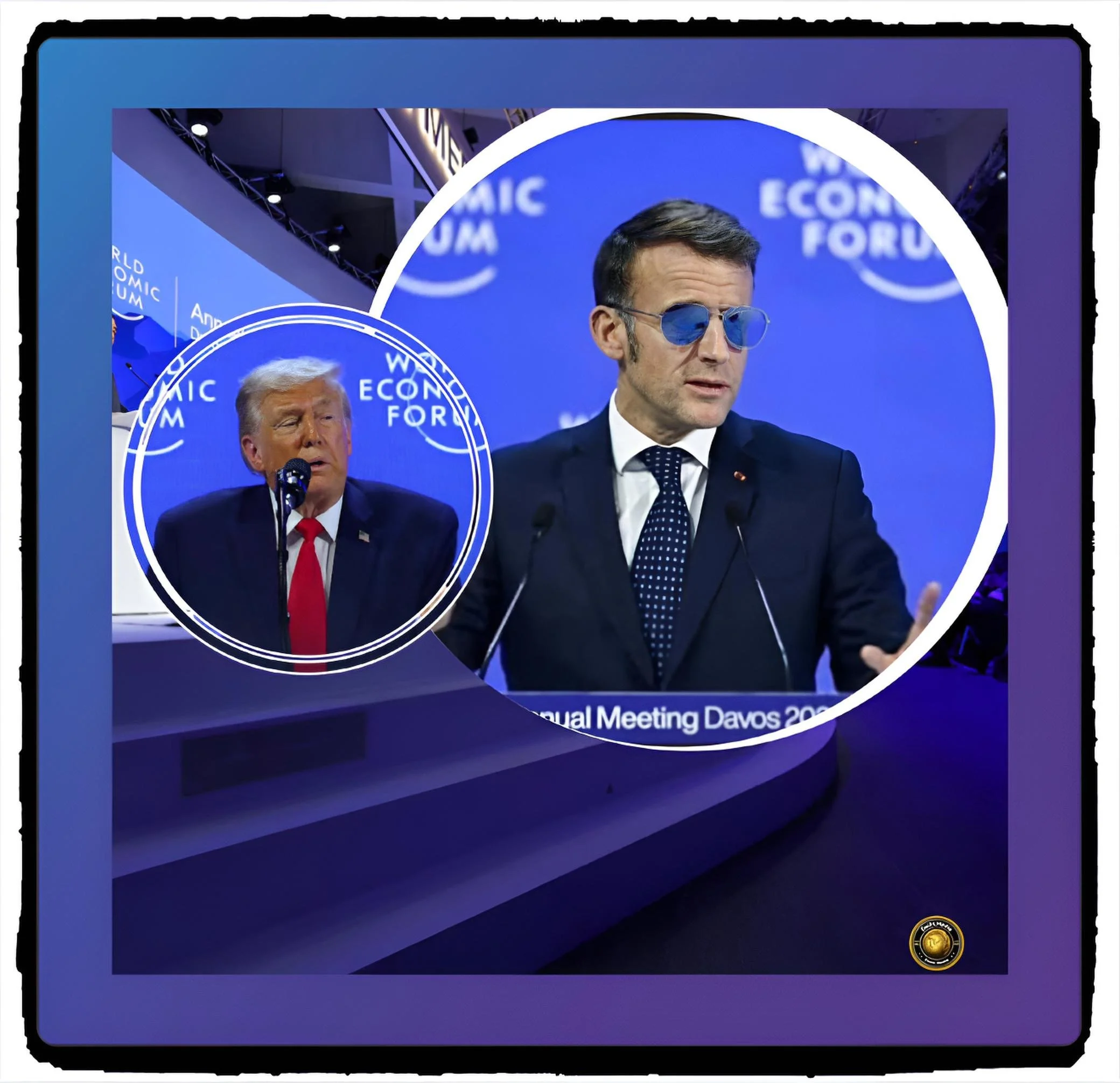
French President Emmanuel Macron gave an important speech at the World Economic Forum in Davos on January 20, 2026. In this speech, he explained that Europe faces serious challenges from trade tensions, especially from American tariffs and Chinese competition.
Macron said Europe must become more independent by protecting its industries, simplifying its complicated rules, and investing heavily in new technology like artificial intelligence. His message was clear: Europe can no longer depend completely on the United States. Instead, Europe must become stronger on its own.
Business leaders and investors at the conference largely agreed with his ideas, though some worried about whether Europe could actually do all this. This article explains what Macron said, why he said it, how people reacted, and what happens next.
Introduction
The Moment Behind the Speech
When Emmanuel Macron walked to the stage at Davos on January 20, 2026, the world was watching nervously. Just days before, American President Donald Trump had threatened to put massive taxes, called tariffs, on eight European countries.
The reason? Trump wanted to buy Greenland, a territory belonging to Denmark, a NATO ally. Most people thought this was an unusual demand, but Trump was serious. He said the taxes would start at 10 %?and go up to 25 %.
This would cost European companies and businesses billions of euros. The situation was very tense.
Into this tense moment, Macron delivered a powerful speech that changed how people think about Europe and America's relationship.
Macron was not angry or loud. Instead, he was calm but firm. He said that Europe had been too trusting of America and needed to take care of itself better. He said Europe should stop being naive about trade and business. This was a historic moment because European leaders do not often talk this way about America.
What Macron Saw as Europe's Problems
Macron started his speech by describing the world's big problems.
First, he said, the world is becoming less democratic and more dictatorial in many countries.
Second, he said, there are more wars than ever.
In 2024, he mentioned, there were over 60 wars happening at the same time.
Third, and most important, Macron said the world is losing its rules. What he meant is that international law, which countries follow to treat each other fairly, is not being respected anymore. Now, only powerful countries seem to matter. Smaller and medium countries are being bullied or ignored.
Macron also said that America is competing against Europe in unfair ways. American companies sell to Europe easily, but American rules make it hard for European companies to sell to America. He said China is doing something different. China makes too many products and sells them cheaply, trying to force other countries out of business. Europe, he said, is stuck in the middle. Europe is losing its ability to compete.
Finally, Macron pointed out that international organizations that should help solve world problems are getting weaker.
The United Nations, the World Trade Organization, and other organizations cannot work well anymore because powerful countries ignore them or leave them. Without these organizations, countries fight with each other instead of working together. This is dangerous for everyone.
Macron's Three-Point Plan for Europe
After explaining the problems, Macron presented his solution. He called it three pillars, which means three main parts of a strong building. Each pillar helps hold up the whole building. Macron's three pillars are: protection, simplification, and investment.
Pillar One: Protect European Business
The first pillar is protection. But Macron was careful to explain what he meant. Protection does not mean Europe should close its borders and refuse to do business with other countries. Instead, protection means defending European companies when other countries do not follow fair trading rules.
Macron gave examples. European companies work in chemicals, cars, and many other industries. These companies are strong and can make good products. But they face competition from American companies that have government protection and from Chinese companies that get government money. European companies do not get the same government protection. So Macron said Europe should use special tools that the European Union has.
One important tool is called the anti-coercion mechanism. This tool lets Europe fight back if countries use unfair tactics. For example, if America puts high taxes on European products as punishment, Europe can use the anti-coercion mechanism to stop American companies from doing business in Europe or to make it very hard for them. Macron said this tool is powerful and Europe should not be afraid to use it.
Another protection tool is European preference. This is an idea borrowed from America. In America, the government often buys American products for government projects. Europe should do the same thing—buy European products for European government projects. This helps European companies grow stronger. Macron said Macron said the European Commission, which is like Europe's government, should create clear rules about European preference by early 2026.
Macron also talked about making sure foreign companies invest in Europe in the right way. For example, China can invest in European companies, but only if the investment helps European workers, brings new technology, and creates real jobs. Europe should not accept investment that just buys European companies and closes them down or ships jobs to China.
Finally, under protection, Europe needs to make its supply chains strong. A supply chain means all the companies and materials that work together to make a product.
Europe depends on other countries for important materials like rare earth metals and computer chips. If those countries cut off supply, European industry suffers. So Europe should find other suppliers and build supply lines that do not depend on just one country.
Pillar Two: Simplify European Rules
The second pillar is simplification. Europe has many rules and laws. Some of these rules exist to protect workers, the environment, and consumers. These rules are good and should stay. But some rules are so complicated that they make it harder for European companies to do business compared to American and Chinese companies. Macron said Europe needs to make things simpler without getting rid of protection for workers and the environment.
For example, Europe has new rules called CSRD and CS3D that require companies to report how they affect the environment and workers. These are good ideas, but reporting can be very expensive and complicated. Europe should keep the protection but make the reporting easier.
Macron also talked about making the European single market work better. In theory, Europe should work like one big country where money, people, and products move freely. But in practice, different European countries have different rules, so it is hard for companies to operate across Europe.
This is not like in America, where a company can grow quickly across all 50 states using the same rules. Macron said Europe should make it easier for European companies to operate across Europe without learning different rules in each country.
Macron made an interesting point about energy and technology. Europe should not favor one type of energy or technology over another just because politicians like it. For example, Europe should not say only solar power is good and nuclear power is bad. Instead, let the market decide which technology works best. This is called technological neutrality. It helps companies innovate without worrying about politics.
Pillar Three: Invest in New Technology and Innovation
The third pillar is investment. Macron said that American companies are more successful than European companies partly because America spends more money on new technology and research. According to Macron, 65 to 70 percent of the difference between how rich Americans are and how rich Europeans are comes from this difference in investment in new ideas and technology.
Macron said Europe needs to invest huge amounts of money in important areas like artificial intelligence, quantum computers, clean energy, and defense. Right now, Europe does not invest as much as it should. But there is a bigger problem: Europe has a lot of money saved, but that money does not go into European companies. Instead, it gets invested in other countries or in bonds that do not help European companies grow.
The solution is to make it easier for European savings to flow into European companies. This means completing something called the capital markets union. Think of it like making it as easy to invest in European companies as it is to invest in American companies. Right now, European banks and investment funds have rules that make it hard to invest across Europe. Macron said these rules should be changed so European money goes to European companies instead of leaving Europe.
Macron also mentioned that France offers particular advantages for investment. France has lots of nuclear power, which is clean electricity that does not make pollution. France exported 93 terawatts of clean electricity last year. France also has great universities and research centers.
Many successful new technology companies, called startups, and computer science companies are based in France. So France is a good place for European technology companies to grow.
Global Cooperation and the G7
Macron also talked about global cooperation. France is leading the group of seven large countries, called the G7, in 2026. These countries are America, Britain, France, Germany, Italy, Canada, and Japan. Macron said the G7 should work together to fix global economic problems.
Macron said there are three big global economic problems.
First, America buys too many things and saves too little, which creates a big problem called the current account deficit.
Second, China makes too many things and does not buy enough, which creates extra production that pushes down prices everywhere.
Third, Europe does not invest enough and is not competitive enough.
The G7 should help each country fix its own problem so the world economy works better. America should buy less and save more. China should buy more and invest less. Europe should invest more and improve competition.
Macron also said Europe should build better relationships with emerging countries like India, Brazil, and South Africa. The world should not split into separate groups that do not work together. Instead, countries should cooperate even when they compete.
How Business Leaders Responded
Macron's speech got strong reactions from business leaders and investors at Davos. Most agreed that Europe needs to invest more in technology.
The biggest companies in technology, including OpenAI and Anthropic, which make artificial intelligence, sent top leaders to Davos. They said that companies like Google, Microsoft, and Amazon, which are American, are ahead of European companies. But they also said Europe has smart people and can catch up if it invests enough money and simplifies rules.
French companies brought a huge team to Davos—23 technology companies came with Macron. These companies work on artificial intelligence, quantum computers, and clean energy. Their goal was to show that France and Europe are doing interesting things in technology.
One company, Mistral, has become very valuable very quickly and is now one of the few European companies that can compete with American artificial intelligence companies.
However, some business leaders were worried. They said Europe has a problem: it has money saved, but the money does not go into new companies very well. There is a gap for companies that are growing but are not yet huge. These companies need a lot of money but are too risky for regular banks. American companies have this money available, but European companies often do not.
Some business leaders also worried about rules. They said that even if Europe simplifies its rules, the rules might still be stricter than rules in America and China.
American companies can move faster and take more risks because rules are lighter.
Chinese companies get government money but do not have to follow many rules. European companies might still be slower even after simplification.
Industrial companies like Siemens said something interesting. They said Europe could win in artificial intelligence used in factories and manufacturing. While America focuses on artificial intelligence for consumers (like talking to ChatGPT), Europe could focus on making factories smarter and more efficient.
Siemens said factories using advanced artificial intelligence could become 7-10 % more productive year after year. But Europe needs to get rid of fear of trying new things and focus on big changes, not small tests.
Europe's Political Leaders Agreed
European political leaders mostly agreed with Macron. Ursula von der Leyen, who leads the European Commission, said Europe needs to become more independent. She said Europe should make deals with other countries like India, Brazil, and Australia. She said Europe should not just depend on America.
Even leaders of smaller countries agreed. They said Europe needs its own strength in technology and business. But they also said Europe still needs America for military protection and defense.
Europe cannot defend itself alone against Russia and other dangers. So the idea was that Europe should be strong in business and technology but still work with America on defense.
One important signal was that Macron and Trump did not meet at Davos. Before, European leaders would rush to meet with American presidents to try to change their minds about policies. This time, Macron skipped the meeting. This showed that Europe is not as eager to please America as before.
What Happened to Markets and Money
When Trump first announced the tariff threats against Europe, stock markets got nervous. The VIX, which measures how scared investors are, went to a two-month high. Many investors sold American stocks and wanted safe investments like gold and government bonds. If the tariffs had happened, European and American companies would have lost billions of euros.
But Trump later changed his mind about Greenland. After talking with the head of NATO, he decided not to go ahead with the tariff threat. When this happened, markets calmed down. But the worry did not go away completely. Investors learned that American policy could suddenly change, which makes it harder to plan business strategy.
What Could Go Wrong
Macron's plan sounds good, but it faces real challenges.
First, Europe has 27 countries that are part of the European Union. These countries sometimes disagree. Eastern European countries like Poland and Baltic countries worry about stopping American companies because America helps them with defense against Russia. Southern European countries worry that Europe's investment rules might hurt poor countries.
Germany, Europe's richest country, might want different policies than France. Getting all 27 countries to agree will be very hard.
Second, Macron's plan will take a long time to work. Macron kept saying everything needs to happen fast. But making big changes in banking, investment, rules, and technology takes years. If the plan does not show success quickly, politicians might give up on it.
Third, America might fight back. If Europe puts up barriers against American companies, America might put up bigger barriers against European companies. This could create a trade war that hurts both sides.
Fourth, China might move faster than Europe. Chinese artificial intelligence and technology companies are improving very quickly. If Europe is still debating and slowly changing rules, Chinese companies might get too far ahead to catch up.
Fifth, European business and people might not like the higher costs. Right now, many products are cheap because they come from around the world. If Europe tries to be independent and make products inside Europe, things will cost more. Will people accept higher prices for more independence?
Sixth, America might not cooperate with Europe's plans for global cooperation. Macron wants the G7 to work together to fix global economic problems. But America under Trump focuses on American interests first and might not want to cooperate on the way Macron imagines.
What Comes Next?
The European Commission will write detailed proposals for European preference and other policies during early 2026. European leaders will argue about these proposals. Some proposals will probably pass. Others might be changed or rejected.
Europe will also work on making it easier to invest money in European companies. This will take time but can probably happen without huge arguments between countries.
France will host the G7 summit in June 2026 in a place called Evian-les-Bains. This will be a big moment. If the G7 can agree on a plan to fix global economic problems, this would be important. But if countries just argue and cannot agree, it will be disappointing.
Europe will probably start using its anti-coercion tool if America keeps threatening tariffs. This would be the first time ever, so it is a big deal. No one knows exactly what will happen, but it could lead to a trade fight.
Big European companies will probably invest more in artificial intelligence and technology, especially in France. This could help Europe compete better with America and China.
Conclusion
Macron's speech at Davos 2026 marked a turning point. For decades, Europe depended on America for defense and trade. Europe trusted that America would keep helping Europe and that rules would be fair. But Trump's tariff threats and unpredictable policies made Europe realize it could not always depend on America.
Macron's answer was clear: Europe must become stronger and more independent. Europe must protect its industries from unfair competition, simplify its complicated rules, and invest heavily in technology for the future. Europe must also try to cooperate globally to help the world economy work better.
This is not a small change. It is a very big change in how Europe thinks about itself and the world. If Europe successfully does what Macron suggested, Europe could become more competitive and more powerful. But the changes are difficult and will take years. Money will need to be spent. Rules will need to be changed. Countries will need to agree even when they disagree about details.
The world is watching to see if Europe can do this. America is watching. China is watching. Global business is watching.
The next few years will show whether Europe can transform itself into a more powerful, independent region that can compete successfully in a world that is more competitive and less cooperative than ever before.
Macron's speech was important because it explained what Europe needs to do. Now comes the hard part: actually doing it.