Macron’s Davos 2026 Speech: Europe’s New Strategy
Executive Summary
French President Emmanuel Macron delivered a consequential address at the 56th World Economic Forum Annual Meeting in Davos on January 20, 2026, articulating a comprehensive vision for European strategic autonomy amid unprecedented geopolitical fragmentation and erosion of multilateral governance structures. His speech constituted far more than a ceremonial intervention—it represented a fundamental reorientation of French and European economic policy toward defensive protectionism, regulatory independence, and technological sovereignty.
Macron's diagnosis of global instability centered on three interconnected phenomena: the global shift toward autocracy and normalized conflict, the emergence of a rules-free international order dominated by raw power dynamics, and the deterioration of effective multilateral institutions. In response, he outlined a tripartite European strategy encompassing protection of industrial base through trade defense mechanisms and European preference principles, simplification of regulatory frameworks to enhance competitive dynamism, and massive acceleration of investment in innovation sectors critical to long-term competitiveness.
His address resonated profoundly with business leaders and investors present, signaling a decisive break from the previous paradigm of passive market liberalism that had characterized European economic governance.
The speech's reception and subsequent outcomes at Davos 2026 revealed both consensus around European autonomy imperatives and lingering tensions regarding the mechanisms and costs of implementing such reorientation.
FAF analysis examines the substantive content of Macron's address, contextualizes it within broader geopolitical developments at Davos 2026, and evaluates the reactions from global leadership, business communities, and financial markets to assess implications for international trade, technological competition, and the future architecture of the transatlantic relationship.
Introduction
The World Economic Forum's annual gathering in Davos traditionally serves as a barometer of elite consensus regarding global economic and political trajectories. The 2026 edition occurred amid extraordinary volatility in the international system, characterized by escalating trade tensions, contested territorial sovereignty, contested interpretations of multilateral commitments, and profound uncertainty regarding American strategic orientation.
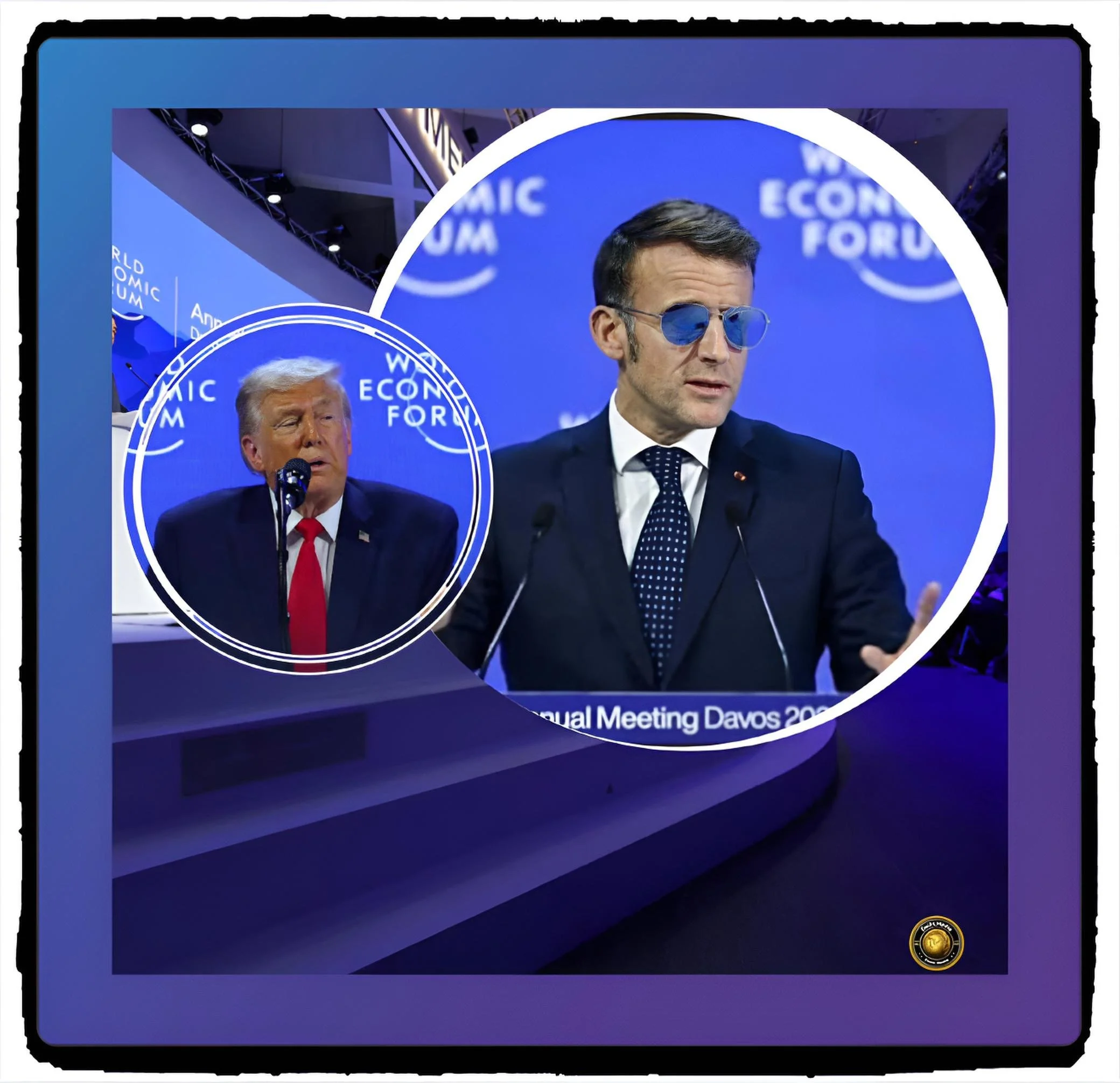
When Emmanuel Macron ascended to the podium in Congress Hall on January 20, 2026, the geopolitical context could not have been more fraught. Mere days prior, President Donald Trump had threatened punitive 10 % tariffs escalating to 25 % against eight European nations—all NATO members—unless these countries capitulated to his demands to negotiate the transfer of Greenland from Denmark to the United States.
The absurdity of the demand was matched only by the gravity of the tariff threat, which would have imposed approximately one trillion euros in economic damage on the European economy through disruption of essential transatlantic trade flows. Into this maelstrom, Macron stepped with a measured yet forceful address that would redefine the terms of European economic policy debate for the remainder of 2026.
The temporal proximity of Macron's speech to Trump's threatened Greenland acquisition and subsequent tariff threats provided the immediate context, but Macron's vision extended far beyond tactical responses to current provocations. His address constituted a strategic reassessment of European positioning within a rapidly destabilizing international system.
The speech demonstrated that France, holding the G7 presidency for 2026, had concluded that the previous post-Cold War consensus regarding liberal trade order, American security guarantees, and rule-based multilateralism could no longer be assumed.
The European Union, Macron argued, could no longer persist in naïveté regarding power dynamics, market access, and the reciprocal application of trade rules. This represented a tectonic shift in French and European strategic thinking—one that aligned with warnings Macron had issued since 2019 regarding European strategic autonomy but now acquired urgent operational urgency given concrete threats to European prosperity and integrity.
The European Challenge: Diagnosis and Context
Before presenting his tripartite strategic framework, Macron articulated a comprehensive diagnosis of the global condition that justified dramatic departures from established policy paradigms. His assessment departed significantly from prevailing conventional wisdom among European leadership that had emphasized continuity with Cold War-era integration frameworks.
Macron identified three interlocking pathologies afflicting contemporary international relations.
First, he documented the global shift toward autocracy, with democracy in retreat across numerous regions.The normalization of conflict constituted a secondary pathology—he cited the statistic that more than 60 wars were active during 2024, representing an absolute record in contemporary conflict dynamics.
These wars had expanded beyond traditional interstate conflict to encompass hybrid dimensions spanning cyber, space, digital information, and trade domains.
The second pathology Macron identified concerned the emergence of what he characterized as a world without rules. International law, he argued, was being systematically trampled underfoot.
The only law that appeared to matter in this emerging order was the law of raw force. Imperial ambitions were resurfacing, manifesting in Russian aggression against Ukraine entering its fourth year, ongoing Middle Eastern conflicts, and expanding regional instability across Africa. The traditional Westphalian system of sovereign equality and mutual non-interference appeared to be collapsing in favor of hierarchical ordering in which powerful states could impose their preferences through coercion.
Third, and perhaps most systemically consequential, Macron identified a radical degradation of effective collective governance structures and multilateral institutions. Powers were either obstructing multilateral institutions or simply withdrawing from them.
Rules that had previously constrained state behavior were being systematically undermined. International bodies that had enabled cooperative problem-solving were being weakened or abandoned by key economies. This degradation of multilateralism, Macron emphasized, eliminated the mechanisms through which common challenges could be addressed cooperatively.
The consequence, he argued, was predictable and dire: without collective governance structures, cooperation surrendered to relentless competition characterized by zero-sum dynamics.
Macron articulated this competition with surgical precision, identifying specific manifestations. Competition from the United States, he contended, operated through trade agreements designed to undermine European export interests and extract maximum concessions. These agreements, he argued, openly aimed to weaken and subordinate Europe. American tariff policy constituted an "endless accumulation" of new levies that were "fundamentally unacceptable," particularly when wielded as leverage against territorial sovereignty, as demonstrated by Trump's Greenland ultimatums. Simultaneously, Chinese competition manifested through massive excess capacities and distortive practices that threatened to overwhelm entire industrial and commercial sectors. Chinese export controls had become increasingly destabilizing to global trade and the international system. In this competitive environment, Europe appeared vulnerable, fragmented, and exposed.
Yet Macron rejected passive resignation to this competitive maelstrom. Instead, he posed a philosophical question that animated his entire address: How should Europe respond to what he termed the "brutalization of the world"? He explicitly rejected two approaches that threatened to emerge as prevalent responses. The first, passive acceptance of the law of the strongest, would lead to vassalization and bloc politics—essentially a new form of colonialism in which weaker states submitted to stronger powers.
Macron contended that heads of state and business leaders who complacently accepted such subordination would bear enormous responsibility for Europe's decline. The second rejected approach—adopting a purely moral posture limited to condemnation—would condemn Europe to marginalization and powerlessness. Neither passive submission nor ineffectual moralizing could serve Europe's interests.
Instead, Macron articulated a dual framework combining European strategic autonomy with renewed commitment to effective multilateralism. Macron emphasized that France and Europe remained attached to national sovereignty and independence, to the United Nations and its charter. He clarified that this commitment to autonomy represented not regression to nationalist isolation but rather preservation of the multilateralist vision that emerged from humanity's traumatic experience in World War II.
The decision to support a NATO mutual exercise in Greenland, he noted, exemplified this approach—supporting an ally and fellow European nation (Denmark) without threatening any competitor.
The Three Pillar European Strategy
Having established the diagnostic framework and philosophical foundations, Macron articulated a tripartite strategy for European repositioning. This framework constituted the substantive core of his address and the operational blueprint he sought to establish for European policy during 2026 and beyond. The three pillars were conceptually distinct yet mutually reinforcing: protection, simplification, and investment.
The Protection Pillar: Defensive Trade Policy and European Preference
The first pillar centered on protection, though Macron was careful to distinguish this from simple protectionism. Protection, he emphasized, meant defending European companies and markets when trading partners disrespected the level playing field. The problem, as Macron diagnosed it, lay not in Europeans being too protectionist but rather in being too naive regarding openness.
The European market, he observed, remained uniquely open to all competitors without rigorous verification of reciprocal market access. China, by contrast, maintained relatively restricted market access for foreign competitors. The United States, despite its rhetorical commitment to free trade, maintained substantial protective mechanisms for domestic industries. Yet Europeans, paradoxically, protected their own companies and markets less stringently than their competitors.
This naïveté, Macron argued, was proving catastrophic. European industries in chemicals, automotive, and numerous other sectors were being "literally killed" by competitors who did not respect normal framework conditions or level playing field principles. European competitiveness suffered not because European companies lacked capability or innovation but because competitors played by different rules and Europeans accepted this disadvantage. This situation demanded realistic reassessment of European trade and investment policy.
Europe possessed powerful tools to address this imbalance, Macron contended, yet hesitated to deploy them. The European Union's anti-coercion mechanism represented a particularly powerful instrument that "should not be hesitated to deploy in today's tough environment." This mechanism could restrict U.S. access to the vast EU single market, impose barriers to participation in public procurement, curtail foreign direct investment, and limit import and export of goods and services.
Though no European Union member state had previously invoked this mechanism, Macron signaled that continued American tariff threats might necessitate its activation. He noted that "the crazy thing is that we could find ourselves in a situation where we use the anti-coercion mechanism for the very first time against the United States," describing such an outcome as consequential of "unnecessary aggressiveness."
Beyond the anti-coercion mechanism, Macron emphasized the necessity of advancing the principle of European preference. He observed that North American preference existed in the American market, yet no equivalent European preference principle currently structured EU markets. Through recent documents and decisions, Europe was progressively developing European preference frameworks, which Macron described as "extremely good." Working closely with Germany, European leadership aimed to deliver an ambitious yet simple framework implementing European preference principles across multiple sectors.
Macron called upon the European Commission to present formal proposals by early 2026, expressing expectations for "the highest possible level of ambition" in operationalizing European preference.
Trade defense instruments required strengthening, particularly given escalating trade tensions and Asian overcapacity. Europe needed to deploy mirror measures to enforce regulatory standards on imports and improve the quality and added value of foreign direct investment targeting projects with strong export potential.
Macron particularly emphasized this rebalancing with China, welcoming Chinese investment but demanding that such investment contribute to European growth, facilitate technology transfer, and represent genuine business expansion rather than merely flooding the market with subsidized goods meeting lower standards than European production.
Supply chain resilience constituted another protective dimension. Protecting European economies required developing resilience strategies for both imports and exports, particularly regarding de-risking supply chains for critical materials.
Raw materials, semiconductors, and microchips demanded particular attention through supply chain diversification and reducing dependence on single sources of supply. In this framework, protection emerged not as xenophobic restriction but as pragmatic development of resilience, reciprocity, and capacity retention essential to long-term economic security.
The Simplification Pillar: Regulatory Harmonization and Market Integration
The second pillar focused on simplification, a concept that Macron emphasized required careful articulation to avoid misunderstanding. Simplification did not mean abandonment of environmental, labor, or social protections that distinguished the European model. Rather, it involved streamlining regulatory frameworks that had become so complex and burdensome that they placed European companies at competitive disadvantage relative to American and Chinese competitors who operated under more rationalized regulatory environments.
European companies faced a particular disadvantage, Macron argued, stemming from regulatory desynchronization. Regulations implemented within the European Union often diverged substantially from international norms, creating compliance burdens and inefficiencies for European businesses that added costs without corresponding benefits.
Recent regulatory initiatives, including the Corporate Sustainability Reporting Directive (CSRD) and Corporate Sustainability Due Diligence Directive (CS3D), had introduced reporting and supply chain diligence requirements that, while well-intentioned, created substantial operational burdens. Regulatory initiatives in automotive, chemicals, digital, AI, and banking sectors required similar reassessment to ensure that European standards remained ambitious regarding sustainability and social outcomes while avoiding unnecessary complexity that reduced competitiveness.
Macron was precise regarding the simplification objective: eliminating recent regulations that created desynchronization between the European Union and the broader global economy. This did not entail reducing environmental standards or labor protections but rather consolidating and rationalizing existing frameworks to reduce compliance costs and complexity without sacrificing substantive protections.
Accelerating the deepening of the single market constituted the second simplification dimension. Despite decades of European integration efforts, the European single market remained incompletely realized. With 450 million inhabitants and consumers, this market should theoretically function as a domestic market for all European Union companies.
In reality, complexities in regulatory application, financial markets integration, energy systems, and capital mobility constrained genuine single market functioning. Eliminating these complexities would enable European companies to achieve the scale economies and integrated operations that American and Chinese firms enjoyed within their respective domestic markets.
Technological neutrality and non-discrimination within the European Union constituted essential simplification elements. Macron specifically noted that Europe had maintained lengthy discriminatory practices between different energy sources, which he characterized as counterproductive.
Establishing technology-neutral frameworks would allow market forces to allocate resources efficiently rather than government preferencing particular energy sources or technologies. This emphasis on technological neutrality emerged as particularly significant given ongoing debates regarding energy transitions and artificial intelligence regulation.
The Integration and Capital Mobilization Challenge
Macron articulated a substantial economic gap underpinning the simplification imperative. The GDP per capita differential between the United States and Europe, he noted, was primarily attributable to differences in innovation levels rather than fundamental resource endowments or work effort. Sixty-five to seventy percent of the explanation for American-European GDP per capita divergence derived from superior American innovation. The innovation gap, in turn, reflected differences in public and private investment levels in innovation-driving sectors.
Critically, Macron identified a capital mobilization problem within Europe. European savings substantially exceeded American savings, yet these savings flowed toward bonds and equities outside Europe rather than being invested in European innovation and growth enterprises.
This capital export deprived European innovation ecosystems of the investment capital necessary to scale and compete globally. The solution involved acceleration of the securitization program and, more fundamentally, completion of the capital markets union. By enabling more efficient capital market integration across the European Union, European savings could be redirected toward European innovation and equity investments, generating the competitive advantage necessary to compete with American and Chinese innovation ecosystems.
The Investment and Innovation Pillar: Closing the Innovation Gap
The third pillar centered on investment and innovation, directly addressing the competitiveness gap that had emerged. Macron argued that substantial increases in investment in critical innovation sectors were essential to European long-term prosperity.
These sectors—artificial intelligence, quantum computing, cleantech, defense, and security—would fundamentally shape the trajectory of economic growth, military capabilities, and technological sovereignty throughout the remainder of the 21st century.
France positioned itself as a key contributor to European innovation renewal. Macron emphasized that France maintained several competitive advantages essential to leadership in these critical sectors. First, France possessed a competitive, stable, low-carbon electricity supply.
The country had exported 93 terawatts of electricity during the previous year, all of it low-carbon electricity derived from France's nuclear-based energy infrastructure.
This energy advantage, unique in Europe, provided substantial competitive advantage for energy-intensive industries like data centers and advanced manufacturing essential to AI and quantum computing leadership.
Second, France possessed world-class innovation and research capabilities that it committed to expanding. The country hosted one of Europe's most vivid and active innovation ecosystems spanning artificial intelligence, quantum computing, energy transition, and related sectors. Numerous start-ups, unicorn companies, and large-cap technology firms from these sectors maintained operations in France and constituted part of Macron's delegation to Davos. He emphasized that France had maintained its position as the most attractive European destination for foreign direct investment for six consecutive years, indicating sustained business confidence in French business conditions.
Third, France maintained high-quality infrastructure and a large market with substantial purchasing power. More fundamentally, France represented a jurisdiction in which rule of law and predictability remained governing principles.
Macron suggested, somewhat audaciously, that this factor was "largely undervalued by the market" and that the combination of predictability, loyalty, and rule-of-law governance represented significant competitive advantage compared to jurisdictions characterized by regulatory unpredictability or arbitrary power exercise.
The G7 Agenda: Addressing Global Economic Imbalances
Macron's framing of European strategy operated within a broader global context that he sought to address through France's 2026 G7 presidency. He articulated a diagnosis of fundamental global economic imbalances that he contended required collective attention and coordinated action.
These imbalances, he maintained, derived from several interconnected phenomena. American overconsumption, sustained through persistent current account deficits, created demand pressure and inflationary dynamics. Chinese underconsumption coupled with massive overinvestment created excess productive capacity that depressed global prices and displaced production in other countries. European underinvestment and lack of competitiveness reflected insufficient innovation spending and restrictive regulatory frameworks.
These macroeconomic imbalances had cascading consequences for the developing world, which Macron described as development gaps reflected in persistent poverty. The existing development aid model, he argued, delivered insufficient results and failed to enable countries to escape poverty. Development assistance required reconceptualization toward frameworks enabling genuine economic growth and productivity improvement rather than perpetual dependence on aid transfers.
The G7, under French leadership, aimed to accomplish several objectives during 2026. First, it would demonstrate that the world's major powers retained capacity to reach shared diagnosis of the global economy and commit to concrete coordinated actions. This reassurance regarding collective problem-solving capacity mattered fundamentally given pervasive anxiety regarding multilateral institution degradation. Second, the G7 would build a framework of cooperation addressing the roots of global imbalances through restoration of efficient convergence and multilateral frameworks.
This required addressing each element: reducing American overconsumption through fiscal adjustment, expanding Chinese consumption and reducing overinvestment, and accelerating European investment and competitiveness improvement.
Third, critical emphasis fell on building bridges and enhancing cooperation with emerging economies, particularly BRICS countries and broader G20 membership. Macron argued that world fragmentation would prove strategically bankrupt. Rather than accepting competing geopolitical blocs and reduced global integration, Europe should engage with emerging economies in building cooperative frameworks transcending Western-centric governance.
This diplomatic outreach to emerging economies represented strategic recognition that effective global governance required inclusive participation from rising powers rather than exclusionary Western-led institutions.
Business Community Reception and Reactions
Macron's address received considerable attention from the assembled business leadership and investor community at Davos, though reactions proved complex and somewhat differentiated by constituency.
Technology sector leadership, representing perhaps the most consequential constituency given artificial intelligence's centrality to future economic growth, demonstrated qualified support for Macron's innovation agenda while expressing concern regarding regulatory constraints and capital availability.
Artificial Intelligence and Technology Sector Positioning
The technology sector's presence at Davos 2026 was extraordinary, with rare personal appearances from transformative technology leaders.
Elon Musk, Jensen Huang of Nvidia, OpenAI executives including CFO Sarah Friar, and Anthropic Chief Executive Officer Dario Amodei all participated prominently. The technology sector's focus had shifted from the speculative enthusiasm that characterized 2024 and early 2025 toward what became framed as "the year of AI ROI"—a sobering emphasis on measurable returns on investment rather than speculative projections of transformative impact.
Macron's emphasis on European innovation leadership in artificial intelligence and quantum computing resonated with segments of the technology community concerned about European technological colonization. France's substantial technology delegation, the largest ever assembled for a Davos gathering, showcased numerous French technology companies: H Company specializing in agentic AI, Bioptimus applying machine learning to biological sciences, Safran.AI representing aerospace and defense integration of artificial intelligence, and most significantly, Mistral, the European AI company that had achieved unicorn status in under a year and now represented Europe's most credible challenger to American AI dominance through OpenAI and Anthropic.
The launch at Davos of the Centre Européen pour l'Excellence en IA (CAIE) in Paris represented a tangible manifestation of Macron's innovation agenda. The center, announced a year prior through partnership between the World Economic Forum and VivaTech, aimed to transform Europe's research base, startup ecosystem, and policy capacity into a coordinated engine for AI innovation capable of delivering economic and social value while maintaining trustworthiness, inclusivity, human-centeredness, and democratic governance.
However, the broader technology sector reception contained important cautionary notes regarding execution. While Macron's emphasis on European AI leadership received general endorsement, technology leaders raised concerns regarding three dimensions: the adequacy of capital mobilization frameworks, the regulatory environment constraining innovation speed, and the feasibility of coordinated European policy given persistent national fragmentations.
Capital Mobilization and Financing Gaps
Perhaps the most significant concern articulated regarding Europe's innovation agenda involved capital availability and mobilization. While Macron correctly identified that Europe possessed substantial savings substantially exceeding American savings, several technology sector leaders and investors noted that mobilizing those savings into high-risk venture capital and growth equity represented a persistently difficult challenge. European institutional investors maintained behavioral preferences for lower-risk fixed income investments and traditionally valued foreign securities markets over domestic opportunities.
More fundamentally, a critical financing gap persisted for mid-stage technology companies. Early-stage venture capital had developed extensively, and large established companies accessed capital markets efficiently. However, companies that had achieved product-market fit and required substantial capital for scaling faced financing constraints.
These companies were too advanced for traditional early-stage venture capital yet too risky by traditional banking standards. Multiple investors and finance sector leaders noted that addressing this gap through public anchor investors and loan guarantee structures could unlock substantially greater capital mobilization. The absence of such mechanisms represented not a capital scarcity problem but rather an institutional design problem.
Regulatory Constraints and Innovation Speed
A secondary concern raised regarding Macron's simplification agenda involved the risk that European regulatory frameworks, even if simplified, would continue to constrain innovation speed relative to less regulated American and Chinese competitors. Regulatory constraints appeared across multiple dimensions.
Corporate Sustainability Reporting Directive requirements, while wellintentioned from environmental and stakeholder governance perspectives, imposed compliance burdens that added costs without proportional sustainability improvements. AI regulatory frameworks under development, while motivated by legitimate concerns regarding algorithmic bias and concentration of AI power, risked creating compliance burdens that slowed European innovation relative to competitors with lighter regulatory touch.
Macron's emphasis on technological neutrality and non-discrimination suggested recognition of these tensions, but multiple technology leaders expressed skepticism regarding implementation. European regulatory bodies, they noted, maintained institutional preferences for precautionary approaches that tended to restrict innovation while American regulators more readily embraced innovation with contingent oversight. Chinese regulators pursued strategic state support for favored technology sectors with minimal concern for consumer protection or competitive outcomes. European frameworks, even simplified, would likely remain more constrictive than either American or Chinese models.
Industrial Competitiveness and AI Adoption in Manufacturing
In contrast to consumer-oriented AI discussions, industrial AI adoption emerged as an area where European positioning could prove more compelling. Industrial AI applications in manufacturing, energy systems, supply chain optimization, and asset maintenance demonstrated substantial productivity improvement potential.
Siemens leadership noted that European factories implementing comprehensive industrial AI frameworks had achieved 7-10 percent annual productivity gains over 5-10 year periods through full transformation rather than isolated pilot projects. Yet 80-90 percent of industrial data in European manufacturing remained unused.
The barriers to accelerated industrial AI adoption, Siemens and other industrial leaders argued, were not primarily technological. Rather, barriers involved regulatory risk aversion, insufficient organizational capability for the scale of transformation required, and fragmented approaches to artificial intelligence implementation.
If Europe could overcome organizational and regulatory constraints, the industrial AI opportunity represented potentially Europe's strongest competitive positioning relative to American dominance in consumer AI and Chinese state-directed AI infrastructure development.
European Leadership and Political Reactions
Beyond business and technology sector responses, Macron's address generated significant reactions from European political leadership. While full consensus did not emerge, the address appeared to crystallize shifting European elite consensus regarding strategic autonomy imperatives and the inadequacy of prior policies predicated on unlimited American commitment to European defense and prosperity.
Ursula von der Leyen's Complementary Vision of European Independence
European Commission President Ursula von der Leyen delivered a complementary address during the same Davos gathering that reinforced Macron's autonomy messaging while introducing trade diversification elements he had not emphasized. Von der Leyen's speech emphasized that European independence had transitioned from an abstract concept viewed skeptically as a potential cover for protectionism to a practical necessity embraced across European leadership.
She noted that the "unthinkable scale of change" experienced by the international system had fostered real consensus across European political, business, and institutional leadership regarding independence imperatives.
Von der Leyen articulated that Europe must "speed up its push for independence—from security to economy, from defense to democracy." She emphasized that nostalgia for previous international order configurations would not restore the previous situation and that hoping for rapid reversion to prior arrangements would not address structural dependencies requiring remedy.
The European Union, she argued, represented a superpower in economic terms, wielding over 20 percent of global GDP through recently concluded trade arrangements with Latin American Mercosur countries. European trade diversification represented an active strategy rather than passive response to American policy shifts.
The Commission President outlined several trade diversification initiatives alongside the European-Mercosur agreement, noting ongoing negotiations with Australia, Philippines, Thailand, Malaysia, United Arab Emirates, and India. She emphasized that European commitment to "fair trade over tariffs, partnership over isolation, sustainability over exploitation" reflected not retreat from global engagement but rather conscious choice to allocate European engagement toward partners and frameworks supporting European interests.
Eastern European Skepticism and Alliance Maintenance
Despite general support for European autonomy language, Eastern European governments expressed more measured enthusiasm regarding European strategic independence narratives.
Baltic states and Poland, which had experienced considerable security vulnerabilities historically and faced renewed Russian regional assertiveness, remained skeptical that European capabilities could substitute for American security guarantees. These governments welcomed European investment in defense and security capabilities but did not view European independence as an alternative to NATO and American deterrence.
The framing of European autonomy required careful navigation to avoid suggesting that Europe could achieve effective security posture absent American military capabilities and commitment.
Belgian Prime Minister Bart De Wever articulated this tension succinctly, warning that Europe risked becoming "slave" to American leadership unless it urgently developed its "own technological platforms to build tomorrow's prosperity."
His formulation captured the essential tension within European autonomy discourse: Europe required meaningful independence in technology and economic spheres to avoid subordination, yet could not achieve security independence without American participation and capabilities.
Strategic autonomy, in this formulation, meant developing capabilities sufficient to ensure political agency and avoid economic colonization, not eliminating interdependence with the United States.
The Macron-Trump Non-Engagement Signal
A significant signal regarding transformed European-American diplomatic relationships emerged from Macron's apparent non-engagement with Trump during the Davos gathering. Trump attended Davos following Macron's January 20 address, yet public reports indicated that the two leaders did not meet in person.
This represented a striking deviation from previous protocols in which European leaders had readily sought meetings with American presidents to shape American policy perspectives. The Macron non-engagement signaled a transformed calculation: European leaders who had previously prioritized access to American leadership to influence policy now questioned whether such meetings remained strategically valuable.
This shift reflected Macron's diagnosis that appeasement and negotiation with Trump's unpredictable policy stance offered limited strategic returns. The previous approach of European leaders rushing to meetings with Trump hoping to moderate his policies had not prevented the Greenland tariff threats or other provocations.
The alternative approach Macron appeared to be embracing involved autonomous European strategic positioning independent of American policy accommodation efforts. Whether American policy would shift in response to such autonomy positioning remained uncertain, but the symbolic break with previous diplomatic protocols represented significant transformation.
Financial Market Responses and Economic Implications
Financial markets responded with considerable anxiety to the Davos 2026 geopolitical tensions, though responses evolved as the conference progressed and Trump ultimately withdrew his Greenland tariff threats following a NATO leadership meeting.
Initial Market Volatility
The initial geopolitical shock from Trump's Greenland tariff threats generated substantial market volatility. The CBOE Volatility Index, commonly known as the VIX or Wall Street's fear gauge, climbed to two-month highs near 19 points. Equity markets globally declined as risk appetite diminished. Investors adopted the "Sell America" trade that had emerged following Trump's April 2025 "Liberation Day" tariff announcement, reducing exposure to American assets and seeking safe haven in gold, cash, and government bonds. Particularly notable was the shift in Northern European investor sentiment, with substantial pension funds and institutional investors becoming increasingly wary of holding American assets amid geopolitical tensions.
The potential economic damage from full implementation of Trump's threatened tariffs would have been extraordinary. Applied comprehensively, escalating from 10 percent to 25 percent tariffs against major European trading partners would have imposed approximately one trillion euros in economic damage through disruption of essential transatlantic trade flows.
Such damage would have exceeded the economic impact of the 2008 financial crisis on Europe and would have been substantially more concentrated. The trade deal agreed between the United States and European Union in July 2025, achieved through substantial negotiation efforts and mutual compromise, faced potential dissolution.
Von der Leyen noted that from political and business perspectives, a deal should mean something. Threatening to abandon recently negotiated agreements undermined the entire foundation of transatlantic commerce and investment.
Tariff Threat Withdrawal and Market Stabilization
Following Trump's meeting with NATO Secretary General Mark Rutte, Trump announced withdrawal of the Greenland tariff threats. This withdrawal reduced acute market anxiety, though it did not eliminate concerns regarding American trade policy unpredictability more broadly.
The tariff threat cycle suggested that Trump's foreign policy approach wielded tariffs as tools for political leverage across multiple objectives rather than as instruments specifically designed to address trade imbalances or economic competitiveness. This instrumentalization of tariffs for geopolitical objectives created persistent uncertainty that constrained investor decision-making and capital allocation.
Economic Analysts' Assessments
Economic analysts at Davos and subsequently noted that Trump's tariff threats undermined the credibility of American commitments more fundamentally than the specific tariff levels would suggest.
As one Cato Institute analyst noted, tariff uncertainty and shifting policy threatened to undermine investor confidence in American governance and legal predictability. This would increase interest rates and constrain housing affordability—the domestic policy objective Trump had publicly emphasized for Davos participation. The economic consequences of tariff-induced uncertainty appeared counterproductive even from the perspective of Trump's explicitly stated domestic priorities.
Business community sentiment, while anxious regarding geopolitical volatility, appeared to anticipate that extreme scenarios would ultimately be avoided while maintaining skepticism regarding normal transatlantic relations. The VIX, despite two-month highs, remained substantially below the extreme fear thresholds that characterize genuine systemic risk episodes. This moderate anxiety reflected both genuine uncertainty regarding policy trajectories and confidence that catastrophic trade wars would ultimately be avoided despite dramatic rhetoric.
Cause-and-Effect Analysis: Macron's Speech Within Causal Chains
Understanding the consequences and significance of Macron's Davos address requires situating it within broader causal chains spanning geopolitical developments, policy trajectories, and institutional evolution. Several significant causal connections merit examination.
Trump's Trade Policy Unpredictability as Catalyst
The immediate catalyst for Macron's autonomous Europe emphasis involved Trump's tariff threats, which in turn reflected Trump's restoration to the American presidency and his articulated intention to use tariff policy as a tool for comprehensive geopolitical repositioning. Trump's previous tenure as president had demonstrated willingness to weaponize tariffs against traditional allies, implementing automobile tariffs against Japan, South Korea, and the European Union and precipitating a broader trade war with China.
Trump's second tenure appeared to contemplate even more expansive use of tariff threats, including threats unmoored from traditional trade policy frameworks. The Greenland tariff threat represented perhaps the most audacious expression of this approach—threatening economic coercion against allies to effect territorial transfer.
This fundamental unpredictability regarding American trade policy eliminated the cornerstone of European economic strategy for the post-Cold War era. For three decades, European policy had rested on assumptions of American commitment to liberal trade order, relatively predictable legal frameworks, and alliance solidarity.
Trump's approach violated all three assumptions simultaneously. The Greenland episode exemplified the violation: it involved a threat against NATO allies regarding a NATO member's territory, justified through tariff coercion rather than diplomatic negotiation, and articulated through social media and presidential statements rather than formal diplomatic channels.
Macron's Response as Strategic Adjustment
Macron's address represented a strategic adjustment reflecting France's and Europe's conclusion that the previous paradigm of relying on American policy predictability could no longer guide European strategic planning. Rather than continuing to assume American support and predictability, European policy should be predicated on European capabilities and European strategic positioning.
This did not necessarily imply abandonment of American alliance relationships; rather, it suggested that European strength and autonomy should be prerequisites for alliance rather than consequences of it.
The causal chain operating through Macron's speech thus involved:
Trump administration's unpredictable weaponization of tariff policy against allies
(1) European recognition that previous assumptions regarding American policy predictability had become invalid
(2) Macron's articulation of need for European strategic autonomy
(3) European business and political leadership recognition that autonomy required transformative policy changes
(4) Initiation of policy implementation affecting trade, investment, and innovation frameworks
This causal chain did not depend on particular American policy outcomes but rather on the fundamental recognition that American policy had become unpredictable and that European interests required autonomous capability development.
Innovation and Competitiveness as Structural Imperatives
A secondary causal chain operated through innovation and competitiveness dynamics independent of American policy shifts.
The American innovation advantage over Europe had persisted for two decades, driven by substantially higher investment in research and development, more effective capital market mechanisms for scaling innovative companies, and regulatory frameworks encouraging rather than constraining technological disruption.
This innovation gap translated into GDP per capita divergence concentrated specifically in innovation-dependent sectors: software, artificial intelligence, biotechnology, and renewable energy.
Macron's diagnosis that 65-70 percent of American-European GDP per capita divergence stemmed from innovation gaps reflected economic analysis broadly accepted among European economists and business leaders. The innovation gap, in turn, reflected capital mobilization failures and regulatory complexity rather than fundamental European innovation deficiencies.
The causal chain operated thus:
(1) Lower European innovation investment relative to the United States
(2) Reduced European startup scaling success and technology company development
(3) American technology companies capturing disproportionate global market share in high-margin innovation sectors
(4) Reduced European GDP growth and productivity improvement
(5) Widening European-American convergence in living standards and per capita prosperity
This causal chain was largely independent of American trade policy and reflected instead structural differences in European and American institutional and regulatory frameworks.
Macron's emphasis on innovation investment, capital markets union completion, and regulatory simplification addressed this structural constraint directly.
The innovation imperative transcended geopolitical considerations and involved fundamental European economic competitiveness, rendering the innovation agenda politically durable even if American trade relationships should normalize.
Trade Defensiveness and Supply Chain Resilience
A third causal chain involved supply chain resilience and trade defense. European manufacturing had become deeply integrated into global supply chains, with critical materials, advanced components, and finished goods flowing across multiple countries and jurisdictions. This integration had delivered substantial economic benefits through comparative advantage utilization and cost optimization. However, it had also created vulnerabilities to supply chain disruptions and exposures to adverse policy shifts by suppliers and trading partners.
The pandemic had demonstrated supply chain fragility regarding semiconductor components, with disruptions in Taiwan and South Korea rippling through global automotive and electronics manufacturing. Chinese trade policy regarding rare earth exports had periodically been utilized as economic leverage. American policy regarding advanced technology exports to China had created cascading effects on European companies attempting to serve both markets.
These experiences generated recognition that supply chain resilience might require accepting higher costs than optimized global supply chains in exchange for reduced exposure to disruption.
Macron's emphasis on supply chain resilience for raw materials, semiconductors, and advanced components reflected this causal chain. The policy response involved deliberate acceptance of somewhat higher costs in exchange for reduced exposure to external disruptions.
This represented a conscious rejection of the optimization logic that had dominated supply chain management for the previous two decades.
Multilateralism and Collective Governance as Foundational Issues
Perhaps the most profound causal chain involved multilateral institutions and effective collective governance. Macron's diagnosis emphasized that effective collective governance required functioning multilateral institutions capable of coordinating state responses to common challenges.
The degradation of these institutions eliminated mechanisms for cooperative problem-solving and shifted international relations toward naked power competition.
This degradation had multiple sources. Traditional great power rivalry, resurgent Russian assertiveness, Chinese challenge to American technological and economic dominance, and American willingness to exit international agreements and institutions had collectively weakened multilateral frameworks.
Climate change, pandemic disease, artificial intelligence governance, and financial system stability represented global challenges that could not be effectively addressed through purely national or bilateral frameworks. Yet multilateral institutions capable of addressing these challenges had become progressively weaker and less effective.
Macron's G7 agenda aimed to demonstrate that effective multilateral problem-solving remained possible, that major powers could reach shared diagnosis and commit to coordinated action. Success in this endeavor would require not only French diplomatic skill but also genuine convergence of interests among G7 members—an outcome far from assured given substantial divergences between American, Chinese, European, Japanese, German, Italian, Canadian, and British strategic perspectives.
Future Steps and Policy Implementation Pathways
The strategic vision articulated in Macron's address required operationalization through concrete policy implementation. Several implementation pathways emerged as critical for translating visionary rhetoric into actual economic and geopolitical consequences.
European Preference Implementation and Sector-Specific Application
The principle of European preference required definition and implementation across multiple sectors. Macron called upon the European Commission to present comprehensive proposals by early 2026, with the highest possible ambition regarding sector coverage. Potential implementation mechanisms included preferential procurement policies for government contracting, investment screening requirements for foreign acquisitions, requirements that critical infrastructure remain under European ownership, and preferential treatment for European technology standards and platforms.
The challenge in implementing European preference involved balancing genuine competitiveness imperatives against protectionism that would reduce efficiency and consumer welfare.
A defensible European preference policy would target strategic sectors where European technological and competitive capabilities merited protection and development support: semiconductors, advanced manufacturing, energy systems, defense, telecommunications infrastructure, and artificial intelligence. European preference in these sectors could be justified as necessary for maintaining technological sovereignty and avoiding dangerous dependence on potentially unreliable competitors.
Implementing European preference in sectors where Europe lacked genuine competitive capability or where European preference would substantially increase costs without offsetting benefits would represent pure protectionism with negative economic consequences.
The political challenge involved maintaining discipline regarding which sectors merited preference while resisting pressure to extend preference across the entire economy.
Capital Markets Union Completion and Securitization Acceleration
A second critical implementation pathway involved capital markets union completion and securitization program acceleration. This agenda required coordination across European Union member states to harmonize financial regulations, reduce regulatory fragmentation, and enable capital flows more freely across borders.
The objective involved ensuring that European savings, which substantially exceeded American savings, could be effectively mobilized toward European innovation, growth companies, and infrastructure investment.
This implementation pathway required sustained technical work by European financial regulators, modification of tax frameworks that currently discouraged cross-border investment, and development of standardized financial instruments enabling pan-European investment vehicles. The work was fundamentally technical rather than politically contentious, yet it required persistence and commitment given the institutional complexity involved.
Success in capital markets union completion could substantially increase European venture capital availability and enable mid-stage companies to scale more effectively. This would require perhaps two to three years of sustained implementation efforts but could generate substantial returns in the form of reduced European brain drain and increased startup scaling success.
Trade Defense Instrument Strengthening and Anti-Coercion Mechanism Preparation
A third implementation pathway involved operationalizing Europe's trade defense capabilities. This involved developing regulatory frameworks enabling rapid deployment of anti-coercion mechanisms, preparing legal arguments supporting various defensive instruments, and building consensus within European Union member states regarding activation conditions. The anti-coercion mechanism, if invoked against the United States, would represent an unprecedented policy deployment requiring careful legal preparation and political coordination.
Trade defense instrument strengthening involved technical regulatory work regarding tariffs, safeguard clauses, government procurement rules, and foreign direct investment screening. This work was substantial but fundamentally administrative in nature, involving modification of existing frameworks rather than creation of entirely new policy instruments.
Artificial Intelligence and Quantum Computing Innovation Acceleration
A fourth implementation pathway involved creating institutional and policy frameworks accelerating artificial intelligence and quantum computing development.
The Centre Européen pour l'Excellence en IA, launched at Davos 2026, represented the institutional centerpiece of this effort. The center required substantial funding, assembly of world-class research talent, coordination with major European technology companies, and development of governance frameworks balancing innovation acceleration with public interest protection.
Complementary policy measures involved funding mechanisms supporting European AI and quantum companies at scaling stages, regulatory streamlining enabling more rapid product development and deployment, and government procurement policies preferentially selecting European technology solutions where feasible. These measures required coordination across European Union member states and substantial public investment alongside private capital mobilization.
Regulatory Simplification and Technological Neutrality Implementation
A fifth implementation pathway involved the complex task of regulatory simplification without sacrificing substantive protections regarding environmental sustainability, labor rights, and consumer protection.
This required distinguishing between regulatory constraints that genuinely impeded competitiveness without offsetting benefits and regulations maintaining important protections that merited preservation.
The Corporate Sustainability Reporting Directive and Corporate Sustainability Due Diligence Directive, mentioned specifically by Macron, required reassessment to determine whether reporting burdens and supply chain diligence requirements could be streamlined without eliminating substantive sustainability and human rights protections. Similar assessments were required across automotive, chemicals, digital, AI, and banking regulatory frameworks.
Technological neutrality implementation required particular attention given ongoing energy transition debates. European policy should not discriminate between energy sources based on political preference or historical accident but rather should enable market-based technology selection.
This principle applied equally to artificial intelligence policy, where regulation should focus on genuinely problematic outcomes (bias, concentration, misuse) rather than constraining particular technological approaches absent demonstrated harms.
Defense and Security Investment Commitments
A sixth implementation pathway involved European defense and security investment. Macron emphasized that Europe required substantially increased investment in defense and security capabilities.
This involved not only increased defense budgetary allocations but also development of integrated European defense industrial capabilities enabling technological autonomy and reduced dependence on American defense contractors. Defense innovation, particularly regarding artificial intelligence applications, autonomous systems, and cyber capabilities, required sustained investment and technological development.
This implementation pathway required sustained political commitment and budgetary discipline despite competing priorities in healthcare, social security, and infrastructure. Yet Macron's emphasis on defense investment reflected recognition that genuine strategic autonomy required military capability credibility, which American extended deterrence could not indefinitely substitute.
Global Engagement and BRICS Dialogue
A seventh implementation pathway involved building cooperative frameworks with BRICS countries and broader emerging market engagement. This required diplomatic outreach, development of trade relationships and investment frameworks, and recognition of emerging powers' legitimate interests in global governance. Implementation involved expanding trade relationships beyond traditional Western partnerships, developing inclusive multilateral frameworks, and supporting development pathways enabling emerging economies to escape poverty through economic growth and development.
Challenges, Limitations, and Implementation Risks
While Macron's strategic vision resonated across substantial segments of European and global business leadership, significant challenges and implementation risks threaten successful policy translation.
Political Fragmentation Within Europe
A first significant risk involved persistent political fragmentation within the European Union regarding specific policy implementation. While general consensus emerged regarding European autonomy and innovation imperatives, disagreement persisted regarding implementation details. Eastern European states remained skeptical regarding trade restrictions and European preference principles that might exclude American defense and technology companies.
Southern European states maintained concerns regarding austerity constraints limiting public investment in innovation. Germany, Europe's largest economy and manufacturing powerhouse, held its own perspectives regarding regulatory modification and trade policy.
Translating Macron's visionary framework into specific legislative and regulatory proposals that commanded consensus across 27 European Union member states represented a formidable challenge.
Unanimity requirements for certain European Union decisions meant that individual member states could constrain implementation. Some elements of the agenda (trade policy, competition policy) could be implemented through European Commission executive action with qualified majority voting, but others required near-unanimity.
Implementation Velocity and Time Horizon Mismatches
A second challenge involved implementation velocity. Macron emphasized repeatedly that "everything is about acceleration," yet the policy changes he advocated required substantial time horizons for full implementation. Capital markets union completion, regulatory harmonization, defense industrial coordination, and innovation ecosystem development all required multiple years of sustained effort.
Political cycles in European democracies and global business cycles operated on shorter timeframes, creating incentives for policy abandonment or modification if results did not emerge rapidly.
The American-European innovation gap, for example, had emerged over two decades and could not be closed through policy intervention alone over a few years. Similarly, developing credible European defense capabilities and strategic autonomy required sustained investment and policy discipline across multiple years. The risk existed that enthusiasm for Macron's agenda would wane as implementation proved difficult and results emerged slowly.
American Policy Response Uncertainty
A third significant challenge involved uncertainty regarding how the American government would respond to European defensive trade and innovation policies. If the European Union implemented aggressive European preference principles and anti-coercion mechanisms, the American government might retaliate through tariffs, investment restrictions, or technology export controls. The result could be intensified transatlantic trade conflict that damaged both American and European interests.
Trump's demonstrated willingness to weaponize tariffs suggested that American policy response to European defensive measures would likely be confrontational rather than accommodating. European leaders would need to prepare for American retaliation scenarios and determine whether defensive measures remained justified despite foreseeable American counterresponses.
Chinese Innovation Competitiveness and Technological Disruption
A fourth risk involved Chinese innovation dynamics and the possibility that Chinese artificial intelligence and quantum computing capabilities might advance more rapidly than European responses could address. DeepSeek, a Chinese artificial intelligence company, had recently demonstrated competitive capabilities in generative AI that had challenged assumptions of American technological dominance.
If Chinese innovation continued advancing rapidly while European responses remained limited by regulatory constraints, capital mobilization problems, and implementation delays, the European competitive position could deteriorate even as investment increased.
Similarly, quantum computing and other transformative technologies represented areas where Chinese, American, and European capabilities might converge or diverge rapidly based on research breakthroughs and investment allocation. European policy responses that optimized for current conditions might become suboptimal if technological trajectories shifted dramatically.
Business and Consumer Acceptance of Higher Costs
A fifth risk involved business and consumer acceptance of the higher costs that European preference, supply chain resilience, and regulatory frameworks would entail. The previous paradigm of optimized global supply chains and relatively unrestricted trade had delivered lower consumer prices and business cost structures.
Deliberate acceptance of somewhat higher costs in exchange for resilience and strategic autonomy represented a collective action problem requiring coordination across millions of businesses and consumers.
Without explicit government messaging regarding the trade-offs between consumer prices and European strategic autonomy, businesses might resist implementing European preference principles and consumers might backlash against higher prices stemming from reduced trade openness. Macron's rhetorical framing emphasized European interests and dignity rather than costs to consumers, yet the policy consequences would ultimately affect prices and competitiveness.
Multilateral Governance and American Disengagement
A sixth risk involved persistence of American disengagement from multilateral governance and rule-based international order frameworks. Macron's G7 agenda assumed that major powers, including the United States, would commit to collective problem-solving and coordinated action addressing global imbalances.
However, Trump administration pronouncements regarding unilateral American action and dismissal of multilateral frameworks suggested that American commitment to collective problem-solving could not be assumed. If the American government continued prioritizing unilateral action over multilateral coordination, Macron's G7 agenda would face substantial constraints.
Technological Sovereignty Paradoxes and Data Flows
A seventh risk involved tensions between European data protection preferences and data flow requirements for effective artificial intelligence development.
European regulatory frameworks prioritizing individual data protection and privacy stood in tension with artificial intelligence development requirements for massive datasets and cross-border data flows. Efforts to achieve European technological sovereignty and reduce dependence on American artificial intelligence companies might require acceptance of more permissive data sharing policies than European privacy preferences preferred.
Conclusion
Emmanuel Macron's address at the World Economic Forum in Davos on January 20, 2026, represented a consequential articulation of European strategic reorientation within a fragmenting global order. His speech transcended ceremonial convention to articulate operational policy frameworks addressing European competitiveness, strategic autonomy, and long-term prosperity.
The address reflected and crystallized shifting European elite consensus regarding the inadequacy of previous policy paradigms predicated on unlimited American commitment and the necessity of European capacity development across economic, technological, and security dimensions.
The substantive content of Macron's speech centered on three interlocking pillars: protection of European industrial base through defensive trade mechanisms and European preference principles; simplification of regulatory frameworks to enhance competitive dynamism; and massive acceleration of investment in critical innovation sectors.
Each pillar addressed identifiable European competitive disadvantages while acknowledging the necessity of difficult trade-offs and sustained implementation efforts.
The reception from business leadership, investors, and political figures demonstrated widespread endorsement of Macron's general framework, though concerns persisted regarding implementation details, capital adequacy, political coordination within Europe, and American policy responses.
Technology sector leadership particularly recognized the innovation agenda's importance, while industrial companies saw potential for European competitive positioning in industrial AI and advanced manufacturing. Financial markets reacted with anxiety to geopolitical volatility but appeared to anticipate that dramatic scenarios would be avoided despite heated rhetoric.
The causal chains linking Trump's trade policy unpredictability, European recognition of policy assumptions' invalidity, and necessary strategic reorientation remained robust and somewhat independent of particular American policy outcomes. Even if American trade policy normalized and tariff threats diminished, the fundamental innovation and competitiveness imperatives Macron identified would persist.
The innovation gap between American and European companies, capital mobilization constraints, and regulatory complexity represented structural features requiring remedy independent of transatlantic relationship dynamics.
Implementation pathways for translating visionary rhetoric into policy reality remained complex and time-consuming. Capital markets union completion, regulatory harmonization, defense industrial coordination, artificial intelligence and quantum computing investment acceleration, and European preference operationalization would require sustained effort across multiple years and would encounter resistance from businesses, political constituencies, and potentially American policy responses.
The significance of Macron's address extended beyond specific policy proposals to encompass broader strategic reorientation. European leadership was consciously embracing a future characterized by greater independence from American policy guidance, greater self-reliance regarding security and economic prosperity, and greater emphasis on European interests and capabilities.
This represented neither a break with transatlantic alliance nor withdrawal from global engagement but rather a fundamental recalibration of European strategic assumptions and policy frameworks reflecting recognition that previous paradigms could no longer guide policy.
The G7 agenda and global cooperation emphasis complemented rather than contradicted European autonomy emphasis. Effective multilateralism required capable, autonomous actors capable of bringing resources and resolve to collective problem-solving. European autonomy and capacity development would enhance rather than diminish Europe's contributions to global problem-solving regarding climate change, pandemic preparedness, artificial intelligence governance, and economic stability.
Whether Macron's strategic vision would translate into durable policy implementation and whether implementation would ultimately deliver the competitiveness improvements and strategic autonomy Macron envisioned remained open questions dependent on sustained political commitment, business engagement, and evolved global circumstances.
Nevertheless, his Davos address marked a significant moment in European strategic consciousness, articulating recognition that the post-Cold War consensus had become invalid and that European interests required conscious commitment to autonomy, capability development, and strategic independence.
The policy consequences of this reorientation would shape European economic development, transatlantic relationships, and global competition across the remainder of the 2020s and beyond.