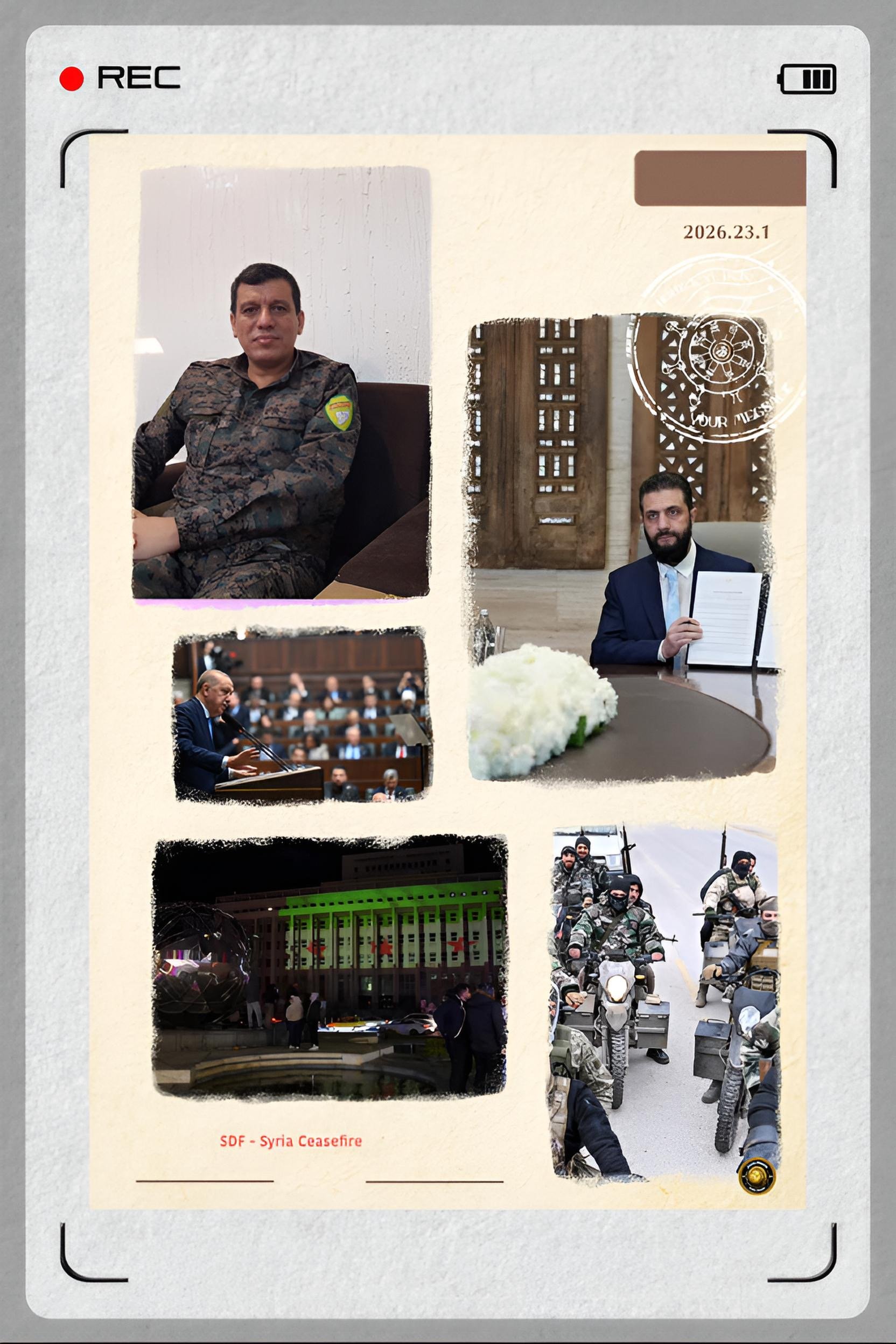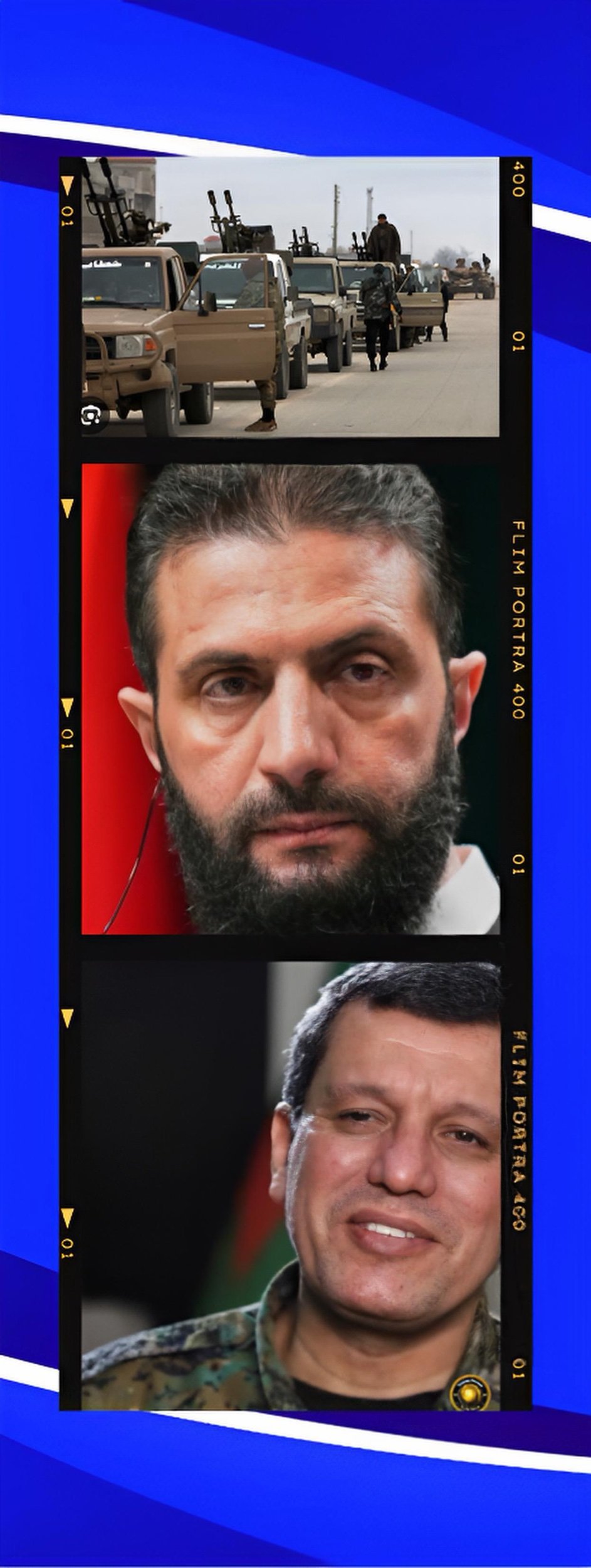
Syria's Kurds Gambled Everything and Lost: The Geopolitical Earthquake That Redrew the Middle East Map
Summary
The Shocking Collapse of a Decade-Long Autonomous Kingdom
It reads like a political thriller that nobody expected. For more than ten years, the Syrian Democratic Forces commanded an independent fiefdom across northeast Syria. They ran their own government, operated their own courts and police, managed their own military forces, and controlled oil fields that funded their entire operation.
They were backed by the world's most powerful military. They had defeated one of the most dangerous terrorist organizations in history.
The Blitzkrieg: Fourteen Days That Changed History
Then, in just two weeks in January 2026, it all fell apart.
What unfolded wasn't a slow erosion of power or a gradual decline of influence. It was a dramatic implosion triggered by military defeat, geopolitical betrayal, and catastrophic miscalculation. By January 20, the SDF agreed to surrender almost everything they had built. The autonomous region that had seemed permanent, that had inspired international admiration, that had stood as the most successful Kurdish self-governance experiment in the modern world, effectively ceased to exist as an independent entity.
The implications ripple across the Middle East in ways that are only beginning to be understood. And the question that haunts Kurdish leadership is whether they made the greatest strategic mistake of their generation.
The Shocking Collapse: When Ten Years of Achievement Dissolved in Two Weeks
The Kingdom That Emerged from Chaos
To understand the magnitude of what was lost, you need to understand what was built. In 2012, as Syria spiraled into civil war, the central government's authority completely collapsed in the northeastern third of the country. The state security forces disintegrated. Police disappeared. There was no law, no order, no functioning government.
Into that vacuum stepped the Kurdish community and their political organizations. The result was extraordinary: the Democratic Autonomous Administration of North and East Syria, known by its acronym DAANES or by the romanticized name Rojava, became the world's most talked-about experiment in grassroots democracy. It was decentralized. It was egalitarian. It offered protections to religious and ethnic minorities. It had women in combat roles fighting ISIS. It operated democratic councils at the neighborhood and provincial levels.
For progressive activists, academics, and international observers, DAANES represented something remarkable. It seemed like an alternative model of governance in a region typically dominated by authoritarian regimes or sectarian conflicts. Foreign volunteers came to fight ISIS alongside Kurdish troops. International media outlets lionized the project.
But the reality was more practical than romantic. The Kurds weren't just running a utopian experiment. They were building a state apparatus with police forces, courts, security services, and a military capable of projecting force. They collected taxes. They ran government bureaucracies. They made strategic alliances with the most powerful military on Earth.
That alliance made all the difference. From 2014 onward, the United States needed ground forces to fight ISIS. The Kurds had no equal as ground troops. The Americans supplied weapons, conducted air strikes, provided training, and coordinated military operations. The partnership was one of the most consequential military alliances of the 2010s.
By 2019, when ISIS's territorial caliphate collapsed, the Kurds had lost an estimated 11,000 fighters and fighters killed in action. They had also captured approximately 12,000 ISIS fighters. They were now responsible for maintaining detention facilities and camps holding thousands of dangerous terrorists. The American military couldn't leave those prisoners unguarded—that would have been a security disaster. So the Kurds remained essential.
Additionally, the Kurds controlled some of Syria's most valuable economic assets: oil and gas fields. They ran local refineries. They generated electricity. They sold fuel to neighboring regions. This oil revenue was the lifeblood of their autonomous administration. Unlike most state administrations in the region that depend on international aid or extraction from the state capital, the Kurds had independent economic power.
By 2025, the SDF appeared to have created something that should have been durable. They had economic resources. They had military strength. They had the support of the world's superpower. They had a track record of effective governance. They had won international sympathy for their role against terrorism.
The Kingdom That Emerged from Chaos: How Independence Was Built from War
Then the Syrian government changed.
The Moment Everything Started to Unravel
The fall of the Assad regime in December 2024 created a new equation. The incoming Syrian government, led by Ahmed al-Sharaa, had a completely different vision for Syria's future. Unlike the previous Assad government, which was too weak to challenge Kurdish autonomy, the new government wanted to consolidate complete control over Syrian territory and rebuild the state's economic base.
That economic base included the oil fields that were financing Kurdish independence.
For any government trying to rebuild a country destroyed by fourteen years of civil war, this was intolerable. The new leadership looked at the map and saw a problem that needed solving: a self-governing region controlling strategic territory and resources, answerable to no one, operating with its own military force, and explicitly resistant to full state integration.
But the Syrian government faced a problem. They weren't strong enough to simply invade and conquer. The SDF had proven its military capabilities against ISIS. They had training, weapons, experience, and motivation. Any military operation risked turning into a quagmire.
Then Turkey made its interests crystal clear.
Turkey's Ultimatum: The Moment the Game Changed
Here's where the story becomes interesting in a dark way. Turkey had its own Kurdish problem. The Kurdistan Workers Party (PKK) has been fighting the Turkish state for decades. That's not ancient history—it's an ongoing conflict that has killed thousands. From Turkey's perspective, any armed Kurdish group anywhere near its borders represented a potential security threat.
Turkey believed—and had significant evidence—that the SDF in Syria was linked to the PKK. Turkish officials looked at the situation and concluded that as long as an independent armed Kurdish force existed in Syria, the threat to Turkish security persisted.
In late 2025, Turkey made its move. Turkish officials announced a firm deadline: December 31, 2025. The Kurds had to integrate into the Syrian government by that date. If they didn't, Turkey would support the Syrian government's military efforts to force integration. Turkish Foreign Minister Fidan made the position crystal clear: "The SDF has no chance of getting anything done through dialogue without the threat of force."
This wasn't diplomatic language. This was a threat spelled out in unmistakable terms.
Why did Turkey matter so much? Because Turkey is a NATO member. Turkey is a military power. Turkey has experience conducting military operations in Syria. And crucially, Turkey has significant influence with the new Syrian government. When Turkey said it would back a military operation, the Syrian government took that seriously.
The Negotiations That Were Never Going to Work: Why Deadlock Became War
The Negotiations That Were Never Going to Work
In March 2025, there had been an agreement. The Syrian government and the Kurds negotiated terms for SDF integration into the Syrian military. Both sides signed off on a framework. The deadline was December 31, 2025.
For nine months, nothing happened.
The negotiation stalled because the two sides had fundamentally incompatible positions. The Kurds wanted their military units to remain intact as Kurdish-commanded formations within the Syrian armed forces. They wanted constitutional recognition of Kurdish rights. They wanted a guarantee that the oil revenue would be shared and that their autonomous region would maintain significant governing authority.
The Syrian government wanted complete integration of SDF forces as individuals into Syrian military units, directly answerable to Damascus, with no separate command structures. They wanted control of the oil fields and all other resources. They wanted a centralized Syrian state with no autonomous regions or competing power centers.
These positions were miles apart. Every negotiating round ended with the same deadlock. Every promised breakthrough failed to materialize.
Kurdish leadership made a fateful judgment. They believed that their leverage was so strong that they could simply hold out for better terms. They had the oil. They had the American military. They had the ISIS prisoners. They had a proven track record of effective governance. They thought time was on their side.
This was a monumental miscalculation.
The Blitzkrieg: Military Collapse in Fourteen Days
On January 6, 2026, fighting erupted in Aleppo. This was no accident. This was the beginning of a coordinated military offensive planned and executed with precision.
The Syrian government, in coordination with Turkish military advisors and Arab tribal militias, launched a comprehensive assault on SDF-held territory. The objective was clear: capture the oil-rich provinces of Raqqa and Deir ez-Zor, establish control over Syria's energy resources, and force the Kurds to retreat east of the Euphrates River.
What happened next stunned military analysts. The SDF's force structure disintegrated.
The reason was structural and brutal. Approximately 40 percent of the SDF's military forces were ethnically Arab. When the Syrian government—an Arab nationalist government—went to war against them, many Arab soldiers faced a choice: fight against your own ethnic group, or switch sides.
Many chose to switch sides.
Entire Arab units simply defected to the government forces. Arab-majority cities like Raqqa fell without sustained resistance as Arab SDF troops disintegrated or changed allegiance. The force that had seemed so formidable for so long collapsed from within.
By January 18—just twelve days later—the Syrian government had accomplished its military objectives. They controlled the oil fields. They controlled the major cities. The SDF had been driven back east of the Euphrates. The government was on the verge of Hasakah, the Kurdish heartland.
The speed of the collapse suggested not just military defeat but structural weakness in the SDF force composition that had never been fully appreciated by outside analysts.
The Betrayal: America's Pivot to Damascus
As the military collapse unfolded, Kurdish leadership expected what they had relied on for over a decade: American military support. Maybe not ground troops, but air strikes. Maybe diplomatic pressure. Maybe public statements of support from Washington saying that America stood by its allies.
Nothing came.
Instead, what came was worse. Tom Barrack, the U.S. special envoy to Syria, made explicit statements that amounted to a stunning reversal of American policy.
On January 21, 2026, Barrack declared that the SDF's role in counter-terrorism "has largely expired" and that Washington had "no interest in extending a separate SDF role." He stated confidently that the new Syrian government was "capable and positioned to take over responsibilities" for counter-terrorism operations.
Translation: You're no longer useful to us. We're switching sides.
For the SDF, this was betrayal at the moment of maximum vulnerability. They had assumed—reasonably, based on a decade of partnership—that the United States would maintain its military commitment if confronted with direct challenges to Kurdish independence. That assumption proved catastrophically wrong.
Why did the U.S. abandon the Kurds? Several reasons. First, the Trump administration has calculated that a unified Syrian government under al-Sharaa is preferable to a divided Syria with Kurdish autonomy. Second, the U.S. wants to contain Iranian influence in Syria, and believes a centralized government is easier to pressure than a decentralized one. Third, American strategists concluded that the cost-benefit calculation of maintaining indefinite protection for the Kurds no longer made strategic sense when the new Syrian government offered the promise of a formal alliance and cooperation.
From a cold strategic calculation, the decision made sense. From the perspective of an ally that had sacrificed 11,000 fighters and expected American protection in exchange, it was a stab in the back.
The Capitulation: What the Kurds Gave Away
By January 18, the SDF understood the situation was hopeless. They had no military advantage. They had no international support. They had no credible alternatives. On January 20, they agreed to a ceasefire that effectively ended their independence.
The terms tell the story of a defeated force negotiating for survival rather than favorable conditions:
The Kurds surrendered immediate control of Raqqa and Deir ez-Zor provinces. These were oil-rich areas that had funded Kurdish autonomy. The Syrian government took them completely.
The Syrian government took control of all oil and gas fields including Al-Omar (Syria's largest field), Al-Tanak, and Conoco. The Kurds lost the economic foundation that had sustained their independent government. Civil service salaries would no longer be paid from oil revenue. Free electricity and fuel subsidies would end. The independent economic base that had funded DAANES disappeared.
SDF forces would be integrated into the Syrian military as individuals, not as intact units under Kurdish command. This meant no separate Kurdish military hierarchy, no Kurdish chain of command, no distinct Kurdish military identity within the state. Kurdish soldiers would simply be Syrian soldiers.
The Kurds surrendered control of detention facilities holding approximately 9,000 ISIS fighters and about 24,000 family members in camps. The security responsibility for these dangerous prisoners passed to the Syrian government.
In exchange, the Kurds received promises. They were promised that Kurdish language would be recognized as a national language. They were promised that Syrian forces would not enter Kurdish villages in Al-Hasakah province. They were promised positions in the Syrian government including a senior defense ministry position.
But here's the critical problem: these were promises, not constitutional rights. They were not written into Syria's founding legal documents. They could be reversed. History is filled with examples of minority groups who accepted power on the basis of promises that were subsequently broken by majority governments.
The Kurds had traded permanent control of territory and resources for temporary promises of cultural recognition.
The ISIS Time Bomb: A Growing Security Crisis
The surrender of detention facilities created an immediate crisis. As security forces changed hands, prisoners began escaping. At the al-Shaddadi prison, estimates range from 81 to 1,500 escaped detainees, depending on the source. The chaos was real. The numbers were uncertain. Nobody knew exactly what was happening.
This mattered because these weren't ordinary prisoners. These were ISIS fighters, recruiters, and operatives. ISIS has a strategic plan for the detention centers: break your people out, reconstitute your armed forces, take back territory. They've done it before, and they were doing it again during the transitional chaos.
The United States military concluded the situation was too dangerous. Starting in late January 2026, American forces began transferring ISIS prisoners to Iraq. The plan is massive: move up to 7,000 ISIS fighters from Syrian detention to Iraqi custody. That represents the bulk of the roughly 9,000 ISIS fighters still in detention in Syria.
But this created a new problem. Iraq is not necessarily more stable than Syria. Iraqi detention facilities may not be more secure than the ones the Kurds were running. And this transfer essentially relocates a major security problem from Syria to Iraq.
The broader concern is about ISIS's capacity to exploit the instability. During 2024, ISIS conducted nearly 700 attacks in Syria and Iraq. That was three times the number in 2023. The organization is getting stronger, not weaker. The transition in Syria is giving ISIS opportunities to recruit, escape, and reconstitute.
America's Forgotten War: Iraq's Growing Burden
America's Forgotten War in Iraq
While this was unfolding in Syria, the United States was also completing its military withdrawal from Iraq. By January 2026, American forces had left all major military bases in Iraq except for a small presence in the Kurdish region.
This is significant because Iraq faces many of the same problems Syria does: terrorism, militia violence, economic instability, and competing foreign influence from the United States and Iran.
The U.S. is now transferring thousands of ISIS prisoners from Syria to Iraq—shifting the security burden to a country that is already struggling. Simultaneously, the U.S. is imposing financial sanctions on Iraqi institutions and individuals connected to Iran. The American objective is to prevent Iraq from becoming too close to Iran, but the effect is to create pressure on Iraq's fragile economy.
The broader pattern is clear: the U.S. is reducing its direct military presence in Iraq and Syria while shifting security burdens and risks to local actors who may be less capable of managing them.
This is the legacy of the Iraq War. In 2003, the U.S. invaded Iraq on the false claim that Saddam Hussein possessed weapons of mass destruction. That invasion destabilized Iraq, killed hundreds of thousands of people, and created the conditions for ISIS to emerge. By 2026, after nearly two decades of involvement, the U.S. was leaving Iraq in a fragile state, extracting thousands of terrorists from Syria and placing them in Iraqi custody, and providing no clear strategy for how Iraq or Syria will manage long-term instability.
The Dreams That Died in January
For the Kurds, January 2026 represented the death of a dream that had seemed possible just weeks earlier. The dream of Kurdish independence, of establishing the first successful Kurdish state in the modern era, of creating a self-governing polity that could survive regionally and internationally.
The question that now haunts Kurdish leadership is: could it have been different?
Theoretically, yes. If the U.S. had maintained military support. If Turkey hadn't coordinated with Damascus. If the Arab component of the SDF had remained loyal. If the Syrian government had been forced to negotiate seriously. If negotiations had succeeded and produced a constitutional framework protecting Kurdish rights. If, if, if.
But realistically, once the U.S. decided that a centralized Syrian government was preferable to Kurdish autonomy, the outcome was essentially determined. The Kurds couldn't fight without air support. They couldn't negotiate effectively without international backing. They couldn't maintain autonomy without control of oil resources.
The geopolitical forces aligned against them proved too strong.
The Lesson for the Middle East: Hard Truths About Power
The Lesson for the Middle East
The SDF's collapse teaches hard lessons about how power operates in the modern Middle East.
First, U.S. partnerships are conditional and temporary. The partnership lasted as long as it served American interests. When those interests shifted, the partnership ended. Other regional actors are watching and learning: relying on American military support can be dangerous because that support can evaporate when American strategic calculations change.
Second, geography is destiny for stateless peoples. The Kurds are divided across four countries: Turkey, Syria, Iraq, and Iran. They will always be a minority in each. Without support from multiple great powers, Kurdish independence is impossible. But getting support from multiple great powers is logically impossible because those powers have conflicting interests.
Third, control of natural resources equals political power. The SDF maintained independence because they controlled oil. Once they lost the oil, they lost political leverage. Economic power and military power determine outcomes.
Fourth, military force ultimately settles questions that politics cannot resolve. Negotiation failed. Military force succeeded. The stronger side won.
Fifth, terrorism and security challenges never disappear. Thousands of ISIS fighters remain in detention. That detention is only as secure as the government managing it. Political instability creates opportunities for terrorist organizations.
The Next Chapter: What Happens Now
Three scenarios are plausible for the SDF's future.
First, successful integration. The Kurds integrate into the Syrian military, gain positions of influence, maintain administrative control of Al-Hasakah, and establish a working relationship with Damascus based on the promises made during negotiations. This would be the best outcome the Kurds can achieve at this point. Probability: 40 percent.
Second, gradual erosion. The SDF technically integrates, but Kurdish influence slowly diminishes. Government officials replace SDF administrators. Kurdish officers are sidelined. By 2030, the SDF exists only as a label without meaningful autonomy. This is the most probable scenario. Probability: 50 percent.
Third, complete dissolution. Damascus breaks the agreement, takes full control of Al-Hasakah, dissolves the SDF entirely, arrests or exiles Kurdish leadership, and initiates armed resistance that is crushed militarily with Turkish support. This is the worst scenario. Probability: 10 percent.
Most likely, the SDF will experience slow erosion. The organization will technically exist but will have no real power.
The Conclusion
When Dreams Become Dust
For more than a decade, the Syrian Democratic Forces represented something remarkable in Middle Eastern politics: a grassroots, decentralized, ostensibly egalitarian political project that won international admiration and military support. For a moment in time, it seemed plausible that the Kurds might actually establish the first successful Kurdish state in modern history.
That moment has passed. The dream has collapsed. The autonomous region that was supposed to be permanent has become temporary. The forces that were supposed to guarantee Kurdish independence have pivoted away from the Kurds.
What remains is an organization stripped of territory, resources, and military independence, dependent on the goodwill of a government that forced them into integration at gunpoint, protected only by promises that have no constitutional weight.
The SDF had everything needed for success except one thing: they didn't understand that in the Middle East, geopolitical arrangements are inherently temporary, that alliances can collapse instantly when perceived interests change, and that military force ultimately determines outcomes when diplomacy fails.
They learned that lesson too late.