Chinese Economic Leadership at the World Economic Forum 2026: Implications and Strategic Directions for Global Economic Governance
Executive Summary
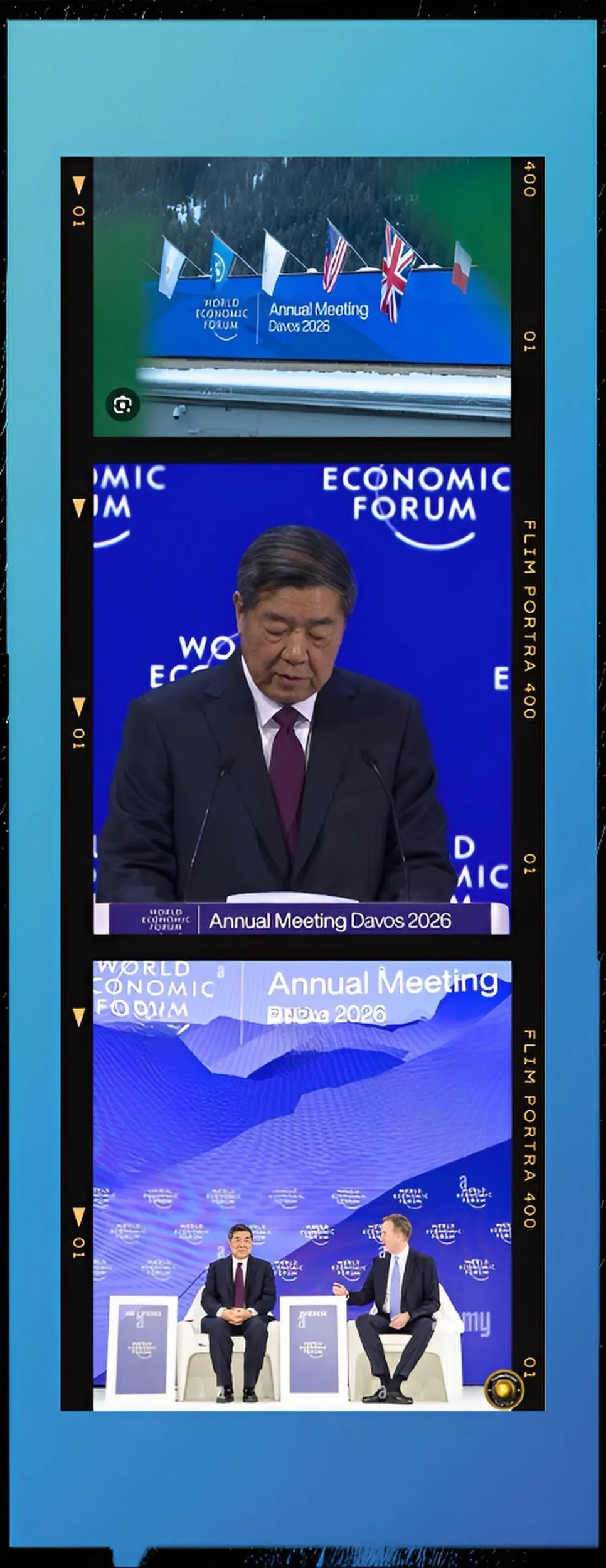
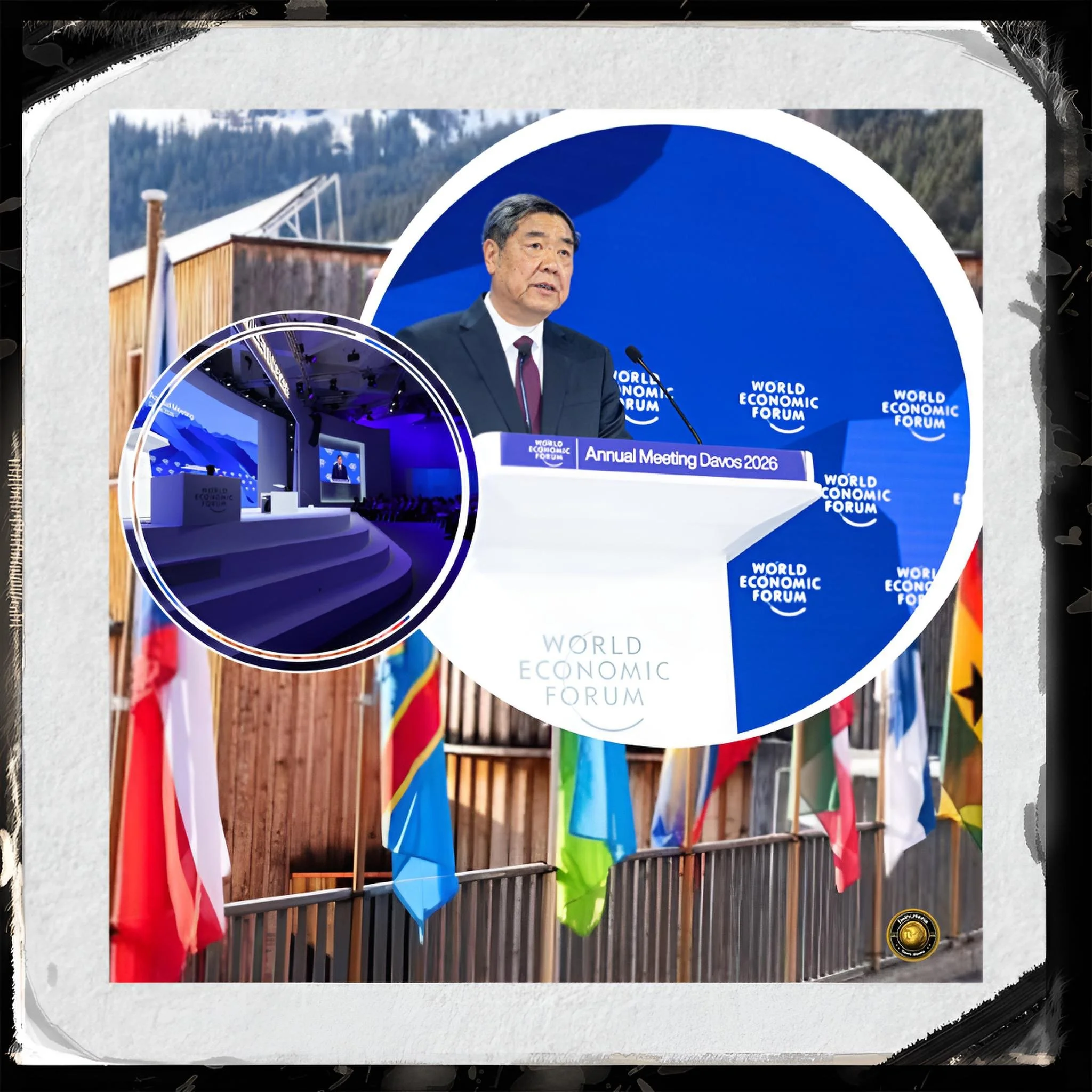
On January 20, 2026, He Lifeng, Vice-Premier of the People's Republic of China and member of the Political Bureau of the Communist Party of China's Central Committee, delivered a comprehensive special address at the World Economic Forum Annual Meeting in Davos, Switzerland.
This keynote presentation articulated China's strategic economic vision in an increasingly fragmented and uncertain global environment, emphasizing multilateralism, free trade, and inclusive economic cooperation. His remarks, delivered under the overarching theme "A Spirit of Dialogue," emerged as a critical intervention in ongoing global economic debates dominated by rising protectionism, geoeconomic fragmentation, and deteriorating multilateral institutions.
The address presented China's position not as a rival actor seeking zero-sum advantages, but rather as a responsible stakeholder committed to expanding shared prosperity through market liberalization, technological innovation, and cooperative governance frameworks.
FAF analysis examines the substantive dimensions of He's keynote, explores its implications for global economic policy, and assesses the underlying strategic considerations shaping China's approach to contemporary international economic challenges.
Introduction
Context and Significance
The 2026 World Economic Forum Annual Meeting occurred at a critical juncture in the post-pandemic global economy.
Multiple concurrent challenges confronted international policymakers: persistent trade fragmentation resulting from tariff escalations between major economies, geopolitical tensions disrupting established supply chains, divergent climate policy approaches between leading economies, rapid technological advancement requiring international governance coordination, and structural inequality in development outcomes, particularly affecting the Global South.
In this context, the appearance of China's highest-ranking economic official carried substantial symbolic and substantive weight. His address provided Beijing with an opportunity to articulate its vision for the global economic order amid intensifying great-power competition, reframing China's development model as beneficial rather than threatening to international stability and prosperity.
The choice of messenger proved significant. As China's economic czar and chief trade negotiator, He Lifeng represents the pragmatic technocratic faction within China's leadership structure, distinct from both nationalist hardliners and reformist elements.
His presence at Davos reflected China's recognition of the forum's continued importance as a venue where multinational corporate leaders, government officials, and representatives of international organizations converge to shape global economic narratives and policies.
Furthermore, the timing of his address immediately preceded remarks by other major economic powers, situating China's message within competitive discourses about the appropriate framework for international economic engagement.
Historical Development
China's Relationship with Global Economic Governance
Understanding China's 2026 position requires examining its trajectory within the post-World War II international economic system.
Following its 1978 reform and opening policy initiated by Deng Xiaoping, China progressively integrated into the General Agreement on Tariffs and Trade framework and later became a member of the World Trade Organization in December 2001.
This accession represented a watershed moment, subjecting Chinese enterprises to binding international trade rules while simultaneously providing Chinese exporters with most-favored-nation status access to developed markets. For two decades, this integration model produced asymmetric benefits, with China emerging as the global manufacturing hub while accumulating substantial current account surpluses, particularly with advanced industrial economies.
The 2008-2009 global financial crisis catalyzed significant conceptual shifts in Beijing's approach to international economic governance.
The crisis exposed vulnerabilities in the existing order, particularly the limited voice and representation accorded to developing economies in international financial institutions established at Bretton Woods in 1944.
In response, China and other emerging economies increasingly advocated governance reforms at the International Monetary Fund and the World Bank, while simultaneously constructing alternative multilateral frameworks such as the Shanghai Cooperation Organization, the BRICS New Development Bank, and the Asian Infrastructure Investment Bank.
These institutional initiatives reflected Beijing's perspective that existing multilateral institutions, while valuable, were insufficient to capture the interests and capacities of developing nations.
The presidency of Xi Jinping, which began in 2012, marked another significant transition in China's articulation of its role within the global economic architecture. Xi's 2013 pronouncement on the Belt and Road Initiative represented an ambitious vision for restructuring worldwide connectivity and economic integration through massive infrastructure investment.
More recently, Xi has articulated a series of interconnected global initiatives: the Global Development Initiative, proposed in 2021; the Global Security Initiative, introduced in 2022; the Global Civilization Initiative, launched in 2023; and, most recently, the Global Governance Initiative, announced in 2025.
These initiatives collectively constitute China's comprehensive ideological framework for addressing what Beijing identifies as structural deficits in global governance, development, security, and cultural understanding.
Against this historical backdrop, He Lifeng's 2026 Davos address must be understood not as a departure from China's established positions but rather as a contemporary articulation of themes consistently emphasized since Xi's 2017 Davos speech, where the Chinese president delivered his signature defense of economic globalization and multilateralism.
He's addressed, recycled, refined, and contextually updated these long-standing positions while addressing specific anxieties and critiques that have intensified since the Trump administration's return to office.
Current Status
The Global Economic Environment in 2026
By early 2026, the world economy faced convergent pressures creating what analysts describe as structural volatility.
The International Monetary Fund projected global growth at 3.1 percent for 2026, meaningfully below the pre-COVID average of 3.7 percent, signaling persistent momentum loss despite cyclical recovery efforts.
More concerning, World Trade Organization data indicated that global trade conducted under most-favored-nation terms had deteriorated from 80% at the beginning of 2025 to 72%, reflecting the proliferation of bilateral, regional, and plurilateral trade arrangements that fragmented the unified multilateral system.
The IMF estimated that this fragmentation could reduce global economic output by approximately 7% over the medium term. This potentially severe consequence would affect all economies, particularly disadvantaging smaller and developing nations with limited alternative trading partners.
Supply chain disruptions persisted at elevated levels. Container shipping costs had surged 40 percent year-on-year as geopolitical tensions disrupted established maritime routes and industries diversified sourcing to mitigate concentration risk. Between the beginning of 2025 and the Davos forum in January 2026, tariff escalations between major economies had reshuffled more than $400 billion in global trade flows. U.S. manufacturing activity had contracted for the tenth consecutive month in December 2025, despite or perhaps because of tariff protections designed ostensibly to revitalize domestic industry.
These contradictions underscored a fundamental reality: protectionist interventions, while generating concentrated benefits for protected constituencies, imposed diffuse costs across productive networks and consumer populations that frequently exceeded narrow gains.
The United Nations reported simultaneously that two-thirds of the Sustainable Development Goals would not be met by the 2030 target date, indicating that global collective action to reduce poverty, improve health outcomes, achieve gender equality, and address environmental degradation had fallen substantially short of aspirational targets.
This development crisis affected the least developed countries most acutely, as global capital flows concentrated in a limited number of growing emerging markets. At the same time, significant portions of the Global South faced capital scarcity, remittance volatility, and commodity price instability.
Against this background, the World Economic Forum designated "geoeconomic confrontation" as the top global risk facing humanity over the subsequent two-year period, reflecting expert consensus that tensions between major powers over economic instruments were escalating, particularly regarding technology competition, trade relationships, and capital flows.
The forum specifically identified China and the United States as the most closely watched actors in the deployment of economic levers to advance geopolitical objectives. This characterization reflects the centrality of great power competition to the trajectory of the global economic order.
Key Developments
Analytical Examination of He Lifeng's Core Arguments
He Lifeng's address articulated four substantive policy propositions, each representing both continuity with established Chinese positions and adaptation to contemporary circumstances.
The first proposition emphasized the indispensability of free trade and inclusive economic globalization. He argued that contemporary protectionism represented a fundamental historical mistake, running counter to inescapable economic logic and historical inevitability. His framing employed vivid metaphorical language: attempting to channel ocean waters into isolated lakes and creeks was futile; multilateral cooperation resembled passengers aboard a single ship sharing a common destiny; by contrast, unilateralism evoked the "law of the jungle," where predatory dynamics replaced cooperative relationships.
This rhetoric served multiple functions simultaneously. It appealed to developing nations' historical experiences of marginalization within Western-dominated systems, validating their aspirations for more equitable international arrangements. Simultaneously, it reassured multinational corporations and global investors that China represented a predictable, rules-based market committed to stability rather than arbitrary interventions.
Furthermore, it positioned China as the defender of post-World War II institutions and norms, an ironic inversion of Cold War narratives that depicted Beijing as a revolutionary disruptor of established order.
The second proposition centered on institutional multilateralism and equitable reform of international governance structures. He announced that China would forgo seeking new special and differential treatment in future World Trade Organization negotiations, a potentially significant concession since developing country status has historically entitled China to accommodations unavailable to advanced economies.
This position signaled a recalibration of China's self-identification, moving from emphasizing its developing-country status to projecting a level of responsibility comparable to that of advanced economies. Simultaneously, he called for comprehensive reform of multilateral institutions, particularly the World Trade Organization and the International Monetary Fund, aimed at enhancing the representation of the Global South and developing countries while strengthening institutional effectiveness and legitimacy.
This dual positioning—accepting advanced economy responsibilities while advocating for institutional democratization—reflected sophisticated diplomacy acknowledging that both developed and developing nations increasingly questioned the appropriateness and effectiveness of Bretton Woods institutions established three-quarters of a century earlier under vastly different geopolitical circumstances.
The third proposition constituted He's most economically substantive contribution: an exposition of China's deliberate transition from an export-surplus-generating manufacturing economy toward a consumption-driven model incorporating imports as a central mechanism for rebalancing global demand patterns. He emphasized that China never deliberately pursued trade surpluses, a contestable claim given historical evidence but important as aspirational positioning.
More concretely, he articulated an ambitious five-year plan commencing in 2026 aimed at transforming China's economic model through expanded domestic consumption, particularly emphasizing services sectors including elderly care, healthcare, entertainment, and cultural services where China historically accumulated large deficits.
He committed China to raising incomes, strengthening social safety nets, and expanding import capacity as mechanisms for simultaneously improving living standards domestically while absorbing global production, particularly from developing countries whose commodity exports and manufacturing capacity required stable markets.
This consumption shift represented a tacit acknowledgment of China's persistent development challenge: despite achieving manufacturing leadership and substantial aggregate wealth accumulation, the model demonstrated vulnerability to external demand shocks, generated unequal income distribution, and created substantial environmental costs.
A consumption-centered model, by contrast, aligned with both domestic political imperatives—managing societal expectations for improved living standards among the middle-income cohorts—and international pressures to reduce bilateral trade imbalances. He emphasized that China would host annual import expos, expand tariff reductions, open services sectors previously restricted to foreign participation, and actively promote foreign direct investment inflows.
These commitments, if implemented substantially, would represent meaningful market opening, though skeptics could note that comparable promises had periodically emerged from previous Chinese administrations without achieving transformative implementation.
The fourth proposition addressed emerging technology governance, environmental sustainability, and China's positioning within future-oriented policy domains. He announced that the 15th Five-Year Plan, adopted in October 2025, established a strategic blueprint for the next five years emphasizing innovative, coordinated, green, open, and shared development.
Regarding artificial intelligence specifically, He positioned China as willing to engage in international cooperation on AI governance, recognizing that rapid development of powerful artificial intelligence systems presented both unprecedented opportunities and substantial risks requiring multilateral coordination.
He referenced China's establishment of the world's largest renewable energy system and most complete new-energy industrial chain, commitments to carbon peaking before 2030 and carbon neutrality by 2060, and availability of green technology partnerships in solar energy, battery development, green infrastructure, and green financing.
These technological domains possessed particular significance for global economic competition. The clean energy transition represented the largest infrastructure investment opportunity of the coming decades, estimated at trillions of dollars.
China's dominance of solar panel manufacturing, battery production, and electric vehicle assembly positioned it advantageously to capture disproportionate benefits from this transition.
By framing clean energy participation not as commercial competition but as collaborative partnership advancing shared climate objectives, He attempted to reframe China's industrial dominance within environmental sustainability narratives rather than competitive market dominance frameworks.
Cause-and-Effect Analysis
Mechanisms Underlying China's Strategic Repositioning
Examining why China pursued this specific messaging at this particular moment requires understanding the causal mechanisms linking domestic challenges, international pressures, and strategic opportunities.
Domestically, China confronted stubborn structural economic problems. Despite achieving 5 percent growth in 2025, consumption remained weak relative to investment and exports. Retail sales growth of 3.7 percent trailed industrial production growth of 5.9 percent, indicating that production capacity expansion outpaced demand growth—a classic oversupply dynamic.
Household consumption as a share of GDP remained below advanced economies' levels despite China's emergence as the world's second-largest consumer market. This imbalance created urgency for policy reorientation toward demand generation. However, traditional stimulus mechanisms—credit expansion and infrastructure investment—had achieved diminishing returns and contributed to debt accumulation.
Thus, structural reform toward consumption required simultaneously boosting household incomes, expanding social safety nets, and opening the economy to foreign competition.
He's Davos address framed these necessary domestic adjustments as generous international gestures rather than defensive responses to structural necessity, a rhetorical repositioning valuable for managing both international perceptions and domestic constituencies skeptical of further market liberalization.
Internationally, China confronted intensifying critique regarding overcapacity and distortive trade practices. French President Emmanuel Macron, speaking immediately before He at Davos, directly accused China of deploying massive excess capacities and distortive practices threatening to overwhelm entire industrial sectors.
European policymakers increasingly characterized Chinese competition as fundamentally different from competitive dynamics among advanced economies, emphasizing state subsidy, currency manipulation, and technology transfer requirements as violations of level playing fields.
United States policy under the Trump administration had become overtly confrontational, employing tariffs explicitly as a strategic weapon to reduce bilateral deficits and constrain Chinese technological advancement.
These critiques, while contested by Beijing, reflected genuine anxiety among policy elites regarding deindustrialization, technology dependence, and asymmetric trade relationships.
China's response, articulated through He Lifeng, strategically distinguished between developed economy concerns (which emphasized market access and reduced government support) and developing economy concerns (which emphasized access to Chinese capital, technology, and markets).
By proposing expanded imports, explicit commitments to market opening, and technology cooperation frameworks, He attempted simultaneously to address developed economy concerns about unfair competition while maintaining attractive incentive structures for developing countries.
The emphasis on joint participation in green technology development, artificial intelligence governance, and infrastructure investment provided frameworks through which both developing and developed economies could engage China on mutually beneficial terms.
Additionally, China recognized that unilateral protectionism by the United States created opportunities for repositioning as the defender of multilateralism and free trade.
The paradox that Beijing—long criticized as an insufficiently market-oriented system—would emerge as the advocate for rules-based international trade reflected the degree to which Trump administration policies represented fundamental breaks from post-1945 norms that even economically nationalist countries had previously accepted.
By positioning itself as the defender of the WTO, IMF, and other multilateral institutions, China implicitly claimed legitimacy as a responsible stakeholder system rather than a disruptor, a claim that resonated with many non-aligned nations skeptical of unilateral American leadership.
Latest Facts and Strategic Concerns
Assessment of Implementation Challenges and Credibility Questions
Several critical questions emerged regarding the credibility and feasibility of He's commitments, reflecting skepticism among global observers about the gap between Chinese pronouncements and actual implementation.
First, the consumption transition represents extraordinarily difficult structural change. Despite years of policy emphasis, household consumption as a share of GDP has remained stubbornly below optimal levels.
The reasons are multifaceted: high precautionary savings driven by inadequate social safety nets, a demographic structure with increasingly large elderly populations requiring sustained savings, and cultural preferences for savings over consumption deeply embedded in Chinese society.
While He emphasized expansion of healthcare, elderly care, and educational services, translating policy announcements into behavioral transformation required sustained implementation and would encounter structural resistance.
The finance ministry's extension of interest subsidies for consumer credit through 2026 and allocation of 625 billion yuan for consumer trade-in programs for appliances and new-energy vehicles represented meaningful efforts but could prove insufficient for fundamentally rebalancing an economy structured around production for decades.
Second, the import expansion strategy, while valuable, faced constraints. He emphasized that "when China wants to buy, others don't want to sell," attributing trade imbalances to unwillingness of trading partners to provide desired goods rather than excessive Chinese export orientation.
This framing, while containing some truth (particularly regarding agricultural products where trade restrictions remain common), obscured the reality that many imports would face price competition from domestically produced goods, currency headwinds, and Chinese regulatory barriers.
Furthermore, services trade opening—potentially significant for advanced economies whose comparative advantage rested on services—required substantial domestic resistance from protected industries. Previous Chinese trade opening episodes demonstrated that actually dismantling protected sectors often proved more difficult than negotiating agreements.
Third, China's environmental commitments, while substantive, required scrutiny regarding feasibility and consistency. He announced carbon peaking before 2030 and carbon neutrality by 2060, with 2035 representing intermediate targets. These goals represented meaningful commitments, particularly the carbon peaking target that represented the first time China had announced absolute emissions reduction targets. However, achieving these targets required essentially complete decoupling of economic growth from emissions growth across the next decade, an extraordinarily ambitious undertaking.
China remained simultaneously the world's largest carbon emitter, largest coal consumer, and largest coal producer. While renewable energy capacity had expanded dramatically, coal remained central to China's energy system. The tension between announced environmental goals and structural energy dependence would require unprecedented policy discipline and technological breakthrough to resolve.
Fourth, the artificial intelligence governance cooperation proposition required examination. He emphasized openness to international cooperation on AI governance while China simultaneously accelerated AI integration through its "AI Plus" initiative, a comprehensive policy program aimed at embedding artificial intelligence across all economic sectors by 2035.
China proposed establishment of a "World Artificial Intelligence Cooperation Organization" under United Nations auspices as a multilateral forum for AI governance. This proposal, while superficially cooperative, implicitly positioned China as championing equitable access to AI technology (coded as opposing Western technological monopoly) while proceeding unilaterally with AI development domestically.
The proposition that international governance could meaningfully coordinate AI development between countries pursuing fundamentally divergent security and ideological objectives remained empirically unproven.
A final concern involved the relationship between He's rhetorical positioning and China's actual conduct regarding intellectual property, technology transfer, and industrial policy.
Despite announcements of strengthened IP protection and market liberalization, Chinese policymakers continued to employ various mechanisms—joint venture requirements, technology transfer conditions, indigenous innovation mandates—that frustrated multinational corporations and advanced economy governments.
He's address framed these practices as relics being gradually overcome through development, but their persistence suggested structural rather than transitional characteristics.
Implications for Global Economic Leadership
Strategic Imperatives and Opportunities
He Lifeng's address generated multiple distinct implications for different categories of global leaders, reflecting the heterogeneous interests and capacities of different state actors and economic constituencies.
For developing country leaders, particularly those from least developed nations and commodity-dependent economies, China's repositioning offered both opportunity and challenge.
The opportunity derived from He's emphasis on expanded consumption of commodities, raw materials, and manufactured goods, potentially stabilizing prices and demand for countries whose exports concentrated in primary commodities. The promise of Chinese investment in infrastructure, manufacturing facilities, and services sectors (particularly through mechanisms like the Belt and Road Initiative and its variants) offered pathways for economic diversification.
The challenge involved the asymmetry between China's bargaining power and smaller economies' vulnerabilities, the risk of debt accumulation through borrowed development financing, and the potential for technology transfer promises to exceed actual implementation.
Furthermore, the competition between China and advanced economies for influence over developing countries' economic trajectories meant that smaller nations' engagement with China occurred increasingly within constrained strategic environments.
For European policymakers, the address presented difficult choices between engagement and strategic autonomy. Europe's manufacturing sectors confronted competition from both Chinese overcapacity and American protectionism, creating a "being squeezed from both sides" dynamic articulated explicitly by French President Macron.
The prospect of expanded Chinese market opening and investment promised growth opportunities, particularly in premium manufactured goods, luxury services, and environmental technologies where Europe possessed comparative advantage.
However, Europe simultaneously sought to reduce technological dependence on China, secure critical mineral supplies, and maintain industrial capabilities across strategic sectors. He's emphasis on services sector opening offered European financial institutions, educational providers, and healthcare companies potential market expansion, while simultaneously raising anxieties about capital outflows and hollowing of domestic provision.
For the United States, He's address operated both as reassurance regarding China's non-revolutionary intentions and implicit critique of American unilateralism. The emphasis on multilateralism and rules-based order implicitly challenged Trump administration approaches while avoiding direct confrontation.
The commitment to expanded imports and market opening addressed specific American grievances regarding bilateral trade imbalances, though skeptics questioned whether actual implementation would achieve meaningful reductions in surpluses. For American business sectors competing in China's market—technology, finance, automotive, pharmaceuticals, consumer goods—the address signaled continued market opportunities if geopolitical tensions could be managed. For American companies facing Chinese competition in developed markets, the address offered little reassurance.
For global corporations, He's address suggested continued policy orientation toward market expansion, technology partnerships, and supply chain integration. The emphasis on intellectual property protection, business environment improvement, and services sector opening aligned with multinational corporation preferences for market liberalization.
The warnings against protectionism, while reflective of multilateral corporation interests, offered limited comfort regarding specific risks—tariff escalations, technology restrictions, supply chain disruption—that dominated corporate risk assessments.
Corporations operating in multiple jurisdictions faced the challenge of navigating divergent approaches between American-led deglobalization pressures and Chinese-led re-globalization rhetoric.
For international organizations including the World Trade Organization, International Monetary Fund, and United Nations system, He's address offered unprecedented opportunities for institutional revitalization.
The explicit support for institutional reform, developing country representation, and multilateral coordination suggested that China, despite its previous criticisms of Bretton Woods institutions, believed these organizations remained central to global economic governance.
However, the simultaneous construction of alternative institutions (Asian Infrastructure Investment Bank, New Development Bank, and various regional development frameworks) indicated that China pursued parallel rather than fully cooperative institutional strategies.
Future Steps
Structural Trajectories and Policy Implications
Examining likely trajectories stemming from He Lifeng's Davos address requires attention to both what China announced and what remained implicit in policy directions.
The consumption transition represents the most challenging structural undertaking.
Achieving meaningful rebalancing of China's economic model toward consumption over the 2026-2030 period would require sustained implementation of multiple policy initiatives: income support policies including basic pension expansion, healthcare system universalization, and educational investment; reduction of precautionary savings through social safety net enhancement; elimination of distortions in services sector provision; and acceptance of slower aggregate growth rates consistent with demand-constrained rather than investment-driven expansion. These adjustments implied distributional consequences—potential unemployment in overcapacity industries, reduced profitability for firms accustomed to government support, regional disparities potentially worsening before improving.
The Central Economic Work Conference in December 2025 indicated political commitment to these adjustments, but implementation across provincial and municipal levels faced coordination challenges inherent in China's federal structure.
The technology domain, encompassing artificial intelligence, semiconductors, quantum computing, and biotechnology, represented another arena where He's commitments would be tested. The "AI Plus" initiative, announced in August 2025, constituted a comprehensive national strategy for AI integration across all economic sectors by 2035.
This initiative positioned AI as a "public good" and "core engine for economic growth," implying substantial government direction and investment. The tension between this vision and He's emphasis on international cooperation and equitable access would emerge acutely if AI development created concentration of capabilities in a limited number of firms or countries.
China's proposed "World Artificial Intelligence Cooperation Organization" represented an attempt to establish governance frameworks, though skeptics questioned whether genuine international governance could constrain national security considerations.
The environmental transition, while rhetorically embraced, faced serious implementation questions. Carbon peaking before 2030 required essentially immediate emissions control measures, yet China continued coal-dependent energy generation and fossil fuel-based transportation.
The New Development Bank and Belt and Road Initiative infrastructure projects continued funding conventional fossil fuel investments, seemingly inconsistent with announced climate commitments. Whether China could achieve the announced targets would substantially affect global climate prospects; China's emissions represented approximately one-third of global totals, making Chinese climate action essential to limiting atmospheric carbon accumulation to pathways consistent with Paris Agreement objectives.
The services sector opening, if genuinely implemented, represented significant structural change. Services sectors—including healthcare, education, finance, professional services, telecommunications, entertainment—have historically encountered greater protection than goods trade due to regulatory complexity and social sensitivity. He's emphasis on services sector expansion for both imports and foreign direct investment suggested potential opening of these domains.
This would benefit advanced economies whose comparative advantage concentrated in high-value services but would encounter domestic resistance from protected professions and service providers.
The trade and investment trajectory depended substantially on geopolitical evolution. He's entire repositioning toward multilateralism and free trade occurred within context of Trump administration policies explicitly rejecting these frameworks. If American unilateralism intensified or persisted across multiple administrations, the appeal of multilateral cooperation would increase, potentially validating China's positioning and driving other countries toward alternative arrangements.
Conversely, if American policies moderated and multilateral consensus re-emerged, China's distinctive contribution would become less significant.
Conclusion
Assessment and Implications for Global Stability and Prosperity
He Lifeng's January 2026 Davos address represented a sophisticated strategic communication aimed at multiple audiences simultaneously. To global audiences, it presented China as a responsible stakeholder committed to multilateralism, free trade, and equitable governance despite increasing geopolitical tensions.
To developing countries, it offered continued partnership and investment while emphasizing China's own development challenges and transformations. To advanced economies and multinational corporations, it signaled continued market opportunities and commitment to economic engagement.
To Chinese domestic audiences, it framed necessary structural economic adjustments—transition from export-led to consumption-led growth, services sector expansion, environmental constraints on growth—as generous international gestures rather than defensive responses to structural limits.
The central substantive question concerns implementation.
Do announced policies—consumption expansion, import growth, services sector opening, environmental commitments, technology cooperation—represent genuine strategic reorientation or tactical rhetorical adjustments?
China's historical record demonstrates both: genuine sectoral liberalization in some domains (telecommunications, automotive manufacture) alongside persistent protectionism in sensitive sectors (agriculture, rare earth minerals) and state support for strategic industries (semiconductors, artificial intelligence, renewable energy).
The gap between announced intentions and actual implementation has frequently proven substantial.
Nevertheless, the address captured important truths about global economic necessity.
The fragmentation trajectory evident in 2025—rising tariff barriers, supply chain reorientation away from efficiency toward security, reduced multilateral institution effectiveness, accelerating geopolitical tensions—represented a costly equilibrium benefiting few constituencies while imposing broad diffuse costs. He's articulation of this reality and implicit critique of protectionist dynamics contributed valuably to Davos discourse, even if China's own practices sometimes diverged from announced principles.
The most significant implication concerned great power competition. If the United States continued pursuing unilateral approaches to trade, technology, and development, China's positioning as the multilateral alternative gained credibility and appeal.
Conversely, if American policy moderated toward renewed engagement with multilateral institutions and consensus-based approaches to global problems, the distinctive appeal of China's positioning diminished.
The trajectory of global economic governance over the next five years would substantially depend on how American policy evolved and whether other major economies could forge cohesive coalitions around shared principles.
For global leaders, He's address suggested that both competition and cooperation remained possible within the existing institutional framework, though the balance between them would continue shifting.
The challenge for policymakers involved discerning which issues admitted win-win cooperation and which represented genuine zero-sum competition, then constructing differentiated approaches rather than applying uniform strategies across heterogeneous policy domains.
The "spirit of dialogue" that He emphasized throughout his address represented not naïve belief in universal harmony but pragmatic recognition that many shared problems—climate change, pandemic preparedness, technological governance, development financing, supply chain resilience—admitted no solution through unilateral action and required sustained multilateral engagement despite persistent competition in other domains.
The ultimate significance of He Lifeng's Davos address lay not in any specific policy announcement but in its reassertion of a vision of global economic order based on rules, institutions, and multilateral coordination despite substantial evidence that this order had eroded significantly. Whether this vision proves resilient or represents a brief interlude before more fundamental restructuring of global economic governance remains uncertain.
What appears clear is that the alternative outcomes—global fragmentation and geopolitical conflict, or renewed multilateral cooperation—would generate vastly different implications for human welfare, prosperity distribution, and global stability.
He's address, while undoubtedly strategic communication with specific Chinese interests, simultaneously articulated positions increasingly vital to global prosperity.