Understanding China's Vision at Davos 2026: A Simple Guide for Everyone
Introduction
What Happened at Davos
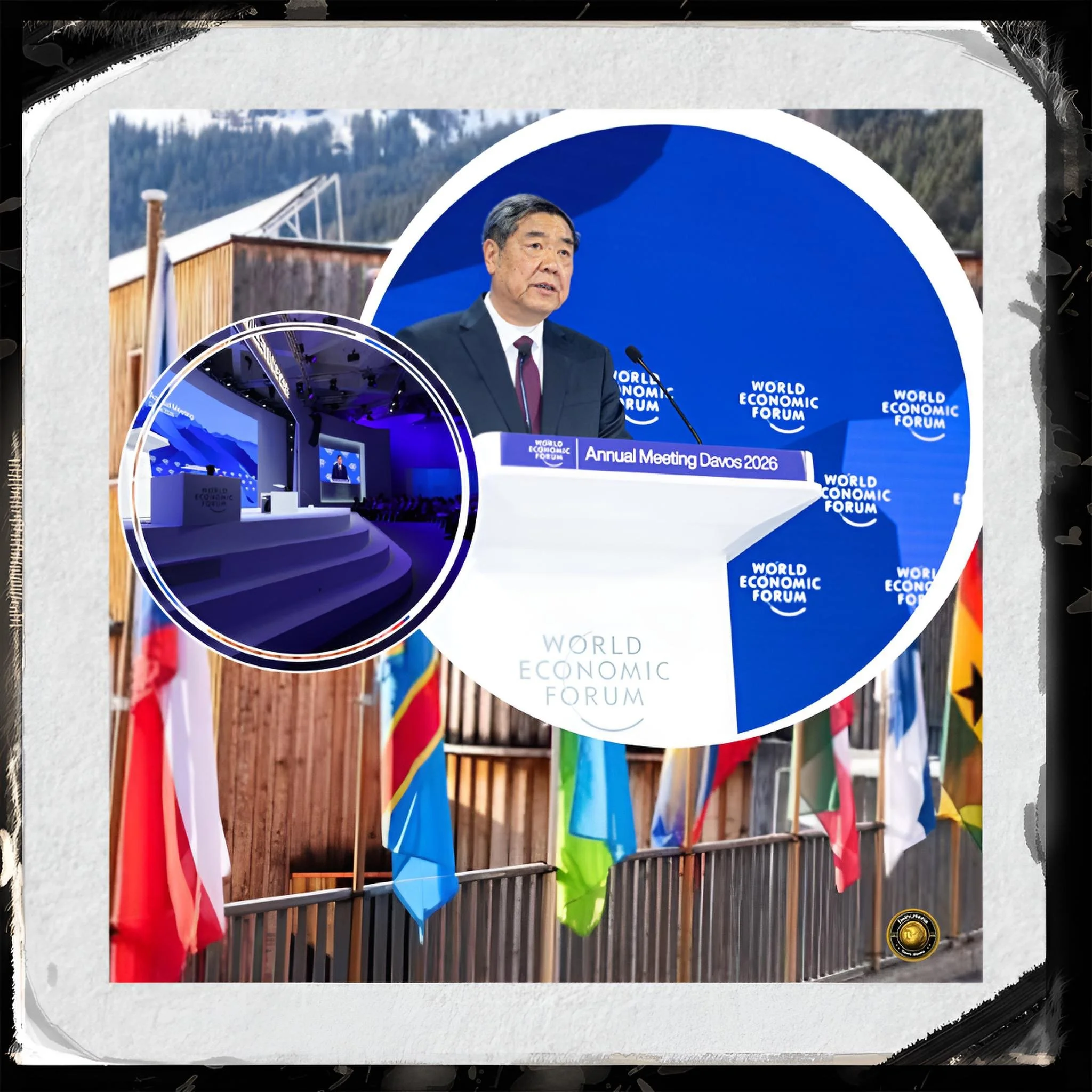
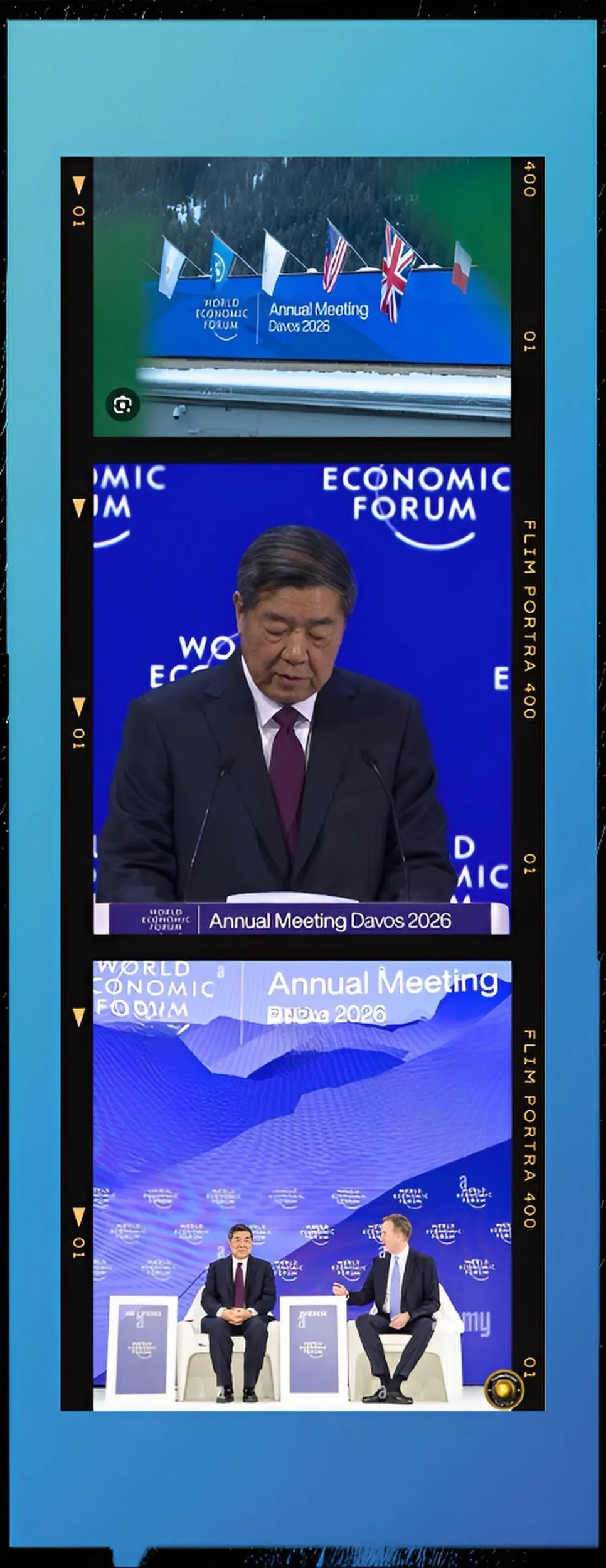
In January 2026, a crucial meeting took place in Davos, Switzerland. This meeting, the World Economic Forum, brings together the world's most powerful business leaders, government officials, and politicians to discuss global challenges and opportunities.
On January 20, 2026, He Lifeng, one of China's top economic leaders, delivered a major speech outlining China's plans for the global economy.
He Lifeng is the Vice-Premier of China, making him one of the second-most influential people in the Chinese government. He is also China's chief trade negotiator, the person who handles all of China's trade discussions with other countries.
His speech was important because it explained how China views global trade, what it plans to do with its economy, and how it wants to work with other countries.
What He Lifeng Said: The Main Message
He Lifeng's core message was simple: "China's development is an opportunity, not a threat." He wanted world leaders to understand that when China grows and becomes wealthier, this actually helps other countries too. This message was important because many countries worry that China's economic power might hurt them.
He used two powerful metaphors, or word pictures, to explain his ideas. First, he said that trying to separate countries from each other is like trying to channel the waters of the ocean back into isolated lakes and creeks. In other words, it is impossible and foolish to try to cut countries off from each other. The world economy works best when all countries trade together openly.
Second, he said, countries are all passengers on the same giant ship traveling across the ocean. If the boat hits a storm, everyone on the ship will be affected, whether they are first-class passengers or traveling in the cargo hold. This means that all countries, whether rich or poor, powerful or weak, have a shared destiny. When one country struggles, others will feel the pain too. When one country prospers, others benefit.
The Problem with Trade Wars
Why Free Trade Matters
He Lifeng spent time explaining why free trade is so essential and why trade wars are harmful. He pointed out that trade wars between countries have not worked well. In fact, since 2025, when more countries started putting high taxes (called tariffs) on goods from other countries, global trade has become very confused and unstable.
Here is a simple example: Imagine a factory in Vietnam makes clothes. The factory imports cotton from India, has the clothes made in Vietnam, and wants to sell them to Europe and America. But now, America puts a 25 % tariff on Vietnamese garments. Europe puts a 15 % tariff.
At the same time, Vietnam and India have a minor trade disagreement, so Vietnam makes it more expensive to import cotton from India. Suddenly, the factory has to pay much higher costs for every step of the process. The price of clothes goes up, so fewer people can afford them. The factory might have to close. Workers lose their jobs. Communities that depend on that factory suffer.
This is what is happening all over the world right now. Trade wars hurt small countries the most because they often depend on selling things to richer countries. They also hurt poor people everywhere because prices go up while jobs become harder to find.
He Lifeng warned that trade among countries under fair rules has dropped from 80 %-72 %. This number might seem small, but it is a big deal. It means that countries are increasingly trading outside the normal rules, making agreements that benefit a few but not others.
The International Monetary Fund estimates that this fragmentation could reduce the total wealth produced by the world by about 7 %.
That is trillions and trillions of dollars that the world economy will not produce. Those dollars could have been used to build schools, hospitals, and roads.
China's Plan
From Making Things to Buying Things
For the past 40 years, China's strategy was to be the "world's factory." China would make cheap things—clothes, shoes, electronics, toys—and sell them everywhere. This strategy worked so well that China became very wealthy. Today, China is richer than it has ever been.
But He Lifeng explained that China is changing this strategy. China now wants to be not just the "world's factory" but also the "world's market." In other words, China wants to buy more things from other countries, not just sell things to other countries.
Think of it this way: For many years, China was like a person who worked hard and made a lot of money, but spent very little. China saved almost everything. Now, China wants to become more like an American or European—someone who works but also spends money on nice things, experiences, and services.
He announced that in the next five years (2026 to 2030), China would do several things:
First, China would make sure its people earn more money. This means wages would go up, pensions would increase, and more people could afford to buy things.
Second, China would spend more money on services that make people's lives better. These services include healthcare (doctor visits and hospitals), elderly care (taking care of older people), education, entertainment, and travel. China has not invested in these areas as much as developed countries have, so there is enormous potential for growth.
Third, China would buy more things from other countries. He pointed out that China imported more than $15 trillion worth of goods and services in the past five years. But China wants to import even more. This means companies from India, Brazil, Australia, Vietnam, and many other countries would have more opportunities to sell things to China.
Fourth, China would open more of its markets to foreign companies. For example, in banking and finance, insurance, healthcare, and education, China would allow more foreign companies to operate. Currently, many of these sectors are restricted. Opening them would give companies from other countries new opportunities to do business in China.
A Real Example
Elderly Care in China
To understand what this means in practice, imagine an American company that specializes in elderly care. Currently, this company cannot easily operate in China because the Chinese government does not allow many foreign companies in this field. But He Lifeng is promising to open this sector. This means that the American company could potentially build nursing homes in China, hire Chinese workers, and provide care to China's rapidly aging population.
China's population is getting older very quickly. More than 280 million Chinese people are already over age 60.
In another five years, this number will grow significantly. These elderly people need care, and there are not enough nursing homes or care workers.
If America, Germany, Japan, and other countries can send experts and invest in this sector, it helps solve China's problem while creating jobs and profits for foreign companies.
The same logic applies to healthcare more broadly, educational services, entertainment, tourism, and many other areas. By opening these sectors, China addresses its own internal challenges while creating business opportunities for the world.
Why This Matters for Your Country
Different countries will benefit from China's new strategy in different ways.
For developing countries, especially those that export raw materials like copper, oil, natural gas, or agricultural products, China's increased consumption is very good news.
China needs massive amounts of raw materials to build the infrastructure that elderly care requires, to produce new medicines and medical equipment, and to support a wealthier lifestyle. When China buys more from these countries, prices for their exports go up. Jobs are created. The economy grows.
For developed countries like Germany, Switzerland, Japan, and the United States, the opportunities are different. These countries specialize in high-quality goods and services. German companies make excellent manufacturing machines.
Swiss companies specialize in pharmaceuticals and watches. Japanese companies make advanced robotics. American companies lead in financial services and technology.
China's wealthier consumers will want these products. Chinese elderly people will want quality healthcare using advanced foreign technology. Chinese universities will want to partner with top American and European universities. These are big business opportunities.
For developing countries hoping to become manufacturing hubs, China's shift creates challenges and opportunities. The challenge is that China still makes most of the world's manufactured goods.
The opportunity is that China is looking for supply chain partners. Chinese companies want to work with companies in Vietnam, Indonesia, Mexico, and India to produce goods together. This can help these countries move up the economic ladder.
Climate Change and Green Energy
A Different Kind of Opportunity
He Lifeng also talked about climate change and green energy. He explained that China has built the world's largest renewable energy system. This means China has more solar panels, wind turbines, and batteries than any other country.
China also has the most complete new-energy industrial chain. In simple terms, this means China can manufacture every part of a solar panel or electric vehicle battery.
China announced that it would peak (stop increasing) its emissions by 2030 and reach carbon neutrality by 2060.
Carbon neutrality means producing as much clean energy as you use dirty energy—basically net zero emissions.
Why did He Lifeng emphasize this? Because green energy represents one of the largest business opportunities in the coming decades. Every country in the world needs to move away from fossil fuels (oil, coal, and natural gas) and toward renewable energy (sun and wind). This is a multi-trillion dollar business opportunity. China is already winning in this competition.
For example, China makes about 80 % of the world's solar panels. The cost of solar panels has dropped 80 % in the past decade because Chinese factories have become so efficient. This means every country can now afford solar energy. But China's companies are profiting from this transition.
He Lifeng invited companies from all over the world to partner with China in this green transition. This could mean a German company partnering with a Chinese company to install solar farms in Africa. Or an Australian company working with Chinese partners to develop new battery technology. These partnerships benefit everyone—poorer countries get affordable clean energy, developed countries get profitable business opportunities, and China strengthens its position as the leader in green technology.
Artificial Intelligence and the Future
He Lifeng also talked about artificial intelligence, or AI. AI is very new technology that is changing everything—how factories work, how doctors diagnose disease, how people search the internet, and much more. Right now, the United States leads in AI technology, but China is catching up very quickly.
He Lifeng said that China wants to cooperate with other countries on AI governance. This is an important statement. Governance means the rules about how to use something responsibly. Just like we have rules about how to drive cars safely, we need rules about how to use AI safely.
He suggested that countries work together to make sure AI benefits everyone, not just rich people or big companies. He also proposed creating an international organization to discuss how to govern AI globally. This would be similar to how countries work together on climate change or health issues.
This is significant because if China and the United States work together on AI rules, the entire world will probably follow. But if they cannot cooperate and create competing standards, this would be bad for everyone because technology companies would have to do everything two different ways.
What About Concerns?
The Other Side of the Story
While He Lifeng's speech was optimistic about cooperation and free trade, some people at Davos raised concerns about China.
France's president, Emmanuel Macron, pointed out that China does have serious overcapacity in some industries. Overcapacity means producing too much of something.
For example, China makes more steel, chemicals, and solar panels than the world needs right now. This creates very low prices, which can destroy factories in other countries. French and European companies sometimes cannot compete with these cheap Chinese products, even if the European products are better quality.
Macron also raised concerns about whether China really means what it says about opening its markets. Historically, when China promises to open markets, the opening sometimes happens more slowly than promised, or only in limited ways.
Some analysts worry that while He Lifeng talks about cooperation and multilateral trade, China is simultaneously developing very advanced artificial intelligence technology and controlling it. If China gets too far ahead in AI, it might use that technology advantage in ways that harm other countries.
Others worry about intellectual property. Companies in advanced countries spend billions of dollars developing new medicines, software, and technologies. In some cases, Chinese companies have copied these innovations without paying for them. Will real cooperation mean that China stops these practices?
These concerns are legitimate. Just because He Lifeng promises cooperation does not automatically mean it will happen. China's actual behavior has sometimes differed from its promises.
Conclusion
What This Means for Global Leaders
He Lifeng's speech at Davos conveyed several important messages to global leaders:
First, China is changing its economic model. For the next five to ten years, China will focus on making its people wealthier and happier rather than just making more stuff to sell. This is good news for companies selling high-value products and services.
Second, China is emphasizing cooperation over confrontation. While acknowledging that countries have different interests, He argued that cooperation creates more wealth than conflict. Trade wars hurt everyone; free trade helps everyone.
Third, China recognizes that the world faces shared challenges—climate change, disease, poverty, and technological disruption—that no country can solve alone. China proposes to lead in some areas (green energy, AI governance, development financing) while cooperating with other countries on others.
Fourth, China wants to lead in the technologies of the future, especially green energy and artificial intelligence. Companies and countries that work with China on these technologies will benefit.
Finally, He Lifeng's speech reflects China's recognition that very high growth rates are becoming harder to achieve and perhaps not even desirable. Instead, China is aiming for high-quality growth that makes people's lives better, not just growth for growth's sake.
For world leaders, this means several practical things:
If you represent a developing country, China wants to be your partner. China will buy your natural resources. China will invest in your infrastructure. China will help you develop clean energy. In return, China wants stable relationships and favorable trade conditions.
If you represent an advanced country like Germany or Japan, China wants to buy your high-quality products and services. This creates business opportunities. But you should negotiate carefully to protect your own interests and companies.
If you represent a country concerned about the environment, China is now one of your potential partners in fighting climate change. Working together on green energy makes sense economically and environmentally.
If you are a global business leader, He Lifeng is basically saying: "Come to China. We are opening our markets. We are building new infrastructure. We have 1.4 billion people who are getting wealthier. You can make money by serving these people."
The big picture is that He Lifeng is trying to reposition China from a country that makes cheap goods to a country that is middle-aged, wealthier, and wants quality goods and services. This is actually where all countries eventually go as they develop. Britain and Germany went through this transition in the 1800s. America went through it in the 1900s. Now it is China's turn.
Whether this actually happens depends on whether China follows through on its promises and whether other countries are willing to work with China. The speech itself represents a significant shift in China's messaging, even if some people remain skeptical about actual implementation.