Summary
The Greenland Grab That Shook the West: Trump, NATO, and the Crisis That Revealed What Really Holds Alliances Together
The Day Trump Went Too Far (Or Did He?)
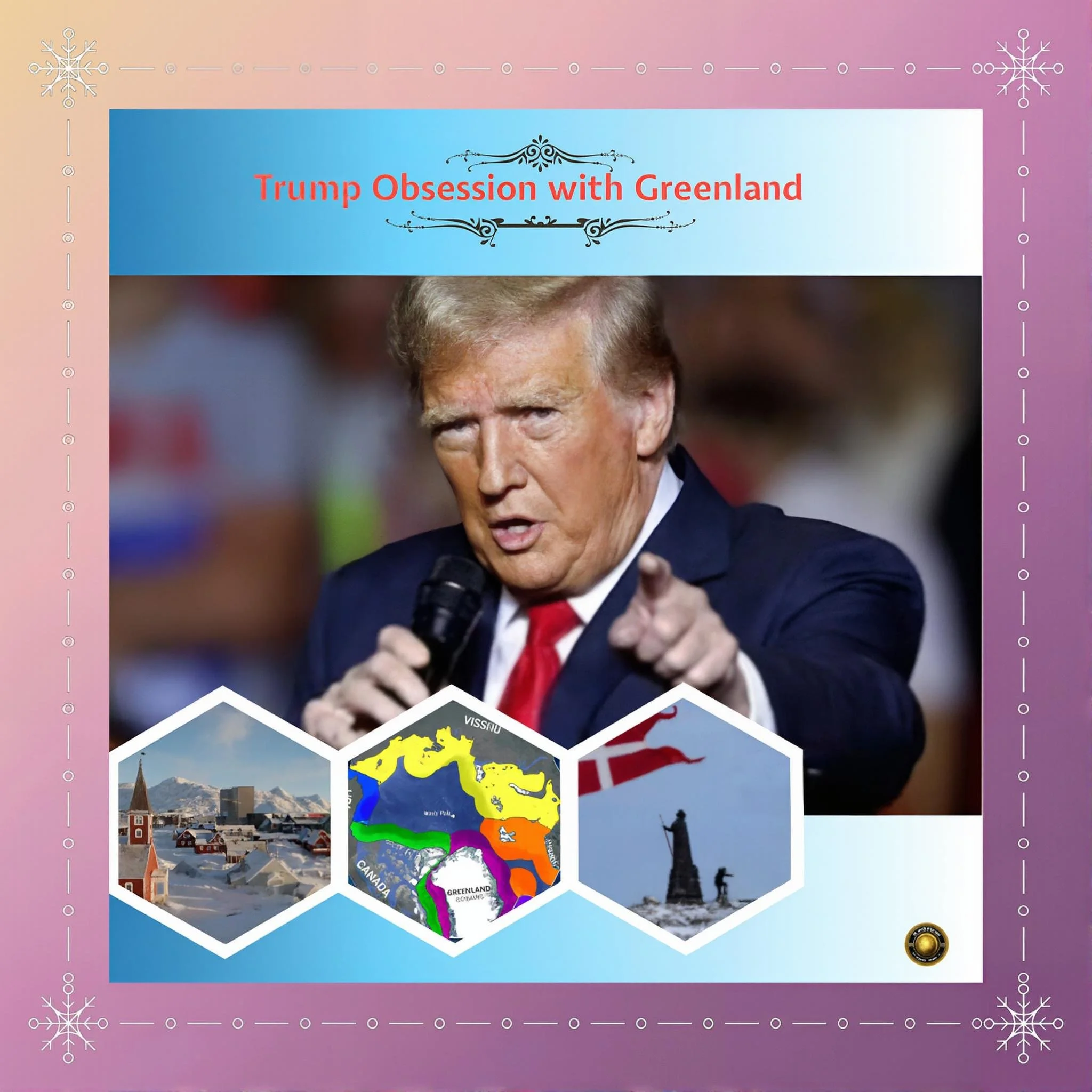
It started like a real estate deal—because with Donald Trump, everything eventually becomes about real estate. In early January 2026, the American president dusted off his 2019 playbook and announced that the United States simply had to own Greenland. Not partner with it. Not negotiate with it. Own it. The Canadian-sized Arctic island that belongs to Denmark, sitting in the frozen far north, became suddenly central to American national security strategy.
By January 18, Trump had escalated to threats that shocked even his most cynical observers.
He announced tariffs—10 % tariffs rising to 25 % —on eight NATO allies. All because they refused to support his Greenland acquisition scheme. This was not just diplomatic posturing. These tariffs would hit Denmark, Norway, Sweden, France, Germany, the United Kingdom, the Netherlands, and Finland starting February 1.
Trump gave them a choice: surrender, or pay the economic price.
For three days, it seemed the entire transatlantic alliance might fracture.
Then, on January 21 at the World Economic Forum in Davos, something unexpected happened. Trump announced that he and NATO's chief Mark Rutte had agreed on a mysterious "framework" for Greenland. He dropped the tariffs. He ruled out military force. And yet, somehow, Trump claimed victory. The headline writers struggled: Had the deal saved the alliance or merely postponed inevitable conflict?
The answer, it turned out, was far more complicated—and far more revealing about the state of the Western world in 2026.
Why Does a President Obsess Over an Arctic Rock?
To understand Trump's Greenland fixation, you have to grasp what is actually happening in the Arctic right now. The ice is melting. Fast. Climate change is opening shipping routes that were frozen for millennia. It is revealing mineral deposits worth trillions of dollars. And it is creating a new geopolitical battlefield where Russia and China are moving aggressively while the West debates among itself.
Greenland sits at the center of this transformation. It is the world's largest island, positioned at the gateway to Arctic resources and shipping lanes that could reshape global commerce. A single American military base there, Thule Air Force Base, already serves as a critical surveillance post. Trump sees Greenland not as a quirky acquisition target but as the geographic key to Arctic dominance—and, by extension, to American national security.
His three main arguments sound more reasonable when you hear them without the sensational framing.
First, the Arctic is becoming a great-power competition zone. China explicitly calls itself a "near-Arctic state" despite being thousands of miles away. Russia has modernized its Arctic military capabilities dramatically. Joint Russian-Chinese patrols are becoming routine.
General Alexus Grynkewich, NATO's top commander in Europe, confirmed publicly that this is not peaceful research: "They are not studying seals and polar bears. They are out there doing bathymetric surveys and trying to figure out how they can counter NATO capabilities." That is serious strategic assessment, not Trump's rhetoric.
Second, Greenland contains minerals that the world will need desperately. Rare earths, uranium, zinc, and other elements critical for manufacturing and renewable energy are locked under Greenlandic ice and bedrock.
Whoever controls access controls supply chains that will matter enormously in the coming decades. Trump's instinct to think in terms of resource control is strategically sound, even if his methods are diplomatically crude.
Third, Trump argues that America has invested in defending Europe for eighty years and should get something in return. The historical argument has teeth—American military presence has guaranteed European security since 1945.
The idea that this should come with some tangible return is not absurd, though the Greenland fix certainly is.
But None of This Explains the Tariffs
This is where Trump's approach shifted from strategically sound to diplomatically explosive. The tariffs were not about persuasion. They were about coercion. Trump was essentially saying: agree with me or face economic punishment. He was treating allies like adversaries.
And here is where the crisis revealed something profound about alliances and power: threatened, the Europeans did not fracture. They united.
Eight countries issued a joint statement. Sweden's Prime Minister declared: "We will not allow ourselves to be blackmailed." France's Macron stated flatly that the tariffs were "unacceptable." Germany, the United Kingdom, Italy, Spain, and Poland coordinated messaging expressing absolute solidarity with Denmark.
A unified European response to American pressure—something that rarely happens—suddenly did.
Greenland's government, meanwhile, distributed emergency preparedness handbooks to all residents. Keep five days of supplies. Be ready for anything. It was the Arctic equivalent of civil defense drills from the Cold War, except the threat came not from the Soviet Union but from America's own president.
Inside the Danish government, officials were quietly livid. Denmark had stood with America in every major conflict since 1945.
Danish troops fought in Iraq and Afghanistan alongside Americans. Denmark had been part of every Western coalition. And now Denmark was being punished—economically threatened by its largest ally—for protecting its own territory.
The Moment Everything Changed
By mid-January, internal White House dynamics were shifting. Vice President JD Vance and Secretary of State Marco Rubio, both known for strategic calculation, began pushing back against the maximalist Greenland strategy. Not because they opposed acquiring Greenland—they did not—but because they understood something basic about power: you cannot maintain alliances through coercion alone.
Military options, which had been deliberately left ambiguous by the White House, were quietly downplayed. No serious military planning had occurred, sources revealed, but the possibility had been left hanging over Europe as negotiating leverage. Now, even that was being reconsidered.
Then Mark Rutte, NATO's secretary-general, played his hand. Rutte is a former Dutch Prime Minister with years of experience managing Trump. He knew what Trump needed: a face-saving exit and a claim of victory. At Davos, Rutte offered exactly that.
The "framework"—that deliberately vague term—allowed everyone to claim success while nobody had to surrender. Trump got to say he had negotiated a deal on Greenland and Arctic security. Denmark got to keep Greenland. Rutte got to prevent a NATO meltdown. It was diplomatic judo, using Trump's need for victory against his maximalist demands.
And Yet...
The relief was premature, even for those celebrating it.
Trump's ruling out of military force was welcome, but it was also inevitable. Military invasion of a NATO ally would have destroyed the alliance entirely.
The fact that this had to be explicitly stated showed how far the discourse had deteriorated. Previously, such an option would have been unthinkable. Now, it had to be formally ruled out.
The canceled tariffs were necessary but did not erase the threat. Trump had demonstrated that he was willing to economically punish allies over disagreements. That knowledge does not disappear just because the tariffs were withdrawn. Every European leader was now calculating: what will trigger Trump's next round of economic coercion?
The vague "framework" on Arctic security? It was a placeholder. Negotiations would continue, with Trump maintaining leverage by keeping specifics deliberately unclear. Was American ownership still on the table? Trump said it was "complex." That was a non-answer that kept everyone guessing.
What This Actually Revealed About the Alliance
The Greenland crisis was not really about Greenland. It was a stress test of the entire transatlantic alliance. And the test revealed disturbing truths on both sides.
For Trump and America, it revealed that even the most powerful nation on Earth cannot simply coerce its allies into fundamental territorial concessions.
Trump tried. He had superior military power, economic leverage through tariffs, and an adversary (Denmark) that was militarily trivial compared to America. And he still could not achieve his objective. This should have been obvious—you cannot legally or politically annex a NATO ally—but the attempt itself was revealing. It suggested a worldview where American power should translate directly into American will, regardless of international law or alliance norms.
For Europe, it revealed both strength and fragility. Strength: eight countries united against American pressure. European leaders found their voice. The alliance could still mobilize collectively when directly threatened. Fragility: the fact that this was necessary showed how much confidence in American leadership had eroded.
Fifteen years ago, a European leader questioned American strategy on this scale would have been inconceivable. Now, an American president was doing the questioning, and Europe had to defend itself.
The Cascading Consequences
In the weeks following the Davos announcement, the real impacts began manifesting. Germany announced historic defense spending increases—a fundamental shift in Berlin's policy after decades of military restraint.
Denmark accelerated Arctic defenses. Norway, Sweden, and Finland ramped up military investments. Poland announced major new weapons purchases. Smaller countries began coordinating more tightly, creating a European defense capability less dependent on American commitment.
This was, in a sense, exactly what Trump claimed to want—allies spending more on defense. But it was happening in a context of reduced confidence in American reliability. European leaders were not gearing up because they trusted America's security guarantees more. They were gearing up because they trusted them less.
In parallel, European strategic autonomy rhetoric intensified. French President Macron, who had been pushing for European independence for years, suddenly had new credibility.
Germany's leadership began serious discussions about European military capabilities, European nuclear weapons, European strategic independence. The European Union started treating defense spending and strategic autonomy as existential questions rather than theoretical aspirations.
China and Russia, watching this unfold, drew their own conclusions. The Western alliance was fracturing from internal stress. America was threatening its own members.
Europe was scrambling to compensate. Beijing and Moscow could calculate that the American security umbrella was less reliable, which meant Allied partners were more vulnerable, which meant opportunities existed for regional powers to test boundaries.
The Normalization of the Abnormal
Perhaps the most dangerous consequence was not the tariff threat or the coercive rhetoric itself, but the normalization of these tactics. Trump had shown that an American president could openly demand territorial concessions from NATO allies. That precedent now exists.
International legal experts were blunt: under the UN Charter and established international law, threatening to coerce territorial concessions is illegal. But Trump had effectively declared that international law was secondary to American national interest. If the world's most powerful nation says it will ignore international law when convenient, what constrains other powers from doing the same?
Russia watched with interest. The logic of "security necessity overrides sovereignty" was, after all, exactly what Moscow had used to justify its seizure of Crimea and invasion of Ukraine. If America could invoke the same logic regarding Greenland, Russian arguments suddenly seemed less anomalous. If international law is conditional—applicable to everyone except the United States—then it ceases to function as law.
This was perhaps the most consequential shift. Not that Trump almost took Greenland, but that he demonstrated America's willingness to subordinate international law to perceived security necessity. That shift, if sustained, will reshape the entire international system.
How Greenland and Denmark Will Never Be Quite the Same
In Greenland itself, the crisis produced a curious effect. Most Greenlanders had viewed independence from Denmark as their long-term goal. Trump's threats momentarily unified the population against external pressure. When forced to choose between America and Denmark, Greenlanders chose Denmark without hesitation.
Prime Minister Jens-Frederik Nielsen's statement—"when faced with a choice between the US and Denmark, Greenland chooses Denmark"—expressed a truth that might have played out very differently under other circumstances.
But the crisis also crystallized something important for Greenlanders: they are vulnerable. Their small population (57,000 people), geographic isolation, and resource wealth make them objects of great-power interest. Whether they ultimately choose independence from Denmark or remain under Danish sovereignty, they will have to manage relationships with powers far larger than themselves.
Denmark, meanwhile, has consolidated its position as America's most steadfast ally while simultaneously learning that steadfastness comes with no guarantees. Danish soldiers have fought in every post-Cold War conflict alongside Americans.
Denmark hosts American military installations. Denmark is at the strategic center of NATO's northern defense. And Denmark's reward for loyalty was to be threatened by its primary security guarantor.
This is the kind of lesson that changes generations of policy. Denmark will remain in NATO. Denmark will continue cooperating with America on security. But Denmark will now do so while quietly strengthening alternatives, coordinating more tightly with other European powers, and maintaining strategic hedges against American unpredictability.
The Gaffe That Revealed the Logic
Late in the crisis, Trump revealed something unintentionally damning. In a communication with Norwegian Prime Minister Jonas Støre, Trump connected his Greenland demands to his resentment over not winning the Nobel Peace Prize. He had been slighted by the international community, so he was determined to assert dominance over smaller powers to restore his status.
This personal grievance driving foreign policy decisions was simultaneously trivial and profound. Trivial because a president's emotional state should not drive decisions about American power and international law.
Profound because it revealed that the coercive diplomacy, the tariff threats, and the territorial demands were rooted not in strategic calculation but in personal resentment.
This is perhaps the deepest concern raised by the Greenland crisis: what happens when the world's most powerful nation is governed by a leader for whom personal grievance and status assertion override traditional calculations of national interest and international obligation?
What Actually Happens Now?
The "framework" that Trump and Rutte announced in Davos is still being defined. Negotiations continue, but the outlines are becoming clearer.
America will probably get enhanced security arrangements in Greenland, possibly more military deployment rights, possible coordination mechanisms on Arctic security, and likely first-refusal rights on strategic mineral development. These are not trivial concessions—they represent expanded American influence over a strategically critical region.
But they are not territorial acquisition. Greenland remains Danish. Denmark remains sovereign. The larger international legal order—prohibiting territorial conquest through coercion—remains nominally intact, even if it has been significantly weakened.
Trump will claim victory. Rutte will claim he prevented a crisis. Denmark will claim it preserved Greenland. All three claims will contain some truth. But the cost—paid in the erosion of alliance cohesion, the weakening of international norms, and the acceleration of European strategic hedging—will accumulate over years.
The Real Threat Is Not Greenland
The actual threat posed by the Greenland crisis is not that Greenland will become American. The threat is that Trump's approach—using coercion against allies, dismissing international law, and treating alliances as transactions rather than mutual commitments—has set a precedent.
If future American presidents follow this logic, the alliance system that has underpinned Western security for eighty years becomes unsustainable. Alliances require trust. They require confidence that commitment is mutual and unconditional.
They require shared understanding of rules and norms. Coercive diplomacy, tariff threats, and demands for territorial concession corrode all of these foundations.
China is watching this unfold with interest. As American reliability with its allies declines, Beijing sees opportunities to deepen ties with European states. Russia, similarly, sees prospects for regional dominance in Eastern Europe if European NATO members cannot fully depend on American security guarantees.
The greatest strategic cost of the Greenland crisis may not be paid by Denmark, Greenland, or even Europe. It may be paid by the United States itself, as the system of alliances that multiplied American power for decades gradually becomes less reliable and less willing to defer to American strategic preferences.
Conclusion
Empires and Ice
Trump wanted Greenland because he thinks in terms of real estate, resources, and dominance. His instinct to recognize the Arctic's strategic importance was correct. His methods for pursuing it were potentially catastrophic.
The crisis revealed both the continuing power of the American alliance system (eight countries united against pressure) and its fragility (that such pressure could come from America's own leader).
It showed that international law still constrains behavior, but only if powerful states choose to respect it. And it demonstrated that even in 2026, the oldest truths about power still apply: alliances cannot be built on coercion.
Empires eventually decline when they treat allies as subjects. And ice-covered islands in the Arctic, no matter how strategically important, are not worth the cost of destroying the system that has protected American interests for generations.
Whether future leaders remember this lesson, or whether Trump's approach becomes the new normal for American foreign policy, remains the central question facing the West.