Why Trump wants Greenland: The complete story -Part II
Introduction
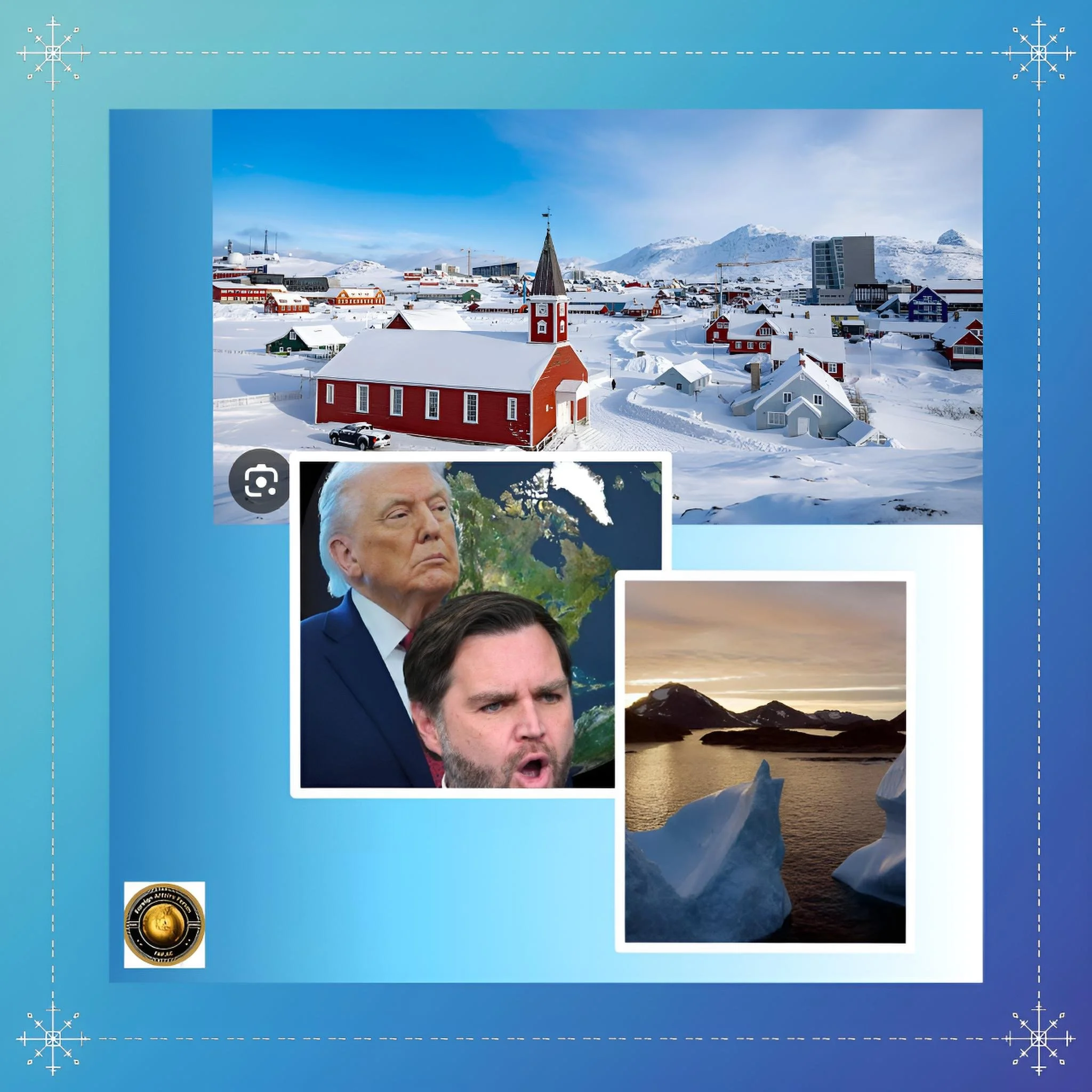
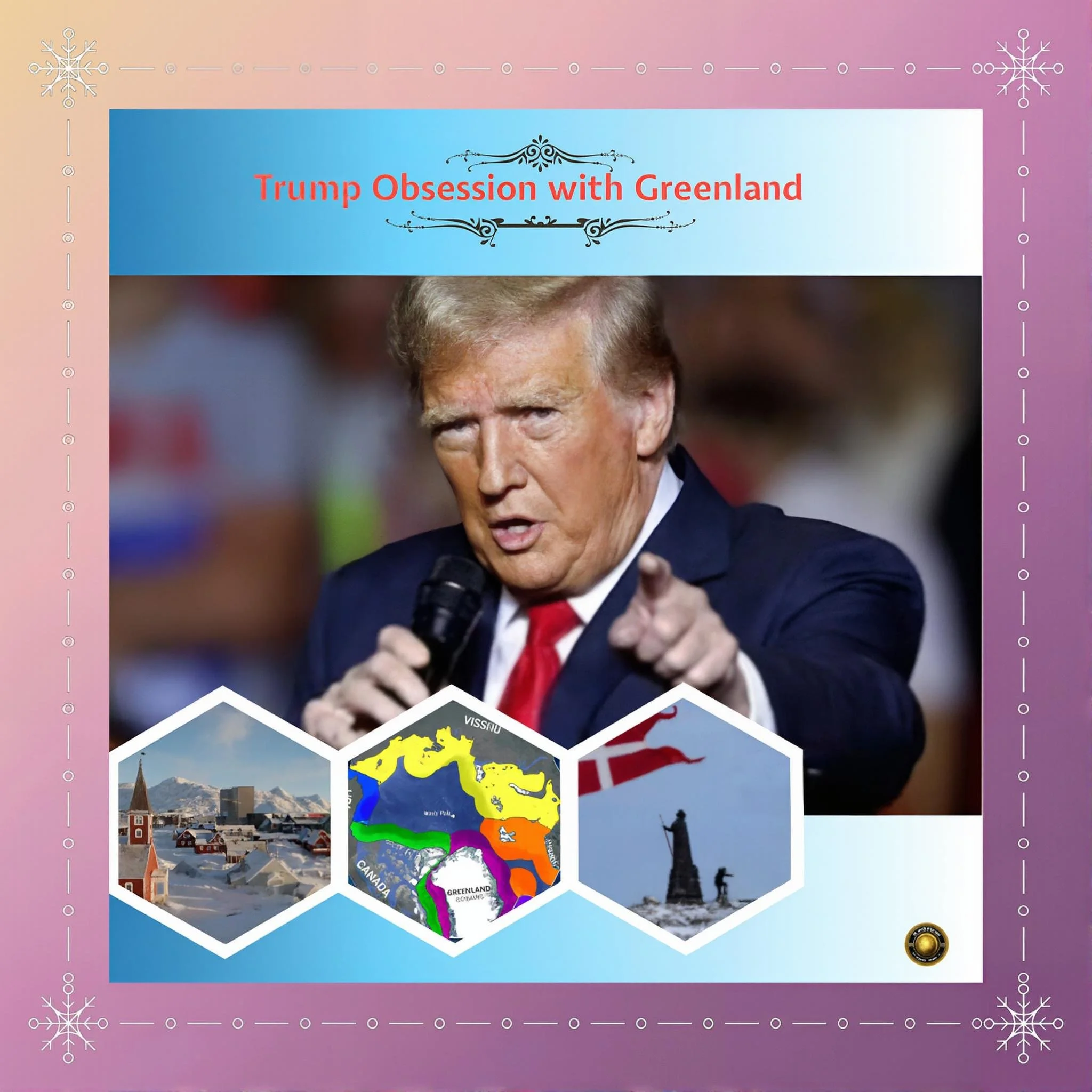
For months, President Trump has talked about buying or taking Greenland. His interest in this Danish territory might seem strange, but there are real reasons behind his push.
Understanding these reasons requires looking at four main factors: valuable minerals, Arctic military strategy, competition with China and Russia and his ego.
What Is Greenland and Why Is It Important?
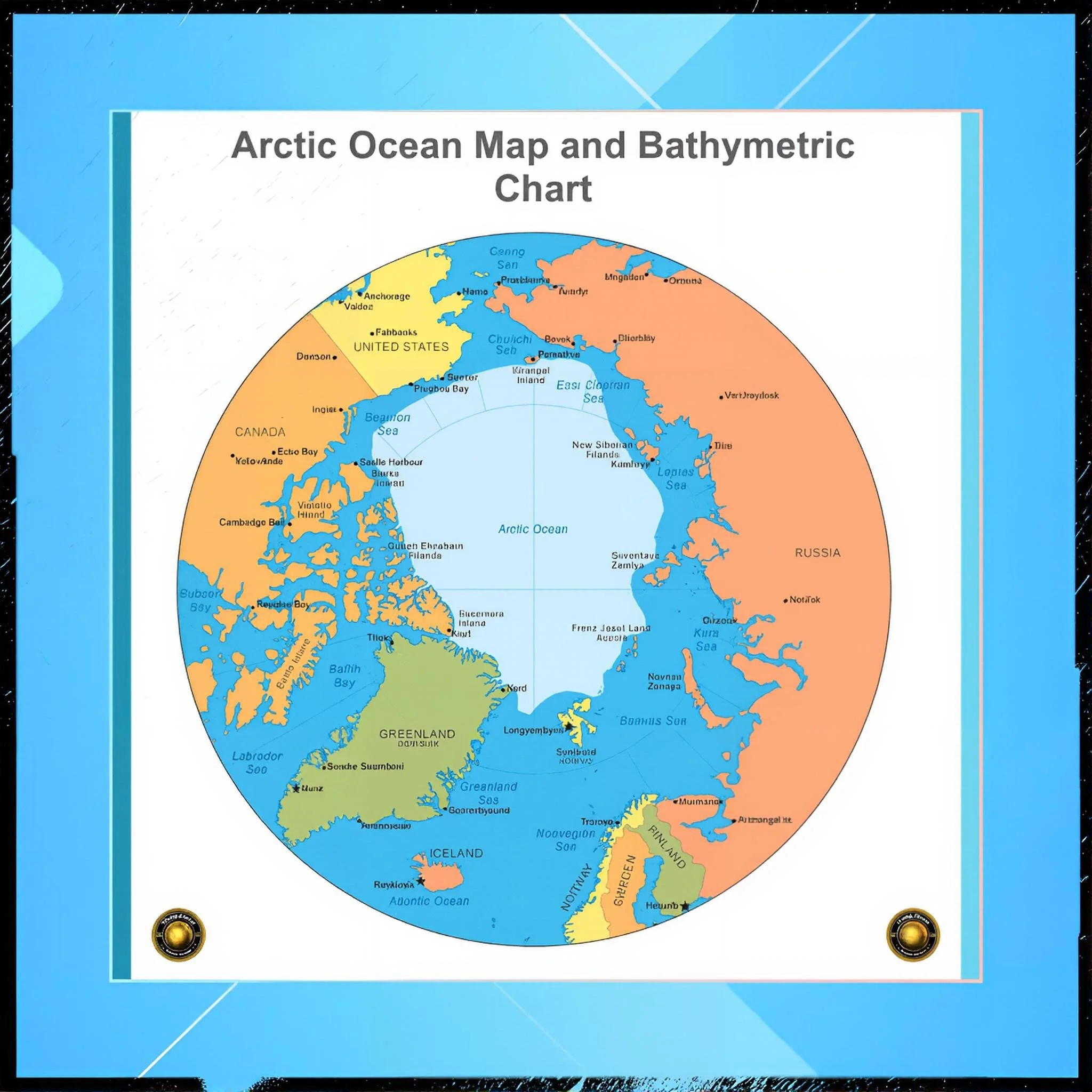
Greenland sits between North America and Europe in the Arctic region. Its location is incredibly valuable for military purposes. From Greenland, the American military can monitor Russian ships travelling through the Arctic Ocean. It also sits along two new shipping routes that are opening up because of climate change.
These routes could save weeks of travel time compared to traditional paths through the Suez Canal or Panama Canal.
The United States already has one military base in Greenland called Pituffik Space Base. But Trump wants much more than a single base. He wants to control the entire island.
The Mineral Treasure Beneath the Ice
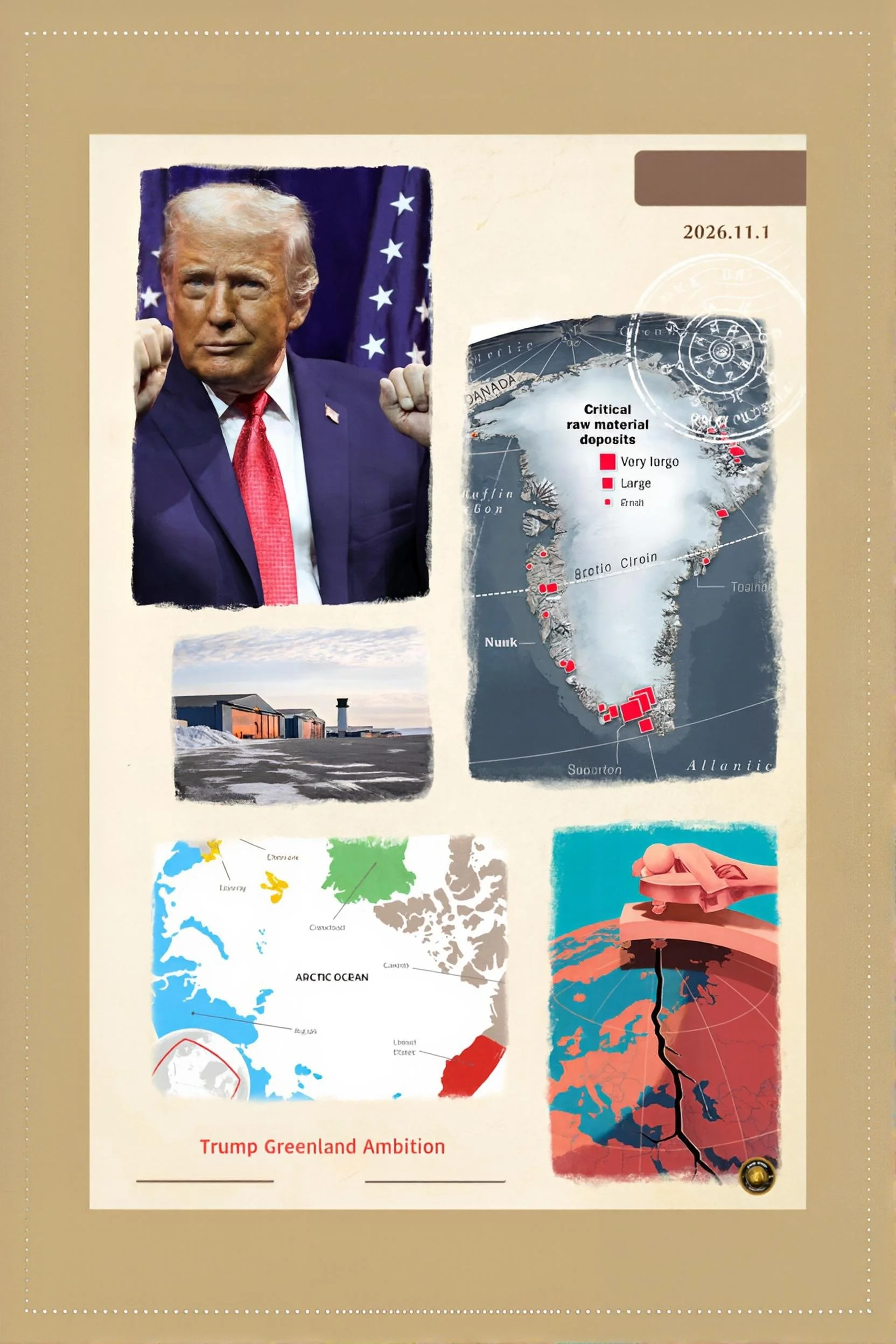
Greenland contains some of the world's richest deposits of rare earth elements.
These minerals are essential for making modern technology. Smartphones, electric vehicle batteries, military weapons systems, and wind turbines all depend on rare earth elements. They also power the computers that run artificial intelligence systems.
Right now, China controls about eighty percent of the world's rare earth processing. This means even if Greenland successfully mines these minerals, they would still need to be sent to China for processing.
This dependence worries American leaders. If China became angry with the United States, it could refuse to process American rare earths, crippling technology production.
Two specific deposits in Greenland are massive. Kvanefjeld contains about eleven million metric tons of rare earth reserves. Tanbreez is equally impressive. Getting these minerals would reduce American dependence on Chinese supplies.
The Arctic Strategy: Countering Russia and China
As the Arctic ice melts due to climate change, the region is becoming strategically important. New shipping routes are opening. New areas are becoming accessible for resource extraction. Both Russia and China are expanding their presence in the Arctic.
Russia has refurbished over fifty old Soviet military bases in Arctic territories. It has deployed modern warships and aircraft throughout the region. China is pursuing what it calls the "Polar Silk Road"—investing in Arctic projects, particularly mining operations in Greenland, to expand its influence in the region.
Trump administration officials argue that if the United States does not secure Greenland, Russia or China will eventually dominate it.
They contend that American control is necessary to maintain hemispheric security and prevent rivals from establishing military footholds close to North America.
Trump's Three Approaches: Negotiation, Payment, and Military
The Trump administration has pursued multiple strategies simultaneously to acquire Greenland.
First, there is negotiation. White House officials have met with Danish and Greenlandic leaders. Secretary of State Marco Rubio has stated that the administration intends to purchase Greenland and is discussing what such a purchase would look like.
Second, there is financial incentive. The administration has considered offering money directly to Greenland's residents to encourage them to support independence from Denmark and joining the United States. Proposals have ranged from ten thousand dollars to one hundred thousand dollars per person.
With approximately fifty-seven thousand residents, this could total between five hundred seventy million and five point seven billion dollars.
Third, there is military force. Trump has stated that if diplomatic and financial approaches fail, the United States will do something "the hard way." The White House has not ruled out using military force. The Trump administration has reportedly ordered military commanders to develop invasion plans.
Why Greenlanders Reject These Approaches
Greenlanders overwhelmingly oppose American acquisition. Their leaders from all political parties have issued joint statements declaring that the island is not for sale and that Greenland's future must be decided by Greenlanders themselves.
Local residents view the American campaign as insulting, treating their homeland like a commodity to be purchased rather than respecting their right to self-determination.
Many Greenlanders aspire to complete independence from Denmark. For these people, replacing Danish rule with American control represents not progress but merely substituting one external power for another. They identify strongly as Greenlanders rather than Danes or Americans.
The NATO Problem: Alliance Crisis
Denmark is a founding member of NATO, the Western military alliance. If the United States attempted to seize Greenland by military force, it would violate the NATO treaty.
Article Five of the NATO treaty states that an attack on one member is an attack on all members. Military seizure of Danish territory would be precisely such an attack.
Danish Prime Minister Mette Frederiksen has warned that military action would end NATO. Other European allies—Britain, Germany, France, Italy, Spain, and others—have declared their support for Denmark.
They have emphasised their commitment to international law and the principle that nations should respect one another's territorial borders.
This creates a strategic paradox. Trump argues that acquiring Greenland is necessary to maintain American strength in the region. But military seizure would shatter the alliance structure through which American power has been historically maintained in Europe.
The Practical Problems: Mining Is Incredibly Difficult
Industry experts have dismissed the rare earth mining justification as unrealistic. Greenland's Arctic climate allows mining operations only three months per year.
The region lacks basic infrastructure needed for large-scale mining. Building this infrastructure would require spending billions of dollars and take many years.
Most importantly, processed rare earth minerals cannot yet be produced outside China. Any Greenlandic ore would still need to be shipped to China for refining.
This means that even if the United States acquired Greenland, it would remain dependent on Chinese processing capacity. The promised independence from Chinese supply chains would not materialise.
Experts estimate that meaningful rare earth production in Greenland remains at least a decade away, even under the most optimistic scenarios.
Historical Precedent: The Truman Proposal
Trump's interest in acquiring Greenland is not entirely new. In 1946, the Truman administration formally proposed purchasing Greenland from Denmark. They offered one hundred million dollars in gold—a sum that seemed reasonable at the time but which Denmark rejected.
The Cold War made Greenland valuable, just as competition with China makes it valuable today.
This historical parallel suggests that American interest in Greenland reflects long-standing strategic doctrine rather than Trump's personal caprice. Multiple American administrations have recognised Greenland's strategic value.
What Could Actually Happen?
Several scenarios are possible. Most likely, negotiations will continue through existing channels. The 1951 Defence Agreement already gives the United States extensive military privileges in Greenland. Denmark and Greenland might agree to expand American military presence without formal territorial acquisition.
Alternatively, the Trump administration could support Greenlandic independence from Denmark while negotiating special military and economic relationships. This would give Greenlanders the independence they want while giving the United States strategic privileges.
A military seizure remains unlikely despite Trump's threats, primarily because such action would destroy NATO and fracture American alliances. The strategic logic that supposedly justifies acquiring Greenland would be undermined by the very action intended to achieve it.
Conclusion
Trump wants Greenland for its minerals, its military location, and its position in the emerging Arctic competition with China and Russia. These reasons are strategically significant. However, the methods being pursued—threats, financial inducements, and military planning—have generated fierce resistance from Greenlanders, Danes, and European allies.
The pursuit of Greenland illustrates how contemporary great power competition is beginning to resemble nineteenth-century imperial competition, but with modern weapons and technology. Whether this drive for Arctic dominance will strengthen American power or undermine the alliances that constitute its foundation remains unclear.