Introduction
When the World's Most Powerful People Meet to Discuss the Future, But Cannot Agree on What That Future Actually Is
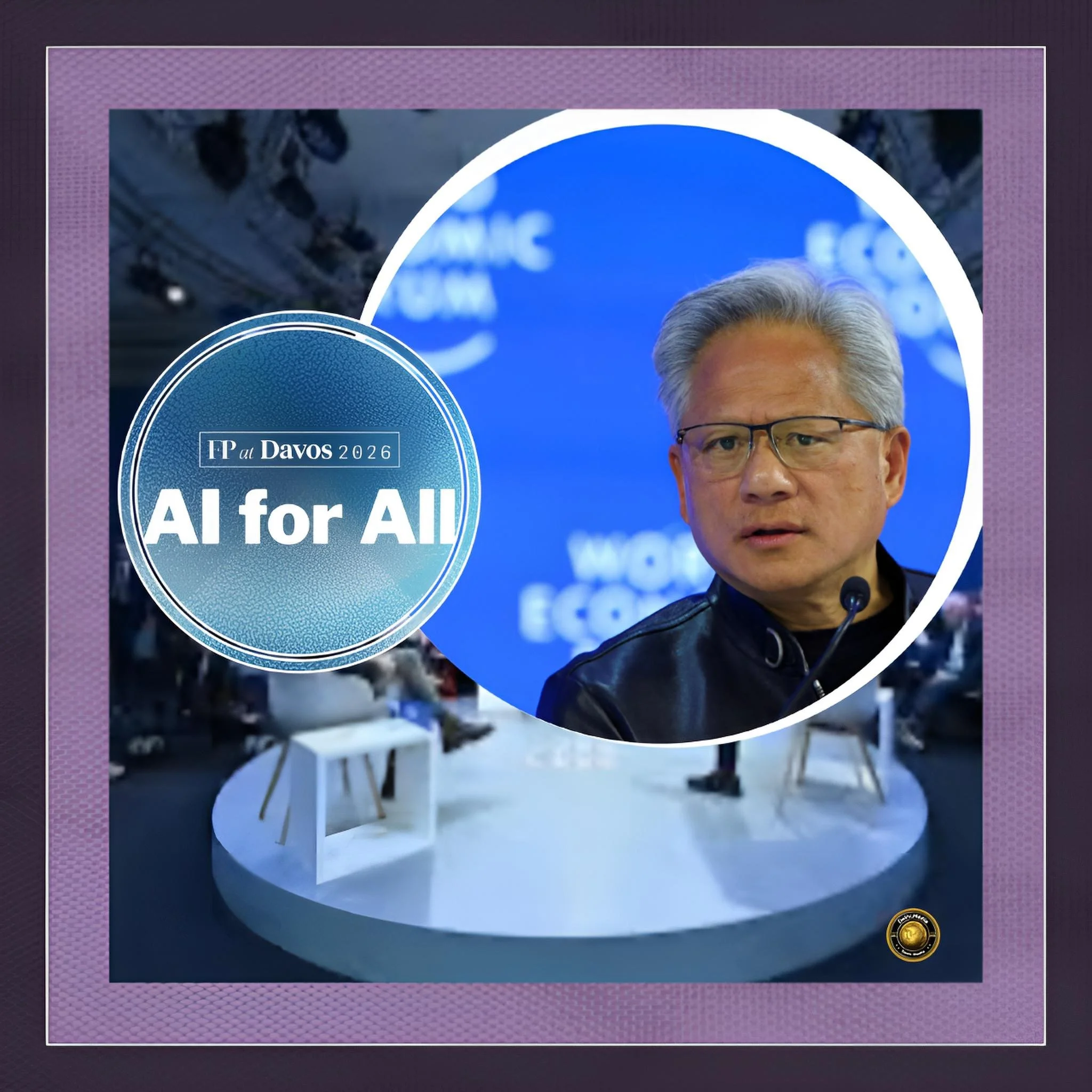
The scene was set perfectly for consensus. Davos, Switzerland. January 2026. Nearly three thousand leaders—CEOs, presidents, prime ministers, tech moguls, and international bureaucrats—gathered at the World Economic Forum in pristine alpine surroundings to chart humanity's collective future.
The theme was "A Spirit of Dialogue." It sounded hopeful. It sounded unified. It sounded like the place where the world's problems get solved.
Then they started talking about artificial intelligence, and the careful facade crumbled.
What emerged from the conference halls was not a roadmap for responsible AI development. What emerged was something far more revealing: a naked display of competing visions, competing interests, and competing fears about where artificial intelligence is actually taking us.
The leaders of the world could not agree on whether AI would be humanity's greatest achievement or its greatest threat.
They could not agree on whether we have one year or ten years before everything changes. They could not even agree on whether the people asking difficult questions about AI were being reasonable or obstructionist.
In short, Davos 2026 revealed that we are heading toward an artificial intelligence future without any agreement on where that future should go.
The Optimists Versus the Realists (Or Are They Pessimists?)
Picture this: Satya Nadella, the calm and measured CEO of Microsoft, standing on stage saying that artificial intelligence might lose its "social permission." It sounds like corporate hedging, but his meaning cut to the bone.
He was saying that if AI companies do not deliver tangible improvements in healthcare, education, and productivity—if they just keep using enormous amounts of electricity to make fancier chatbots—people will eventually demand that governments shut it down.
This was essentially Nadella saying: "We have a deadline, and that deadline is social acceptance."
Then you had Jensen Huang from Nvidia painting an almost utopian picture. Eighty-five trillion dollars of infrastructure investment over fifteen years.
The largest construction project in human history. Jobs for electricians, construction workers, plumbers. AI would not destroy work; it would transform it. A rising tide lifts all boats, or so the argument goes.
These two billionaires were essentially disagreeing about whether the water is rising evenly or drowning the people already struggling to stay afloat.
The Scariest Conversation Nobody is Having
Then Dario Amodei walked on stage and said something that should have stopped the room cold: AI will eliminate half of all entry-level jobs, and it might happen within 6-12 months.
He was not being theoretical. He pointed to his own engineers at Anthropic who do not write code anymore. They tell AI what code to write. The AI writes it. The engineers review it. That is the future of engineering right now, not a decade from now. Right now.
Demis Hassabis, the brilliant but more cautious DeepMind chief, pushed back. He said no, it will be 5-10 years before AI reaches that level of capability. You could see the strategic calculation happening: Amodei is trying to prepare people for a shock. Hassabis is trying to calm things down. Both might be right, or both might be wrong, which is precisely the problem.
Meanwhile, IMF Managing Director Kristalina Georgieva stood up and announced that 40 % of global jobs could be affected by artificial intelligence.
In advanced economies, it could be 60 %. She called it a "tsunami." And then she moved on like she had not just described an economic catastrophe.
The most revealing moment was how little pushback she got. Nobody shouted her down. Nobody said she was being alarmist. Everyone just nodded and took it as established fact that most jobs might disappear.
When the Leaders of the World Seem Powerless
Here is where Davos 2026 became genuinely troubling. The conversations revealed that these powerful leaders—presidents, prime ministers, CEOs—do not actually feel like they have much control over what happens next.
Yuval Noah Harari, the brilliant historian, delivered what might have been the most important speech of the conference.
He said AI is not a tool. A tool does what you tell it. AI is an agent. It learns. It improves. It can decide things. He went further: within a few years, more information, more law, and more policy will be written by AI than by humans.
The question, he asked, is whether countries will recognize AI as a legal entity that can own property, sign contracts, and conduct business independently. If America says yes and your country says no, what happens? Do you block American AI from your economy and isolate yourself? Or do you accept it and lose control?
This is not a rhetorical question. This is a genuine governance nightmare heading our way.
The regional leaders—particularly India's Ashwini Vaishnaw—seemed to understand this existential positioning question acutely. India does not want to be a consumer of American or Chinese AI. It wants to be a creator. It wants to be a sovereign AI power. Vaishnaw pointed out that India ranks third globally in AI preparedness and second in AI talent. But the IMF had suggested India was in a "second tier." His pushback was sharp: "I don't know what the IMF criteria is, but Stanford places India at third in the world for AI preparedness."
This was not just the complaint of a proud official. This was a warning signal: emerging economies are not going to accept subordinate roles in the AI revolution. They will build their own systems or forge their own alliances. And when that happens, we do not have a global AI future. We have competing AI futures.
The Infrastructure Monster That Everyone Acknowledges But Nobody Wants to Confront
Jensen Huang's metaphor of the "five-layer cake" was useful, but it concealed something troubling. Building out the world's AI infrastructure means building data centers everywhere. Data centers use enormous amounts of electricity. They use enormous amounts of water. They attract investment and jobs but also gentrification and displacement.
Brad Smith from Microsoft actually acknowledged the problem. Communities where Microsoft wants to build data centers are saying no. They are asking whether their electricity bills will go up. They are worried about water shortages. They want to know who benefits from the jobs. Smith admitted these were "completely legitimate questions."
Translation: the global infrastructure buildout that Jensen Huang said would create millions of jobs faces enormous local resistance. The people living near these data centers do not necessarily want them, even if the global economy supposedly needs them.
This revealed something the leaders at Davos kept dancing around: they want to manage AI development from the top down. But the people who will actually be affected by it want a say in whether it happens in their communities. And when top-down decisions collide with bottom-up resistance, the decision-makers usually lose.
The Geopolitical Elephant in Every Room
China was there, represented by Vice Premier He Lifeng. He gave a conciliatory speech about cooperation and shared opportunities. The message was: "AI is not a weapon; it is an opportunity for everyone."
Nobody believed him, and he probably knew they did not.
The conversation that really happened—the conversation you had to read between the lines to find—was about whether the West could maintain AI dominance or whether China had already caught up. Some speakers suggested China was six months behind on certain cutting-edge systems. Others suggested Chinese AI models like DeepSeek were already competitive with American systems.
Dario Amodei took the strongest stance: "Not selling chips to China is one of the biggest things we can do," he said, essentially comparing advanced semiconductor technology to nuclear weapons proliferation. If China cannot get the chips, America maintains an AI advantage.
But this arms-race mentality creates a problem: it drives accelerated development regardless of safety concerns. It means the race to build AGI (artificial general intelligence) becomes not a thoughtful process but a geopolitical sprint. And when you are sprinting, you do not look carefully at what might trip you up.
The Uncomfortable Truth: Nobody Has a Plan
The deepest honesty at Davos came not in the speeches but in the silences. There was no announcement of a global AI governance framework. There was no commitment from major nations to coordinate safety standards. There was no plan for how to retrain workers whose jobs disappear. There was no agreement on how to distribute AI benefits fairly.
What there was, instead, was acknowledgment that artificial intelligence is changing everything, and we do not know what to do about it.
The regulatory approaches being taken—Europe's AI Act, China's corporate control, America's permissiveness—were revealed to be not coordinated strategies but regional responses born of different values and different geopolitical positions. They might not even be compatible. An AI system regulated in Brussels might be regulated differently in Beijing and left almost unregulated in California.
What This Means for Your Life
Here is the uncomfortable part: the leaders of the world gathered in Davos seem genuinely uncertain about what happens next. Some think AI will be wonderful. Some think it will be catastrophic. Some think it will be both—wonderful for some people and catastrophic for others. But almost nobody thinks we are ready for it.
Your job might be affected. Your children's career choices will definitely be affected. The country you live in will either lead in AI development or be led by AI developed elsewhere. Education will change. Healthcare will change. Entertainment will change. The nature of truth and information will change because AI can generate convincing content that might be real or fake.
And the leaders who have the power to shape these changes do not agree on whether they are good or bad or what should be done about them.
That is the real story from Davos 2026. Not the speeches about dialogue and cooperation. Not the technical breakthroughs or impressive demonstrations. The real story is that the world's most powerful people looked at artificial intelligence and collectively shrugged. They acknowledged its importance. They recognized its dangers. They expressed hope that it would work out okay.
But they did not actually solve the problem. They did not even really try.
The Great AI Divide Did Not Close
Davos 2026 will be remembered as a inflection point. Not because consensus emerged. Not because a plan was forged. But because the absence of consensus and the absence of a plan became undeniable.
We are moving into an artificial intelligence future without agreement on where that future should go. Different nations will pursue different strategies. Different companies will pursue different visions. Different communities will accept or reject the transformation.
And the people at the top, the ones with the most power to shape outcomes, will discover that power is more limited than they thought. Because in the end, the future is not determined by what leaders in Davos want. It is determined by the millions of ordinary decisions made by millions of ordinary people who will either embrace, resist, or simply try to survive the changes coming.
The real conversation about AI is not happening in the alpine halls of Davos. It is happening in classrooms where students choose what to study. In cities where communities decide whether to host data centers. In workplaces where people figure out how to coexist with AI systems. In homes where families worry about their financial security.
Conclusion
Davos 2026 showed us that the leaders are uncertain. That should tell us something important: we should not be waiting for them to figure this out. We need to figure it out ourselves.
And we better start now, because AI is not waiting for consensus. It is accelerating regardless of what the people in the Swiss mountains decide.