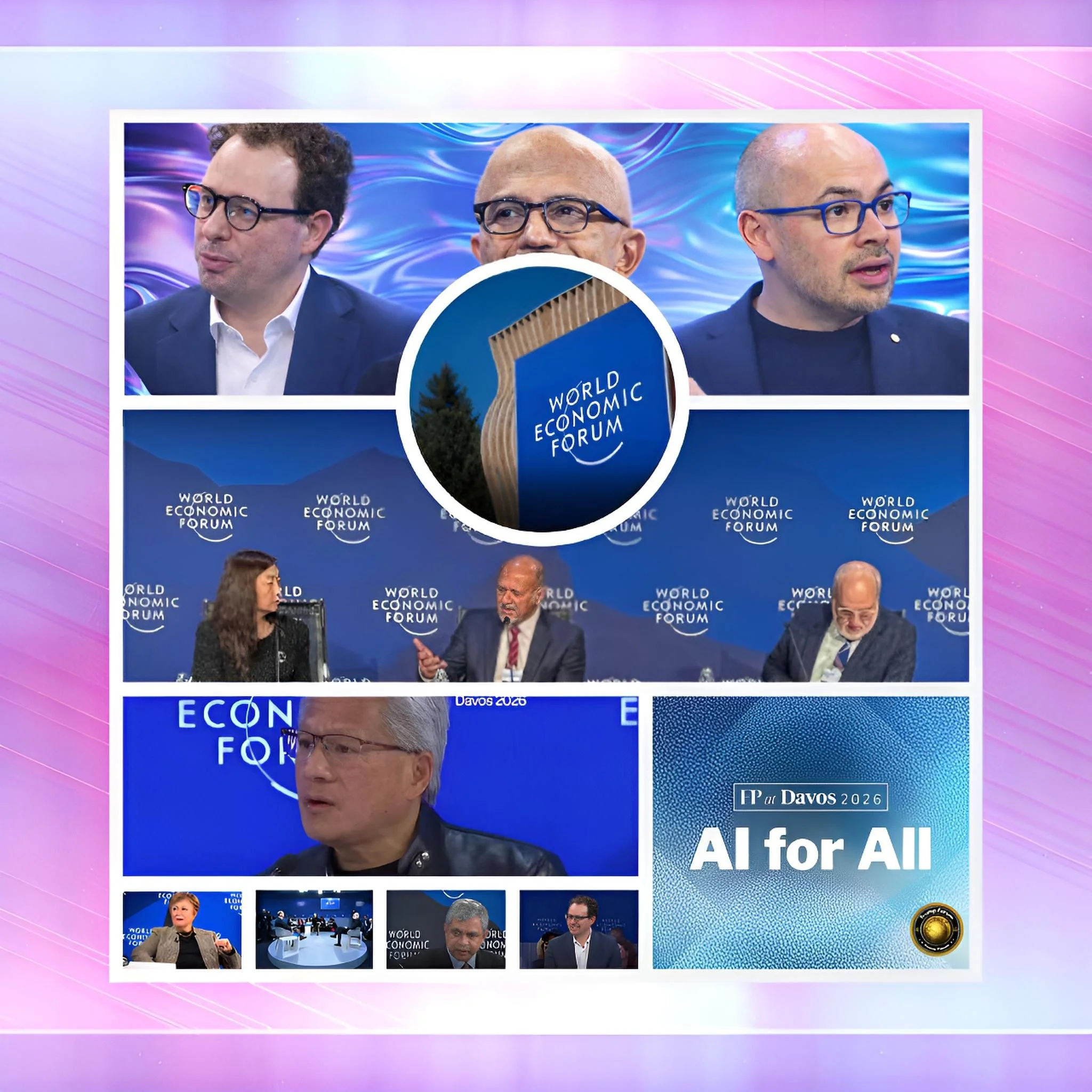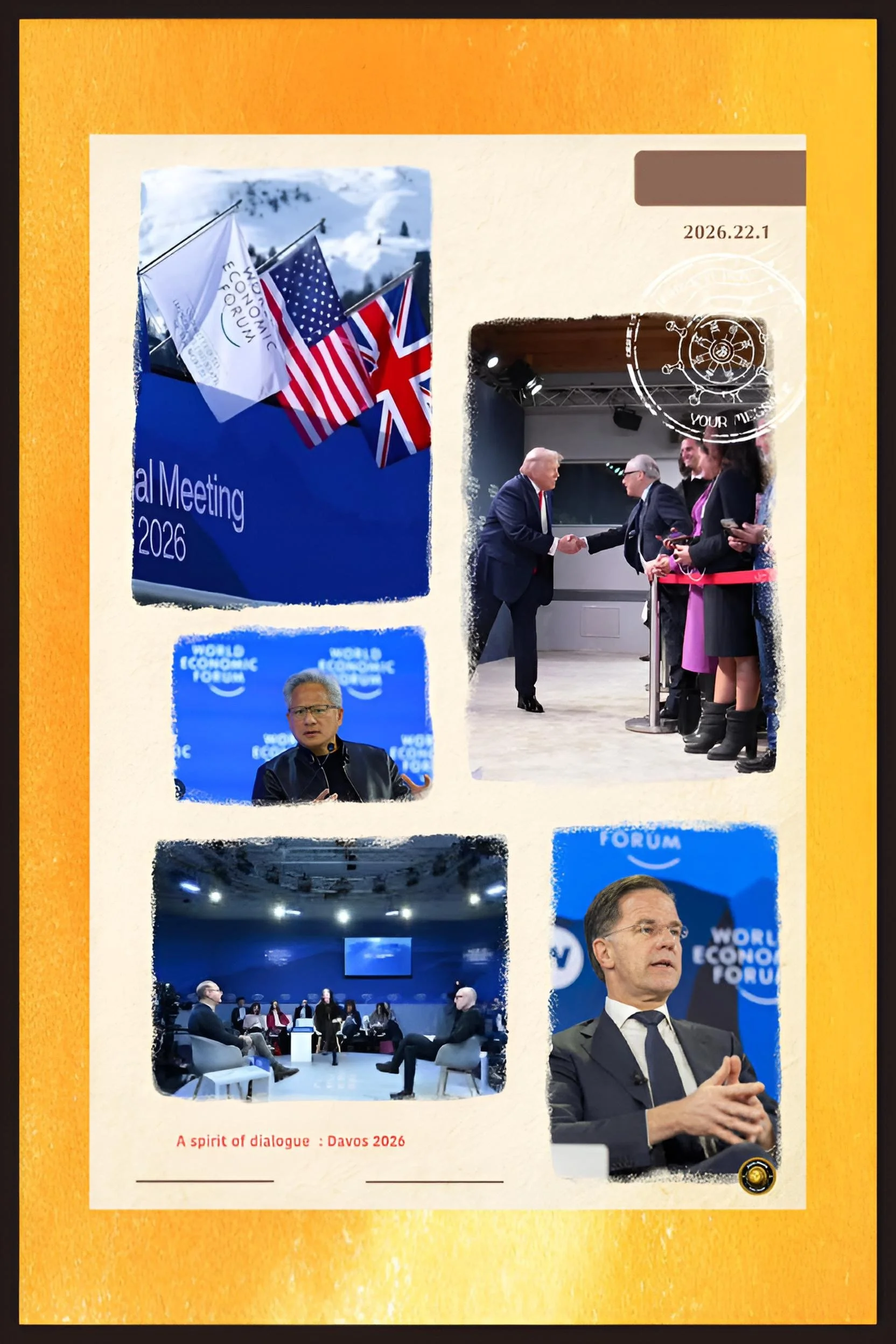
A Spirit of Dialogue Confronts Institutional Fragmentation: The 2026 World Economic Forum and the Limits of Elite Deliberation in Addressing Global Challenges
Executive Summary
Davos 2026: Evaluating Outcomes Against Objectives in a Fragmented Global Order
The 56th World Economic Forum Annual Meeting convened in Davos-Klosters from January 19 to 23, 2026, bringing together a record 400 political leaders, including 65 heads of state and government, alongside 850 CEOs and 3,000 participants from over 130 countries.
Operating under the thematic framework "A Spirit of Dialogue," the conference sought to advance five interconnected global priorities: fostering cooperation amid geopolitical fragmentation, unlocking novel sources of economic growth, deploying transformative technologies responsibly, investing substantially in human capital development, and establishing sustainable prosperity within planetary boundaries.
While the forum successfully facilitated unprecedented high-level dialogue on critical challenges including artificial intelligence governance, geopolitical realignment, and climate restoration, the translation of discourse into measurable outcomes remained inconsistent.
The conference demonstrated qualified success in catalyzing awareness and initiating multi-stakeholder conversations, particularly regarding AI diffusion and nature-based solutions, yet fell short of establishing binding commitments or resolving fundamental structural tensions between national sovereignty and global cooperation.
This analysis demonstrates that Davos 2026 functioned principally as a diagnostic and agenda-setting mechanism rather than as a problem-solving instrument, with implications for how the international community might address systemic challenges in the subsequent period.
Introduction to Davos 2026 and Its Global Context
The convening of the World Economic Forum in January 2026 occurred within a profoundly altered geopolitical and economic landscape.
The previous five years had witnessed the reconsolidation of great-power competition, the acceleration of technological disruption, the persistent erosion of institutional trust, and the manifestation of climate-driven economic shocks.
Whereas prior editions of the Annual Meeting often emphasized consensus-building around shared values, the 2026 iteration explicitly acknowledged what WEF President and CEO Børge Brende termed "the start of a new reality, the contours of which are still to be defined."
This reframing reflected a candid recognition that the post-Cold War institutional architecture—predicated on liberal multilateralism, rules-based economic order, and technocratic problem-solving—had entered a period of profound contestation.
The selection of "A Spirit of Dialogue" as the organizing theme carried inherent acknowledgment of crisis. Dialogue becomes necessary when consensus fractures; its elevation as a primary objective signaled not triumph but a recalibration of expectations toward conversation rather than consensus.
As Klaus Schwab, WEF founder and former board chair, articulated in pre-conference remarks, the global community presently lacks two foundational pillars—truth and trust—requisite for addressing urgent international challenges.
This diagnostic observation would persist throughout the gathering, appearing in various formulations across hundreds of panel discussions, bilateral engagements, and bilateral negotiations.
Historical Context and Evolution of Davos as an Institution
To properly situate the 2026 conference's achievements and limitations, contextual understanding of Davos's historical trajectory proves essential.
Since its establishment in 1971 by Klaus Schwab, the World Economic Forum has functioned as a convening mechanism for capital holders, political executives, and intellectual elites to address consequential problems transcending national borders.
The organization has documented several transformative moments in its history—from facilitating dialogue between Greece and Turkey to hosting the symbolic handshake that catalyzed the formal end of South African apartheid.
These interventions established Davos's reputation as a venue where geopolitical transformation could be precipitated through elite dialogue.
However, scholarly and journalistic analysis increasingly documents a widening gap between Davos's aspirational agenda and its actual problem-solving capacity.
The forum's institutional blindness regarding major historical inflection points has become documented: participants failed to anticipate the 2016 Brexit referendum, the 2016 ascendancy of MAGA populism in the United States, or the geopolitical realignment following Russia's 2022 invasion of Ukraine.
Moreover, the forum's fundamental structural contradiction—an exclusive gathering of capital holders and political executives convened to discuss challenges afflicting billions with whom these attendees have minimal direct contact—has intensified as global inequality has widened and social polarization has deepened.
The COVID-19 pandemic, occurring in proximity to the 2020 meeting, crystallized this contradiction in particularly acute form. While attendees engaged in fondue-fountains-as-communion rituals in the Alpine resort, a novel coronavirus was circulating among delegates and subsequently dispersing globally.
This temporal irony encapsulated what critics have long articulated: Davos functions as a space where the globally privileged discuss the globally marginal.
Current Status of Global Cooperation and Governance Infrastructure
The 2026 meeting occurred at a juncture characterized by demonstrable erosion of multilateral institutions and the rise of what analysts term "minilateralism"—voluntary coalitions of aligned states organized around specific issue-areas rather than universal institutional frameworks.
The Global Cooperation Barometer 2026, released concurrent with the forum, documented that while overall cooperation levels have remained relatively stable, the composition of cooperative arrangements has shifted markedly.
Climate and nature cooperation increased, while cooperation on peace and security experienced the steepest decline.
This bifurcation reflects a fundamental fracture in the international system.
China and the European Union continue to articulate commitments to multilateralism and rule-based international order, while the United States—under its second Trump administration—has pursued what Treasury Secretary Scott Bessent termed a recalibration of market access philosophy.
Bessent's declaration that "the US market is never going to be permanently available to everyone all the time forever" signified a departure from the post-1945 Bretton Woods conception of trade as a developmental and stability mechanism.
Instead, trade itself became reconceived as an instrument of geopolitical assertion rather than economic development.
Against this backdrop, the 2026 meeting represented an attempt to reconstruct dialogue across these deepening fissures.
Canada's Prime Minister Mark Carney delivered remarks that captured the existential uncertainty confronting mid-power nations: "For decades, countries like Canada prospered under what we called the rules-based international order...this bargain no longer works."
Yet Carney articulated what he termed "value-based realism"—a posture combining principled advocacy for democratic norms with pragmatic engagement in issue-based coalitions rather than universal institutional frameworks.
Key Developments and Thematic Emphases at Davos 2026
The conference program encompassed hundreds of sessions organized around five primary thematic pillars.
Examination of these themes reveals both the substantive content of deliberation and the tensions among competing visions of global governance and economic organization.
Artificial Intelligence as Central Priority
Artificial intelligence constituted perhaps the most pervasive concern threading through the 2026 agenda.
Multiple sessions examined what might be termed the "diffusion problem"—the concern that transformative AI capabilities would concentrate in advanced economies and major technology corporations, thereby widening existing inequality metrics.
The International Monetary Fund, represented by Managing Director Kristalina Georgieva, provided quantitative framing: while artificial intelligence affects approximately 40 % of global employment, the impact varies markedly by economic status.
Advanced economies experience AI-driven transformation affecting 60 % of employment, whereas low-income countries face impacts on 20 % to 26 % percent of the labor force.
This disparity does not necessarily indicate lower vulnerability; rather, it reflects the concentration of AI-accessible data, computational infrastructure, and skilled personnel in wealthy nations.
Microsoft President Brad Smith and Saudi Arabia's Minister of Investment Khalid Al-Falih engaged in what might be characterized as a dialectical exchange regarding AI infrastructure development.
Smith noted the paradox whereby "in the US, they are being blocked, while in Europe governments want to use taxpayers' money to fund them," suggesting that the political economy of AI infrastructure investment varies considerably across jurisdictions.
Al-Falih countered that "everybody wants to build the infrastructure for it, but the essence of AI's power is it has to be accessible...Diffusion is not just within economies that have to compete, but I believe it has to be done globally.”
This exchange illuminated a fundamental tension: the geopolitical competition for AI dominance coexists with recognition that narrow concentration of AI capabilities poses systemic risks to global stability and growth. India's Minister of Railways and Information Technology Ashwini Vaishnaw introduced a critical corrective to enthusiasm about AI development, arguing that "creating a large model doesn't give you power as a country" and that the competitive advantage accrues to those capable of deploying "the lowest cost solution to get the highest possible return."
This observation reframed AI competition from a binary winner-take-all framework to a more complex terrain where implementation and diffusion capabilities matter as substantially as frontier innovation.
The World Economic Forum published contemporaneously with the meeting a data assessment indicating that global investment in AI is accelerating sharply, with annual investment expected to reach $1.5 billion for AI applications and $400 billion for AI infrastructure by 2030.
These figures underscored that the question of AI governance cannot remain abstract; substantial capital flows and geopolitical consequences attach to decisions regarding where and how AI infrastructure develops.
Geopolitical Fragmentation and the Search for New Cooperation Models
The forum's explicit acknowledgment that the "rules-based international order" had ceased functioning marked a significant departure from previous years' rhetorical frames.
Emmanuel Macron, in a special address, described the contemporary moment as one of "brutalization," noting that 2024 witnessed more than sixty wars—an absolute record.
He articulated what he termed "effective multilateralism" as the appropriate response, but his formulation demonstrated the tensions inherent in the contemporary concept of multilateralism. Rather than universal institutions, Macron advocated for coalitional approaches grounded in shared values and interests.
The Global Risks Report 2026 documented what commentators began terming a "vacuum in global governance.”
Traditional multilateral institutions—the United Nations, World Trade Organization, international monetary institutions—persisted in form but found their authority contested and their capacity to enforce compliance limited. In response, diplomatic practitioners began organizing around what researchers termed "minilateral" or "plurilateral" frameworks: coalitions of willing states capable of achieving specific objectives without aspiring to universal membership.
The Middle East exemplified this dynamic. Qatar's Prime Minister Sheikh Mohammed bin Abdulrahman Al Thani, in a session examining regional security architecture, advocated for reimagining the security relationship among regional actors.
His proposition that "the moment has come for the region to come together and to think about how we can reshape our security architecture so that at least we ensure that we are not representing a threat for each other" reflected an attempt to move beyond zero-sum geopolitical competition toward mutual security arrangements.
Yet the persistence of conflicts in Gaza, Syria, and Yemen, alongside intra-regional tensions, demonstrated the fragility of such aspirations.
The forum's documentation of minilateral cooperation provided important counterweight to narratives of wholesale institutional collapse. A WEF analysis noted that while traditional multilateral mechanisms weakened, new coalitions emerged around discrete objectives, particularly in technology (AI, 5G infrastructure) and climate domains.
These coalitions, however, lacked the enforcement mechanisms and universal participation structures characterizing postwar institutions, suggesting both opportunity and vulnerability in the emerging order.
Economic Growth in Context of Persistent Inequality
The conference occurred at a moment of apparent economic resilience in advanced economies.
Contrary to predictions of recession, the US economy continued expanding, inflation had moderated, and technology-driven productivity gains accelerated. Yet beneath these aggregated statistics lay profound distributional challenges.
Wells Fargo CEO Charles Scharf articulated the matter with directness: "The economy is performing really well overall...but when you look at who's doing well and who's not doing well, it's very, very uneven."
The International Monetary Fund and World Bank research presented at the forum documented what analysts termed a "K-shaped" economy—where high-skill, capital-rich agents experienced genuine prosperity while other segments faced stagnation or decline. This pattern manifested both within nations and globally, suggesting that growth itself, absent distributional mechanisms, might prove insufficient for social stability.
Argentina's President Javier Milei presented a contrasting economic narrative centered on deregulation and fiscal austerity. Milei noted that his government had "eradicated a fiscal deficit of 15% of GDP, reducing inflation from 300% to 30%, lowering country risk by 2,500 basis points and restoring economic growth, with poverty falling from 57% to 27%."
Yet Milei's framing emphasized individual economic liberty rather than collective welfare provision, presenting an alternative vision to the inclusive growth paradigm articulated by most Davos participants.
The forum's engagement with growth objectives thus revealed competing diagnoses regarding both growth's sources and its distribution.
Some participants emphasized technological innovation (particularly AI) as the growth engine; others highlighted green transition as investment opportunity; still others stressed macroeconomic rebalancing.
These perspectives, while not necessarily mutually exclusive, reflected different assumptions regarding the relationship between growth and stability.
Climate, Nature, and Restoration Economics
Concurrent with the Davos meeting, research published by the World Economic Forum and partnering institutions documented that approximately fifty-three percent of global GDP depends on natural capital.
This finding elevated environmental considerations from peripheral ethical concerns to central economic questions. Multiple sessions examined what speakers characterized as a transition from "do no harm" conservation frameworks to "regeneration" approaches wherein economic activity actively restores degraded ecosystems.
Johan Rockström, Director of the Potsdam Institute for Climate Impact Research, framed the challenge in systems-theoretic terms. Current climate warming trajectories, he argued, position the global economy in a "yellow warning zone"—beyond which systemic economic losses would escalate dramatically.
At warming levels of 1.5–2°C, he noted, average income loss across localities could approach five percent, with aggregate global implications measured in "trillions, not billions."
This quantification attempted to translate climate risks into the language of financial analysis, thereby making environmental restoration legible to capital markets.
PepsiCo CEO Ramon Laguarta reframed the green transition debate: "This is not about sustainability or profitability...this is about short term or long term."
His articulation suggested that the polarization between environmental and economic objectives had become analytically obsolete. Instead, the relevant axis of choice concerned temporal orientation—whether firms and governments would optimize for quarterly returns or for intergenerational sustainability.
Fortescue CEO Andrew Forrest provided a concrete example, noting that his company was "saving up to $1 billion per year in operating costs" through elimination of diesel from supply chains.
This case study exemplified how environmental restoration and operational efficiency could align, at least within certain industrial contexts. However, the persistence of stranded asset risks and the heterogeneous profitability implications across sectors meant that consensus on green transition remained incomplete.
Cause-and-Effect Analysis: Dialogue's Limits and Possibilities
The deliberative structure of Davos 2026 illuminates crucial dynamics regarding the relationship between dialogue and decision-making within fragmented global systems.
The forum convened unprecedented numbers of high-level decision-makers, facilitated substantive exchanges across previously separated domains (geopolitics, technology, environment, economics), and enabled what analysts termed "trust-building" conversations among actors accustomed to regarding one another as competitors or adversaries.
Yet the causal pathways from dialogue to institutional change or behavioral modification remain opaque and contested. Larry Fink, BlackRock chairman and de facto "mayor" of the 2026 gathering, articulated the core structural problem: "Many of those most impacted by our discussions here will never attend this conference...this is a central tension of the forum."
Fink's observation highlighted that deliberative legitimacy and behavioral effectiveness constitute distinct properties. Even were participants to achieve perfect consensus in Davos, translating that consensus into actions affecting billions operating outside the forum's deliberative space requires institutional mechanisms that the forum itself does not command.
The pattern of concrete deliverables versus aspirational declarations suggests that outcomes emerged most readily when aligned with participants' preexisting strategic interests. Mumbai's MMRDA announced $96 billion in investment commitments and ten major memoranda of understanding on the first day of the conference.
These investments represented genuine capital commitments with documented implementation mechanisms. Conversely, declarations regarding climate transition, trust-building, and cooperation among geopolitical rivals remained largely rhetorical, lacking specified mechanisms for enforcement or accountability.
This pattern reflects what might be termed the "collective action problem" endemic to international forums. Individual actors face incentives to agree to non-binding commitments while reserving capacity to defect when circumstances change.
The absence of supranational enforcement mechanisms means that binding commitments require substantial trust and credible commitment mechanisms—precisely the conditions WEF participants collectively lamented as eroded.
Future Steps and the Agenda Forward from Davos
Implicit in the forum's deliberations were several emergent strategic directions for the subsequent period. These directions merit specification and analysis.
First, the disaggregation of global governance around issue-specific coalitions rather than universal institutions appears to constitute the emerging operational reality.
The Global Cooperation Barometer 2026 documented this pattern; future international coordination would likely proceed through multiple simultaneous tracks (climate coalitions, AI governance consortia, security arrangements) rather than through reformed versions of postwar multilateral institutions.
This development carries implications for both efficacy and legitimacy, potentially enabling more rapid consensus on specific issues while fragmenting global governance into incoherent structures lacking normative unity.
Second, artificial intelligence has emerged as a governance challenge demanding urgent attention. The forum's extensive engagement with AI reflected recognition that the technology's trajectory cannot be left to market forces alone, yet substantial disagreement persists regarding the appropriate locus of governance authority.
Should AI governance operate through national regulatory frameworks, international consortia, multi-stakeholder partnerships, or some hybrid arrangement? The forum facilitated dialogue but did not resolve this question, suggesting that 2026-2027 will witness intensive institutional innovation around AI governance mechanisms.
Third, the climate transition continues to represent both technical and political challenge, but the framing has shifted toward economic opportunity rather than sacrifice narrative.
This reorientation, if sustained, could enable political coalitions previously impossible under a "burden-sharing" framework. However, the persistence of stranded asset concerns, distributional questions (particularly regarding the costs borne by fossil fuel-dependent economies and communities), and the relationship between climate investment and development assistance remain contested.
Fourth, the question of how to rebuild institutional trust appears to require deeper engagement than Davos 2026 achieved.
The Edelman Trust Barometer results indicating that seventy percent of survey respondents manifest "insular" mindsets—preferring not to interact with those holding different worldviews—suggest that dialogue mechanisms face substantial headwinds.
Building trust sufficient to enable collective action on challenges like climate change or pandemic preparedness likely requires institutional reforms at the national and subnational levels rather than international summitry alone.
Conclusion: Davos as Diagnostic Rather Than Prescriptive Forum
The 56th Annual Meeting of the World Economic Forum achieved what might be characterized as partial success against its stated objectives.
The forum succeeded in its foundational function: convening unprecedented numbers of high-level decision-makers and facilitating substantive dialogue regarding consequential challenges.
The quality of deliberation across multiple issue-areas appeared superior to prior iterations; candid acknowledgment of institutional failures and geopolitical fracture marked a notable departure from consensus-seeking rhetoric.
However, measured against the more ambitious goal of translating dialogue into institutional change and behavioral modification, the forum's achievements proved more modest.
Few binding commitments emerged; the fundamental structural tensions between national sovereignty and global cooperation remained unresolved; and the gap between participants' awareness of systemic challenges and their willingness to implement transformative solutions persisted.
This disparity between dialogue and action capacity should not be interpreted as forum failure, but rather as accurate reflection of deeper structural realities. International coordination remains constrained by collective action problems, principal-agent difficulties, and the persistence of zero-sum perception among great powers.
No conversation at Davos, however elevated the participants or refined the rhetoric, can unilaterally overcome these structural constraints. Davos functions most usefully as a diagnostic and agenda-setting mechanism—clarifying what challenges require attention and which actors might find coalitional approaches beneficial—rather than as a problem-solving instrument capable of implementing systemic reform.
The pertinent question regarding Davos 2026 is not whether it succeeded in ending geopolitical fragmentation, implementing universal climate transition, or rebuilding institutional trust. It is whether it advanced the conversation and created conditions whereby some subset of the global elite might organize around specific problems. By this measure, the evidence suggests qualified success.
The subsequent period will demonstrate whether the dialogue catalyzed at Davos translates into institutional innovation and behavioral change, or whether the 2026 gathering joins the extended catalogue of summits that diagnosed problems without catalyzing solutions.