Introduction
What Davos Is and Why It Matters
Every January, about three thousand of the world's most powerful people gather in a small Swiss mountain village called Davos. They come from governments, big companies, banks, and organizations. They talk about the biggest problems facing the world: climate change, wars, jobs, technology, and how to help poor countries grow richer.
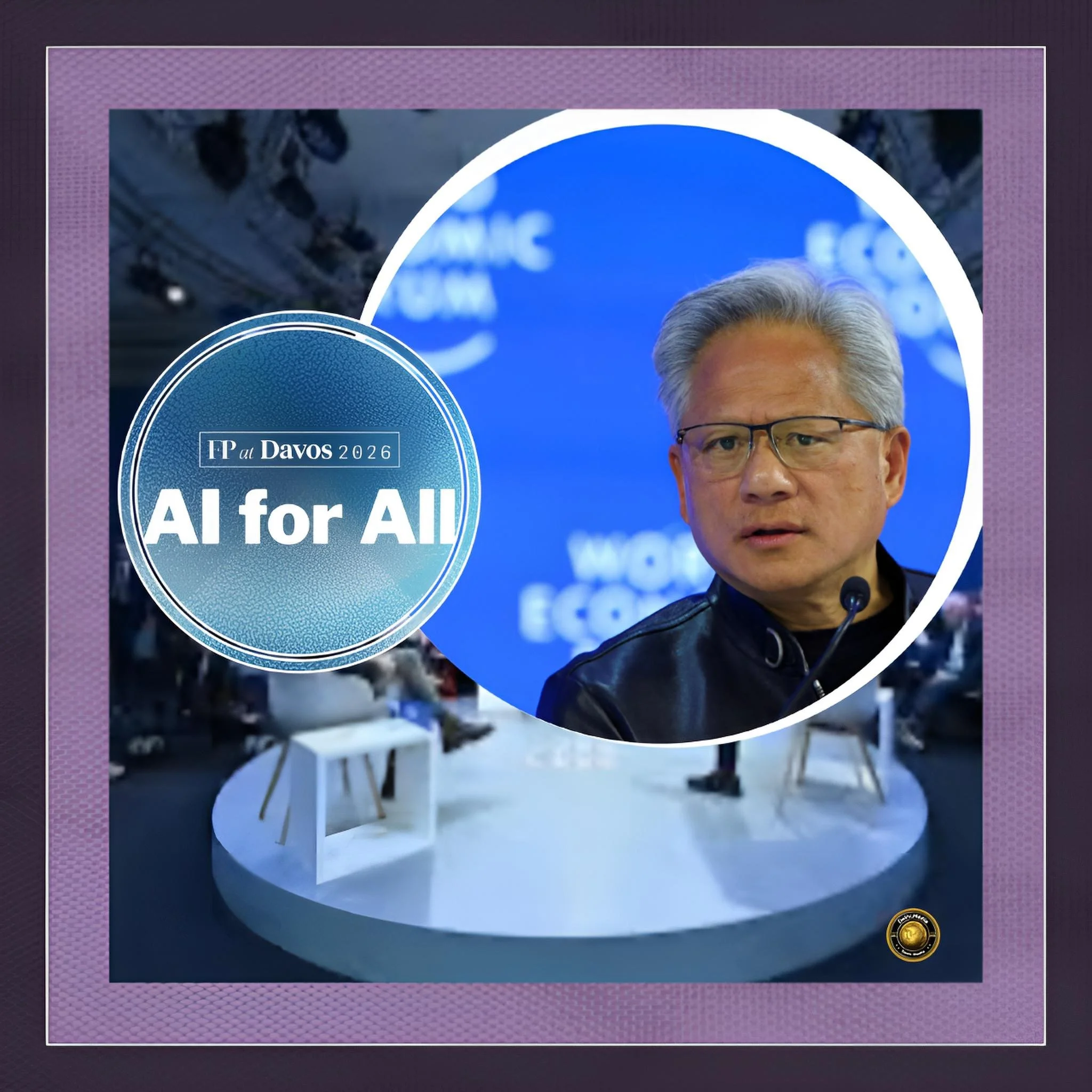
The 2026 meeting was special because it brought together a record 400 political leaders, including 65 heads of state and government. That means presidents and prime ministers from almost every country came to one place to talk. This was the most important gathering of world leaders in at least a decade.
The theme for 2026 was "A Spirit of Dialogue." This phrase means that leaders agreed they needed to talk to each other, listen to different views, and try to find solutions together.
This theme was chosen because the world is more divided than ever. Countries argue about trade, technology, and security. People inside countries disagree with each other. Trust between governments and citizens has dropped sharply. The organizers wanted to remind everyone that talking is better than fighting.
Summary
What Were the Main Goals?
The World Economic Forum set five main goals for the 2026 meeting. Think of these as the five biggest problems Davos wanted to solve.
The first goal was to find ways for countries to cooperate even though they disagree more than before. The world used to follow clear rules, but now countries are going their own way. America is protecting its businesses with tariffs. China wants to trade more openly. Europe is trying to stay independent. Davos wanted to create a space where these countries could understand each other better.
The second goal was to discover new ways to create economic growth. For many years, world growth has been slow. Companies are struggling. Young people cannot find good jobs. Davos wanted to help find new engines for growth: things like artificial intelligence, renewable energy, and infrastructure building.
The third goal was about artificial intelligence. AI is becoming more important every day. It can solve problems but also create new ones. It can help doctors find diseases or help companies work faster, but it might take away jobs or make countries more unequal. Davos wanted to figure out how to use AI safely and fairly.
The fourth goal was about people. The world has a serious problem: governments and companies are not investing enough in education, job training, and helping workers become better at their jobs. Young people graduate from school but cannot find work in the jobs that exist. Davos wanted to change this by getting governments and companies to invest more in people.
The fifth goal was about nature and climate. Many companies depend on nature for their business. Coffee companies need healthy soil and water. Oil companies affect the atmosphere. Fishing companies need healthy oceans. But for many years, companies treated nature as something that was free and endless. Davos wanted to convince business leaders that protecting nature is actually good business.
Did Davos Succeed? What Actually Happened
Davos 2026 Talked Straight but Delivered Little: What Really Happened at the World's Elite Conference
The answer is complicated. Davos succeeded in some areas but fell short in others. Let us look at what actually happened.
What Went Well
The dialogue was honest and direct. Leaders did not give fake speeches where they pretended everything was fine. Emmanuel Macron, the French president, said the world is facing "brutalization" with over 60 wars happening in 2024. This is the most wars in any single year in modern history. He was honest about Europe's problems and asked for Europe to invest more in defense and technology.
Donald Trump, the American president, defended his tariff policies. He said that globalization had hurt American workers and that his approach was fixing the problem. He presented real numbers: America's trade deficit has dropped 77 percent in one year with no inflation.
China's Vice-Premier He Lifeng said that China wants to cooperate and open its markets wider, but that trade wars hurt everyone. He made clear that China disagrees with America's approach but still wants dialogue.
This honest debate was important. For years, Davos was criticized for being a place where rich people spoke in code and hid real disagreements. In 2026, leaders said what they actually believed. That is valuable.
Artificial intelligence got serious attention. The International Monetary Fund said that AI could increase global productivity by 0.1 to 0.8 percent. That sounds small, but it means billions of dollars more economic growth.
However, there is a serious problem: rich countries have more AI capability than poor countries. In the United States and Europe, 25 percent of people use artificial intelligence tools. In Africa and Asia, only 14 percent do. This is creating a bigger gap between wealthy and poor countries.
Microsoft's Brad Smith pointed out that 40 percent of all jobs globally will be changed by AI. In rich countries, it is 60 percent. In poor countries, it is only 20 percent. But this does not mean poor countries are safe. It means they are not ready. Smith warned that we need to train more workers in poor countries to use AI, otherwise they will fall further behind.
India announced $96 billion in investments on the very first day of the conference. This came from ten different agreements between Mumbai and international companies. These agreements will create 960,000 new jobs in India. One company, SBG Group, signed a deal worth $45 billion to build logistics and industrial centers across Mumbai's region. These are real, concrete investments with contracts signed.
Nature protection became seen as good business. For a long time, environmental protection was seen as the opposite of business profit. The Fortescue company showed that saving the environment can actually save money. By removing diesel from their mining operations, Fortescue is saving $1 billion per year in costs while also protecting the environment.
The World Economic Forum reported that nature-based solutions produce excellent returns. For every dollar invested in protecting nature, companies and societies get between 7 and 30 dollars back in benefits. This changes the conversation. It is not about sacrifice anymore. It is about good investment.
Where Davos Failed
The conference did not create binding agreements. Almost everything discussed was voluntary and non-binding. Leaders said they would try to cooperate, but they did not commit to specific actions with penalties for failure. Compare this to Mumbai's investment deals, which have actual contracts and enforcement. That is why Mumbai's deals are real.
The trust problem did not get solved. Research released at Davos showed that 70 percent of people worldwide have withdrawn into their own bubbles. They do not want to talk to or work with people who disagree with them. In the United States, 70 % of people believe that leaders intentionally lie to them. A German study showed that only 52 %of workers trust their senior leaders. In countries that are developing faster, like India and Vietnam, 67 % of workers trust their leaders. This suggests that the problem is in wealthy countries' failing institutions.
Davos did not address the wealth gap. The conference had sessions about poverty and inequality, but it did not produce concrete plans to fix these problems. Think about the irony: leaders arrived in private jets and had five-star dinners while discussing poverty.
One economist pointed out that attendees are aware they are disconnected from ordinary people, but knowing about the problem is not the same as fixing it.
The American approach created tension, not cooperation. While Trump defended his policies, many allies expressed worry. European countries asked why America was putting tariffs on their goods when they should be working together.
Treasury Secretary Scott Bessent said that "the US market is never going to be permanently available to everyone all the time forever, like it has been for the past 25 years." This alarmed European leaders like France's Macron and Britain's Chancellor Rachel Reeves. They want to work with America, but they fear America is changing the rules.
Young people are still not in power. The conference had sessions about youth concerns, but the decisions are still made by older leaders. Young people told researchers that they want quality jobs, better education, AI that includes guardrails to protect people, and real action on climate. But the conference did not change how decisions are made.
The global divide on AI strategy is getting worse. Saudi Arabia wants to build AI infrastructure to serve its Vision 2030 strategy.
India wants to develop AI companies.
But the United States and China are racing to win the AI competition. This creates conflict, not cooperation.
One IMF official said that AI is like a "tsunami" hitting the labor market, and different countries are unprepared in different ways.
The Biggest Lessons from Davos 2026
Several important lessons emerged from the conference that will shape what happens next.
First, dialogue is not enough. Larry Fink, the powerful chief of BlackRock and one of Davos's main organizers, said something important: "Many of those most impacted by our discussions here will never attend this conference. This is a central tension of the forum." Davos is an exclusive club. Everyone there is already powerful and rich. The people most affected by global problems—poor farmers in Africa, factory workers in Asia, unemployed people in Europe—are not in the room. Talking about their problems is not the same as solving them.
Second, the world's old rules do not work anymore. Canada's Mark Carney said something that shocked people: "For decades, countries like Canada prospered under what we called the rules-based international order...this bargain no longer works." The international system that was built after World War II is breaking down. Countries are making their own rules. This means the future will have smaller groups of countries working together on specific issues, rather than all countries following one set of rules.
Third, artificial intelligence needs serious government control. Many experts at Davos warned that AI cannot develop without government oversight. Yoshua Bengio, one of the world's leading AI scientists, said that today's AI systems imitate humans too closely—including human flaws like bias and dishonesty. He warned that we need to be very careful about letting AI systems make important decisions.
Yuval Noah Harari, a famous historian, said something striking: "We have no experience with building a hybrid human-AI society." He meant we are entering completely unknown territory and need to be humble about what might go wrong.
Fourth, company profits and environment protection can work together. The old argument was always: you must choose between making money and protecting nature. Davos 2026 showed this is false. Companies cutting costs while protecting the environment make more money, not less money. The question is not profit versus environment. It is short-term profit versus long-term profit.
Fifth, trust is broken and needs rebuilding. Klaus Schwab, the founder of Davos, said before the conference that the world is missing two essential things: truth and trust. Without these, countries and people cannot work together. Davos recognized this problem but did not solve it. Rebuilding trust will take years. It cannot happen in one conference.
Sixth, countries are dividing into different groups rather than working as one world. This is happening because countries have different interests. Saudi Arabia wants to invest in AI and energy. China wants to trade and grow. America wants to protect its companies.
Davos recognized this and talked about "minilateral" cooperation, which means smaller groups of countries working together on specific issues. This is realistic but also risky. It could create conflict between different groups.
Seventh, the climate transition is becoming an economic opportunity, not just an obligation. For years, businesses complained that environmental protection would cost them money. In 2026, more companies see the opportunity: renewable energy, electric vehicles, sustainable infrastructure. These are growing businesses creating good jobs. This shift makes progress more likely.
What Comes Next?
After Davos 2026, several things will happen that the conference set in motion.
First, expect more focus on artificial intelligence governance. Countries will argue about how to regulate AI. Some will argue that each country should make its own rules. Others will push for international standards. This debate will be one of the most important political issues of 2026 and 2027.
Second, expect continued tension between the United States and other countries on trade and tariffs. Trump's tariff strategy is not changing. European and Asian countries will have to decide whether to retaliate or cooperate. This will affect job creation and economic growth worldwide.
Third, climate transition will move forward because companies now see profit in it. Investment in renewable energy, electric vehicles, and green infrastructure will continue to grow. But countries and companies that depend on fossil fuels will resist and face real economic pain.
Fourth, trust between leaders and ordinary people will remain a critical issue. This is not something Davos can solve. It requires changes inside countries, in how governments work, in how companies treat workers, and in how institutions become more transparent.
Fifth, the wealth gap will continue to be a source of tension. The gap between rich and poor countries is growing. The gap between rich and poor people within countries is growing. Until this changes, there will be political instability, protests, and conflict.
Conclusion
Davos Spoke Honestly but Did Not Deliver Solutions
The 2026 World Economic Forum succeeded in creating honest dialogue. Leaders told the truth about disagreements. Experts warned about serious dangers from AI and climate change. Businesses showed that protecting nature can make money. But Davos did not solve the fundamental problems.
The conference was useful in the way a doctor's diagnosis is useful: it identified the sickness. But doctors do not cure patients by talking about the illness. Doctors prescribe medicine and monitor the patient. Davos identified the problems but did not prescribe solutions.
The real question now is whether the dialogue started at Davos will lead to action.
Will countries actually cooperate on AI? Will climate transition accelerate?
Will wealthy nations help develop AI capacity in poor countries? Will companies actually invest in worker training? Will trust be rebuilt?
The answers will come in 2026 and 2027, when leaders go home and have to make decisions. Davos was a conversation. The real work is just beginning.