Trump’s Approval Crisis: Will History Repeat With a New Low?
Executive Summary
The Collapse Accelerates: Trump Falls Toward Watergate-Era Lows as Economy Deteriorates
Donald Trump enters 2026 with approval ratings at their lowest point since his first term, hovering between 36 and 42 percent according to major polling aggregators. His net approval rating stands at approximately -12 to -15 percent, positioning him at or potentially below Richard Nixon’s historical nadir of 24 percent should economic conditions deteriorate further.
Unlike Nixon, whose collapse was rooted in the Watergate constitutional crisis, Trump’s decline reflects diffuse policy consequences: a tariff regime that has sustained inflationary pressures on consumer goods, deteriorating international credibility, and a fundamental disconnect between campaign promises and governance outcomes.
The question is no longer whether Trump is unpopular—his approval ratings have been consistently weak throughout his political career—but whether persistent economic headwinds and geopolitical instability will drive him into historical ignominy.
The answer depends less on scandal than on whether Americans’ assessment of his economic stewardship continues to corrode.
Introduction: An Unprecedented Trajectory
The Nixon Parallel Materializes: How Trump Could Become America’s Weakest-Ever Approved President
Presidential approval ratings provide a crude but consequential metric of democratic legitimacy. A president with sub-40 percent approval operates from a position of severe constraint, unable to move public opinion on major issues and vulnerable to unexpected events. Yet Trump’s standing presents an anomaly within American political history: he maintains robust support among Republicans (84-91 percent approval within the party) while facing near-complete rejection from Democrats and declining support from independents. This creates a bifurcated political landscape where Trump possesses an unshakeable partisan floor but minimal capacity for expansion.
The immediate question motivating this analysis is straightforward: will Trump’s approval ratings fall below Nixon’s 24 percent, recorded in August 1974 at the moment of his impending resignation? The answer requires understanding not merely current numbers but the causal mechanisms driving disapproval and the structural constraints that may either prevent or enable further deterioration.
More significantly, it requires recognizing that Trump’s potential historic low would represent a fundamentally different phenomenon than Nixon’s—not constitutional crisis but accumulated policy failure and economic deterioration.
Historical Baseline: Nixon’s Collapse and Trump’s Divergence
Richard Nixon entered his presidency with substantial public support, registering 59 percent initial approval and maintaining approval above 50 percent through his entire first term. His landslide reelection in 1972 appeared to vindicate his political strategy and provide political capital for his second term. Yet within months of his second inauguration, his approval soared to 67 percent (buoyed by announcement of a Vietnam peace settlement) and then immediately entered freefall as the Watergate scandal transitioned from background investigation to front-page constitutional crisis. By May 1973, disapproval exceeded approval for the first time. Throughout the remainder of 1973 and 1974, his approval hovered in the 25-35 percent range as evidence accumulated of presidential obstruction of justice and abuse of power.
Nixon’s final approval rating of 24 percent, recorded in August 1974 when resignation appeared inevitable, reflected the convergence of several factors: mounting evidence of criminality, loss of Republican party support as constitutional stakes became evident, and growing recognition that removal was likely. That 24 percent represented an approximate floor—the core of the American public that believed either that presidential crimes were insufficiently proven or that the office should not be lost over such controversies.
Trump’s trajectory diverges materially. His inaugural approval of 45 percent in 2017 represented the lowest for any elected president since 1953, setting a precedent of weakness from inception. Throughout his first term, his approval ranged between 36 and 49 percent—an extraordinarily narrow band suggesting that public opinion had crystallized early and proved resistant to major events. His economic approval, specific policy approval, and leadership metrics all declined throughout 2025, but the mechanism was not a singular scandal but rather the cumulative consequences of policy choices on tariffs, immigration, and trade.
Trump began his second term with marginally improved perception at 47-51 percent in January 2025, the product of electoral victory and the customary post-election rally. Yet this advantage evaporated with remarkable speed. By April, following the announcement of his “Liberation Day” reciprocal tariff initiative—positioned as a means to reduce trade deficits and revitalize manufacturing—approval had declined to 44 percent. The month of April also witnessed a severe market reaction and Trump’s immediate suspension of the tariff implementation, a retreat that undermined the “strong leadership” brand. Throughout the remainder of 2025, approval declined monotonically, reaching 36-42 percent by December.
The critical distinction is that Nixon’s collapse was moored to a specific catastrophic event (Watergate), which created a binary decision point: removal or tolerance of presidential criminality. Trump’s decline, by contrast, reflects ongoing assessment of policy outcomes against campaign promises. This makes Trump’s disapproval potentially more durable than Nixon’s, because it is not dependent upon the resolution of a single constitutional question but rather sustained by ongoing evaluation of economic conditions and policy effectiveness.
The Economics of Disapproval: Tariffs as the Primary Vector
The dominant driver of Trump’s approval decline is economic perception, specifically the failure of his tariff strategy to deliver promised outcomes. Trump campaigned explicitly on tariffs as the economic salvation for American workers and manufacturing. His argument was straightforward: decades of trade deficits reflected unfair trade arrangements that had hollowed American industry and suppressed wages. Reciprocal tariffs would correct this misalignment by raising the cost of foreign goods to parity with domestic production costs, incentivizing both domestic substitution and renegotiation of trade relationships.
The Tariff Trap: Inside Trump’s Economic Strategy and Why It’s Failing Exactly Where It Promised Success
The implementation proved far messier. Trump signed executive orders mandating tariff reviews on his first day in office. By early February 2025, he imposed 25 percent tariffs on Canada and Mexico and 10 percent on Chinese goods. These were ostensibly grounded in national security concerns (border security, fentanyl trafficking) but functionally represented the opening gambit in his broader tariff strategy. Initial tariffs were suspended after 30 days when Canada and Mexico agreed to enhanced border security measures, but reinstated in early March.
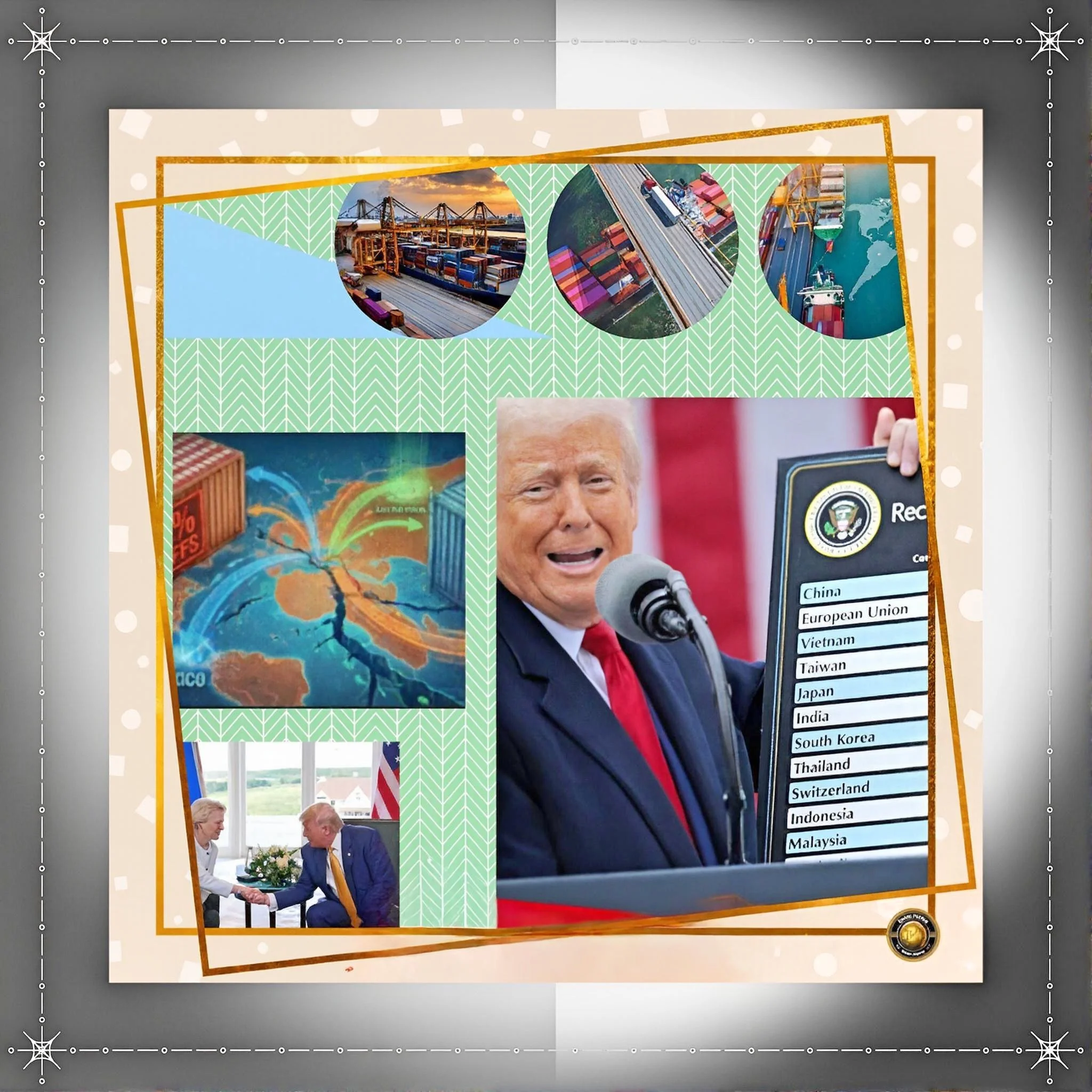
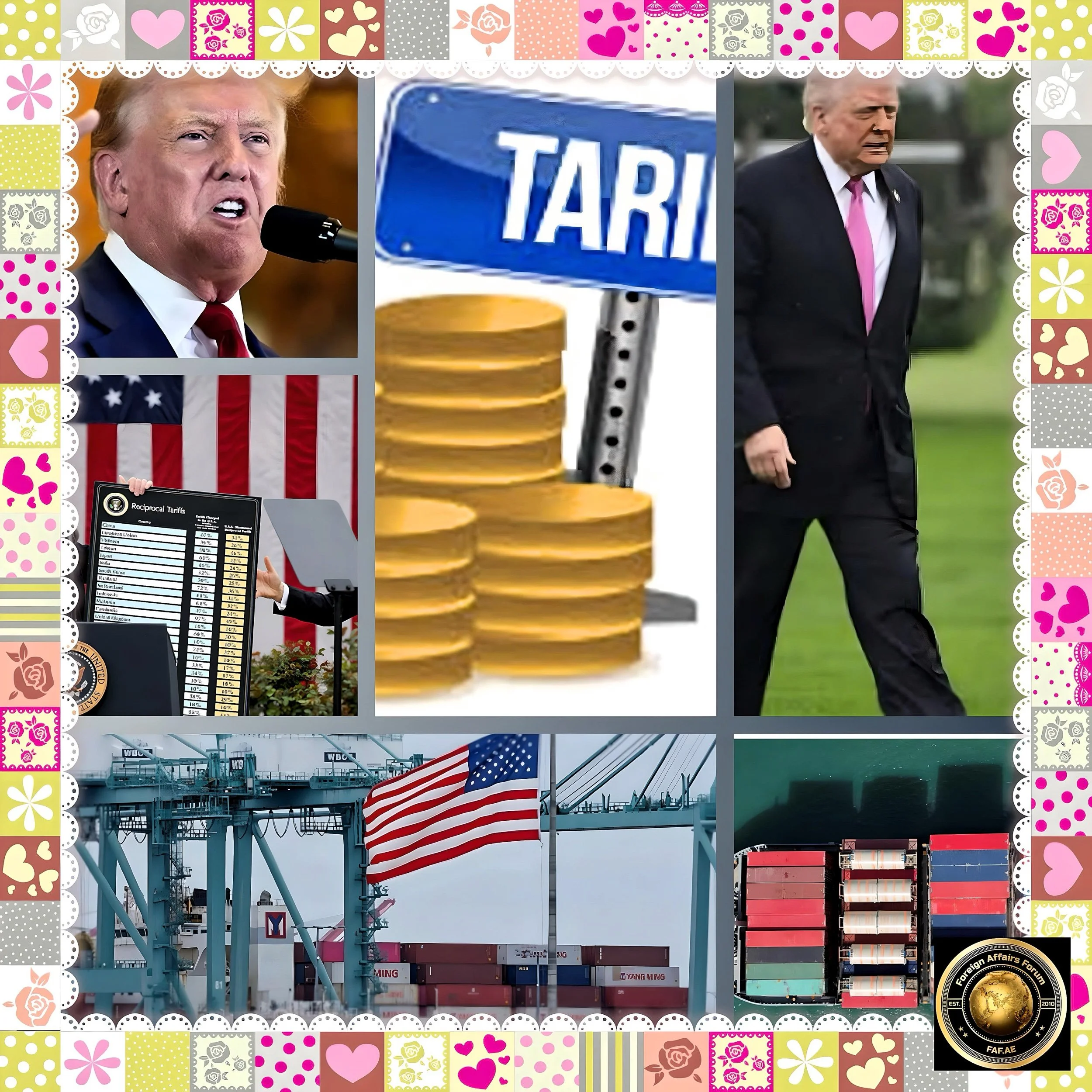
The “Liberation Day” announcement on April 2, 2025 represented the moment when Trump’s broader tariff vision crystallized into concrete policy. Reciprocal tariffs, ranging from 10 to 41 percent across approximately 70 trading partners, were announced with fanfare. The market response was immediate and severely negative—equity markets declined sharply and volatility spiked. Within one week, Trump suspended the tariffs, a retreat he attempted to frame as a negotiating tactic rather than policy reversal. This rapid reversal directly preceded a sharp decline in his approval ratings in April and May, suggesting that the tariff announcement and reversal crystallized public doubts about his economic strategy.
Subsequent months witnessed escalatory cycles: tariff rates were raised on China (10 percent initially, then to 20 percent, then reciprocal rates reaching 125 percent by mid-year), Canada (25 percent to 35 percent), Brazil (10 percent to 50 percent), and India (25 percent to 50 percent). Steel and aluminum tariffs reached 50 percent by June 2025. By August, Trump’s administration implemented reciprocal tariffs across approximately 90 countries, raising the effective U.S. tariff rate to over 18 percent—the highest level since 1934.
The economic consequences have been dampening rather than stimulative. U.S. imports declined 5.1 percent in August 2025 alone as American businesses reduced purchases of foreign machinery, industrial supplies, pharmaceutical components, and telecommunications equipment. The trade deficit contracted—declining 10.9 percent to $52.8 billion in September 2025—but this reflected demand destruction (reduced purchasing power) rather than increased American competitiveness or manufacturing revival. Pre-tariff import surges in anticipation of increased costs inflated the trade deficit in the first half of 2025, meaning the later contraction represented normalization rather than structural improvement.
Most critically for presidential approval, tariffs have sustained inflationary pressures on consumer goods precisely when Trump promised to reduce prices. The Federal Reserve reports that inflation stabilized at 2.7 percent annually by November 2025, with particular elevation in food staples and furniture. Furniture prices increased 4.6 percent year-over-year. Coffee, bananas, and eggs—the latter symbolically emblematic of affordability concerns—have sustained elevated prices. Trump’s central campaign promise was to reduce inflation and lower consumer prices. Instead, tariff-driven inflation has undermined purchasing power for the households most likely to have voted for him based on economic anxiety.
Polling reflects this directly. A CBS News survey from December 17-19, 2025 found that merely 18 percent of Americans believe themselves financially better off due to Trump’s policies, while 50 percent report being worse off. Trump’s economic approval rating stands at 36-37 percent, with 57-63 percent disapproving—his weakest performance on the issue Americans consistently identify as their top concern.
Among working-class households earning under $50,000 annually, Trump’s approval has collapsed to 31 percent, with 65 percent disapproving. This represents a net approval of -34 points among the ostensible core constituency that delivered his electoral victory.
The trajectory of Trump’s economic performance assessment suggests further deterioration is plausible. The World Trade Organization forecasts global goods trade growth of merely 2.4 percent in 2025 and 0.5 percent in 2026—effectively stagnation. Federal Reserve officials have revised downward growth expectations for 2026, with consensus estimates around 2 percent, one percentage point lower than late-Biden administration performance.
Unemployment has risen from 4 percent when Trump took office to 4.6 percent currently, with projections suggesting further increases absent demand stimulus.
These conditions suggest that Trump’s economic approval will likely remain underwater throughout 2026, potentially declining further should recession indicators accumulate.
International Credibility Collapse and Geopolitical Consequences
Beyond domestic economic factors, Trump’s approval decline reflects international reputation damage that, while not directly measured in U.S. domestic polls, contributes to the broader perception of American decline and presidential weakness.
A Pew Research Center survey conducted between January and April 2025 among over 28,000 individuals across 24 countries revealed a dramatic deterioration in favorable views of the United States.
On average, global approval of America fell by 10 percentage points during this period. Among developed OECD nations in Europe and Asia, the decline was 14 percentage points.
The geographic distribution is particularly notable: America’s deterioration has been most severe among its historical allies. Trust in American democracy, economic leadership, and capacity to serve as an impartial mediator has eroded most acutely in Western Europe, Canada, and developed Asia-Pacific economies. Conversely, confidence in China has surged globally.
In April 2025, 49 percent of respondents believed China would exert a positive influence on world affairs, compared with 39 percent in October 2024—a nine-percentage-point shift that represents the first time China has surpassed the United States on this metric in Pew’s polling history.
Trump’s approval ratings for specific international issues are universally negative. Net approval on China relations stands at -38 percent, on climate change at -32 percent, on foreign trade at -28 percent, and on Israel-Gaza conflict at approximately -1 percent. Only on international drug trafficking does his net approval register positive (+7 percent), reflecting military operations against trafficking networks.
The geopolitical consequences extend into substantive conflicts and negotiations. Trump has styled himself as a “peacemaker,” yet he has inherited and perpetuated multiple ongoing conflicts: the Ukraine war (now in its fourth year with no resolution), Gaza post-ceasefire instability, and rising tensions in the Taiwan Strait. His approach has been characterized by short-term dealmaking without durable institutional frameworks.
In Ukraine, Trump has simultaneously threatened reduced support, discontinued U.S. financial aid (shifting burden to Europe), suggested Ukraine should make territorial concessions, and claimed readiness to broker a settlement.
This contradictory posture—applying leverage through reduced commitment—has created uncertainty among allies regarding American resolve.
In the Indo-Pacific, Trump’s tariff policies have directly undermined his stated strategic objective of countering Chinese expansion.
By imposing 50 percent tariffs on India while simultaneously claiming to advance Quad cooperation, Trump signaled that American alignment is transactional rather than strategic. Japan and South Korea, nominal security allies, faced tariff pressures despite their alignment with U.S. strategic interests.
These policy contradictions encourage regional actors to hedge toward China, viewing American commitments as contingent on immediate advantage rather than rooted in durable strategy.
The cumulative effect has been a fundamental shift in international perceptions of American reliability. European discussions of “strategic autonomy”—developing defense capacities less dependent on the United States—have intensified.
Alternative trade blocs and financial arrangements not centered on the United States (BRICS, Regional Comprehensive Economic Partnership, Shanghai Cooperation Organization) have expanded. This represents a structural reorientation away from the post-World War II liberal international order that the United States has underwritten and benefited from for seventy years.
These international consequences feed back into domestic approval through multiple mechanisms: the perception of American prestige and influence declining internationally reduces the prestige premium that historically supports presidential approval; the perception of American unreliability encourages adversaries toward assertiveness and allies toward equivocation; the structural shift toward multipolarity creates a sense of American loss of position that undermines confidence in presidential leadership.
The Structural Vulnerability: Economic Swing Voters and Partisan Polarization
The trajectory of Trump’s approval reveals a paradox: he has lost significant support among non-partisan voters while maintaining firm partisan loyalty. Among Republicans, Trump’s approval ranges from 84 to 91 percent depending on the poll. Among Democrats, it registers at single digits (3 to 6 percent). Among independents, it has collapsed from approximately 50 percent approval at the start of his term to 25 to 46 percent currently, with significant variance by poll and demographic subgroup.
This distribution implies that Trump’s floor is his Republican base, approximately 30 to 35 percent of the electorate. His ceiling is constrained by his near-complete loss of Democratic support and deteriorating independent backing. The range within which his approval fluctuates is now heavily dependent on independent sentiment and the intensity with which Democrats withhold support.
2026 Reckoning: Can Trump’s Approval Crisis Reverse, or Is American Decline Now Structural?
The most vulnerable constituency is economic swing voters—households concerned primarily with jobs, wages, and prices and willing to support either party based on perceived economic competence. Trump’s working-class support, which was crucial to his 2016 and 2020 victories, has eroded significantly. Among households earning under $50,000 annually, approval is at 31 percent with 65 percent disapproving. This represents a net approval of -34 points among a demographic he explicitly courted. Middle-class households (earning $50,000 to $100,000) have similarly moved against him, declining from 50 percent approval in October 2025 to 40 percent in December.
This deterioration among economic swing voters is directly attributable to tariff impacts and inflation concerns. Trump’s claim to superior business acumen and economic management is being tested against reality, and the reality—as perceived by the American public—is failing. Only 18 percent of Americans believe themselves financially better off due to Trump’s policies; 50 percent believe themselves worse off.
The mechanism of further approval decline, should it occur, would operate through continued economic deterioration among this constituency. If unemployment rises to 5.5 percent or higher in 2026, if inflation re-accelerates, or if recession indicators accumulate, Trump’s approval among economic swing voters could contract further, potentially pushing overall approval into the 28 to 34 percent range. This scenario would place him in Nixon territory but for different reasons: not constitutional crisis but accumulated economic failure.
Conversely, a modestly positive economic scenario—unemployment stabilization near 4.6 percent, inflation remaining below 3 percent, GDP growth moderate but positive—could stabilize Trump’s approval in the 42 to 45 percent range, avoiding Nixon-level catastrophe but sustaining weakness that exposes Republicans to congressional losses in 2026 midterms.
Geopolitical Dimensions: Trade Wars and Great Power Competition
Trump’s tariff strategy cannot be assessed purely as an economic policy; it is fundamentally geopolitical, rooted in the conviction that decades of trade deficits reflect American strategic loss to rival powers, particularly China. The tariff regime is positioned as a tool to decouple the American economy from Chinese supply chains, pressure Beijing on trade balances and intellectual property protection, and revitalize domestic manufacturing capacity.
The actual outcome in 2025 has been far more complex. China ended the year with a trillion-dollar trade surplus—an economic and political victory despite Trump’s tariff escalation. By midsummer 2025, Trump and Chinese officials agreed to reduce tariffs for 90 days following escalation that temporarily raised U.S. tariffs on Chinese goods to 30 percent plus reciprocal rates totaling 125 percent. This represented a temporary de-escalation suggesting that both sides recognized the mutual damage inherent in tariff escalation.
American Reputations Unraveling: Trump Faces Historical Ignominy as Allies Flee and Inflation Persists
More significantly, Trump’s tariff strategy has created conditions where China has emerged as the geopolitical beneficiary. By withdrawing the United States from multilateral climate agreements, reducing intelligence sharing and military coordination with allies, and pursuing tariff strategies that alienate Europe, Japan, and South Korea, Trump has accelerated the very multipolarity he presumably opposes.
China has positioned itself as an alternative pole of economic and diplomatic authority, offering trade relationships through BRICS and the Belt and Road Initiative as substitutes for the U.S.-led order.
Trump’s International Standing Collapses While China Surges—A Geopolitical Realignment Underway
India represents a particularly striking case of unforced strategic error. As a nominal U.S. partner within the Quad framework (intended to counter Chinese expansion in the Indo-Pacific), India has nonetheless faced 50 percent tariff escalation by Trump, ostensibly due to its oil purchases from Russia. This represents a contradiction between stated strategic objectives and tactical tariff implementation: Trump simultaneously claims commitment to counter Chinese expansion while punishing India, a crucial partner in that counterbalancing strategy, for purchasing Russian energy. The logical consequence is that India hedges toward China and Russia, thereby weakening the Quad coalition Trump presumably supports.
The tariff regime has thus produced a geopolitical outcome contrary to its stated objectives: the United States has become less trusted, less coordinated with allies, and less capable of sustaining anti-China coalitions. China’s position has strengthened relative to the United States, not through Chinese action but through American self-inflicted damage. This represents a strategic loss that compounds Trump’s approval deficit by suggesting that his policy approach is counterproductive even on its own terms.
The Nixon Comparison: Historical Context and Contemporary Divergence
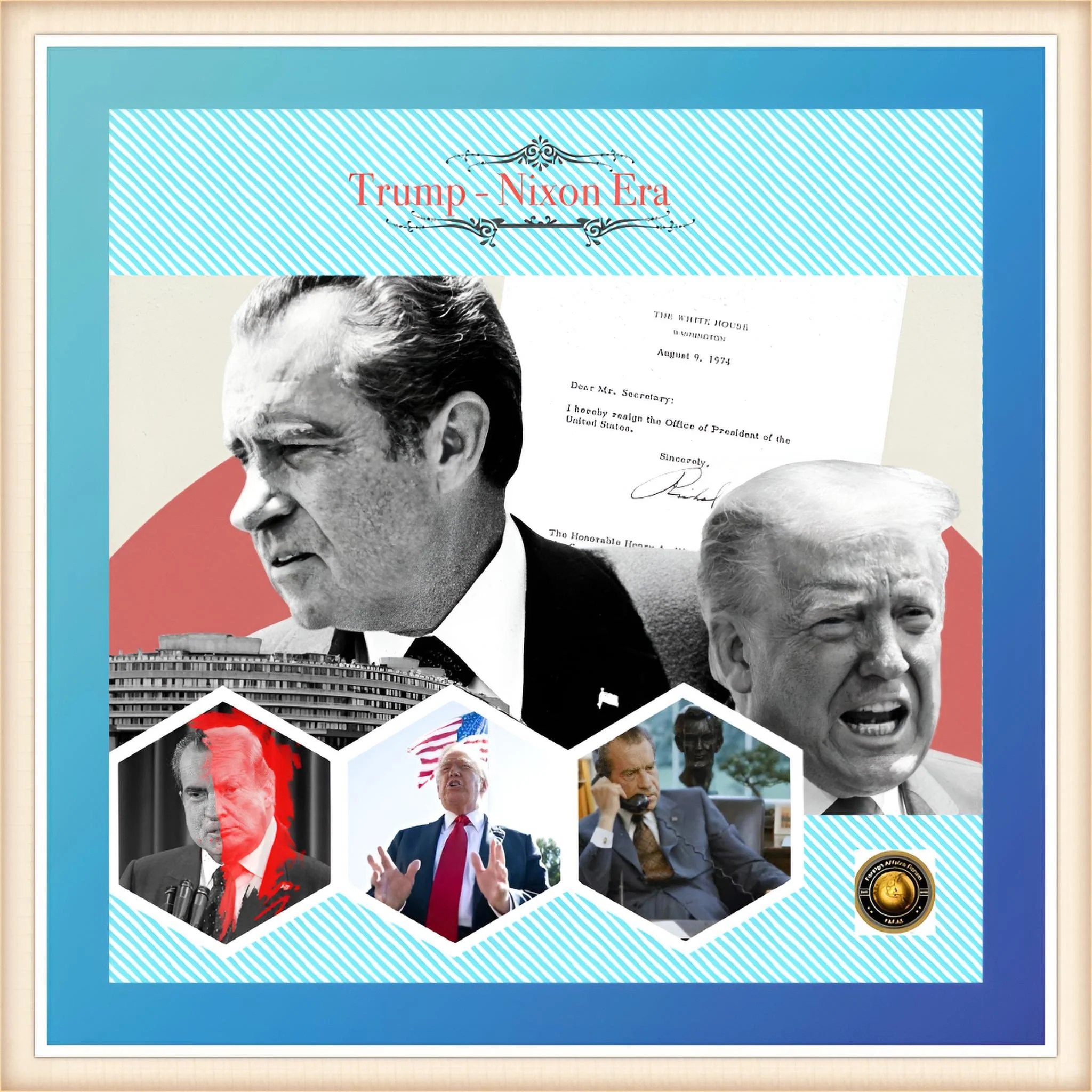
The question framing this analysis—will Trump reach or fall below Nixon’s 24 percent approval—requires careful specification of what such a comparison would mean. Nixon’s 24 percent, recorded in August 1974, reflected a nation that had concluded its president had violated constitutional norms and must be removed from office. The evidence of obstruction of justice, abuse of power, and misuse of presidential authority had become overwhelming. Republicans, who had been Trump-like in their initial loyalty, increasingly acknowledged that removal was necessary on constitutional grounds. That 24 percent represented the approximate floor of those who either disbelieved the evidence or believed removal was inappropriate regardless of the evidence.
Trump’s potential descent to 28 to 34 percent (the likely lower bound before structural constraints prevent further decline) would represent something fundamentally different: not constitutional crisis but accumulated policy failure and economic deterioration. The disapproval would be rooted in assessment of governance competence rather than constitutional violation.
Several factors may constrain Trump from reaching Nixon’s nadir:
First, partisan polarization is more severe in the contemporary period than in 1974. Nixon faced substantial Republican criticism on constitutional grounds; Republicans increasingly embraced the principle that presidential crimes warrant removal.
Contemporary Republicans, by contrast, have largely adopted the position that Trump deserves loyalty regardless of policy outcomes or even legal jeopardy. Trump’s partisan floor (30 to 35 percent) is thus higher than Nixon’s was, creating a cushion against reaching 24 percent unless some additional shock (legal prosecution, conviction on criminal charges, or genuine constitutional crisis) elevates the stakes beyond policy failure.
Second, Trump’s decline lacks the declarative force of constitutional crisis. While economic deterioration is politically damaging, it operates through diffuse mechanisms (inflation, unemployment, declining purchasing power) rather than the singular, crystallizing events that drove Nixon’s collapse (the Saturday Night Massacre, the Ervin Committee hearings, the Judiciary Committee transcripts). This diffuseness may prevent the kind of sudden opinion shift that drives approval from 30 percent to 24 percent.
Third, Trump has demonstrated capacity to reshape narrative around events in ways Nixon could not. Trump routinely claims his “real” approval rating (which he asserts is 64 percent) differs dramatically from poll averages, fostering skepticism of polling among his base. Nixon, by contrast, faced undeniable evidence of criminal activity recorded in his own voice. Trump’s approval deficit can be narrativized as “fake news” or polling bias, providing psychological cover for supporters even as they recognize policy failures.
However, these constraining factors could be overwhelmed should sufficient economic deterioration occur. A recession coupled with unemployment exceeding 6 percent, inflation re-accelerating above 4 percent, or a major geopolitical shock (e.g., Israeli escalation in the Middle East, military confrontation in Taiwan Strait) could push approval below 30 percent and into potential Nixon territory. The difference would remain categorical—policy failure rather than constitutional crisis—but the numerical outcome could be comparable.
Conclusion
An Unprecedented Situation Without Historical Parallel
As Trump enters 2026, he stands in an unprecedented position within American presidential history. He is the first elected president to serve with sub-50 percent initial approval, the only president never to reach 50 percent approval at any point in his presidency, and the only president to experience such sustained disapprobation among economic swing voters. His aggregate approval across his tenure is on pace to be the lowest of any president in the polling era, surpassing even Harry Truman’s previous low average of 45.4 percent.
Whether Trump will descend to Nixon’s 24 percent approval remains contingent on economic evolution and external shocks in 2026. A baseline scenario suggests his approval would stabilize in the 40 to 45 percent range, sufficient to avoid historical ignominy but insufficient to claim political renewal. A severe deterioration scenario—recession, unemployment spike, inflation re-acceleration—could drive approval toward 28 to 34 percent, approaching but likely not reaching Nixon levels owing to structural partisan polarization. A geopolitical shock could temporarily boost approval but would likely require sustained crisis to maintain any recovery.
The more significant finding transcends the question of whether Trump reaches 24 percent. What is already historically certain is that Trump will be remembered as a president who governed with the weakest support of any elected president in the polling era. This reflects not merely policy failure or political vulnerability but a fundamental shift in the nature of presidential authority in an age of severe partisan polarization. When nearly half the nation opposes a president regardless of policy outcomes, and when the other half supports him regardless of policy failures, the capacity of the presidency to serve as a unifying institution erodes.
Trump’s approval crisis is thus not merely a political vulnerability but a sign of deeper institutional strain within American democracy.
The November 2026 midterm elections will provide the first electoral test of whether American voters ratify or rebuke this unprecedented situation. The outcome will likely determine whether Trump’s approval crisis translates into Republican congressional losses and constrains his capacity for policy implementation, or whether the partisan base proves sufficiently durable to sustain Republican control despite presidential unpopularity.
The stakes extend beyond Trump himself to the future of American governance under conditions of unprecedented partisan division and presidential-public misalignment.