Federal Court Blocks Trump’s Liberation Day Tariffs: Constitutional Crisis and Global Trade Implications
Introduction
A landmark ruling by the US Court of International Trade on May 28, 2025, has fundamentally challenged the Trump administration’s aggressive trade strategy by blocking the implementation of sweeping “Liberation Day” tariffs.
What do we know
A U.S. trade court delivered a significant ruling on Wednesday regarding President Donald Trump's "Liberation Day" tariffs.
The ruling indicates that the president may have overstepped his authority by implementing broad duties on imports from nations that export more to the United States than they import.
The Manhattan-based Court of International Trade affirmed that the U.S. Constitution allocates Congress the exclusive power of regulating commerce with foreign nations.
The court noted that the president's emergency powers cannot supersede this power to safeguard the U.S. economy.
Further, the judges have instructed the Trump administration to issue new orders within the next 10 days in accordance with the permanent injunction.
Shortly thereafter, the Trump administration submitted a notice of appeal, expressing concerns regarding the court's authority.
Decisions made by the Manhattan-based Court of International Trade, which addresses matters related to international trade and customs law, can be appealed to the U.S. Court of Appeals for the Federal Circuit in Washington, D.C., and potentially to the U.S. Supreme Court.
What is the Court of International Trade
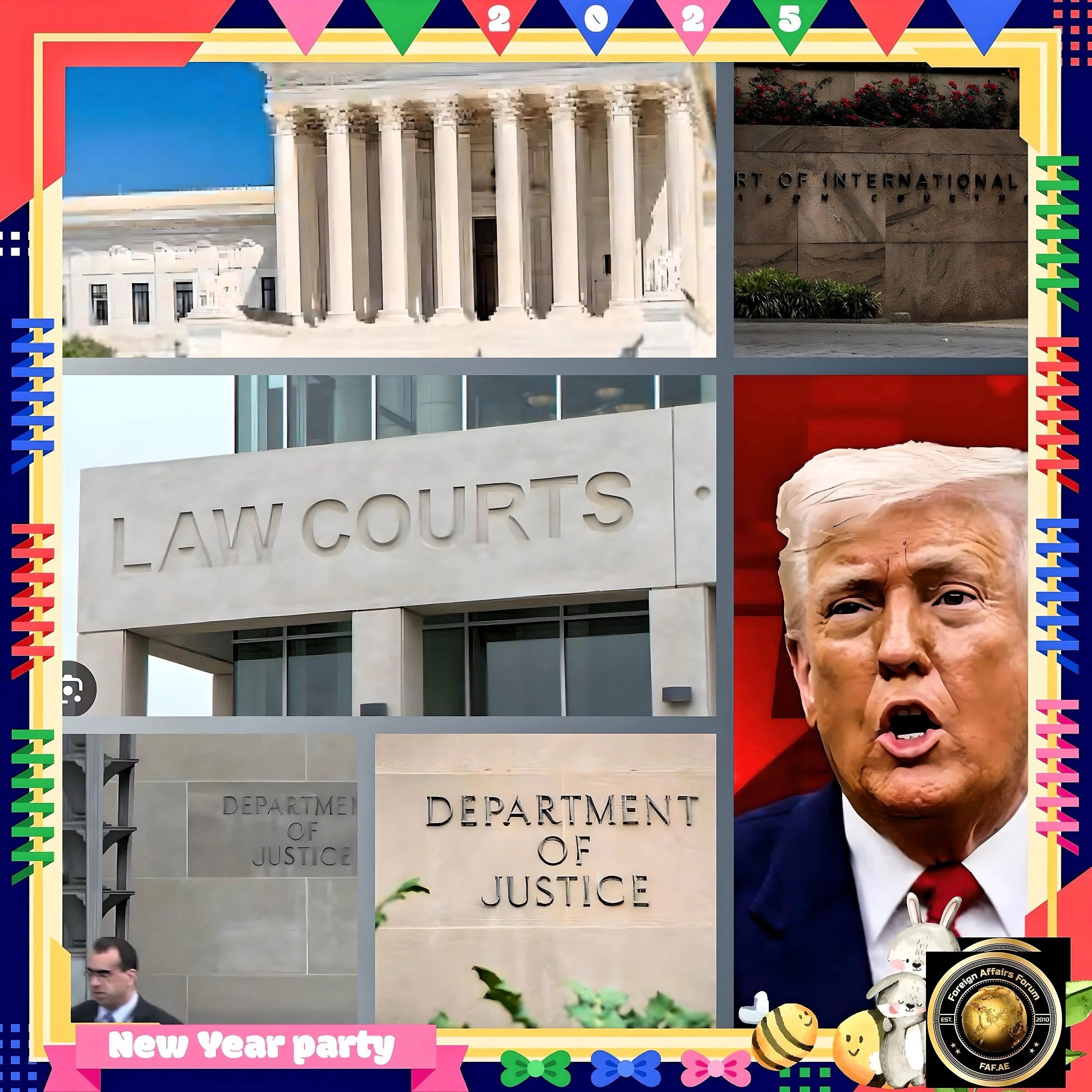
The Court of International Trade (CIT) is a vital U.S. court established by the Customs Court Act of 1980 as an Article III court, effectively replacing the U.S. Customs Court and significantly broadening its jurisdiction.
The CIT is the authoritative venue for all international trade civil actions involving government agencies, actions, and officials. It operates out of New York City but holds jurisdiction over the entire United States.
The court’s jurisdiction encompasses many issues, including disputes over tariffs imposed by U.S. Customs and Border Protection (CBP) and assessments made by the U.S. International Trade Commission (ITC).
The chief judge efficiently assigns cases to one of the court's nine judges, while a panel of three judges deliberates significant matters.
Importantly, decisions rendered by the CIT are subject to appeal in the U.S. Court of Appeals for the Federal Circuit.
FAF analysis secures a position stating, that this judicial intervention represents one of the most significant legal setbacks to presidential trade authority in decades, with far-reaching implications for executive power, international trade relations, and global economic stability.
The court’s determination that President Trump exceeded his constitutional authority by imposing broad tariffs under emergency powers has created a constitutional crisis that will likely reshape how future administrations approach trade policy while simultaneously providing relief to international trading partners bracing for escalating trade wars.
The Court’s Decisive Ruling and Legal Framework
The three-judge panel at the Manhattan-based Court of International Trade unanimously and comprehensively rejected the Trump administration’s tariff strategy, fundamentally challenging the legal basis for the president’s trade war approach.
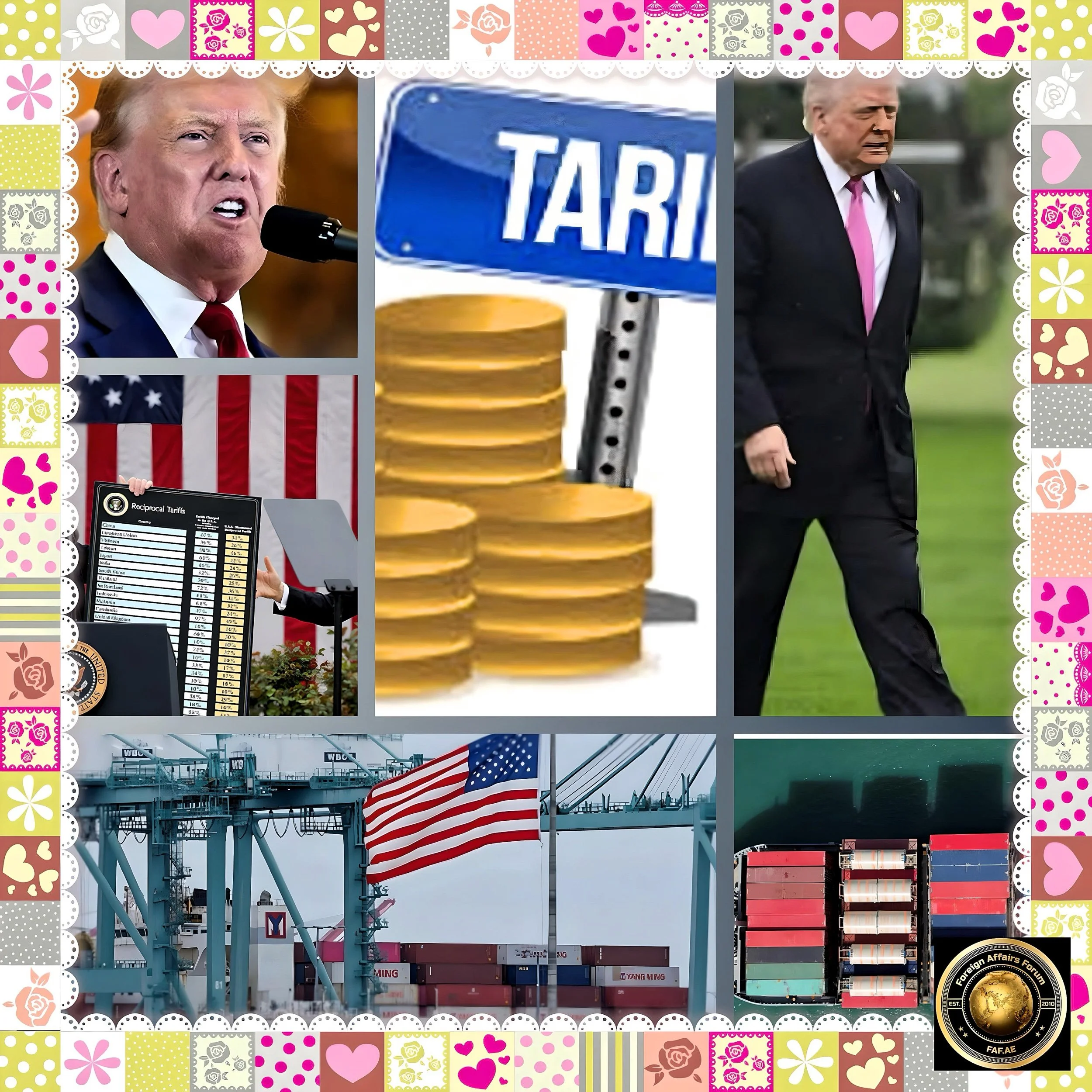
The court’s ruling specifically targeted Trump’s use of the International Emergency Economic Powers Act (IEEPA) of 1977, which the administration had invoked to justify imposing a baseline 10% tariff on most imports and significantly higher rates on countries with large trade surpluses with the United States.
The judges concluded that “an unlimited delegation of tariff authority would constitute an improper abdication of legislative power to another branch of government,” establishing a clear constitutional boundary around executive trade powers.
The court’s analysis revealed four critical legal deficiencies in Trump’s approach, demonstrating the administration’s fundamental misunderstanding of statutory limitations.
First, the judges determined that while IEEPA grants the president authority to regulate foreign transactions during national emergencies, it does not provide the “unlimited tariff authority” that Trump claimed.
The court emphasized that if Congress had intended to grant such expansive powers, it would violate constitutional separation of powers principles by failing to provide “an intelligible principle” to guide executive action.
Second, the ruling highlighted that a separate federal law, Section 122 of the Trade Act 1974, explicitly governs presidential responses to trade deficits.
This law limits such tariffs to 15% or lower and restricts their duration to 150 days.
The judicial panel’s third finding addressed Trump’s justification that tariffs would combat illegal drug trafficking, with the court rejecting this rationale as failing to meet IEEPA’s requirement that emergency measures must “address an unusual and extraordinary threat.”
The judges noted that tariffs do not directly prevent drugs from entering the United States. They dismissed the administration’s argument that economic pressure on other nations to change their policies constitutes addressing the emergency.
Finally, the court mandated a nationwide injunction, citing the Constitution’s requirement that “all Duties, Imposts, and Excises shall be uniform throughout the United States,” ensuring that if the tariffs cannot legally apply to one person, they cannot apply to anyone.
Impact on the Trump Administration’s Trade Strategy
The court’s ruling represents a devastating blow to the Trump administration’s central economic policy, effectively dismantling what officials had characterized as the most comprehensive trade reform since the 1930s.
Trump’s “Liberation Day” tariffs, announced on April 2, 2025, were designed as the cornerstone of a broader strategy to reshape global trade relationships through the threat of economic punishment.
The administration had framed these measures as necessary to address what it described as a persistent $1.2 trillion goods trade deficit that constituted a national emergency requiring immediate intervention.
The immediate practical consequences for the Trump administration are severe and multifaceted, extending beyond mere policy setbacks to fundamental questions about executive authority.
The administration filed a notice of appeal within minutes of the court’s decision. White House spokesperson Kush Desai argued, “It is not for unelected judges to decide how to address a national emergency properly.”
However, the ruling effectively strips the administration of its primary negotiating tool, forcing a return to slower, more traditional trade investigation procedures that require congressional oversight and approval.
This shift fundamentally alters the administration’s ability to leverage the immediate threat of tariffs in international negotiations.
The economic and political ramifications extend to ongoing trade discussions with multiple countries, as the administration used the threat of escalating tariffs to extract concessions from trading partners.
Trump administration officials argued in court that the tariff power had been instrumental in brokering a ceasefire between India and Pakistan following April’s terrorist attack and that ongoing negotiations with China, the European Union, and other nations remained in a “delicate state” with July deadlines approaching.
The loss of this leverage mechanism forces the administration to rely on more conventional diplomatic and economic tools, potentially prolonging negotiations and reducing the United States’ bargaining position in international trade talks.
Constitutional and Legal System Implications
The Court of International Trade’s decision reinforces fundamental constitutional principles regarding the separation of powers and congressional authority over interstate and foreign commerce.
The ruling explicitly states that “the U.S. Constitution gives Congress exclusive authority to regulate commerce with other countries that are not overridden by the president’s emergency powers to safeguard the U.S. economy.”
This interpretation strengthens legislative oversight of trade policy and establishes essential precedents for limiting executive overreach during declared national emergencies.
The judicial system’s response demonstrates the effectiveness of constitutional checks and balances, particularly in an era of expanded executive power claims.
The court’s analysis goes beyond immediate trade concerns to address broader questions about how emergency powers can be invoked and the limits of presidential authority during economic crises.
The ruling establishes necessary guardrails for future emergency declarations across multiple policy areas by requiring that emergency measures directly address specific threats rather than serve as general policy tools.
The decision also highlights the growing role of specialized courts in complex policy areas, with the Court of International Trade emerging as a crucial check on executive trade authority.
This development suggests that future trade policies will face increased judicial scrutiny, potentially leading to more careful legal analysis before implementation and greater reliance on traditional legislative processes.
The court’s willingness to issue a nationwide injunction demonstrates judicial confidence in constraining executive power when constitutional boundaries are exceeded.
Appeals Process and Supreme Court Prospects
The Trump administration’s immediate appeal ensures that this constitutional challenge will progress through the federal court system, with significant implications for trade policy and executive power precedents.
The case will proceed to the U.S. Court of Appeals for the Federal Circuit in Washington, D.C., before potentially reaching the Supreme Court.
Given the fundamental constitutional concerns involved and the nationwide scope of the injunction, expedited review appears likely.
The Supreme Court could potentially address the case within weeks rather than months.
Several critical timing considerations could influence the appellate process's legal and political outcomes.
The Court of International Trade has mandated that administrative orders effectuating the permanent injunction must be issued within 10 calendar days.
Unless higher courts intervene quickly, Trump’s tariffs will cease to exist immediately.
This timeline pressure may prompt the administration to seek emergency stays from the Federal Circuit and potentially the Supreme Court to maintain the tariffs during appeals.
The Supreme Court’s eventual consideration of this case will likely focus on broader questions of executive power during national emergencies and the scope of congressional delegation of authority.
The current Court’s composition and previous decisions regarding executive power suggest a complex deliberation process, particularly given the intersection of constitutional law, international trade, and separation of powers principles.
The Court’s decision could establish lasting precedents for how future presidents can respond to economic challenges and the extent to which emergency powers can implement broad policy changes without explicit congressional authorization.
International Community Response and Global Market Reactions
The international community’s response to the court ruling has been characterized by cautious relief tempered by awareness that the legal challenge represents only a temporary resolution to escalating trade tensions.
Financial markets immediately responded positively to the news, with the U.S. dollar rallying against major currencies, including the euro, yen, and Swiss franc.
Wall Street futures and Asian equities rose in response to reduced trade war uncertainty.
This market reaction demonstrates the significant economic anxiety that Trump’s tariff strategy generated among global investors and trading partners.
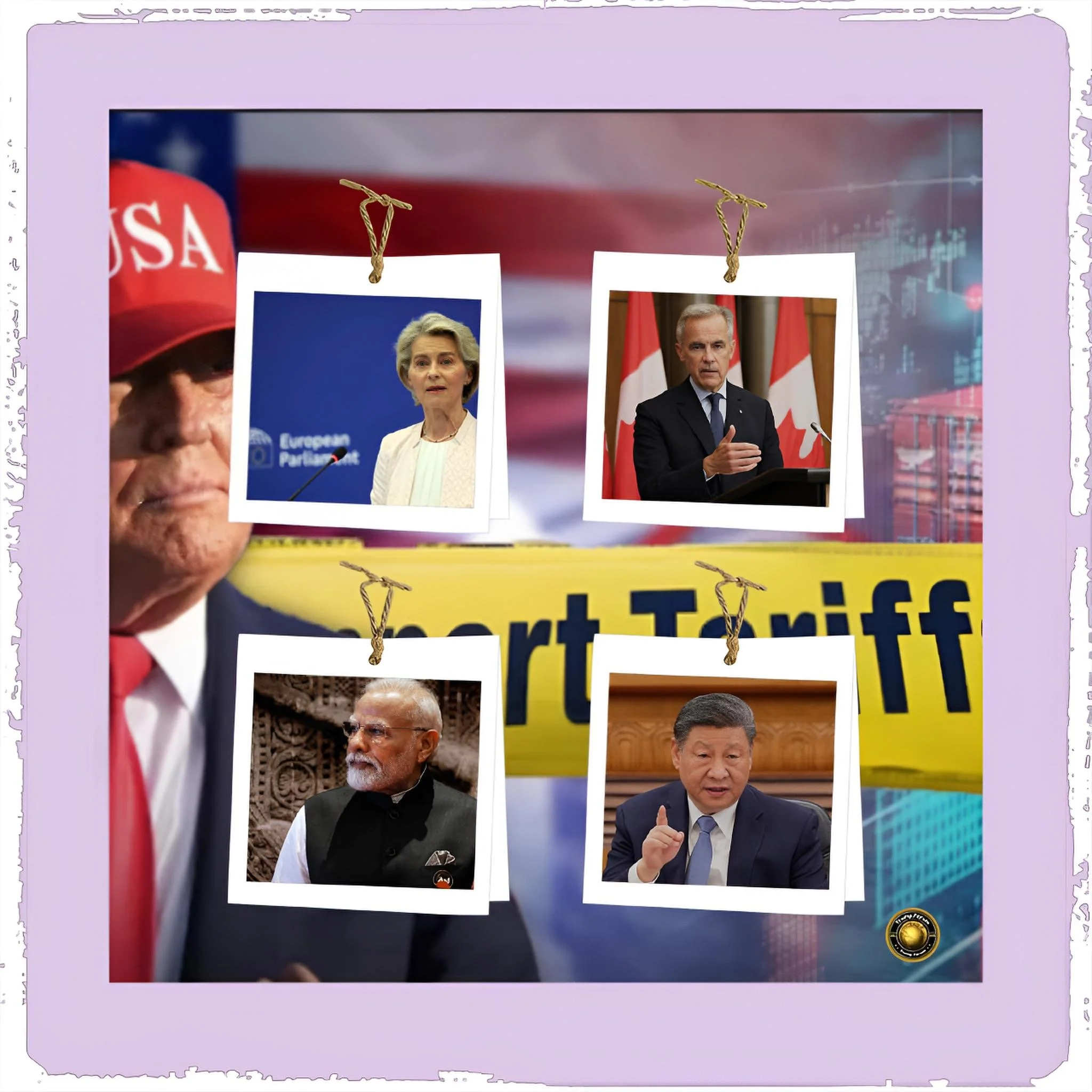
The European Union, which had been preparing comprehensive retaliatory measures worth up to 95 billion euros in response to U.S. tariffs, has found temporary respite from the court’s decision.
European Commission President Ursula von der Leyen had previously stated that the EU had a “strong plan” to respond to Trump’s tariffs while preferring a “negotiated solution.”
The court ruling provides additional breathing room for ongoing EU-U.S. trade negotiations, which had been accelerated following Trump’s threat of 50% tariffs on European goods that was subsequently delayed until July 9, 2025.
EU trade chief Maroš Šefčovič has been leading political discussions focusing on key sectors, including semiconductors, automobiles, and aluminum, to prevent the reimposition of tariffs.
The broader international response reveals the global economy’s vulnerability to unilateral trade actions and the importance of multilateral institutions in maintaining economic stability.
Several countries have been preparing to challenge Trump’s tariffs through the World Trade Organization’s dispute settlement mechanism, arguing that the measures violated fundamental WTO principles, including most-favored-nation obligations and bound rate commitments.
The court’s domestic legal intervention may reduce pressure on international dispute resolution mechanisms while reinforcing the need for trade policy to operate within established legal frameworks.
Global Leaders’ Reactions and Diplomatic Implications
The response from global leaders and international institutions has been notably restrained, reflecting the delicate balance between relief at the court’s decision and caution about future developments.
The Group of Seven finance ministers, meeting just as the court ruling was announced, notably failed to explicitly condemn U.S. trade policies in their joint statement, instead offering cautious language about “international economic uncertainty” weighing global growth.
This diplomatic restraint suggests that major economies remain focused on ongoing bilateral negotiations rather than multilateral confrontation, recognizing that the court’s decision may be temporary pending appeals.
Chinese officials, who had been engaged in escalating tariff exchanges with the United States, have maintained their position of conditional willingness to negotiate while preparing for continued trade tensions.
The Chinese Commerce Ministry had previously labeled Trump’s tariff threats as “a mistake on top of a mistake” and promised to “fight to the end” if the U.S. persisted with escalating measures.
However, both countries had recently agreed to temporarily reduce tariff rates for 90 days while pursuing broader negotiations, suggesting that diplomatic channels remain open despite the legal uncertainty.
The Indian government’s response exemplifies the cautious optimism shared by many trading partners, as officials had been actively negotiating with the Trump administration to avoid the full impact of reciprocal tariffs.
Indian Prime Minister Narendra Modi’s February 2025 White House visit focused on advancing a deal to double bilateral trade to $500 billion by 2030.
India proposed various concessions, including “zero-for-zero” tariffs on auto parts.
The court’s ruling provides additional leverage for countries like India to negotiate exemptions or reductions in U.S. tariff measures while maintaining their trade policy autonomy.
Conclusion
It is essential to recognize that the trade imbalance does not constitute a national emergency.
The Court of International Trade’s decision to block President Trump's Liberation Day tariffs marks a pivotal moment in American trade policy and constitutional law.
This ruling establishes essential precedents regarding the limits of executive power while providing temporary relief to a global economy facing challenges from rising trade tensions.
By emphasizing the constitutional separation of powers and affirming congressional authority over commerce, the ruling upholds fundamental democratic principles and encourages the Trump administration to pursue its trade objectives through more collaborative and traditional methods.
The immediate intent to file appeals suggests that this legal dialogue is far from over, with the Supreme Court likely to address the extent of presidential emergency powers in trade policy.
Furthermore, the international ramifications of this decision reach well beyond immediate tariff relief.
It signals to global partners that American trade policy remains subject to institutional checks and balances, even amidst periods of aggressive unilateral action.
For trading partners in the European Union, China, and India, the court’s ruling offers an opportunity for ongoing negotiations while reinforcing the significance of multilateral trade institutions and established legal frameworks.
The positive response from the markets indicates a global confidence in institutional constraints against disruptive trade policies; however, there remains some uncertainty regarding the outcomes of the appeals and the potential for future trade escalations.
This ruling could significantly influence how future administrations formulate international trade policies, necessitating enhanced congressional engagement and more thorough legal justification for emergency trade actions.
Moreover, the decision underscores the judiciary's crucial role in restraining executive overreach while highlighting the delicate balance between presidential leadership in foreign economic policy and constitutional limitations on executive power.
As the appeals process develops, the eventual resolution may establish enduring precedents for reconciling executive efficiency with democratic accountability within the context of our increasingly interconnected global economy.
In light of current geopolitical tensions, nations are prioritizing economic stability amid the unpredictable political landscape in the United States.
Though we may see some short-term relief, the emphasis must remain on seeking long-term solutions. It is vital to approach this situation with a focus on constructive dialogue and partnership.