Tariff Tsunami 2026: Is Global Trade’s Miracle Resilience About to Shatter
Executive Summary
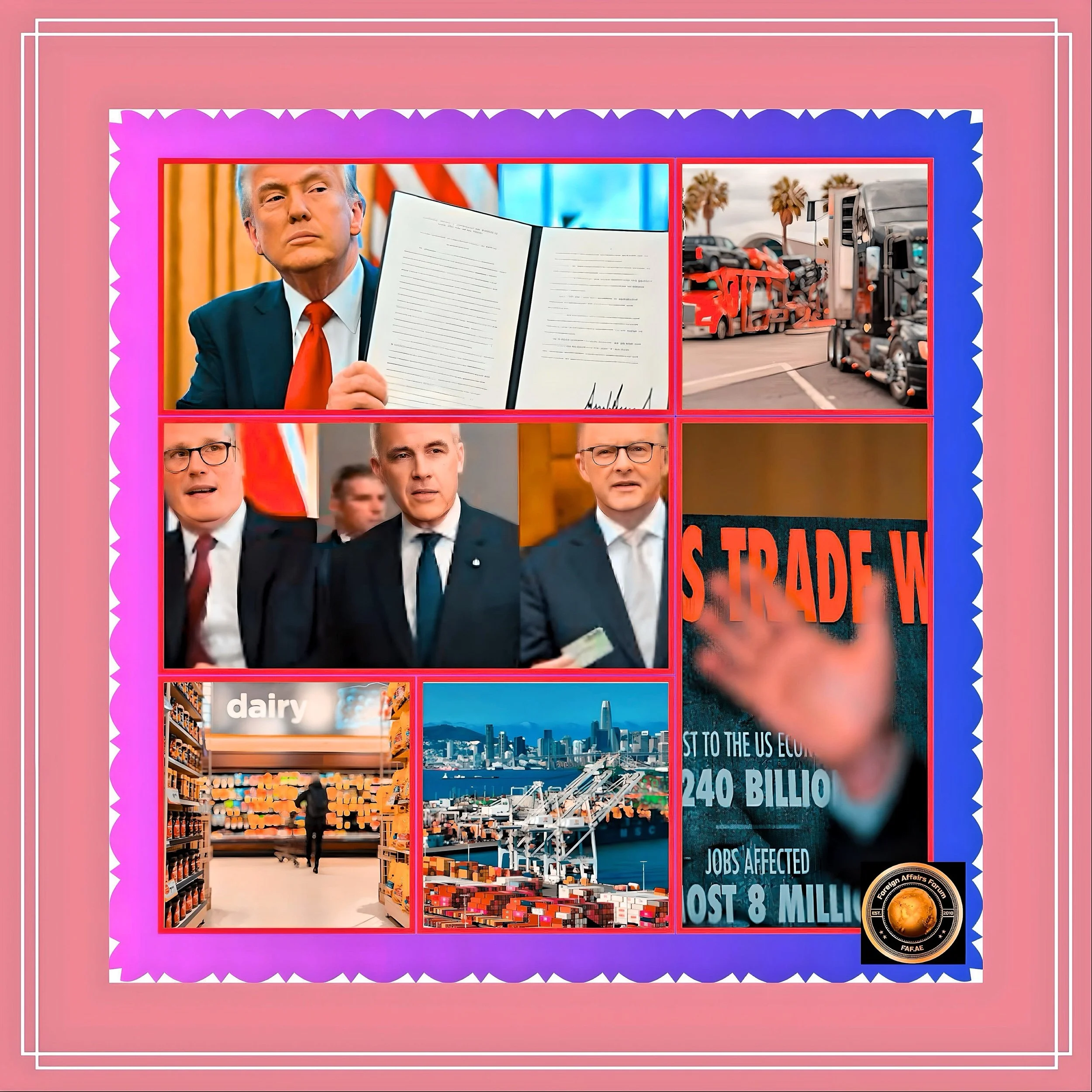
Rather than collapsing under the weight of the highest U.S. tariffs in nearly a century, the global trade system has demonstrated remarkable adaptability, growing 6.35% in goods imports and 6.24% in exports during 2025 despite President Trump’s “Liberation Day” tariff offensive launched April 2.
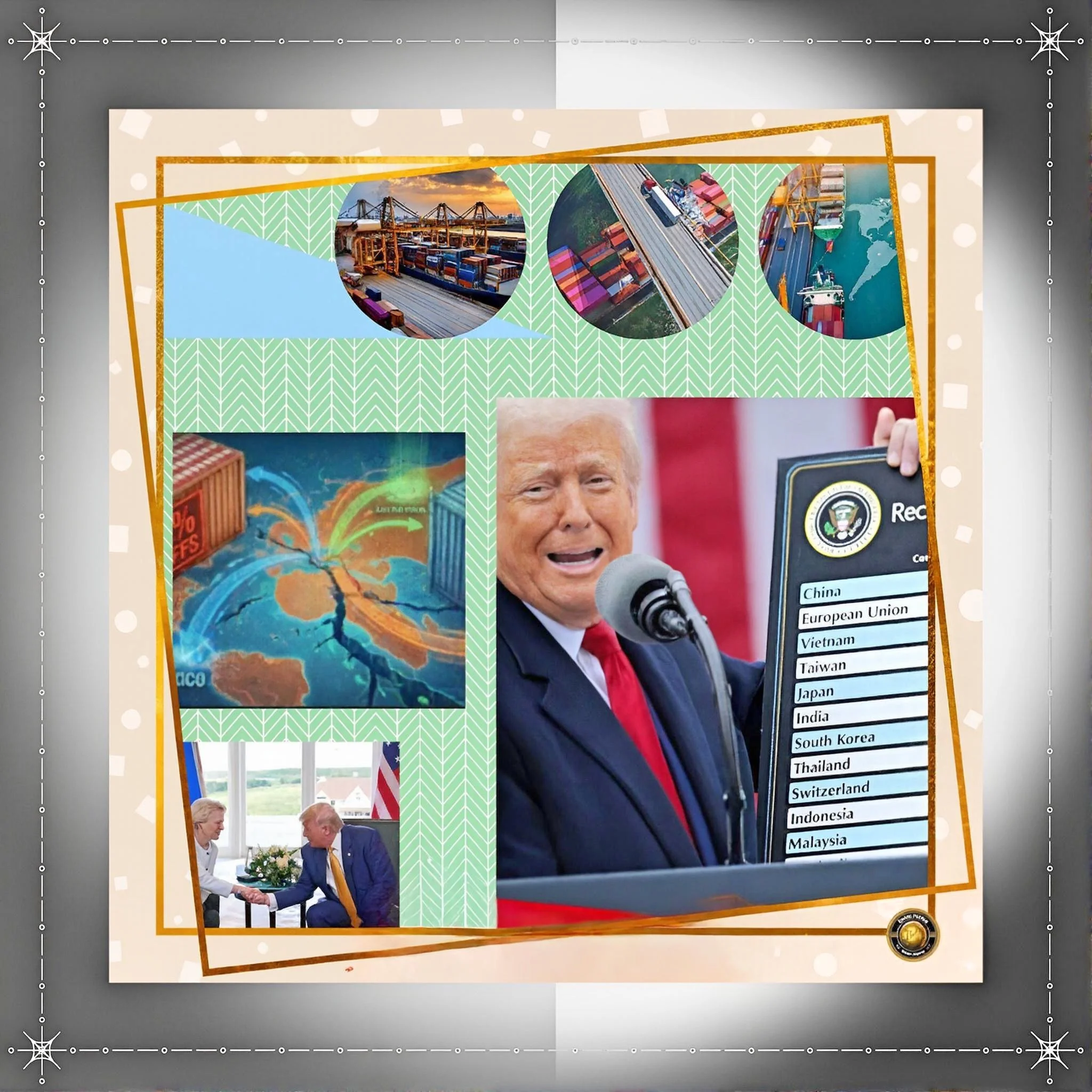
The average U.S. tariff rate surged from 2.5% to over 15% by year-end, imposing baseline 10% duties on all imports plus country-specific “reciprocal” tariffs reaching 49% on Cambodia, 46% on Vietnam, and 34% on China.
Yet global merchandise trade is projected to surpass $35 trillion for the first time, driven by AI-related demand, supply chain diversification, and bilateral negotiations that recast trade flows along new geopolitical lines.
Vietnam negotiated tariffs down from 46% to 20%, committing to zero tariffs on U.S. goods and anti-transshipment measures.
The European Union secured a 15% cap on most exports after pledging $600 billion in U.S. investments and $750 billion in energy purchases.
Taiwan’s TSMC pledged $165 billion in U.S. fabs, securing semiconductor exemptions despite 100% tariff threats.
Mexico aligned with U.S. priorities by imposing up to 50% tariffs on non-FTA partners like India, strengthening USMCA integration.
China’s trade surplus exceeded $1 trillion for the first time, while U.S. trade deficit narrowed from a March record of $136.4 billion to $52.8 billion in September.
These adaptations reveal a trade system not merely surviving but evolving through frontloading, regionalization, and technological resilience, though 2026 uncertainties loom amid USMCA review and retaliatory measures.
Introduction: Tariff Shock and Systemic Resilience
When President Donald Trump declared April 2, 2025, “Liberation Day” and signed Executive Order 14257 invoking national emergency powers under the International Emergency Economic Powers Act, the world anticipated trade Armageddon.
The sweeping tariff regime—a baseline 10% duty on all imports plus country-specific “reciprocal” rates calculated from trade deficits—represented the most aggressive protectionism since the 1930 Smoot-Hawley Tariff Act, which exacerbated the Great Depression.
Economists warned of global recession, supply chain collapse, and inflation spikes. The IMF initially slashed 2025 growth forecasts to 1.6%, OECD economists predicted trade contraction, and shipping volumes appeared poised for precipitous decline.
Yet 2025 delivered a paradox. Global trade not only endured but expanded at double 2024’s pace. Container volumes grew 2.1% year-over-year in October, AI-driven semiconductor trade surged 20%, and total merchandise flows approached $35 trillion.
U.S. GDP accelerated to 4.3% in Q3, fueled paradoxically by falling imports and rising exports amid tariff-induced adjustments.
The trade system’s resilience stemmed not from tariff weakness but from corporate and national adaptability: frontloading imports before duties hit, rapid supply chain diversification to Mexico, Vietnam, and India, bilateral negotiations securing exemptions and quotas, and technological demand outpacing protectionist friction.
This recasting unfolded through vivid narratives. Vietnam, facing 46% tariffs, negotiated a 20% rate by pledging zero U.S. duties and $1.5 billion Trump Organization investment. TSMC, confronting 100% semiconductor tariffs, committed $165 billion to U.S. fabs, transforming Arizona into a chip hub.
The EU, threatened with 200% wine tariffs, capitulated to a 15% ceiling after $1.35 trillion in U.S. commitments.
Mexico imposed 50% duties on Indian steel to align with U.S. reshoring.
These stories illustrate how tariff shockwaves propelled not disintegration but reconfiguration, forging new trade architectures resilient to protectionism.
Historical Context and Current Status: From Smoot-Hawley to Liberation Day
U.S. tariff history oscillates between revenue generation and protectionism. Pre-1913, tariffs supplied 90% of federal revenue; Smoot-Hawley raised rates to 60%, triggering retaliatory spirals and 65% trade collapse.
Post-WWII, the U.S. championed GATT/WTO liberalization, reducing average tariffs to 2.5%.
Trump’s first term (2018) previewed the 2025 offensive with Section 232 steel/aluminum duties (25%/10%) and China Phase One tariffs, but Liberation Day dwarfed predecessors.
Executive Order 14257 declared persistent trade deficits a “national emergency,” imposing 10% baseline duties April 5 and reciprocal rates April 9: Cambodia 49%, Vietnam 46%, Thailand 36%, China 34%, Taiwan 32% (later reduced), EU 15% post-deal. Steel/aluminum hit 50%, autos 25%, semiconductors threatened 100%.
De minimis exemption ended for China/Hong Kong low-value shipments. By December, U.S. effective tariff rate exceeded 15%, highest since WWII.
Current status reveals resilience
WTO forecasts 2.4% goods trade growth 2025, 0.5% 2026.
UNCTAD reports 7% expansion, double 2024. U.S. trade deficit peaked $136.4 billion March (pre-tariff frontloading) then fell to $52.8 billion September, year-to-date 17% above 2024 but narrowing.
Global container growth 2.1% October. AI/semiconductor trade boomed 20%, comprising half growth. China’s $1 trillion surplus marked historic milestone.
Key Developments: Bilateral Negotiations and Supply Chain Metamorphoses
Vietnam’s adaptation exemplifies tariff-induced reinvention. Facing 46% duties on electronics/furniture, Hanoi dispatched Trade Minister Nguyen Hong Dien to Washington May 23, pledging anti-transshipment crackdowns, zero U.S. tariffs, and $1.5 billion Trump golf course.
July 2 deal capped rates at 20%, preserving Vietnam’s U.S. export surge (electrical machinery up 35% May).
Factories relocated from China to Vietnam accelerated, though transshipment scrutiny intensified.
Taiwan’s semiconductor odyssey unfolded dramatically.
TSMC, facing August 6’s 100% chip tariff announcement, leveraged March CEO Wei meeting with Trump ($100 billion U.S. investment pledge) and September Lutnick visit (50-50 U.S./Taiwan production pitch).
Exemptions secured, Arizona fabs expanded, packaging/R&D centers announced. Despite 32% initial levy (reduced 20%), TSMC reported demand exceeding supply, H1 2025 exports hitting records.
Global AI boom (20% trade growth) buffered tariff pain, positioning Taiwan as indispensable.
EU-U.S. negotiations culminated
July 27 Turnberry golf course deal between von der Leyen and Trump. Facing 200% wine/film threats, EU committed zero industrial tariffs, $600 billion investments, $750 billion energy purchases by 2028. U.S. capped duties 15% (autos/pharma/semiconductors), preserving TRQs for agriculture.
August 21 joint statement formalized “reciprocal fair balanced framework,” shielding EU autos (15% vs proposed 30%) while enhancing U.S. market access.
Mexico’s alignment transformed North America
Facing USMCA review, President Sheinbaum imposed 5-50% duties January 2026 on non-FTA partners (India 35-50% autos/steel), shielding local industry, narrowing trade imbalance, boosting employment.
Pharmaceuticals spared (0-10%), maintaining generics competitiveness. This “near-shoring” fortified USMCA, Mexico becoming U.S. #1 import source surpassing China.
India navigated collateral damage
50% U.S. tariffs hit apparel/pharma precursors, but services surplus and generics resilience buffered.
Mexico’s 35% retaliation threatened $5.75 billion exports (75% affected), prompting PTA talks. Diversification to Middle East/Africa mitigated losses.
China’s defiance yielded $1 trillion surplus
Dual-track strategy—export controls retaliation, domestic consumption boost, R&D investment—validated Xi’s resilience narrative. Dollar diversification, trade route rerouting neutralized tariffs.
Latest Facts and Concerns: Metrics of Metamorphosis
Data underscores resilience
U.S. Q3 GDP 4.3%, fastest two years, driven by export rise/import fall. Inflation 2.7% November.
IMF raised 2025 global growth 3.2%. OECD forecast 1.8% September, 2% December. Container volumes +2.1% October. Semiconductor trade +20%. Global goods imports +6.35%, exports +6.24%.
Concerns persist
U.S. manufacturing jobs declined tens of thousands despite reshoring rhetoric.
Retaliation cascades
Mexico-India tensions, EU critical minerals restrictions. 2026 USMCA review threatens North America. WTO forecasts 0.5% growth amid uncertainty. Supply chain opacity risks transshipment evasion, enforcement challenges.
Corporate stories illuminate adaptation
TSMC’s $165 billion U.S. commitment created Arizona ecosystem. Vietnam factories absorbed China exodus. EU energy deals secured U.S. LNG dominance. Indian exporters pivoted Middle East.
Cause-and-Effect Analysis: Tariff Tectonics
Tariffs acted as tectonic force, realigning trade plates.
Cause: Liberation Day shock induced frontloading (March deficit peak), then substitution (Mexico #1 importer). Effect: U.S. deficit narrowing, manufacturing selective revival.
Bilateral diplomacy causal chain
tariff threats → negotiations → concessions (Vietnam zero tariffs, EU investments). Effect: asymmetric deals favoring U.S. access.
Supply chain effect
China tariffs → Vietnam/Mexico/India diversion. AI demand causal buffer: 20% semiconductor growth overwhelmed duties.
Retaliation feedback
U.S. pressure → Mexico duties → India pivot. Geopolitical multiplier: U.S. security leverage extracted EU energy commitments.
Macro resilience
services trade U.S. surplus, dollar dominance sustained funding. Concern: lagged effects—2026 inflation, growth slowdown if AI boom fades.
Future Steps: Navigating 2026 Turbulence
2026 dawns uncertain
USMCA review July threatens autos/energy.
WTO challenges Liberation Day legality.
Mexico-India PTA talks intensify.
TSMC 50-50 production negotiations loom.
Adaptation imperatives: traceability competency (blockchain origin audits), regional resilience (Americas/Europe/Asia parallel ecosystems), frugal engineering/modular design.
Asian firms lead reinvention: Vietnam hubs, Indian diversification, Taiwanese U.S. footprint.
Policy trajectories: Trump tariff maintenance (15% average), retaliation risks (EU minerals, Mexico autos).
IMF warns persistent uncertainty hampers investment.
Policy trajectories
Trump tariff maintenance (15% average), retaliation risks (EU minerals, Mexico autos). IMF warns persistent uncertainty hampers investment.
Conclusion
A Phoenix Forged in Tariff Flames: Trade’s Audacious Reinvention Amidst Protectionist Fury
President Trump’s century-high tariffs—unleashing the most ferocious protectionist tempest since Smoot-Hawley—did not shatter globalization’s edifice but rather hammered it into a more resilient, geopolitically hardened alloy. What emerged from Liberation Day’s inferno was not cataclysmic disintegration but evolutionary brilliance: bilateral pacts recalibrating power dynamics, supply chains morphing with liquid agility, and technological primacy—particularly AI’s insatiable semiconductor hunger—propelling trade volumes past the $35 trillion milestone.
Vietnam’s diplomatic deftness transformed 46% tariff Armageddon into a 20% manageable equilibrium through zero-duty concessions and Trump-branded golf empires. TSMC’s $165 billion U.S. fab odyssey neutralized 100% semiconductor threats, birthing Arizona’s silicon renaissance.
The EU’s pragmatic surrender—$1.35 trillion in investments and energy capitulation—secured a 15% tariff lifeline, entrenching American LNG hegemony. Mexico’s bold alignment, wielding 50% retaliatory blades against Indian interlopers, crowned it America’s paramount import bastion, fortifying USMCA’s continental fortress.
These chronicles illuminate antifragility incarnate: a global trade system not merely surviving stress but thriving through metamorphosis, its flows surging 6.35% despite doomsday prophecies. Yet this phoenix harbors vulnerabilities beneath iridescent plumage. Retaliatory tempests brew—Mexico-India frictions, EU minerals embargoes—while enforcement chasms invite transshipment chicanery.
America’s selective reshoring triumphs mask persistent manufacturing hemorrhage, as tariff windfalls concentrate in steel silos while broader employment languishes. The 2026 crucible—USMCA’s seismic review, WTO’s beleaguered challenges, AI boom’s potential ebb—will assay true mettle.
The tariff epoch unveils trade’s phoenix essence: disrupted yet indomitable, realigned yet voracious, evolutionary rather than extinct. What began as economic warfare has forged a multipolar order where bilateral cunning supplants multilateral complacency, technological monopolies trump mercantilist friction, and geopolitical fealty purchases market access.
Whether this reinvention endures as globalization 2.0 or fractures under retaliatory gravity remains the paramount wager. One certainty endures: the global trade phoenix, scorched yet soaring, has rewritten its legend in tariff-forged fire.