Through the American Lens: A Nation Divided on the Return of Presidential Power
Executive Summary
A House Divided: How Americans Interpret the Same Facts Differently
Donald Trump's return to the presidency on January 20, 2025, initiated one of the most polarizing political periods in contemporary American history.
Positioned amid sweeping promises of prosperity, security, respect, and hope, his first year in office has crystallized a nation so fundamentally divided that the reality of governance appears almost unrecognizable across ideological lines.
This scholarly examination explores the multifaceted dimensions of Trump's first year—from immigration enforcement and economic policy to foreign intervention and regulatory reform—through both empirical evidence and the deeply divergent interpretations that define American political discourse in 2026.
Introduction
The Paradox of Performance: Interpreting Trump’s First Year Back in Power Through Fundamentally Different Lenses
The inauguration of any president carries with it inevitable expectations, measured promises, and the accumulated hopes and fears of a fractured electorate.
Trump's second term, however, presents a peculiar paradox: his administration's claimed achievements are simultaneously celebrated by supporters as vindication of populist governance and condemned by critics as destructive to the social fabric.
Recent polling data reveals a nation where approximately 58 to 60% of Americans evaluate the president's first year as a failure, while his approval rating languishes at approximately 39 to 40 % —a trajectory that suggests deepening public ambivalence bordering on rejection.
What makes this year particularly instructive is not merely the divergence of opinion, but the factual metrics that underpin such interpretations.
The economy exhibits measurable stagnation in inflation reduction despite aggressive tariff implementation. Immigration enforcement demonstrates unprecedented scale and scope, with border crossings plummeting from roughly 100,000 monthly encounters during the final months of the Biden administration to approximately 10,000.
Foreign policy has taken a distinctly interventionist turn, culminating in military operations in Venezuela and the capture of president Nicolás Maduro. The regulatory apparatus has undergone substantial reorganization, with federal employment contracting by tens of thousands and deregulatory efforts claimed to generate $180 billion in collective savings.
Each of these developments furnishes empirical substrates for interpretation, yet the meaning extracted from such facts differs radically depending upon one's initial ideological orientation.
Historical Context and Evolution of Expectations
The Two Americas: Divergent Narratives in the Age of Trump's Return
To comprehend the present moment, one must situate Trump's return within the longer arc of his political trajectory and the evolving expectations of his movement.
His first presidency, extending from 2017 to 2021, established a pattern of executive assertiveness, particularly regarding immigration restriction and trade protectionism.
That administration pioneered travel restrictions, separated families at the southern border as a deterrent, and initiated the construction of a border wall—policies that galvanized both devoted supporters and fierce opponents.
The Biden interregnum of 2021 to 2025 reversed many of these policies, reopening legal pathways for asylum seekers, implementing a more permissive approach to deportations, and prioritizing individuals deemed threats to national security rather than targeting undocumented immigrants categorically.
Border encounters surged to historic levels, approaching 250,000 monthly in 2023 before declining somewhat through 2024. This reversal created a particular political dynamic whereby Trump's return represented not merely a restoration but a comprehensive recalibration.
Current Status: The Polarization Thesis Statement
Measuring Success: Why Supporters and Critics Cannot Agree on the Facts
The most salient characteristic of contemporary American political perception is its hermetically sealed quality.
Republicans overwhelmingly celebrate Trump's achievements, pointing to declining unemployment, stock market records, and border security measures as evidence of effective governance.
Democrats and independents express considerable anxiety regarding what they perceive as norm-erosion, executive overreach, and economic deterioration masked by statistical obfuscation.
This divergence is not incidental but structural. The Trump administration has deliberately invested in particular metrics that align with its policy priorities while downplaying indicators that suggest underperformance. Inflation, for instance, remains at 2.7% —virtually identical to the rate upon his inauguration.
The administration claims this represents stability, while critics note that inflation has actually increased since reaching a low of 2.3 % in April 2025, suggesting that policy decisions are proving inflationary rather than deflationary.
Similarly, immigration statistics furnish starkly different narratives.
Border apprehensions have declined precipitously, from approximately 100,000 monthly to 10,000, representing an extraordinary achievement in enforcement capacity. Yet this same enforcement has broadened substantially, now targeting individuals with legal status including those on asylum parole and temporary protected status arrangements.
The administration's revocation of Temporary Protected Status for twelve of seventeen designated countries has compelled approximately 530,000 individuals to confront deportation despite previously lawful residence.
Whether such expansion represents appropriate security vigilance or dangerous overreach depends entirely upon one's interpretive framework.
Key Developments and Policy Architecture
The Immigration Paradox: Unprecedented Enforcement Amid Expanding Scope
The first year of Trump's second term has been characterized by four major policy vectors: immigration enforcement, economic policy centered upon tariffication and deregulation, foreign policy intervention, and federal restructuring.
Immigration enforcement has operated at an unprecedented scale. The One Big Beautiful Bill Act, passed by Congress in July 2025, allocated nearly $170 billion for immigration enforcement over four years.
This legislation enabled the expansion of ICE detention capacity, authorized hiring of 10,000 additional enforcement officers, and provided $46 billion for border wall construction. As of mid-November 2025, approximately 65,000 individuals were held in ICE detention, while the administration established and maintained a daily arrest quota of 3,000 undocumented immigrants.
The scope of enforcement has widened considerably, with Immigration and Customs Enforcement expanding through 287(g) agreements—which deputize state and local law enforcement to perform federal immigration functions—from 135 such agreements in December 2024 to more than 1,100 covering forty states.
This represents a fundamental reconfiguration of enforcement architecture, bringing federal immigration authority into the interior of the United States in unprecedented fashion.
Economic policy has centered upon tariff implementation and deregulation. According to the Yale Budget Lab, average tariff rates have increased from approximately 2.4% in late 2024 to 17 % by late 2025, reaching levels not witnessed since the 1930s.
These tariffs, imposed across trading partners including China, the European Union, Canada, and Mexico, have generated approximately $200 billion in revenue claimed by the administration as funding sources for various policy initiatives.
However, academic research indicates that these tariffs have contributed approximately 0.7 percentage points to current inflation rates, effectively raising prices for consumers rather than lowering them as promised during the campaign.
Deregulation has proceeded at a rapid pace, with the administration claiming $180 billion in collective savings from regulatory elimination. Federal employment has contracted by approximately 75,000 positions, with particular reductions targeting the Department of Education, the Internal Revenue Service, and various agency diversity, equity, and inclusion programs.
The administration contends these measures have generated approximately $2,100 in annual savings per family of four, though critics note that many regulatory frameworks exist to protect environmental quality, consumer safety, and worker protection.
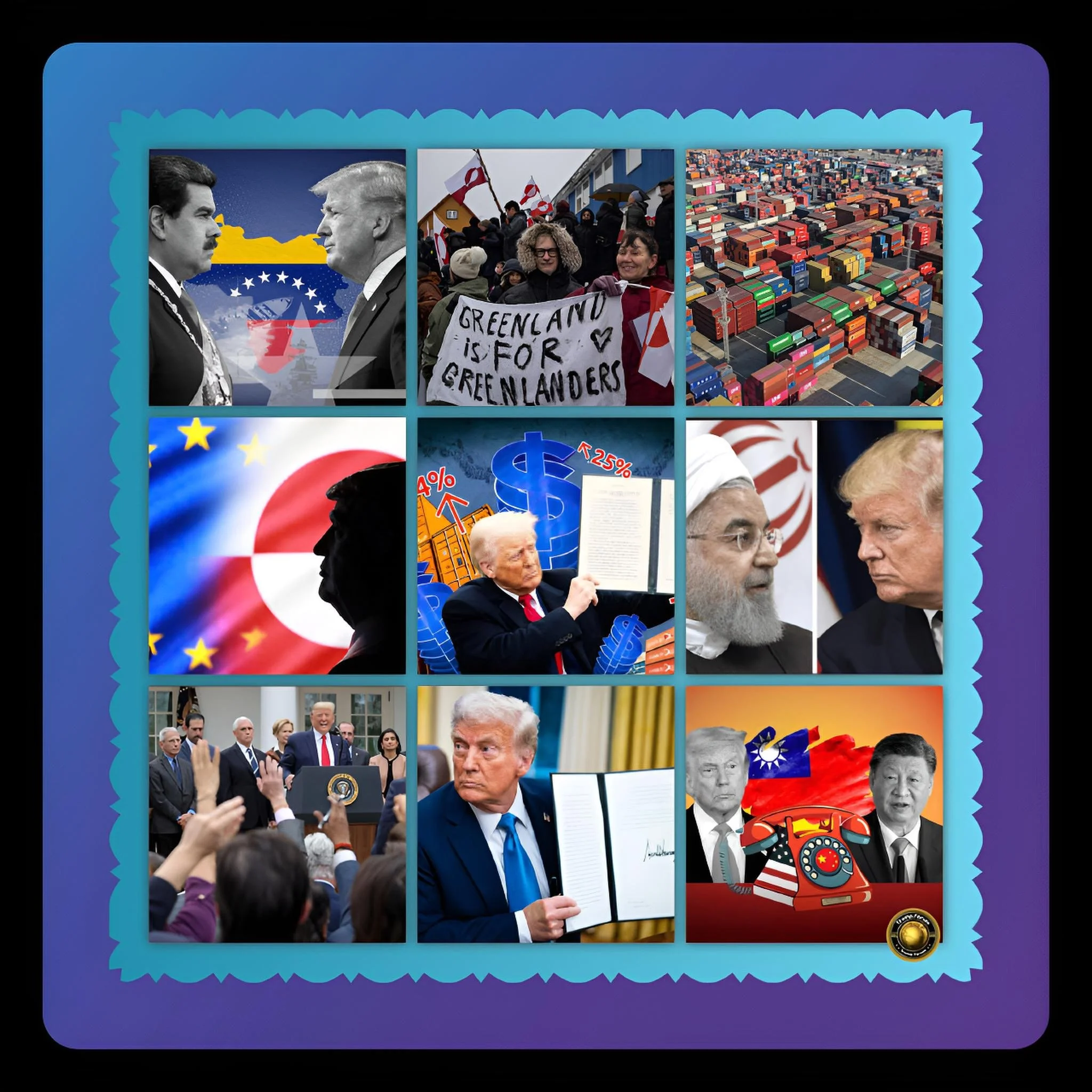
Foreign policy has demonstrated a distinctly interventionist character. The administration orchestrated military operations in Venezuela in January 2026, resulting in the capture of president Nicolás Maduro and his wife.
Trump has indicated that the United States intends to exercise effective control over Venezuelan governance and oil resources for an indefinite period, with oil revenues designated to compensate the United States for purported damages inflicted by the Venezuelan regime.
This operation represents the most dramatic foreign policy action of the administration and signals a willingness to employ military force in pursuit of regional objectives, including energy security and counter-narcotics operations.
Latest Facts and Emerging Concerns
The Economic Mirage: Tariffs and the Inflation Conundrum
Several developments merit particular attention as indicators of trajectory. Approval ratings have declined considerably among key demographic constituencies.
Latino voters, traditionally aligned with Democratic candidates, express approval at only 30 percent, down from 41 % at the beginning of the term. Voters under 35 similarly show 30 % approval, suggesting generational estrangement. Independent voters demonstrate approval of only 29 % , indicating that the president has failed to consolidate support among persuadable voters.
Economic sentiment remains stubbornly pessimistic despite administration claims of progress. Approximately 55 % of Americans report that the economy has become worse off, while only 36 percent believe the president has focused on appropriate priorities.
Core inflation remains problematic, with the Federal Reserve target of 2% remaining elusive. Housing affordability has not improved materially, with experts noting that Trump's tax legislation will increase long-term interest rates by approximately 1.4 % points, thereby raising borrowing costs for mortgages and automotive purchases.
Immigration enforcement, while successful in reducing crossings, has generated considerable concern regarding due process and humane treatment.
Civil liberties organizations report that the expansion of expedited removal procedures has curtailed migrants' ability to mount legal challenges. The redirection of enforcement toward individuals with lawful status has created instability across communities where immigrant populations have maintained legal residence for years.
The Venezuelan intervention has attracted criticism from both international law experts and Democrats in Congress, who contend that military operations lack clear congressional authorization and may represent illegal regime change operations.
The indefinite occupation of Venezuelan territory and extraction of oil revenues represents a departure from post-Cold War norms of non-intervention and raises questions regarding the administration's longer-term strategic intentions in the Western Hemisphere.
Cause-and-Effect Analysis: The Economic Paradox
Blood and Oil: Trump's Aggressive Turn Toward Regional Intervention
The most significant discrepancy between promise and outcome involves economic performance. Trump campaigned extensively on commitments to reduce inflation, lower energy costs, make housing affordable, and increase real wages. Each of these commitments has proven substantially more difficult to achieve than anticipated.
Inflation remains stubbornly above the Federal Reserve's 2 percent target at 2.7% . Moreover, inflation has actually increased from April 2025, when it reached 2.3 %, suggesting that policy decisions—particularly tariff implementation—are exerting inflationary pressure rather than deflationary effects.
The tariff regime, designed to protect domestic manufacturers and shift production back to the United States, has increased input costs throughout the economy, with retailers absorbing some costs while passing others to consumers.
Energy prices present a mixed picture. Gasoline prices have declined from $3.09 to approximately $2.84 per gallon, a modest improvement that falls short of Trump's pledge to achieve sub-$2.00 gasoline prices.
Simultaneously, electricity costs have increased substantially, with the price per kilowatt-hour rising from 17.9 cents in January 2025 to 18.9 cents in December 2025. Utility costs collectively have increased 41 percent between 2020 and 2025, with 5 percent of that increase occurring since Trump took office.
Housing affordability has deteriorated further rather than improved.
While the administration has streamlined certain regulatory requirements, Trump's tax legislation—the One Big Beautiful Bill Act—is projected to widen the federal budget deficit substantially, thereby increasing long-term interest rates.
The Yale Budget Lab estimates that by 2054, the 10-year Treasury yield will be 1.4 % points higher than it would have been absent the legislation, raising borrowing costs for prospective homebuyers and other consumers requiring debt financing.
Real wage growth has improved modestly according to administration calculations, with reported real wage gains of approximately 4 percent ($700 annually), though critics note that these calculations depend heavily upon inflation methodologies and that nominal wage growth has not kept pace with asset price inflation or declining purchasing power in essential categories such as housing and healthcare.
The cause-and-effect relationship underlying these economic outcomes involves several mechanisms. Tariff implementation, while generating revenue, increases input costs and reduces economies of scale for manufacturers relying upon global supply chains.
Deregulation, while reducing compliance costs, has proven insufficient to offset tariff-induced inflation.
Tax cuts, while increasing short-term disposable income, have widened budget deficits and raised long-term interest rates, thereby increasing borrowing costs for future consumer expenditure.
Future Trajectories and Implications
Several scenarios appear plausible as the administration approaches its midterm. If immigration enforcement succeeds in reducing undocumented immigration to negligible levels while simultaneously maintaining economic growth, Trump may consolidate support among working-class voters for whom immigration represents a salient concern.
This outcome would require that tariff-induced inflation does not accelerate and that wage growth continues to exceed price increases in essential categories.
Alternatively, if tariff inflation accelerates, interest rates rise, and housing becomes even less affordable, public opinion may shift further toward rejection of the administration's economic strategy.
This scenario appears more probable given current trajectory, with 55 percent of Americans already evaluating the economy negatively and 58 percent of Americans reporting that tariffs have "gone too far."
The Venezuelan intervention introduces substantial geopolitical risk. Should occupation prove protracted or require significant military casualties, domestic support may erode rapidly.
Simultaneously, successful stabilization of Venezuelan governance and restoration of oil production could validate the administration's assertive foreign policy approach and generate energy price benefits that prove politically consequential.
Conclusion
Shrinking the State: Deregulation and the Legitimacy Question
Trump's first year in office has demonstrated that executive power, when deployed aggressively toward particular constituencies and policy objectives, can achieve measurable outcomes in specific domains—notably immigration enforcement—while simultaneously disappointing expectations in others, particularly economic management.
The deep divergence in public opinion reflects not merely partisan preference but divergent interpretations of empirical reality itself.
Americans who prioritize immigration restriction and cultural traditionalism observe an administration delivering on core promises through enforcement operations of unprecedented scale and scope.
Americans concerned with economic stability, housing affordability, and wages perceive an administration implementing policies that exacerbate underlying cost-of-living pressures while failing to deliver on explicit campaign commitments.
What remains evident is that the presidency of Donald Trump, in its second iteration, has crystallized rather than healed the fundamental divisions within the American polity.
Whether the administration can generate sufficient economic improvement, immigration outcomes, or foreign policy vindication to consolidate public support remains an open question. For the present, however, the nation remains deeply divided on the meaning and consequences of the return to Trump's governance.