Global Democracy on the Brink: The 2026 Election Siege
Executive Summary
The Ballot Boxes That Could Break—or Rebuild—Global Order in 2026
The 2026 electoral calendar is not merely crowded; it is strategically combustible. In multiple theatres—South Asia, Central Europe, Latin America, and the transatlantic West—elections are converging with three destabilising forces: economic dislocation, institutional stress, and increasingly explicit cross-border political interference.
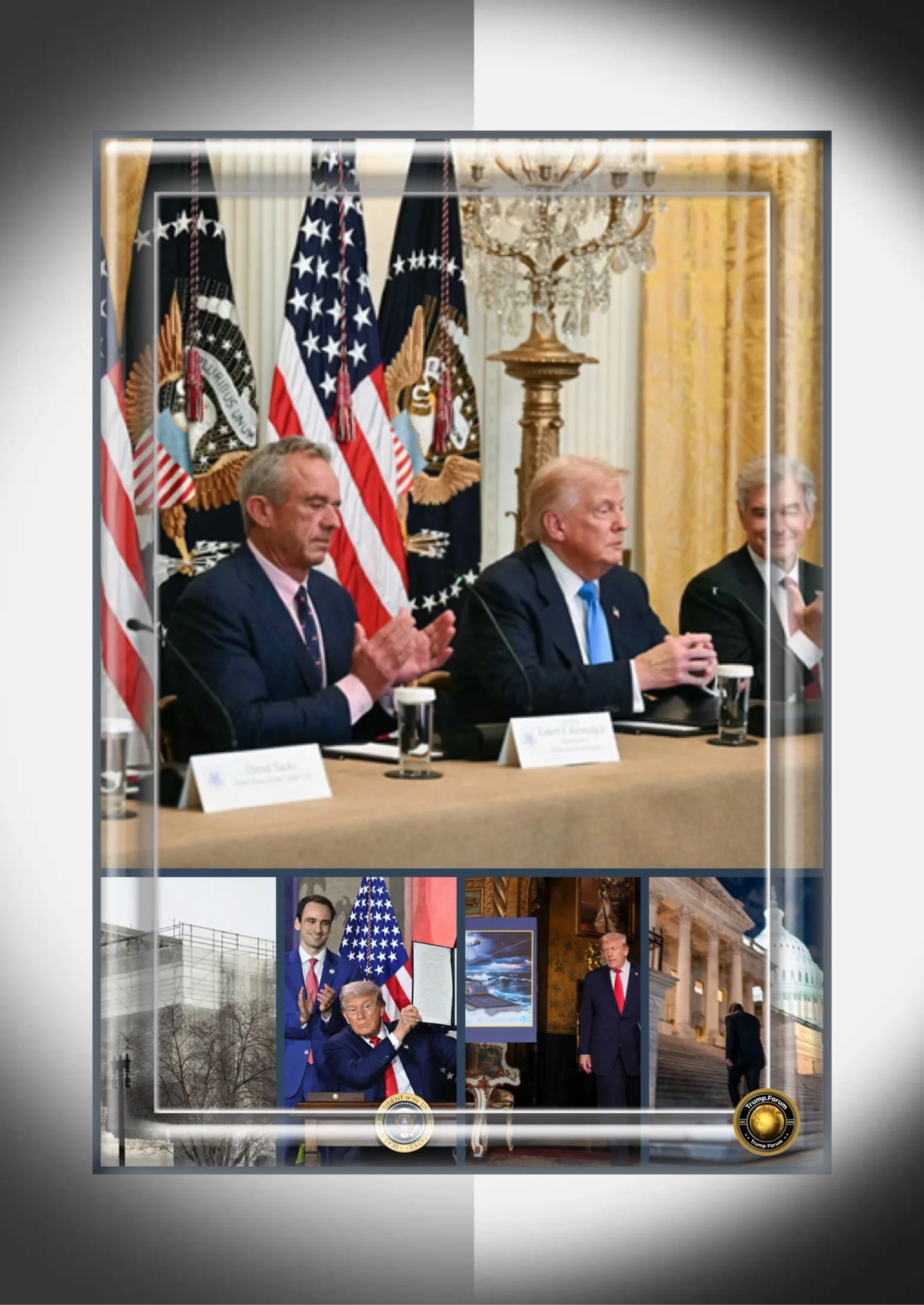
The United States’ own midterm contest is already reshaping the international environment because it is being preceded by an unusual, openly partisan round of mid-decade redistricting designed to pre-empt the historical tendency of governing parties to lose seats.
Simultaneously, Washington under President Donald Trump has demonstrated a willingness to fuse state power with electoral outcomes abroad, most conspicuously by tying extraordinary financial support to Argentina’s electoral cycle, and by using trade coercion as a political instrument in Brazil.
Across the headline races to watch—from Bangladesh’s first competitive national election in more than a decade to Brazil’s high-stakes presidential contest—politics is narrowing into legitimacy showdowns. In such showdowns, the procedural mechanics of democracy (maps, courts, electoral commissions, media rules) are as consequential as platforms and personalities.
The central analytical point is straightforward: where institutions are brittle, external shocks and foreign meddling do not merely influence outcomes; they can redefine the rules of the game, turning elections into plebiscites on the state itself.
Introduction
Why 2026 Elections Won’t Behave Like ‘Normal Politics
Elections traditionally promise orderly succession, policy correction, and a periodic release valve for social tensions. In 2026, that promise is under strain.
Many of the year’s most consequential races are unfolding in countries where the electorate is being asked to choose not only between parties, but between competing theories of legitimacy: constitutionalism versus executive primacy; pluralism versus “stability”; judicial constraint versus political immunity.
The more that elections become referendums on institutional architecture, the more tempting it becomes for incumbents and their patrons—domestic or foreign—to manipulate that architecture in advance.
The United States is central to this story in two ways. First, its midterm elections are structurally pivotal and already being shaped through redistricting manoeuvres that have triggered reciprocal escalation across states. Second, the Trump administration’s posture suggests a widening acceptance of electoral intervention as a tool of statecraft: financial leverage in Argentina and tariff-and-sanctions power directed at Brazil’s domestic legal and political disputes. That posture alters the incentives of political actors globally, particularly those who frame elections as existential contests between “sovereignty” and “liberal hegemony.”
History and Current Status: How 2026 Became a Legitimacy Year
The years following the pandemic, the inflation surge, and the geopolitical shocks of the Ukraine war reset political expectations almost everywhere. Governments that had relied on growth dividends and globalisation tailwinds instead faced a harsher electorate: anxious about prices, suspicious of elites, and less patient with institutional “process” when security and livelihoods feel threatened. Into that environment entered a second-order transformation: the mainstreaming of institutional hardball.
Electoral rules, once treated as background conditions, have become primary political terrain.
In the United States, this has manifested as a mid-decade redistricting scramble. Trump’s call for Republican-led states to redraw congressional maps has helped normalise an exceptional tactic—re-opening the cartography of representation between censuses—and it has prompted counter-moves in Democratic-led jurisdictions. Whatever the legal outcomes, the political consequence is already visible: elections are being reframed as pre-committed outcomes engineered through process, which corrodes trust and raises the stakes of defeat.
Internationally, the same logic is accelerating. Where courts are strong, leaders seek to delegitimise courts. Where parties are weak, leaders bypass parties with personalistic movements. Where electoral commissions are contested, governments reshape them. And where foreign relationships can be monetised, external actors can become not just influencers but underwriters of electoral viability, as the Argentine case has illustrated.
Key Developments: The Major Elections to Watch and Why They Matter
Bangladesh: A Vote That Must Rebuild the State, Not Merely Replace a Government
Bangladesh’s general election on February 12 is structurally unusual because it is paired with a reform referendum and takes place after profound political rupture. It is widely seen as the first true test of whether the country can restore competitive politics after a long period in which elections were viewed by many observers as increasingly non-competitive.
The significance is not simply who wins, but whether the election is accepted as authoritative across factions that now disagree on the basic terms of participation. If the vote is perceived as exclusionary or as a settlement imposed by one coalition, the “winner’s mandate” may be too weak to govern, even if it is technically valid.
Bangladesh matters geopolitically because it sits at the intersection of Indo-Pacific competition, climate vulnerability, and a highly mobile labour economy.
A credible election would stabilise diplomatic bandwidth for economic recovery and external balancing; a contested election risks pushing politics back into the street, where coercive actors traditionally gain leverage.
Hungary: A European Fault-Line Election with an External Patron in the Wings
Hungary’s parliamentary election, expected in April, is poised to shape both domestic governance and the country’s position between the EU and Russia. Prime Minister Viktor Orbán’s model—illiberal governance justified as civilisational defence—has long had admirers in parts of the American right, and Trump has openly cultivated a political relationship with Orbán.
The election therefore sits uncomfortably close to questions of foreign endorsement and international factionalism: whether Hungary remains an EU outlier that leverages veto power and cultural politics, or whether a serious challenge forces recalibration.
What makes the contest particularly consequential is the broader European context: war in Ukraine, energy insecurity, and societal polarisation over migration and identity.
An Orbán victory would be read, fairly or not, as validation of “managed democracy” inside the EU; a credible opposition breakthrough would be interpreted as a rare rollback of entrenched illiberal incumbency.
Colombia: The Left’s Succession Test in a Country Where Violence Pollutes Political Choice
Colombia’s presidential election on May 31 is a succession test because the incumbent cannot run again and the electorate will judge not a single leader, but the credibility of an ideological turn. The core issue is not merely policy; it is the state’s capacity to provide security and integrity simultaneously. In Colombia, where political violence and armed actors have historically distorted civic space, the election will measure whether democratic competition can proceed without coercion becoming an unspoken voter-suppression mechanism.
The regional implication is equally large: Colombia’s direction influences the balance of power in northern South America and sets precedents for how reformist projects survive leadership transitions.
Sweden and Morocco: Quietly High-Impact Elections That Test Governance Models
Sweden’s general election on September 13 will be watched as a barometer of European centre-right durability under the pressures of crime, migration politics, and cost-of-living constraints. While Sweden’s institutions are robust, the political challenge is whether governance coalitions can retain legitimacy without adopting the rhetorical excesses that populist challengers often impose on the agenda.
Morocco’s parliamentary elections, anticipated in September, may appear technocratic compared with more volatile contests, yet they hold a strategic question: whether incremental reform can sustain consent amid youth disaffection and socio-economic frustration.
This matters because Morocco’s stability is regionally catalytic in North Africa, and because its governance model is often presented as a pragmatic alternative to both revolutionary rupture and overt autocracy.
Russia: A Predetermined Election That Still Matters Because It Manufactures Consent for War
Russia’s parliamentary elections are expected in September. The outcome, in seat terms, is widely assumed to be controlled; yet the election remains consequential because authoritarian systems use elections not to discover public will, but to manufacture it.
That manufacturing has two strategic purposes: legitimising continued mobilisation for war and signalling regime durability to elites and external adversaries.
Even where voters cannot meaningfully change government, the regime still monitors turnout, spoilt ballots, and the “temperature” of dissent. In the Kremlin’s logic, a managed election is a periodic audit of obedience—and, when necessary, an instrument for tightening the system further.
Brazil: The Hemisphere’s Most Explosive Election—Now Entangled with U.S. Trade Coercion
Brazil’s general election on October 4 is among the year’s most globally consequential because it will decide the presidency and reshape legislative and state power across a continental-scale democracy.
President Luiz Inácio Lula da Silva has stated he will seek re-election, despite earlier signals to the contrary. The right, meanwhile, is in a volatile succession phase after the legal incapacitation of its prior standard-bearer, which intensifies incentives for polarizing mobilization and “substitute candidate” strategies.
What elevates Brazil from important to combustible is the external overlay
The Trump administration’s willingness to use trade power as political pressure tied explicitly to Brazil’s internal legal and institutional disputes. In July 2025, the White House declared a national emergency with respect to Brazil and implemented an additional tariff framed as a response to Brazil’s actions against U.S. companies and citizens, as well as what it characterised as political persecution of former president Jair Bolsonaro.
This is not routine trade friction; it is a public fusion of U.S. economic coercion with another democracy’s judicial and electoral arena. It risks hardening Brazilian political identities around sovereignty and anti-imperial rhetoric, which can strengthen whichever camp most credibly claims to resist external domination—often the very dynamic that disfigures democratic deliberation.
The danger is second-order
Once trade instruments are normalized as electoral levers, domestic actors begin campaigning not only on policy, but on promises of external retaliation or external rescue. Elections then become referendums on foreign alignment, which is precisely the terrain on which democracies are easiest to fracture.
The United States: Midterms Shaped by Map-Warfare, Not Merely Messaging
The U.S. midterm elections on November 3 will dominate headlines, but the more analytically important story is that the contest is being shaped in advance by district maps.
Trump’s push for Republican-led states to redraw congressional districts has triggered a rare mid-decade wave of gerrymandering, with states adopting new maps or pursuing enabling mechanisms to do so. The explicit objective is to alter seat arithmetic in a narrowly divided House, where a small swing can change control.
The international consequence is underappreciated. America’s capacity to conduct foreign policy depends on domestic legislative stability. If the midterms yield divided government or intensified institutional conflict, Washington’s external posture will become more transactional and less predictable. If the midterms are perceived as structurally “rigged” through maps, the legitimacy of U.S. democracy—already a strategic asset and a strategic vulnerability—will further degrade, weakening America’s ability to criticise electoral manipulation elsewhere without inviting credible accusations of hypocrisy.
Latest Facts and Concerns: What Should Worry Analysts Right Now
The most immediate concern is not that elections will be competitive; it is that elections will be disbelieved. In 2026, legitimacy deficits are likely to emerge through four pathways.
First is pre-election rule manipulation
Mid-decade redistricting in the United States is the clearest example: a procedural change justified as normal politics but experienced by the losing side as structural disenfranchisement. The core risk is escalation: once both sides believe the other will weaponise process, restraint collapses and democratic competition becomes a race to entrench.
Second is the externalisation of domestic contests.
The Argentine episode illustrates the logic: Trump-era U.S. financial intervention was publicly tied to electoral outcomes, with senior U.S. officials framing support as contingent on the political success of an allied administration. This sets a precedent that other leaders may seek to replicate, either by courting Washington’s favour or by constructing nationalist backlash against it.
Third is the conversion of trade and sanctions into electoral instruments.
The Brazil case is paradigmatic: U.S. tariffs and emergency authorities were framed explicitly in relation to Brazil’s domestic legal disputes and electoral environment. Regardless of the merits, the effect is to inject a superpower’s coercive capacity directly into another democracy’s political bloodstream, heightening polarisation and weakening the autonomy of institutions such as courts and electoral authorities.
Fourth is the normalization of impunity debates.
Where leaders face legal jeopardy—whether through corruption trials, coup-plot prosecutions, or constitutional disputes—elections become vehicles for retroactive immunity.
That pattern tends to radicalise political coalitions because defeat threatens not only loss of office but legal exposure. The incentive then becomes to delegitimise courts, discredit commissions, and portray opposition victory as a coup-by-ballot.
Cause-and-Effect Analysis: The Mechanics Driving 2026 Outcomes
The causality of 2026 can be explained through a simple chain: economic strain intensifies social grievance; grievance increases demand for decisive leadership; decisive leadership often means weakened constraints; weakened constraints invite both domestic manipulation and foreign opportunism; manipulation and foreign opportunism further erode legitimacy; eroded legitimacy increases the probability that elections trigger crisis rather than closure.
In Bangladesh, the effect is that an election meant to restore democratic normalcy must simultaneously manage the aftershocks of regime collapse and a referendum-sized question about institutional redesign. In such conditions, the vote is less a contest among parties and more a contest among futures—making losers less likely to accept defeat as temporary.
In Hungary, a long period of institutional consolidation by incumbents interacts with external ideological patronage. When global leaders publicly validate an incumbent’s model, domestic opposition can be framed as foreign-aligned or “anti-national,” while incumbents can frame rule changes as sovereign defence. That dynamic is self-reinforcing: external endorsement intensifies internal polarisation, which then justifies further illiberal steps, which then attracts more endorsement from ideological allies abroad.
In the Americas, Argentina and Brazil illustrate a sharper mechanism: external leverage can stabilise allies short-term, but it often delegitimises them politically at home. Financial lifelines and trade coercion do not arrive as neutral acts; they are interpreted through nationalist and anti-imperialist lenses, and those lenses can mobilise voters more powerfully than policy programmes. The result is a paradox: external intervention designed to secure a friendly government can increase the salience of sovereignty narratives that make governance harder for that very government.
In the United States, redistricting escalations produce a legitimacy feedback loop. If voters believe representation is pre-engineered, they shift from persuasion to mobilisation, from coalition-building to enemy-defeat, and from political loss as acceptable to political loss as intolerable. That shifts campaign tactics, media incentives, and even judicial legitimacy, because courts become arbiters of the map rather than interpreters of law.
Future Steps: What to Watch as 2026 Approaches Its Peak
The most useful forward-looking approach is to track not polling swings, but institutional stress indicators.
One indicator is procedural escalation: additional redistricting bids, legal challenges, emergency measures, and changes to election administration. In the U.S., the pace and judicial fate of state-level remapping will offer a preview of whether the midterms will be fought primarily through persuasion or through rules.
A second indicator is the “foreign leverage index”: explicit linkage between external economic actions and domestic electoral outcomes. Any repetition of the Argentina model—financial support framed as conditional on a friendly party’s success—should be treated as a strategic warning sign that elections are becoming instruments of international alignment rather than domestic accountability.
A third indicator is the politicisation of legal jeopardy. Where leaders seek pardons, immunity, or prosecutorial suppression through political power, elections become existential. Existential elections raise the probability of non-recognition, street mobilisation, and coercive tactics, because the cost of losing becomes personal as well as political.
A fourth indicator is narrative convergence around “order” versus “chaos.” When campaigns collapse into that binary, compromise becomes betrayal, and post-election governance becomes more fragile. In Brazil, sovereignty narratives amplified by external pressure are likely to push politics into precisely that binary, especially if trade coercion is perceived as an attempt to choose Brazil’s leadership.
Conclusion
The World Votes Under Pressure: What Comes After 2026
The elections of 2026 are best understood not as separate national episodes, but as a single global phenomenon: democracy operating under conditions of high distrust, high economic anxiety, and rising tolerance for instrumental interference—both domestic and foreign. In such an environment, the most consequential variable is legitimacy. Where legitimacy holds, elections correct. Where legitimacy collapses, elections detonate.
Bangladesh, Hungary, Colombia, and Brazil illustrate different versions of the same underlying question: can electoral competition be restored or sustained without turning the state itself into the prize of winner-takes-all vengeance? The United States, through its own midterm dynamics and its increasingly explicit willingness to use economic tools as political levers abroad, is not merely a spectator. It is becoming one of the structural drivers of the global electoral climate.
For policymakers, investors, and strategic analysts, the practical implication is uncompromising: treat 2026 elections less as calendar events and more as stress tests of institutional credibility. The winners will inherit not simply office, but the obligation to prove that the rules remain real.