The Turbulent Second Year: Trump Navigates Intractable Global Conflicts and Fractured Domestic Consensus
EXECUTIVE SUMMARY
The Year of Constraints
President Donald Trump enters his second year in office confronting an array of challenges that resist the transactional solutions he championed during his first year.
Unlike the policy landscape of 2025, which witnessed significant unilateral executive actions and rapid institutional restructuring, 2026 presents a more constrained environment where international stalemates, Congressional opposition, and judicial scrutiny impose formidable constraints on presidential authority.
America at the Pivot: Trump's Second Year and the Limits of Presidential Power in a Complex World
The confluence of stalled peace negotiations in Ukraine and Gaza, escalating tensions with Iran, a Supreme Court ruling pending on tariffs, midterm electoral vulnerability, and Congressional defections from the Republican coalition suggests that Trump's second-year trajectory will be substantially more contentious than his inaugural year.
These challenges force a fundamental recalibration of both foreign and domestic strategy, particularly as the administration recognizes that dealmaking prowess alone cannot resolve conflicts with deep structural underpinnings and competing stakeholder interests.
THE HISTORICAL CONTEXT AND CURRENT GEOPOLITICAL LANDSCAPE
From Confidence to Complexity
Trump's first year in office was characterized by confident assertions of executive authority and rapid implementation of campaign promises.
The administration conducted military operations in Venezuela, imposed sweeping tariffs under emergency powers, restricted immigration through executive action, and pursued an ambitious—if nascent—peace initiative in the Middle East. Yet the transition from year one to year two marks a subtle but consequential shift in the political economy of presidential power.
The same executive confidence that characterized 2025 now confronts the grinding reality of complex international conflicts where American power, however formidable, cannot unilaterally impose outcomes acceptable to all parties.
The international system in early 2026 remains characterized by great power rivalry, intra-regional conflicts, and systemic challenges to the American-led order that Trump himself has contested.
In Europe, the war in Ukraine persists with Russian forces continuing offensive operations and strikes against civilian infrastructure despite Trump's vaunted deal-making abilities.
In the Middle East, the second phase of Trump's peace plan for Gaza has launched, yet implementation challenges loom large.
In Asia, the Trump administration contemplates a new framework for managing North Korean nuclear capabilities rather than pursuing denuclearization.
And at home, the Republican Party's razor-thin Congressional majority faces growing internal divisions and external electoral pressures as midterm season approaches.
THE UKRAINE IMPASSE AND AMERICAN CREDIBILITY IN EUROPE
When Dealmaking Meets Intractable Conflict
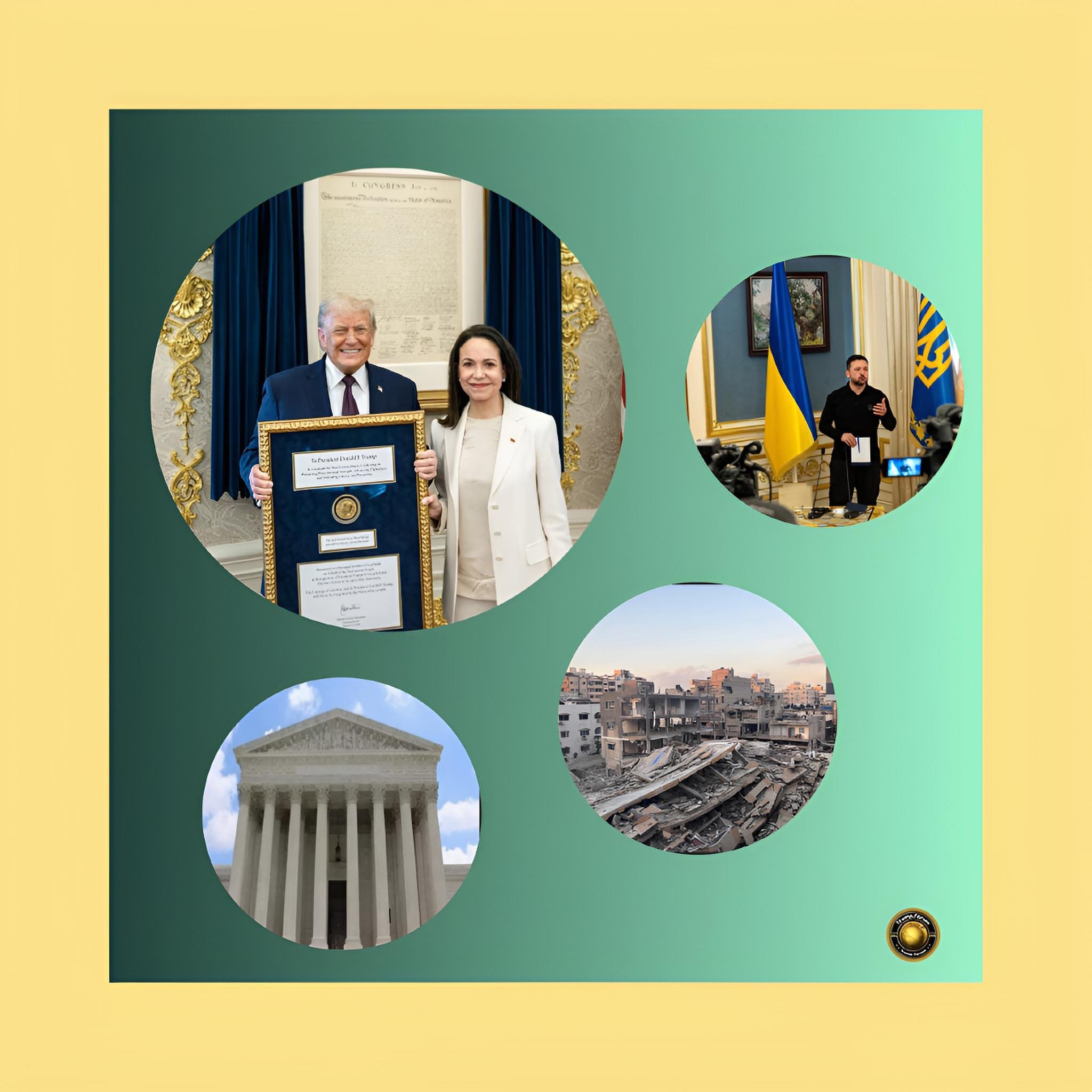
By January 2026, Trump's assertion that he would end the Russia-Ukraine war within twenty-four hours of taking office has proven substantially inaccurate. Instead, negotiations have stalled despite the imposition of new sanctions on Russia's largest oil companies and high tariffs on nations purchasing Russian crude.
The fundamental problem reflects incompatible preferences among the parties: Russia demands that Ukraine cede territory and accepts that no NATO troops provide security guarantees; Ukraine rejects territorial concessions without verifiable security arrangements; and Trump seeks a resolution that would generate positive publicity while preserving Russian friendship.
This triangular dilemma has exposed tensions within the Trump administration's approach.
While Trump has publicly blamed Ukrainian President Volodymyr Zelenskyy for obstruction, suggesting that Russian President Vladimir Putin appears more willing to negotiate, multiple sources indicate that Russian forces continue extensive military operations and attacks on civilian energy infrastructure.
Moscow agreed with Trump's characterization of Ukrainian intransigence, signaling an attempt to exploit differences between Washington and Kyiv for strategic advantage.
Nevertheless, the administration's apparent willingness to pressure Ukraine into unfavorable terms has alarmed NATO members and generated criticism from American lawmakers, who question whether the White House adequately represents European security interests.
The confidence with which Trump approached the peace initiative has given way to acknowledgment that resolution requires extended diplomatic engagement rather than rapid settlement.
The proposed twenty-eight-point peace framework remains unimplemented, and no three-way summit among Trump, Putin, and Zelenskyy has occurred.
European allies, including France and the United Kingdom, have responded by announcing intentions to deploy troops to Ukraine as part of any future settlement, suggesting that America's European partners anticipate a diminished American role in post-conflict security guarantees.
The NATO Alliance has simultaneously begun implementing new defense spending requirements, effectively signaling that European security cannot depend on the Trump administration's continued commitment to collective defense.
Second-Term Fever: Trump, Greenland, and the Breakdown of Transatlantic Order
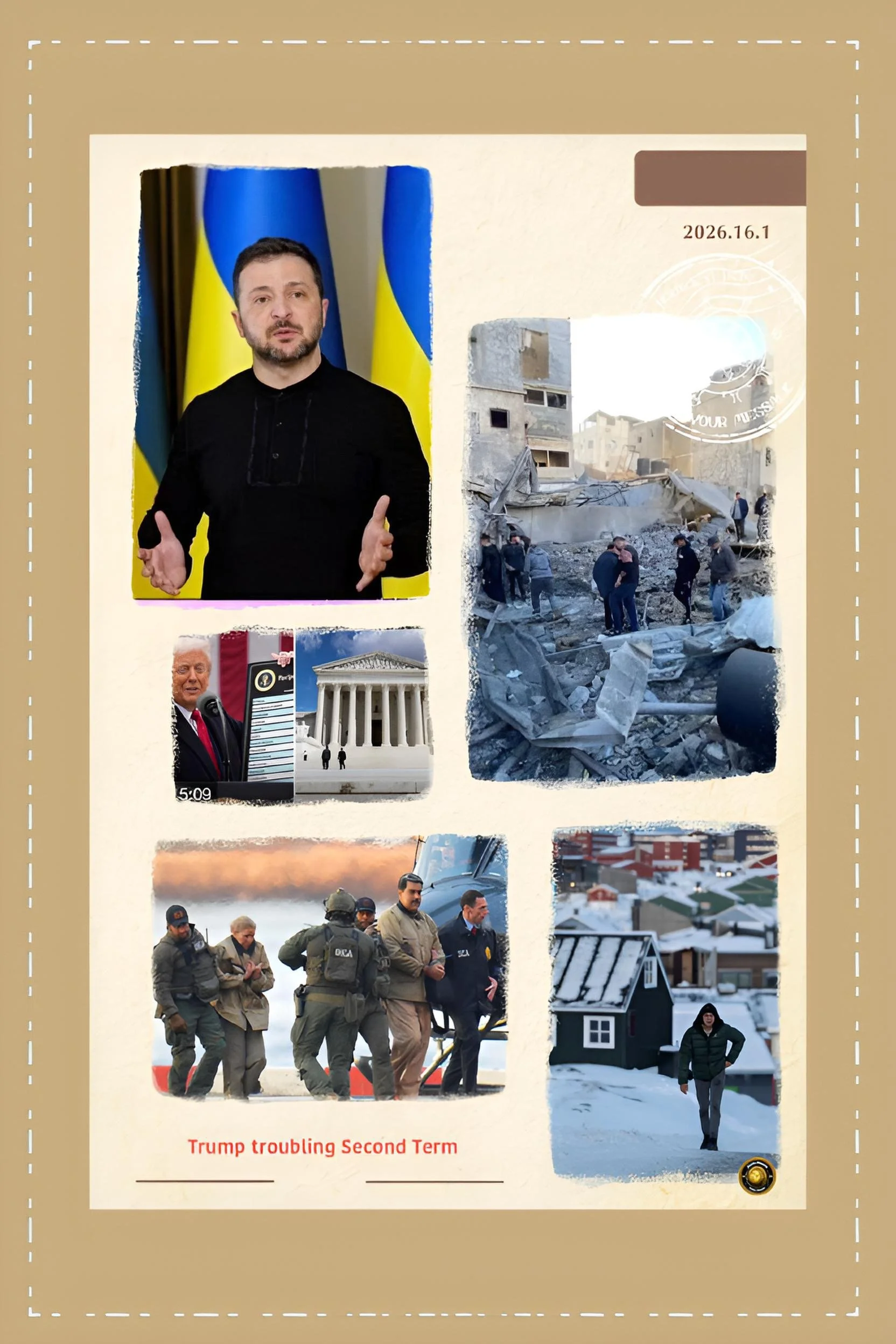
The Greenland acquisition drive represents one of Trump’s most consequential second-year challenges, exemplifying his willingness to subordinate diplomatic relationships with NATO allies for perceived strategic advantage.
Trump has repeatedly asserted that Greenland constitutes a national security imperative due to its Arctic location, rare earth mineral deposits, and strategic positioning between North America and Europe, threatening both military action and economic coercion to accomplish annexation despite consistent rejection by both Greenland’s government and Denmark.
The administration established a technical working group in January 2026 with Denmark and Greenlandic officials, yet substantive progress remains elusive as both parties maintain that Greenland is not for sale and that its political future should be determined by Greenlanders themselves, 85 percent of whom oppose American governance.
Trump’s escalating rhetoric—including consideration of tariffs on countries that oppose annexation and refusal to rule out military force—has alarmed NATO allies and generated internal Republican opposition, with bipartisan congressional delegations visiting Denmark to reassure European partners of congressional support for Danish sovereignty even as the White House signal that “anything less than U.S. control is unacceptable.”
The Greenland initiative thus compounds Trump’s second-year governing challenges by fracturing transatlantic relationships precisely when he seeks Ukrainian alignment on Russia, potentially weakening NATO cohesion at a moment when Russian military operations continue unabated and regional security concerns mount.
Denmark’s announcement of increased military presence in Greenland, coordinated with NATO allies including France, Germany, Norway, and Sweden, signals European determination to maintain Arctic security independence from American direction, a response that undermines Trump’s broader objective of enhancing American Arctic dominance and highlights the extent to which his Greenland obsession has become counterproductive to stated national security objectives.
THE MIDDLE EAST PEACE INITIATIVE AND IMPLEMENTATION CHALLENGES
Gaza's Second Phase and the Test of American Persistence
Trump launched Phase Two of his twenty-point Gaza peace plan in mid-January 2026, transitioning from ceasefire arrangements to demilitarization, technocratic governance, and reconstruction.
The announcement represented a significant diplomatic achievement, as it formalized movement beyond the initial hostage-prisoner exchange and humanitarian relief provisions that characterized Phase One. Yet the second phase immediately confronted substantial implementation obstacles that reflect the underlying complexity of post-conflict transformation.
The plan envisions the disarmament of Hamas and other Palestinian armed groups, a prospect that has proven politically fraught in previous peace initiatives.
Hamas leadership has indicated receptivity to discussions regarding its military capabilities, yet no concrete mechanisms for disarmament have been specified. The appointment of a Palestinian technocrat to lead a transitional administration and the establishment of a Board of Peace chaired by Trump represent institutional innovations, yet they lack precedent and face skepticism regarding legitimacy among Palestinian populations.
Israeli Prime Minister Benjamin Netanyahu has signaled that securing the final Israeli hostage remains his paramount objective, potentially prioritizing military operations over reconstruction initiatives if hostage recovery demands military action.
Beyond Gaza, the Trump administration's broader Middle Eastern strategy has encountered resistance regarding expansion of the Abraham Accords framework. Saudi Arabia, whose participation would significantly enhance the initiative's strategic weight, has indicated unwillingness to join absent a credible pathway toward Palestinian statehood.
The Israeli-Palestinian conflict's intractability thus constrains the administration's ability to realize its vision of comprehensive regional normalization.
Additionally, ongoing Israeli settler violence in the occupied West Bank threatens to destabilize the fragile security environment, potentially derailing peace initiatives if such violence escalates without credible Israeli government restraint.
THE IRAN CRISIS AND AMBIGUOUS AMERICAN RESPONSE
Threats Without Follow-Through
January 2026 witnessed the most serious domestic challenge to Iran's clerical regime in several years as anti-government protesters engaged state security forces over economic grievances and systemic governance failures.
Initial reports suggested thousands of fatalities, with human rights organizations documenting over two thousand confirmed deaths. Trump's response evolved from threatening military intervention—declaring "help is on the way" and warning of "very strong action"—to tacit acknowledgment that immediate military operations would not occur.
The administration's shifting rhetoric reflected recognition that military intervention carried substantial risks without clear strategic objectives or regional partner support. Regional actors, including Egypt, Saudi Arabia, and the UAE, counseled against precipitous military action, cognizant of the potential for escalatory spirals.
Simultaneously, the regime's brutal suppression of protests appeared to succeed in subduing the uprising, with demonstrations substantially diminishing by mid-January despite the authorities' brutal methods and threats of mass executions.
This episode revealed the limits of American military power to influence internal regime dynamics in states with sophisticated security apparatus and nationalist populations united against perceived foreign intervention.
Trump's threat of military assistance to internal opposition movements carries echoes of Cold War-era rhetoric, yet practical mechanisms for covert support or overt intervention remain constrained by both strategic interest calculations and the absence of capable indigenous opposition forces capable of overthrowing a regime with substantial security apparatus.
THE SUPREME COURT TARIFF RULING AND ECONOMIC UNCERTAINTY
The Thousand-Billion-Dollar Question
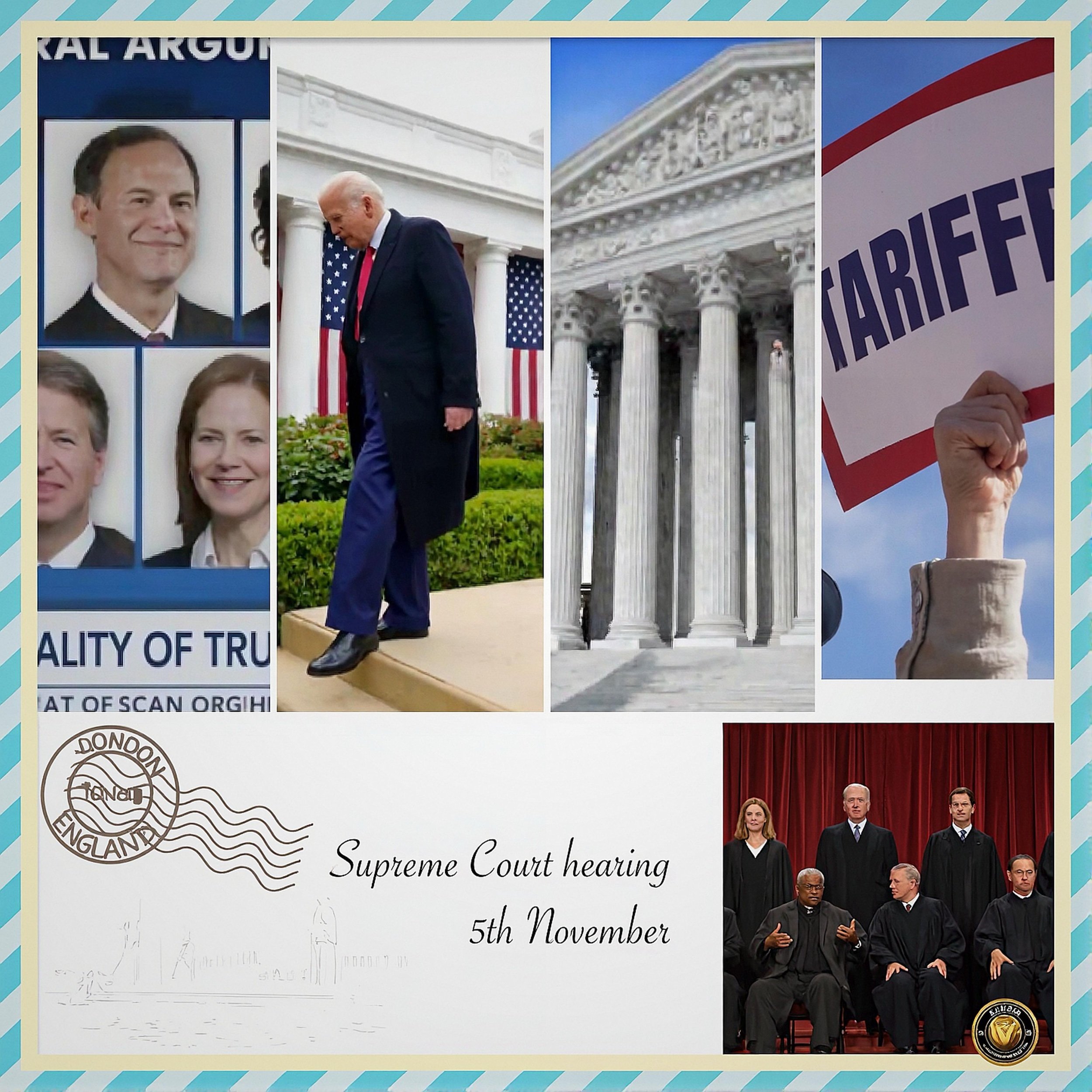
Perhaps the most consequential Supreme Court ruling pending before the American judiciary concerns the legality of Trump's tariff regime, imposed under the International Emergency Economic Powers Act.
The administration has characterized the case as among the most significant in American history, yet justices appeared skeptical of the administration's legal theories when oral arguments occurred in November 2025.
The extended delay in issuing a ruling—now exceeding seventy days since arguments—suggests substantial internal deliberation regarding the proper scope of presidential emergency powers.
If the Court invalidates the tariffs, the Trump administration faces immediate cascading consequences. Over one thousand companies have preemptively filed lawsuits seeking refunds of tariffs already collected, representing over one hundred billion dollars in potential government liability.
The administration has suggested that such refunds would constitute a budgetary catastrophe, yet legal mandates may require compensation.
Alternatively, the Court could rule that tariffs are unlawful prospectively but allow the government to retain revenues already collected, a compromise outcome that would prevent fiscal hemorrhaging while constraining future tariff authority.
The administration has devised a contingency plan: should the Court invalidate emergency-powers-based tariffs, the president intends to impose a baseline ten-percent tariff across all trading partners, relying on less controversial statutory authority.
This backup plan would preserve the tariff regime's essential contours while comporting with whatever legal constraints the Court imposes.
Nevertheless, the uncertainty surrounding tariff policy injects substantial volatility into economic forecasting and international trade calculations, potentially dampening investment and complicating the administration's affordability agenda.
THE ELECTORAL MATHEMATICS AND CONGRESSIONAL FRACTURING
When the Party Speaks with Multiple Voices
Trump confronts an uncomfortable historical reality: second-term midterm elections typically witness losses for the party controlling the presidency.
This pattern has repeated across numerous administrations, reflecting a complex mix of voter fatigue, off-year electorate dynamics, and regressing coalition effects.
With Republicans controlling the House by only a narrow margin and facing uncertain Senate prospects, the stakes of the 2026 midterms extend beyond typical electoral competition to encompass control of the legislative apparatus.
The administration's legislative record in 2025, while substantial, has encountered increasing Congressional opposition as 2026 unfolds.
On spending matters, Congress has rejected numerous Trump proposals for eliminating agencies and programs, instead enacting bipartisan appropriations legislation that continues funding for Voice of America, the National Endowment for the Arts, and international aid initiatives that the administration sought to terminate.
On health care, seventeen House Republicans defected to support Democratic legislation extending healthcare subsidies, signaling that constituents' economic concerns transcend partisan loyalty.
On foreign policy, Republicans have expressed skepticism regarding military operations in Venezuela and the administration's diplomatic approach toward Greenland.
The Republican Conference itself exhibits deepening divisions. The House Freedom Caucus has pressured leadership to pursue aggressive legislative action on election reform, firearms reciprocity, and federal judiciary impeachments.
Moderate Republicans, by contrast, emphasize affordability legislation that addresses constituent concerns regarding healthcare costs, housing, and consumer prices.
The administration's inability to bridge these intra-party divisions suggests that the second half of 2026 will witness intensified legislative conflict rather than coherent Republican agenda implementation.
SPECIFIC POLICY CHALLENGES AND THEIR INTERCONNECTIONS
The Interconnected Web of Second-Year Governance
The challenge landscape facing Trump in 2026 reflects not discrete problems amenable to isolated solutions but rather interconnected policy domains where decisions in one area generate consequences in others.
The tariff regime, for instance, directly influences inflation trajectories and consumer purchasing power, metrics central to the administration's affordability agenda. Congressional opposition to spending reductions constrains the administration's budgetary flexibility, potentially forcing choices between defense investments, immigration enforcement funding, and domestic programs.
The midterm electoral environment conditions Congressional willingness to support controversial initiatives, particularly when such initiatives generate negative publicity in swing districts.
Immigration policy exemplifies this interconnectedness.
The administration suspended immigrant visa processing from seventy-five countries, citing public charge concerns.
Yet this restriction directly conflicts with administration interests regarding the World Cup hosting in summer 2026. International fans from designated countries will face processing delays and uncertainty regarding entry, potentially depressing attendance and generating negative publicity in host communities.
The logistical and public relations challenges of managing a major international sporting event while simultaneously implementing harsh immigration restrictions impose operational constraints that the administration had not fully anticipated.
FUTURE TRAJECTORIES AND STRATEGIC IMPLICATIONS
Reading the Tea Leaves of 2026
Trump's second year appears poised for confrontation with structural constraints that first-year executive confidence did not adequately anticipate.
The Ukraine peace initiative will likely persist in stalemate absent significant shifts in Russian or Ukrainian preferences regarding acceptable settlement terms.
The Middle East peace framework will struggle with implementation challenges regarding Palestinian governance and Hamas disarmament.
The Iran situation will remain fraught with uncertainty regarding both regime stability and American intervention preferences.
The Supreme Court tariff ruling will inject economic volatility and may necessitate substantial administrative policy adjustments.
Domestically, the narrow Congressional majority will likely constrain the administration's legislative ambitions, particularly as the midterm campaign season intensifies.
The electoral environment will impose political constraints on controversial initiatives, and the historical pattern of second-term midterm losses suggests growing vulnerability for Republicans.
The affordability agenda, while rhetorically prominent, faces headwinds from tariff-induced inflation, congressional resistance to aggressive fiscal retrenchment, and the compounded effects of prior-year inflation on household budgets.
CONCLUSION
The Challenge of Governing Without Consensus
Trump's second year stands as a fundamental departure from the triumphalism and rapid change that characterized his first year.
The international system exhibits greater resistance to American unilateral action than first-year experiences suggested. Congress exhibits growing willingness to constrain executive prerogatives, particularly in spending and military matters.
The Supreme Court looms as a substantial check on tariff authority. And the electoral calendar imposes growing constraints on political risk-taking and controversial initiatives.
The administration's challenge in 2026 thus encompasses not the implementation of transformative policies but rather the navigation of constraints, negotiation with skeptical international partners, and adaptation to an environment substantially less permissive than the early months of the second term suggested.
Whether Trump's dealmaking approach can generate breakthrough outcomes despite these structural constraints remains an open question with profound implications for both American foreign policy and the domestic political trajectory of the remainder of his presidency.