Convergence at the Frontier: How Energy, Governance, and Distributed Computing Will Shape the Future of Artificial Intelligence
Executive Summary
Artificial intelligence has transitioned from an experimental technology into a critical infrastructure challenge that exposes fundamental constraints in the contemporary energy paradigm.
By 2028, AI systems are projected to consume 165-326 terawatt-hours annually, yet the traditional centralized data center model cannot sustainably accommodate this demand.
Simultaneously, the absence of international governance frameworks for increasingly autonomous AI systems presents risks that existing regulatory models have proven inadequate to manage.
FAF examination synthesizes evidence from three converging domains: novel energy infrastructure solutions, the emergence of alternative AI architectures, and responsible governance frameworks.
The evidence suggests that future AI capability and safety will be determined not by raw computational power but by the integration of distributed energy-computing systems, neuromorphic and edge-based alternatives to large language models, and enforceable governance mechanisms comparable to those in nuclear or aviation sectors.
The stakes are consequential for both technological leadership and the trajectory of human-AI relationship development.
Introduction
The acceleration of artificial intelligence capabilities has created an unprecedented paradox. Modern large language models and agentic systems deliver genuine value across sectors ranging from healthcare to scientific discovery, yet their operational demands have begun to stress the electrical infrastructure of developed economies.
A single AI-optimized hyperscaler facility consumes as much electricity annually as approximately 100,000 households.
The largest facilities under construction are expected to consume twenty times this amount. This energy intensity is not incidental to AI development but foundational to its architecture.
The transformer-based models powering contemporary systems require massive computational parallelism, and the infrastructure to support them—cooling systems, power distribution, network equipment—compounds energy requirements further. Simultaneously, the governance deficit has become inescapable.
Agentic AI systems that take autonomous action in the world now operate within regulatory frameworks designed for passive tools.
The failure modes of such systems are not yet fully understood, yet deployment velocities have accelerated beyond institutional capacity to establish protective guardrails.
This article examines the dual crisis: how to power AI sustainably and how to govern it responsibly.
The synthesis of evidence across these domains reveals not a binary choice between growth and constraint, but rather a structured pathway toward integration of energy sovereignty, distributed computation, and human-centered governance.
Historical Context: The Energy-Infrastructure Imperative
The relationship between computation and energy has remained largely invisible to end-users through decades of Moore's Law and distributed cloud architectures.
Data center energy consumption in the United States has grown from negligible levels in the 1990s to approximately 4.4% of total national electricity use as of 2024.
For most of this period, energy efficiency improvements and geographic distribution across regions with cheaper power masked the underlying trajectory.
However, the rise of AI has fundamentally altered this calculus. Training and inference of large language models requires not incremental increases but order-of-magnitude shifts in computational intensity. A single training run for a model like GPT-3 consumed approximately 1,287 megawatt-hours and generated about 552 tons of carbon dioxide equivalent emissions.
These figures have been superseded by larger models. Meanwhile, regional concentration of data center capacity has begun to threaten grid stability and create political vulnerabilities around energy security.
Ireland provides an illustrative case. Data centers currently consume approximately 21 % of the nation's electricity, with projections suggesting 32 % by 2026.
This concentration creates explicit dependency risk: a single major failure or regulatory intervention could disrupt national digital infrastructure.
The United States faces similar regional vulnerabilities in Virginia and parts of the Pacific Northwest.
Historical precedent for infrastructure transitions offers limited guidance. Electrification in the early twentieth century created analogous challenges, but the pace of change was substantially slower.
The electricity grid itself took decades to achieve nationwide penetration.
By contrast, AI deployment is advancing in years, not decades.
This temporal asymmetry between technology deployment velocity and infrastructure development capacity has forced policymakers and industry to seek unconventional solutions simultaneously rather than sequentially.
Current Status: Three Emerging Solution Pathways
The contemporary response to the energy-AI nexus has bifurcated into three distinct but potentially complementary pathways: extraterrestrial data infrastructure, submarine deployment with passive cooling, and fundamental reimagining of the AI architecture itself.
First Pathway
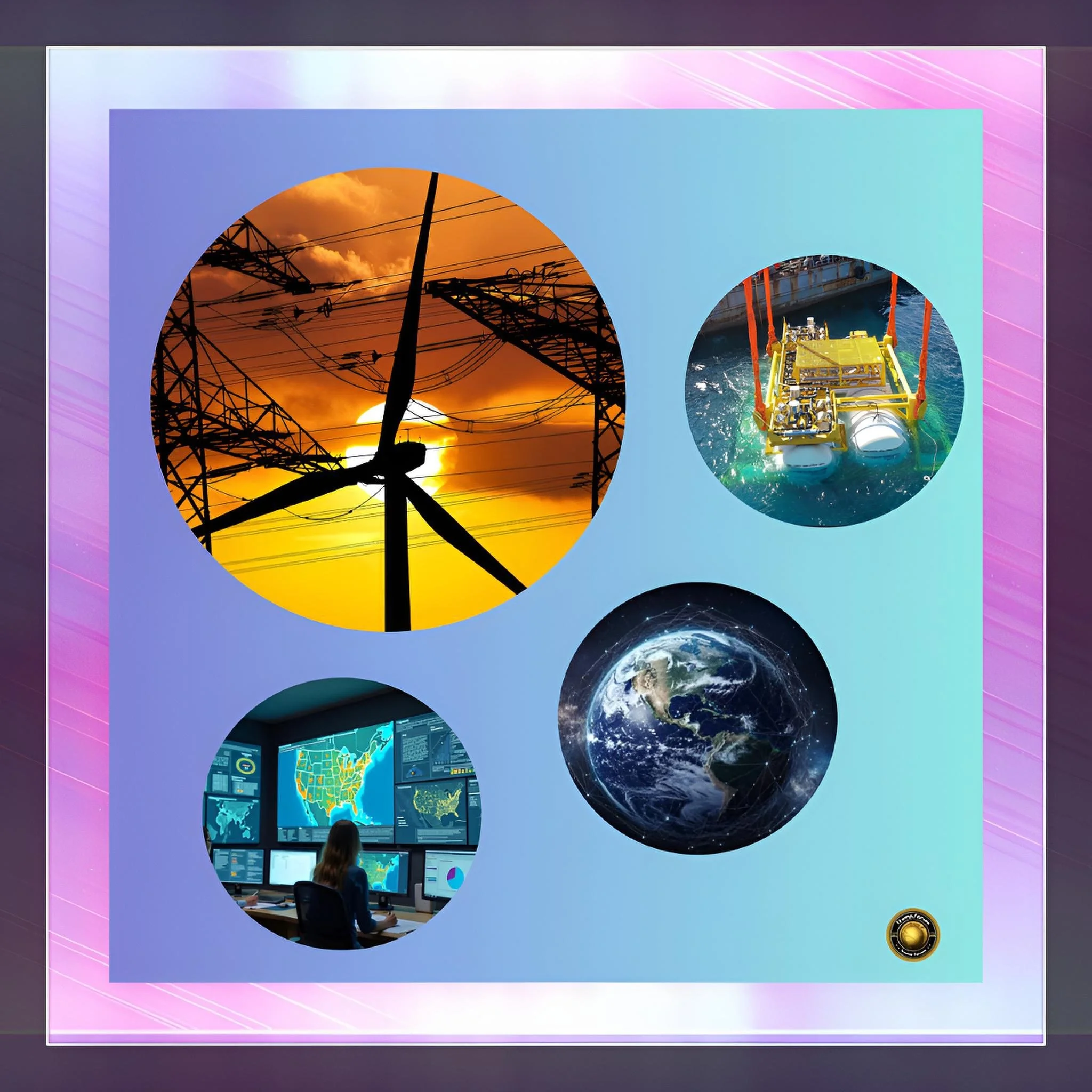
The first pathway—space-based solar data centers—has transitioned from speculative to demonstrable. In December 2025, Starcloud, a venture backed by Nvidia and graduated through the Google Cloud AI Accelerator, successfully trained an artificial intelligence model aboard an orbital satellite.
This validation is significant not for the immediate scale of deployment but for the proof that computational systems can function reliably in the space environment. Google has announced Project Suncatcher, which envisions constellations of solar-powered satellites equipped with Google TPUs and interconnected via free-space optical links.
The physics underlying this approach is straightforward. Solar panels in a sun-synchronous dawn-dusk orbit receive continuous illumination with no atmospheric attenuation, achieving capacity factors exceeding 95 % compared to median terrestrial solar installations at approximately twenty-four percent.
A solar array in space can generate over five times the energy of the same array on Earth. The waste heat from computational systems can be dissipated through passive radiative cooling into the deep vacuum of space, eliminating the energy-intensive chillers required in terrestrial facilities.
Starcloud has estimated orbital energy costs at approximately $0.005 per kilowatt-hour, representing a fifteen-fold reduction compared to contemporary wholesale electricity pricing.
A five-gigawatt compute cluster in orbit would generate more energy than the largest power plants in the United States, yet occupy a physical footprint substantially smaller than equivalent terrestrial solar installations.
However, significant engineering and regulatory challenges remain unresolved. Radiation shielding for sensitive components, space debris mitigation, inter-satellite latency optimization, and the eventual deorbiting and disposal of massive infrastructure create problems without precedent.
The commercial and military strategic implications have not been adequately addressed through governance frameworks.
Second Pathway
The second pathway employs submarine and underwater deployment to leverage passive cooling from seawater. This approach has achieved commercial operation in China.
The Shanghai Hailanyun facility, completed in 2024 at a cost of approximately $226 million, is powered entirely by offshore wind generation at twenty-four megawatts capacity and uses natural seawater circulation for cooling.
The facility achieves a 30% reduction in electricity consumption compared to land-based data centers, with cooling energy consumption dropping from forty to sixty percent of total usage to below ten percent.
Microsoft's Project Natick, which operated an undersea data center off the Scottish coast from 2015 to 2017, established the foundational proof of concept. Hailanyun has compressed the commercial timeline dramatically, moving from proof of concept in 2022 to full-scale operation in under 30 months. The advantages beyond cooling are significant.
Undersea facilities face no land constraints, require no fresh water for cooling, and can be positioned proximate to coastal population centers, enabling lower-latency edge computing. The environmental and operational risks, however, are non-trivial.
Marine ecosystems remain incompletely understood, and the thermal impact of large-scale seawater circulation on local aquatic biodiversity has generated scientific concern.
Acoustic vulnerabilities present security threats, with research indicating that certain underwater speaker systems can damage submerged infrastructure. Permitting and regulatory oversight remain under development.
Third Pathway
The third pathway represents the most fundamental reimagining. Rather than optimizing energy supply to conventional AI architectures, this approach restructures AI itself toward inherent efficiency.
Neuromorphic computing, inspired by the architecture of the human brain, integrates memory and processing functions in close physical proximity, eliminating the energy cost of data movement between separate memory and computational units that characterizes traditional von Neumann architecture.
The human brain, despite operating at approximately twenty watts, performs pattern recognition and learning tasks that would require megawatts of conventional computational resources.
A neuromorphic chip developed at the Technical University of Munich, designated AI Pro, requires only 24 microjoules for specific tasks, representing a tenfold reduction compared to competing systems.
Beyond hardware innovation, architectural alternatives to large language models have proven viable for substantial task categories.
Nvidia research has demonstrated that small language models, operating at billions rather than hundreds of billions of parameters, outperform large models for the narrow, repetitive subtasks comprising most agentic workflows.
This research indicates that a hybrid architecture, in which small specialized models handle routine classification, extraction, and structured output tasks while reserving large models for genuinely complex reasoning, can reduce infrastructure costs by 10-30 times while improving operational characteristics such as latency, maintainability, and deployment flexibility.
Edge computing and fog computing architectures distribute computation to the periphery of networks, processing data at the source rather than transmitting raw data to centralized facilities.
This approach reduces bandwidth consumption, improves latency, enhances privacy, and creates opportunities for AI functionality on battery-powered devices.
Together, these architectural innovations suggest that the dominant future AI paradigm will not be monolithic cloud-dependent systems but rather distributed, heterogeneous systems combining centralized reasoning resources with specialized edge inference.
Model quantization techniques, developed by Nvidia and others, enable reduction of model precision from 32 or 64 bit floating-point representations to eight, four, or even lower-bit formats with minimal accuracy degradation.
Nvidia's NVFP4 format enables 50-fold energy efficiency improvements in token generation for certain model architectures while preserving near-original accuracy.
These techniques have the effect of making contemporary AI models dramatically more portable and energy-efficient, enabling deployment scenarios previously considered infeasible.
The Governance Deficit and Responsible AI Frameworks
While solutions to the energy constraint are proliferating, the governance challenge has received substantially less systematic attention despite arguably greater consequential risk.
Agentic AI systems—autonomous agents that perceive environments, decide actions, and interact with digital and physical systems with minimal human intervention—operate within governance frameworks designed for passive advisory systems. An agentic system managing customer interactions, financial decisions, or security operations no longer simply provides recommendations; it executes actions.
This transition fundamentally alters the nature of risk. Risks that were static and fixed at the point of deployment now become continuous and evolving. Control shifts from prescribing specific steps to defining objectives and guardrails while the system determines execution methods.
Accountability relationships become blurred. An organization deploying an agentic system remains legally and reputationally responsible for the system's outcomes, even when the organization's humans have not directly approved every action. This creates a novel accountability gap.
A 2025 Accenture study predicts that by 2030, AI agents will be the primary users of most enterprises' internal digital systems. Gartner forecasts that by 2027, over 40% of agentic AI projects will be canceled due to governance and controllability failures. The governance gap is not a minor implementation challenge but a structural deficit that threatens to undermine the entire agentic AI investment class.
Current governance responses have taken multiple forms.
The European Union's Artificial Intelligence Act, entering into effect in phases beginning February 2025, implements a risk-based regulatory framework that prohibits AI systems posing unacceptable risks, establishes transparency and accountability requirements for high-risk systems, and mandates conformity assessments and human oversight mechanisms.
The timeline for full implementation extends to August 2026, at which point obligations for high-risk AI systems become fully enforceable.
Texas, the United States' largest technology hub, enacted the Responsible AI Governance Act in June 2025, effective January 2026, which prohibits AI systems developed or deployed for behavioral manipulation, discrimination, and unauthorized deepfakes, and establishes a regulatory sandbox for experimentation.
The United States federal government, through Office of Management and Budget directives M-24-10 and M-24-18, has required federal contractors to provide AI inventories, independent red team assessments, incident notification protocols, and performance dashboards for fairness and robustness.
These frameworks, however, represent initial steps in a substantially incomplete governance ecosystem. The approaches remain primarily national rather than international, creating regulatory arbitrage opportunities and inconsistent standards.
They focus on post-hoc oversight and accountability rather than building safety and controllability into system design itself. They lack the institutional infrastructure—specialized agencies, technical expertise, international coordination mechanisms—that characterizes nuclear or aviation safety regulation.
The International Atomic Energy Agency provides the model most frequently referenced for AI governance. The IAEA establishes binding international standards for nuclear safety and security, operates inspection regimes, coordinates peer review among national regulators, and maintains continuous surveillance of compliance.
An analogous framework for AI might establish international standards for autonomous system design, require third-party audits and certifications before deployment of high-stakes agentic systems, create mechanisms for coordinated incident response and information sharing, and develop common protocols for evaluating alignment and corrigibility of increasingly capable systems.
The UK Office for Nuclear Regulation has recently collaborated with nuclear regulators from the United States and Canada to develop position papers on principles for regulating AI in nuclear contexts. This represents a nascent step toward international coordination, but infrastructure for enforcing such standards remains absent.
Responsible AI governance also encompasses what the Responsible AI Impact Report terms the "human controllability" dimension.
As AI systems become more capable and autonomous, understanding which trajectories remain human-controllable and which risk escaping human oversight becomes essential.
The alignment problem—ensuring that AI systems reliably pursue intended objectives and values—is not purely a question of training or parameter tuning. Research using the Beingness-Cognition-Intelligence (B-C-I) framework demonstrates that alignment risks vary conditional on system architecture, not merely on capability scale.
A system with sufficient persistence to maintain objectives over time, sufficient cognition for strategic planning, and sufficient intelligence to execute complex strategies but lacking robust deference mechanisms faces deceptive alignment risks.
By contrast, a highly capable but non-persistent system might hallucinate confidently without developing concerning goal drift.
The implication is that some alignment properties must be built into system structure before deployment rather than managed solely through training procedures or oversight mechanisms.
Cause-and-Effect Analysis: Energy Scarcity as Driver of Governance Innovation
The relationship between energy constraints and governance frameworks is not incidental but causal. Energy scarcity compels technological and organizational changes that simultaneously create governance challenges and opportunities.
Constraint-driven technical innovation accelerates. When energy supply cannot match demand growth, engineers must innovate toward efficiency.
The space-based solar data center concept would likely remain speculative were energy costs not becoming prohibitive in terrestrial locations. Similarly, neuromorphic computing receives accelerating investment precisely because traditional architectures have reached practical energy limits.
This phenomenon has historical precedent. The oil crises of the 1970s catalyzed efficiency innovations across transportation and industrial sectors. Energy scarcity makes previously marginal innovations economically viable.
Strategic partnerships between energy and technology firms align incentives for integrated solutions. NextEra Energy and Google Cloud have announced partnerships to jointly develop multiple gigawatt-scale data center campuses with accompanying generation and capacity.
This model differs fundamentally from the historical arrangement in which cloud providers selected locations based on available cheap power and negotiated contracts with established utilities.
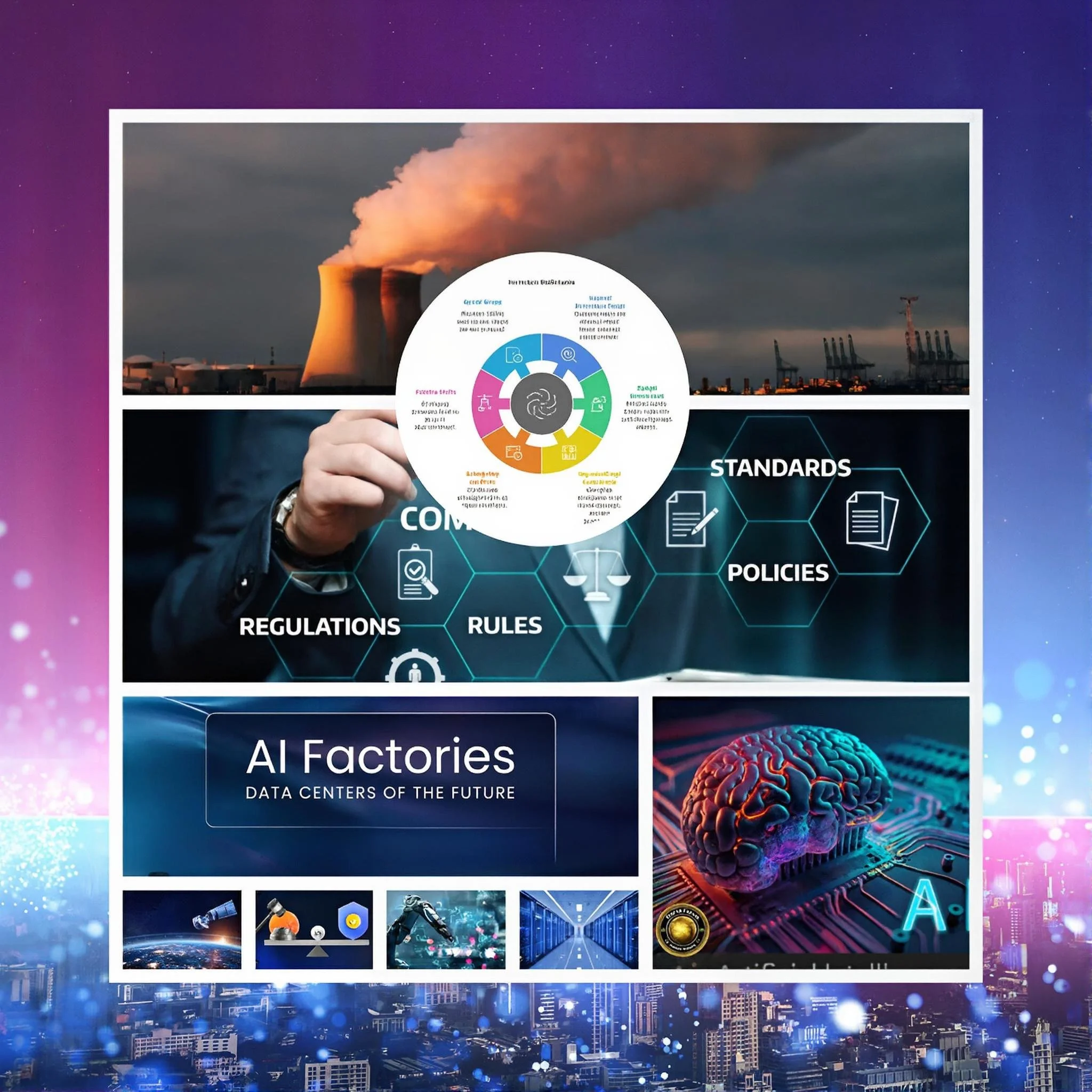
The new model integrates energy generation, grid management, and computation into unified systems optimized for mutual benefit. Brookfield and Bloom Energy have announced a five-billion-dollar strategic partnership to build "AI factories" designed specifically to meet compute and power demands in coordinated fashion.
These partnerships create incentives for long-term thinking about grid stability, renewable integration, and infrastructure resilience that short-term commercial arrangements would not.
Energy localization drives data sovereignty and regulatory autonomy. As data centers become embedded within regional energy systems and geographically distributed, the historical concentration of computational capacity in a small number of locations diminishes.
This geographic distribution has governance implications. Governments gain leverage to enforce national regulations when infrastructure is physically present within their jurisdictions and dependent on local power systems.
This creates opportunities for what McKinsey terms "sovereign AI"—computational capacity under domestic control and governance.
However, it also creates fragmentation risk. If every nation develops independent AI infrastructure and regulatory frameworks, interoperability challenges and duplicative development costs proliferate.
Industrial and societal transitions require workforce adaptation and institutional innovation. The Industrial Revolution displaced craftspeople but created new occupational categories. However, this transition unfolded over decades and generated substantial social disruption.
Contemporary AI transitions have the potential to unfold more rapidly, creating comparable displacement with compressed timescales.
McKinsey research indicates that approximately fifty percent of current work activities could technically be automated, but fewer than five percent of occupations are entirely automatable.
The crucial insight is that transformation rather than replacement will characterize most labor market outcomes.
This transformation requires institutional innovation—education systems developing new curricula, labor market policies managing transitions, organizations rebuilding roles around human-AI complementarity rather than competition. The absence of such institutional infrastructure amplifies governance risks.
The Energy-Governance-Architecture Triangle
A rigorous examination of the evidence suggests that three variables—energy infrastructure, governance frameworks, and AI system architecture—interact in systematic ways that determine both AI capability and risk.
Energy infrastructure solutions constrain the possible architectures for AI systems. Centralized, server-farm-dependent models remain viable for locations with abundant cheap power but become economically marginal as energy costs rise.
Distributed edge and fog computing become increasingly attractive as power becomes scarce. Neuromorphic and small-model architectures optimize for environments with distributed, limited power.
Space-based computation becomes viable at scale only when terrestrial power becomes uncompetitive. The energy constraint therefore drives architecture choices toward distributed, efficient, specialized systems rather than monolithic, high-power, general-purpose systems.
Governance frameworks must align with the actual deployment architectures of AI systems. Regulatory approaches designed for centralized, controlled, well-understood systems become problematic when applied to distributed, autonomous, emergent systems.
The EU AI Act's conformity assessment and risk management requirements assume systems with clear boundaries, defined purposes, and human oversight points. Agentic systems distributed across thousands of devices with genuine autonomy and evolving objectives may not fit this framework coherently.
Effective governance of edge-deployed, specialized models requires different assurance mechanisms than governance of centralized large models. The implication is that governance frameworks must evolve as system architectures change.
Responsible AI practices become economically viable under energy constraint. Organizations operating in energy-scarce environments gain incentives to optimize computation toward precision and relevance rather than brute-force parallelism.
This economic pressure creates alignment with responsible AI principles: only computing what is necessary, understanding what the computation is doing, maintaining human oversight of consequential decisions.
Conversely, in environments of energy abundance, brute-force approaches that compute broadly and filter results through post-hoc oversight remain economically rational despite governance deficits.
The Workforce Transition and Organizational Learning
Historical analysis of the Industrial Revolution provides both sobering warnings and grounds for qualified optimism regarding AI workforce transitions.
The technological transformation was genuine and disruptive. Approximately eighty percent of the American workforce was employed in agriculture in 1800; by 1900, this figure had fallen to forty percent, and by 2000, to less than 2%.
This represented millions of displaced workers. However, the period also witnessed the emergence of entirely new occupational categories: industrial engineers, factory managers, machine operators, maintenance specialists, and eventually electricians, telephone operators, software developers, and countless other roles that could not have been imagined in a pre-industrial context.
The parallel to contemporary AI is imperfect but instructive. AI will genuinely displace workers in categories such as data entry, basic customer service, and routine analysis.
However, it will simultaneously create demand for workers in AI training and fine-tuning, model evaluation and red-teaming, AI system operation and maintenance, and the integration of AI capabilities into human workflows.
The World Economic Forum estimates that AI will displace 92 million jobs but create one hundred seventy million new roles by 2030.
The temporal and geographic mismatch between displacement and creation represents the genuine challenge, not the overall labor market outcome.
Organizations that successfully navigate this transition will be those that adopt what Salesforce terms a "culture of innovation" around AI. Rather than treating AI as a threat to be managed or a tool to be imposed, high-performing organizations view AI as an enabler and create structured environments for experimentation, learning, and gradual capability building.
This cultural shift requires leadership commitment, sustained investment in training, and explicit organizational structures that prioritize the complementarity of human and artificial intelligence over either automation or humanocentric resistance.
Future Trajectories and Critical Uncertainties
The convergence of energy constraints, governance frameworks, and architectural innovation will likely produce an AI landscape substantially different from both utopian and dystopian conventional predictions.
Energy availability will remain the binding constraint on AI deployment for at least the remainder of this decade. Space-based solar data centers will likely achieve operational capability by 2028-2030, but deployment at true scale requires solutions to orbital debris management, inter-satellite communication networks, power transmission to ground receivers, and regulatory frameworks governing orbital infrastructure.
This suggests a timeline of 5-10 years before space-based capacity becomes material at a global scale.
Submarine data centers face fewer engineering obstacles but confront environmental and political-ecological challenges that remain incompletely understood.
Edge and neuromorphic computing will experience accelerating deployment but cannot immediately substitute for the high-intensity computation required for model training and certain inference workloads.
Governance frameworks will likely stabilize around a hybrid international-national structure comparable to aviation or pharmaceuticals. International standards bodies will establish binding requirements for high-stakes agentic systems, but enforcement and detailed regulation will remain at national and regional levels.
This creates governance pluralism—different jurisdictions implementing international standards through different national mechanisms.
The European Union is likely to remain the most stringent regulator, as the precedent of GDPR suggests.
The United States will develop a more fragmented approach, with federal procurement requirements driving adoption and state-level experimentation producing regulatory innovation.
China will pursue centralized governance aligned with strategic technological autonomy. Most developing nations will adopt frameworks with limited enforcement capacity while prioritizing technology access over regulatory stringency.
The most consequential uncertainty involves whether future AI systems will remain meaningfully controllable.
Research on AI alignment suggests this is not purely a question of scale but of system architecture and training procedures.
Neuromorphic and small-model approaches may prove more aligned and controllable than monolithic large models, but this remains an empirical question open to research.
The organizational commitment to interpretability, red-teaming, and continuous monitoring described in the Responsible AI Impact Report is necessary but may prove insufficient for systems of sufficient capability and autonomy.
Conclusion
The convergence of energy scarcity, governance deficit, and architectural innovation is reshaping the trajectory of AI development in ways that challenge conventional assumptions about the future.
Energy is not an incidental input to AI systems but a fundamental constraint that structures both what is possible and what is economically rational.
Governance frameworks designed for passive tools have become inadequate for autonomous agents, and the institutional infrastructure for managing this transition has not yet been constructed.
AI system architectures are beginning to shift from monolithic, power-intensive, general-purpose models toward distributed, efficient, specialized systems that align better with constrained energy environments and governance frameworks built around human oversight.
The strategic implications are substantial. Nations and organizations that succeed in integrating energy sovereignty, distributed computation, and robust governance will gain competitive advantage in the AI era.
Those that attempt to maintain energy-intensive centralized systems in a resource-constrained world or deploy autonomous systems without effective governance will face both economic and security vulnerabilities.
The human stakes are also significant. If workforce transitions are managed through deliberate institutional innovation and commitment to human-AI complementarity, AI can augment human capability and create new forms of valuable work. If transitions are managed through technological determinism and acceptance of widespread displacement, social disruption risks materialize.
The evidence suggests that the future of AI will not be determined solely by algorithmic breakthroughs or raw computational resources, but rather by the integration of sustainable energy infrastructure, distributed and neuromorphic computing architectures, and governance frameworks that preserve human agency while enabling technological capability.
This integration is technically feasible but organizationally and politically challenging. The outcomes remain contingent on choices yet to be made by governments, organizations, and individuals.