Trump’s Prime-Time Address to the Nation: Economic Promises Amid Persistent Fiscal Skepticism
Executive Summary
Trump Gambles on Economic Boom Despite Warning Signs of Market Turbulence
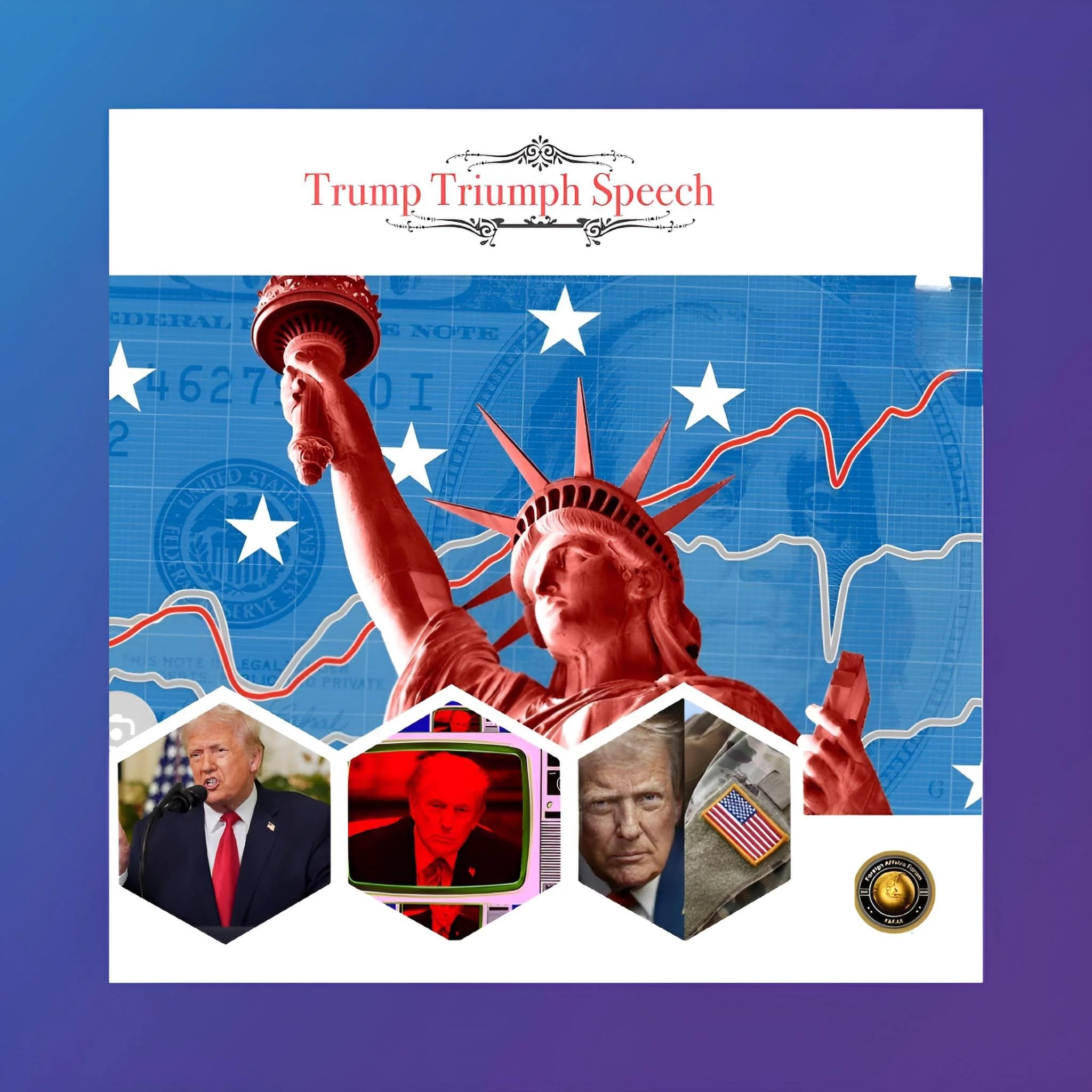
On Wednesday evening, December 17, 2025, President Donald Trump delivered a nineteen-minute televised address from the White House Diplomatic Reception Room, focusing primarily on reassessing his first year in office whilst projecting ambitious economic expectations for 2026.
The speech maintained characteristic rhetorical patterns, emphasizing purported accomplishments whilst attributing national challenges—particularly inflation and immigration—to his predecessor’s administrative tenure.
Trump Touts Economic Boom While 45% of Americans Worry About Prices
Trump articulated predictions of an impending “economic boom the likes of which the world has never seen,” announced non-binding pharmaceutical agreements to moderate drug pricing, pledged the appointment of a Federal Reserve chair supportive of aggressive interest rate reductions, and presented controversial claims regarding declining cost pressures.
However, contemporaneous polling data and macroeconomic indicators reveal substantial disconnects between presidential assertions and public perception, with only thirty-six percent of Americans approving of his economic management whilst forty-five percent identify escalating living costs as their predominant economic concern.
The address thus exemplifies the broader political challenge confronting the administration: reconciling rhetorical optimism with the tangible economic experiences of American households navigating persistent inflationary pressures and labour market deterioration.
Introduction
Trump’s Reality Check: Promises vs. Public Pain Widens
The December 17 address materialised within a politically consequential context. Trump’s administration approaches the one-year milestone of his second term amidst significant electoral vulnerabilities stemming from Republican setbacks in recent contests and widespread voter frustration regarding economic conditions.
The White House strategically deployed the prime-time format—a conventional presidential mechanism for agenda-setting and public persuasion—to recalibrate political momentum before the administration enters a transitional governance phase.
This rhetorical intervention represented an attempt to reclaim narrative control over economic policy, particularly concerning the politically sensitive intersection of inflation management, labour market stability, and healthcare accessibility.
The address served simultaneously as retrospective justification for first-term policies and prospective framing of second-term ambitions, employing familiar rhetorical repertoires of blame-attribution and triumphalism whilst navigating demonstrable tensions between policy claims and observable economic realities.
Key Developments and Policy Pronouncements
The president’s address centred upon several substantive policy domains, beginning with immigration critique and expenditure allocation.
Trump attributed escalating housing costs and broader economic difficulties to undocumented immigration, claiming that “undocumented immigrants have taken American jobs and overwhelmed emergency services, receiving free healthcare and education funded by you—the American taxpayer,” whilst asserting that enforcement expenditures had reached “nearly unspeakable” proportions.
Simultaneously, the administration announced what Trump characterised as “warrior dividends”—$1,776 payments to military service members preceding Christmas, a symbolism-laden gesture simultaneously referencing American founding and contemporary military compensation debates.
Regarding monetary policy, Trump announced forthcoming Federal Reserve chair appointments, promising selection of individuals “who believe in lower interest rates by a lot,” signalling intent to subordinate monetary independence to political preferences for expansionary conditions.
This pronouncement reflected persistent administrative pressure upon Federal Reserve leadership to accommodate politically expedient rate reductions despite inflation concerns.
ACA Subsidies Expiring as Trump Pursues Pharmaceutical Market Disruption Through Direct Consumer Sales
On healthcare, Trump presented modest pharmaceutical cost-reduction initiatives through non-binding commercial negotiations, launching the forthcoming “TrumpRx” direct-to-consumer pharmaceutical sales platform whilst positioning enhanced Affordable Care Act subsidy expiration as an opportunity to redirect insurance funding “to the people” rather than institutional intermediaries.
The president explicitly targeted pharmaceutical and insurance industries as beneficiaries of existing arrangements, framing redistributive reform as populist necessity.
Most significantly, Trump projected extraordinary economic expansion, asserting that the United States stands “poised for an economic boom, the likes of which the world has never seen,” whilst promising declining energy prices, reducing mortgage rates, and presenting “some of the most aggressive housing plans in history” during the coming year.
He coupled these forecasts with claims regarding restored international standing, stating that foreign leaders communicate to him that the United States remains “the hottest country anywhere in the world.”
Factual Concerns and Evidentiary Disconnects
Substantial analytical and empirical challenges confront the president’s central economic assertions.
Contemporary inflation, whilst declining from 2022 peaks of 9.1 percent, remained elevated at 3 percent year-over-year as of September 2025, indicating continued consumer price pressures rather than deflation.
Trump’s repeated assertions regarding “bringing prices down” contravene fundamental economic reality; whilst inflation rates have decelerated, consumer prices continue ascending—deflation, or declining prices, remains extraordinarily rare in contemporary American economies.
This terminological imprecision obscures meaningful policy accountability, conflating modest inflation moderation with absolute price reductions.
Labour market conditions present complementary complications. Recent months have witnessed sharp labour market deterioration, contradicting narratives of employment robustness.
The administration’s tariff architecture, which Trump prominently referenced, has generated aggregate economic uncertainty and potentially contributed to labour market weakening, notwithstanding political framing emphasising protectionist accomplishment.
Public perception measurements diverge dramatically from presidential characterisations.
Consumer Confidence Crisis: Price Anxiety Overshadows Administration’s Economic Messaging
An NPR/PBS News/Marist poll contemporaneous with the address revealed merely thirty-six percent approval of Trump’s economic stewardship, whilst forty-five percent identified price increases as primary economic concern.
Over fifty percent of respondents perceived the economy as already experiencing recessionary conditions—a subjective recession incompletely captured by traditional macroeconomic metrics yet politically consequential through effects upon voter confidence and consumption behaviours.
The claim regarding “the largest tax cuts in American history” warrants scrutiny, particularly given historical precedent and comparative magnitude.
Trump’s Tax Claims Fact-Checked, Immigration Stats Scrutinized
Fact-checking analyses questioned whether characterisations as absolute records reflect defensible analytical framing, suggesting possible rhetorical exaggeration outpacing empirical foundations.
Immigration enforcement statistics present interpretative complexity.
Border Patrol estimates indicating approximately 1.7 million migrant apprehension evasions under the Biden administration provide numerical substance to immigration rhetoric, yet contextualisation within broader demographic and labour market dynamics remains contested across analytical frameworks.
Cause-and-Effect Analysis: Policy Trajectories and Anticipated Consequences
The administration’s policy trajectory reveals interconnected causal relationships with multidirectional consequences. Tariff implementation, presented as economic nationalism triumphalism, has simultaneously constrained business investment, elevated input costs for domestic manufacturers, and introduced uncertainty into hiring decisions.
These dynamics contribute materially to labour market deterioration and potential stagflation scenarios—simultaneous inflation and economic stagnation—notwithstanding political framing emphasising nationalist accomplishment.
Federal Reserve Independence at Stake as Trump Signals Aggressive Rate-Cut Agenda
Federal Reserve chair selection criteria privileging lower interest rates institutionalise political subordination of monetary independence.
Such subordination risks regenerating inflationary pressures precisely when cooling conditions remain macroeconomically desirable, potentially creating cyclical instability contradicting longer-term price stability objectives.
The political economy of such appointments generates perverse incentives favouring near-term electoral advantages over multi-year stability.
Healthcare reorientation through pharmaceutical negotiation and Affordable Care Act subsidy expiration presents distributional consequences.
Direct-to-consumer pharmaceutical models may moderate price pressures for sophisticated consumers whilst potentially fragmenting insurance markets and destabilising coverage for vulnerable populations dependent upon institutional intermediation.
Subsidy expiration during economically uncertain periods risks coverage loss precisely when vulnerable populations face employment instability.
Immigration enforcement intensification, operationalised through enhanced funding and administrative mechanisms, generates labour market consequences through potential workforce contraction in sectors—agriculture, construction, hospitality—dependent upon immigrant labour.
Such contraction would amplify inflationary pressures in precisely those sectors most sensitive to labour availability, creating counterintuitive effects to administration rhetorical framings.
Future Steps and Policy Horizons
Trump Pledges Lower Interest Rates, Massive Housing Plans in First Prime-Time Address of Second Term
The administration articulated several forward-looking initiatives requiring subsequent operationalisation. The promised “aggressive housing plans” remain unspecified, necessitating detailed policy articulation distinguishing rhetoric from implementable mechanisms.
Given housing affordability crises driven substantially by land regulation, monetary policy, and investment capital dynamics, policy effectiveness depends upon whether proposals address structural constraints or merely rhetorical placation.
Fed Independence on the Line: Trump’s Rate-Cut Power Play
Federal Reserve chair appointment during the coming months represents a critical juncture.
Selection of candidates explicitly prioritising rate reduction risks subordinating inflation management to political cycles, with potentially consequential implications for asset price dynamics, international capital flows, and currency stability.
This appointment constitutes a defining test of monetary policy autonomy versus political subordination.
Implementation Gap: Trump’s Policy Promises Face Reality Check on Pharma, Taxes, and Economic Boom
Pharmaceutical negotiation outcomes require monitoring, particularly whether non-binding commercial arrangements translate into sustainable cost moderation or merely distribute concessions across time-dependent purchasing arrangements.
The TrumpRx platform’s operational mechanics and actual cost reduction efficacy remain empirically indeterminate pending implementation.
Tax policy operationalisation, contingent upon congressional action, will demonstrate legislative capacity to translate rhetorical tax reduction claims into actualised fiscal reallocation.
The magnitude of effective implementation relative to announced aspirations remains politically uncertain given budgetary constraints and competing priorities.
The administration faces substantive tests regarding validation of economic boom predictions.
Should macroeconomic conditions deteriorate—manifesting through employment contraction, yield curve inversion, or renewed inflationary acceleration—presidential credibility on economic management faces quantifiable challenges distinct from qualitative framing disputes.
The timing of policy implementation relative to electoral cycles creates incentive structures favouring short-term stimulus over longer-term stability.
Conclusion
Rhetoric, Reality, and Governance Challenges
Trump’s December 17 address exemplifies recurring tensions within contemporary American political economy: the disconnect between political rhetoric and observable economic conditions; the challenge of sustaining electoral coalitions during economically uncertain periods; and the political temptation toward monetary and fiscal subordination of independent institutions to near-term electoral imperatives.
The address synthesised characteristic elements—blame attribution to predecessors, triumphalist claims regarding first-term accomplishment, ambitious future projections—within a framework emphasising restoration of national greatness and economic resurgence.
Yet substantial analytical challenges confront the president’s central propositions. Public polling manifests considerable scepticism regarding economic management, with approval ratings substantially below partisan baseline expectations and cost-of-living concerns transcending traditional demographic divides.
Labour market deterioration contradicts narratives of robust employment conditions. Inflation dynamics, whilst decelerating from recent peaks, continue escalating consumer prices rather than producing deflation. International economic dynamics remain uncertain, particularly regarding tariff implementation consequences and capital flow stability.
The governance challenge confronting the administration involves bridging observable gaps between assertion and actuality whilst maintaining electoral coalition cohesion through economically uncertain periods.
Trump’s Economic Gamble: Twelve Months to Bridge the Credibility Gap
Success requires either: (1) macroeconomic conditions substantially improving relative to contemporaneous expectations, thereby validating presidential rhetoric through empirical validation; (2) effective reframing of public perception through rhetorical persuasion and alternative information environments; or (3) political mechanisms enabling electoral advantage independent of economic performance metrics. Failure in these dimensions risks deepening governance legitimacy questions already evident in public confidence measurements.
The address ultimately represents a inflection point: a moment when presidential rhetoric confronts the constraints of observable reality, when political ambition encounters macroeconomic gravitas, and when governance capability becomes tested against quantifiable economic outcomes.
The subsequent twelve months will determine whether the promised economic boom materialises, whether public scepticism transforms into confidence, or whether the disconnect between rhetorical aspiration and economic reality deepens further, with cascading consequences for political legitimacy and governance effectiveness.