Summary
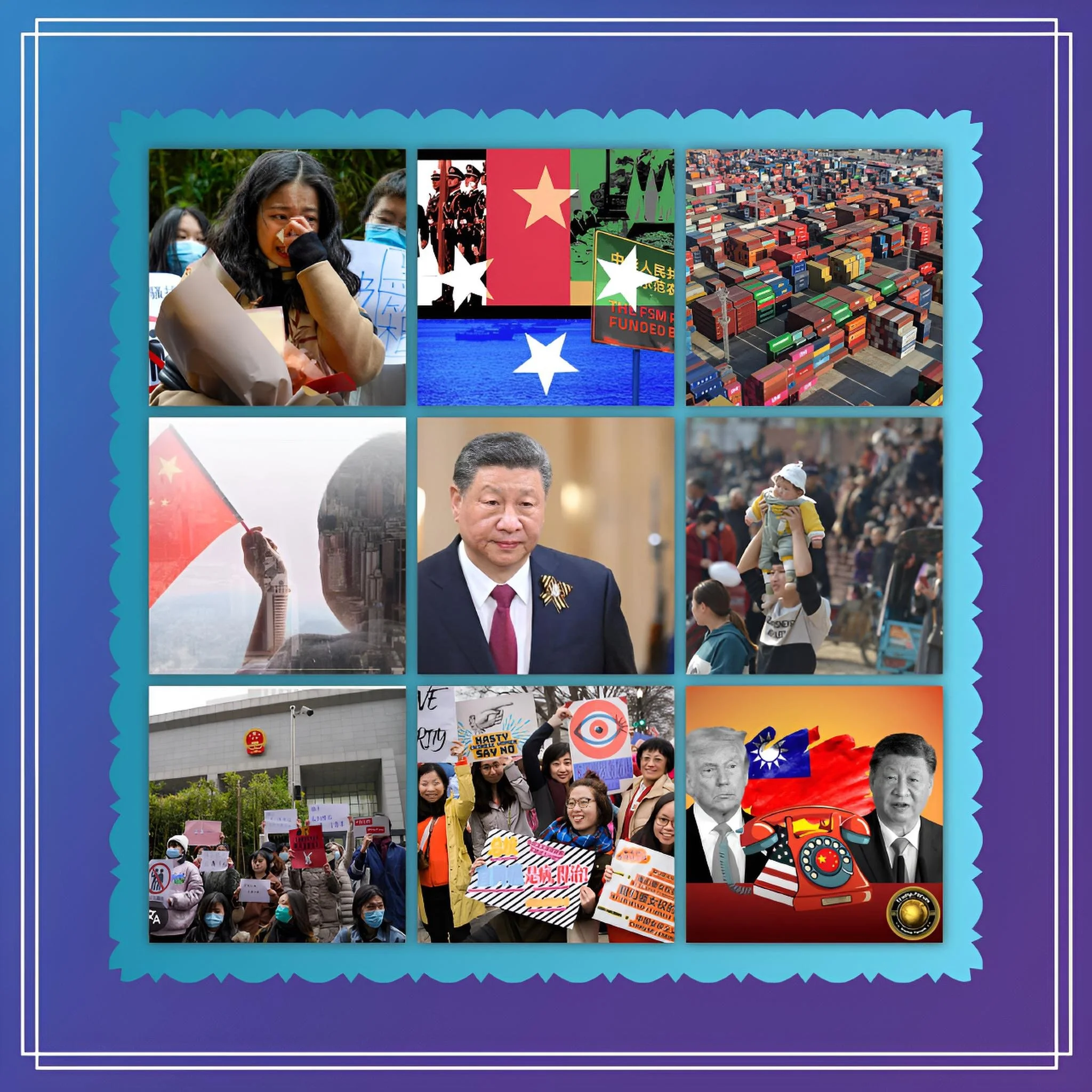
The calendar marks a moment of profound consequence for China's future trajectory. As 2026 unfolds, official statistics will confirm what demographers have long understood: the world's most populous nation is shrinking. For the fourth consecutive year, China's population declined, a reversal of historical direction so fundamental that it reshapes every major policy arena from military planning to economic strategy to social cohesion.
This demographic reality constitutes the essential context within which all other developments in 2026 must be understood, yet it remains insufficiently central to Western strategic analysis of Chinese intentions and vulnerabilities. Where military assessments focus on weapons systems and naval capabilities, where economic analyses emphasize export resilience and trade surplus dynamics, demographic realities operate as the underlying tectonic shift determining the eventual trajectory of all surface-level developments.
The magnitude of China's demographic challenge is without historical precedent outside of wartime collapse. The nation's fertility rate has collapsed to approximately one child per woman, placing it among the world's lowest alongside South Korea, Taiwan, and Singapore.
The pool of women of childbearing age is contracting precipitously, with projections indicating that the number of such women could decline by more than two-thirds by century's end, potentially falling below one hundred million individuals. For context, this represents a civilization-scale transformation. China's workforce is beginning to shrink even as its elderly population expands to consuming proportions. Within two decades, the demographic pyramid that has inverted will impose extraordinary burdens on a shrinking productive population. The ratios of elderly to working-age individuals that were considered manageable crises in Japan and South Korea will appear almost comfortable when compared to the projections China now faces.
The government's response in 2026 reflects both recognition of the severity and desperation about capacity to address it. Beijing has committed approximately 180 billion yuan, equivalent to 25.8 billion U.S. dollars, to natalist policies in the coming year.
This represents an extraordinary allocation of fiscal resources focused on a single objective: increasing birth rates. The measures announced include full subsidization of pregnancy and childbirth costs through the national medical insurance system, coverage of in vitro fertilization treatments, expanded child subsidies, and anticipated personal income tax credits for families with children. These policy interventions are unprecedented in scope within Chinese history and reflect the centrality of demographic concerns within Xi Jinping's strategic vision.
Yet the likely futility of these measures is already apparent from comparative analysis. Japan, South Korea, and Singapore have each implemented generous natalist policies offering superior financial support for childbearing and child-rearing than China now provides.
These policies have consistently failed to reverse fertility decline, with marginal improvements at most. The fundamental problem is not insufficient financial incentive but rather structural: childbearing has become economically irrational for women educated at high levels, economically independent, and confronting job markets that treat motherhood as a career penalty.
China's situation is particularly acute because these universal factors are compounded by gender-imbalanced sex ratios created through decades of sex-selective abortion, by extraordinary educational expenses imposed on parents expecting single children to achieve exceptional academic accomplishments, and by persistent gender inequality in the workplace and household that makes motherhood particularly costly for women's career trajectories.
The failure of 2026's natalist policies will be invisible when measured only in fiscal expenditure, but evident in demographic statistics. The fertility rate will likely remain stable or decline further despite the government's efforts. This reality will force policymakers toward increasingly difficult conversations that carry substantial political sensitivity.
Immigration emerges as the only demographic mechanism through which population decline can be reversed, yet public sentiment within China has not historically aligned with policy necessity on immigration. Concerns about ethnic minority immigration coexist with nationalist ideology emphasizing Han Chinese identity and civilizational authenticity.
Proposing immigration as a solution to demographic decline risks triggering nationalist backlash that could destabilize the domestic political consensus Xi has carefully constructed. Alternatively, accepting population decline while extending working life through increased retirement ages and accepting lower per-capita living standards constitutes an implicit acknowledgment that the civilization-scale aspirations of the previous two decades have become unrealizable.
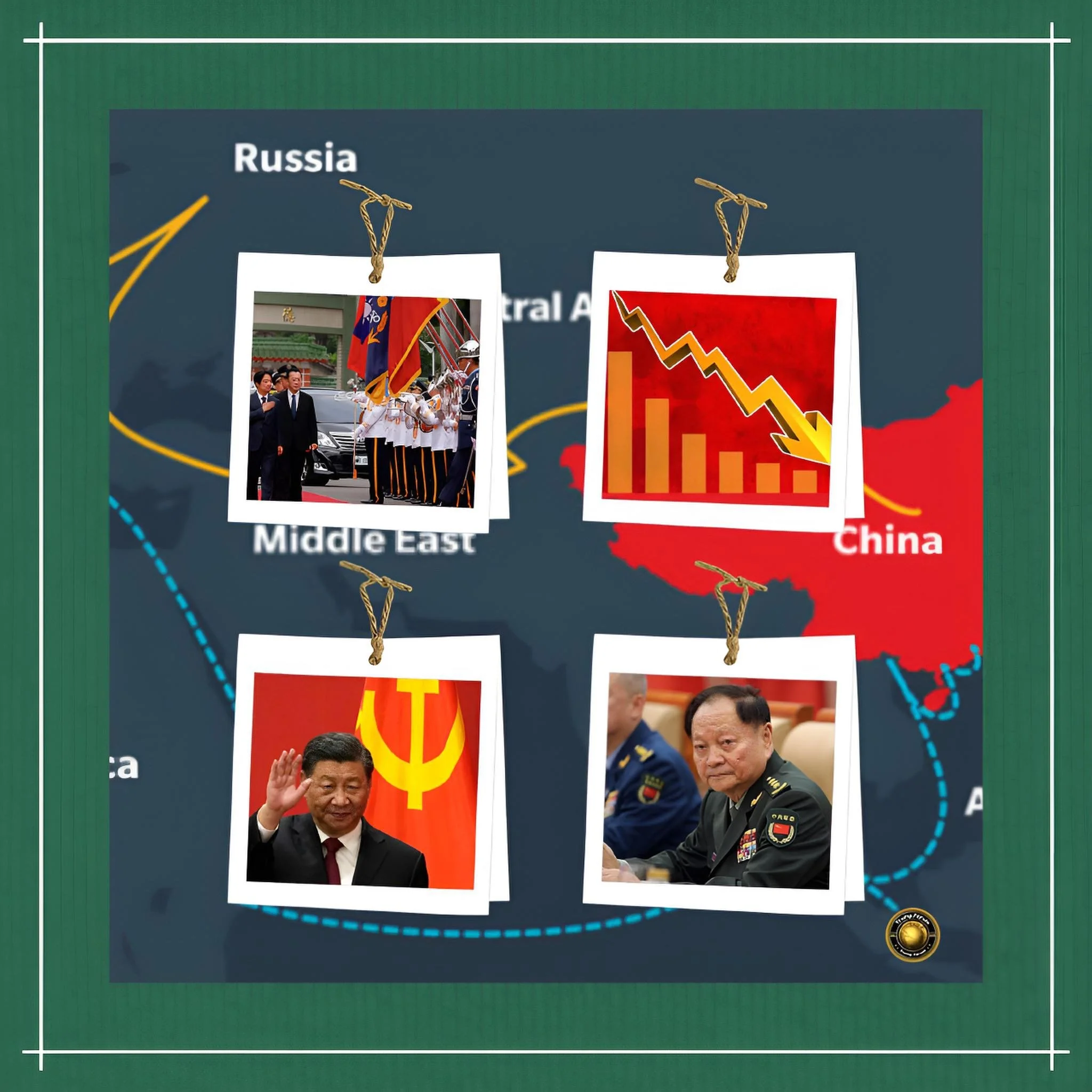
This demographic trap influences military calculations regarding Taiwan in ways insufficiently appreciated in conventional strategic analysis. Military action designed to achieve unification with Taiwan would impose extraordinary costs on an already-strained population. The manpower requirements alone would create difficulties in a context of contracting workforce. Economic disruption from conflict would undermine already-fragile consumer confidence and depress domestic consumption. International sanctions would constrain access to critical technologies and resources. From a purely rational calculation, the optimal moment for military action was perhaps five to ten years earlier, when China's workforce was still expanding and demographic pressure less acute.
The decision to prepare for military action by 2027 rather than to attempt it reflects recognition within Beijing that the window for military action is closing as demographic pressures intensify. This understanding may lead Xi toward either unprecedented restraint regarding Taiwan or alternatively toward miscalculation driven by desperation to achieve unification before demographic decline makes the operation impossible.
The gender equality contradiction embedded within natalist policy creates additional pressures that will manifest in 2026. Xi's stated commitment to women's equality and expanded political participation coexists in explicit tension with policies designed to increase childbearing. Genuine gender equality requires conditions incompatible with increased fertility: women's capacity to defer or decline childbearing, redistributed responsibility for household labor, transformation of workplace structures to accommodate parenthood for both sexes, and acceptance of lower fertility rates as the cost of women's expanded opportunities.
Yet Xi's natalist policies implicitly position women's primary role as bearing children and managing family structures. This contradiction reflects a fundamental challenge in state-directed approaches to social engineering: the attempt to achieve incompatible objectives simultaneously through policy direction. The tension will intensify in 2026 as women activists navigate the narrow space between continued advocacy for equality and avoiding state repression.
China's economic rebalancing toward domestic consumption must be understood as context of demographic uncertainty. Consumption rebalancing requires households with confidence in future income and pension security, capacity to absorb economic shocks, and willingness to spend rather than save. Demographic decline undermines all three conditions. Households uncertain about whether they will receive adequate pensions as they age will rationally increase savings rates rather than consumption.
Families concerned about the costs of education for limited offspring will constrain discretionary spending. Workers uncertain about labor market security in an aging economy will not readily increase consumption. Thus, the government's efforts to stimulate consumption through subsidies, shopping festivals, and trade-in programs confront structural headwinds that policy cannot easily overcome. The record trade surplus of 1.2 trillion dollars achieved in 2025 provides direct evidence of this: production capacity far exceeds what domestic consumption can absorb, forcing continued export dependence precisely when international trade faces increasing friction.
The intersection of these dynamics creates conditions for policy paralysis or escalation. Xi's centralization of power has created a system in which miscalculation by a single individual could have civilization-scale consequences. The absence of institutional checks or designated successors removes mechanisms through which other leaders might course-correct if Xi's analysis proves mistaken.
The pressures of demographic decline, economic slowdown, and international isolation could rationally lead toward either unprecedented pragmatism or alternatively toward nationalist mobilization and military adventurism. Which direction 2026 moves toward will be determined by Xi's assessment of these interconnecting pressures and his confidence in his capacity to maintain domestic political cohesion. What remains clear is that 2026 represents a year in which China's demographic reality becomes unavoidable within policy circles.
The comfortable fictions of the previous decade regarding manageable demographic challenge and achievable fertility rate recovery will dissolve beneath the weight of accumulating statistical evidence. How the regime responds to this reality will substantially determine China's trajectory through 2027 and beyond.