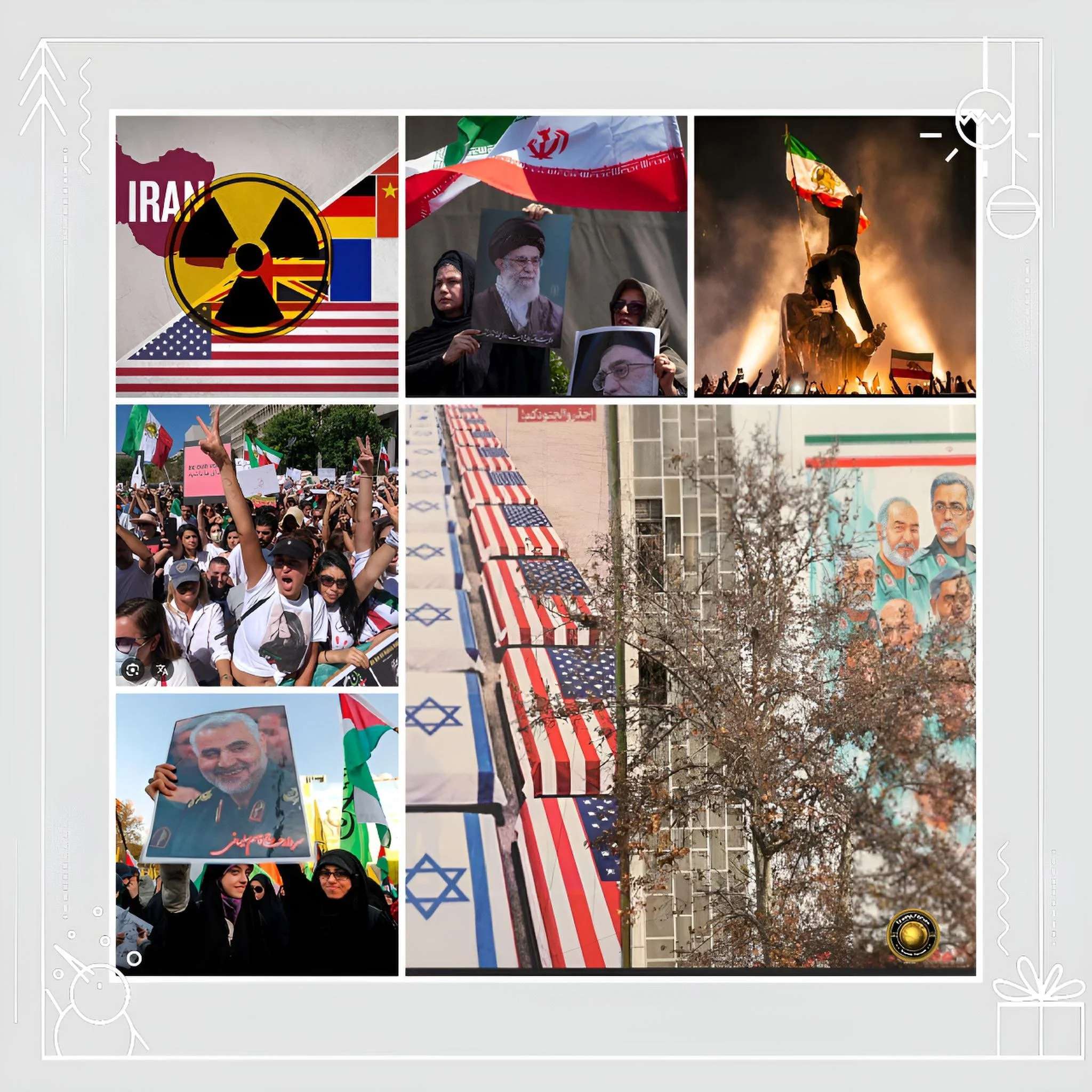
The Perilous Path: Why Coercive Pressure Fails and What Iran's Transition Demands
EXECUTIVE SUMMARY
A Cautionary Primer on Foreign Intervention and Democratic Change
The history of American foreign policy reveals a consistent and costly pattern: military interventions and coercive pressure campaigns produce temporary tactical victories but fail to sustain political transformation in the target state.
As Iran confronts its most serious internal challenge since the 1979 revolution—a nationwide uprising rooted in economic collapse and popular exhaustion with authoritarian rule—the Trump administration faces a critical strategic decision about how to respond.
The evidence from decades of failed interventions in Iraq, Afghanistan, Cuba, and Somalia demonstrates that sustainable political change emerges primarily from indigenous civilian movements operating within their own cultural and institutional contexts, not from external pressure or invasion.
A successful Iranian transition, if one emerges, will depend almost entirely on the regime's own fractures, the coordination and legitimacy of internal opposition forces, and the willingness of elites to negotiate power-sharing arrangements.
External pressure can at best create space for internal actors to mobilize; it cannot substitute for the difficult, time-consuming work of building inclusive institutions and securing buy-in from diverse stakeholders.
FAF analysis examines historical precedents, current Iranian dynamics, and the strategic logic of effective versus ineffective intervention, concluding with practical considerations for policymakers seeking to support rather than sabotage genuine democratic transition.
INTRODUCTION
The Myth of American Power: Why Coercion Cannot Produce Democratic Change, and What Iran's Future Actually Depends On
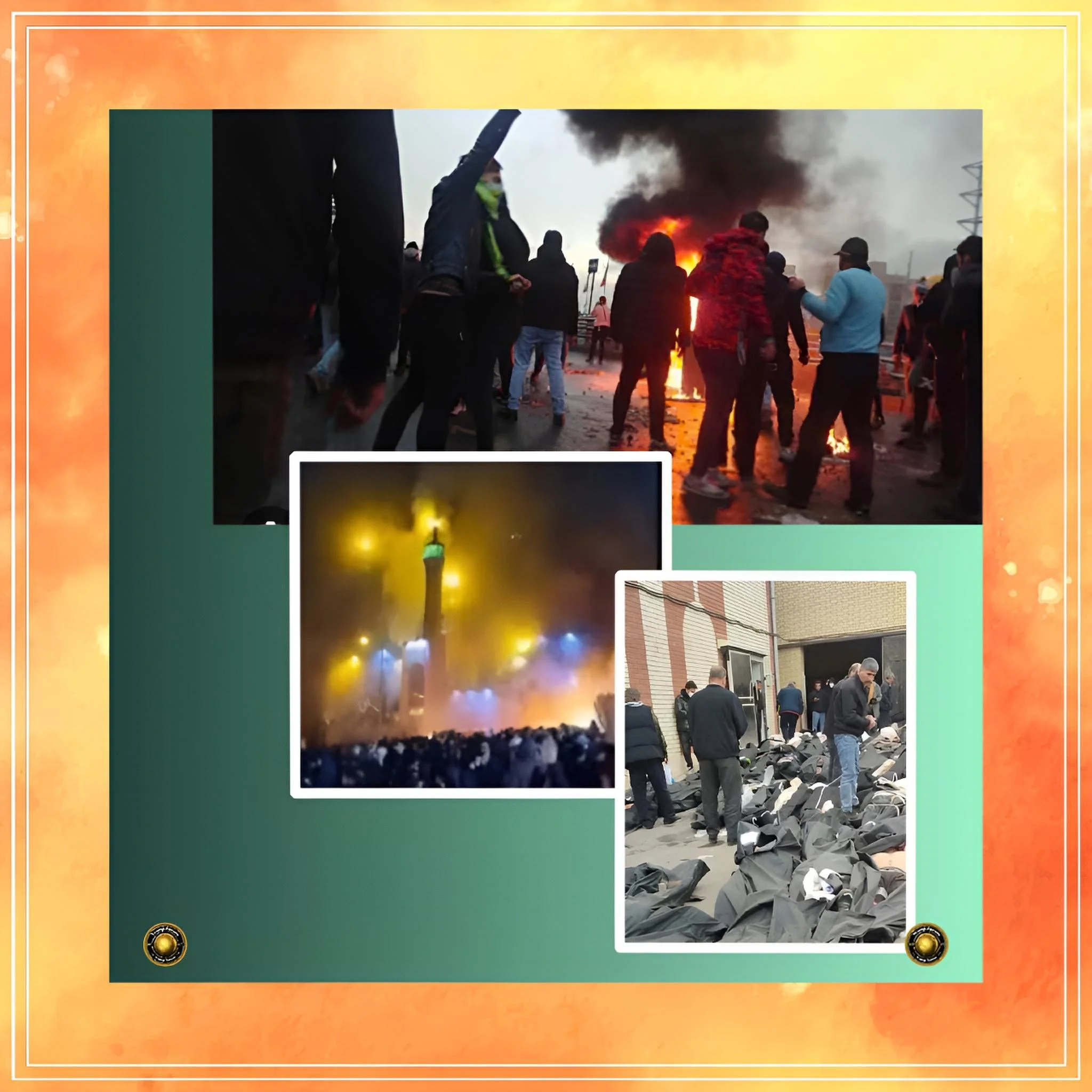
In early 2026, Iran finds itself in a state of unprecedented internal turmoil. Beginning in late December 2025, protests initiated by merchants facing currency collapse mushroomed into a nationwide uprising spanning more than one hundred cities and encompassing diverse social constituencies—bazaar traders, workers, students, Kurds, Baluchis, and ethnic minorities historically excluded from power.
The regime's response has been characteristically brutal: internet shutdowns, live fire against unarmed demonstrators, and the death of tens of thousands in what observers describe as some of the largest massacres in Iran's modern history.
These protests occur against a backdrop of profound economic deterioration, with inflation exceeding forty percent, currency devaluation, frozen oil revenues, and near-zero economic growth.
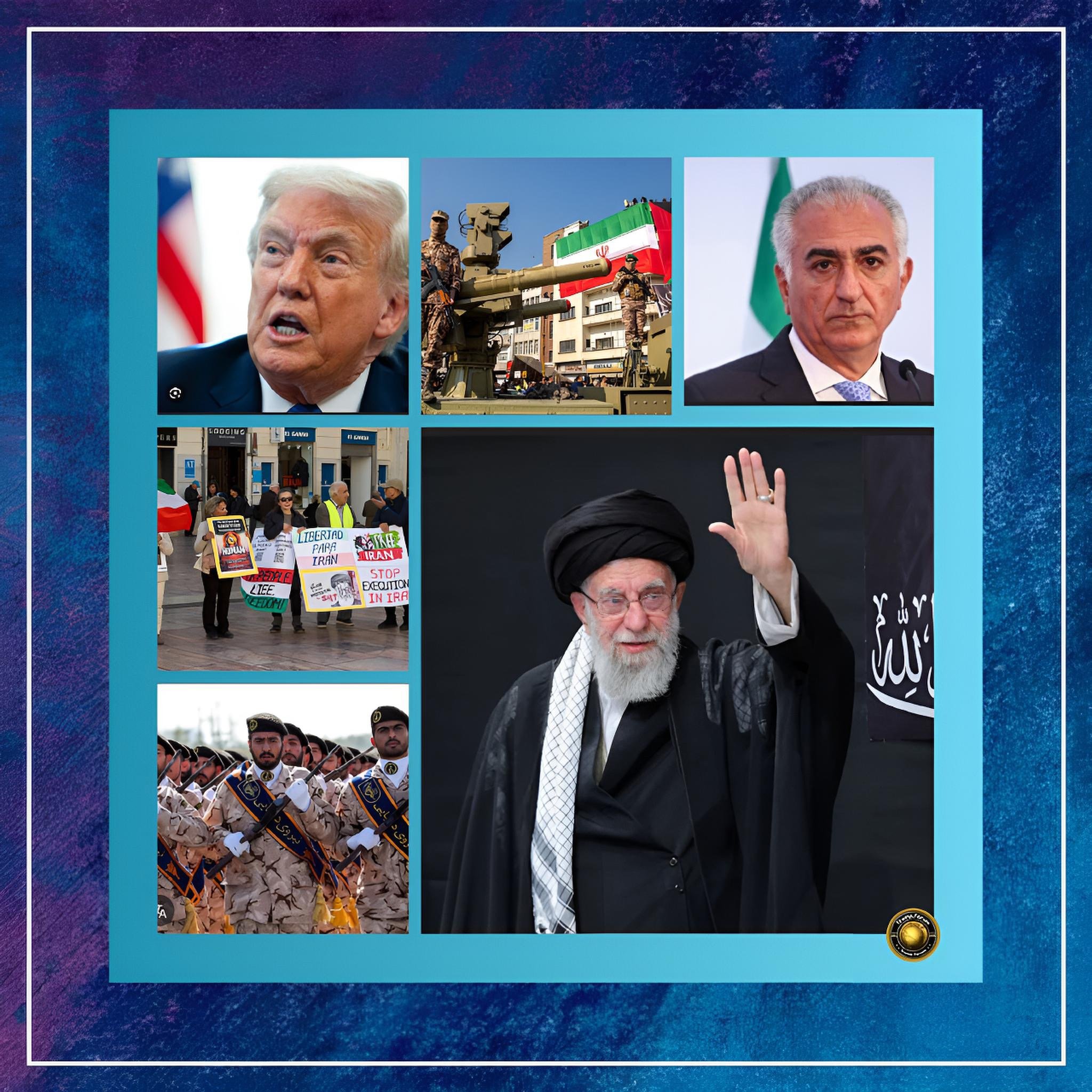
Simultaneously, Iran's leadership confronts the looming succession of Supreme Leader Ayatollah Ali Khamenei, who at eighty-six years old has hinted at his own mortality and the need for rapid institutional transition.
The regime's recent regional losses—degraded military capability following Israeli and American strikes in mid-2025, loss of deterrent capacity, and exposure of defensive vulnerabilities—compound the domestic crisis by making Iran simultaneously weaker abroad and more desperate at home.
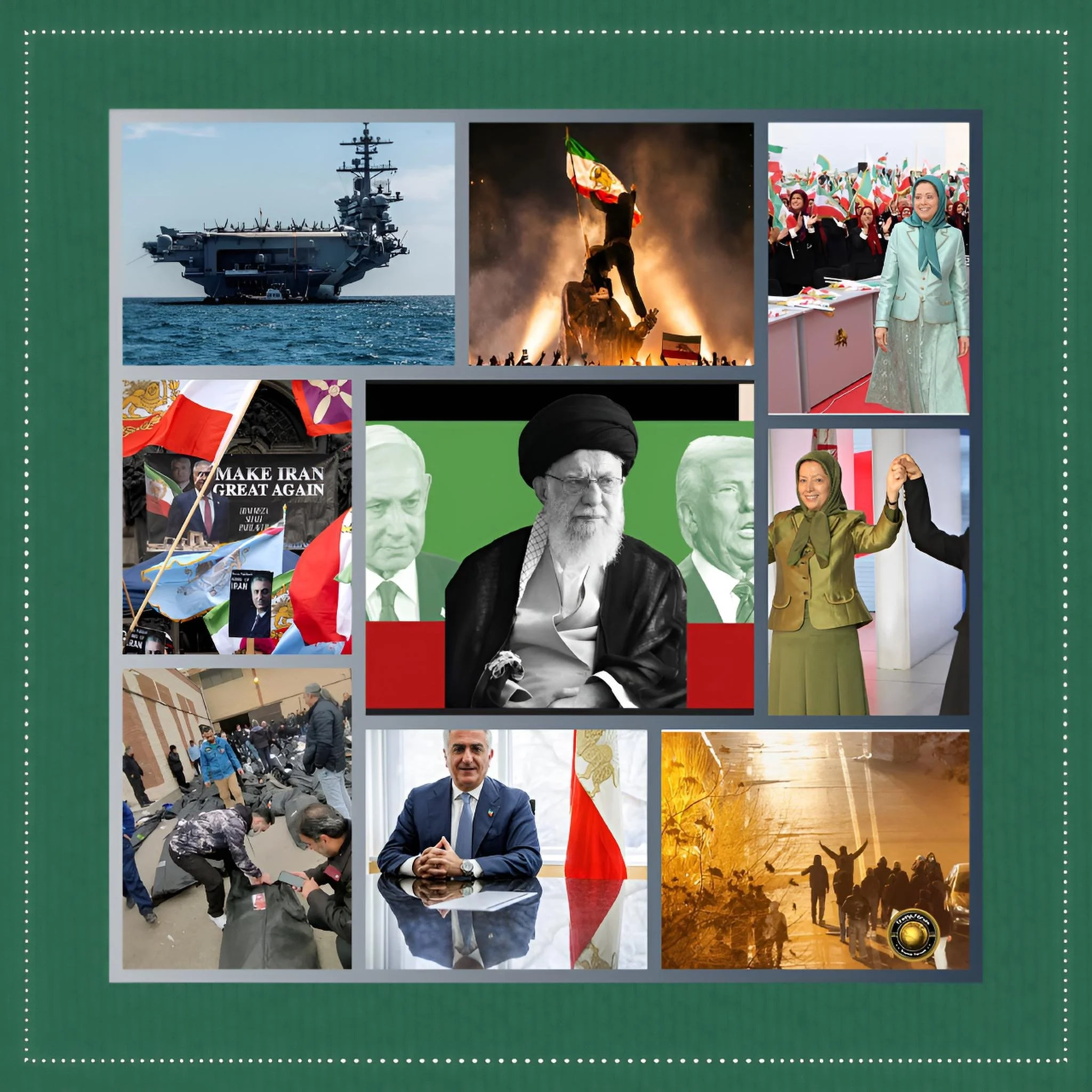
For the Trump administration, this constellation of circumstances presents what appears to be an historic opportunity to influence Iran's trajectory.
The president has renewed the "maximum pressure" campaign of sanctions, threatened military strikes, warned against repression of protesters, and kept open the possibility of diplomatic engagement. Yet beneath these tactical maneuvers lies a deeper question that American policymakers have repeatedly confronted and repeatedly misunderstood: what does it actually take to encourage successful political change in a foreign state, and what role can external power play in that process?
The answer, drawn from half a century of costly American experiments, is far more limited and conditional than most policymakers acknowledge.
HISTORICAL PRECEDENTS: WHAT WORKED AND WHAT FAILED
A Half-Century of Costly Lessons: America's Failed Interventions from Cuba to Afghanistan
The record of American-backed political transitions since the Cold War ended is remarkably consistent in its failures.
The 1961 Bay of Pigs invasion represented what historians termed a "perfect failure"—a covert operation so thoroughly defeated that it accomplished the opposite of its intended purpose by consolidating Fidel Castro's rule, pushing Cuba firmly into Soviet alignment, and poisoning American-Cuban relations for generations. The operation failed because American planners dramatically underestimated Cuban support for the revolution and overestimated the capacity of fourteen hundred CIA-trained exiles to incite a popular uprising.
The lesson was simple: importing armed outsiders to overturn a government with genuine domestic support produces not regime change but revolutionary consolidation.
The 1993 United Nations intervention in Somalia offers a different but equally instructive failure. What began as a humanitarian intervention deteriorated into a military operation focused on eliminating warlords through force.
The UN shifted from neutrality to forceful disarmament, inciting hostility from broad segments of Somali society, particularly when American helicopter gunships killed civilians in downtown Mogadishu.
The operation's overwhelming emphasis on military operations and its preoccupation with warlord factions—at the expense of supporting Somali civil society, human rights monitoring, or grassroots reconciliation—undermined local authority structures and left Somalia in worse condition after withdrawal than when intervention began.
The fundamental error was substituting external military force for indigenous political problem-solving.
The two-decade American occupations of Afghanistan and Iraq produced perhaps the most expensive and protracted demonstrations of intervention failure in modern history.
Both conflicts began with overwhelming military success—Taliban forces routed, Iraqi government toppled—yet both ended in strategic failure and civilizational trauma.
The pattern was remarkably similar across both cases: American forces proved highly effective at conventional warfare but utterly inadequate at nation-building and institutional transformation.
Crucial errors emerged across multiple dimensions. First, American planners attempted to build indigenous security forces in the image of the American military—emphasizing high technology, centralized logistics, and conventional warfare doctrine—rather than designing forces sustainable on local resources and responsive to indigenous political structures. This approach created an addiction to American support that evaporated upon withdrawal.
Second, the American-backed governments proved incapable of transcending factional, ethnic, and sectarian divisions to build national cohesion.
Afghan President Hamid Karzai's government, installed by and dependent on American support, became synonymous with corruption, nepotism, and elite plunder rather than with national leadership.
Iraqi governments dominated by Shia elites systematically excluded Sunni populations from power, sparking the sectarian catastrophe that eventually created space for ISIS.
Third, American intervention itself became a focal point for local opposition because foreign occupation delegitimized the institutions the Americans sought to build.
The contrast with successful democratic transitions in the late Cold War era is illuminating. Poland's Solidarity movement succeeded in forcing democratic transition not through external pressure or invasion but through indigenous civilian resistance combining nonviolent discipline with broad social base.
The movement's victory flowed from the moral force of grassroots organization, the deep legitimacy accorded Solidarity by Polish workers and society, and the willingness of Polish Communist leadership—under pressure from a collapsing economy and Soviet leadership prepared to accept reform—to negotiate a compromise rather than resort to military force.
The Roundtable Talks of 1989 represented a negotiated transition in which regime insiders, recognizing the regime's lost legitimacy, agreed to free elections. Solidarity's movement succeeded not because the West invaded but because Poles themselves organized, risked their lives, and created pressure that regime elites found preferable to repression.
Moreover, Poland's subsequent transition to democracy and European integration occurred through indigenous institutional building and civil society development, not through foreign occupation or imposed governance models.
Taiwan and South Korea offer similar patterns. Both underwent democratization not through external military intervention but through top-down decisions by authoritarian leaders—Chiang Ching-kuo in Taiwan, military leaders in South Korea—who recognized that regime survival required political opening. Democratization in both cases proceeded gradually, with multiple stages of liberalization preceding full democratic transition, allowing time for institutional development and elite adaptation.
The process was painful and contested but indigenous and sustainable precisely because the transformation emerged from within existing power structures rather than being imposed externally.
THE INEFFECTIVENESS OF ECONOMIC COERCION FOR REGIME CHANGE
The Sanctions Illusion: Why Economic Pressure Rarely Produces Regime Change
The Trump administration's strategy toward Iran centers on "maximum pressure"—an escalating sanctions regime designed to inflict economic pain on Iran's leadership with the expectation that this pain will compel policy change or regime overthrow.
The empirical record on sanctions effectiveness offers sobering conclusions. Academic research analyzing decades of sanctions episodes finds that economic sanctions succeed in achieving their stated objectives approximately twenty-six to forty percent of the time.
For sanctions explicitly aimed at forcing regime change—the most ambitious objective—success rates fall substantially lower. By contrast, aid suspensions, which directly affect government budgets and buying power, achieve their objectives approximately forty-four percent of the time.
Sanctions fail more often with autocratic regimes than democracies because authoritarian leaders control internal redistribution of costs and can insulate their own support coalitions from sanctions pain. Market forces—sanctions evasion, third-country trade substitution, offsetting aid from rivals—systematically undermine the economic impact of sanctions.
Most significantly, sanctions imposed as coercive instruments frequently produce a "rally-around-the-flag" effect where populations unite against external pressure rather than defecting from leadership.
Trump's first-term "maximum pressure" campaign, initiated after American withdrawal from the Iranian nuclear agreement in 2018, illustrates this pattern in concrete terms.
Sanctions were reimposed on virtually all aspects of the Iranian economy, targeting financial institutions, oil revenues, and trade access. Yet the campaign failed to achieve either of its stated objectives: it did not compel Iran to renegotiate the nuclear agreement on American terms, nor did it force Iranian concessions on regional behavior or ballistic missile development. Instead, sanctions increased Iranian incentives to abandon nuclear compliance, prompted Iranian leadership to announce suspension of JCPOA limits on uranium enrichment, and aligned Iran closer to Russia and China.
The sanctions inflicted genuine economic pain on Iranian citizens—exacerbating pharmaceutical shortages, restricting medical imports, deepening poverty—but did not translate into policy change or regime vulnerability. The regime proved capable of absorbing and redistributing costs in ways that protected its core security apparatus while squeezing ordinary citizens.
The current maximum pressure campaign, renewed under Trump in February 2025, doubles down on this failed approach by targeting Iran's oil exports more aggressively, imposing secondary sanctions on countries and companies conducting trade with Iran, and threatening additional tariffs.
These measures will certainly deepen Iran's economic crisis. Yet the evidence suggests they are unlikely to achieve the transformative political outcomes policymakers expect. Economic pressure may weaken Iran's overall state capacity, but it is not a vector for political change except insofar as domestic economic hardship mobilizes internal opposition forces independent of external pressure.
IRAN'S CURRENT MOMENT: BOTH OPPORTUNITY AND TRAP
A Nation at the Crossroads: Iran's Succession Crisis and the Limits of External Leverage
The 2025-2026 protests in Iran differ substantially from previous cycles of unrest in ways that create genuine potential for systemic change. The uprising is not the work of a single constituency (students in 1999, women in 2022) but represents mobilization across class, regional, and sectarian lines. Bazaar merchants, workers, Kurds, Baluchis, and ordinary urban residents have all participated, indicating that discontent has penetrated networks previously considered loyal to the regime.
The breadth of participation suggests the protests are rooted not in momentary grievance but in accumulated exhaustion with authoritarianism and economic failure. The specific triggers—currency collapse, inflation, and regime mismanagement of the economy—touch every Iranian household and create pressure without waiting for policy response.
The regime's capacity for managed response has also deteriorated. Unlike previous crackdowns that successfully suppressed unrest after weeks or months, the current repression has required unprecedented violence and comprehensive communications shutdown, suggesting that ordinary coercion no longer suffices.
The security forces themselves may be developing resistance to orders to fire on unarmed civilians, leading the regime to rely on specialized units and militias rather than national police and regular military personnel. These signs point to potential fracturing within the security apparatus—not yet evident as coordinated defection but visible as degradation of institutional cohesion.
Simultaneously, Iran's leadership confronts the looming succession question in ways that create instability. Khamenei's private discussions of his own mortality, the death of long-time heir apparent President Ebrahim Raisi in 2024, and the aging of the revolutionary generation have sparked factional maneuvering among clerical, military, technocratic, and commercial elites.
The IRGC itself is not monolithic, containing internal divisions between older security-conscious conservatives and younger businessmen open to less confrontational foreign policy. The succession struggle will inevitably intensify as Khamenei's health declines, creating windows where factional conflict may paralyze decision-making or produce unexpected policy shifts.
Yet these genuine vulnerabilities must be clearly distinguished from regime collapse or imminent transformation. The regime retains effective instruments of coercion, including the IRGC and Basij militia, even if their loyalty is fraying at the margins. The protests, though broad, have not produced a unified leadership or coherent vision for post-regime governance.
Reza Pahlavi, the shah's son in exile, has become a focal point for some segments of the opposition, but his claim to represent a majority Iranian preference for monarchy is contested and unverified.
The opposition lacks the organizational infrastructure that would enable rapid transition to alternative governance. Most importantly, there is no credible arrangement by which external actors could facilitate elite-level negotiation or power-sharing without either appearing to undermine the regime's final authority (thus triggering maximal hardline response) or appearing to undermine opposition credibility (thus delegitimizing transition prospects).
WHAT THE EVIDENCE SAYS ABOUT SUCCESSFUL TRANSITIONS
The Evidence on What Actually Works in Political Transitions
Scholarly research on democratic transitions identifies a consistent set of preconditions and dynamics associated with sustainable political change. These findings, drawn from comparative analysis of dozens of cases, should inform policymaking about Iran.
First, successful transitions emerge from indigenous movements. The Solidarity movement in Poland succeeded because it was rooted in decades of worker organization and possessed moral authority derived from the Polish population itself, not from American or Western support.
Taiwan and South Korea democratized because indigenous leaders made decisions to open political systems, not because external powers demanded it.
By contrast, transitions imposed externally or led by foreign-backed factions tend to lack legitimacy and prove vulnerable to reversal. An Iran transition led by American-backed figures or imposed through American military pressure would likely fail the legitimacy test, making it reversible and unstable.
Second, time is the friend of inclusive transitions and the enemy of elite-driven change. Research emphasizes that "time pressure is the enemy of inclusion," as rapid transitions tend to advantage existing elites while excluding broader populations.
The most durable democratic transitions were those that allowed extended periods for negotiation among diverse stakeholders, inclusion of women and minorities in constitution-writing, and development of civil society oversight mechanisms.
Rushed transitions attempting to rapidly install new governments tend to reproduce the power structures they nominally replace, creating cosmetic leadership change without systemic transformation. Any Iran transition imposed through external military pressure or designed for rapid regime replacement would likely suffer from precisely this limitation.
Third, transitions require institutional buy-in from multiple layers of the existing order. The most successful democratic transitions involved negotiations between regime insiders, opposition leaders, military representatives, business elites, and civil society figures.
These roundtable-style negotiations allowed regime insiders to accept defeat without facing existential threat and allowed transition architects to credibly commit to protecting some existing interests.
The Polish experience is paradigmatic: Communist leaders agreed to free elections because they received assurances regarding the transition's pace, the protection of certain regime assets, and their own safety. By contrast, transitions that appear to threaten all existing elites—visible in rapid, violent regime collapse scenarios—tend to produce civil conflict and state failure rather than democratic governance.
Fourth, civil society strength matters enormously but cannot be built through external pressure. The research is unambiguous: robust civil society organizations—human rights groups, labor unions, religious associations, professional organizations, media institutions—are essential for democratic consolidation.
They provide mechanisms for citizen participation, government accountability, and horizontal oversight that prevent elite capture. However, externally-funded and externally-directed civil society organizations lack the legitimacy and social rootedness necessary for real impact.
Moreover, overt external support for civil society can delegitimize those organizations in the eyes of the broader population, rendering them less effective precisely because they appear as instruments of foreign policy rather than authentic expressions of popular will.
Fifth, transition outcomes depend critically on elite willingness to accept power-sharing or succession. Democratic transitions rarely occur as popular revolutions that sweep elites entirely from power.
More commonly, they involve negotiations in which current elites retain certain prerogatives or properties, accept checks on their authority, and agree to participate in competitive systems rather than monopolistic control. This is not democratic purity, but it is the pattern across successful cases.
An Iran scenario in which internal elite negotiation produces a constitutional arrangement preserving some IRGC institutional autonomy but ending Supreme Leader dictatorship would be far more likely to succeed than a scenario in which external pressure attempts to eliminate all existing power structures simultaneously.
CAUSE AND EFFECT: WHY PRESSURE BACKFIRES
Understanding the Backfire Effect: Why External Pressure Often Strengthens Authoritarian Regimes
The causal mechanisms linking external pressure to political outcomes are important to understand because they explain why maximum pressure campaigns designed to achieve regime change tend to fail.
First, external pressure triggers nationalist rally effects. When populations perceive their country under attack or their sovereignty threatened by foreign powers, they tend to unite around existing leadership regardless of domestic grievances.
This is particularly acute in Iran, where nationalist sentiment runs deep and American intervention is remembered as destabilizing. External pressure—sanctions, military threats, or actual strikes—activates this nationalist reflex, making it harder for internal opposition to mobilize because they appear as collaborators with foreign enemies.
Conversely, internal opposition movements rooted in domestic grievances rather than foreign pressure tend to maintain legitimacy as expressions of Iranian will rather than American agency.
Second, external pressure raises the costs of regime concession. When authoritarian leaders perceive external pressure as an existential threat, they become less willing to make concessions because doing so appears as capitulation to foreign enemies.
A regime leader facing pressure from both internal protest and external coercion may calculate that demonstrating toughness against external pressure is necessary to maintain internal legitimacy.
The regime's response to American warnings about protester violence has included diplomatic signals suggesting openness to negotiation, but also escalation of security rhetoric and claims that the United States is fueling unrest—a classic "rally" strategy designed to unite domestic constituencies around the leadership by framing internal protest as externally-instigated.
Maximum pressure thus may paradoxically harden regime intransigence on the very issues policymakers hope to change.
Third, external pressure undermines internal opposition credibility. Opposition figures who appear to be coordinating with external powers or benefiting from external pressure lose the indigenous legitimacy necessary to mobilize broad social support.
The regime's accusations that the United States and Israel are directing the protests, while false in the sense that the protests are genuinely indigenously driven, become partially credible when external actors signal support for regime change.
Reza Pahlavi's invocation of American and Israeli backing, though he frames it differently, actually reinforces the regime's narrative that the opposition is foreign-directed. This dynamic weakens opposition political leverage precisely when internal conditions might create space for meaningful change.
Fourth, external pressure diffuses responsibility for negative outcomes. When economic crisis deepens or humanitarian conditions deteriorate under sanctions, populations may blame not the regime but the external powers imposing sanctions.
This is particularly evident in Iranian public opinion data, which shows that external pressure tends to increase rather than decrease support for regime legitimacy among segments of the population that might otherwise defect.
Conversely, when internal opposition successfully frames its cause in terms of indigenous national interest rather than external pressure, it preserves the moral authority necessary for transition leadership.
FUTURE STEPS: WHAT COULD ACTUALLY FACILITATE IRANIAN CHANGE
Beyond Maximum Pressure: A Strategy of Strategic Patience and Conditional Support
If external pressure is not the answer, what approach might actually support democratic transition in Iran? The evidence suggests several principles should guide policy.
First, preserve space for internal opposition mobilization by moderating external pressure. This does not mean abandoning leverage, but rather calibrating it to pressure regime behavior regarding protesters without appearing to direct or control the opposition.
The distinction is crucial: warning the regime that killing protesters will have external consequences is different from attempting to direct protests toward specified political outcomes. The former maintains external credibility without delegitimizing the opposition; the latter collapses the distinction between internal and external agency.
Second, develop contingency support for civil society institutions that emerge from the Iranian transition process itself. Rather than attempting to fund and direct opposition groups externally, offer material support for whatever institutional arrangements Iranians themselves create.
This includes potential support for a constituent assembly process, roundtable negotiations, truth and reconciliation commissions, or other mechanisms that Iranians might adopt. Such support would come only after internal consensus emerges, not in advance of it, and would be explicitly contingent on inclusive, transparent, and participatory processes.
Third, signal willingness to normalize economic relations if Iran makes meaningful concessions on nuclear weapons and regional proxy activities. This is different from the current approach because it frames sanctions as tools for negotiation leverage rather than instruments of regime change. The goal would be communicating credibly that Iran's leadership can survive and even prosper economically if they accept constraints on ambitions they cannot achieve anyway, given current military weakness.
This requires patience and willingness to negotiate with whatever Iranian leadership emerges, including potentially unreformed regime insiders if that proves to be the price of nuclear nonproliferation.
Fourth, avoid military strikes that would accelerate regime consolidation. The Trump administration's threats of strikes against IRGC-linked security targets, while designed to signal resolve, risk activating the nationalist rally effect and consolidating hardline control.
Measured use of force strictly limited to nuclear facilities, if Iran violates nonproliferation commitments, differs in kind from strikes on domestic security forces. The latter appears as external intervention in internal affairs; the former can be framed as self-defense against nuclear threat.
Fifth, work with regional allies to preserve space for Iranian internal negotiation without appearing to direct outcomes. This requires a delicate balance: Israel and Gulf Arab states have legitimate interests in Iranian strategic change, but visible coordination of external pressure with these interests undermines opposition credibility.
Conversely, allowing these actors to pursue unconstrained policies in the region will trigger Iranian rally effects and make negotiation harder.
CONCLUSION: ACCEPTING HUMBLER AMBITIONS
Accepting Constraints: How American Interests in Iran Can Be Achieved Without Regime Change
The fundamental challenge in American Iran policy is accepting that the United States cannot produce democratic transition in Iran through external pressure alone.
The historical record is unambiguous on this point. American military power can destroy governments and devastate military capabilities, but it cannot build sustainable political orders in their aftermath.
Economic pressure can weaken regime capacity and inflict humanitarian costs, but it does not reliably produce political change and often backfires by triggering nationalism and delegation of blame to external actors. The deepest irony of American interventionism is that the goal of regime change becomes less achievable the more visibly and aggressively it is pursued.
This does not mean the United States should withdraw from Iranian affairs or abstain from leverage. Rather, it means recalibrating objectives and tactics. The realistic American interest is not in producing democratic governance in Iran—an outcome that depends entirely on Iranian decisions and institutional capacity—but in constraining Iranian nuclear ambitions, limiting regional proxy activities, and preventing humanitarian catastrophe.
These more modest objectives are achievable through combinations of sanctions, military deterrence, and negotiation. They do not require regime transformation, only behavioral change. They do not demand that American pressure produce specific political outcomes, only that it create conditions where Iranian leaders calculate that negotiation is preferable to confrontation.
The current moment in Iran offers genuine opportunity for change rooted in indigenous forces: a broad-based opposition movement, deepening economic crisis, factional conflict within the elite, and questioning of the succession process. These indigenous pressures are the actual sources of potential transformation.
External actors can create space for these forces to operate, can support institutional development once internal consensus emerges, and can provide incentives for negotiated compromise over violent repression. What external actors cannot do—and what American policy has repeatedly failed to do—is substitute for indigenous political agency.
For Trump and his advisors, accepting this reality means resisting the temptation to claim credit for outcomes produced by Iranian forces themselves, moderating rhetoric about regime change in favor of language about behavioral modification, and preparing for outcomes that fall short of the most ambitious hopes.
It means distinguishing between supporting Iranian opposition as a strategic interest and attempting to direct Iranian opposition toward American-specified goals. It means accepting that the most durable outcome may not be democracy but rather a reformed authoritarianism that constrains Iran's most destabilizing behaviors while preserving regime continuity.
This approach requires patience, discipline, and strategic humility. It is the antithesis of the "maximum pressure" mentality that assumes American power can bend foreign societies to American will. Yet it is grounded in the hard-won lessons of a half-century of costly interventions and the positive example of transitions that succeeded precisely because external actors allowed internal forces to drive outcomes.
Iran's future will be determined by Iranians. American policy can either acknowledge that reality and work within it, or continue the counterproductive pattern of assuming external pressure can produce outcomes that only indigenous forces can create.