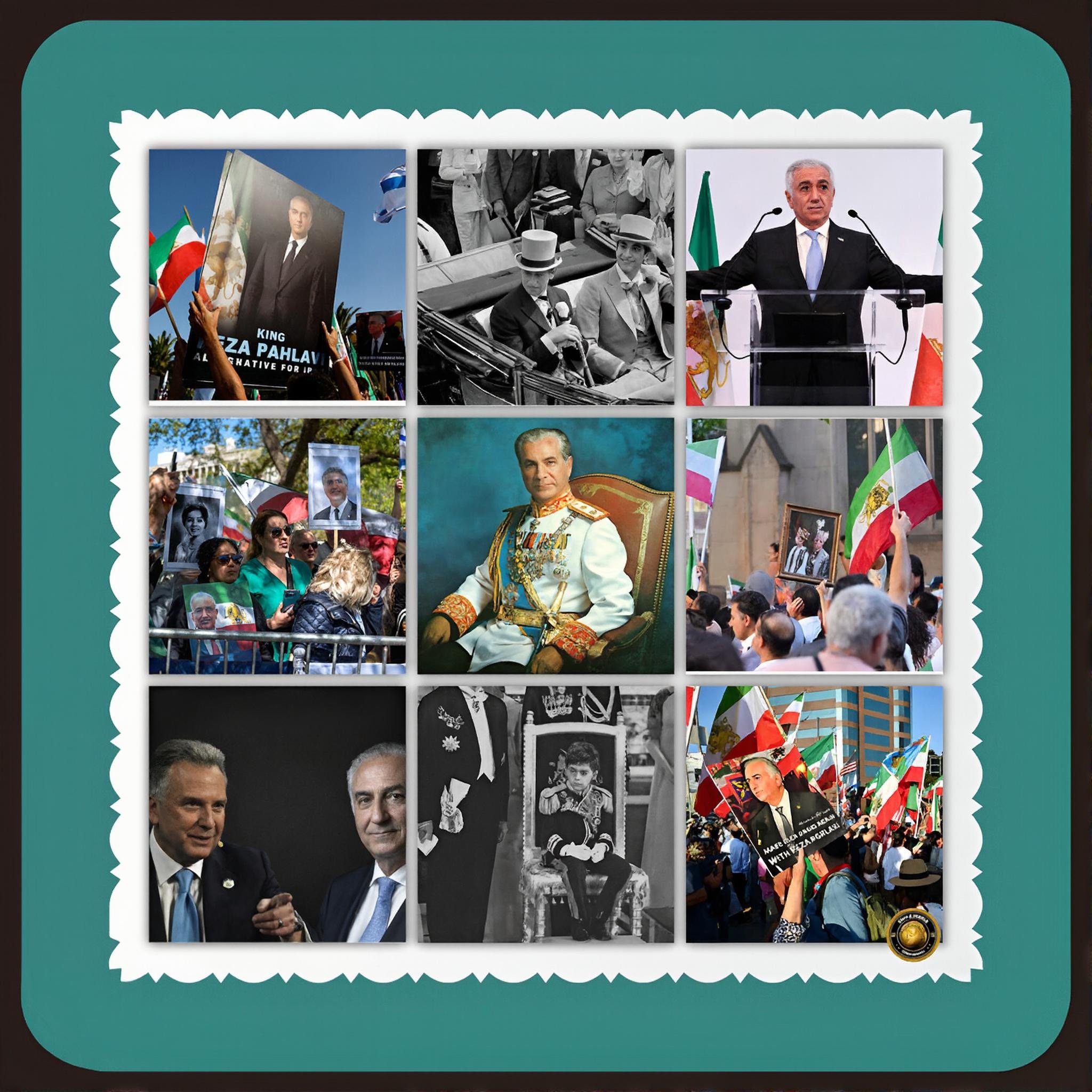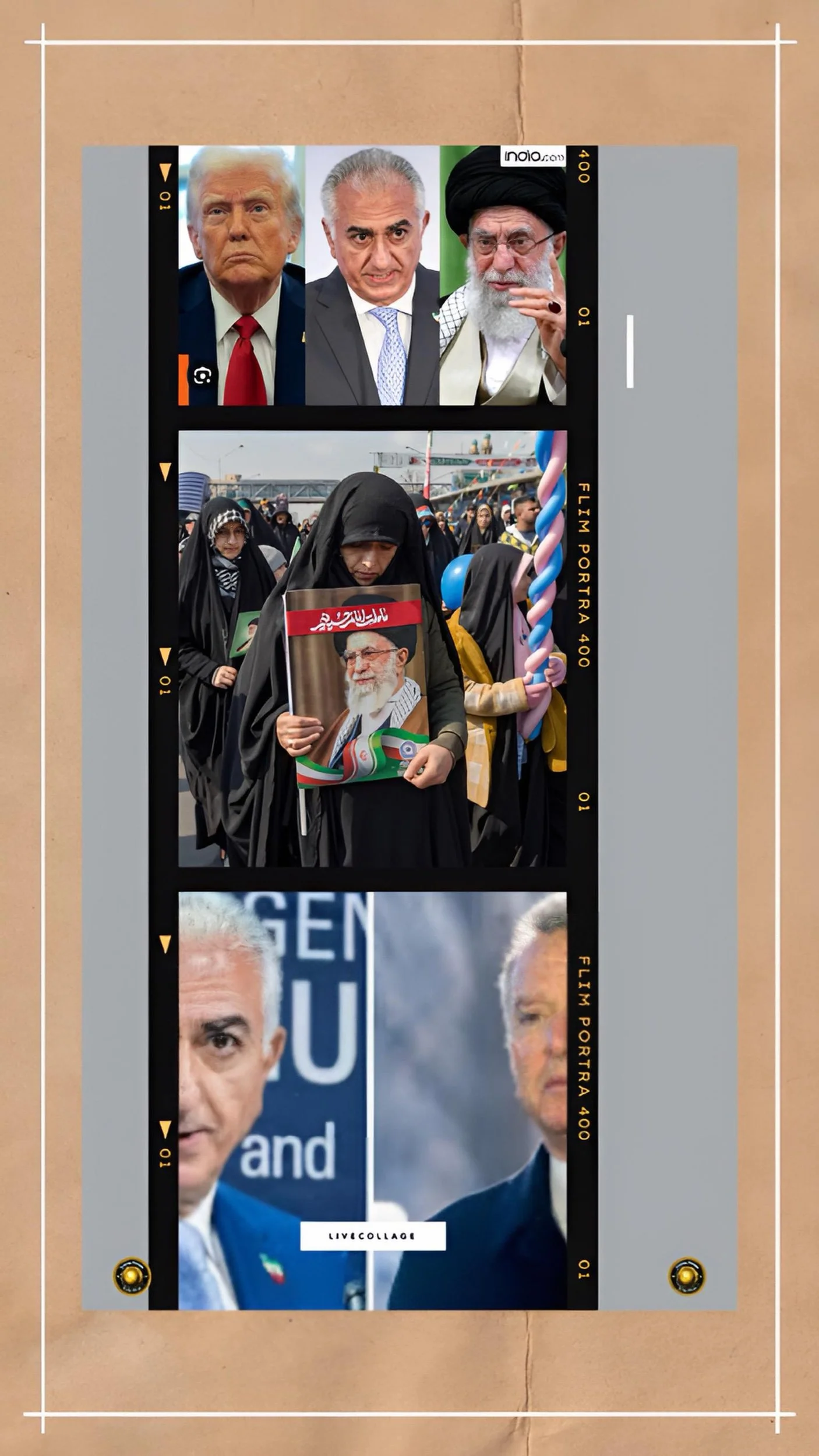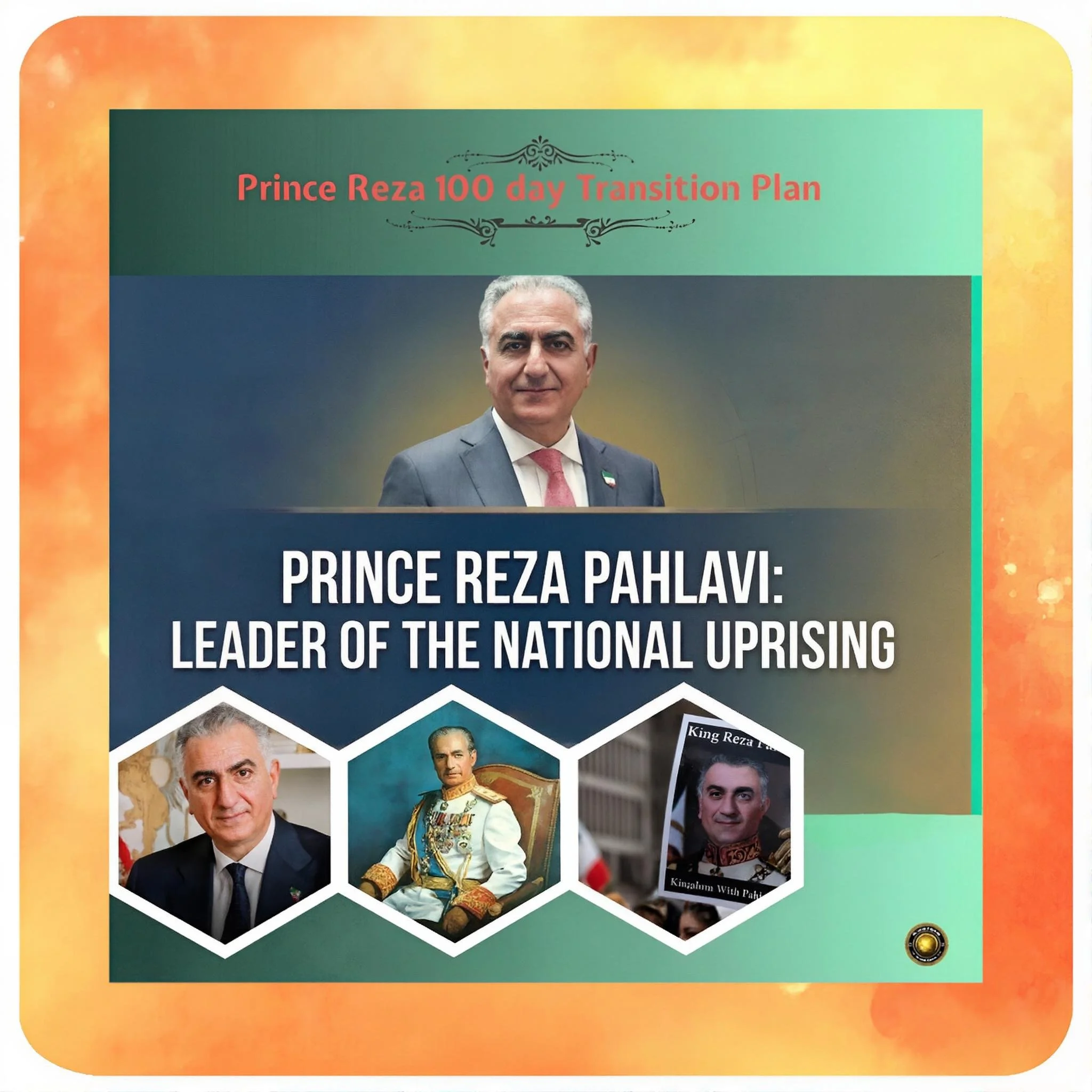
Prince Reza Pahlavi’s Hundred-Day Transition Framework
Executive summary
The Exile’s Stopwatch: Mapping a Revolution’s Fragile Bridge
Reza Pahlavi’s hundred-day transitional government proposal constitutes a meticulously constructed response to the acute governance vacuum that would accompany the Islamic Republic’s potential collapse. The framework delineates a compressed three-month interval during which a provisional authority would assume executive responsibilities, orchestrate a constituent assembly, and facilitate a national referendum to determine Iran’s permanent constitutional order.
Pahlavi’s repeated assertion that the initiative “is not about restoring the past” serves as both strategic reassurance and ideological repositioning, attempting to transmute monarchical heritage into democratic facilitation.
The plan’s architecture prioritizes institutional continuity, security sector realignment, and procedural legitimacy, addressing the specter of post-revolutionary anarchy that has haunted Iranian opposition discourse for decades.
Recent high-level engagement between Pahlavi and US envoy Steve Witkoff indicates that Western policymakers are evaluating this blueprint within broader contingency matrices, valuing its structural clarity while remaining cognizant of its implementation challenges.
The proposal’s efficacy remains contingent upon military defection, opposition cohesion, and popular ratification, factors that currently elude opposition control.
Introduction
From Dynasty to Deadline: Reinventing Monarchy as Democratic Lifeline
In the crucible of Iran’s escalating protests, Reza Pahlavi has advanced a hundred-day transitional paradigm that seeks to preempt the chaos of regime disintegration.
This framework emerges not from abstract constitutional theory but from the practical exigencies of power vacuums, where the absence of transitional mechanisms has historically precipitated civil conflict and external intervention.
By imposing temporal constraints and procedural safeguards, the plan endeavors to forge consensus among disparate opposition constituencies while signaling to international actors a viable alternative to indefinite instability.
The deliberate disavowal of restorationist intent reflects Pahlavi’s recognition that legitimacy in contemporary Iranian politics derives from democratic process rather than dynastic entitlement.
History and current status
Echoes of 1979, Visions of Tomorrow: The Plan’s Buried Roots
The genealogy of transitional governance concepts in Iranian opposition circles traces to the immediate aftermath of the 1979 revolution, when secular and monarchist factions grappled with theocratic consolidation.
Pahlavi’s hundred-day iteration represents evolutionary refinement, informed by global precedents and domestic polling that reveal widespread anxiety regarding post-regime disorder.
Currently, the framework exists as a disseminated manifesto, articulated through digital platforms, expatriate networks, and direct appeals to security personnel. It posits a caretaker executive vested with limited powers to maintain state functions, convene a pluralistic constitutional convention, and administer a binding referendum on governmental form.
The plan’s status remains preparatory, lacking domestic institutional footholds amid pervasive regime surveillance.
Key developments
Street Fire Meets Secret Talks: When Protests Ignite Policy
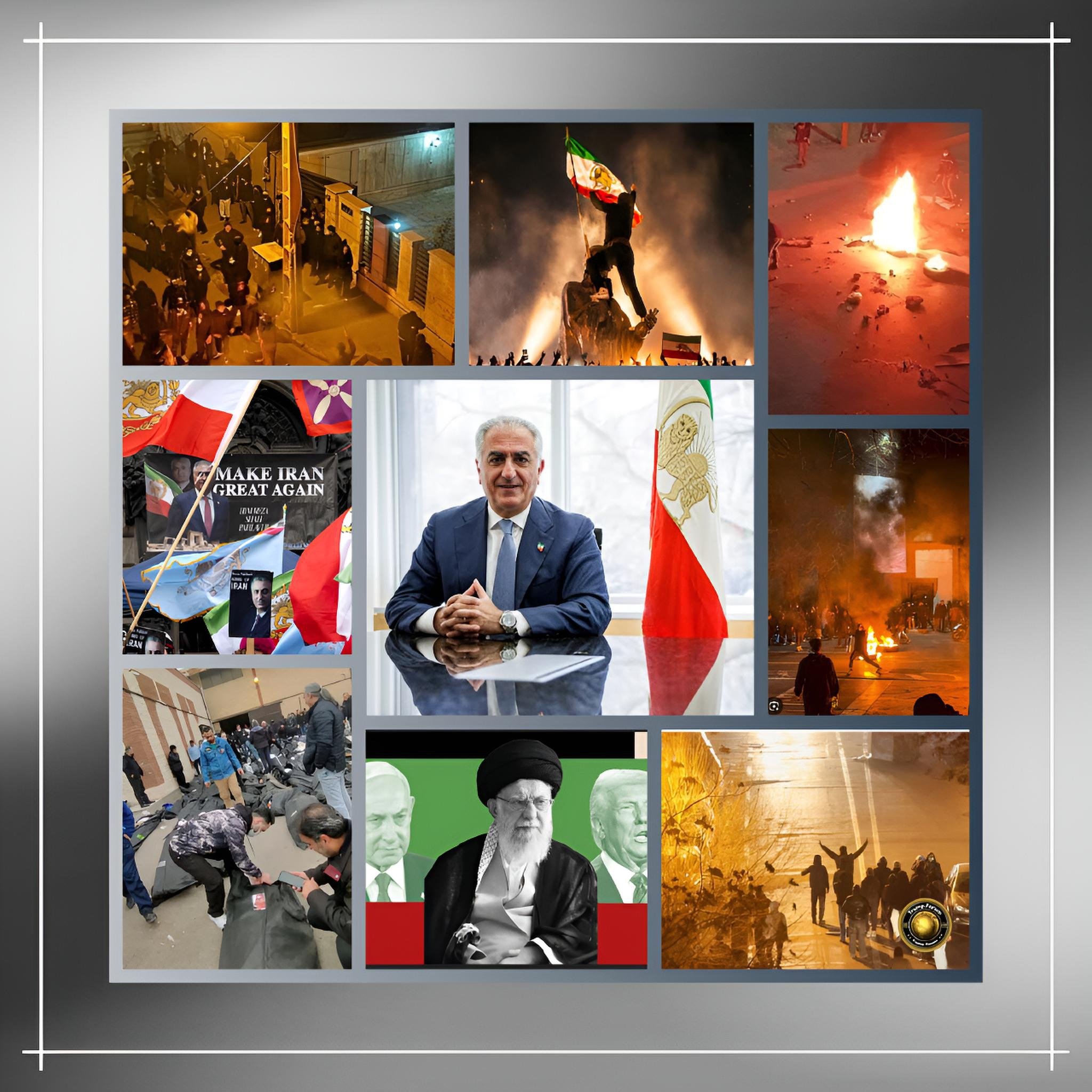
The proposal has gained salience amid protests engulfing Iran’s urban centers, where socioeconomic grievances have coalesced into existential challenges to clerical authority.
Pahlavi’s amplification via satellite media has synchronized the framework with street demands, positioning it as antidote to perceived revolutionary disorganization.
Concurrently, the Trump administration’s covert outreach via Witkoff marks the plan’s entry into official contingency deliberations, elevating it from oppositional advocacy to geopolitical instrument. These convergences have catalyzed diaspora mobilization and tentative defections among mid-level officers, though regime coercion continues to suppress organized transition preparations.
Latest facts and concerns
Cracks in the Foundation: Why 100 Days Might Not Suffice
Empirical indicators underscore the plan’s precarity: protest casualties exceed two thousand, yet coordinated military defection remains negligible. Opposition fragmentation persists, with ethnic federalists and republican secularists expressing reservations regarding centralized transitional authority.
Foreign association risks delegitimization, as regime narratives frame the framework as imperialist restorationism. Logistical constraints—communication blackouts, economic collapse—further imperil the compressed timeline, while minority constituencies demand explicit federal accommodations absent from the current iteration.
Cause-and-effect analysis
The Butterfly Effect of One Meeting: Ripples from Witkoff to Tehran
The hundred-day proposal functions as both symptom and catalyst within Iran’s crisis matrix. Protests’ intensification has necessitated structured alternatives, propelling Pahlavi’s framework from marginality to centrality and prompting US evaluation as leverage against Tehran.
This external validation, however, generates backlash dynamics: regime escalation reinforces repression, potentially alienating moderates while emboldening hardliners. Conversely, the plan’s dissemination fosters protest resilience by articulating post-victory governance, though unmet expectations could engender disillusionment if implementation falters.
Future steps
Fork in the Revolution: Three Pivots That Could Make or Break It
Strategic evolution demands refinement: incorporating federal safeguards, decentralizing initial authority, and cultivating domestic networks via covert channels. International actors should furnish non-lethal support—communications technology, sanctions amplification—while eschewing overt endorsement.
Pahlavi must prioritize coalition-building, convening virtual assemblies to embed the framework within broader opposition architectures. Monitoring defection signals will dictate activation thresholds, with phased implementation contingent upon security sector fractures.
Conclusion
No Guarantees in the Palace Void: Iran’s Self-Made Destiny
Pahlavi’s hundred-day paradigm exemplifies opposition ingenuity amid existential peril, offering procedural architecture to navigate revolutionary rupture. Its disavowal of restorationism astutely navigates ideological minefields, yet success hinges upon endogenous Iranian dynamics beyond exile orchestration.
As contingency instrument, it equips Western strategy with plausible deniability and structured optimism, though realization remains probabilistic rather than predetermined.