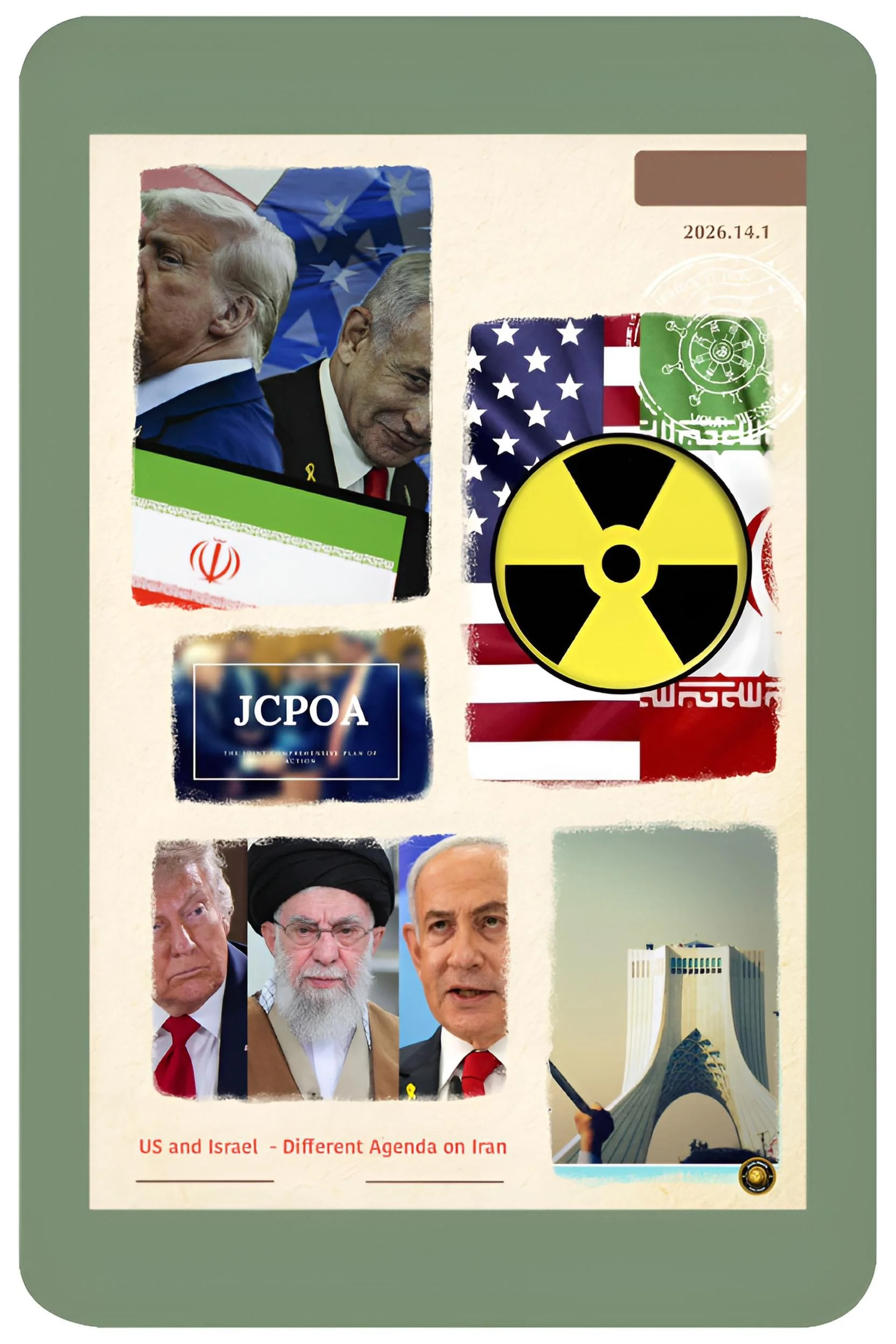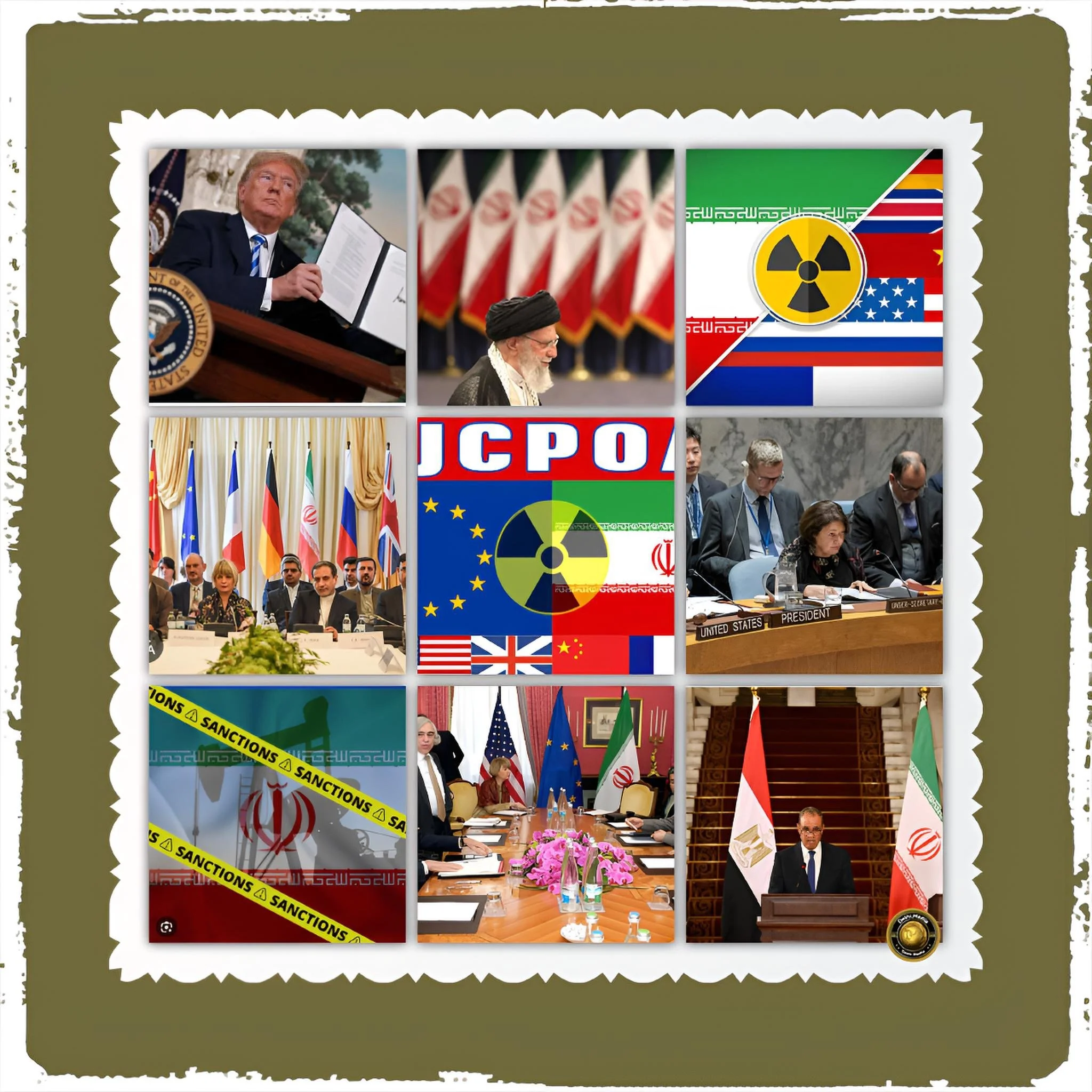
When Diplomacy Meets Geopolitical Recalculation: Understanding the Unraveling of International Nuclear Consensus - JCPOA
Summary
The trajectory of the Joint Comprehensive Plan of Action illustrates a fundamental paradox inherent in contemporary international relations: the disproportionate influence wielded by individual great powers in multilateral frameworks ostensibly committed to collective security.
The JCPOA, which entered implementation in January 2016 following extraordinary diplomatic exertion, functioned successfully for approximately three years.
During this period, the agreement achieved its primary technical objectives—constraining Iran's uranium enrichment, reducing its stockpile capacity, and establishing unprecedented monitoring mechanisms that satisfied even skeptical observers regarding verification procedures.
Yet the agreement's structural vulnerability became apparent upon the 2018 American withdrawal, revealing that technical efficacy could not compensate for the absence of sustained political consensus across successive administrations.
The profound asymmetry between Iran's compliance and its subsequent strategic response merits careful examination. Throughout the 2016-2018 implementation period, Iran demonstrated meticulous adherence to the agreement's quantitative provisions.
International Atomic Energy Agency inspectors verified that Iran had reduced its enriched uranium stockpile from approximately 7,000 kilograms to the agreed 300-kilogram ceiling, had dismantled excess centrifuge cascades, and had begun the conversion of facilities toward civilian research purposes.
This exemplary compliance occurred despite Iran's legitimate grievances regarding the inadequacy of sanctions relief and the persistent secondary sanctions imposed by the United States against European companies conducting business with Iran.
The calculus underlying American withdrawal merits scrutiny beyond the typical polemical characterization. Critics emphasized the agreement's temporary nature—the so-called sunset provisions meant that most restrictions expired after ten to fifteen years, theoretically permitting Iran's return to unrestricted enrichment by 2030-2031.
This critique, while technically accurate, overlooked the political logic behind these temporal constraints. Perpetual restrictions would have rendered the agreement politically unpalatable to Iranian constituencies and legislative bodies that viewed such permanent limitations as incompatible with national sovereignty.
Similarly, the exclusion of ballistic missile restrictions and regional military activities from the agreement's purview reflected the negotiating reality that Iran would never accept a framework addressing those dimensions without reciprocal constraints on Israeli and Gulf state capabilities.
The Trump administration's articulation of concerns regarding "inadequate" verification measures, despite consistent IAEA verification of Iranian compliance, suggests that the fundamental objection transcended technical disagreements. Rather, the withdrawal reflected a strategic reassessment concluding that constraining Iran's nuclear weapons pathway, while potentially permitting expansion of its regional military influence, represented a disadvantageous exchange.
This judgment, whatever its merits, demonstrated the fragility of arms control arrangements contingent upon the continuation of specific political alignments within major signatories.
Iran's subsequent escalation pathway appears less irrational when contextualized within this strategic environment. Having demonstrated faithful compliance with the agreement's provisions and subsequently faced reimposition of sanctions despite that compliance, Iranian decision-makers rationally concluded that the agreement had failed to deliver its primary incentive—sustained economic relief.
The domestic political consequences of compliance without compensation were substantial, particularly given that the sanctions relief had not sufficiently penetrated the broader Iranian economy to generate tangible improvements in ordinary citizens' material circumstances.
The acceleration toward 60 percent uranium enrichment, announced in April 2021, represented a qualitative escalation transcending mere return to pre-JCPOA parameters.
This enrichment level, unprecedented for any non-nuclear-weapons state, effectively converted the enrichment question from a technical constraint into a geopolitical declaration.
Iran was signaling that it retained the capacity to rapidly produce weapons-grade material should political circumstances compel weaponization. This posture reflected neither an imminent decision to weaponize nor a descent into uncontrolled proliferation, but rather a calculated deployment of nuclear latency as a deterrent instrument and bargaining lever.
The European dilemma becomes comprehensible when situated within this trajectory. France, Germany, and the United Kingdom faced the unrewarding choice between accepting Iran's systematic breach of the agreement without response or invoking the snapback mechanism that would formally terminate their own participation in the sanctions relief framework.
The decision to activate snapback in August 2025, reached only as the mechanism itself approached expiration on October 18, 2025, reflected the acknowledgment that the original agreement had become permanently nonviable.
However, the reimposition of sanctions through the snapback mechanism carries its own complications.
Sanctions imposed through this veto-proof procedure, while formally reestablished under the precise terms of previous Security Council resolutions, lack the ideological and strategic consensus that accompanied their original imposition.
China and Russia's explicit rejection of the snapback's legitimacy signals a fracture in the international consensus underlying the non-proliferation regime.
Iran, perceiving itself as victim of American unilateralism followed by European capitulation to that unilateralism, increasingly oriented itself toward strategic partnerships with Beijing and Moscow that partially offset the effects of renewed Western sanctions.
The question of weaponization timelines assumes heightened significance within this context.
Technical assessments suggesting that Iran could produce weapons-grade uranium in periods ranging from days to weeks, coupled with Iran's demonstrated technological capacity in centrifuge development and uranium metallurgy, indicate that Iran possesses a narrow decision window for rapid weapons fabrication should political circumstances change catastrophically.
The absence of evidence regarding active weaponization warhead design or integration with delivery systems does not diminish this capability; rather, it suggests that Iran has adopted a posture of nuclear latency—maintaining the capacity to weaponize without crossing into actual warhead fabrication.
The current diplomatic impasse reflects incompatible positions regarding the scope of any future agreement. The Trump administration, having returned to office in January 2026, has signaled that it would not resurrect the original JCPOA but rather would seek a more comprehensive accord addressing ballistic missiles and regional military activities.
Iran, meanwhile, has adopted an intransigent stance, declaring that it would neither abandon its enrichment program nor accept constraints on activities outside the nuclear domain. These positions appear fundamentally incompatible, suggesting that negotiation toward any near-term agreement remains implausible.
The JCPOA episode illuminates a structural vulnerability in contemporary arms control: the dependence upon sustained consensus across multiple administrations within democracies characterized by contested worldviews. When geopolitical strategies diverge fundamentally between successive governments, even technically sound agreements become vulnerable to unilateral withdrawal.
The agreement's architects understood this vulnerability intellectually but lacked mechanisms to prevent its realization politically.
The result has been a cascade of consequences extending from Iran's accumulation of weapons-grade material to the fracturing of the international non-proliferation consensus and the progressive militarization of great power competition in the Middle East region.
The bitter pedagogical lesson of the JCPOA consists in the recognition that arms control arrangements, however sophisticated their verification mechanisms or comprehensive their constraints, ultimately rest upon political foundations that technical design cannot secure.
The agreement demonstrated what international cooperation could accomplish when sustained. Its subsequent collapse demonstrated the limits of such cooperation when political will fractured.
For future negotiations, whether regarding Iran or other proliferation concerns, the fundamental prerequisite involves establishing mechanisms that can survive the inevitable shifts in political alignment that characterize democratic governance and great power competition.
The JCPOA lacked such mechanisms; its successor, whatever form it may eventually assume, must incorporate safeguards against the political vulnerabilities that precipitated the original agreement's demise.