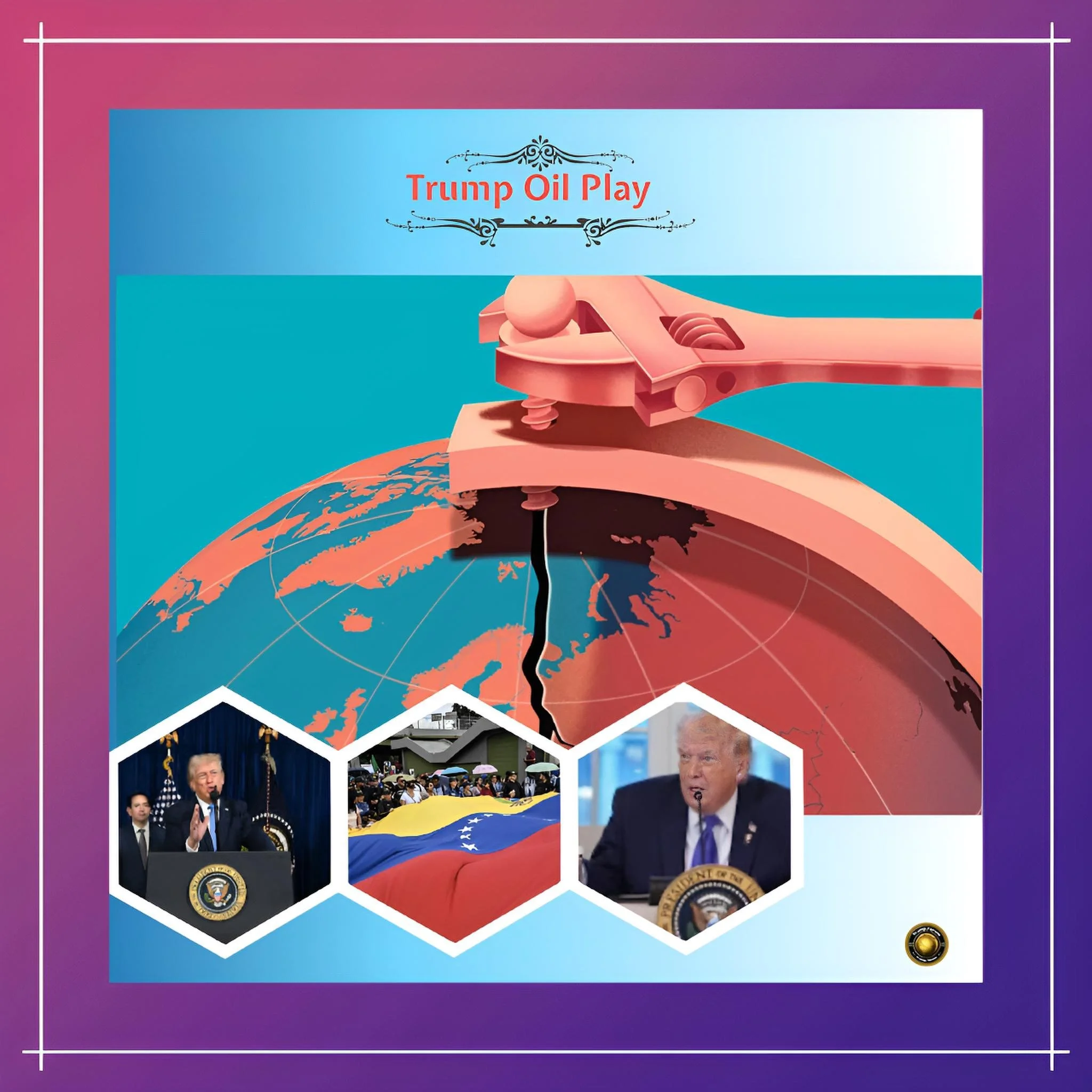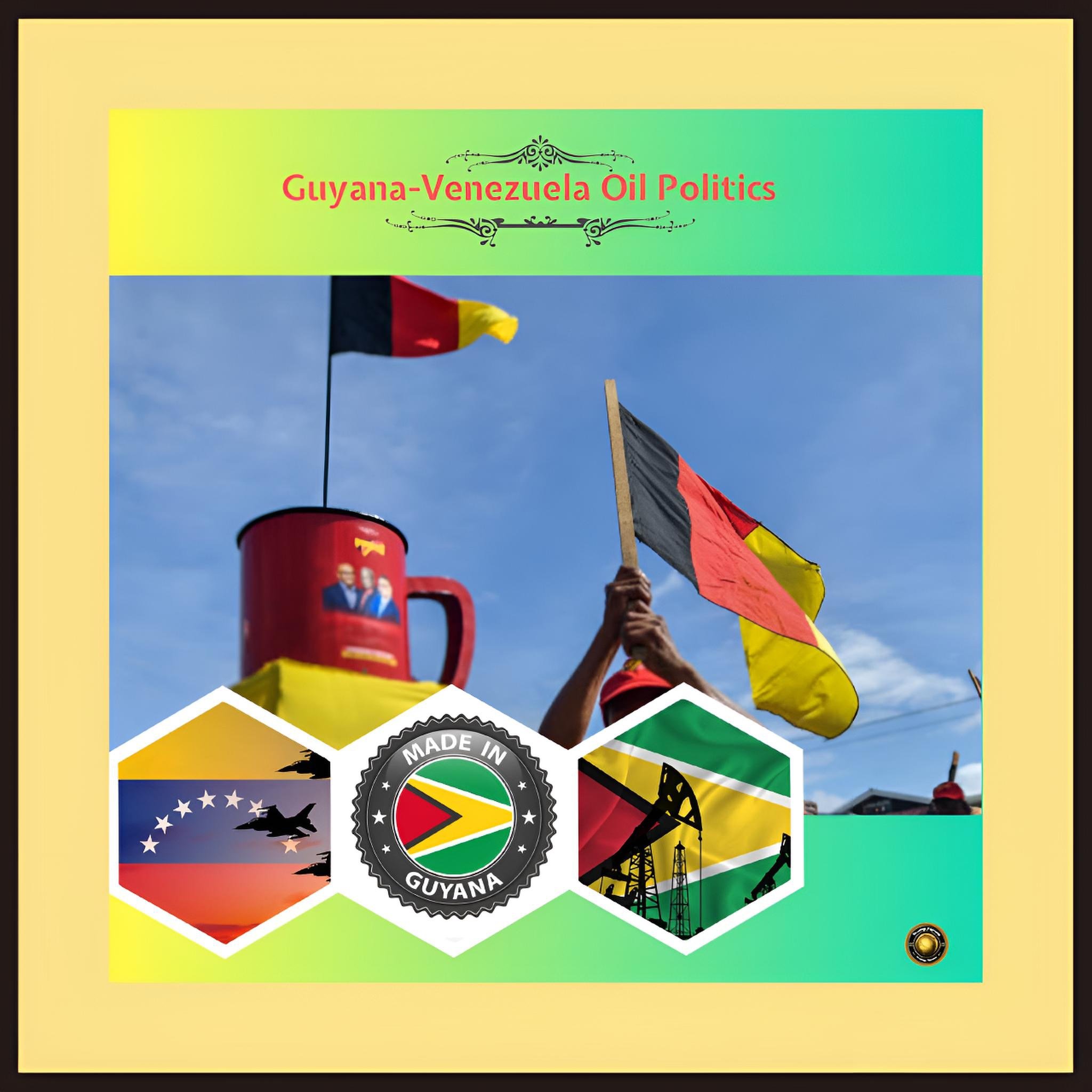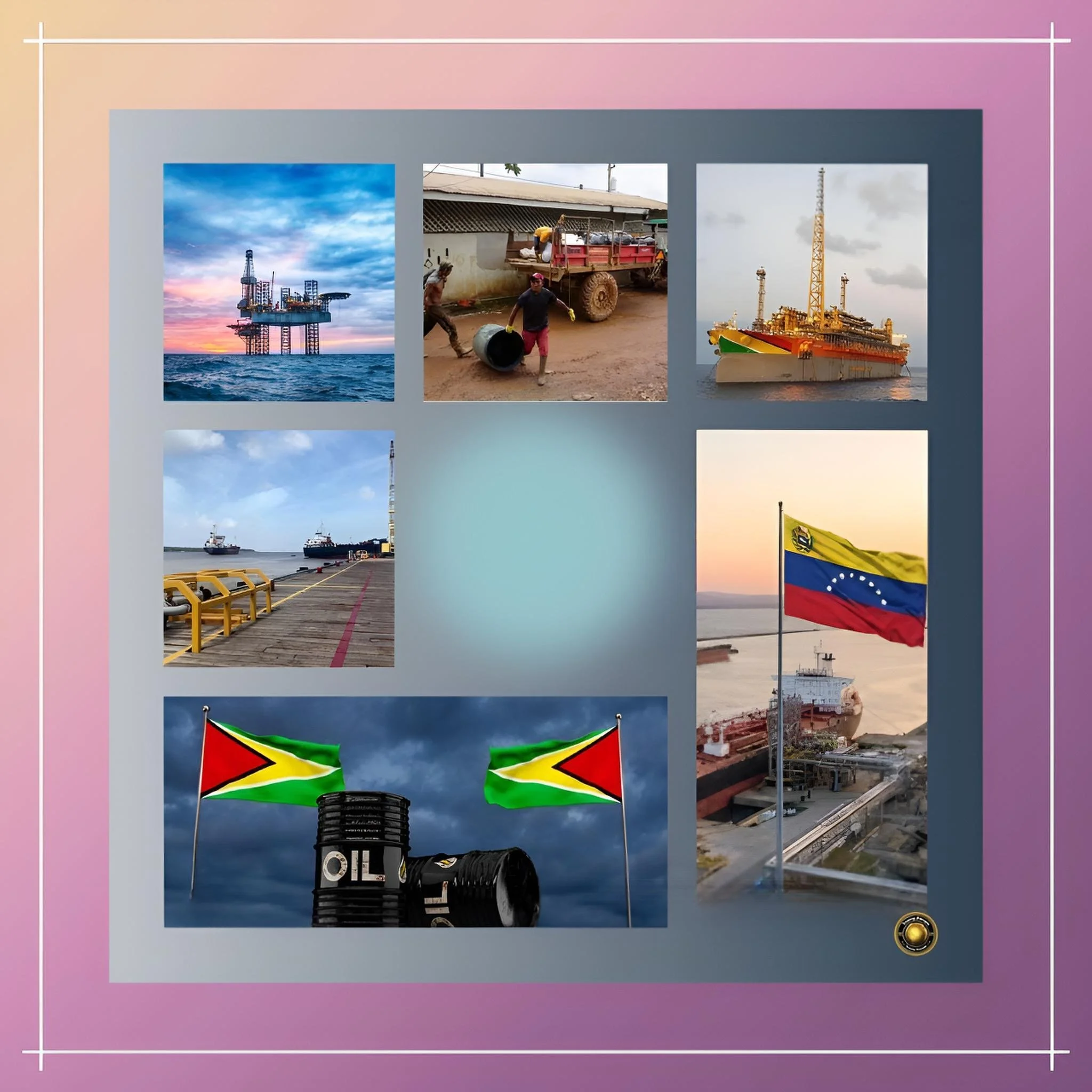
The Most Consequential Non-Decision in Caribbean Energy: Why Venezuela's Oil Will Wait While Guyana Booms
Executive Summary
The emergence of Guyana as a major global energy producer has fundamentally reconfigured Caribbean geopolitics and investor calculus regarding oil development.
With production reaching 900,000 barrels per day and projections for 1.7 million barrels daily by 2030, Guyana represents an unprecedented opportunity for capital deployment and revenue generation.
Conversely, Venezuela's vast reserves remain largely inaccessible due to geopolitical instability, infrastructure degradation, and the prohibitively high cost of heavy crude extraction. The strategic removal of Nicolás Maduro from power in January 2026 represents a watershed moment that fundamentally alters regional security calculations.
By eliminating the most significant impediment to Guyana's territorial integrity and developmental trajectory, this intervention simultaneously removes the primary barrier to capital investment in Caribbean energy infrastructure.
The fundamental question animating current investment dynamics is not whether Venezuela's reserves can be developed, but rather whether rational investors will commit capital when superior alternatives exist in stable, well-governed jurisdictions with world-class operational infrastructure.
Introduction
The Caribbean energy landscape has undergone transformation over the past decade that defies historical precedent. A region historically defined by sugar, bauxite, and tourism has emerged as a critical nexus in global hydrocarbon markets, yet this ascendancy has been unequally distributed across the region.
The concentration of investment capital, technical expertise, and operational focus in Guyana rather than Venezuela reflects not merely geological happenstance but rather a profound divergence in institutional governance, political stability, and the fundamental economic rationality governing capital allocation decisions.
This divergence has been further dramatized by Maduro's aggressive pursuit of territorial claims against Guyana, a strategy that paradoxically accelerated the very isolation and strategic marginalization of Venezuelan energy assets that the regime sought to reverse through territorial expansion.
Understanding why international petroleum companies, sovereign wealth funds, and development institutions overwhelmingly favor Guyanese oil development over Venezuelan production recovery requires rigorous examination of both the structural economics of crude production and the geopolitical risk frameworks that now dominate investment decision-making in the Western Hemisphere.
The removal of Maduro as a political actor transforms these calculations fundamentally. The threat to Guyana's sovereignty and territorial integrity, which reached apotheosis in Maduro's December 2023 referendum claiming Essequibo as Venezuelan territory, constituted the single greatest impediment to normalized capital flows into Guyanese energy infrastructure.
With that threat substantially diminished, if not entirely eliminated, the landscape has shifted decisively toward sustained, long-term capital commitment to Guyana's developmental trajectory.
Historical Development and Current Status
The territorial dispute between Venezuela and Guyana regarding the Essequibo region extends far beyond contemporary energy politics, rooted instead in the administrative and diplomatic decisions that accompanied the European decolonization process in the nineteenth century.
The 1899 Arbitral Award established the boundary between these two nascent nations, allocating Essequibo and the entire region west of the Essequibo River to British Guiana. Venezuela has contested this determination since 1962, arguing that the arbitration was flawed and that colonial powers unjustly awarded Guyanese territory to British colonial administrators.
For over six decades, this dispute remained largely rhetorical, a point of nationalist contention advanced periodically by Venezuelan governments but lacking sufficient urgency to precipitate genuine military confrontation.
The discovery of vast offshore petroleum deposits by ExxonMobil in 2015 transformed the character of this dispute fundamentally. The initial Liza-1 discovery in the Stabroek Block proved to contain recoverable hydrocarbon resources with commercial value exceeding one billion dollars, but subsequent exploration campaigns revealed a far more substantial petroleum province.
Conservative estimates place total recoverable reserves at eleven billion barrels, with additional discoveries anticipated in the coming years. This petroleum abundance transformed Essequibo from a geographically significant but economically marginal territory into one of the world's most strategically valuable maritime zones.
Guyana itself had functioned as a relatively impoverished South American nation prior to oil discovery, with an economy of approximately 40 billion dollars centered on agriculture, bauxite mining, and gold production.
A population of 830,000 residents generated per capita income levels that placed the nation in the lower-middle income category.
The oil discoveries fundamentally altered this trajectory, creating prospects for rapid economic transformation and sustained revenue generation that could position Guyana as a prosperous, developed nation within a single generation.
ExxonMobil and its partners, Hess Corporation and China National Offshore Oil Corporation, systematized petroleum production across multiple deepwater projects, achieving first oil production in 2019 and scaling operations with unprecedented speed.
Venezuela's petroleum sector, by contrast, has experienced continuous contraction since the beginning of the Maduro presidency in 2013. Production has declined from 2.7 million barrels per day to approximately 800,000 barrels daily by late 2025, representing a seventy percent reduction from historical peak production of 3.5 million barrels per day achieved in the 1990s.
This production collapse stems from multiple reinforcing factors: deteriorating infrastructure resulting from chronic underinvestment, international sanctions that eliminated access to critical equipment and spare parts, massive capital flight as technical personnel emigrated in search of stability and professional opportunity, and governmental mismanagement that subordinated energy sector efficiency to political objectives.
The Venezuelan oil industry that once ranked among the world's largest and most technically advanced has devolved into a dysfunctional complex of degraded facilities, obsolete equipment, and a workforce depleted of experienced engineers and specialists.
The fundamental characteristic distinguishing Venezuelan from Guyanese crude lies in its hydrocarbon composition and operational implications. Venezuelan oil from the Orinoco Belt constitutes heavy, sour crude with high sulfur content and density that requires specialized refineries for processing and necessitates mixing with lighter diluent for transportation.
This crude sells at a twelve to twenty dollar discount compared to global benchmarks like Brent crude oil, reflecting the additional processing costs and environmental complications attendant to its utilization.
Guyanese oil, conversely, constitutes light sweet crude of the highest commercial quality, commanding premium prices in global markets and requiring minimal processing complexity for commercialization.
Current Production Status and Strategic Positioning
As of November 2025, Guyanese production had achieved 900,000 barrels per day following the successful commencement of full-capacity operations at the Yellowtail facility, representing one of the fastest production ramp-ups in petroleum industry history.
Four fully operational developments—Liza Phase 1, Liza Phase 2, Payara, and Yellowtail—contributed to this milestone, with additional capacity additions scheduled through 2029.
The Stabroek Block co-venturers have committed more than sixty billion dollars to developing seven government-sanctioned projects, with final investment decisions already obtained for the Hammerhead development.
Production projections anticipate reaching 1.7 million barrels per day by 2030, positioning Guyana among the world's leading oil exporters on a per capita basis and generating cumulative government revenues exceeding one trillion dollars over the operational lifetime of these projects.
Venezuela's current production capacity remains constrained by infrastructure limitations despite possessing the world's largest proven reserves. Even under optimistic scenarios incorporating immediate sanctions relief, infrastructure rehabilitation, and substantial international capital inflows, analysts project production increasing to 1.5 million barrels per day by 2032 and 2 million barrels per day by 2040.
These projections require capital investments of 53 billion dollars for the baseline holding pattern scenario and 183 billion dollars for sustained growth trajectory through 2040.
The temporal dimension remains critical: achieving meaningful production increases would require a minimum three to five year trajectory from license award to initial production for new field development, with shorter timelines potentially available for rehabilitation of existing facilities and infrastructure.
Key Developments in the Maduro Threat to Guyanese Stability
Maduro's escalation of rhetoric regarding Essequibo reached critical intensity in 2023 with the organization of a consultative referendum on December 3 through which Venezuelan citizens were asked whether they supported establishing a new Venezuelan state within the disputed territory, granting Venezuelan citizenship to existing residents, and rejecting International Court of Justice jurisdiction over territorial settlement. Although turnout figures remain disputed, Venezuelan authorities claimed approximately fifty percent participation with ninety percent voting in favor of the referendum questions.
The referendum itself carried no immediate legal force, but Maduro's government subsequently transformed the referendum outcome into formal state policy by signing the "Organic Law for the Defence of Guyana Essequiba" in April 2024, effectively unilaterally annexing the disputed territory as a Venezuelan state governed from Tumeremo.
Accompanying this legal maneuver, Venezuelan military deployments significantly intensified in the border regions adjacent to Guyana. In October 2024, Venezuelan military vessels approached ExxonMobil's floating production storage and offloading vessel in the disputed zone, demanding information from crew members and creating a direct confrontation between Venezuelan state power and international energy infrastructure. Guyanese responses included deployment of military assets and solicitation of international support, particularly from the United States and United Kingdom.
The Organization of American States issued formal statements condemning Venezuelan actions as violations of international law and threats to ExxonMobil operations and regional stability.
These escalations occurred within the context of Maduro's political vulnerability domestically. The July 2024 presidential election, in which Maduro claimed victory, was widely perceived as fraudulent by international observers, the Venezuelan opposition, and regional governments.
The regime's electoral legitimacy collapsed following contested election results, creating domestic instability that paradoxically coincided with the regime's most aggressive international posturing regarding Essequibo.
Military resources ostensibly allocated to border enforcement were simultaneously diverted toward internal repression and suppression of opposition protest movements, creating a contradictory strategic environment in which aggressive territorial rhetoric masked fundamental governmental weakness.
The Geopolitical Implications of Removing Maduro
The United States military operation conducted on January 3, 2026, codenamed "Absolute Resolve," fundamentally altered the regional geopolitical landscape through the capture of Maduro and his wife, Cilia Flores. Delta Force operatives conducted targeted raids against Venezuelan military installations while over 150 United States aircraft conducted precision strikes against communications infrastructure, military facilities, and defensive systems.
Maduro was subsequently transported to New York, arraigned on charges of narco-terrorism and narcotics trafficking, and entered a plea of not guilty while interim governmental figures assumed administrative authority pending political transition processes.
This intervention eliminated the primary agent advocating territorial expansion against Guyana. While the underlying territorial dispute persists as a long-standing Venezuelan claim, the removal of Maduro substantially diminishes the likelihood of military escalation or aggressive action toward Guyanese territory in the near to medium term.
Maduro's regime had invested substantial political capital in the Essequibo dispute as a mechanism for generating nationalist sentiment and diverting attention from economic collapse, repressive governance, and the deterioration of living standards affecting the Venezuelan population. His successor interim authorities, focused primarily on stabilizing internal governance and preventing state collapse, have demonstrated reduced appetite for aggressive regional posturing.
The U.S. intervention simultaneously clarified the American strategic commitment to Guyanese territorial integrity and resource security. Secretary of State Marco Rubio's public statements have positioned Guyanese sovereignty and regional stability as aligned with American strategic interests, formalizing security guarantees that render significant probability to any Venezuelan adventurism.
The deployment of U.S. military assets in the region, including jet aircraft and special operations forces, creates a visible deterrent architecture that makes military conquest of Guyanese territory substantially less feasible from a strict cost-benefit calculation perspective.
Investment Dynamics and Capital Allocation Frameworks
The divergent investment trajectories of Guyanese and Venezuelan oil assets reflect rational capital allocation decisions within rigorously defined governance frameworks. ExxonMobil, operator of the Stabroek Block and the world's largest petroleum company, has explicitly prioritized stable, predictable regulatory environments characterized by transparent contract enforcement and protection of investor property rights.
The company's CEO, Darren Woods, has established conditions for Venezuelan re-engagement including the establishment of functioning legal systems capable of enforcing contracts, revision of hydrocarbon legislation to create predictable business frameworks, and robust investment protections against governmental asset seizure or contract abrogation.
These requirements emerge from historical experience. ExxonMobil sustained substantial losses during the Chavez and Maduro periods as Venezuelan governments expropriated company assets without compensation, renegotiated contracts unilaterally, and subjected foreign investors to legal uncertainty and political pressure.
The company's arbitration claims against Venezuela for expropriated assets remain unresolved, with settlement discussions preceding any potential Venezuelan reinvestment. Reentry into Venezuelan markets would require confidence in governmental stability and commitment to contractual obligations, conditions entirely absent under contemporary Venezuelan circumstances.
By contrast, Guyanese governance has established transparent institutions including a professional sovereign wealth fund, competitive bidding processes for petroleum concessions, and institutional frameworks that operate according to formal legal provisions rather than arbitrary executive discretion.
The Guyanese government has demonstrated commitment to contractual sanctity and investor protection, creating the institutional prerequisites for sustained capital deployment. International capital flows have responded accordingly, with Guyanese oil production achieving growth rates without historical parallel in petroleum industry experience.
Exxon's aggressive capital commitment to Guyanese development, evidenced through sixty billion dollar investment commitments, reflects confidence in the stability and profitability of operations within this jurisdiction.
Cause-and-Effect Analysis: The Maduro Threat as Investment Impediment
Maduro's territorial claims and military escalation created multiple reinforcing mechanisms that depressed capital confidence in Guyanese assets and elevated perceived investment risk.
The threat of military conflict, annexation, or seizure of production facilities created fundamental uncertainty regarding whether petroleum investors could conduct normalized operations in the disputed zone. Insurance and underwriting costs for maritime operations in contested zones increase substantially, reflecting the enhanced probability of operational disruption.
Supply chains and logistics networks become subject to interruption if territorial disputes escalate to active military confrontation. Multinational companies face reputational risk and potential shareholder liability if operations proceed in territories subject to territorial claims and military threat.
Maduro's specific targeting of ExxonMobil through military harassment of production vessels, formal claims of territorial jurisdiction over production zones, and legal declarations integrating these zones into Venezuelan territory created operational friction and strategic uncertainty.
The International Court of Justice's December 2023 order prohibiting Venezuela from altering the status quo in disputed territory created some legal framework for ExxonMobil operations, but the order's enforceability remained contingent on Venezuelan compliance and international willingness to enforce judicial decrees through military or diplomatic means.
The regulatory uncertainty created by Venezuelan actions increased the cost of capital for Guyanese operations, necessitating higher discount rates and return thresholds to justify continued investment.
The removal of Maduro directly alleviates these impediments through multiple mechanisms. The elimination of the primary political actor advocating territorial expansion reduces the probability of aggressive military action or governmental harassment of energy infrastructure.
The clarified U.S. commitment to Guyanese territorial integrity transforms the underlying threat environment from uncertain to significantly more stable. Markets and investors respond to reduced uncertainty through lower cost of capital, accelerated investment timelines, and enhanced confidence in long-term operational continuity.
Additionally, the removal of Maduro creates space for Venezuelan energy sector rehabilitation focused on domestic recovery rather than regional adventurism.
The interim government and successor political authorities are substantially more likely to prioritize internal stabilization and economic reconstruction than pursuit of territorial claims requiring military capability Venezuela does not possess and populace support Maduro no longer commands. This shift in governmental priorities reduces the zero-sum character that had defined Venezuela-Guyana relations throughout Maduro's tenure.
Future Trajectory and Investment Positioning
Looking forward, the capital allocation frameworks governing global petroleum investment appear likely to sustain strong preferential advantage toward Guyanese operations relative to Venezuelan alternatives for the foreseeable future.
The combination of superior crude quality, world-class operational infrastructure, stable governance, and clarity regarding territorial control creates a compelling competitive advantage that economics alone cannot overcome.
Even if Venezuela achieves political stabilization and sanctions relief, the structural advantages possessed by Guyanese light sweet crude and the institutional advantages of Guyanese governance remain substantial.
Venezuelan energy sector rehabilitation is theoretically feasible given adequate capital investment and time, but rational investors will continue deploying capital to Guyanese expansion as long as those opportunities remain available at acceptable return rates.
ExxonMobil projects continued Guyanese production growth through 2030 as additional projects commence operations and existing facilities achieve full capacity utilization.
The Hammerhead development, Uaru, Whiptail, and Longtail projects will sequentially come online, adding incremental production capacity while the company's existing portfolio generates cash flows supporting continued capital deployment.
Venezuelan energy sector development will necessarily occur on a deferred timeline relative to Guyanese expansion.
The political transition processes must stabilize, confidence in governmental commitment to contractual frameworks must be reestablished, infrastructure rehabilitation must proceed, and international capital must be marshaled at scale sufficient to justify the investment requirements.
These prerequisites are achievable but require years of sustained effort and political stability that Venezuela has not recently demonstrated.
The removal of Maduro creates the necessary condition for Venezuelan energy sector rehabilitation by eliminating the most destabilizing geopolitical threat operating against both Venezuelan interests and regional stability. However, the elimination of this threat does not automatically convert Venezuelan energy assets into attractive investments relative to Guyanese alternatives.
The structural advantages possessed by Guyanese crude and governance will sustain preferential capital allocation toward Caribbean operations in the Caribbean even under scenarios of successful Venezuelan political transition and sanctions relief.
Conclusion
The fundamental answer to the question of why investors favor Guyanese oil over Venezuelan reserves lies not in conspiracy or arbitrary preference but rather in the objective economic and political metrics governing capital allocation in capital-intensive, long-cycle industries.
Guyana offers superior crude quality, world-class operational infrastructure, institutional governance frameworks that protect investor interests, and political stability undergirded by explicit international security commitments.
Venezuela, despite possessing the world's largest proven petroleum reserves, confronts structural barriers encompassing heavy sour crude requiring specialized processing, degraded infrastructure demanding massive rehabilitation, governance frameworks historically hostile to foreign investors, and political instability that creates operational uncertainty.
The removal of Maduro from power in January 2026 eliminates the most acute impediment to Guyanese development through elimination of the primary political actor advocating territorial conquest.
This removal does not magically transform Venezuelan energy assets into competitors for global capital relative to Guyanese opportunities, nor does it eliminate the structural economic characteristics that have rendered Guyanese petroleum development more economically attractive to international investors.
What it does accomplish is the elimination of a source of regional destabilization that could have disrupted Guyanese operations and created the political conditions for military conflict that would devastate both nations.
The strategic calculus governing petroleum investment has never fundamentally turned on abstract justice regarding historical territorial claims or the emotional resonance of nationalist narratives. Instead, it responds to objective measures of profitability, risk-adjusted returns, and the presence of institutional frameworks capable of protecting capital investment against expropriation and contract violation.
By these metrics, Guyana will continue to attract capital while Venezuelan rehabilitation will necessarily operate on an extended timeline contingent upon successful political transition and institutional reform.
The removal of Maduro accelerates the trajectory toward regional stability and eliminates a significant source of uncertainty for Guyanese capital flows, but it does not fundamentally alter the underlying competitive dynamics that have driven capital toward Caribbean energy development at the expense of Venezuelan alternatives.