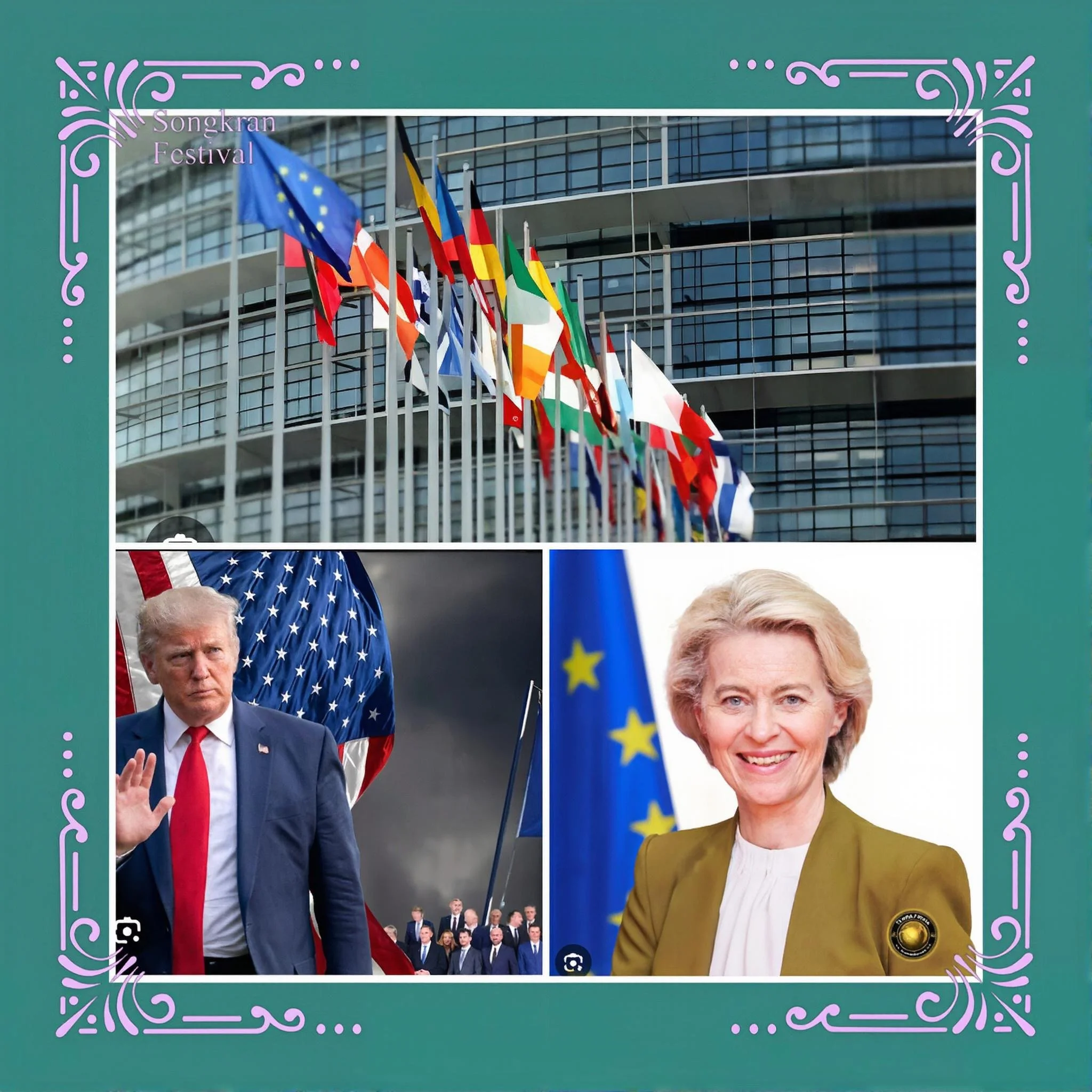
Europe’s Strategic Illusions Collapse in a Year of Harsh Geopolitical Reality - Part I
Executive Summary
The Reckoning Has Begun: Dissecting Europe's Defence Awakening
The year 2026 represents a decisive inflection point in the European security paradigm. The announcement of the Greenland acquisition bid and the persistent signals of American strategic retrenchment have shattered decades of implicit assumptions regarding the permanence of transatlantic security guarantees.
European nations, confronted with the prospect of genuine strategic autonomy, face a bifurcated reality: possessing the aggregate economic resources and technological sophistication to construct autonomous defence capabilities, yet constrained by structural fragmentation, industrial bottlenecks, and the temporal compression between political ambition and operational implementation.
FAF examines whether 2026 constitutes the genuine beginning of European defence independence or represents merely another aspirational iteration of policies that exceed the continent's willingness to execute them comprehensively.
Introduction
When the Guarantee Expires: Trump's Challenge and Europe's Awakening
The proposition that "2026 is the year Europe will fend for itself" emerges not from utopian thinking but from the convergence of unprecedented geopolitical pressures and Brussels' own articulated commitments.
The NATO summit in The Hague (June 2025) inaugurated a new defence expenditure framework demanding 5 percent of GDP annually by 2035, with intermediate benchmarks of 3.5 percent for core military capabilities.
Simultaneously, the Trump administration's interrogation of Article 5 collective defence obligations and threatening overtures toward Greenland have precipitated what European strategists characterise as an existential rupture in the transatlantic relationship. Whether through intentional coercion or genuine preference for American strategic reorientation toward the Indo-Pacific, Washington has signalled that the era of American provision of European security at the periphery of American attention has concluded.
The ReArm Europe/Readiness 2030 initiative mobilises €800 billion across the decade for defence industrial transformation, whilst the €150 billion Security Action for Europe (SAFE) facility permits member states to circumvent traditional fiscal constraints.
These commitments constitute the material scaffolding upon which European strategic autonomy must be constructed. Yet the question persists: does institutional commitment translate into operational capability?
Historical Context and the End of the Peace Dividend
The Illusion Ends: How the Peace Dividend Became Europe's Strategic Vulnerability
European defence policy since 1991 operated within a peculiar historical parenthesis. The Cold War's termination liberated capital and institutional attention from defence modernisation. NATO expansion absorbed former Soviet satellite states into a security architecture underwritten by American preponderance. Russia, economically enfeebled and politically chaotic during the 1990s, posed no acute conventional challenge.
This confluence of circumstances permitted what scholars term the "peace dividend"—the progressive reduction of European defence expenditure, the atrophy of military-industrial capacity, and the intellectual displacement of security concerns from the centre to the periphery of European political discourse.
The Ukraine invasion of February 2022 shattered this interregnum violently. Yet even this shock to the European system produced incrementalism rather than transformation. Successive iterations of European defence initiatives—the Defence Readiness Roadmap, the European Compass—articulated ambitions without corresponding institutional authority or industrial preparation.
European procurement remained predominantly national, interoperability gaps festered, and the continent's defence industrial base continued its organic decline relative to American and Chinese competitors.
Current Status: Ambition Without Parity
Rhetoric Meets Reality: Why €800 Billion Promises Insufficient Firepower
As of early 2026, European defence spending collectively reaches approximately €381 billion annually, representing 2.1 percent of GDP across the twenty-three NATO member states within the European Union. The new NATO commitment of 3.5 percent of core military expenditure implies an additional €254 billion in annual spending by the end of the structural adjustment period.
The ReArm Europe initiative mobilises procurement and industrial investment through two mechanisms: the activation of the national escape clause under the Stability and Growth Pact, permitting member states to increase defence spending contrary to normal fiscal restrictions, and the SAFE facility providing €150 billion in concessional lending for defence investment through 2030.
Institutionally, the Permanent Structured Cooperation (PESCO) framework encompasses seventy-four projects spanning unmanned systems, integrated air and missile defence, cyber capabilities, and medical facilities. Approximately half have entered the execution phase.
The creation of the Military Schengen zone conceptually permits cross-border military movement unconstrained by the administrative procedures that historically impeded force mobility across the continent.
Yet operational reality diverges sharply from institutional pronouncement. The Future Combat Air System (FCAS) programme, an eight-year initiative involving France, Germany, and Spain to develop a sixth-generation fighter jet, encountered such profound industrial and political divisions that a decision regarding the programme's future was postponed beyond its self-imposed year-end 2025 deadline, with no new decision date established.
A demonstrator aircraft initially scheduled for 2027 cannot be completed, with entry-into-service now estimated for 2045 at the earliest.
The programme's fundamental structure—wherein Dassault Aviation leads the fighter aircraft element, Airbus leads the combat cloud and remote carriers, and Spain's Indra leads sensors—has created cascading disputes regarding industrial leadership, technological control, and return on investment. France signals intent to pursue an independent programme should tripartite cooperation fail.
Germany and Spain explore alternative partnerships including Sweden and Poland. This dysfunction, occurring within the three largest European defence industrial economies, exemplifies the fragmentation that plagues European security governance.
Decisions requiring unanimity often produce paralysis or late compromises that sacrifice efficiency for political accommodation.
Key Developments and Strategic Catalysts
The Greenland Ultimatum: How Sovereignty Became Defence Europe's Catalyst
The Greenland incident of January 2026 functioned as the crystallising moment that transformed European strategic autonomy from an intellectual exercise into an existential imperative.
When President Trump articulated the possibility of acquiring Greenland from Denmark—itself a NATO member—the Danish Prime Minister's response was categorical: any military intervention against a NATO member would constitute the "destruction of NATO" itself.
This rhetorical escalation by Copenhagen reflected the collective European recognition that the American security guarantee could no longer be presumed automatic. The statement implicitly acknowledged that NATO's binding power derived from American enforcement capacity rather than from multilateral commitment to collective defence.
The statement, therefore, revealed rather than created the new reality—NATO's credibility rests upon American willingness to execute collective defence at potentially significant cost, and the Trump administration has repeatedly signalled ambivalence regarding that willingness.
Simultaneously, the Pentagon announced the withdrawal of approximately one thousand American troops from Romania, terminating a rotational presence that had provided forward-deployed capabilities along NATO's eastern frontier.
While characterised by Pentagon officials as a modest adjustment within a broader force posture review rather than a fundamental withdrawal, the announcement's timing and context signalled that the Trump administration intended to translate rhetorical pressure regarding European defence burden-sharing into concrete force reductions.
Pentagon officials privately conveyed to European counterparts that the United States established a 2027 deadline for Europe to assume genuine leadership in conventional defence. Failure to meet this benchmark might precipitate American withdrawal from NATO's integrated command structure and coordinated defence planning.
Whether this constitutes authentic administration policy or represents Pentagon institutional resistance to retrenchment remained ambiguous; the message's effect, however, proved unambiguous. European defence ministers accelerated discussions regarding the Defence Readiness Roadmap 2030 implementation.
The Ukraine peace negotiations, which achieved provisional cease-fire frameworks in January 2026, paradoxically accelerated European defence commitments. European capitals recognised that any sustainable peace arrangement would require European enforcement rather than American underwriting.
France and Britain pledged to establish military hubs throughout post-conflict Ukraine, providing secure facilities for weapons storage and equipment management. This represented the first explicit assumption by European powers of security guarantees previously anticipated from NATO collectively.
The shift from guarantee-seeking to guarantee-provision marked a conceptual reorientation whose implications remain insufficiently explored within European political discourse.
Cause-and-Effect Analysis: The Machinery of Transformation
Building Autonomy While Drowning in Dependency: The Industrial Paradox
The transformation of European defence posture operates through multiple simultaneous mechanisms, each possessing distinct time horizons and efficacy rates.
The most immediate mechanism involves procurement acceleration. European nations collectively authorised defence spending increases substantially above their historical trajectories. Poland, Estonia, Lithuania, and other frontline states prioritised ammunition production, air defence systems, and long-range precision strike capabilities.
The Czech-led initiative to aggregate artillery shells globally, when transatlantic aid stalled, demonstrated that European coalitions of the willing could function pragmatically around institutional paralysis.
The EU's Act in Support of Ammunition Production (ASAP) targeted approximately two million 155-millimetre shells annually by the conclusion of 2025.
Rheinmetall unveiled Europe's largest ammunition manufacturing facility at Unterlüß in August 2025, with capacity reaching three hundred thousand shells per year and projected expansion toward 1.1 to 1.5 million rounds annually by 2027.
Yet procurement acceleration encounters systemic impediments. Russian artillery production reached approximately four million shells annually by 2025, substantially outpacing European capacity even at maximum expansion. NATO's 2026 target of roughly 267,000 rounds monthly achieves parity with Russian production rather than superiority—an insufficient posture for genuine deterrence when Europe requires production dominance to offset Russian advantages in mass and firepower.
The ammunition shortage reflects deeper industrial vulnerabilities. European explosive production depends upon a single major TNT manufacturer in Poland. Rare earth material sourcing remains almost entirely dependent upon Chinese suppliers; Romania's nascent efforts to capture market share represent long-term hedges rather than near-term solutions.
The overlap between defence and civilian supply chains—electronics, micro-components, hydraulic systems, electrical harnesses—creates competition for scarce inputs.
Automotive manufacturers compete directly with defence contractors for printed circuit boards and semiconductor components. Rail and machinery sectors face identical pressures. Suppliers, responding to governmental urgency and defence contract premiums, divert production toward military applications. This creates cascading disruptions across civilian industries whose supply chains intersect with defence networks.
The second transformative mechanism involves industrial restructuring. European defence companies, recognising the demand surge, invested heavily in production capacity expansion. Beyond ammunition manufacturing, companies like Indra Group tripled technological footprints and consolidated supplier networks into fewer than 550 strategic relationships.
This represented a transition from fragmented production toward integrated supply chain management—yet implementation proceeded slowly and inconsistently across the continent. Indra alone was selected to operationalise over half of Spain's 31 Special Modernisation Programmes, consolidating coordination within the Spanish defence industrial ecosystem. Similar patterns emerged in France and Germany, though coordination remained predominantly national rather than pan-European.
The FCAS programme's dysfunction reflected this deeper tension between national industrial champions and European collective procurement.
The tertiary mechanism involves capability development through PESCO projects. The seventy-four active initiatives spanning cyber, unmanned systems, integrated air and missile defence, and logistical integration represented the most concrete institutional expression of European defence interdependence.
Projects demonstrating genuine operationality included the Cyber Rapid Response Teams and European Medical Command, which activated in support of missions including the European Union Military Assistance Mission in Ukraine. Yet PESCO projects suffered from three systematic limitations.
First, execution proceeded unevenly across projects; some remained in preliminary design phases whilst others approached operational deployment.
Second, projects prioritised capability development over technological innovation.
European defence spending weighted procurement heavily over research and development—unlike the United States, which invests roughly equal resources in both, European governments allocated perhaps 20 percent of defence spending to research and innovation. This imbalance risks perpetuating European dependence upon American technological leads in advanced domains including artificial intelligence, autonomous systems, and hypersonic weapons.
Third, member state participation reflected national interest calculations rather than collective strategic requirements. Governments joined projects aligned with indigenous industrial interests whilst remaining peripheral to initiatives offering fewer direct economic benefits.
This perpetuated the fragmentation that undermined Europe's collective military effectiveness.
Latest Facts and Evolving Concerns
2027 or Bust: Trump's Deadline and Europe's Acceleration Dilemma
The political landscape entering 2026 possessed characteristic fragility. The anticipated completion of the Force Posture Review—which would outline specific timelines and magnitudes for American troop reductions—remained unpublished as of January 2026.
This administrative ambiguity permitted both European worst-case scenario planning and continued hedging regarding genuine American commitment. The Pentagon's private communications regarding the 2027 deadline circulated widely through NATO channels, yet Trump administration ambivalence regarding the Pentagon's negotiating position persisted.
Vice-President JD Vance's public statements regarding potential American withdrawal should the European Union attempt technology regulation suggested that defence cooperation remained contingent upon broader American strategic preferences.
European intelligence assessments, meanwhile, reflected sobering evaluations of the capability-threat mismatch.
The IFRI Europe-Russia Balance of Power Review concluded that European nations possessed sufficient aggregate economic, technological, and military potential to defend the continent by 2030, contingent upon demonstrated political will. Yet the report emphasised critical asymmetries. Russia's tactical advantage in the land domain—reflected in mass, firepower, mobilisation capacity, and attrition tolerance—remains decisive for conventional warfare along the eastern frontier. Europe's superiority in air, naval, cyber, and spatial domains offers advantages only if the conflict shifts into those domains, requiring strategic choices Europeans have historically been reluctant to embrace.
Reliance upon American extended nuclear deterrence remained fundamental; any serious undermining of the American nuclear guarantee would create strategic imbalance.
The Defence Readiness Roadmap 2030 implementation commenced with the Eastern Flank Watch programme, integrating air defence, ground defence, maritime security, and civil resilience across the Baltic and Black Sea regions. However, the programme's critics noted the inherent conflict between frontline states' urgent requirements and the geographically distant member states' fiscal reluctance.
Those furthest from Russian borders questioned both the costs and the intrusion by Brussels into what they characterised as sovereign defence prerogatives.
This tension threatened programme durability should electoral cycles produce governments prioritising domestic expenditures over defence investments.
Future Steps and the Temporal Problem
The Temporal Trap: Managing Multiple Crises Within a Single Decade
Europe's strategic autonomy trajectory depends upon decisions and execution occurring across multiple time horizons, each possessing distinct feasibility thresholds.
The immediate twelve-month horizon (2026) requires crystallising decisions regarding FCAS, finalising the Defence Readiness Roadmap 2030 implementation framework, and demonstrating capacity for rapid ammunition and drone production scaling.
The medium-term horizon (2027-2030) demands achieving the NATO 3.5 percent of GDP core defence expenditure commitment across all member states, completing Military Schengen zone operationalisation, and fielding the first-generation capabilities envisioned within PESCO projects.
The long-term horizon (2030-2040) requires sustaining defence spending at elevated levels despite inevitable electoral pressures, completing the development of European sixth-generation combat aircraft, achieving technological parity with American and Chinese advanced systems, and constructing autonomous European strategic intelligence, surveillance, and reconnaissance capabilities.
The critical vulnerability affecting all time horizons concerns the sustainability of political commitment. Democratic societies periodically reorient priorities toward domestic expenditures.
The activation of the national escape clause permits elevated defence spending through 2028, yet permanent elevation requires either sustained public support or structural budgetary reorientation.
Public opinion data from late 2025 indicated strong support for defence spending within NATO-European populations, reaching 76 percent in favour of maintaining or increasing expenditures. Yet this support remains contingent upon the perception of acute Russian threat. Should Ukraine-related tensions diminish or peace accords stabilise borders, electoral pressures toward social spending might reassert dominance.
The temporal compression between European institutional decision-making and American strategic preferences creates additional urgency. The Trump administration's 2027 deadline for European assumption of genuine conventional defence responsibility establishes a checkpoint against which American commitment to NATO will ostensibly be assessed. If European progress proves insufficient by Trump's subjective evaluation, precedent suggests the administration will pursue actual force reductions regardless of Congressional restrictions.
The 2024 National Defense Authorization Act included provisions constraining the President's ability to modify force posture, yet the administration's signing statement reasserted executive prerogatives in this domain.
European planners must simultaneously manage three contradictory imperatives: accelerating defence capacity development (time-constrained by American impatience and Russian threat), avoiding technological dependency upon new partners replacing American providers, and sustaining the political coalitions necessary for continued elevated defence spending.
These imperatives cannot be simultaneously optimised; policy choices reflect compromises acknowledging inherent tensions.
Conclusion
Home Alone in a Hostile World: Can Europe Survive Its Own Independence?
The Autonomy Paradox
The question whether 2026 constitutes the year Europe achieves strategic autonomy admits of no categorical affirmation or negation. Rather, 2026 represents a watershed moment in which European ambitions, once confined to rhetorical iteration, encountered the material constraints and political realities of genuine execution. Europe possesses neither the political unity enabling rapid multilateral decision-making nor the industrial capacity for warfare-scale production.
The aggregate spending increases remain insufficient for European dominance in conventional capabilities, particularly across the land domain where Russian advantages persists. The continent's dependence upon American strategic enablers—intelligence, surveillance, and reconnaissance; long-range precision strike; logistics; airlift; and nuclear deterrence—cannot be rapidly eliminated through procurement or industrial investment. Yet the alternative—acquiescence to American strategic retrenchment—proves politically unacceptable, particularly to frontline states whose security risks increase proportionally with American disengagement.
The paradox of European autonomy, therefore, lies in the recognition that genuine independence remains decades distant whilst the necessity for autonomous capability development has become historically immediate.
Europe is constructing the machinery for independence even whilst acknowledging the futility of expecting near-term strategic autonomy in its classical conception. The ReArm Europe initiative, the Defence Readiness Roadmap, and the expanding PESCO architecture represent not delusions of imminent European defence independence but rather long-term structural investments in reducing the rate of American dependency.
Decisions crystallised in 2026—particularly regarding FCAS and the implementation framework for Defence Readiness 2030—will determine whether this transition constitutes a managed evolution toward greater European responsibility or a chaotic dissolution of transatlantic security architectures.
The year 2026 will not witness Europe fending for itself in any comprehensive sense. Rather, it will witness the beginning of Europe accepting the psychological reality that it must prepare to fend for itself—a realisation with profound implications for European grand strategy, industrial organisation, and political unity.
Whether Europeans possess the political endurance to sustain this preparation through inevitable disappointments, competing demands, and the perpetual seductions of hope that American commitment will endure remains the genuine strategic question underlying all institutional pronouncements regarding European autonomy.
The answer to this question will determine whether 2026 inaugurates a genuine transformation or merely represents another iteration of promising restructuring followed by inadequate execution.