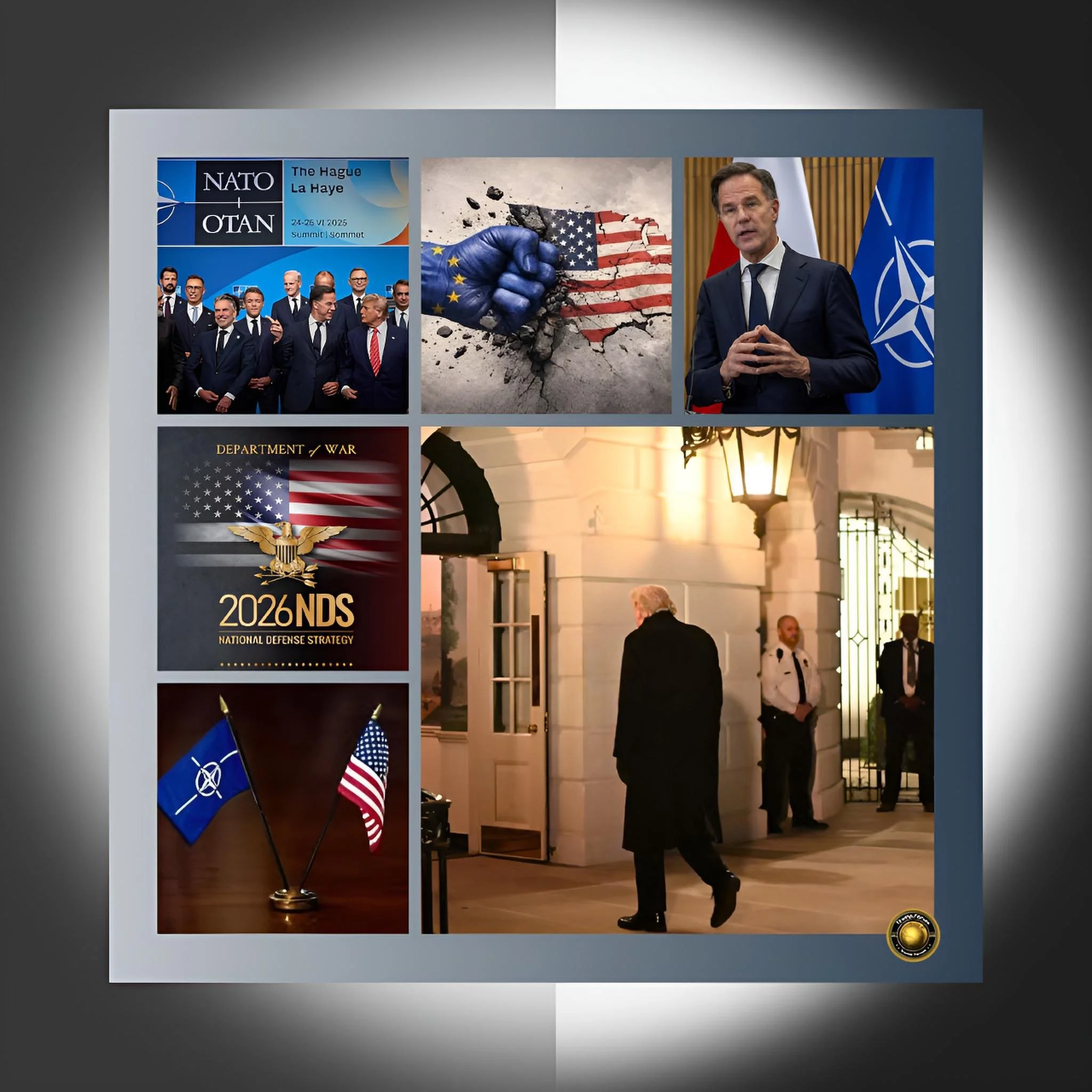
Europe’s Socio-Economic and Political Dependence: A Strategic Assessment of Structural Vulnerabilities and Liberation Pathways
Executive Summary
Countdown to 2030: Why Europe’s Defence Transformation Must Begin Now or Face Permanent Subordination
Europe stands at a critical historical juncture, ensnared in a complex web of interdependencies that simultaneously constrain its geopolitical autonomy and expose it to systemic vulnerabilities from both Russian aggression and American strategic realignment.
The continent’s dependence manifests across multiple dimensions: energetic reliance on Russian hydrocarbon flows, structural subordination to American military guarantees, fragmentation of its financial architecture that hemorrhages approximately €7.5–8 trillion in unrealized economic growth since 1995, technological vulnerabilities in critical sectors such as semiconductors, and decision-making paralysis rooted in its consensus-driven institutional design.
However, the structural conditions for liberation are accumulating simultaneously. The Defence Readiness Roadmap 2030, newly formalized NATO spending commitments targeting 5 percent of GDP by 2035, and emerging consensus on strategic autonomy suggest that Europe possesses the material capacity—though not yet the political will—to construct an independent security architecture within the decade.
The critical variable is whether the European Union can execute a fundamental institutional and economic transformation at sufficient velocity before geopolitical windows close and American strategic guarantees become irrevocably conditional.
Introduction
Europe at a Crossroads: The 2030 Autonomy Deadline Is Ticking as Russia Calculates, America Retreat
The notion of European dependence is neither new nor particularly contentious in academic discourse; however, the urgency and structural depth of this subordination have intensified dramatically following Russia’s invasion of Ukraine in February 2022 and the Trump administration’s formal signaling in December 2025 that the United States may no longer provide unconditional security guarantees to the continent.
For seventy-five years, the transatlantic architecture functioned as an implicit bargain: Europe provided strategic real estate, political alignment, and economic integration into American-led systems in exchange for American military protection and institutional frameworks guaranteeing interstate stability.
This arrangement, while constraining European autonomy, delivered measurable security dividends and facilitated unprecedented prosperity through integrated Western institutions.
The fundamental premise of this settlement—American commitment to European collective defense through NATO’s Article 5 guarantee—is now explicitly in doubt.
Europe’s multidimensional dependence extends beyond the traditional military-strategic axis.
The continent’s fragmented capital markets have systematically redirected innovation capital and high-growth entrepreneurial ventures toward Wall Street, creating a persistent value leakage that compounds over decades.
Energy security remains precariously tethered to Russian hydrocarbon infrastructure despite nominal commitments to diversification.
Semiconductor manufacturing capacity—a foundational component of contemporary economic and military power—remains concentrated in Asia, with European firms occupying only peripheral positions in the advanced-node fabrication ecosystem.
Moreover, the European Union’s decision-making architecture, constructed around consensus among 27 member states with divergent strategic interests, has become functionally inadequate for the rapid, decisive action that contemporary geopolitical competition demands.
The trajectory forward is neither deterministic nor equitable. Europe possesses genuine material advantages—an integrated single market encompassing 450 million consumers, technological leadership in critical domains, substantial industrial capacity, and accumulated geopolitical experience.
Yet these assets remain underutilized, fragmented across competing national interests, and vulnerable to exploitation by external actors who operate with strategic clarity and decisional efficiency.
Understanding the architecture of European dependence, the mechanisms perpetuating these vulnerabilities, and the pathways toward genuine autonomy is essential for comprehending both the continent’s existential challenges and the potential contours of a multipolar world in which European strategic agency becomes determinate rather than derivative.
Key Developments: The Architecture of Contemporary European Subordination
Energetic Vulnerability and the Russian Leverage Mechanism
Europe’s energy landscape underwent dramatic transformation following the 2022 Russian invasion, yet this restructuring remains fundamentally incomplete and, in certain critical respects, has stalled or reversed course.
Despite the European Union’s formal commitment to eliminate Russian gas imports by 2027—a target enshrined within the REPowerEU initiative—Russian gas deliveries have paradoxically increased, rising eighteen percent in 2024 alone, from 38 billion cubic meters to 45 billion cubic meters, primarily through Italian, Czech, and French import channels.
Russian natural gas continues to represent fourteen percent of the Union’s total gas consumption, demonstrating that diversification efforts, whilst making progress, have manifested insufficient velocity relative to the Union’s declared strategic objectives.
The December 2024 termination of Russian gas transit through Ukrainian territory represented a symbolic victory for Kyiv yet exposed the fragility of Europe’s diversification architecture.
This disruption, whilst reducing direct pipeline flows, prompted concerning compensatory patterns: Russian liquefied natural gas (LNG) deliveries, less visibly subject to political opposition, increased to approximately seventeen percent of European LNG imports in 2024, up from twelve percent in 2023, with approximately seventy percent of Russian LNG reaching European markets.
Geopolitically, Hungary and Slovakia maintain vocal support for continued Russian gas relationships, whilst rumors circulate—amplified by the Trump administration’s apparent receptivity to renewed negotiations with Russia—that the Nord Stream 2 pipeline, suspended following Ukraine’s invasion, might constitute a component of potential peace settlement arrangements.
This dynamic illustrates a fundamental structural problem: European energy security cannot be conceptualized as a technical or market-driven problem amenable to engineering solutions.
Rather, it constitutes a political leverage mechanism through which Russia maintains capacity to reward compliant member states and punish resistant ones, thereby fragmenting European unity on strategic issues of broader consequence.
Military Dependence and the Transatlantic Compression
The NATO Summit convened in The Hague in June 2025 crystallized Europe’s subordinate position within the transatlantic alliance with unusual clarity.
President Trump’s demands that European member states assume “primary responsibility” for their own defense, coupled with the administration’s formal strategic guidance suggesting that Washington may no longer provide unconditional security guarantees, effectively terminated the post-Cold War settlement.
The European response—expressed through NATO Secretary-General Mark Rutte’s carefully calibrated flattery and the Union’s acceptance of a dramatically abbreviated summit declaration (five paragraphs versus the customary thirty-eight) represented not strategic assertiveness but rather capitulation to asymmetric power dynamics.
Quantitatively, Europe has commenced a historically unprecedented rearmament process.
Germany abandoned constitutional debt restrictions to create a €500 billion infrastructure fund, whilst NATO members collectively committed to NATO’s new 5 percent spending target by 2035 (comprising 3.5 percent for defense systems and 1.5 percent for critical infrastructure), representing approximately €900 billion in additional expenditure for European members, with €270 billion directed toward German military modernization.
Spain, previously reluctant to meet NATO’s 2 percent threshold, accelerated its defense commitments.
The Defence Readiness Roadmap 2030, endorsed by all EU member states in October 2025, formally codified the objective of achieving “military-security readiness and strategic autonomy by the end of the decade.”
Yet these quantitative achievements mask a persistent structural reality: Europe will remain, throughout the 2030s, dependent upon the United States for nuclear deterrence, strategic intelligence and reconnaissance capabilities, long-range strike systems, and logistical infrastructure supporting large-scale military operations.
Even optimistic assessments acknowledge that full European autonomy in these critical domains is technologically feasible only within a fifteen-to-twenty-year timeframe, contingent upon three simultaneously occurring conditions: five to ten years of relative peace permitting capability development, unprecedented European political consensus across fiscal and geographic divides, and American acceptance of European autonomy without perceiving this as strategic rejection.
The probability of all three conditions aligning simultaneously is demonstrably low.
More realistically, Europe will achieve partial autonomy in conventional territorial defense, regional maritime security, and cyber operations, whilst remaining structurally dependent upon American nuclear guarantees and strategic intelligence systems.
The Trump administration’s approach—explicitly treating Europe as a secondary theater relative to the Indo-Pacific and maintaining ambiguity regarding future security commitments—has fundamentally altered the bargaining relationship.
Rather than the Cold War model of unambiguous American strategic interest in European stability, contemporary American policy instrumentalizes European security commitments as leverage to extract increased defense spending and political alignment.
This represents not alliance partnership but rather coercive transactionalism, wherein European security guarantees become conditional upon demonstrated utility to American strategic priorities in other regions.
Financial Market Fragmentation and Value Leakage
The European Union’s fragmented capital market architecture constitutes perhaps the most underappreciated yet consequential source of structural dependence.
Whilst political and security vulnerabilities command headlines, the systematic redirection of capital, innovation, and intellectual property toward American financial markets represents a form of economic subordination with compounding generational consequences.
Recent econometric analysis demonstrates that Europe’s failure to integrate its capital markets at the pace of American market integration since 1995 has resulted in approximately €7.5–8 trillion in unrealized GDP growth—representing a difference of 25–30 percent relative to current European economic output.
This dramatic differential emerges from several reinforcing mechanisms. European capital markets remain predominantly bank-centric, with companies externally financed approximately 75 percent through bank loans and 25 percent through capital markets—a ratio inverted relative to the United States, where the capital market provides roughly 75 percent of external financing.
More significantly, European pension funds allocate merely 0.018 percent of total assets to venture capital, compared to 1.9 percent for American pension funds, creating a structural venture capital famine that starves European technology entrepreneurs of growth capital.
The consequence is systematic: high-growth technology firms, biotech enterprises, and innovative startups systematically migrate to American capital markets and Silicon Valley ecosystems, where valuations are substantially higher and exit opportunities more abundant.
This value leakage extends beyond capital provision to encompass intellectual property, tax revenues, employment opportunities, and reinvestment cycles.
When European innovation is monetized through American markets, the benefits of productivity growth accrue to American shareholders, American employees, and the American state apparatus, whilst European populations bear the costs of research investment without capturing corresponding returns.
This represents not merely an economic inefficiency but rather a structural dependence mechanism: Europe’s most productive innovators operate within systems controlled by American institutions, subject to American regulatory frameworks, and accountable to American capital providers.
The proposed Capital Markets Union initiative, repeatedly articulated since its inception, has perpetually stalled due to regulatory fragmentation, political divisions among member states, and the entrenched interests of national banking sectors.
Technological Vulnerabilities and Semiconductor Dependence
Contemporary geopolitical competition increasingly revolves around control of semiconductor manufacturing capacity and advanced node design capabilities—technologies foundational to artificial intelligence systems, military applications, telecommunications infrastructure, and virtually all high-value industrial processes.
Europe’s position within this ecosystem is characterized by peripheral marginalization coupled with strategic vulnerability.
The European Union has mobilized €43 billion to enhance domestic semiconductor self-sufficiency by 2030, yet this commitment remains insufficient to address structural dependencies.
European firms are self-sufficient in only approximately 20 percent of semiconductor supply chain domains, with nearly 80 percent of European semiconductor companies’ suppliers headquartered outside the Union, distributed across the United States (35 percent), Taiwan (12.4 percent), China or Hong Kong (11.7 percent), South Korea (10 percent), and Japan (approximately 9 percent).
European manufacturing equipment producers—historically a competitive strength—face escalating American pressure to restrict sales to China, potentially constraining their market access and profitability whilst undermining the economic case for continued investment in European semiconductor capabilities.
The structural challenge extends beyond manufacturing capacity to encompass the entire semiconductor value chain.
European fabs, even when constructed domestically, remain dependent upon American suppliers for wafers, chemicals, and manufacturing equipment, whilst post-fabrication processes including assembly, testing, and packaging remain concentrated in Asia, primarily Taiwan, China, and Malaysia.
Europe currently possesses minimal capacity in back-end semiconductor processing, with approximately 5 percent of global outsourced semiconductor assembly and test facilities.
Aspirations toward 20 percent global semiconductor manufacturing capacity by 2030 would not materially reduce these dependencies, as increased European fabrication would perpetuate reliance upon foreign suppliers throughout the value chain.
This technological subordination carries profound strategic implications. As artificial intelligence systems, advanced weapons platforms, and critical infrastructure increasingly depend upon semiconductor access, nations capable of restricting supply or conditioning access upon political compliance gain coercive leverage over dependent economies.
Europe’s current trajectory—characterized by incremental capacity expansions and partnerships with like-minded producers in Japan and the United States—offers partial risk mitigation but cannot generate genuine technological autonomy within this critical domain.
Decision-Making Paralysis and Institutional Constraints
The European Union’s institutional architecture, constructed around unanimous consent and consensus among 27 member states with divergent strategic interests, has become fundamentally inadequate for contemporary geopolitical demands.
Consensus-based decision-making, initially conceived as a mechanism ensuring equity among diverse national interests, now perpetuates strategic paralysis precisely when decisive action is most critical.
Hungary and Slovakia, both maintaining privileged relationships with Russia and dependent upon Russian gas revenues, systematically block or constrain initiatives targeting Russian energy phase-out. Poland, given its geographic exposure to Russian military threat, champions accelerated European rearmament and closer NATO integration—positions often opposed by Western European members prioritizing fiscal consolidation and regulatory consistency.
France maintains distinct nuclear capabilities and strategic interests that occasionally diverge from broader European consensus.
Germany, historically committed to European integration and consensus-building, has recently embraced unilateral decision-making authority regarding its own defense spending, effectively downgrading the significance of collective EU action in favor of direct NATO engagement and bilateral partnerships.
The institutional implications are severe: the European Union possesses neither the decision-making velocity nor the enforcement mechanisms necessary to execute strategic pivots at the speed geopolitical competition increasingly demands.
Each initiative targeting Russian energy phase-out, defense industrial consolidation, or capital market integration becomes subject to interminable negotiation, compromise, and dilution.
This institutional dysfunction is not merely procedural; it reflects a deeper disagreement regarding Europe’s strategic priorities, the appropriate balance between national sovereignty and collective action, and the acceptable costs of strategic autonomy.
Facts and Concerns: The Interconnected Nature of European Vulnerabilities
Multidimensional Exposure to Russian Coercion
Europe’s multiple dependencies upon Russian resources interact to create concentrated vulnerability.
Energy dependence establishes direct leverage through supply manipulation and pricing coercion; agricultural disruptions (resulting from Ukraine’s reduced export capacity) compound food price inflation and social instability; and military inferiority in Russia’s immediate periphery means that European capacity for deterrence or defense in Eastern Europe remains fundamentally conditional upon American reinforcement.
A Russian calculation regarding the economic and strategic utility of military aggression against a NATO member must account not merely for direct military resistance but for the broader European economic disruption that would follow and the American response decision.
Yet American ambiguity regarding future commitment to Article 5, combined with Europe’s acknowledged military inferiority, suggests that Russian cost-benefit calculations have fundamentally shifted.
The plausibility of Russian military action against a NATO member has increased precisely as European dependencies have become more visible and American willingness to absorb costs has become more questionable.
American Strategic Realignment and the Unilateral Termination of Implicit Bargains
The Trump administration’s formal policy guidance indicating that the United States will no longer provide unconditional security guarantees to Europe represents a unilateral termination of the post-Cold War settlement without negotiated replacement arrangements.
American strategy now treats Europe primarily as a domain for extracting military spending commitments and maintaining bases for power projection toward the Middle East and Africa—objectives that could theoretically be served by alternative arrangements with non-European states or through alternative technological systems (space-based reconnaissance, cyber intelligence, autonomous systems) that reduce dependence upon forward-based infrastructure.
This realignment is not temporary political theater but rather reflects structural American strategic reorientation toward Indo-Pacific competition with China, recognition that European military capabilities will not materially influence outcomes in Taiwan or the South China Sea, and growing frustration that European allies leverage American security commitments whilst simultaneously developing independent economic relationships with Chinese entities.
The American pivot cannot be reversed through European diplomatic persuasion or increased defense spending; it reflects long-term shifts in relative capabilities and strategic priorities.
Europe must therefore construct security arrangements on the basis that American commitment is conditional, potentially transitory, and subject to rapid termination should American strategic calculations shift.
The Tempo of European Transformation and the Window of Opportunity
The Defence Readiness Roadmap 2030 establishes a target date of December 2030 for European achievement of “military-security readiness and strategic autonomy,” yet this timeline remains optimistic and contingent upon political developments largely outside European control.
European rearmament, at the mandated 5 percent spending rate, will require fundamental restructuring of national budgets, accelerated procurement processes, and coordination among member states regarding specialization and interoperability.
Defense industrial consolidation—presently fragmented across 27 separate national suppliers with limited cross-border integration—must advance at unprecedented velocity to achieve economies of scale and technological parity with American production.
The critical vulnerability emerges if Russia, perceiving that European military capacity will become genuinely credible by 2030, calculates that military action against Ukraine or a NATO member must occur before this window closes.
A Russian invasion of Latvia, Estonia, or Lithuania—initiated before European military capabilities mature—could present NATO with the requirement to respond militarily to Russian aggression at precisely the moment when European forces remain insufficient for sustained operations and American commitment is ambiguous.
This temporal mismatch between European military capability development and Russian military window for advantageous action creates a period of acute vulnerability spanning approximately five years.
Diplomatic Initiatives and the Question of Negotiated Settlement
As of December 2025, peace negotiations regarding the Ukraine conflict have advanced to approximately ninety percent framework agreement on a twenty-point settlement proposal.
Discussed elements include Russian acceptance of Ukrainian EU membership (potentially as early as January 2027), NATO-style security guarantees for Ukraine provided by the United States, and a European-led military presence in Ukraine supporting Ukrainian force regeneration and airspace security.
Russian resistance to these proposals centers on territorial concessions, with Deputy Foreign Minister Sergei Ryabkov insisting that Moscow will not withdraw from occupied territories or accept foreign peacekeepers, effectively rejecting the framework arrangement unless Ukraine accedes to permanent territorial losses.
The geopolitical implications of potential Ukraine settlement are profound and deeply ambiguous.
A negotiated end to the conflict that explicitly or implicitly sanctions Russian territorial acquisitions would represent a Russian strategic victory that fundamentally alters European security assumptions.
NATO expansion into Ukraine would be explicitly precluded, creating a sustained buffer zone between European NATO members and Russian territory.
European commitment of military forces to Ukraine would exceed NATO commitments and introduce direct European-Russian military confrontation absent American mediation.
Conversely, failure to achieve negotiated settlement perpetuates ongoing conflict on the European periphery, sustained Ukrainian dependence upon Western military and financial support, and the possibility of Russian escalation beyond Ukraine’s borders.
Neither outcome generates conditions favorable to European strategic autonomy. A Russian-negotiated settlement establishes precedent that military aggression, if sustained sufficiently, generates territorial concessions and accommodations.
A perpetual Ukraine conflict perpetuates the dependency relationship wherein European security remains conditional upon continued American support. Europe finds itself trapped between outcomes, neither of which strengthens its position.
Cause-and-Effect Analysis: How Dependencies Reinforce Each Other
The Feedback Loop of Military Subordination and Political Coercion
European military dependence upon the United States creates asymmetric bargaining dynamics that extend into political domains ostensibly unrelated to security.
When European security is conditional upon American goodwill and American military commitment, American political preferences gain veto power over European decision-making.
The Trump administration has explicitly leveraged this dynamic, conditioning continued security commitments upon European acquiescence to American tariff policies, political alignment with American foreign policy objectives regarding China and Iran, and acceptance of American political preferences regarding European union negotiations with Russia.
This creates a reinforcing cycle: European military weakness necessitates American military protection; American military protection generates political leverage that constrains European autonomy; constrained autonomy prevents Europe from developing independent military capabilities; lack of independent capabilities perpetuates dependence.
Breaking this cycle requires simultaneous achievement of military capability sufficiency (reducing reliance upon American protection) and political consensus (enabling independent European decision-making).
These objectives interact: political consensus is difficult to achieve whilst members remain subordinate to external coercion, yet military capability cannot be developed without unified political commitment.
The European Union is trapped within this logical paradox.
Energy Dependence and Political Fragmentation
Russian energy leverage directly undermines European political unity. Countries receiving discounted Russian gas (Hungary, Slovakia, historically Poland) have disproportionate political influence over European energy policy, enabling them to protect Russian interests and constrain anti-Russian initiatives.
Energy sanctions upon Russia are perpetually threatened yet never fully implemented due to concerns regarding European energy availability and pricing.
This dynamic extends beyond energy into broader foreign policy: countries dependent upon Russian energy revenues demonstrate greater political flexibility regarding Russian military aggression, territorial annexations, and violations of international law.
The correlation between energy dependence and tolerance for Russian violations is direct and measurable.
Simultaneously, alternative energy supplies (American LNG, North African gas, renewable energy infrastructure) introduce different dependencies and constraints.
American LNG pricing is substantially higher than Russian pipeline gas, creating incentives for countries to maintain Russian supply relationships despite political costs.
Renewable energy infrastructure requires capital investment, supply chain vulnerabilities (particularly regarding materials, rare earths, and manufacturing concentrated in China), and time horizons spanning a decade or more.
The European Union faces a choice not between energy independence and energy dependence but rather between different forms of dependence with distinct political and economic characteristics.
Technological Subordination and Economic Vulnerability
Europe’s technological vulnerabilities in semiconductors and artificial intelligence create downstream dependencies across virtually all contemporary economic sectors.
As AI systems become embedded within financial systems, manufacturing processes, healthcare delivery, military applications, and administrative functions, societies dependent upon American or Asian technological providers become vulnerable to technological coercion: restrictions on AI access, degradation of service quality, introduction of vulnerabilities or backdoors, or pricing manipulation.
The current fragmented international technological order offers European firms no protection against American or Chinese restriction of access.
This technological dependence intersects with capital market fragmentation: European firms lack sufficient venture capital to develop competing technological platforms independent of American ecosystem dependencies.
The few European technological champions that emerged (SAP, Siemens, Philips) operate within global supply chains and regulatory environments shaped by American or Chinese preferences.
The feedback mechanism is clear: technological subordination requires European firms to operate within American-controlled ecosystems; operation within American ecosystems generates capital flows and innovation rents directed toward American institutions; redirection of European innovation toward American platforms constrains European capacity to develop independent technological capabilities.
Financial Fragmentation and Industrial Atrophy
The European Union’s fragmented capital markets perpetuate industrial weakness through multiple mechanisms.
Companies that might become technological leaders or manufacturing champions never achieve sufficient scale because growth capital is unavailable at competitive terms within European markets.
European venture capital firms lack sufficient capital pools to support high-risk innovation; institutional investors lack incentives to allocate capital to European startups when American alternatives offer higher returns and greater liquidity.
This creates a vicious cycle wherein European industrial weakness perpetuates capital market fragmentation, which perpetuates weakness.
The consequence extends into the defense industrial domain: European defense manufacturers, operating within fragmented national markets with limited interoperability, cannot achieve the scale efficiencies that American defense contractors attain.
Duplication, redundancy, and inefficiency pervade European defense industrial capacity. European defense spending, even at 5 percent GDP, purchases substantially fewer military capabilities than American defense spending at comparable levels precisely because of these industrial fragmentation penalties.
The fragmented capital market structure means that European defense industrial consolidation proceeds far more slowly than American capacity development, ensuring that the capability gap widens even as European spending increases.
Future Steps: Pathways Toward Strategic Autonomy
The Defence Readiness Roadmap 2030 and Military Capability Development
The formal commitment to achieve military-security readiness by 2030 represents an unprecedented European strategic pivot, yet translating aspiration into material capability requires navigating multiple obstacles.
Germany’s fiscal revolution—abandoning constitutional debt restrictions to create a €500 billion infrastructure fund—establishes the political precedent that defense and security constitute justifiable budgetary exceptions to austerity principles.
This precedent must diffuse across all member states; absent parallel commitment from France, Italy, Spain, and Poland, European military capacity cannot achieve the required integration and interoperability.
European defense industrial consolidation must advance toward scale-efficient production systems capable of delivering capability at quantities sufficient for credible deterrence.
This requires standardization of weapons systems across member states—a political objective repeatedly articulated yet rarely achieved given the nationalist impulse to maintain indigenous military-industrial capacity.
Purchasing decisions by Spanish, Polish, and Baltic militaries regarding tanks, air defense systems, missiles, and logistics support must be coordinated to achieve common platforms rather than fragmented national systems.
This coordination requires subordinating national preferences to collective European interests—a degree of political integration that remains uncertain.
Critical capability gaps must be addressed with particular urgency: European air defense capacity, strategic airlift, long-range precision strike systems, and integrated command and control architecture all require substantial investment and technological development.
Partnership with American allies in these domains (particularly regarding long-range strike systems and air defense integration with NATO architecture) appears inevitable, creating persistent technological dependencies that undermine autonomous capability claims.
However, achieving sufficient autonomous capacity in conventional territorial defense, regional maritime security, and cyber operations is genuinely achievable within the 2030 timeframe if political commitment remains sustained.
Capital Markets Union and Financial Architecture Integration
The structural imperative for capital market integration is clear; the political obstacles remain substantial.
The Capital Markets Union initiative, repeatedly articulated since its inception in the mid-2010s, has advanced minimally due to regulatory fragmentation, national banking interests, and political divisions regarding appropriate risk allocation and depositor protection.
Transforming European financial architecture to approximate American capital market integration would require: harmonization of corporate governance standards; elimination of barriers to cross-border equity trading and settlement; integration of pension fund regulations enabling substantial European venture capital allocation; and political consensus that financial integration constitutes a strategic necessity comparable to military integration.
Recent analysis suggests that without fundamental capital market integration, Europe will remain dependent upon American institutions for innovation financing, venture capital provision, and scale-up support.
The European Commission’s proposed measures remain insufficient to address structural fragmentation.
A genuine Capital Markets Union would require creating integrated European venture capital funds with sufficient capital pools to compete with American institutions, harmonizing tax treatment of capital gains to eliminate incentives for cross-Atlantic migration, and establishing regulatory frameworks enabling European institutional investors to allocate capital across borders with efficiency comparable to American markets.
The timeline for capital market integration is inherently longer than defense capability development—perhaps fifteen to twenty years for meaningful structural transformation—yet initiation of this process within the next eighteen months is essential if European economies are to capture innovation benefits and retain high-growth firms within European financial systems.
Energy Transition and Supply Chain Resilience
The European commitment to Russian energy phase-out by 2027 remains achievable yet requires accelerated action and difficult political choices.
Increased American LNG imports, coupled with North African gas supplies and renewable energy expansion, can theoretically replace Russian supply by 2027, yet the capital investment, infrastructure development, and pricing implications remain substantial.
European consumers will face higher energy costs under this scenario; political opposition from publics facing energy inflation is predictable and significant.
The agricultural dimension of European dependence upon the broader Eastern European region requires distinct attention. Ukraine’s historically massive grain exports (9 percent of global wheat, 12 percent of corn) remain disrupted by ongoing conflict.
Reconstruction of Ukrainian agricultural capacity and restoration of reliable grain exports to global markets requires sustained European investment, security guarantees, and commitment to post-conflict agricultural recovery.
This commitment extends beyond immediate Ukrainian support to encompass global food security, particularly in developing economies dependent upon grain imports from Ukraine and Russia.
Diplomatic Architecture and the Question of European Agency in Settlement Negotiations
The approaching conclusion of Ukraine conflict negotiations presents Europe with a choice between passive acceptance of American-negotiated settlements and active engagement in determining outcome parameters.
Current negotiations are essentially American-mediated, with European inputs limited to expressions of support or concern regarding particular framework elements.
This arrangement perpetuates European subordination: Europeans bear substantial costs and security risks resulting from settlement parameters yet exercise limited influence over their determination.
An alternative model would involve European nations (particularly Poland, Baltic states, and France) assuming primary negotiating responsibility for settlement parameters affecting European security architecture, territorial arrangements bordering European NATO members, and the nature of post-conflict European military presence in Ukraine.
This would require European consensus regarding acceptable settlement parameters and willingness to present unified negotiating positions.
Poland and the Baltic states, most directly threatened by Russian aggression, should establish parameters for acceptable settlements; Western European nations should provide diplomatic and economic support.
Critically, European nations must explicitly reject settlement parameters that perpetuate European dependence upon American security guarantees by establishing NATO-style security arrangements for Ukraine that remain conditional upon American commitment.
Instead, Europe should propose European-led security guarantees for Ukraine, supported by European military forces rather than American troops.
This would constitute genuine European security autonomy: the continent itself guarantees the territorial integrity and security of its eastern periphery.
Institutional Reform and Decision-Making Capacity
The European Union’s consensus-based decision-making architecture must undergo fundamental reform if the continent is to achieve strategic autonomy.
Qualified majority voting, already employed for economic matters, should extend to strategic security matters. Foreign policy decisions, defense spending commitments, and energy policy initiatives should be subject to qualified majority voting rather than unanimous consent.
This represents a profound shift in European institutional design—from a consensus model protecting minority member state interests to a majoritarian model enabling decisive action.
The political resistance to such reform is substantial: smaller member states fear marginalization; states with particular relationships with Russia (Hungary, Slovakia) will actively oppose institutional changes constraining their veto power.
Yet the alternative—perpetual strategic paralysis—is incompatible with European autonomy objectives.
The institutional reform package must include mechanisms protecting minority interests (enhanced consultation requirements, transitional implementation timelines, safeguards for smaller states regarding budgetary distribution) whilst enabling majority decision-making on strategic matters.
Conclusion
Can Europe Escape Russian Leverage Before the Strategic Window Closes? December 2025 Proves Time Is Running Out
The Contours of European Liberation
Europe’s path toward strategic autonomy is neither predetermined nor insurmountable, yet it requires simultaneous transformation across military, economic, technological, and political dimensions at a pace unprecedented in the continent’s peacetime history.
The structural dependencies constraining European agency have accumulated over decades through thousands of discrete decisions, institutional arrangements, and market transactions; reversing this trajectory cannot be accomplished through individual initiative or dramatic gestures.
Rather, it requires sustained commitment across a minimum five-to-ten-year horizon, maintained regardless of political transitions, geopolitical volatility, or competing budgetary priorities.
The Defence Readiness Roadmap 2030 represents the most concrete articulation of European transformation yet achieved, with quantified spending commitments, timeframe specifications, and formal institutional endorsement.
Yet this military dimension, whilst necessary, is insufficient without parallel advances in capital market integration, technological capability development, and institutional decision-making reform.
Europe possesses the aggregate economic capacity, technological capabilities, and human resources to construct a genuinely autonomous security architecture.
What remains uncertain is whether the political will exists to make the necessary sacrifices and institutional compromises that autonomy demands.
The window for this transformation is finite.
Russian calculations regarding military opportunity will harden as European military capacity visibly increases; American commitment to NATO will continue declining as Indo-Pacific priorities dominate strategic thinking; Chinese technological competition will accelerate as AI systems mature and become determinant in military and economic competition.
Europe cannot indefinitely postpone the difficult choices regarding capital market integration, institutional reform, and strategic reorientation.
The negotiations regarding Ukraine settlement establish parameters within which European security will operate for the next decade; accepting passivity in this process perpetuates the dependent status the continent seeks to escape.
European liberation from Russian aggression and American strategic ambiguity is neither automatic nor guaranteed.
It requires the continent to behave, for perhaps the first time in modern history, as a unified strategic stakeholder with clarity regarding its interests, willingness to bear substantial costs, and commitment to institutional transformation.
The alternative is continued subordination to forces and actors that do not share European interests and increasingly demonstrate diminishing commitment to European stability.
The choice, ultimately, remains with European leadership and European publics: whether the continent will summon the political will to construct the autonomous future its material capabilities enable, or whether it will acquiesce to continued dependence as the price of avoiding difficult transformation.