Can Europe Protect Itself? 2026 and the Quest for Independence -Part II
Introduction
For seventy-five years, Europe relied on America. After World War Two ended, the United States built a security umbrella over Western Europe. NATO protected the continent from Soviet threats. When the Cold War ended in 1991, Europe relaxed. The threat was gone.
Governments cut military spending and focused on making money instead of making weapons. This “peace dividend” lasted until 2022, when Russia invaded Ukraine.
Suddenly, Europeans realised their weakness. They had stopped building weapons. Their soldiers lacked ammunition. Their industries could not produce fast enough. Now, in 2026, Europe faces a hard truth: America may not protect it anymore.
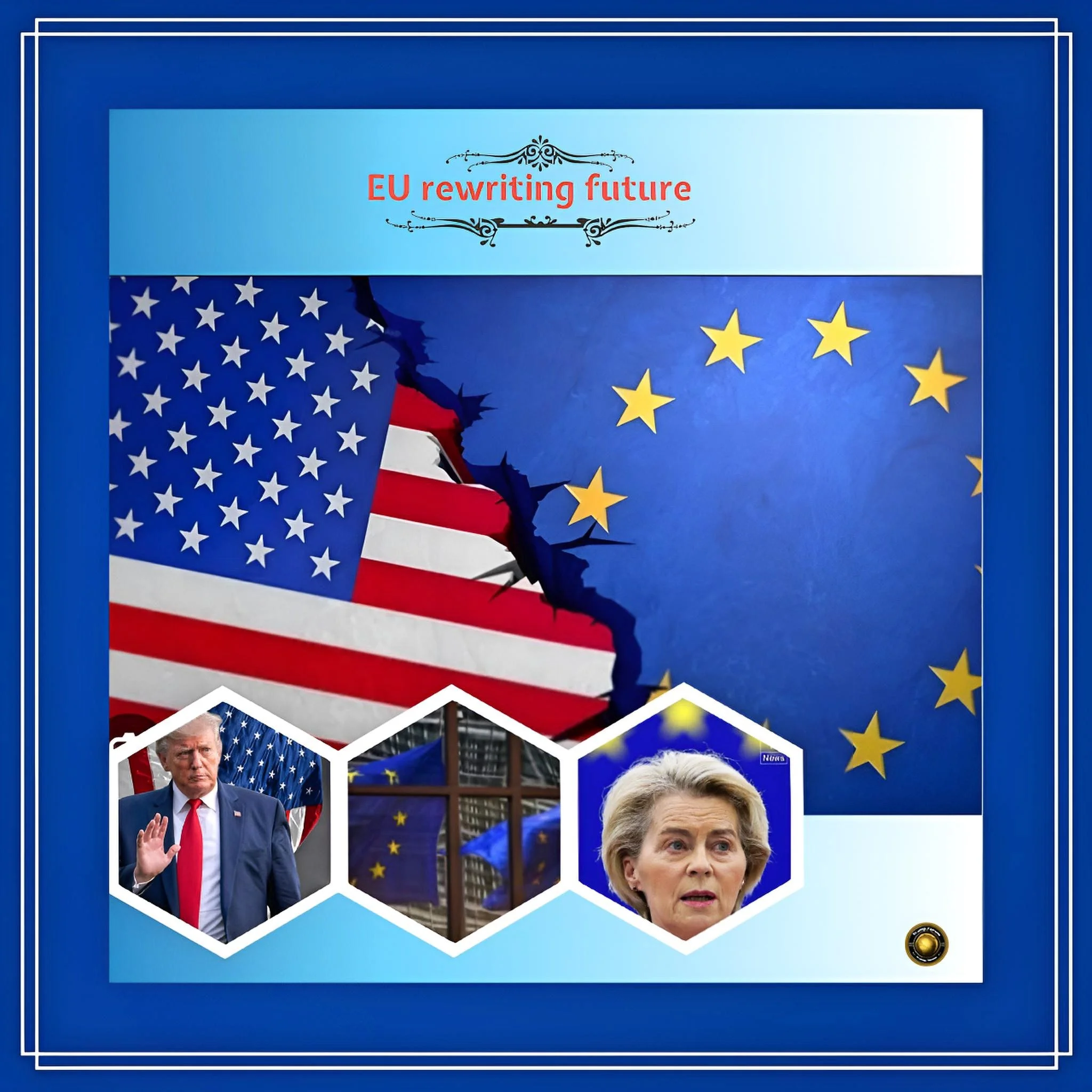
President Trump has made this clear. He questions whether America should help Europe. He asks why Americans should defend Europe when Europeans don’t spend enough on defence themselves. He even suggested buying Greenland from Denmark. This shocked Europe. It showed that America’s protection cannot be assumed. For the first time since 1945, Europeans must seriously consider defending themselves without American help.
The question for 2026 is simple but terrifying: Can Europe do it?
The New Plan
Europe has begun a massive military buildup. At a NATO summit in June 2025, leaders agreed that every country must spend at least 3.5 percent of its budget on defence by 2035. Some countries must spend 5 percent. This is a huge increase from the 2 percent promise made years before. The spending represents hundreds of billions of euros.
The European Union created a €150 billion loan programme to help countries pay for weapons and factories. Another programme, called ReArm Europe, aims to spend €800 billion on defence by 2030.
This sounds impressive. But spending money alone doesn’t create security. Europe also must build weapons, hire soldiers, and train them. This takes time. Europe’s defence factories have become weak over thirty years of peace. Some factories closed. Others shrank. Workers left to find different jobs.
Now, Europe must rebuild these factories and hire new workers while also making enough ammunition, missiles, and aircraft to defend against Russia.
The Real Problem: Too Much Ambition, Too Little Capacity
European leaders have big plans. France, Germany, and Spain want to build a new fighter jet called the FCAS. This aircraft would match American and Chinese jets. It would be ready by 2045. But the project is already in trouble.
The three countries cannot agree on who controls what.
Who will lead?
Who will make the engine?
Who will make the sensors?
These arguments have delayed the project. A design was supposed to be finished in 2025. It wasn’t. Now they hope to have a decision in 2026.
The ammunition problem is even worse. Russia fires hundreds of thousands of artillery shells every month.
The European Union promised to make two million shells per year. It’s struggling to reach this number. Europe has only one major factory that makes TNT, the explosive in shells. Poland has this factory. If something goes wrong there, Europe cannot replace it quickly.
China controls rare earth materials that Europe needs for advanced weapons. America controls precision technology Europe cannot make itself.
Supply chain problems are everywhere. Europe needs electronic components, hydraulic systems, and microchips. These come from limited suppliers.
Military factories want more. Commercial car factories want more. Airlines want more. But suppliers cannot make enough. Someone goes without. Right now, it’s commercial factories that lose out. But if this continues, military production will suffer.
Can Europe Replace America?
America provides things Europe cannot easily replace. American intelligence satellites see Russian troop movements. American planes can carry bombs far from Europe.
American ships protect European trade routes. America has thousands of nuclear weapons that promise to destroy Russia if it attacks Europe. America has the world’s most advanced air force, navy, and army. Europe has good forces, but nothing like America’s.
Europe’s forces are strong in some areas.
European air forces can beat Russian air forces. European navies control the seas around Europe.
But on land, where soldiers fight with tanks and infantry, Russia is stronger. Russia has more soldiers, more tanks, and more guns.
Russia accepts losing soldiers in ways Europeans don’t.
This means Russia can win wars of attrition—where both sides lose soldiers, but whoever loses more still wins because they have more to begin with.
Europe cannot match Russia’s ability to accept casualties. European countries have smaller populations. They value each soldier’s life more. Russia accepts huge losses. This gives Russia an edge in ground warfare that Europe cannot overcome without American help.
The Political Problem
Even if Europe had money and factories, Europe has a bigger problem: agreement. European countries don’t always agree with each other. Poland wants to spend heavily on defence. Spain might prefer spending on healthcare. France wants European independence from America. Germany worries about friction with Russia.
These different views create disagreements. European decision-making requires all twenty-seven countries to agree. One country can block action. This process is slow. Military decisions cannot wait. Soldiers need orders now, not after three months of discussion.
Ukraine shows this problem. Some European countries gave tanks to Ukraine quickly. Others waited. Some sent ammunition. Others sent little.
Some wanted to give long-range missiles to Ukraine. Others refused. This fragmentation means Europe cannot move as one. Russia is one country with one leader making decisions. Europe is twenty-seven countries arguing. In military competition, this is dangerous.
What Must Happen in 2026
2026 is critical. Europe must make hard decisions. The FCAS fighter jet programme must either continue with full commitment or break up. If it breaks up, each country builds its own fighter. This wastes money. Countries will have three different fighters that cannot work together. This is expensive and weak.
Ammunition factories must expand. Poland’s TNT factory must grow. New factories must open. Rare earth material supplies must be secured. These decisions require money and political will.
European countries must agree to move troops across borders quickly if war comes. The Military Schengen plan allows this, but it requires paperwork changes in each country. Parliament must approve each change. This is slow.
Soldiers must train together and practice together. Weapons must work together. Different European forces using different equipment cannot coordinate well. This requires time and money.
The Hard Truth
Europe will not be able to defend itself completely by 2026. Even by 2030, European forces cannot replace American forces entirely. Europe will need America for intelligence, nuclear weapons, and long-range power. This is reality.
But Europe can become much stronger. By 2030, Europe can make its own weapons and ammunition. European soldiers can be better trained and equipped if European forces can protect most of Europe without America. This is not full independence, but it is real progress.
Conclusion
The question isn’t whether Europe will become fully independent by 2026. It won’t. The question is whether Europe will start the hard work of building real defence. Will European countries spend the money? Will factories expand? Will soldiers train harder? Will politicians agree to work together? If yes to all these questions, then Europe can become genuinely strong by 2035 or 2040.
2026 is not the year Europe fends for itself. It’s the year Europe finally accepts that it must.