The Credibility Trap: Why American and Israeli Leadership Cannot Accept Iranian Nuclear Weapons Without Undermining Regional Deterrence
EXECUTIVE SUMMARY
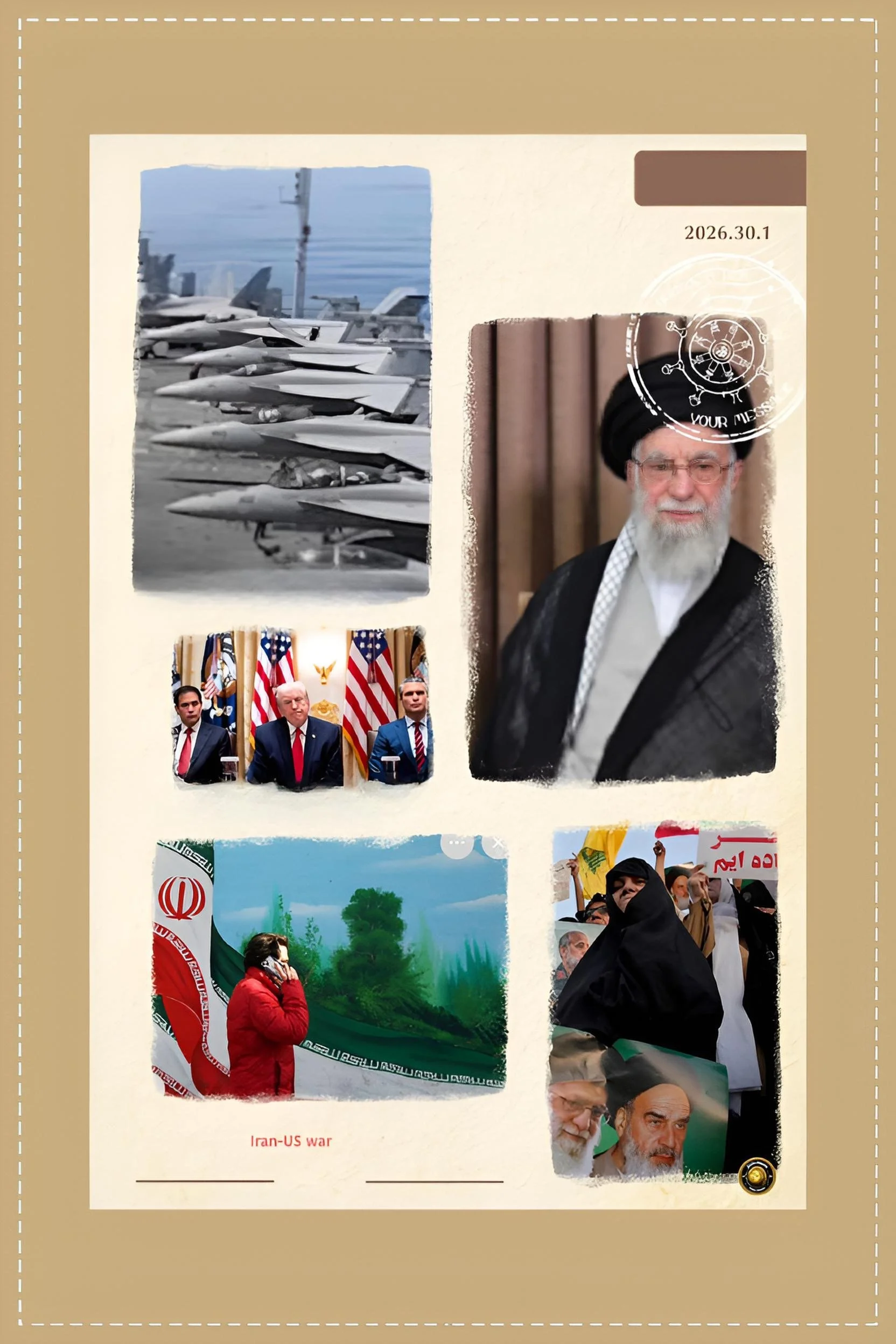
The contemporary geopolitical moment in the Middle East exhibits unprecedented indicators of imminent large-scale military confrontation between the United States-Israeli coalition and the Islamic Republic of Iran.
Multiple asymmetric escalatory signals emanating from both coalitions—including massive American military airlift operations, Iranian air defence exercises, explicit governmental threats, accelerated nuclear weapons programme reconstitution, and domestic political instability within Iran—suggest that the probability of a second comprehensive military strike against Iranian nuclear and military infrastructure has transitioned from plausible contingency to probable eventuality within the forthcoming sixty to ninety day window.
The fundamental dynamics driving this escalatory spiral derive from structural misalignment between Iranian strategic imperatives (demonstrating national resilience following June 2025 military defeat and suppressing internal dissent) and American-Israeli deterrence objectives (preventing Iranian nuclear proliferation and missile programme advancement).
Absent successful diplomatic intervention—which existing evidence suggests remains extraordinarily improbable given both parties’ maximalist negotiating positions—the progression toward kinetic conflict exhibits characteristics of near-inevitability.
The implications for regional stability, global energy markets, and American strategic interests warrant comprehensive analytical assessment.
INTRODUCTION
The period from mid-December 2025 through early January 2026 witnessed a qualitative transformation in the escalatory dynamics characterizing the tripartite relationship between the United States, Israel, and Iran. From abstract threat matrices and implicit deterrent messaging, political discourse and military preparations have transitioned into concrete deployments, explicit ultimatums, and preparations bearing unmistakable hallmarks of imminent military engagement.
The visit of Israeli Prime Minister Benjamin Netanyahu to Mar-a-Lago on 29 December 2025 crystallised the emerging consensus between Washington and Jerusalem regarding the necessity of renewed military action.
Netanyahu broached the prospect of “round two” strikes on Iranian nuclear infrastructure, an eventuality that Trump neither rejected nor constrained through temporal or substantive limitations. Rather, Trump articulated an open-ended commitment to military action should Iran pursue demonstrable reconstitution of prohibited nuclear programmes or acceleration of ballistic missile capabilities.
This diplomatic posture—characterised by explicit commitment to future military action contingent upon Iranian compliance criteria interpreted entirely through American and Israeli intelligence assessments—represents fundamental rejection of the negotiated settlement framework that has historically characterised great power competition in the region.
HISTORICAL CONTEXT: THE JUNE 2025 PRECEDENT
Understanding the contemporary escalatory trajectory requires situated comprehension of the preceding June 2025 conflict, which fundamentally restructured the regional security environment.
The conflict initiated when Iran announced operationalization of an undisclosed uranium enrichment facility, leading the International Atomic Energy Agency to formally declare Iranian non-compliance with non-proliferation obligations for the first time in two decades.
This technical finding created the political occasion for Israeli unilateral action. Beginning mid-June 2025, Israeli Air Force operations targeted Iranian nuclear facilities, military installations, air defence infrastructure, and personnel infrastructure with unprecedented intensity.
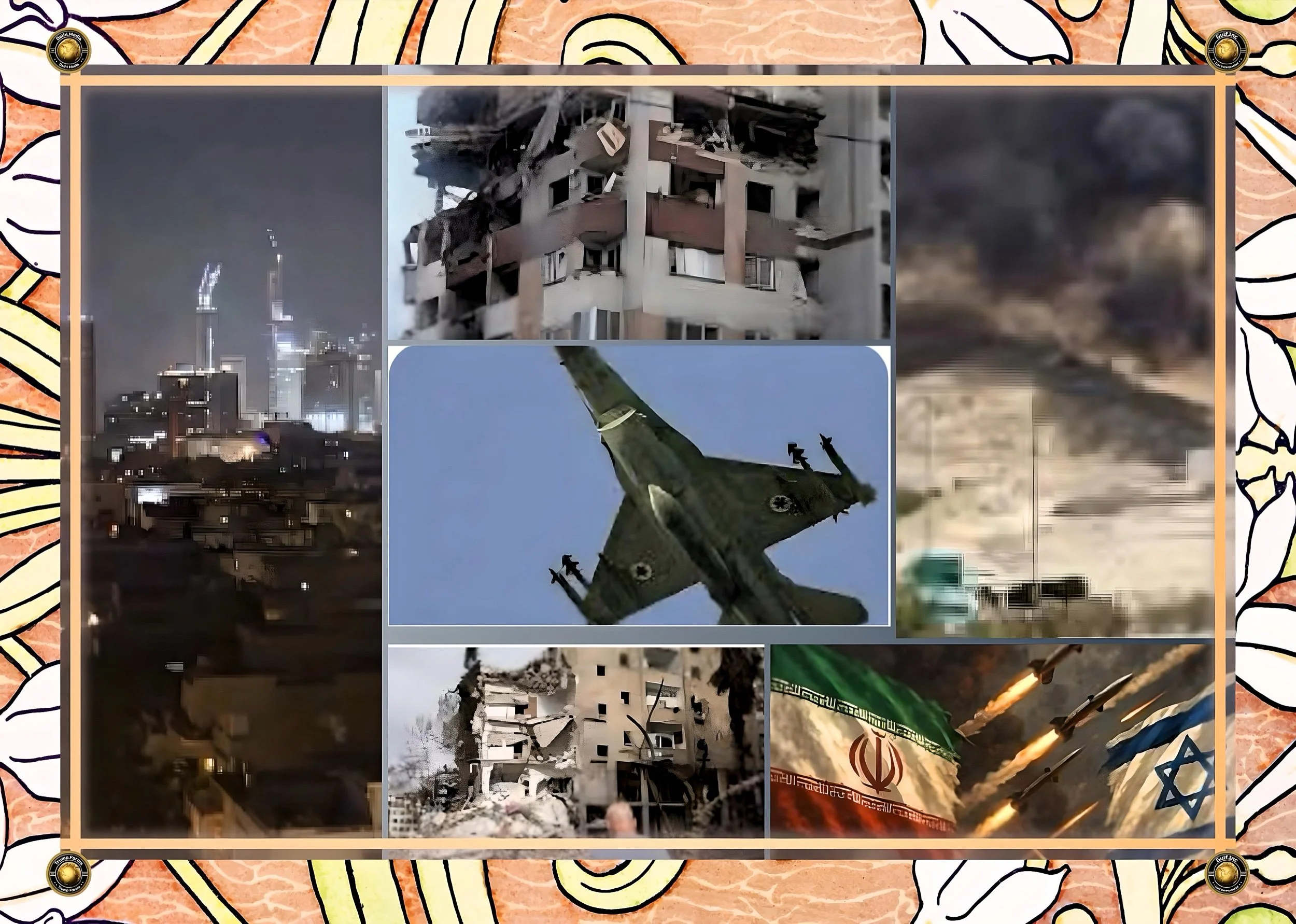
Over twelve days, Israeli aircraft executed approximately 360 individual strikes across twenty-seven Iranian provinces, specifically targeting the Fordo and Natanz uranium enrichment facilities, the Isfahan nuclear technology centre, the Parchin military complex, and dispersed ballistic missile production sites.
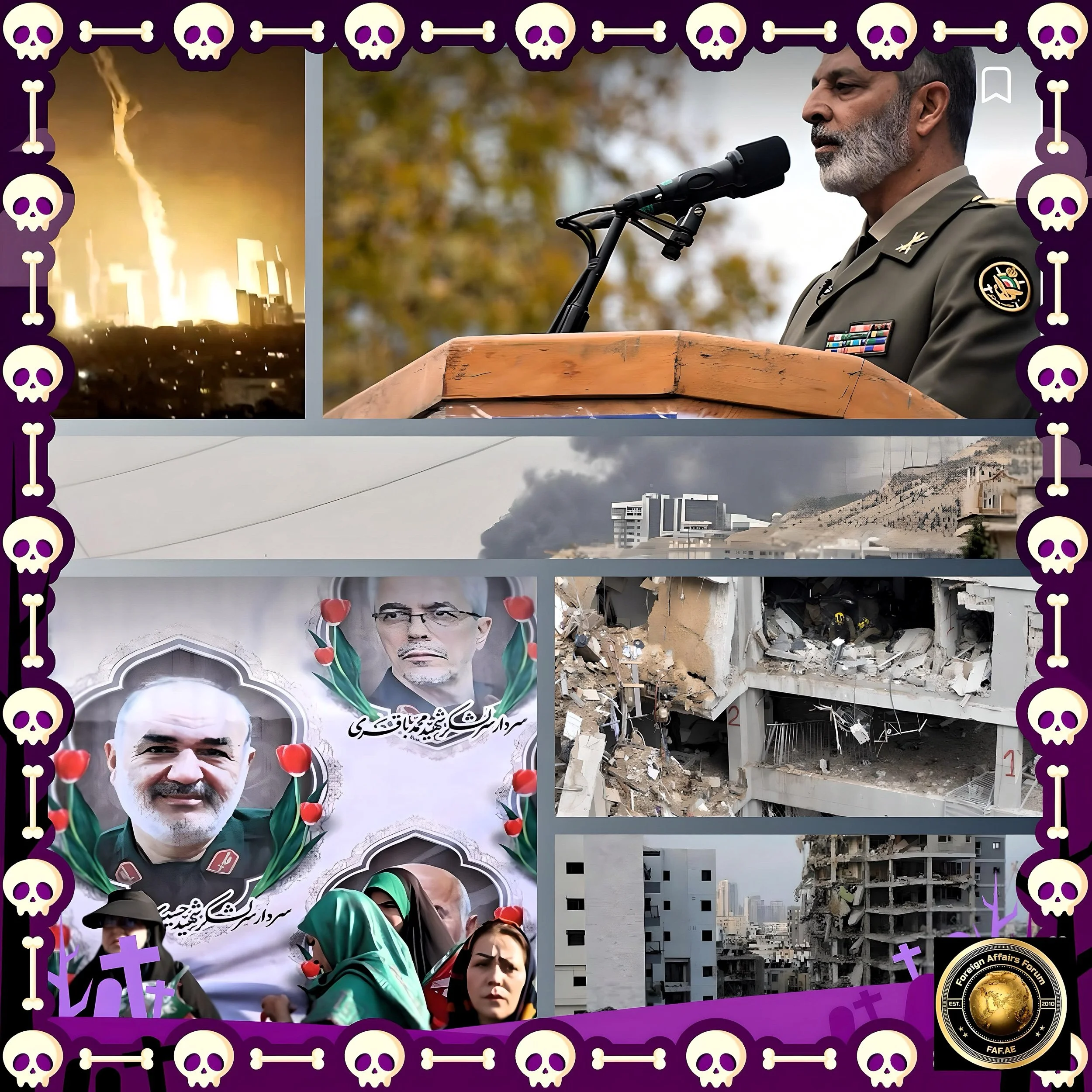
The initial Israeli campaign destroyed over one thousand ballistic missiles, eliminated more than forty air defence systems within the first twenty-four hours, killed over thirty high-ranking military commanders, and killed at least eleven Iranian nuclear scientists.
Materially, the campaign devastated Iran’s strategic infrastructure. Yet Iranian leadership elected not to accept the ceasefire implicitly embedded within the Israeli campaign’s conclusion. Rather, Iran mobilised its ballistic missile arsenal and launched approximately three hundred drones and eighty ballistic missiles against Israeli territory, achieving minimal material effect due to Israeli air defence interception.
The escalatory trajectory continued when the Trump administration, initially ambiguous regarding participation, authorised direct American strikes against Iranian nuclear facilities on 21 June 2025. United States Air Force bombers executed bunker-buster strikes against three critical uranium enrichment sites—Fordow, Isfahan, and Natanz—inflicting severe structural damage.
Iran responded with missile strikes against the Al Udeid Air Force Base in Qatar, where approximately ten thousand American service personnel and forward headquarters of United States Central Command are located. These strikes damaged critical communications infrastructure but inflicted no combat casualties, apparently due to advance notification permitting personnel dispersal.
Trump announced a ceasefire on 23 June 2025, which both parties accepted. The ceasefire has largely held for the subsequent seven months, though both sides have accused the other of sustained violations. Critically, the June 2025 conflict established several foundational preconditions for the contemporary escalatory period.
First, it demonstrated both Israeli and American willingness to execute direct military strikes against Iranian territory without exhausting diplomatic channels.
Second, it revealed substantial vulnerabilities in Iranian air defence architecture and ballistic missile effectiveness.
Third, it created powerful incentives within Tehran to undertake rapid reconstitution of damaged military infrastructure whilst simultaneously managing the profound domestic political consequences of military defeat.
CURRENT STATUS: JANUARY 2026 MILITARY DYNAMICS
The contemporary military posture of both coalitions exhibits structural characteristics indicating movement toward kinetic engagement.
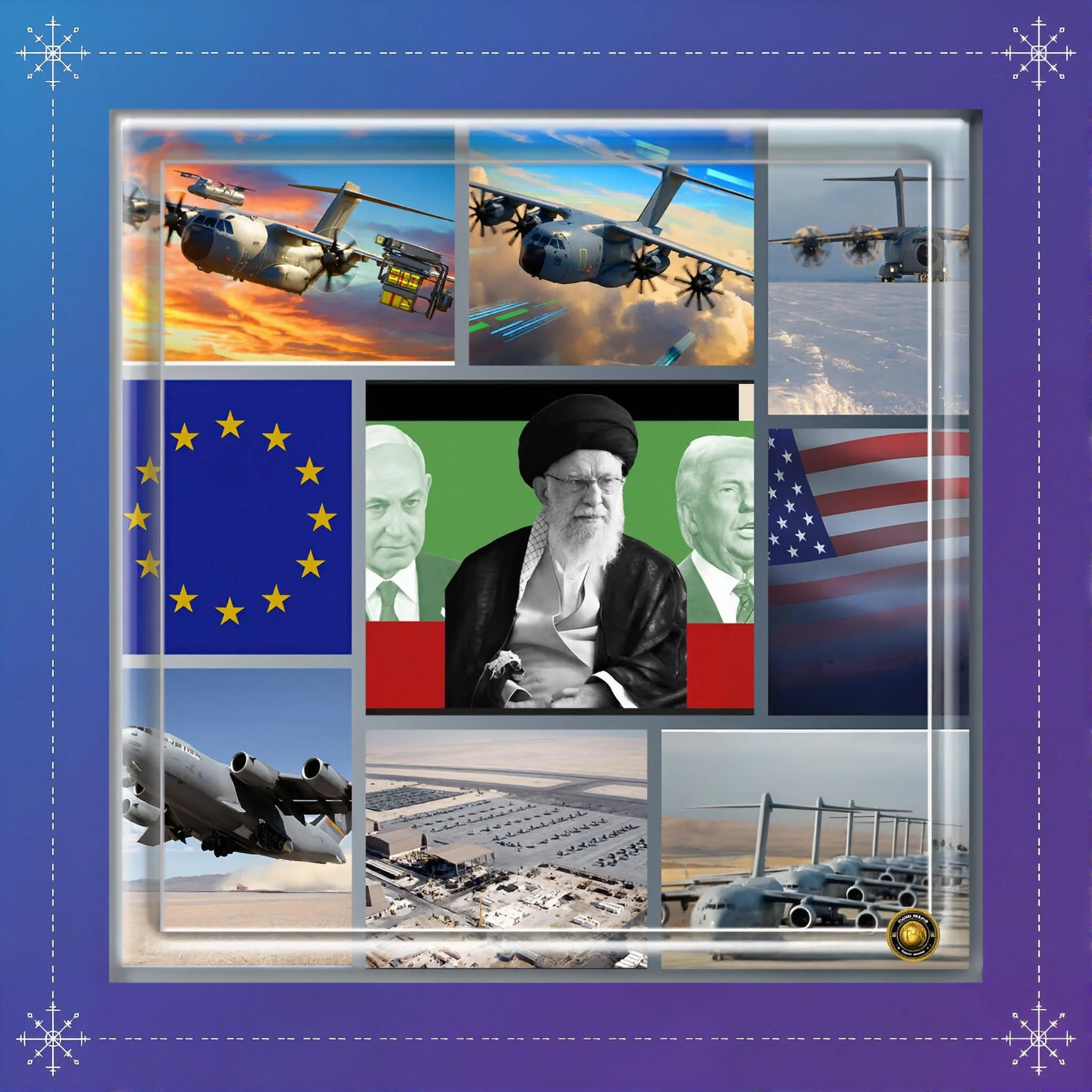
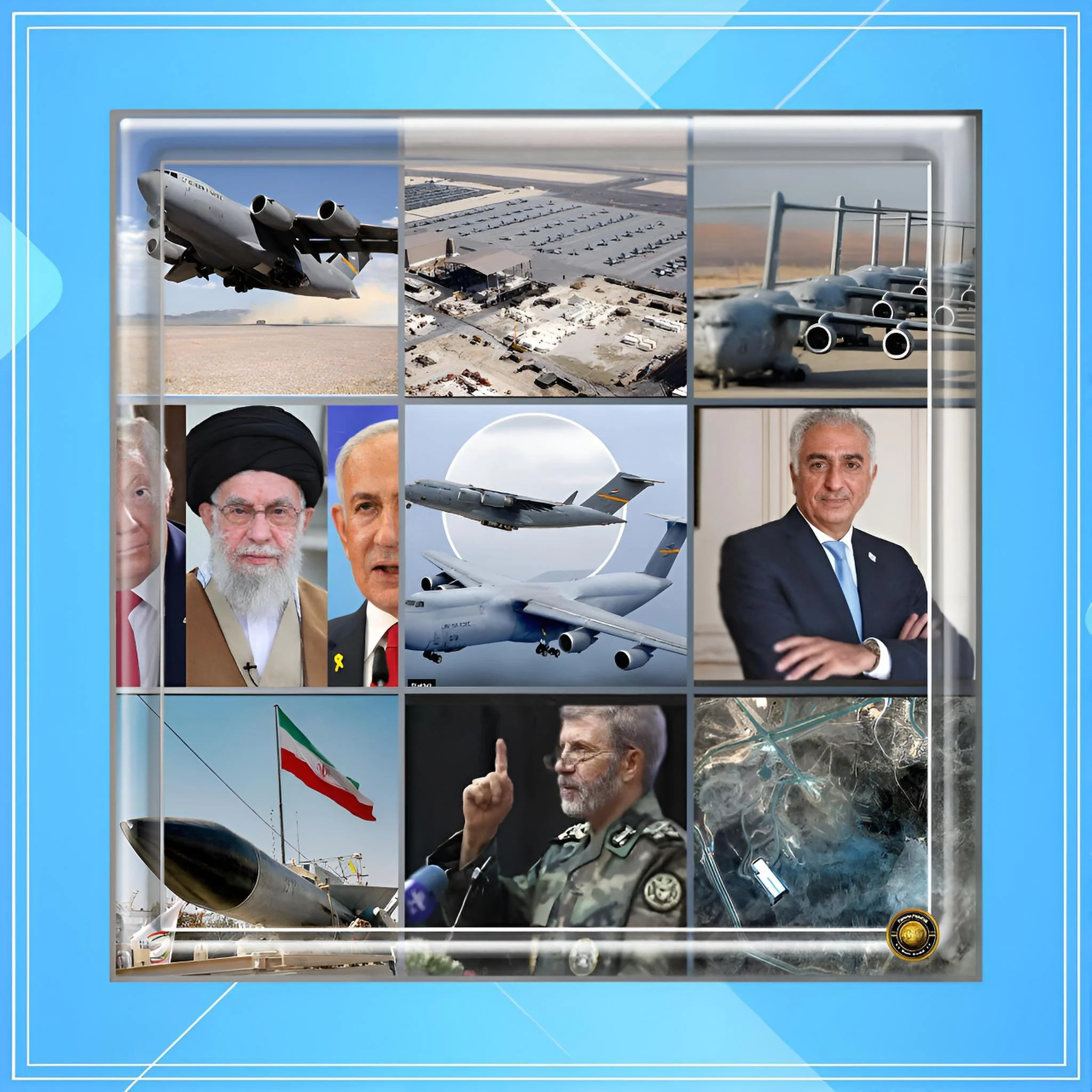
American military deployments originating from continental United States and European bases on 7 January 2026 encompassed heavy transport aircraft including multiple C-5 Galaxy airlifters and C-17 Globemaster III transports, supported by KC-135 Stratotanker and KC-46 Pegasus aerial refuelling aircraft.
These aircraft categories are utilised exclusively for deployment of substantial personnel contingents, advanced equipment, and special operations units requiring strategic-range deployment.
Intelligence analysts assessed these aircraft as directed toward forward operating bases in the Arabian Peninsula and Persian Gulf region, particularly concentrating upon Al Udeid Air Base in Qatar.
The absence of official Department of Defence commentary regarding these deployments stands in notable contrast to the explicit character of the stated deployments themselves.
Simultaneous Iranian military preparations encompassed execution of comprehensive air defence and ballistic missile exercises conducted across multiple metropolitan areas including Tehran, Shiraz, and additional provincial locations. The exercises explicitly incorporated surface-to-air missile units, radar stations, and command-and-control infrastructure distributed across Iran’s populated heartland.
The decision to conduct training operations during peacetime hours rather than utilising standard military exercise protocols suggests these preparations served simultaneously as operational readiness assessments and signalling mechanisms demonstrating Iranian military capacity to domestic and international audiences.
Iranian state media characterised these exercises as “air defence drills” and “missile tests,” terminology deliberately ambiguous regarding whether actual weapons systems deployments occurred or whether simulated exercises transpired.
The implicit messaging embedded within these exercises communicated several foundational strategic concepts.
First, Iran sought to demonstrate possession of operationally distributed air defence architecture across national territory, implicitly suggesting that concentrated air strikes would encounter resistance across geographical regions rather than concentrated in specific zones.
Second, the exercises constituted deterrent signalling—attempting to convey to potential adversaries that Iranian defensive capacity, whilst degraded relative to pre-June conditions, remained sufficiently intact to impose costs upon attacking forces.
Third, the exercises functioned as internal legitimacy mechanism, demonstrating to Iranian citizens experiencing acute economic crisis and domestic dissent that the Islamic Republic possessed military capability and resolve despite acknowledged vulnerabilities.
KEY DEVELOPMENTS: NUCLEAR RECONSTITUTION AND MISSILE ADVANCEMENT
The most consequential development undergirding escalatory trajectory concerns verifiable Iranian progress in nuclear weapons programme reconstitution. Satellite imagery analysis dated 25 December 2025 indicates ongoing construction at the Taleghan 2 facility within the Parchin military complex.
The facility represents the primary location where Iran conducted experimental work related to nuclear weapons prior to international discovery of illicit nuclear activities in 2002. Israeli strikes in October 2024 and subsequent American strikes in June 2025 destroyed the high explosives containment vessel essential for nuclear weapons-related research.
Iranian engineers have initiated reconstruction of this critical component and have undertaken substantial hardening measures, specifically constructing a concrete sarcophagus surrounding the reconstruction site to mitigate vulnerability to future aerial strikes.
Institute for Science and International Security technical assessment indicates construction commenced approximately May 2025 and is nearing final stages as of January 2026.
Parallel excavation and reconstitution efforts proceed at the Natanz Pilot Fuel Enrichment Plant and Esfahan tunnel complex. Iranian authorities have erected privacy barriers over previously bombed facilities, suggesting assessment operations attempting to determine whether partially enriched uranium or critical equipment survived the June 2025 strikes.
The Technical evaluation of these activities suggests Iran is pursuing limited but increasing efforts to salvage survivable assets whilst simultaneously undertaking reconstruction of damaged infrastructure.
The temporal trajectory of these activities—consistently demonstrating progress despite acknowledged damage and international scrutiny—indicates that Iranian leadership has committed substantial resources to nuclear programme reconstitution despite acute economic constraints and ongoing domestic political instability.
The trajectory becomes particularly significant when assessed in conjunction with reportedly authorised nuclear warhead development. Iranian sources disclose that Supreme Leader Ali Khamenei authorised development of miniaturised nuclear warheads optimised for ballistic missile integration as recently as October 2025.
This authorisation represents qualitative shift in Iranian strategic doctrine—heretofore constrained by Khamenei’s fatwa prohibiting nuclear weapons development, the recent authorisation suggests Iran’s strategic decision-makers have determined that defensive value of deployable nuclear deterrent outweighs religious and diplomatic constraints previously invoked to justify non-weaponisation.
Concurrently, Iranian ballistic missile programme demonstrates accelerated reconstruction trajectory.
The Revolutionary Guard Corps Aerospace Force has undertaken major training exercises distributed across multiple provinces, deployed missile launchers to eastern regions of Iran, and undertaken facility reconstruction at Khojir and Parchin production complexes.
Iranian sources report that technical team is pursuing optimisation of ballistic missiles to carry chemical and biological warheads, suggesting that if nuclear warhead integration proves technically infeasible within the necessary temporal window, Iran maintains alternative escalation options.
The integration of chemical and biological weapon technology with ballistic missile delivery represents escalation beyond the conventional military domain, introducing putative weapons of mass destruction into the deterrent calculus.
CAUSE-AND-EFFECT ANALYSIS: STRUCTURAL DRIVERS OF ESCALATION
The escalatory spiral engulfing the three-way relationship between the United States, Israel, and Iran derives from interconnected structural imperatives rather than idiosyncratic decision-making or miscalculation.
Iranian Strategic Vulnerability and Reconstitution Imperative
The June 2025 military campaign inflicted unprecedented damage upon Iranian nuclear infrastructure, air defence systems, and military leadership. The psychological impact upon Iranian strategic community proved equivalent to the material damage.
The demonstrated capacity of American and Israeli forces to penetrate Iranian airspace, destroy hardened targets, inflict tens of thousands of casualties, and execute leadership targeting without suffering significant losses in either aircraft or personnel exposed the fundamental inadequacy of existing Iranian deterrent architecture.
From Tehran’s perspective, this existential vulnerability created irresistible pressure toward rapid reconstitution of military capability and accelerated weaponisation of nuclear programme.
The logic is strategically coherent: if conventional deterrence has manifestly failed, then only nuclear capability provides plausible basis for deterring renewed strikes.
The reconstitution of nuclear programme simultaneously addresses domestic political imperatives. The Iranian economic system has contracted substantially, with currency collapsing, inflation reaching confiscatory levels, energy shortages creating cascading infrastructure failures, and unemployment among youth exceeding thirty percent.
These conditions precipitated nationwide protests commencing in late December 2025, with demonstrators directly challenging regime legitimacy and demanding systemic economic transformation.
The regime interprets these internal challenges as existential threat comparable to external military threat. Demonstrated commitment to nuclear programme reconstitution and military capability enhancement allows Iranian leadership to appeal to nationalist sentiment and deflect internal criticism by focusing discourse upon external threats and national resilience. Nuclear programme advancement becomes simultaneously military strategy and domestic political strategy.
American-Israeli Deterrence Imperative and Preemption Rationale
American and Israeli decision-makers confront alternative but complementary strategic imperatives. The United States retains declaratory policy opposing Iranian nuclear weapons development, a position that has remained consistent across administrations of both parties for over two decades.
The Trump administration has distinguished itself through unprecedented commitment to “maximum pressure” enforcement of this policy, combining economic sanctions with explicit threats of military action and demonstrated willingness to execute military strikes.
From Washington’s perspective, Iran’s apparent determination to proceed with nuclear weapons development despite demonstrated vulnerability to military strikes represents existential challenge to American credibility and deterrence architecture.
Failing to execute threatened military response against Iranian nuclear development would undermine American credibility with regional allies (Saudi Arabia, United Arab Emirates, Israel) who have oriented their entire strategic calculus around assumption of American commitment to preventing Iranian nuclear weapons. The credibility cost of inaction would exceed the strategic cost of renewed military action.
Israel’s strategic calculus emphasises existential threat posed by Iranian nuclear weapons capability. Israeli strategic doctrine fundamentally premises national security upon maintenance of exclusive nuclear weapons capability within the Middle East region.
The achievement of Iranian nuclear weapons capability would eliminate this regional nuclear monopoly, thereby constraining Israeli strategic options and potentially embolden anti-Israeli regional actors believing nuclear deterrence provides protection against Israeli retaliation.
Furthermore, Iranian nuclear weapons development would trigger nuclear weapons proliferation throughout the Middle East, with Saudi Arabia, United Arab Emirates, and potentially Egypt pursuing parallel nuclear weapons programmes to maintain strategic balance.
From Israeli perspective, nuclear weapons acquisition by Iran represents unacceptable transformation of regional strategic environment that justifies preventive military action.
Timing and Window Dynamics
The contemporary moment exhibits several temporal characteristics intensifying escalatory pressure. Iranian domestic unrest provides what Israeli and American strategists characterise as “window of opportunity”—period during which Iranian governance apparatus is distracted by internal security challenges, military deployment is constrained by need to suppress internal dissent, and Iranian leadership exhibits weakness potentially inviting external exploitation.
This “window” is understood as transient—once Iranian authorities suppress internal dissent or undertake economic reforms addressing underlying grievances, the window closes.
The logic of preemptive action presumes that costs of action now (during period of Iranian relative weakness) are substantially lower than costs of action later (when Iran has consolidated internal control and accelerated military reconstitution).
The Iranian leadership has explicitly articulated awareness of this dynamic. Senior officials have characterised Iran as in “survival mode,” acknowledging both external military threat and internal political threat.
This awareness creates paradoxical incentive structure: to demonstrate national resilience and prevent loss of internal legitimacy, Iranian leadership must undertake visible military and nuclear programme advancement. Yet precisely these actions trigger the escalatory response from Washington and Israel they were undertaken to deter.
The system becomes self-reinforcing: Iranian actions undertaken to demonstrate strength paradoxically confirm American and Israeli assessments that preventive military action is necessary.
Institutional and Bureaucratic Dynamics
The military institutions engaged in these preparations exhibit bureaucratic incentive structures favouring escalation. Within the United States Central Command apparatus, planning staffs have spent months developing operational concepts for renewed strikes against Iranian nuclear facilities.
These plans have achieved institutional reality through development of detailed targeting matrices, coordination protocols with Israeli partners, logistical planning for support operations, and integration with ongoing operations in Iraq, Syria, and the broader region. Once such planning infrastructure achieves institutional embedding, the psychological cost of cancellation increases substantially.
Military planners who have invested months in plan development exhibit unconscious bias favouring implementation of developed plans rather than sustaining costly maintenance of contingency preparations. This dynamic, described in organisational theory literature as “plan momentum,” creates subtle but consequential pressure toward action.
Information Asymmetry and Assessment Disputes
Critically, the triggering mechanism for renewed military action centres upon verification and assessment of Iranian nuclear activities. Trump administration officials have indicated willingness to support renewed strikes “if Iran takes real and verifiable steps” to revive nuclear programme. Yet the definition of “reconstitution” and the evidentiary standard establishing such reconstitution remain explicitly contested.
American and Israeli intelligence assessments view Iranian reconstruction of the Taleghan 2 facility as clear evidence of nuclear weapons development. Iranian officials characterise identical activities as routine maintenance and reconstruction of scientific facilities for peaceful purposes.
This assessment dispute cannot be resolved through enhanced intelligence collection or more refined analysis—the activities themselves admit both interpretations depending upon foundational assumptions regarding Iranian intentions.
This interpretive gap creates catastrophic risks. If American and Israeli decision-makers become convinced that Iranian activities constitute prohibited nuclear weapons development, they will execute military strikes regardless of Iranian characterisations of activities as peaceful.
If Iranian leadership becomes convinced that renewed American-Israeli strikes are inevitable regardless of Iranian actions, then Iranian leadership has incentive to accelerate actual nuclear weapons development, thereby transforming disputed peaceful activities into undisputed weapons development.
The system thus contains within itself powerful incentives toward self-fulfilling prophecy.
REGIONAL AND GLOBAL IMPLICATIONS
The escalatory trajectory engulfing Iran-US-Israel relations contains profound implications for global stability.
An American-Israeli strike campaign against Iran would disrupt global energy markets, generate unpredictable responses from Iranian regional proxy forces (Hezbollah in Lebanon, militias in Iraq and Syria, Houthi forces in Yemen), potentially trigger Russian and Chinese interventions to protect strategic interests, and fundamentally alter the trajectory of American great power competition with China.
The temporal window during which the United States can address both Chinese strategic challenge and Iranian nuclear challenge simultaneously remains constrained.
Should military action against Iran consume American strategic attention and defence resources during 2026, the advantage accrues to China in domains of technological competition, semiconductor manufacturing, and economic statecraft.
The Iranian response architecture, weakened by June 2025 losses but not eliminated, retains capacity to inflict meaningful strategic costs upon American and Israeli targets.
Hezbollah in Lebanon possesses substantially replenished ballistic missile arsenals that could target Israeli population centres.
Iranian militia forces in Iraq and Syria retain capacity to conduct attacks against American military installations.
Houthi forces in Yemen continue harassing international shipping in the Red Sea and Arabian Gulf.
Collectively, these proxies cannot prevent American-Israeli air strikes, but they can ensure that costs of military action extend beyond the initial air campaign into protracted regional conflict.
FUTURE TRAJECTORY AND ESCALATION DYNAMICS
The probability of large-scale military confrontation appears to have crossed the fifty percent threshold.
Multiple indicators suggest that planners within the American and Israeli defence establishments are preparing for combat operations rather than maintaining contingency readiness.
The deployment of heavy airlift assets to the Arabian Peninsula, the explicit statements from Trump and Netanyahu regarding future strikes, the Iranian perception of escalating threat, and the Iranian commencement of military preparations all exhibit characteristics indicating movement toward kinetic engagement.
Several scenarios merit analytical consideration. An optimistic scenario premises successful diplomatic intervention by third-party mediators (Qatar, Switzerland, potentially China or Russia) capable of establishing frameworks constraining both Iranian nuclear activities and American demands, thereby creating space for negotiated settlement.
This scenario requires both parties to step back from maximalist positions and accept negotiated outcomes neither party deems ideal—a proposition for which existing evidence provides minimal foundation.
A second scenario premises that threat of military action, combined with continued economic sanctions, constrains Iranian nuclear programme advancement without requiring actual military engagement.
This scenario assumes that threats, combined with international pressure and domestic economic constraints, prove sufficiently powerful to prevent Iranian nuclear weaponisation. The precedent of the June 2025 conflict, which failed to produce desired deterrent effect, renders this scenario comparatively less probable.
A third scenario—increasingly probable based upon contemporary evidence—premises large-scale military confrontation within the sixty to ninety day window, specifically between mid-January and mid-April 2026.
This timeline aligns with the Nowruz (Iranian New Year) observance on 20 March 2026, a date at which Iranian analysts predict renewed strikes. This scenario anticipates intensive air campaigns targeting distributed nuclear and military facilities, Iranian missile and proxy force responses, potential escalation to broader regional conflict, and protracted instability.
CONCLUSION
The Middle East exhibits unprecedented escalatory dynamics suggesting that the probability of American-Israeli military action against Iran has transitioned from contingency to probability.
The structural imperatives driving both coalitions toward conflict—Iranian determination to demonstrate national resilience through military and nuclear reconstitution, and American-Israeli determination to prevent Iranian nuclear weapons development—have become substantially misaligned.
The contemporary moment exhibits multiple escalatory pressure points: explicit governmental threats, military deployments, nuclear programme acceleration, and domestic Iranian political instability that creates temporal pressure toward action.
Absent dramatic diplomatic breakthroughs for which existing evidence provides minimal foundation, the trajectory appears directed toward large-scale military confrontation within a compressed temporal window.
The implications for regional stability, global energy markets, and American strategic positioning warrant urgent policy attention. The window for diplomatic resolution, though not yet closed entirely, narrows daily as both military institutions and political leadership commit progressively greater resources to military preparations.
The choice between escalation and de-escalation remains theoretically available to decision-makers in Washington, Jerusalem, and Tehran. However, the structural imperatives embedded within security dilemmas, credibility concerns, and domestic political dynamics push toward escalation with powerful force.
Understanding these drivers—rather than attributing escalation to miscalculation or irrationality—remains essential prerequisite for any successful intervention.