US and Iran on the Precipice of Military Confrontation: Examining Strategic Preparedness and the Fallacy of the Venezuela Model
Executive Summary
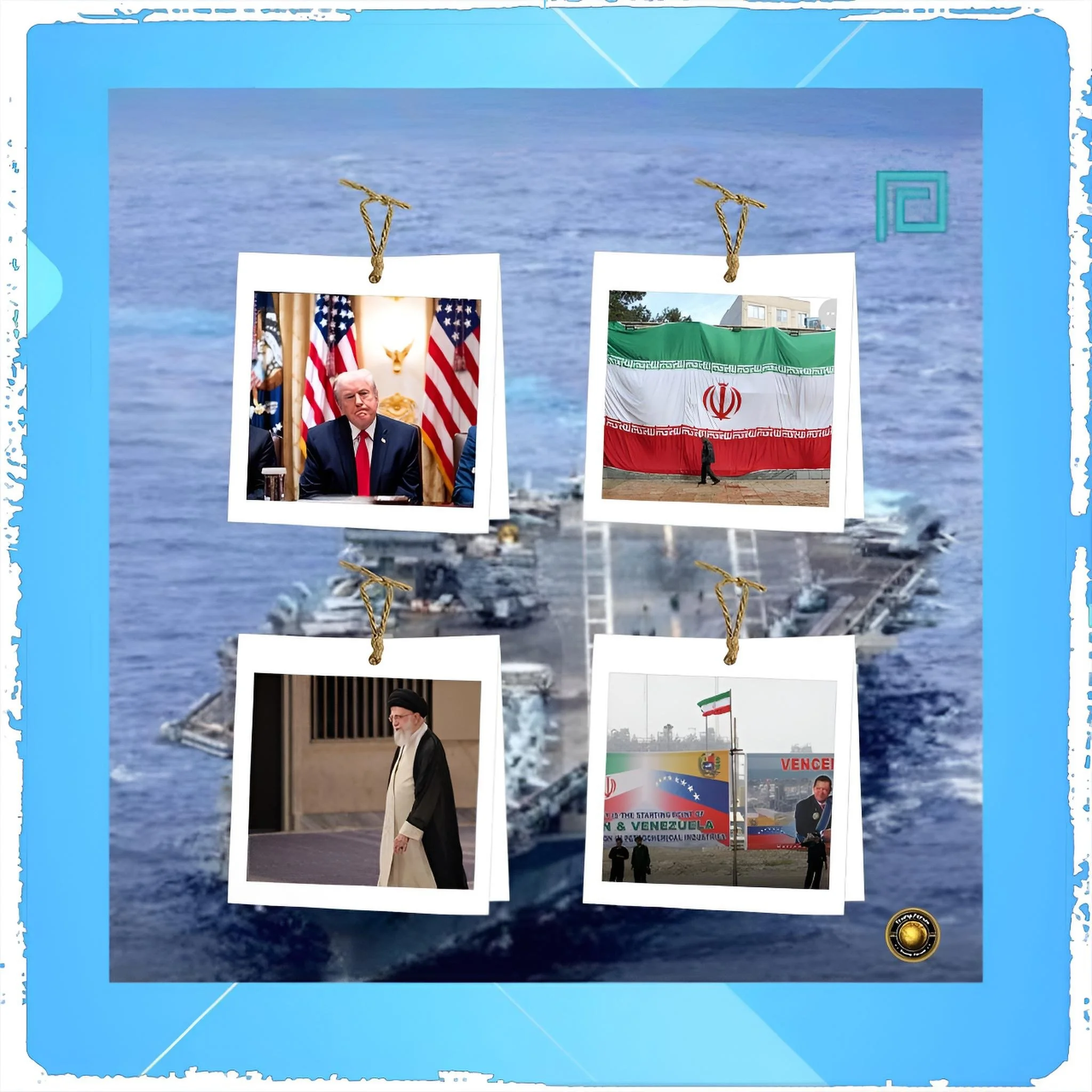
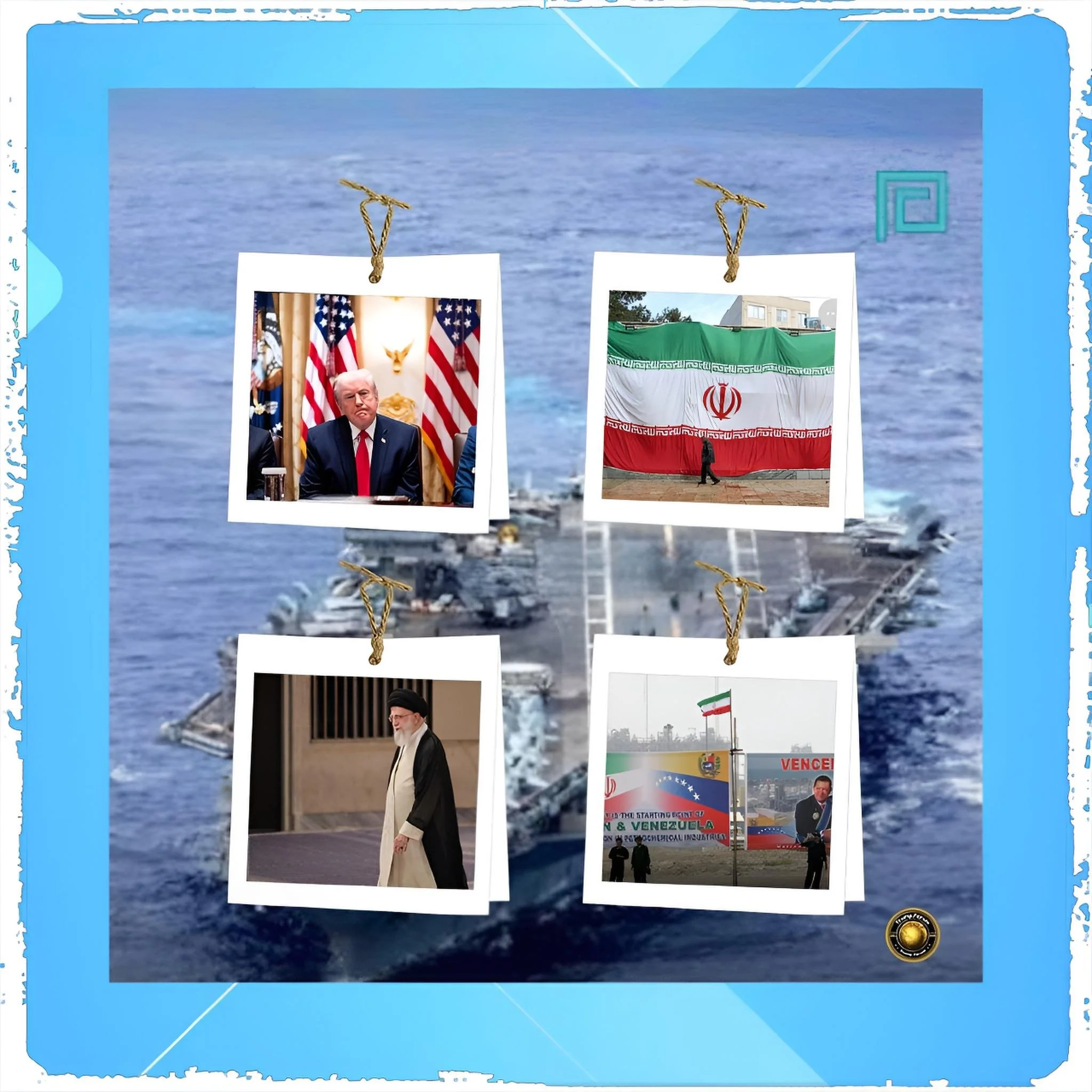
As of January 2026, the United States and Iran stand at an unprecedented threshold of direct military confrontation, characterized by the most substantial American military deployment to the Persian Gulf since the conclusion of the June 2025 Israel-Iran conflict.
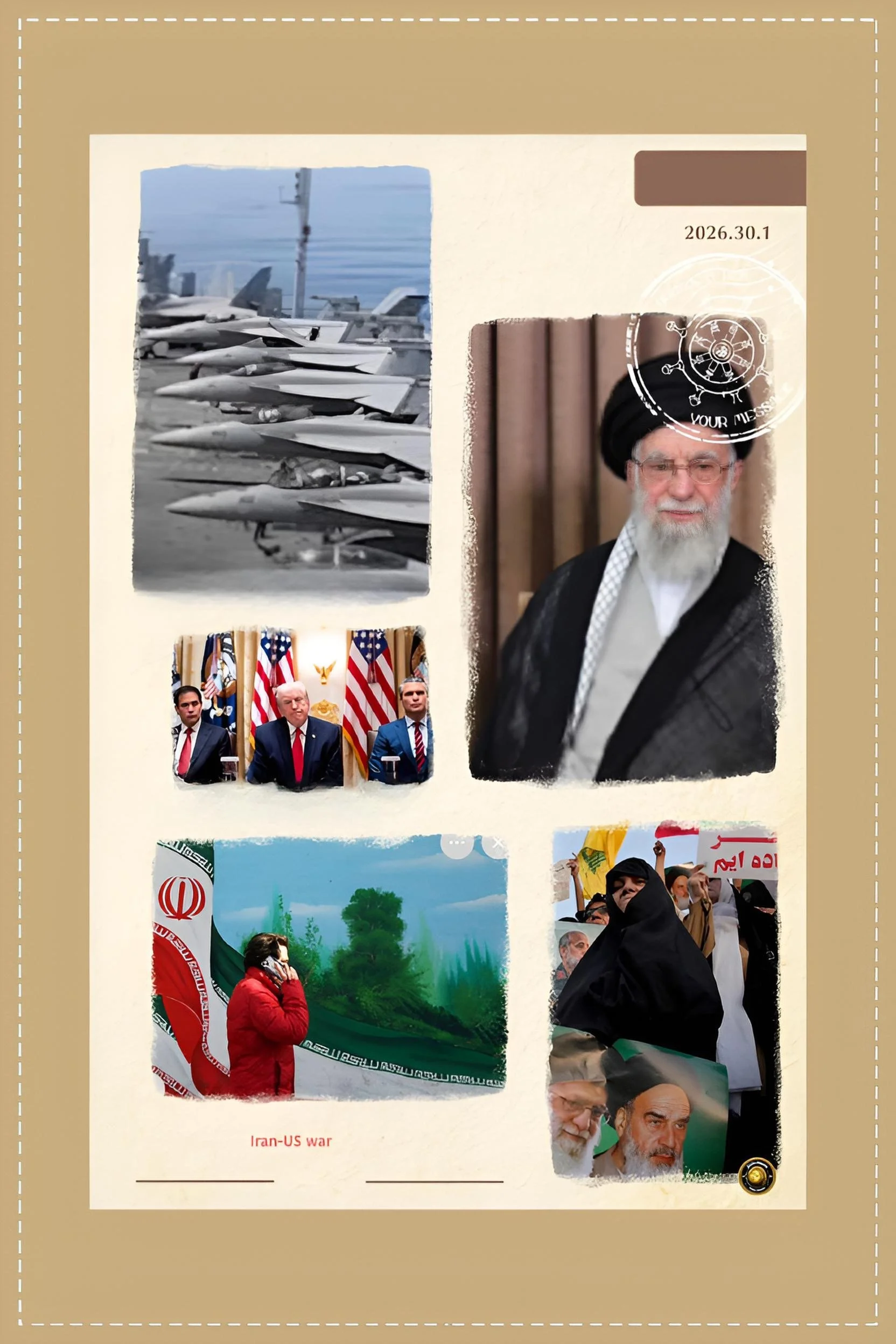
The USS Abraham Lincoln Carrier Strike Group, supplemented by fighter squadrons, strategic bombers, and approximately 50,000 American military personnel across the Middle East, faces an Iranian state apparatus mobilizing its military infrastructure in simultaneous response to internal unrest and external military pressure.
President Trump's administration has articulated explicit preconditions for avoiding escalation—cessation of nuclear enrichment, constraints on ballistic missile programs, termination of proxy support, and mitigation of protest-related violence—none of which Iran has demonstrated willingness to accept.
While parallels to the January 2026 Venezuelan operation have gained considerable currency in policy discourse, the structural differences between the two regimes render such comparisons analytically misleading and potentially catastrophic if permitted to guide strategic decision-making.
Introduction
The contemporary moment represents a convergence of systemic vulnerabilities and strategic asymmetries unprecedented in Iranian history.
Iran's economy has fractured under cumulative sanctions pressure; the Iranian rial has undergone radical depreciation that triggered the largest protest waves since 2009.
Simultaneously, the regime confronts evidence of military degradation stemming from the June 2025 conflict with Israel and the United States, during which American and Israeli forces systematically targeted nuclear enrichment facilities, air defense networks, and ballistic missile production infrastructure.
The International Atomic Energy Agency confirms that Iranian uranium enrichment has accelerated to 60% purity, bringing the Islamic Republic to the threshold of weapons-grade material within weeks rather than months. Yet paradoxically, these cascading pressures have not produced regime fragmentation or elite defection; rather, they have consolidated security force cohesion and intensified repression.
This dynamic renders the American approach—which rests upon assumptions of regime vulnerability and potential collapse—fundamentally at odds with Iranian institutional reality.
History and the Current Status of US-Iran Relations
The contemporary crisis originates in the Trump administration's 2018 withdrawal from the Joint Comprehensive Plan of Action, formally known as the nuclear deal.
That agreement had imposed rigorous international constraints on Iranian enrichment, reduced breakout time to one year, and established unprecedented intrusive inspections including daily access to sensitive nuclear sites.
Following the American withdrawal and the reimposition of maximum pressure sanctions, Iran systematically breached JCPOA constraints.
By September 2025, the agreement formally expired when France, Germany, and the United Kingdom invoked the snapback mechanism, restoring United Nations Security Council sanctions that had been suspended under the agreement.
This sequence of events—American withdrawal, Iranian violation, and international restoration of sanctions—has eliminated the institutional architecture previously constraining Iranian nuclear advancement.
Concurrently, regional military dimensions have shifted dramatically. The October 2024 Iranian ballistic missile strike against Israel, followed by the June 2025 twelve-day war in which the United States conducted Operation Midnight Hammer against three uranium enrichment facilities (Fordow, Natanz, and Isfahan), degraded but did not eliminate Iranian air defenses or missile production capacity.
Iranian officials have consistently characterized that conflict as deliberately timed to coincide with announced American-backed negotiations; the narrative has crystallized within Iranian elite circles that diplomacy serves as cover for military planning rather than a genuine alternative to conflict.
Superimposed upon this cycle of escalation and negotiation failure, late December 2025 witnessed the onset of economically-driven demonstrations in Tehran's Grand Bazaar that rapidly metastasized into nationwide protests touching 88 cities across 27 of Iran's 31 provinces.
The security apparatus response has been asymmetrically violent, with estimates of deaths ranging from 600 (human rights organizations) to 36,500 (Iranian regime officials), along with approximately 18,000 documented arrests.
That the regime undertook this repression despite Trump's explicit warnings that mass killings would provoke American intervention signals either an assessment that American threats lack credibility or a judgment that regime survival supersedes consideration of external consequences.
Key Developments and Contemporary Status
The current military buildup represents the most expansive American presence in the region since the onset of Iranian threats to global oil transportation via the Strait of Hormuz.
The carrier strike group deployment, coupled with forward deployment of F-15E Strike Eagles to Jordan and B-52 strategic bombers to Qatar, provides Trump with tiered escalation options ranging from limited precision strikes against security force targets to more comprehensive operations against nuclear and missile infrastructure.
American sources have articulated that 700 additional military personnel have been deployed to the region, bringing total American forces to approximately 50,000.
Concurrently, Iran has announced the integration of 1,000 domestically-manufactured strategic drones into its military apparatus, a declaration intended to convey asymmetric retaliatory capability.
These unmanned systems—characterized as combat, surveillance, and electronic warfare platforms—purportedly extend Iranian striking range to fixed and mobile targets across land, maritime, and aerial domains.
Additionally, Iran has scheduled live-fire exercises in the Strait of Hormuz, a waterway through which approximately 20% of global petroleum transits. Such exercises function simultaneously as military readiness demonstrations and implicit warnings regarding disruption of global energy supplies should escalation occur.
Iranian Foreign Minister Abbas Araghchi has articulated Tehran's position with deliberate ambiguity, characterizing the armed forces as prepared "with their fingers on the trigger" while simultaneously signaling openness to "genuine," "fair," and "equitable" negotiations.
This rhetorical positioning permits Iran to maintain deterrent credibility while preserving diplomatic off-ramps should American threats prove sufficiently credible.
Critically, Iran has delineated clear boundaries: ballistic missile programs and defense capabilities remain non-negotiable, whereas nuclear enrichment programs are framed as legitimate civilian activities subject to discussion only under conditions of mutual respect and absence of coercive pressure.
Cause-and-Effect Analysis
Understanding the Escalatory Trajectory
The contemporary crisis results from the intersection of three reinforcing causal chains.
First, the termination of the JCPOA removed the institutional constraints and international monitoring that had previously functioned as barriers to rapid nuclear advancement. Iran's decision to breach enrichment limits was both a rational response to American withdrawal and an intentional signal of resolve.
The regime calculated that demonstrated willingness to advance nuclear capabilities despite international opposition would function as a deterrent against intervention; this calculation has proven partially accurate, as Israeli officials have expressed concern regarding the difficulty of destroying deeply buried enrichment sites even under conditions of optimal air superiority.
Second, the June 2025 conflict clarified the asymmetric vulnerability inherent in Iran's military posture. American and Israeli operations demonstrated the capacity to systematically degrade Iranian air defenses and nuclear infrastructure while maintaining operational freedom from effective Iranian retaliation.
However, the conflict simultaneously reaffirmed the resilience of Iran's ballistic missile force; despite extensive targeting, Iran retained sufficient missiles to mount credible retaliatory strikes against both Israeli and American targets.
This dynamic has produced a counterintuitive strategic outcome: awareness of American military superiority has driven Iranian reliance upon missile deterrence rather than conventional air defenses, and accelerated Iranian pursuit of nuclear weapons as the ultimate asymmetric equalizer.
Third, the convergence of economic collapse and internal protest has created the current moment of maximum vulnerability and maximum risk. Economic vulnerability—driven by sanctions, currency depreciation, and chronic underinvestment in productive capacity—has generated legitimate grievances that have coalesced into rejection of the regime itself, not merely its policies.
The regime's response has been categorical repression, suggesting that leadership perceives this uprising as existentially threatening in ways that previous protest cycles were not.
FAF assessment appears justified by the geographic scope and social composition of the demonstrations, which transcend the educated urban middle class to encompass bazaar merchants, industrial workers, and provincial populations historically peripheral to elite politics.
However, this economic and social vulnerability has not translated into the elite fragmentation or security force defection that would be prerequisite for successful regime change operation.
To the contrary, the external American threat appears to have consolidated internal cohesion, activating what scholars term "rally-around-the-flag" dynamics wherein internal divisions are suspended in response to perceived foreign aggression.
Historical precedent suggests this consolidation will prove temporary absent escalation to full-scale warfare; yet it currently vitiates the assumption underlying American strategy, namely that regime vulnerability can be exploited through limited demonstration of force.
The Iran-Venezuela Distinction: Why Precedent Fails
The proliferation of Venezuela comparisons reflects a fundamental misunderstanding of comparative regime structures and strategic environments.
While both Venezuela and Iran have endured American sanctions and experienced presidential removal via external action (Maduro's capture on January 3, 2026), the underlying institutional architectures differ in categorical ways that render the Venezuela model inapplicable to Iran.
Venezuela's power structure centered upon the person of Nicolás Maduro, whose removal via American special operations resulted in rapid succession by Vice President Delcy Rodríguez—a continuation of state apparatus rather than fundamental transformation.
The Venezuelan military, numbering approximately 120,000 active and reserve personnel, proved incapable of mounting credible resistance to American intervention. Venezuela possessed no nuclear deterrent, no meaningful ballistic missile force, and no international allies capable or willing to provide military support.
The operation succeeded precisely because it exploited Venezuelan military weakness and institutional centralization.
Iran's structure is categorically different. The Supreme Leader, Ali Khamenei, functions not as the sole locus of state power but as the apex of an institutionalized theocracy wherein authority is distributed across the Islamic Revolutionary Guard Corps, the regular military (Artesh), the Basij militia, clerical hierarchies, and revolutionary institutions.
The IRGC alone commands approximately 190,000 active personnel and operates its own ground forces, naval forces, aerospace division, and elite Quds Force conducting foreign operations.
The Basij militia provides an additional 90,000 to 300,000+ personnel depending on mobilization levels.
Combined, these forces approach one million active and reserve personnel—nearly an order of magnitude greater than Venezuelan military capacity.
Critically, the IRGC was institutionally designed to prevent precisely the kind of regime transformation that occurred in Venezuela. Founded immediately following the 1979 Islamic Revolution as a counterweight to the pre-revolutionary military, the IRGC functions as an institution dedicated to regime defense rather than national defense.
Its internal structure, dispersed across 31 provincial commands, renders it resistant to decapitation through removal of national leadership. Its economic role, encompassing approximately 50% of Iranian economic output, provides institutional interests independent of any single political figure. Its ideological coherence—despite acknowledged factionalism—remains centered upon defense of the Islamic Republic as an institutional entity rather than any individual leader.
Precedent from previous Iranian crises supports this structural analysis. During the 1980–88 Iran-Iraq War, despite extraordinary casualties, economic devastation, and repeated calls for regime change, the IRGC remained cohesive and operational.
During the 2009 Green Movement protests, despite the largest internal unrest since 1979 and explicit American signals of support, security forces remained unified and suppressed dissent without regime fracturing.
During the June 2025 conflict, despite substantial military losses and international humiliation, the regime did not fracture. The pattern suggests institutional resilience rather than fragility.
Furthermore, Iran possesses strategic assets that rendered Venezuelan comparisons deeply misleading. Iran's ballistic missile arsenal, though degraded by June 2025 operations, retains sufficient capacity to strike American bases throughout the Middle East, American naval forces in the Persian Gulf, and Israeli civilian and military infrastructure.
Iran's nuclear program, now approaching weapons-grade material sufficiency, functions as an asymmetric deterrent that vastly complicates American military planning. Iran's regional proxy networks, though damaged by years of Israeli strikes and losses in Syria and Lebanon, remain functionally intact across Iraq, Yemen, and elsewhere.
Additionally, the geopolitical position differs fundamentally. Venezuela, located in the Western Hemisphere, presented a regional scenario wherein American military dominance was overwhelming and external support to resistance forces was geographically and logistically implausible.
Iran, by contrast, maintains active military relationships with Russia and China, receives Russian weapons systems (albeit with significant delays and constraints due to Russian priorities regarding Ukraine), participates in naval exercises with both powers, and sits astride critical sea lanes and energy routes where regional powers maintain substantial interests.
American strike operations against Iran would necessarily activate considerations regarding Chinese and Russian reactions that did not arise in the Venezuelan context.
Future Steps and Strategic Options
The Trump administration confronts four broad strategic pathways, each presenting distinct risk profiles and outcomes.
The first pathway involves intensified economic pressure through what administration officials have termed "Maximum Pressure 2.0." This approach would expand unilateral sanctions, propose 25% tariffs on any nation or entity conducting business with Iran, and seek to deter international corporations and financial institutions from supporting Iranian trade and investment.
This approach presents the lowest military risk profile but requires sustained international coordination that current EU and international dynamics suggest may prove difficult to achieve. Economic pressure alone has historically proven inadequate to alter Iranian state behavior absent simultaneous internal political transformation, and may instead consolidate regime cohesion by reinforcing narratives of external siege.
The second pathway involves limited precision strikes against Iranian security force targets, air defense infrastructure, and senior IRGC leaders. Administration sources indicate this option has been contemplated with the explicit objective of weakening Iran's internal security apparatus and potentially inspiring renewed protest.
This approach would be militarily feasible given current American force levels and Iranian air defense degradation from June 2025; American forces would likely maintain air superiority throughout any such operation.
However, historical precedent suggests limited strikes produce escalatory momentum rather than de-escalation. Iranian leadership would face pressure to respond to preserve deterrent credibility; such responses could trigger expanded American operations, creating an escalatory spiral that neither side initially intended.
The third pathway involves nuclear-centric operations employing either air strikes or covert special operations teams against uranium enrichment facilities, particularly the deeply buried Fordow complex.
Such operations would be more militarily ambitious than June 2025 strikes and would necessarily contemplate Iranian retaliation options that could include Strait of Hormuz disruption, missile strikes against American forces and allies, and proxy activation throughout the region.
Regional allies—including Saudi Arabia, the United Arab Emirates, and Qatar—have explicitly warned against such operations, citing concerns regarding cascading regional warfare and petroleum price disruption.
The fourth pathway, repeatedly invoked in policy discourse but assessed as lowest probability by intelligence analysts, involves regime change operations aiming at the removal of Supreme Leader Khamenei or catalyzing internal military coup.
Such operations would require the kind of elite fragmentation and security force defection that has not materialized during simultaneous economic collapse and external military threat.
Historical precedent and organizational analysis suggests the IRGC institutional structure specifically prevents the kind of hierarchical fragmentation that enabled the Venezuelan operation.
The most probable near-term trajectory involves sustained deployment of current American forces, continuation of diplomatic communications through back-channels, incremental negotiation regarding red lines and de-escalation mechanisms, and retention of military options without triggering immediate escalation.
This approach permits the Trump administration to maintain deterrent credibility while avoiding the strategic catastrophe of full-scale regional warfare.
However, such equilibrium remains inherently unstable given the numerous variables susceptible to miscalculation: Iranian domestic unrest may reignite, regional proxies may initiate strikes against American personnel or allies, Israeli actions may constrain American diplomatic flexibility, or economic dynamics may force either party to calculate escalation as preferable to continuing pressure.
Conclusion
The American military posture reflects rational assessment of Iranian vulnerability and substantial military capability. However, the underlying strategic theory guiding this posture—that Iranian vulnerability can be exploited through demonstration of force and that the Venezuelan model provides applicable precedent—rests upon analytical foundations rendered unstable by categorical institutional differences.
Iran's distributed power structure, institutionalized security apparatus, nuclear deterrent, and strategic partners fundamentally distinguish it from Venezuela's hierarchical, militarily weak, isolated regime.
The current moment offers both opportunity and danger. Opportunity resides in the possibility that sustained pressure—military, economic, and diplomatic—might catalyze Iranian recalculation regarding the costs of nuclear advancement and regional aggression, producing strategic submission without full-scale warfare. Danger resides in the possibility that miscalculation, escalatory spirals, or the triggering of Iranian retaliation could produce precisely the regional conflagration that all parties claim to wish to avoid.
The distinction between the two scenarios rests not upon American military capability, which is overwhelming, but upon the strategic theory guiding its application.
A theory that understands Iran as capable of institutional reorganization without regime collapse—that recognizes the IRGC as an institution distinct from any individual leader—that appreciates the difference between military victory and political transformation—offers greater prospect for achieving American strategic objectives than a theory that conflates Venezuelan circumstances with Iranian realities and assumes that regime vulnerability necessarily precedes regime change.
The next 60 to 90 days will determine whether this administration can sustain the tension between deterrent demonstration and escalatory restraint. Success requires abandoning the Venezuela model entirely.