The Unmatched Trinity: How American Powerhouses and European Innovation Redefine Global Military Force Projection — Is the Iran Conflict on Our Horizon?
Executive Summary
Three Platforms, One Strategic Imperative
The global military airlift landscape comprises three fundamentally distinct aircraft platforms that represent divergent philosophies in power projection.
The Lockheed C-5 Galaxy remains the apex of strategic heavy-lift capability, transporting outsized loads exceeding 270,000 pounds across intercontinental distances with unparalleled volume.
The Boeing C-17 Globemaster III serves as the equilibrium between raw lifting power and operational flexibility, accommodating 170,000 pounds whilst accessing austere environments and shorter runways.
The Airbus A400M Atlas emerges as Europe's tactical-strategic hybrid, delivering 37 tonnes with strategic range whilst maintaining the ability to land on unprepared airstrips where heavier jet-powered competitors cannot operate.
Each platform addresses distinct operational voids within NATO and allied force structures, collectively ensuring comprehensive global logistical reach. The A400M's development trajectory towards 40-tonne payload capacity signals European commitment to reducing dependence on American strategic airlift whilst maintaining NATO interoperability.
These three systems represent not competition but rather a sophisticated architectural response to the multifaceted demands of contemporary power projection, crisis response, and humanitarian operations across contested, underdeveloped, and austere operational theatre’s.
The Cold War Giant Meets Modern Ambition: When Engineering Redefines Possibility
The C-5 Galaxy emerged during the Cold War as an unprecedented technological achievement, introduced operationally in the 1970s to project American power across the iron curtain's shadow. Its massive dimensions and intercontinental range established a new paradigm for strategic mobility, fundamentally altering the calculus of military deployment and sustenance.
The C-17 Globemaster III followed in the 1990s, conceived not as a replacement for the C-5's raw capacity but rather as a revolutionary expansion of operational flexibility. By combining jet-powered speed with short-field capability previously reserved for smaller tactical transports, the C-17 collapsed the operational distance between strategic reach and tactical responsiveness.
The A400M Atlas represents a distinctly European initiative originating in the 1980s when NATO allies recognised that reliance upon American strategic airlift infrastructure created strategic vulnerability and operational constraint.
The Future International Military Airlifter programme, established in 1982, sought to develop a genuine replacement for the aging Lockheed C-130 Hercules and Transall C-160 tactical platforms. Initial design evaluations examined twin and quad turbofan configurations before settling upon the quad turboprop architecture, a decision ultimately validated by operational experience and technological maturity.
The aircraft's maiden flight occurred in December 2009 from Seville, Spain, following years of development complications and international political negotiations across multiple European nations.
Certification arrived in March 2013, with initial deliveries commencing to France in August 2013, substantially later than originally projected.
From Proving Ground to Combat Ready: The Rise of Operational Maturity Across Three Continents
The C-5 Galaxy maintains active operational service within the United States Air Force's strategic transport fleet, performing the nation's most demanding airlift missions.
Modernisation programmes designated the C-5M Super Galaxy have progressively upgraded the fleet with advanced avionics, improved engines, and enhanced reliability.
The C-17 Globemaster III fleet comprises 279 aircraft distributed globally, including substantial allocations to the United States Air Force alongside multinational operators. The aircraft has become the primary strategic airlifter for the majority of NATO allied air forces and international partners.
The A400M has achieved operational maturity following years of technical challenges encompassing engine integration complications, software malfunctions affecting navigation systems, and persistent refuelling probe-and-drogue system difficulties.
Deliveries have progressively accelerated with 131 aircraft delivered to nine national operators as of May 2025, with ten total nations now operating the platform. France, Germany, Spain, Belgium, the United Kingdom, Turkey, Poland, Luxembourg, Indonesia, and Kazakhstan now field operational A400M fleets.
Production acceleration has reached eight aircraft annually through at least early 2029, with 178 total aircraft originally ordered across all customers.
The latest deliveries include aircraft to Indonesia in November 2025 and Kazakhstan in December 2024, expanding the A400M's geographic footprint beyond traditional European operators.
The current European A400M fleet expanded from 97 operational aircraft in 2022 to 106 by 2023, with 59 aircraft remaining undelivered to contracted customers.
France and Spain jointly negotiated accelerated delivery schedules at the 2025 Paris Air Show to strengthen European strategic autonomy and respond to elevated operational demands from security tensions in Eastern Europe, the Sahel, and the Middle East.
These nations view the A400M as pivotal to power projection across geographically dispersed regions without reliance upon American strategic lift provision.
Anatomy of Ambition: Decoding the Engineering Choices That Define Each Platform
The dimensional and performance characteristics of these three platforms reveal profound divergences in design priority and operational intent.
The C-5 Galaxy stretches 222 feet in length with a wingspan exceeding 223 feet, accommodating a pressurised cargo compartment of extraordinary proportions. Maximum payload capacity approaches 270,000 pounds, enabling transport of complete military systems including tanks, helicopter squadrons, and bridging equipment.
The aircraft operates from substantial military airbases with full supporting infrastructure, typically requiring runways exceeding 8,000 feet. Range extends to intercontinental distances, supporting sustained operations globally with minimal forward basing requirements.
The C-17 Globemaster III measures 173.9 feet in length with a 169.8-foot wingspan, producing a maximum payload capacity of 170,900 pounds. The revolutionary aspect of the C-17 design involved achieving jet-powered strategic range and speed whilst retaining capability to operate from runway surfaces as brief as 3,000 feet.
The aircraft utilises high-efficiency turbofan engines producing 40,440 pounds of thrust each, enabling sustained cruise speeds approaching 518 miles per hour whilst maintaining altitude performance exceeding 45,000 feet. This combination of speed, range, and austere-field capability created a transformational platform redefining military airlift expectations.
The A400M Atlas presents fundamentally different design priorities. At 148.0 feet in length with a 139.1-foot wingspan, the aircraft ranks as a substantially smaller platform than either American competitor. Four Europrop TP400-D6 turboprop engines, each producing approximately 11,000 shaft horsepower, drive counter-rotating scimitar-style propellers generating combined power output exceeding 44,000 horsepower.
Maximum certified payload reaches 37 tonnes, with development roadmaps targeting 40-tonne capacity through targeted hardware refinements without structural modification.
The operational distinction emerges in unprepared runway access: the A400M operates effectively from surfaces as brief as 940 metres, including grass and semi-prepared airstrips where jet-powered aircraft cannot safely operate. Cruise speed reaches Mach 0.72 with service ceiling approaching 40,000 feet, permitting flight in standard civilian airspace. Pressurised cabin capability enables sustained high-altitude operation essential for transcontinental missions.
Cargo hold volume spans 340 cubic meters with a 4-meter width permitting transport of outsized loads such as NH90 helicopters, CH-47 Chinook helicopters, infantry fighting vehicles, and armored transport systems that exceed C-130 Hercules dimensional limitations.
Mission DNA: How Strategic Doctrine Shapes Aircraft Design and Operational Employment
The C-5 Galaxy remains unmatched in sheer strategic lift capacity, dominating scenarios requiring transport of complete military expeditionary systems across intercontinental distances.
When nations require rapid deployment of multiple tank platoons, helicopter squadrons, or major bridging equipment, only the C-5 provides adequate capacity and speed.
The aircraft's transcontinental range eliminates reliance upon intermediate staging bases, enabling power projection from continental United States bases to distant operational theatre’s within hours. This capability provides American strategic decision-makers with unprecedented flexibility in crisis response and deterrence operations. The C-5's operational cost remains extraordinarily elevated, reflecting both historical acquisition expenses and contemporary fuel consumption rates, limiting deployment frequency to missions of paramount national importance.
The C-17 Globemaster III revolutionised military logistics by collapsing the operational gap between strategic and tactical requirements. The aircraft's ability to land on short, unpaved, or damaged airfield surfaces enabled forward supply operations previously requiring smaller tactical transports with reduced payload capacity.
A single C-17 sortie delivers substantial cargo quantities to bare base locations supporting combat operations, humanitarian missions, and crisis response. The combination of jet-powered speed with tactical field access created unprecedented operational flexibility, fundamentally reshaping NATO deployment patterns and establishing the C-17 as the primary strategic transport for the majority of allied air forces. The aircraft's operating cost remains elevated relative to turboprop alternatives, though substantially lower than the C-5. The C-17's 170,000-pound payload accommodates most military vehicles except the heaviest main battle tanks and specialized bridging equipment requiring C-5 transport.
The A400M Atlas emerged from European recognition that substantial airlift gaps existed below C-17 capacity but above C-130 Hercules limitations. The aircraft bridges the tactical-strategic void by delivering 37 tonnes with strategic range and cruise speed whilst retaining genuine unprepared runway access denied to jet-powered platforms.
This capability paradigm shifts operational planning: military operations formerly requiring hub-and-spoke logistics with multiple smaller aircraft sortie combinations can consolidate into single A400M missions.
Humanitarian relief operations in developing nations benefit from the A400M's austere-field capability, enabling direct delivery to disaster zones lacking robust airport infrastructure. The turboprop architecture provides superior fuel efficiency relative to jet engines at reduced cruise speeds, extending range on fixed fuel loads and reducing overall mission cost.
Air-to-air refuelling capability enables extended operations and multiplies the aircraft's force projection range. The platform's four-engine turboprop architecture provides redundancy and Foreign Object Damage protection superior to jet designs when operating from unprepared surfaces.
Trials by Fire: Engineering Obstacles and the Path to Operational Excellence
The A400M programme confronted substantial technical and financial challenges that threatened programme viability multiple times. Initial development delays and cost overruns emerged from Europrop TP400-D6 engine integration complexities, requiring unprecedented modifications to achieve performance specifications within structural weight constraints.
Software malfunctions affecting navigation systems delayed capability certification; personnel encountered unexpected aerodynamic phenomena necessitating revised flight control laws and system architecture modifications. The probe-and-drogue aerial refuelling system presented extraordinary technical challenges for helicopter integration, requiring multiple test campaigns before achieving full operational certification.
These complications compelled aircraft groundings extending through 2024, temporarily limiting operational availability across multiple operators and restricting mission planning assumptions.
Despite these obstacles, programme maturation has accelerated substantially.
By early 2025, the A400M achieved full operational certification for helicopter in-flight refuelling, enabling unprecedented French Air Force capabilities combining A400M tanker operations with H225M Caracal helicopter deployments.
The aircraft successfully completed complex aerial delivery testing, achieving record-setting airdrop performance including 23-tonne single-load drops exceeding historical records for United Kingdom aircraft. Recent operational exercises, including French Exercise Athena from May 2025, demonstrated the aircraft's advanced capabilities in high-threat environments and rapid power projection scenarios.
Current development roadmaps target further performance enhancements including electronic warfare variants, unmanned aerial vehicle mothership architectures, aerial firefighting kit integration, and advanced communications relay configurations.
The C-5 and C-17 platforms have achieved operational maturity through decades of service, though both programmes encountered early technical challenges. The C-5's propulsion systems required periodic modernisation to maintain reliability and performance standards.
The C-17 experienced weight growth and systems integration complications during development, necessitating design refinements before achieving full operational capability. Both platforms have since accumulated hundreds of thousands of flight hours, validating design robustness and operational reliability across diverse environments from Arctic operations to tropical deployments.
The Geopolitical Equation: How Airlift Capacity Determines National Power and Alliance Dynamics
The presence or absence of strategic airlift capacity directly determines military force projection capabilities, diplomatic credibility, and crisis response velocity.
The United States Air Force's dominance in strategic airlift enabled American global military reach and crisis response commitments throughout the Cold War and subsequent decades. American capacity to rapidly deploy carrier strike groups, air expeditionary forces, and ground formations globally established American strategic credibility and deterrence architecture.
Nations lacking equivalent organic lift capacity operate perpetually constrained in their strategic options, requiring either American assistance, commercial contract airlift, or alternative power projection methods.
European nations recognized during the 1990s that continued dependence upon American C-17 capacity for continental operations created both political vulnerability and strategic constraint.
The A400M programme emerged directly from this geopolitical calculation, representing European commitment to strategic autonomy and reduced dependence upon American strategic support. As the A400M fleet expands, European operational independence increases proportionally, enabling European military operations without prerequisite American logistical support. This capability shift possesses profound implications for NATO cohesion, burden-sharing expectations, and the balance of strategic decision-making authority within the alliance.
The concentration of C-5 capability within the United States Air Force creates asymmetry in heavy strategic lift availability. When multiple nations simultaneously require oversized cargo transport, only the United States operates sufficient C-5 capacity to satisfy demand. This limitation compounds during major force deployment scenarios or simultaneous humanitarian crises.
The A400M fleet expansion mitigates these constraints within European contexts, providing continental heavy airlift capacity for intra-European operations without prerequisite American assistance. This shift redistributes strategic flexibility and decision-making authority within NATO, elevating European operational autonomy.
Conversely, the proliferation of C-17 capability globally has diffused strategic mobility more broadly. Nations operating C-17 fleets independently achieve substantial strategic reach without reliance upon American logistical infrastructure.
This expansion of strategic lift capacity has multiplied potential military responders to global crises, distributed decision-making authority across multiple nations, and elevated the complexity of alliance management.
The Future Horizon: Next-Generation Capabilities Reshaping the Airlift Landscape Through 2030
The A400M trajectory encompasses six distinct capability enhancements planned through the remainder of this decade. Payload increase from 37 to 40 tonnes represents the foundational upgrade, achievable through targeted hardware modifications and flight control system refinements without structural redesign.
This augmentation directly enables five derivative variants under active development: a standoff electronic warfare version equipped with advanced jamming systems; an unmanned aerial vehicle mothership platform enabling launch, control, and recovery of multiple UAV systems; a dedicated aerial firefighting variant capable of delivering 20,000 liters of retardant in single passes; an advanced tanker configuration maximizing fuel offload capacity for extended range operations; and a tactical communications relay platform providing network-enabled operations support in forward areas.
Germany leads the integration of defensive countermeasure systems, contracting for Directed Infrared Counter Measure upgrades on 23 tactical variants through 2026. This enhancement directly addresses air-defence threats from infrared-guided missiles prevalent in contested environments, substantially increasing crew survivability during tactical operations.
These modifications represent the evolution of the A400M towards comprehensive self-protection equivalent to modern combat aircraft, extending tactical operational reach into higher-threat environments previously accessible only through electronic warfare support or standoff delivery methods.[16]
France's integration of helicopter in-flight refuelling capabilities demonstrates the A400M's evolving multirole architecture. The aircraft functions simultaneously as transport, tanker, medical evacuation platform, and humanitarian relief system.
This versatility contrasts sharply with the C-5 and C-17, which remain fundamentally specialised in their primary transport roles despite auxiliary capabilities. The A400M's flexible design allows rapid mission kit reconfiguration, extending operational utility across peacetime and wartime scenarios.
Airbus has committed to production stability through at least early 2029, with possible extension to 2030, ensuring continued aircraft delivery and supporting a robust European aerospace industrial base. This production commitment provides customer nations with multi-year planning certainty and demonstrates manufacturer confidence in long-term market demand.
The 40-tonne payload upgrade applies retroactively to existing and future airframes through EASA certification processes, ensuring fleet-wide performance improvements rather than creating differentiated capabilities between production batches.
The C-5 and C-17 development roadmaps focus primarily upon avionics modernization, propulsion efficiency improvements, and sustainment enhancements rather than fundamental capability increases.
The C-5 modernization programme emphasizes reliability and operational readiness rather than expanded payload capacity, reflecting the platform's historical performance at the limits of structural and aerodynamic design. The C-17 maintains established configuration with incremental improvements to systems and sensors, satisfied that the platform adequately addresses defined requirements.
The Strategic Verdict: American Dominance, European Autonomy, Alliance Equilibrium
The evolving global airlift architecture reflects fundamental shifts in NATO burden-sharing and strategic autonomy expectations.
The proliferation of A400M capability enables European forces to conduct substantial operations without American logistical dependence, fundamentally altering alliance dynamics.
France and Spain's joint acceleration of A400M deliveries signals European determination to strengthen strategic independence whilst maintaining NATO interoperability. These developments support European deterrence architecture against Russian aggression without complete reliance upon American strategic mobility provision.
Simultaneously, American C-5 and C-17 dominance remains unquestionable. No alternative platform matches the C-5 Galaxy's intercontinental heavy-lift capacity; no peer competitor exists for the C-17's combination of speed, range, and austere-field capability.
These aircraft ensure that American power projection remains fundamentally unconstrained by logistical limitation, providing American decision-makers with strategic flexibility unmatched by any potential competitor.
The continued modernization and sustainment of these platforms remains essential to American military superiority and global strategic credibility.
The A400M fulfils a complementary rather than competitive role within the established airlift hierarchy. The aircraft effectively replaces the C-130 Hercules and Transall C-160 tactical transports whilst providing strategic reach and payload that neither platform possessed. This capability positioning enables European forces to consolidate tactical and strategic airlift into a single platform, reducing overall fleet size whilst improving operational flexibility.
The A400M's austere-field access provides capabilities denied to C-5 and C-17 platforms, creating operational synergies rather than redundancy.
Regional power competition and rising great-power tensions elevate the strategic importance of independent European airlift capacity. Should NATO face simultaneous crises in Eastern Europe and the Mediterranean, European A400M fleets would enable sustained operations without saturating American C-17 availability.
This distributed capacity architecture strengthens NATO's overall resilience and reduces the alliance's single points of failure inherent in exclusive American logistical dependence.
Top contender in battlefield
A400M’s Battlefield Edge: Europe’s War Machine Outmaneuvers America’s Airlift Giants
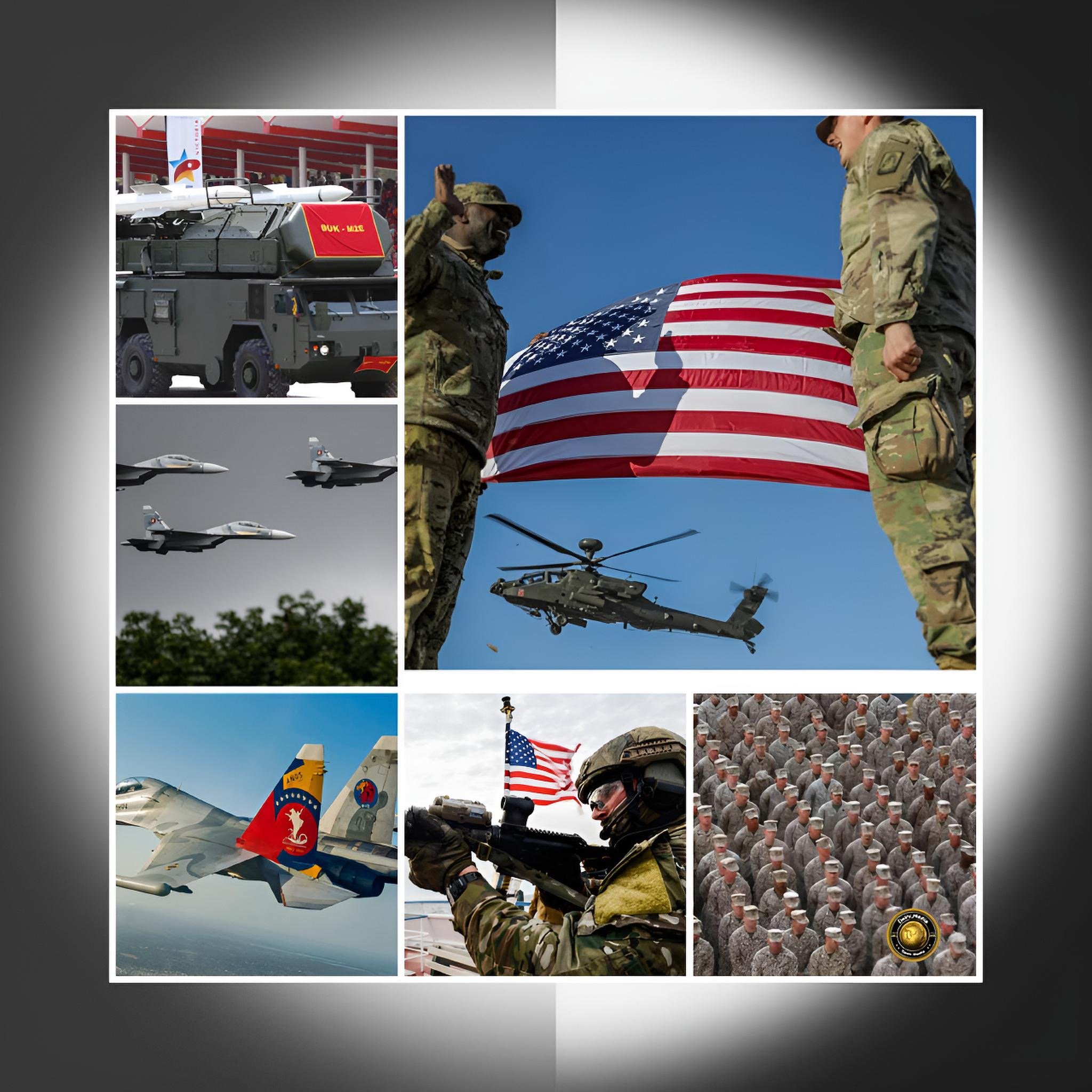
The Airbus A400M Atlas emerges as the most advanced platform for contemporary war scenarios, distinguished by its tactical-strategic hybrid architecture that transcends the specialised paradigms embodied by the C-5 Galaxy and C-17 Globemaster III.
Conceived amid Europe’s imperative for operational autonomy, the A400M integrates turboprop efficiency with strategic range, enabling deployment to unprepared airstrips—grass fields, damaged runways, or semi-prepared surfaces as brief as 940 metres—where jet-powered competitors confront prohibitive risk of foreign object damage or insufficient thrust reversal.
This austere-field proficiency, coupled with air-to-air refuelling, precision airdrop of 23-tonne payloads, and nascent multirole derivatives encompassing electronic warfare, UAV mothership, and defensive countermeasures like Germany’s DIRCM integration, positions the Atlas as optimally attuned to peer conflicts characterized by degraded infrastructure, contested airspace, and dispersed forward operations.
Recent validations include French drone launches from A400M fuselages and RAF aid deliveries into Gaza amid active hostilities, underscoring its resilience in high-threat environments where sustained ground presence invites vulnerability.
By contrast, the C-5M Super Galaxy excels in uncontested strategic heavy-lift, transporting outsized systems like tank platoons across intercontinental distances, yet its dependence on extended runways exceeding 8,000 feet renders it ill-suited for forward wartime logistics amid peer adversaries capable of airfield interdiction.
The C-17A Globemaster III, whilst revolutionary in bridging strategic reach with 3,000-foot runway access, remains fundamentally jet-dependent, limiting its efficacy in the most degraded theatres where the A400M’s counter-rotating propellers and four-engine redundancy confer superior survivability and operational tempo.
US Air Force projections extending C-17 service to 2075 reflect enduring utility in expeditionary campaigns, but the A400M’s Block Upgrade 0—incorporating NATO-compliant satellite landing, tactical data links, and 40-tonne payload evolution—heralds a paradigm of networked, resilient airlift indispensable for protracted conflicts where rapid, dispersed sustainment determines victory.
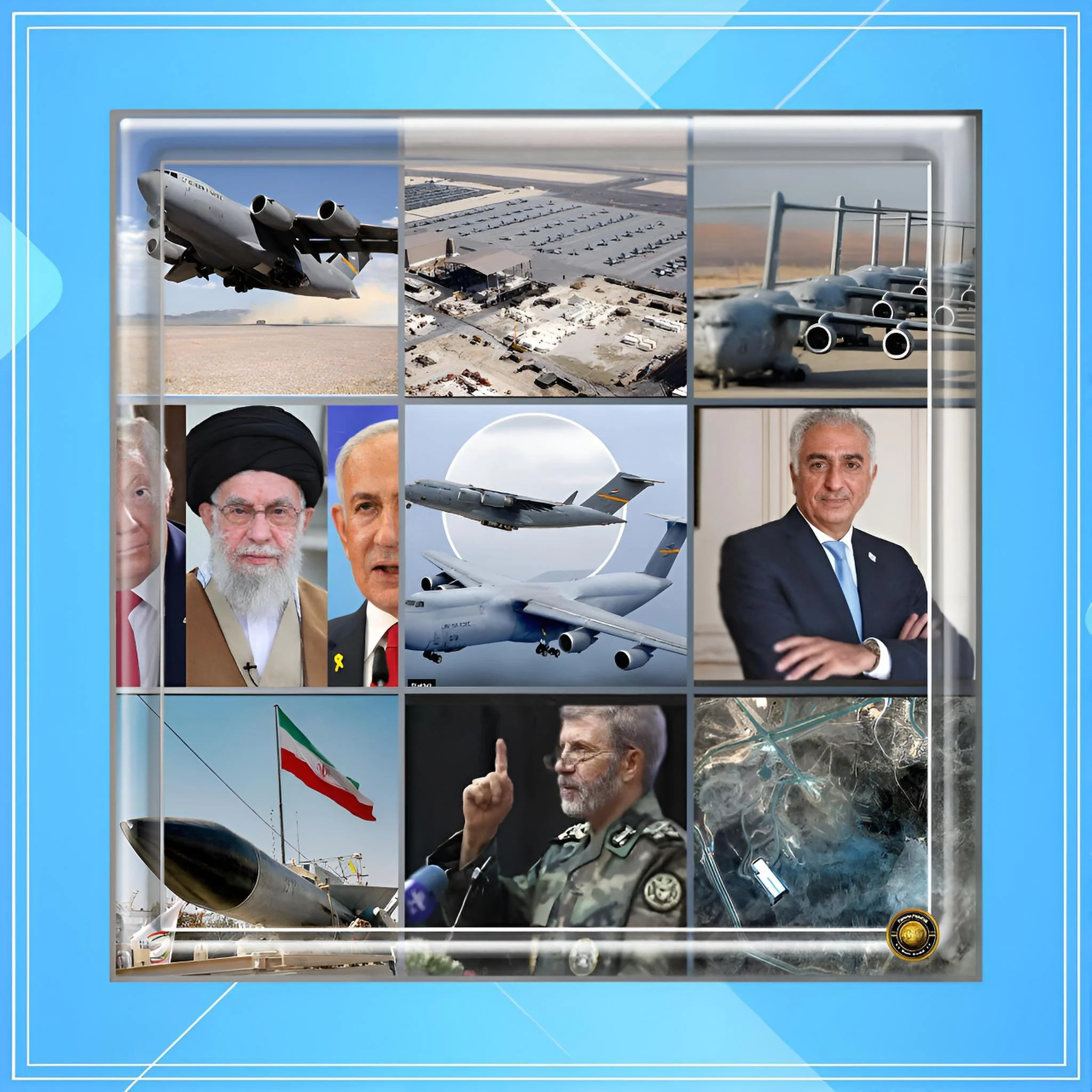
History of Giants of War: C-5 and C-17 Surge to Gulf as America Prepares for Iran Showdown
The Lockheed C-5 Galaxy and Boeing C-17 Globemaster III represent post-World War II technological achievements, emerging from Cold War strategic imperatives absent during the Second World War.
The C-5 Galaxy achieved initial operational deployment in 1970, whilst the C-17 Globemaster III entered service in 1993, both platforms consequentially unable to participate in World War II operations concluding in 1945. However, their nomenclatural antecedent—the Douglas C-47 Skytrain and Curtis C-46 Commando during World War II, succeeded by the C-54 Skymaster for long-range strategic transport—established the foundational doctrine of dedicated strategic airlift essential to American military superiority.
These propeller-driven predecessors executed critical missions including the Berlin Airlift supply operations, Pacific theatre resupply across island-hopping campaigns, and European theatre logistics supporting the D-Day invasion and subsequent continental operations.
The modern C-5 and C-17 platforms represent exponential technological advancement upon these World War II-era foundations, incorporating jet propulsion, pressurized cabins, and cargo handling systems enabling transcontinental operations with payload capacities exceeding 270,000 pounds—capabilities rendering the earlier aircraft obsolete by comparison.
The Lockheed C-5 Galaxy achieved epochal validation during Operation Desert Storm in 1991, transporting complete mechanised battalions, armoured brigade combat teams, and air defence systems across intercontinental distances, establishing the paradigm whereby American strategic airlift capacity became synonymous with rapid force projection and global power assertion.
The aircraft subsequently sustained Operation Enduring Freedom commencing 2001, executing the longest sustained airlift campaign since the Berlin Airlift of 1948-1949, delivering heavy equipment, helicopter squadrons, and engineering systems to austere bases throughout Afghanistan and Central Asia.
The Boeing C-17 Globemaster III, following its 1993 operational introduction, achieved transformational significance during Operation Iraqi Freedom commencing 2003, when C-17 squadrons established the initial logistical foundation enabling rapid force concentration across 500 miles of contested terrain within weeks.
Subsequent critical validation encompassed Operation Inherent Resolve beginning 2014, wherein C-17 fleets sustained counter-terrorism operations across Iraq and Syria, delivering ammunition, fuel, replacement personnel, and casualty evacuation missions to forward bases with unprecedented frequency and reliability.
The Airbus A400M Atlas, whilst chronologically contemporary with the C-17’s maturation, developed within distinctly European strategic contexts emphasizing tactical-strategic hybrid capability. The A400M achieved operational certification in 2013, subsequently conducting sustained missions throughout the Sahel region supporting counterterrorism operations in Mali, Niger, and Burkina Faso since 2014.
French and German A400M fleets have delivered equipment and personnel to isolated forward bases that larger American platforms cannot efficiently service, whilst demonstrating austere-field access capabilities enabling operations from grass fields and semi-prepared airstrips.
Recent validations include French Exercise Athena in May 2025, showcasing A400M capabilities in high-threat environments, and RAF humanitarian deliveries to Gaza during active hostilities, underscoring platform resilience in degraded infrastructure scenarios.
The January 7, 2026 strategic repositioning represents continuation of established paradigms wherein American strategic airlift capacity functions as the foundational instrument enabling crisis response and deterrence operations.
The C-5 Galaxy and C-17 Globemaster III deployment to Persian Gulf air bases—including potential staging areas throughout the United Arab Emirates, Qatar, and Saudi Arabia—constitutes the operational vanguard for American contingency planning regarding Iranian escalation scenarios.
This redeployment echoes historical precedent established during the 1991 Gulf War, the 2003 Iraq invasion, and multiple intermediate crisis scenarios wherein American airlift capacity enabled rapid force concentration within hours.
The concentration of heavy strategic lift capacity at forward bases enables rapid equipment delivery should military operations necessitate combat air support, precision strike systems, or ground force augmentation responding to Iranian ballistic missile threats, nuclear proliferation concerns, or regional proxy operations threatening American interests and allied security commitments throughout the Arabian Peninsula and Indian Ocean littoral regions.
Conclusion
The Eternal Trinity: Three Platforms, Infinite Possibilities, Unmatched Global Reach
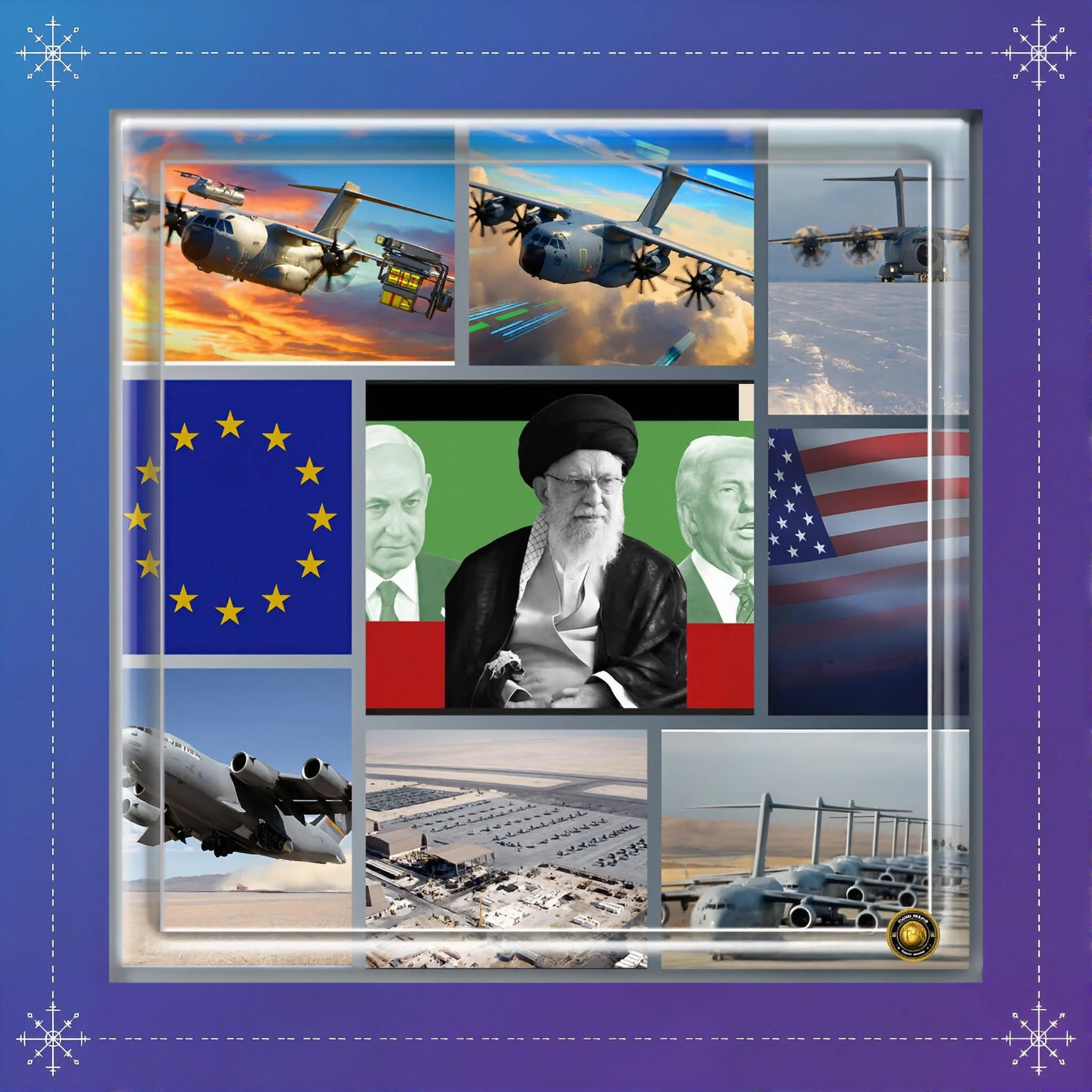
The C-5 Galaxy, C-17 Globemaster III, and Airbus A400M Atlas represent not competing platforms but rather a sophisticated architecture of complementary specialisation addressing the full spectrum of military and humanitarian airlift requirements.
The C-5 provides unmatched strategic heavy-lift capacity essential for intercontinental power projection and the transport of the most demanding cargo loads.
The C-17 revolutionised military logistics by achieving jet-powered speed and range combined with unprecedented austere-field capability, becoming the dominant platform for NATO and allied air forces globally.
The A400M emerged from European commitment to strategic autonomy, delivering tactical-strategic hybrid capability with genuine unprepared runway access denied to jet-powered competitors whilst providing strategic range and speed enabling sustained regional operations.
Each platform addresses distinct operational voids within contemporary military requirements. The hierarchical relationship between these aircraft creates a sophisticated logistics architecture: the C-5 handles the most demanding transcontinental transport missions; the C-17 provides the primary operational lift for the majority of alliance requirements; the A400M enables forward delivery to austere locations whilst supporting European strategic independence.
This tripartite architecture ensures that NATO possesses comprehensive global reach whilst reducing overreliance upon any single platform or nation.
The A400M's development trajectory towards 40-tonne payload capacity and six derivative mission variants reflects the platform's evolution towards comprehensive multirole utility. European commitment to accelerated production through at least 2029 demonstrates strategic determination to strengthen continental airlift capacity independent of American provision.
These developments represent the maturation of a genuinely European strategic capability that complements American dominance rather than challenging it.
Future military operations will likely require sophisticated employment of all three platforms in coordinated campaigns. Strategic deployments will utilise C-5 capacity for initial surge operations with the heaviest equipment, subsequent C-17 sorties for sustained supply, and A400M operations for forward delivery to unprepared locations within theatre.
This integrated approach maximises logistical efficiency whilst distributing operational risk across multiple platforms and nations.
The continuance of this architecture ensures that NATO retains unmatched global reach capabilities whilst progressively reducing dependence upon any single nation's logistical provision—a strategic positioning that strengthens alliance cohesion and operational resilience into the coming decades.