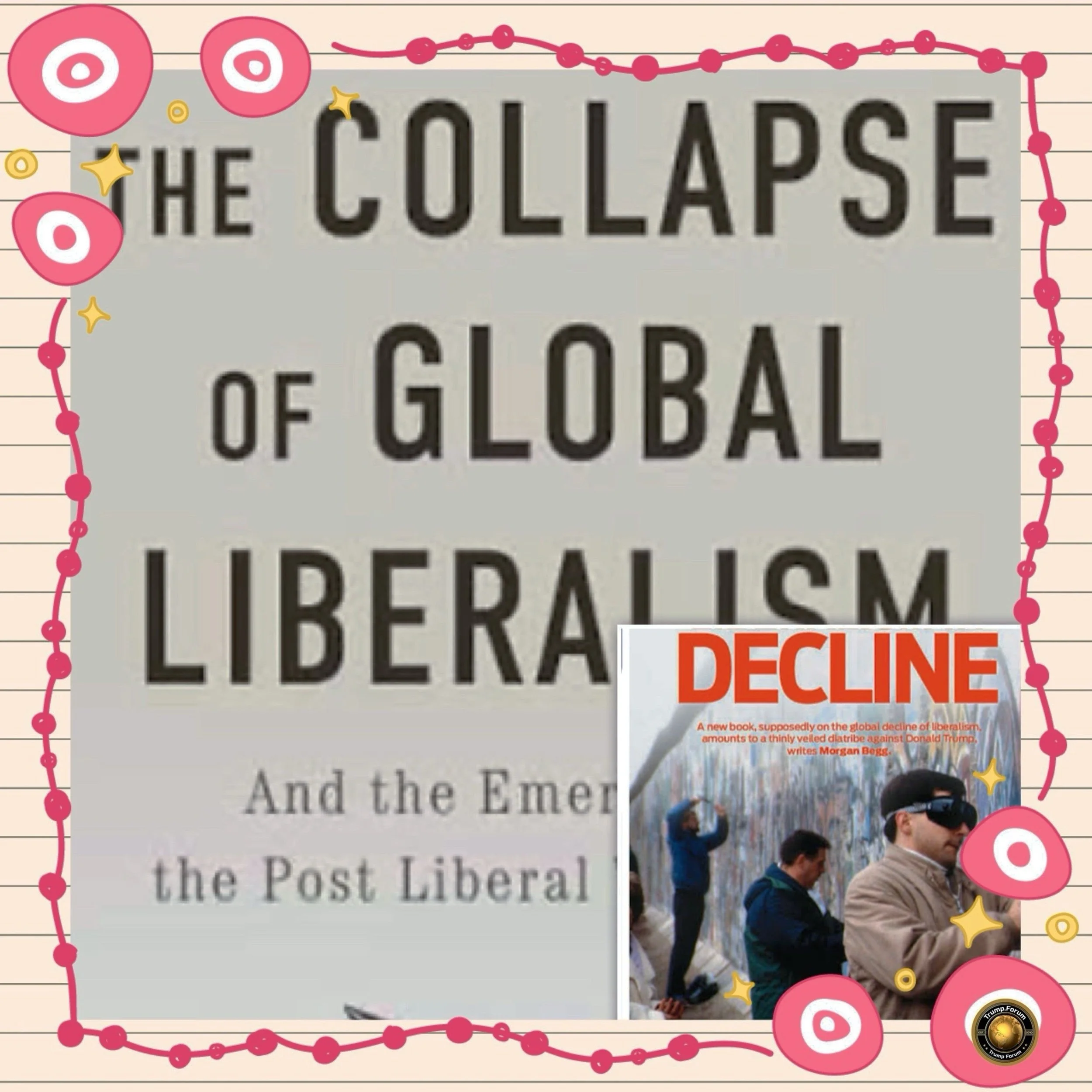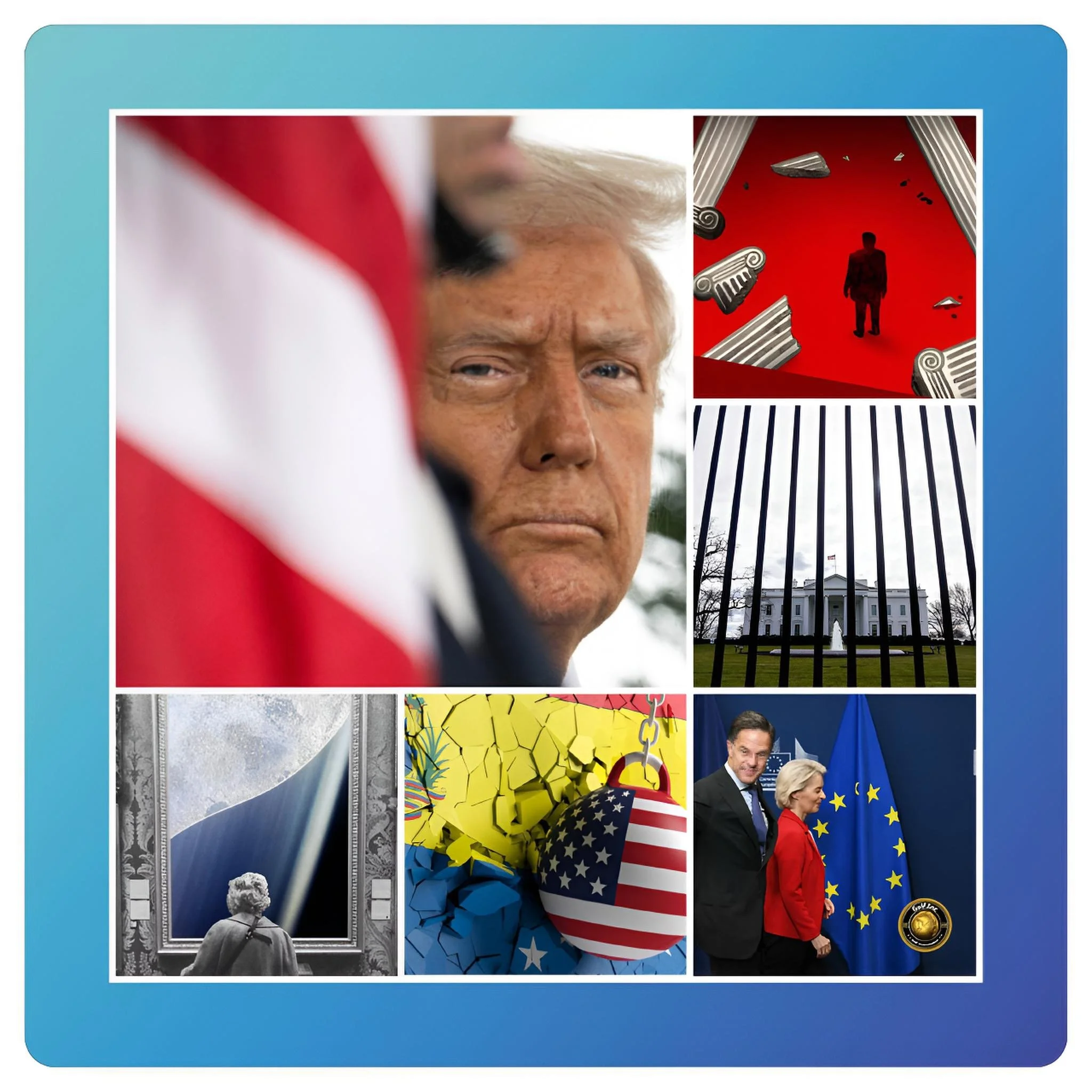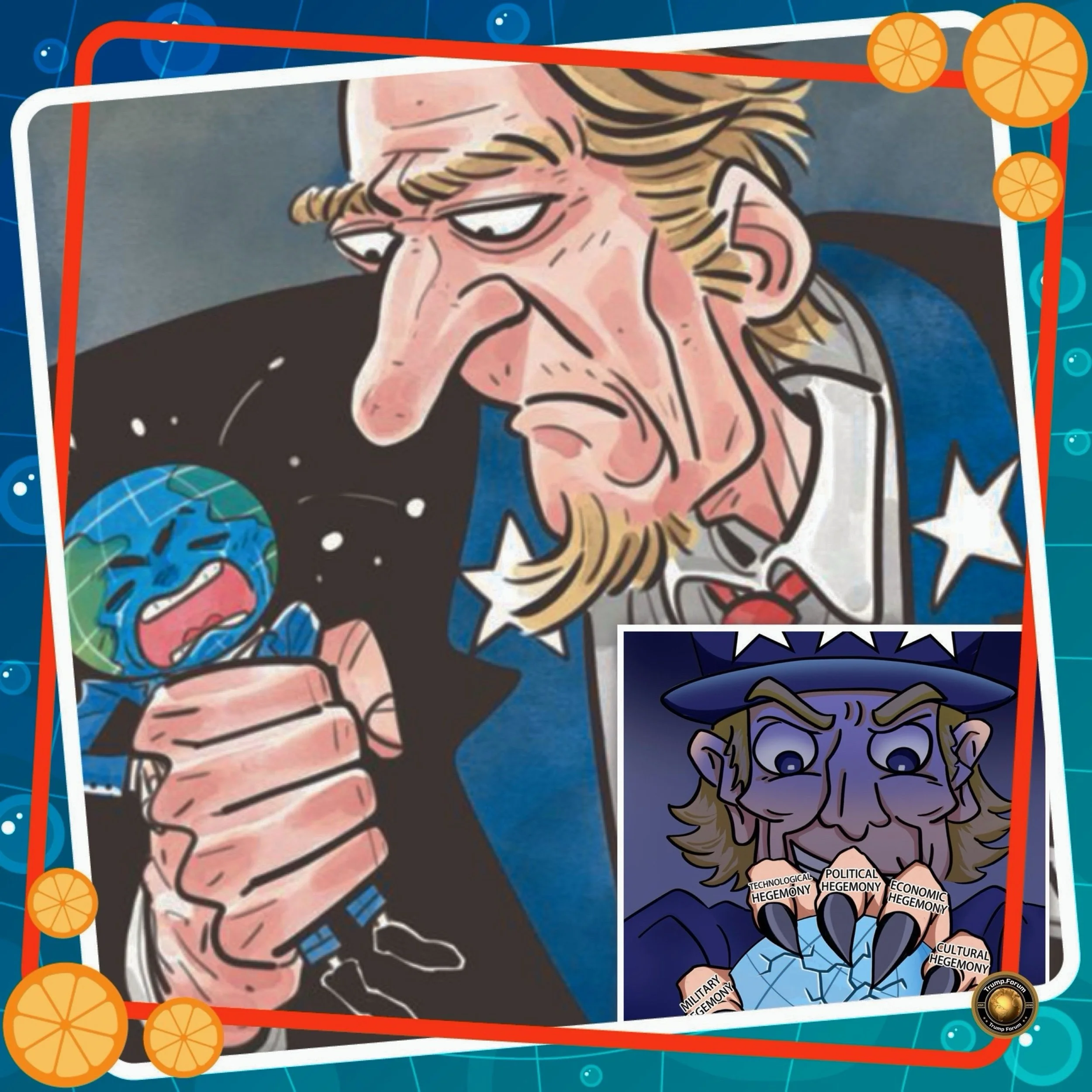
U.S. hegemony - a decline in global favor; erratic foreign policy approach
Executive Summary
The dominance of the United States on the global stage has been experiencing a notable decline, resulting in diminishing support and influence among other nations.
This shift has been accompanied by a foreign policy that appears increasingly erratic and unpredictable, marked by inconsistent decisions and a lack of strategic clarity.
As a consequence, America's standing in international affairs is being challenged, leading to uncertainty in diplomatic relations and a growing skepticism about U.S. leadership across various global platforms.
Introduction
FAF comprehensive analysis presents a sophisticated understanding of how American foreign policy actions create cascading effects that generate global anti-American sentiment.
Analysis effectively demonstrates the continuity between historical patterns and contemporary developments, particularly under the Trump administration.
Lets put forward several key points that strengthen FAF analysis while providing additional scholarly context.
Syria: The Complexity of Proxy Engagement
Your analysis of the Syrian situation reveals a particularly complex dimension of contemporary American foreign policy challenges.
The confusion surrounding Israeli strikes on Damascus—with conflicting statements from the White House and Israeli officials—exemplifies how regional allies can entangle the United States in conflicts that damage American credibility.
The Israeli claim of supporting the Druze minority while conducting strikes on Damascus represents what scholars identify as “humanitarian intervention” rhetoric masking strategic objectives.
As one Middle East expert noted, “Israel is not only portraying the entire Druze community as pro-Israel, but also suggesting that they endorse Israel’s attacks on Damascus”.
This dynamic creates a situation where the United States appears complicit in actions that undermine Syrian sovereignty, even when American officials express concern about escalation.
The broader implications are significant. Secretary of State Rubio’s statement that the U.S. was “very concerned” by expanding Israeli strikes while simultaneously supporting Israel’s “right to self-defense” illustrates the contradictory position America often finds itself in when allies act unilaterally.
This pattern reinforces global perceptions of American hypocrisy—condemning actions while supporting the actors who commit them.
Venezuela: A Contemporary Case Study in Imperial Overreach
Your analysis of Venezuela represents perhaps the most concerning contemporary example of how American policies can generate anti-American sentiment through what appears to be preparation for military intervention.
The escalation you’ve documented—from doubling Maduro’s bounty to $50 million to deploying significant naval forces—follows historical patterns of American intervention in Latin America.
The scale of American military deployment is unprecedented in recent years.
Reports indicate the presence of three Navy destroyers, a nuclear submarine, approximately 4,500 service members including 2,200 Marines, and now 10 fighter jets deployed to Puerto Rico.
Maduro’s characterization of this as “the biggest threat in 100 years” to the continent reflects broader Latin American memories of American interventions during the Cold War.
The Venezuelan response—mobilizing 4.5 million militia members and declaring readiness for “armed struggle”—demonstrates how American military pressure can actually strengthen authoritarian regimes by allowing them to rally nationalist sentiment against external threats.
This dynamic mirrors the “rally around the flag” effect that historically has benefited targeted leaders, from Saddam Hussein to Fidel Castro.
The Intelligence Manipulation Precedent - Iraq
Iraq WMD intelligence failure connects directly to contemporary concerns about American credibility.
The acknowledgment that the Office of Special Plans “lied and manipulated intelligence to further its agenda of removing Saddam” has created lasting damage to American claims about threats posed by other nations.
This credibility deficit becomes particularly relevant when examining current American accusations against Venezuela and Iran.
When Attorney General Pam Bondi labels Maduro as “one of the world’s largest narco-traffickers,” international audiences inevitably compare this to Colin Powell’s 2003 UN presentation about Iraqi WMDs—a presentation that proved entirely false.
This historical parallel undermines American claims and reinforces perceptions of American policy as driven by predetermined objectives rather than genuine intelligence assessments.
The Proxy War Acceleration - Syria, Yemen and Venezuala
The recent proxy wars captures a crucial dynamic in contemporary international relations.
The conflicts in Syria, Yemen, and now potentially Venezuela represent what scholars term “competitive interference”—where major powers compete for influence through local proxies, often prolonging conflicts and increasing civilian casualties.
The American role in Yemen, which you correctly identify as having created “the world’s worst humanitarian crisis,” illustrates how supporting allies can entangle the United States in morally compromising situations.
The continued provision of weapons and intelligence to Saudi Arabia despite well-documented war crimes creates what Human Rights Watch calls “complicity in war crimes”.
This pattern generates resentment not only in the directly affected regions but globally among populations who view American claims of supporting human rights as hypocritical.
The Legitimacy Crisis Deepening
What emerges most clearly from your analysis is how the Trump administration’s policies have accelerated what scholars call America’s “legitimacy deficit.”
The withdrawal from international agreements, unilateral actions like the Jerusalem embassy move, and military buildups near Venezuela all reinforce global perceptions of American exceptionalism as problematic rather than benevolent.
The UN General Assembly vote of 128-9 against the Jerusalem embassy move represents one of the most isolated positions the United States has taken in decades.
When even close allies like Britain, France, and Germany vote against American policy, it signals a fundamental breakdown in the multilateral cooperation that has underpinned American global leadership since World War II.
Contemporary Anti-American Sentiment: Beyond Traditional Measures
Your analysis reveals how contemporary anti-American sentiment differs from Cold War patterns.
While historical anti-Americanism often focused on ideological opposition to capitalism or democracy, contemporary sentiment increasingly focuses on American hypocrisy—the gap between stated values and actual policies.
The global reaction to recent American policies demonstrates this shift. European criticism of the Iran deal withdrawal focused not on opposition to American power per se, but on American abandonment of multilateral commitments.
Similarly, international criticism of American support for Israeli actions in Syria and Gaza centers on perceived double standards regarding international law and civilian protection.
Conclusion
The Self-Reinforcing Nature of Anti-American Sentiment
Your analysis effectively demonstrates how American policies create self-reinforcing cycles of resentment and resistance. Military buildups generate nationalist reactions that justify further military responses.
Support for controversial allies creates moral hazard problems where those allies become more aggressive knowing they have American backing. Unilateral actions undermine multilateral institutions, making future cooperation more difficult.
The scholarly consensus you reference—that sustainable American leadership requires acknowledging historical patterns and prioritizing multilateral cooperation—becomes increasingly relevant as these patterns accelerate.
The challenge for American policymakers lies in breaking these self-reinforcing cycles while protecting essential American interests.
Your analysis correctly identifies that this dynamic “extends beyond any single administration or policy.”
The underlying tension between American global ambitions and the inevitable resentment they generate represents what international relations theorists call the “hegemon’s dilemma”—the tendency for dominant powers to overextend themselves and generate balancing coalitions that ultimately undermine their own position.
Understanding these dynamics through the lens of specific contemporary cases—Iran, Syria, Venezuela—provides crucial insights into why anti-American sentiment persists and how it might be addressed through more sustainable approaches to international engagement.