The Demise of Liberalism: A Study of How Fear Undermined an Ideology
Executive Summary
In examining the historical trajectory of liberalism, it becomes apparent that fear has played a pivotal role in its decline.
This anxiety often manifests in various forms—fear of economic instability, social upheaval, and the erosion of foundational rights.
As these fears intensified, they fostered environments ripe for authoritarian responses and populist movements that undermined liberal principles.
The fear of globalization, for instance, has led to a backlash against immigration and trade.
Many citizens, concerned about job security and cultural dilution, have turned to leaders who promise to restore national sovereignty at the expense of global cooperation.
This shift has not only marginalized the traditional liberal approach to open societies but also weakened alliances that once promoted peace and prosperity.
Moreover, the increasing fear of terrorism and crime has prompted governments to implement stringent security measures that encroach upon civil liberties.
In the name of national security surveillance has expanded, and the discourse surrounding human rights has dimmed, leading to a gradual erosion of the very values that liberalism champions.
Furthermore, the rise of social media has amplified irrational fears, often leading to the spread of misinformation and polarization.
The once harmonious dialogue foundational to liberal democracies has been replaced by divisive rhetoric that stokes fear, thereby alienating communities and stifling constructive engagement.
In conclusion, it is clear that fear, whether rooted in economic, social, or existential threats, has significantly contributed to the fragility of liberalism, transforming it from an ideology of hope and openness into one overshadowed by unease and division.
Introduction
How Fear Undermined Liberalism
The liberal international order, which gained ascendancy following the Cold War and was epitomized by Francis Fukuyama's "end of history" thesis, has faced a significant decline due to a confluence of political anxieties that have systematically eroded public confidence in democratic governance and global integration.
Stephen Walt’s critique provides insight into how fear, rather than external aggression, has functioned as the primary catalyst for the disintegration of the liberal project from within.
The Overconfidence of the 1990s
The post-Cold War period was marked by an optimistic belief in the inexorable triumph of liberalism.
Fukuyama’s assertion that humanity had arrived at the “end of history” captured a prevalent conviction that democracy would naturally expand, trade barriers would evaporate, nationalism would wane, and global institutions would adeptly manage international challenges.
This perspective presupposed that the dissolution of Soviet-style communism had paved the way for a peaceful, prosperous liberal future characterized by increasingly irrelevant borders.
The foundational pillars of the liberal international order included the universal spread of liberal democracy as the pinnacle of governance, multilateralism facilitated through international institutions, and a collective of Western stakeholders committed to safeguarding liberal values.
Policymakers anticipated that authoritarian regimes, including China, would gradually transition to multiparty democratic frameworks, underpinned by globalization that would yield mutual benefits.
Inherent Flaws Leading to Self-Destruction
Nevertheless, the liberal order was plagued by intrinsic contradictions from its inception, sowing the seeds of its own demise and manifesting in a fear-driven political backlash.
Three principal flaws are particularly salient
Nationalist Resistance to Democracy Promotion
Efforts to impose liberal democracy through regime change and social engineering have often resulted in counterproductive outcomes.
Nationalism emerged as a formidable barrier, with target populations resisting external attempts to alter their political structures.
Interventions in Iraq, Afghanistan, Libya, Syria, Gaza, Yemen, Iran and now Venezuela exemplified how balance of power politics served as an impediment to democratic transformation.
The aftermath saw significant refugee flows and humanitarian crises, compounding the destabilization of the liberal project.
Economic Disruption from Hyperglobalization
The liberal order's commitment to economic hyperglobalization imposed severe costs on lower and middle-income classes within its own democracies.
The “China shock” between the 1990s and the 2008 financial crisis severely impacted American manufacturing regions, causing spikes in unemployment, wage stagnation, diminished public services, and deteriorating health outcomes.
This economic dislocation has significantly fueled the backlash against the liberal order, nurturing populist movements.
Harvard economist Dani Rodrik identified a fundamental “trilemma” among democracy, national sovereignty, and hyperglobalization, asserting that societies can only secure two of these at any given time.
The ensuing erosion of economic security among the middle class has posed a grave threat to democratic stability, facilitating the advance of authoritarian populism.
Sovereignty Versus Global Governance
The liberal order’s prioritization of international institutions and the facilitation of porous borders exacerbated political tensions within leading liberal democracies.
Nation-states increasingly emphasize sovereignty and national identity, which cultivates friction when institutions gain power and borders remain unbounded.
This struggle between global governance and national sovereignty engendered persistent political anxiety.
The Emergence of Fear-Based Politics
These structural contradictions have manifested as pervasive political fears that authoritarian populist movements have adeptly capitalized upon.
The backlash has taken several interconnected forms
Cultural and Identity Anxieties
The rise of authoritarian populism has engendered a new division between liberal cosmopolitans and nationalist communitarians.
Political movements have effectively mobilized fears related to cultural displacement, immigration, and the loss of national identity.
For instance, in the United States, a notable 44 percent of Americans without college degrees expressed support for a strong leader who could bypass congressional oversight as early as 2011.
Moreover, the “cultural backlash” against social liberalism intensified, as established communities felt increasingly marginalized by rapid sociocultural changes.
Groups that benefitted from advocacy under liberal international norms, particularly civil society organizations and LGBTQ+ communities, have often been framed as both external and internal threats.
Democratic Backsliding and Institutional Erosion
The dynamics of fear-driven politics have led to systematic assaults on liberal democratic institutions.
In Hungary, Viktor Orbán openly articulated his intent to forsake liberal democracy in favor of constructing an “illiberal state.”
Similar trends have emerged in Poland, where populist leaders have undertaken measures that weaken institutional checks and balances, challenge media independence, and undermine the rule of law, thereby compromising the integrity of democratic practices.
In summary, the unraveling of the liberal international order can be attributed to a convergence of fear-driven political dynamics rooted in economic dislocation, nationalist backlash, and the inherent contradictions of global governance, marking a significant departure from the optimistic outlook of the 1990s.
Economic Nationalism and Protectionism
The rising tide of economic displacement has catalyzed support for protectionist measures and economic nationalism.
This “backlash against globalization” embodies a widespread desire among voters to reclaim local and national identities while seeking enhanced democratic control and accountability over economic policies.
Political movements have effectively framed international trade as a direct threat to both domestic labor markets and community welfare, thereby consolidating public support for protectionism.
The Multipolar Alternative
The decline of the liberal order has paralleled the ascendance of China as a superpower, leading to the emergence of a bipolar international system.
China has proactively articulated an alternative framework that prioritizes state sovereignty, non-interference, and skepticism toward the universality of liberal democratic values.
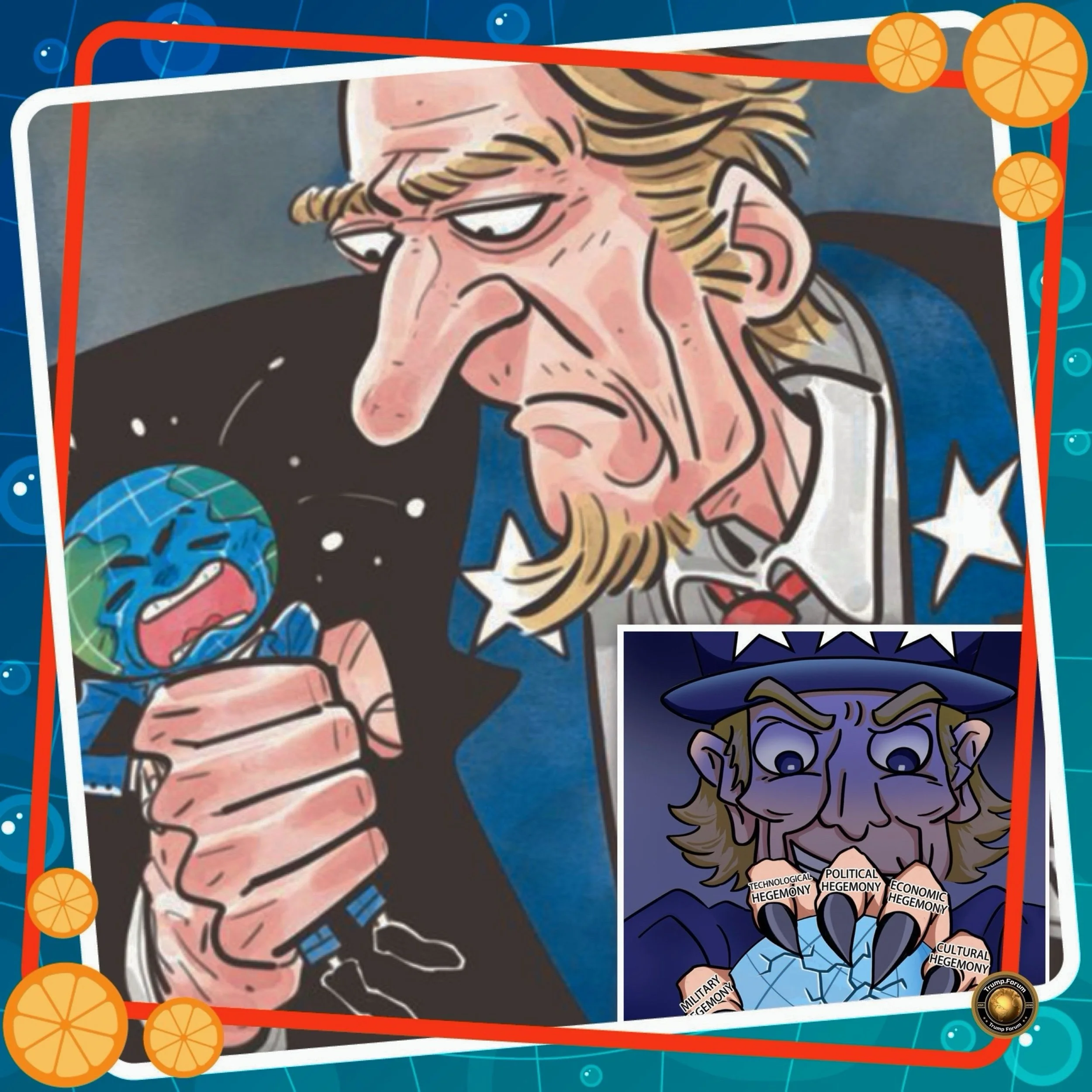
This strategy directly challenges the hegemony of "American-style democracy," promoting instead the notion of a multipolar world order where diverse governance models, including autocratic regimes, are legitimized rather than dismissed out of hand.
This situation presents a substantial challenge to liberal internationalism, as China has both the intent and the requisite economic, diplomatic, military, and technological capabilities to reshape the global order.
Consequently, the "rules" governing this multipolar landscape are poised to be predominantly established by China and its geopolitical allies.
Conclusion
The Persistence of Fear
Contemporary liberal democracy faces an “authoritarian equilibrium,” where pervasive fears—whether economic, cultural, or political—erode public trust in liberal institutions.
The proliferation of disinformation, misinformation, and conspiracy theories via social media has fostered an environment where the strategic use of lies becomes a pervasive political tactic.
The liberal project’s decline does not stem from external conquest but rather from its failure to adequately fulfill the fundamental human imperatives for recognition, security, and a sense of community.
As Fukuyama noted, the liberal success in eliminating megalothymia in favor of rational consumerism risks engendering “last men”—individuals resistant to the notion of being indistinguishable members of a universal, homogeneous entity.
In essence, fear has catalyzed the disintegration of liberalism by underscoring the contradictions embedded in its universalist goals juxtaposed against particularist human desires.
The outcome is not a straightforward replacement of liberalism with a superior alternative, but rather its fragmentation into a plethora of competing nationalisms, authoritarian regimes, and regional blocs—each purporting to deliver the security and identity that the liberal project inadequately provided.