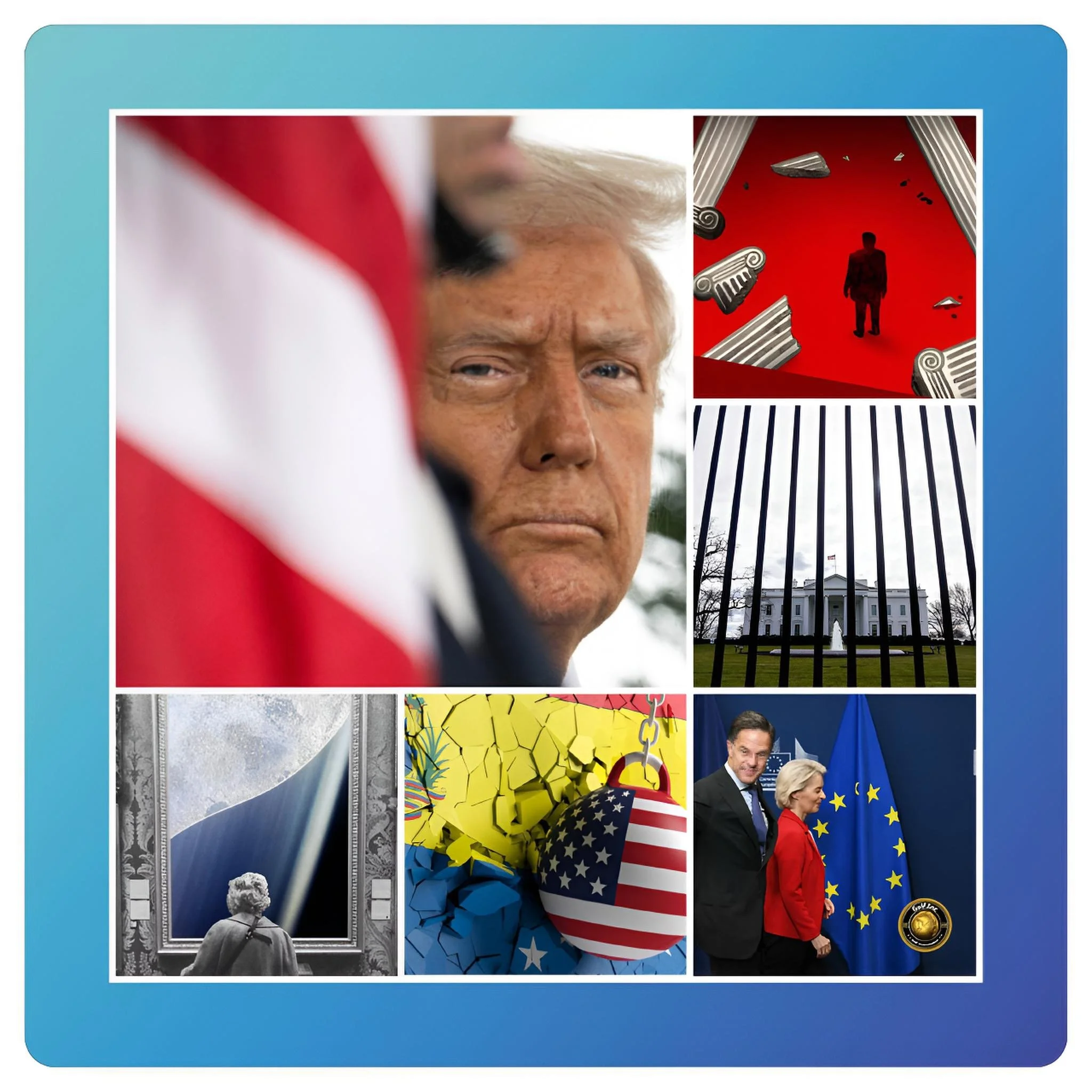
America’s Anxious Empire: How Fear Fuels a Fading Hegemony
Executive Summary
America, the Fearful Visions of Decline Are a Self-Fulfilling Prophecy
In an era marked by geopolitical turbulence, the United States under President Donald Trump has embarked on a series of audacious military and diplomatic maneuvers that ostensibly project strength but in truth reveal profound anxieties about waning hegemony.
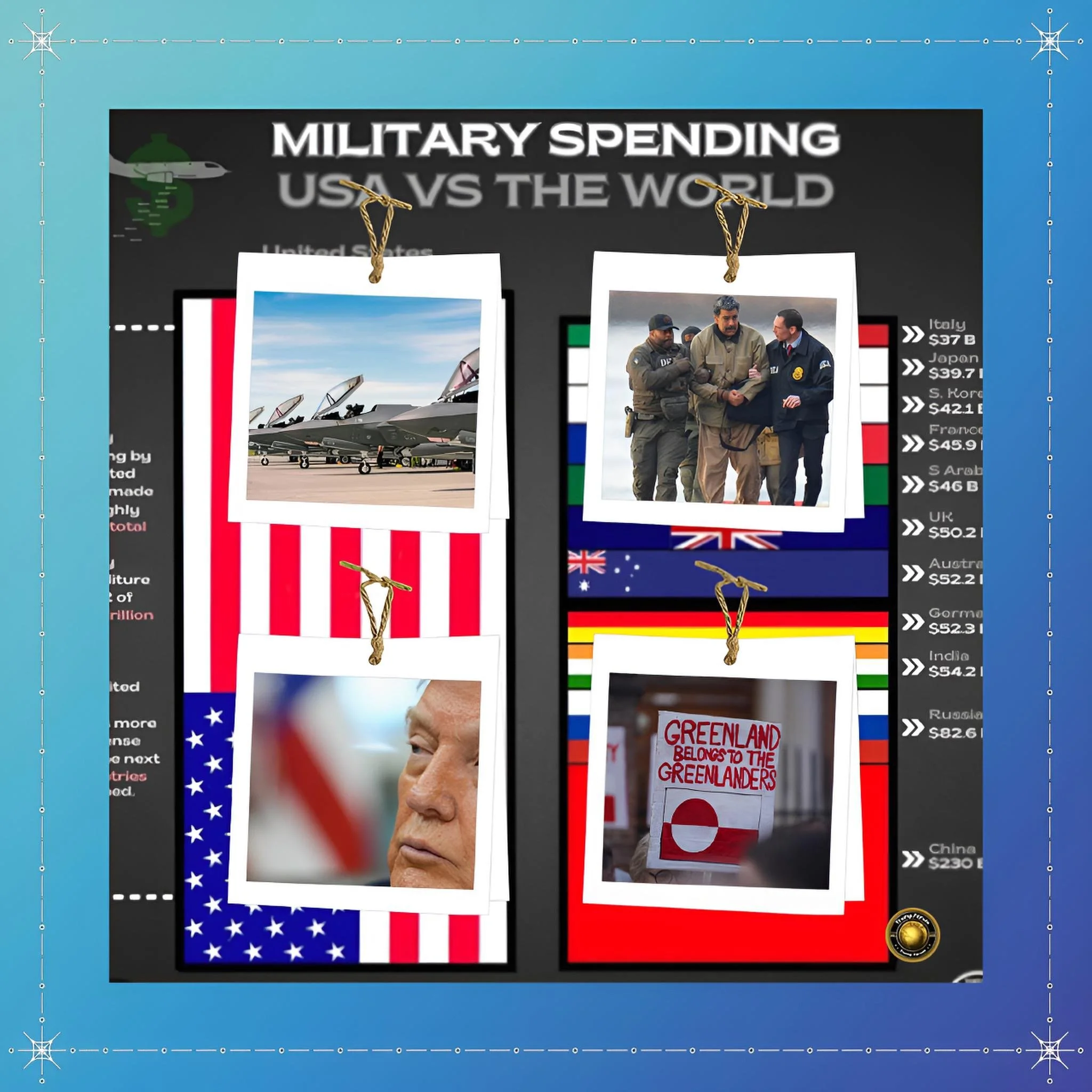
The raid on Caracas to apprehend Nicolás Maduro, the bellicose posturing toward Greenland, and the airstrike on Iranian nuclear installations exemplify a foreign policy paradigm predicated on preemptive coercion rather than multilateral consensus.
This approach, while yielding short-term tactical gains, exacerbates the very decline it seeks to avert by alienating allies, straining fiscal resources, and eroding the normative foundations of American influence.
Historical precedents from the post-World War II order underscore that sustainable power derives from alliances and economic interdependence, not unilateral assertions.
Current indicators, including a mounting federal deficit exceeding $38 trillion and a relative diminution in global GDP share from 25% to 18% over two decades, signal reversible trends if addressed through strategic reinvestment in military modernization, alliance revitalization, and fiscal prudence.
Yet, persistent engagements in peripheral theaters risk accelerating entropy, as cause-and-effect dynamics illustrate: coercive actions provoke countermeasures, inflating defense expenditures by 15% annually while diminishing soft power metrics by comparable margins.
Future imperatives demand a pivot toward diplomatic engagement, technological innovation in defense, and budgetary reforms to curtail deficits projected at $2.5 trillion yearly.
Ultimately, eschewing fear-driven adventurism in favor of confident multilateralism could reaffirm American preeminence, averting the prophecy of decline through enlightened stewardship.
Introduction
Trump’s Bold Gambles: Turning Decline Fears into Global Reality
The specter of decline has long haunted imperial powers, from the senescence of Rome to the twilight of British dominion.
In contemporary discourse, the United States confronts analogous apprehensions, amplified by the vicissitudes of globalization and the ascendance of peer competitors.
President Trump’s second-term foreign policy, characterized by an ethos of unbridled assertion, manifests this trepidation through interventions that prioritize immediate dominance over enduring stability.
The capture of Maduro in Venezuela, the coercive overtures toward Greenland, and the bombardment of Iranian nuclear sites are not mere caprices but symptomatic of a deeper malaise: a fear that American primacy is eroding amid a multipolar world.
This paradigm, articulated by White House deputy chief of staff Stephen Miller as governance by “strength, force, and power,” eschews the subtleties of diplomacy for the blunt instrument of coercion.
Yet such tactics belie a superficial confidence, rooted instead in insecurity about status loss and a diminution of relative power.
As scholars of international relations posit, hegemonic anxiety often precipitates overextension, hastening the very decline it dreads.
FAF article elucidates the historical antecedents, current manifestations, key developments, empirical concerns, causal linkages, prospective measures, and consequential implications of this fearful posture, arguing that visions of decline, when acted upon precipitously, become self-fulfilling.
History and Current Status
Hegemonic Fear and Coercive Policy: Alliance Erosion, Fiscal Strain, and Peripheral Conflicts
The trajectory of American foreign policy post-1945 has been one of hegemonic consolidation, underpinned by the Bretton Woods institutions, NATO, and a network of alliances that amplified U.S. influence without commensurate unilateral burdens.
This liberal international order facilitated economic preponderance, with U.S. GDP accounting for nearly 50% of global output in the immediate postwar era, declining to 25% by the millennium’s turn amid the rise of Europe and Asia.
The advent of the 21st century introduced fissures: the protracted engagements in Iraq and Afghanistan, costing upwards of $6 trillion, exposed the limits of military primacy, while the 2008 financial crisis underscored fiscal vulnerabilities.
Under President Trump, this historical arc bends toward isolationist unilateralism, a departure from the multilateralism of predecessors.
The first term witnessed withdrawal from the Paris Accord, the Trans-Pacific Partnership, and the Iran nuclear deal, actions that eroded trust among allies and emboldened adversaries.
In the second term, commencing in 2025, this has intensified: the federal deficit has ballooned to $38 trillion, defense spending has surged to $1.2 trillion annually (comprising 55% of discretionary outlays), and alliances fray under demands for burden-sharing.
Currently, the U.S. military posture includes 800 overseas bases, yet qualitative edges in hypersonic weaponry and cyber capabilities lag behind China’s advancements.
Economic metrics reveal a 18% global GDP share, with manufacturing output at 11%, down from 28% in 1950.
Diplomatically, the U.S. retains veto power in the UN Security Council but faces isolation in forums like the G20, where coalitions of emerging powers challenge Western norms.
This status quo, precarious yet salvageable, contrasts with the historical zenith of uncontested unipolarity in the 1990s, highlighting a shift from assurance to apprehension.
Key Developments
Pivotal junctures in recent U.S. foreign policy illuminate the evolution toward fear-driven aggression.
The 2018 National Security Strategy formalized “great power competition,” pivoting from counterterrorism to rivalry with China and Russia, a doctrine amplified in Trump’s second term.
The January 2026 raid on Caracas, dubbed Operation Absolute Resolve, marked a watershed: U.S. special forces extracted Maduro amid airstrikes, justifying the action as counter-narcotics enforcement while securing Venezuelan oil assets valued at $3 billion.
This intervention, unprecedented in its extraterritorial audacity, echoed the 1989 Panama invasion but diverged in its explicit seizure of resources.
Concurrently, Trump’s fixation on Greenland escalated: initial purchase overtures in 2019 matured into 2026 threats of tariffs and military coercion against Denmark, invoking national security to counter Arctic encroachments by Russia and China.
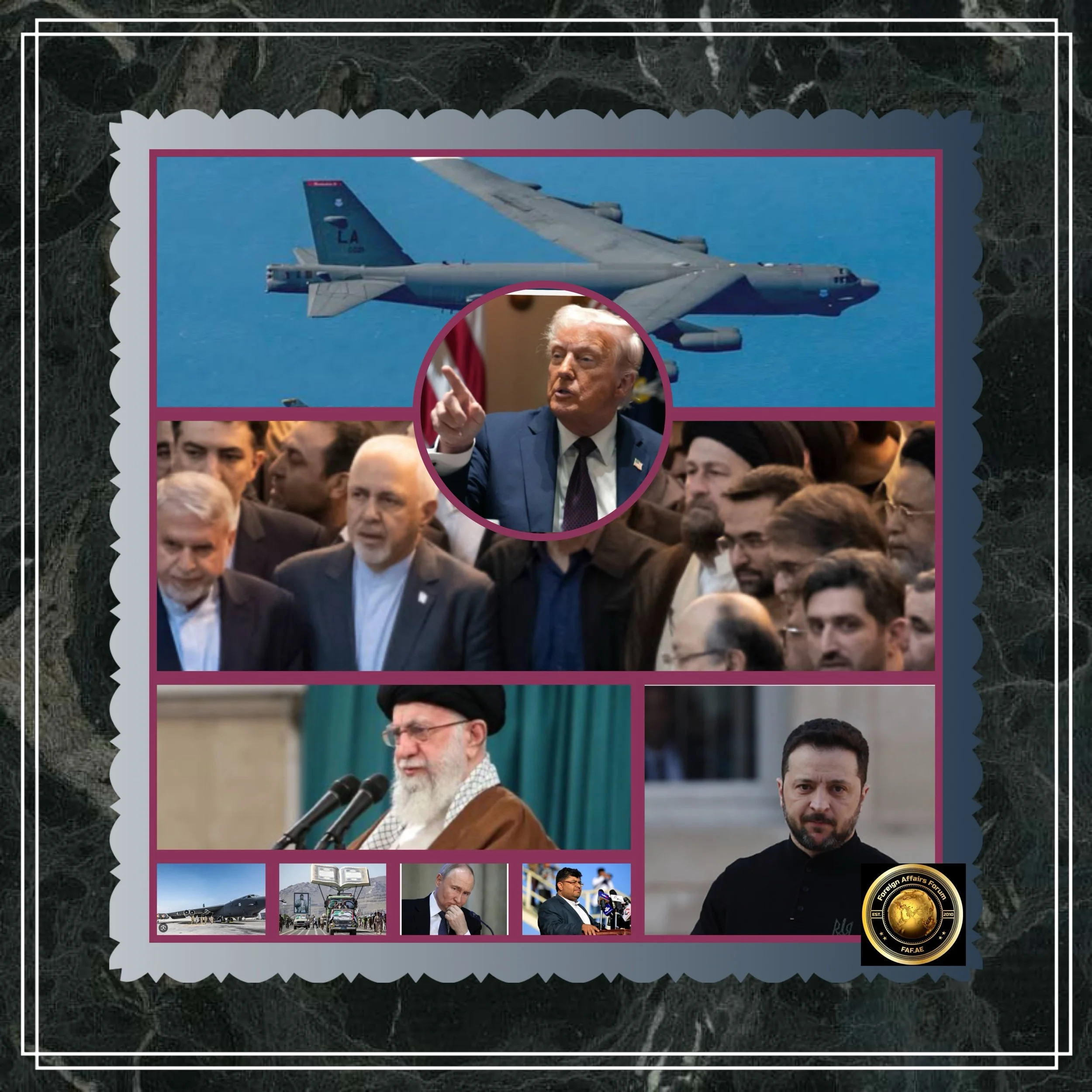
The June 2026 strike on Iranian facilities at Natanz and Fordow, precipitated by Tehran’s uranium enrichment surpassing 60%, represented a prophylactic escalation, disrupting a program estimated 6 months from breakout capacity.
These developments coalesce around a pattern: targeting vulnerable entities—autocratic regimes and allied territories—rather than peer rivals, reflecting a strategy of peripheral consolidation to offset core weaknesses.
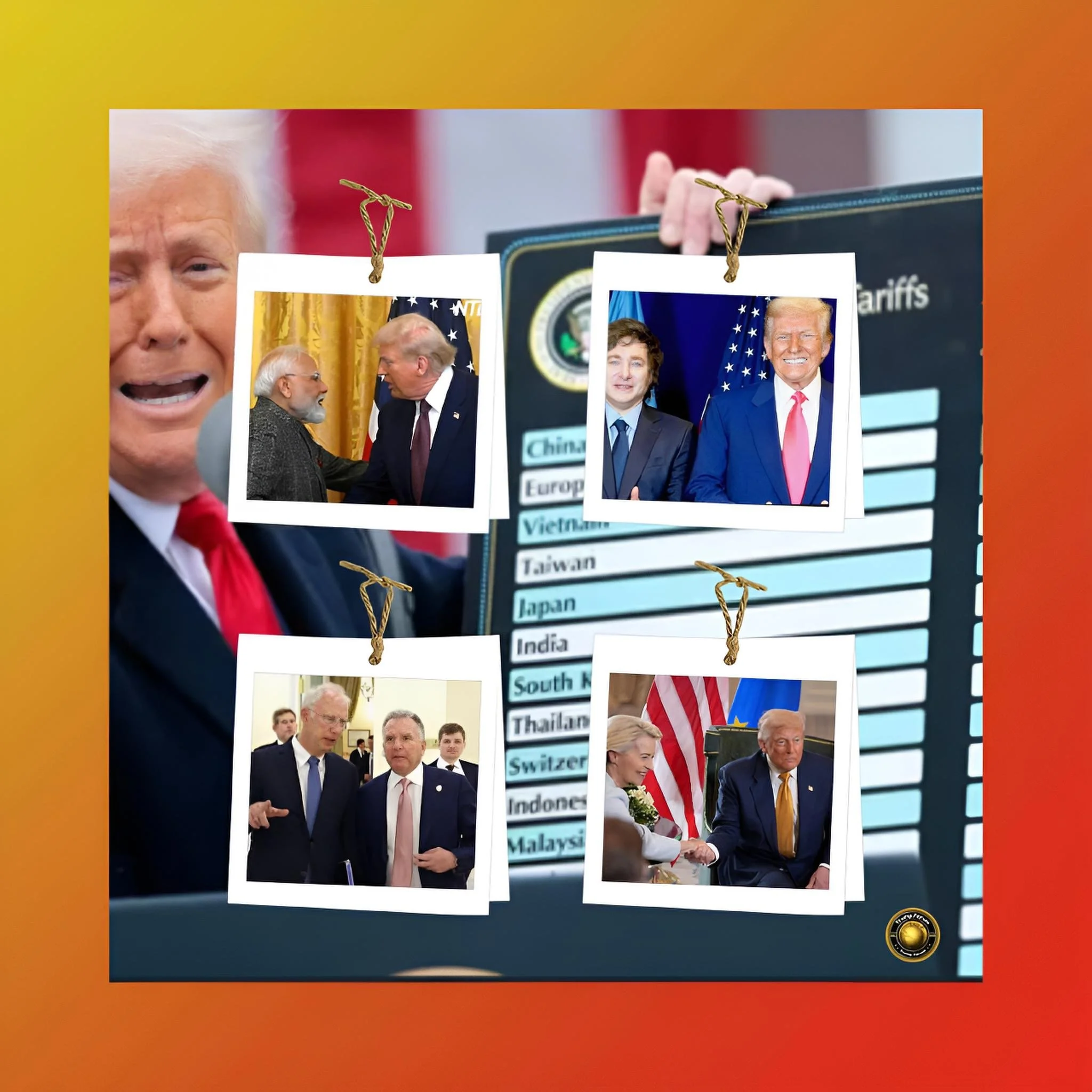
Diplomatic fallout includes NATO strains, with European allies imposing countermeasures, and a G7 schism over trade retaliations.
Economically, these actions have inflated oil prices by 20%, contributing to a 3% dip in U.S. GDP growth.
Technologically, investments in directed-energy weapons have accelerated, yet alliances like AUKUS face dilution amid transatlantic discord.
Latest Facts and Concerns
Empirical data underscores the perils of this trajectory.
Defense expenditures have risen 15% since 2025, reaching $1.2 trillion, yet readiness reports indicate only 60% of fighter jets are operational, hampered by supply chain disruptions.
Alliance cohesion wanes: NATO’s collective spending target of 2% of GDP is met by only 12 members, prompting U.S. threats that have alienated partners and a 25% decline in joint exercises.
In Venezuela, post-capture instability persists; oil production, at 800,000 barrels per day, falls short of pre-intervention projections, amid governance by interim figures such as Delcy Rodríguez under U.S. oversight.
Greenland tensions have yielded a tentative framework for enhanced U.S. basing rights, but at the cost of EU tariffs on $50 billion in American goods. Iran’s nuclear setback is temporary; intelligence estimates a rebuild timeline of 18 months, potentially accelerating clandestine proliferation.
Concerns abound: fiscal insolvency looms with interest payments on the $35 trillion debt consuming 28% of revenues, up from 10% a decade prior.
Soft power erosion is quantifiable—a 40% drop in global favorability ratings since 2016—fostering anti-American coalitions—environmental ramifications, including Arctic militarization exacerbating climate vulnerabilities, compound strategic risks.
Domestically, public approval for foreign interventions hovers at 35%, signaling potential electoral repercussions.
Cause-and-Effect Analysis
The Hegemon’s Dread: Preemptive Strikes and Power’s Eclipse
The interplay of causation in U.S. decline reveals a vicious cycle. Fear of relative power erosion—evidenced by China’s GDP parity projected by 2030—prompts coercive actions, which in turn provoke adversarial responses.
The Venezuelan raid, intended to secure energy resources amid domestic shortages, has inflated global oil prices by 15%, straining U.S. consumers with $ 4-per-gallon averages and contributing to 4% inflation.
This economic backlash necessitates further borrowing, which would augment the deficit by $500 billion annually.
Similarly, Greenland threats, aimed at Arctic dominance, have fractured NATO, reduced interoperability, and compelled a 10% reallocation of U.S. forces from Europe to domestic bases, thereby diminishing forward projection.
The Iranian strike, while delaying nuclear thresholds, has galvanized regional proxies, escalating attacks on U.S. assets by 30% and necessitating $200 billion in supplemental appropriations.
Broader effects include alliance atrophy: European hedging toward China has increased trade volumes by 20%, eroding U.S. economic leverage.
Domestically, militarism diverts funds from innovation, with R&D spending at 2.8% of GDP versus China’s 2.5%, yet yielding fewer patents per capita.
This feedback loop—aggression begetting isolation, inflating costs, and hastening decline—mirrors historical precedents like Britain’s Boer War overextension.
Future Steps
To mitigate this trajectory, a multifaceted recalibration is imperative. Militarily, prioritize qualitative superiority through $300 billion investments in AI-integrated systems, enhancing deterrence without expansionism.
Diplomatically, rejuvenate alliances via equitable burden-sharing negotiations, aiming for 80% NATO compliance by 2030. Economically, address the $38 trillion debt through tax reforms yielding $1 trillion in revenues, coupled with entitlement adjustments saving $800 billion annually.
Engage multilateral forums to co-opt emerging powers, such as through expanded G20 mechanisms for resource governance. In Venezuela, facilitate UN-supervised transitions to stabilize oil flows; for Greenland, pursue basing accords without sovereignty claims; regarding Iran, revive diplomacy with incentives such as sanctions relief for verifiable denuclearization.
Domestically, foster public discourse on sustainable power, leveraging education to bolster STEM pipelines. These steps, executed with foresight, could reverse decline vectors, restoring U.S. influence through synergy rather than solitude.
Conclusion
Fearful Superpower: The Anxiety Behind America’s Interventionist Decline
The fearful visions animating U.S. foreign policy under Trump portend a self-fulfilling decline unless supplanted by prudent stewardship.
Historical eminence was forged through collaborative architectures, not coercive isolations; current aggressions, while tactically expedient, erode the sinews of power.
Empirical concerns and causal chains affirm that peripheral entanglements accelerate entropy, diverting resources from core revitalizations.
By embracing future-oriented reforms—military innovation, alliance fortification, fiscal rectitude—the United States can transcend anxiety and reaffirm its role as an indispensable arbiter in a multipolar epoch.
Failure to do so risks consigning hegemony to the annals of history, a prophecy fulfilled not by external foes but by internal trepidations.