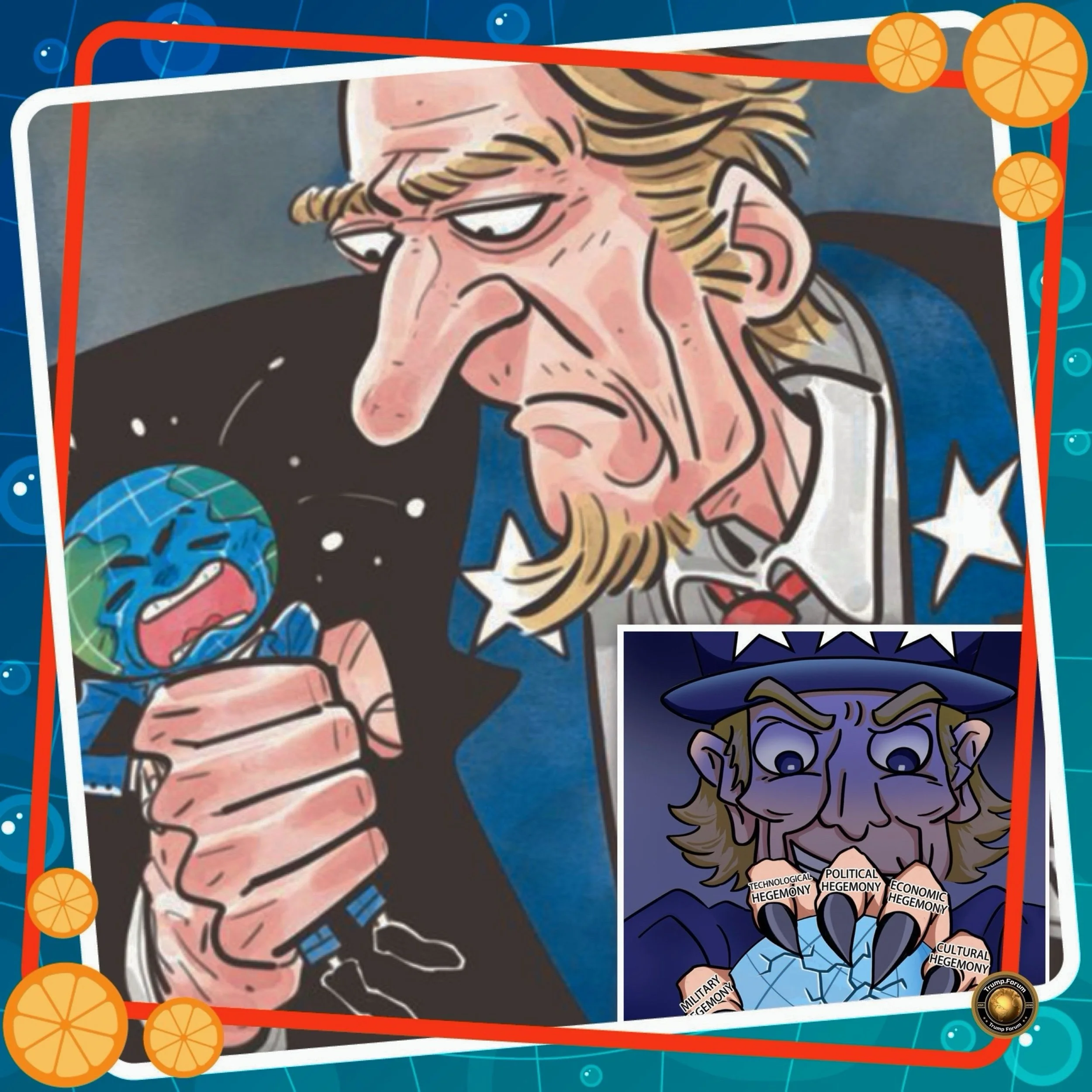
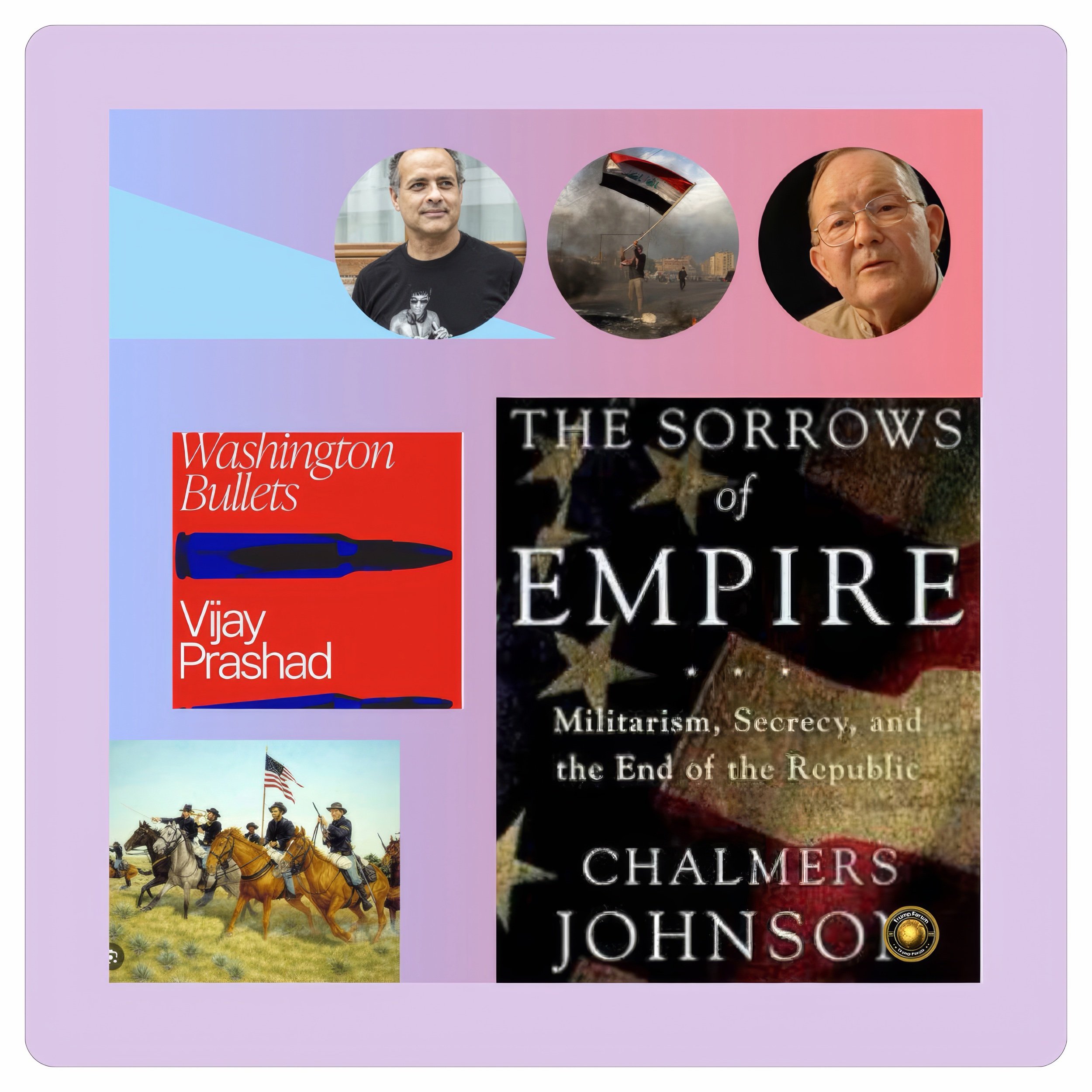
The Origins of Global Anti-American Sentiment: Historical Foundations and the Journey Leading to September 11
Executive Summary
The pervasive sentiment of anti-Americanism across various parts of the globe has deep historical roots that can be traced back to several complex factors.
This sentiment has been shaped by a confluence of historical events, cultural misunderstandings, and geopolitical dynamics that have evolved over the decades.
During the 20th century, pivotal moments such as the United States' involvement in World War II, the Cold War tensions, and various military interventions in different regions significantly influenced global perceptions of America.
The aftermath of these interventions often left lasting scars on relationships between the U.S. and other nations, particularly in areas like the Middle East, where American foreign policy frequently intersected with local political conflicts and influenced sociocultural landscapes.
As we approach the events of September 11, 2001, it's crucial to understand how these historical foundations helped cultivate an environment ripe for resentment.
The rise of extremist ideologies, in part fueled by perceptions of U.S. hegemony and actions in foreign nations, further aggravated feelings of disenfranchisement among individuals and groups.
The convergence of these historical grievances ultimately culminated in the tragic events of 9/11, marking a pivotal moment in how the world viewed America and how America responded to global dissent.
In this examination, we will delve deeper into the specific incidents and policies that contributed to the rise of anti-American sentiment, providing a nuanced understanding of the intricate path that led to one of the most devastating attacks on American soil.
Introduction
The global perception that the United States is disliked represents one of the most complex and contentious aspects of contemporary international relations.
While this sentiment varies significantly across regions and time periods, it has deep historical roots that extend far beyond any single event or policy.
The September 11, 2001, attacks served as a violent culmination of decades of accumulated grievances against American foreign policy, imperial conduct, and global hegemonic practices.
Understanding these dynamics requires examining the intricate web of American interventions, the concept of “blowback,” and the inherent contradictions within American exceptionalism as it has been practiced on the world stage.
Historical Foundations of Anti-American Sentiment
The Imperial Contradiction
The foundation of global anti-American sentiment lies in a fundamental contradiction that has characterized American foreign policy since the early 20th century.
While the United States was founded on principles of self-determination and resistance to imperial rule, it gradually evolved into what scholars increasingly recognize as an imperial power itself.
This transformation created what historian David Ellwood identified as three primary sources of anti-Americanism: representations and stereotypes from the Republic’s birth, the challenge of American economic power and modernization from the 1910s-1920s, and the organized projection of U.S. political, strategic, and ideological power from World War II onward.
The scholarly consensus has increasingly moved away from the notion of American exceptionalism as a benevolent force.
As one comprehensive study of American imperialism noted, “Almost a decade of overt war in Indochina; military interventions in Greece, Iran, Lebanon, the Congo, Cuba, the Dominican Republic, Colombia, Guatemala, Panama, Bolivia, China, Korea and Thailand; military missions throughout most of the ‘free world’; and American economic dominance of countless Third World countries have combined to impress upon all but the most recalcitrant observer the truth in the assertion that in the postwar period the United States has been a formidable imperialist power”.
The Architecture of Global Dominance
A critical component of anti-American sentiment stems from the unprecedented scale of American military presence worldwide.
The United States currently operates approximately 750-800 military bases in at least 80 countries, constituting 75-85 percent of all overseas military bases globally—more than any other nation or empire in recorded history.
This vast network of installation projects powers and generates local resentment.
Research consistently demonstrates that overseas military bases generate significant local opposition.
Since World War II, populations in more than 30 countries have protested against U.S. military presence in their territories.
These protests reflect deeper concerns about sovereignty, environmental damage, crime by military personnel, and the transformation of local communities.
One defense analyst noted, “Rather than providing reassurance, a U.S. military presence can stoke resentment among local populations and their leaders, alienating the allies that bases intended to reassure”.
Cold War Interventions and the Architecture of Resentment
Latin America: The Laboratory of Intervention
The Cold War period established patterns of American intervention that would define global perceptions of U.S. foreign policy for decades.
Latin America served as a particular laboratory for American imperial practices, beginning with the CIA-orchestrated coup in Guatemala in 1954, which many scholars identify as the “original sin” that initiated decades of violence and instability throughout the hemisphere.
The scope of American intervention in Latin America during this period was extraordinary.
The School of the Americas, established in 1946, trained approximately 55,000 officers and 4,000 police and civilians from 22-23 countries by the end of the century.
Many graduates became prominent leaders in the “dirty wars” that devastated Argentina, Chile, Colombia, Guatemala, Peru, El Salvador, Ecuador, Honduras, Panama, and Nicaragua.
The institution earned derisive nicknames such as “School of Assassins” and “School of Dictators” due to its role in training operatives who later committed human rights violations.
Operation Condor, the transnational campaign of state-sponsored terror in South America’s “Southern Cone” nations, exemplified the brutality of U.S.-supported operations.
This collaborative effort among dictatorial regimes in Argentina, Chile, Uruguay, Brazil, Paraguay, Bolivia, Ecuador, and Peru resulted in the deaths or disappearances of 50,000-60,000 individuals during the 1970s and 1980s.
The targeting extended beyond armed militants to include anyone associated with social justice advocacy, including “religious workers, labor organizers, student groups, and others in sympathy with the cause of the poor”.
Iran and the Middle East: Seeds of Future Conflict
The 1953 CIA-orchestrated coup in Iran represents a pivotal moment in understanding the genesis of anti-American sentiment in the Middle East.
The overthrow of democratically elected Prime Minister Mohammad Mossadegh, who had nationalized Iran’s oil industry, established a pattern of American intervention that would have profound long-term consequences.
The operation restored the Shah to power, leading to decades of authoritarian rule supported by the United States until the 1979 Iranian Revolution.
This intervention exemplified what scholars term “blowback”—the unintended consequences of covert operations that eventually harm the sponsoring nation.
The Iranian hostage crisis of 1979 directly resulted from accumulated resentment over American support for the Shah’s repressive regime.
As one intelligence analysis noted, the term “blowback” first appeared in the CIA’s internal history of the 1953 Iranian coup, acknowledging that such operations could have harmful consequences for American interests.
The Roots of 9/11: Bin Laden’s Declared Grievances
The Strategic Logic of Terrorism
The September 11 attacks cannot be understood merely as irrational acts of hatred but rather as the culmination of a calculated strategy developed over more than a decade.
Osama bin Laden’s 1996 “Declaration of War” against the United States outlined specific grievances that would drive al-Qaeda’s campaign of violence. These grievances, consistently articulated in multiple statements, included:
The presence of U.S. military forces in Saudi Arabia, particularly near the holy sites of Mecca and Medina
American support for Israel against Palestinian interests
U.S. backing of corrupt and repressive Arab regimes
Economic sanctions against Iraq caused civilian suffering
American support for Russian actions in Chechnya and Indian policies in Kashmir
Bin Laden’s strategy explicitly aimed to draw the United States into a protracted conflict that would bankrupt the superpower, similar to the Soviet experience in Afghanistan.
As one scholarly analysis noted, “Al Qaeda set upon a strategy to maneuver the United States into a position to address Al Qaeda’s expressed grievances, escalating rhetoric and violence to draw America to either address the grievances (which was unlikely) or escalate the violence to the point where it lured the United States into a guerrilla war in Afghanistan.”
The Blowback from Afghanistan
The origins of al-Qaeda and bin Laden’s anti-American campaign are deeply intertwined with the CIA’s support for Afghan mujahideen during the 1980s Soviet occupation.
While the direct connection between U.S. support and bin Laden remains debated, the broader phenomenon of blowback from the Afghan conflict is well-documented.
The war created a network of radicalized fighters and established ideological frameworks for global jihad that would later turn against American interests.
The concept of “blowback” becomes particularly relevant when examining how American foreign policy actions generate unintended consequences.
As one counterterrorism expert noted, “U.S. drone strikes, especially those in Pakistan, are criticized for outraging local populations and creating more sympathy for the terrorists”.
This dynamic demonstrates how even well-intentioned security measures can contribute to the cycle of anti-American sentiment and recruitment for extremist organizations.
The Hegemonic Dilemma
American Exceptionalism and Global Resentment
The concept of American exceptionalism—the belief that the United States represents a unique and morally superior nation—has played a crucial role in shaping American foreign policy and global reactions to it.
However, this exceptionalism becomes problematic when it translates into practical policies that place America above international law and norms.
Research by the Pew Research Center reveals the complexity of American attitudes toward global leadership.
While Americans believe in their country’s exceptional role, they are often oblivious to how this exceptionalism is perceived abroad.
The study found that 69% of Americans believed the United States was “generally disliked” by people in other parts of the world, yet 67% also believed the United States paid attention to foreigners’ interests—a perception contradicted by international polling.
The Legitimacy Crisis
The exercise of hegemonic power without corresponding legitimacy creates what scholars term a “legitimacy deficit” that undermines long-term American interests.
This deficit becomes particularly pronounced when the United States acts unilaterally or appears to ignore international institutions and norms.
One analysis of American hegemony noted, “If the dominant power chooses to rule via coercion rather than consent, then it is more likely that its power will decline.”
The post-Cold War period has seen increasing challenges to American legitimacy, particularly following interventions in Iraq and Afghanistan. The failure of these interventions to achieve their stated objectives while causing significant civilian casualties has reinforced negative perceptions of American power globally.
Contemporary Manifestations and Consequences
Regional Variations in Anti-American Sentiment
Anti-American sentiment manifests differently across global regions, reflecting specific historical experiences and current grievances.
In Latin America, sentiment is heavily influenced by the legacy of Cold War interventions and ongoing economic policies perceived as exploitative. In the Middle East, American support for Israel and authoritarian regimes, combined with military interventions, shapes predominantly negative perceptions.
In Europe, anti-American sentiment tends to be more conditional and policy-specific, often related to disagreements over specific actions rather than fundamental opposition to American values. However, even traditional European allies have expressed growing concern about American unilateralism and disregard for international institutions.
The Cycle of Violence and Resentment
The relationship between American foreign policy and anti-American sentiment creates a self-reinforcing cycle.
Military interventions and support for authoritarian regimes generate resentment, which manifests in various forms of resistance, including terrorism.
American responses to this resistance often involve additional military action, further escalating tensions and creating new grievances.
This cycle is particularly evident in counterterrorism operations, where drone strikes and military interventions aimed at eliminating threats often create new sources of anti-American sentiment.
One military expert observed, “If you’re trying to kill your way to a solution, no matter how precise you are, you’re going to upset people even if they’re not targeted”.
Conclusion
Understanding the Historical Context
The global perception of American unpopularity represents a complex phenomenon rooted in decades of foreign policy decisions, imperial practices, and the inherent tensions within American exceptionalism.
The September 11 attacks, while representing an extreme manifestation of anti-American sentiment, emerged from a specific set of grievances articulated by al-Qaeda leadership over many years.
Understanding these dynamics requires moving beyond simplistic explanations that focus solely on ideological hatred or jealousy of American freedoms. Instead, a comprehensive analysis reveals how specific policy choices—from Cold War interventions to contemporary military operations—have created accumulated resentment that manifests in various forms of opposition to American global leadership.
The challenge for American foreign policy is to address the legitimacy deficit that underlies much anti-American sentiment while maintaining necessary security interests.
This requires acknowledging the historical legacy of American interventions, recognizing the unintended consequences of well-intentioned policies, and developing approaches that prioritize multilateral cooperation and respect for international norms.
The scholarly consensus increasingly suggests that sustainable American global leadership depends not on exercising unilateral power but on building genuine partnerships based on mutual respect and shared interests.
Only by understanding the historical roots of anti-American sentiment can policymakers develop strategies that address legitimate grievances while protecting American interests and values in an interconnected world.