Trump’s Core Five Initiative: India’s Elevation and the Reconfiguration of Global Power Architecture
Executive Summary
India’s Rise and the New World Order
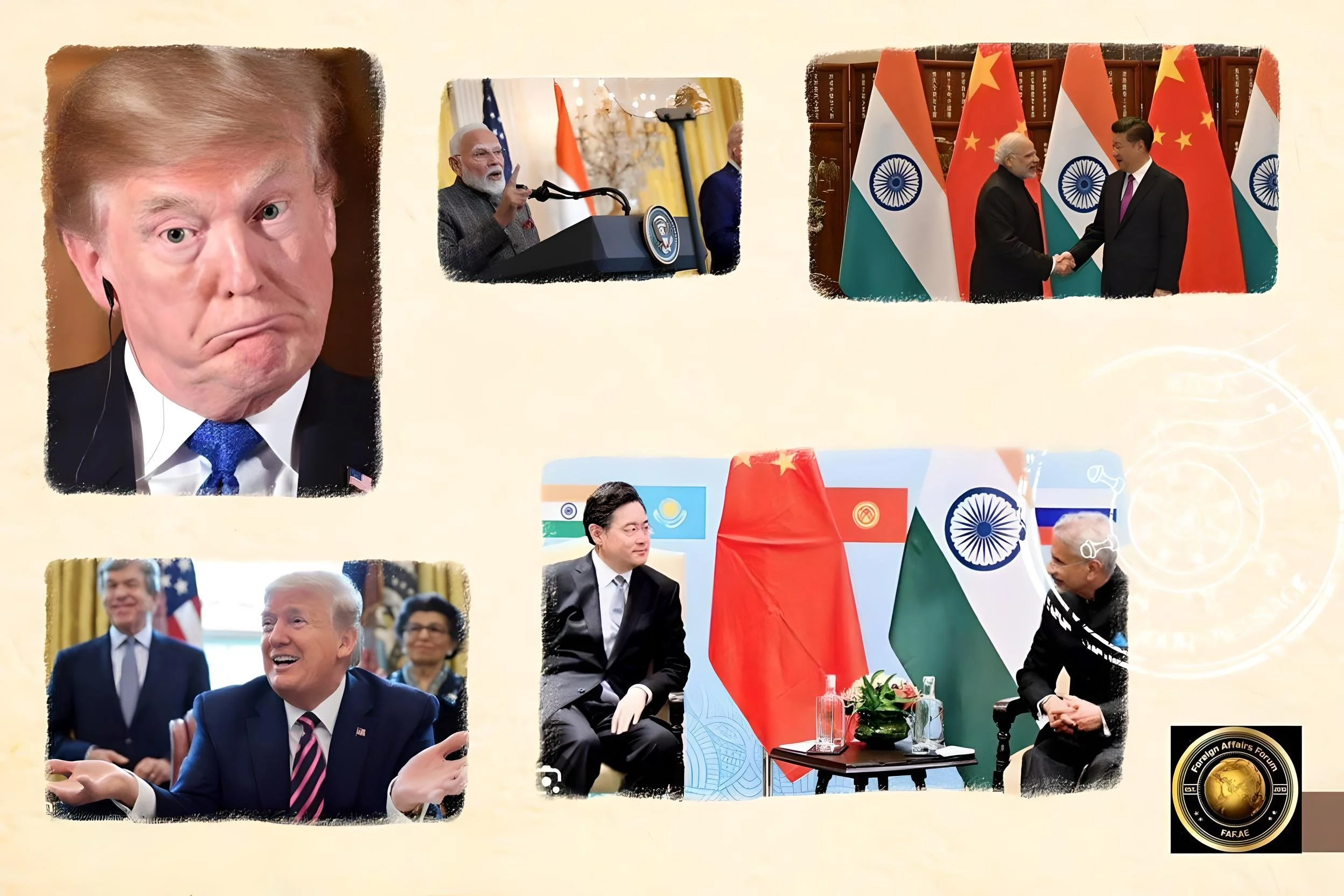
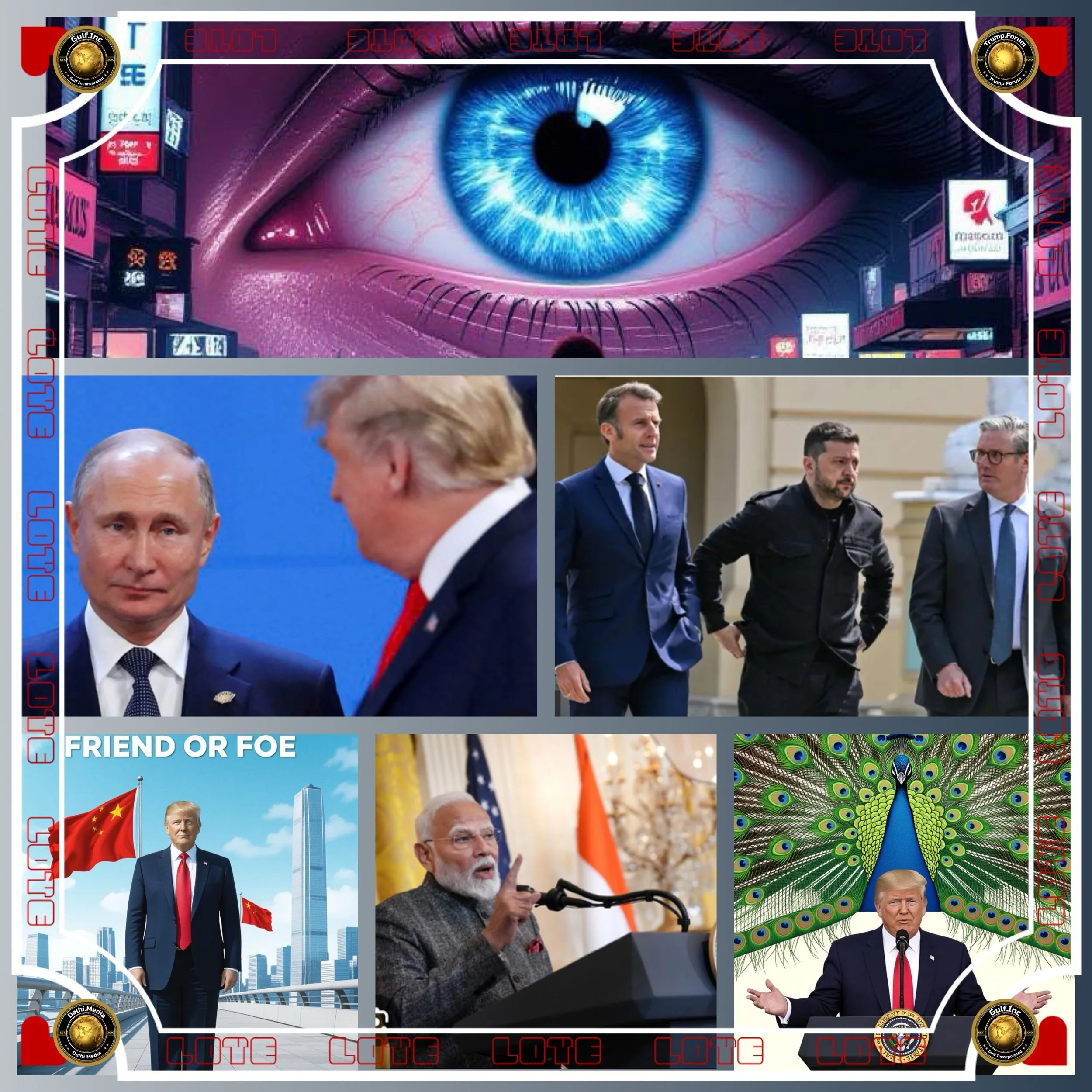
The Trump administration has articulated an audacious proposal to fundamentally restructure global governance by creating the “Core Five” (C5), an elite forum comprising the United States, China, Russia, India, and Japan.
This initiative, embedded in draft versions of the 2025 National Security Strategy and publicly disclosed in December 2025, represents a revolutionary departure from post-World War II institutional frameworks, including the G7, United Nations structures, and multilateral consensus-building mechanisms.
The inclusion of India within this exclusive pentarchy elevates the world’s fourth-largest economy and most populous democracy to the status of consequential great power, fundamentally altering India’s geopolitical positioning and international role.
The C5 would supersede the G7 by jettisoning wealth-based and democratic governance criteria in favor of raw material power considerations encompassing military capacity, economic scale, and global population, thereby legitimizing authoritarian governance models and strategic power as the organizing principles of international relations.
India’s elevation to this status reflects
(1) Recognition of its demographic magnitude (1.4 billion citizens)
(2) Economic trajectory (recently surpassing Britain and France in absolute GDP)
(3) Military capabilities, strategic positioning astride maritime commerce routes
(4) Capacity for autonomous decision-making unconstrained by formal alliance obligations.
However, the proposal simultaneously presents extraordinary complexities and potential contradictions, particularly regarding India’s simultaneous engagement within BRICS and the Shanghai Cooperation Organization, its strategic autonomy doctrine, and the unresolved India-China border dispute.
The proposal has generated considerable alarm among European powers, who perceive themselves excluded from this configuration, abandoned in confronting Russian aggression in Ukraine without American support, and superseded as consequential actors in international affairs.
The C5 concept remains in draft form and has not been formally adopted.
However, Trump’s evident philosophical alignment with it signals his administration’s orientation toward multipolar great-power competition rather than multilateral institution-building.
Introduction
Trump’s Core Five Shakes Up Global Power
The Trump administration’s consideration of the Core Five initiative marks a potential inflection point in the post-Cold War international system, signaling the abandonment of decades-long American commitment to maintaining international institutions grounded in shared democratic values, the rule of law, and multilateral consensus.
Since 1945, the United States has constructed a complex lattice of international organizations—the United Nations, World Trade Organization, International Monetary Fund, World Bank, and regional alliances including NATO—predicated on the assumption that a rules-based international order would advance American interests more effectively than unilateral power politics or great-power competition.
The Trump administration’s reorientation toward the C5 concept implies a rejection of this foundational premise, suggesting that American interests are maximized through direct great-power negotiation among military and economic powerhouses, regardless of ideological orientation or governance systems.
This philosophical reorientation carries revolutionary implications for nations that previously anchored themselves in American-led multilateral frameworks.
India, which has historically maintained strategic autonomy through simultaneous engagement with Western powers, non-aligned movement successors, and Asian regional institutions, now finds itself elevated to participation in a configuration that could fundamentally reshape its strategic options and obligations.
The C5 proposal simultaneously offers India unprecedented recognition as a consequential world power while posing potential constraints on the strategic autonomy that has been a cornerstone of Indian foreign policy since independence.
Key Developments: The C5 Proposal and India’s Inclusion
The Core Five: A Blueprint for Power Realignment
The Core Five initiative emerged from internal National Security Council deliberations, circulated in draft form late in 2025, and became public knowledge through investigative reporting by Politico and Defense One in early December 2025.
The proposal appears within more extended, unpublished versions of the 2025 National Security Strategy, though the White House has publicly denied the existence of alternative or classified strategic documents.
The concept proposes establishing a regular summit mechanism that brings together leaders from the five nations to meet periodically and address global strategic issues.
The initial proposed agenda item for C5 deliberation involves the Middle East, specifically facilitating normalization of diplomatic relations between Israel and Saudi Arabia—a matter Trump views as critical to regional stability and American strategic interests.
The composition of the proposed C5 reflects Trump’s distinctive geopolitical worldview, emphasizing material power and spheres of influence over ideological alignment or democratic governance.
The five members—the United States, China, Russia, India, and Japan—collectively possess approximately 3.5 billion individuals, or roughly 44 percent of the world’s total population.
The five nations encompass the world’s largest, second-largest, sixth-largest, fourth-largest, and third-largest economies, respectively, representing approximately 55 percent of global gross domestic product.
Military capabilities within the C5 span from the world’s preeminent military establishment (United States) to nuclear-armed great powers (Russia, China) to sophisticated conventional militaries (Japan, India), creating a configuration capable of addressing virtually any security challenge through coordinated great power action.
India’s Ascent: The Strategic Core of Trump’s Emerging C5 Order
The inclusion of India represents the proposal’s most consequential element for South Asian geopolitics and global power distribution. India’s elevation reflects several converging considerations within Trump’s strategic thinking.
Demographically, India has surpassed China as the world’s most populous nation, with approximately 1.4 billion citizens whose economic advancement, technological development, and social modernization will profoundly shape twenty-first-century geopolitical dynamics.
Economically, India has achieved remarkable growth, with nominal GDP surpassing that of Britain and France, positioning New Delhi as an indisputably significant economic power with growth rates substantially exceeding those of developed nations.
Strategically, India occupies a geographic position of extraordinary consequence, controlling maritime choke points through which the vast majority of global commerce flows, commanding access to the Indian Ocean and its critical sea lanes, and sitting astride the intersection of Indo-Pacific, Central Asian, and West Asian geopolitical configurations.
Furthermore, India’s political independence and refusal to accept subordinate status within any formal alliance structure have rendered it uniquely valuable to Trump.
Unlike Japan, which maintains a formal treaty alliance with the United States within the context of American security commitments, India maintains what it terms “strategic autonomy,” refusing to choose between competing powers while maintaining substantive relationships with multiple potentially adversarial states.
This independence suggests that India could serve as a valuable balancing power within the C5 configuration, potentially moderating Chinese ambitions, stabilizing relations with Russia, and advancing American interests through diplomatic negotiation rather than through alliance coercion.
Facts and Geopolitical Dimensions
The Core Five and the Architecture of Emerging Power
The elevation of India to C5 membership carries significant quantitative and qualitative dimensions that illuminate India’s consequential role within emerging global power configurations.
Economic and Demographic Weight
India’s economy, with a nominal GDP of approximately $4.4 trillion by 2025, ranks as the world’s fourth-largest.
Over the past decade, India has consistently achieved gross domestic product growth rates of 6 to 8 percent annually—substantially exceeding those across the developed world and approaching those of China, despite the latter’s substantially larger base.
India’s demographic profile is distinctly advantageous: approximately 65 percent of the population is under age 35, creating an enormous workforce that will continue to expand through the 2030s before stabilizing, in contrast to aging populations across Europe, Japan, China, and Russia.
This demographic advantage implies that India’s economic contribution to global gross domestic product will continue to expand for decades, potentially positioning India as the world’s second- or third-largest economy by 2050.
Military Capabilities and Strategic Positioning
India possesses the world’s fourth-largest military establishment by personnel, with approximately 1.45 million active-duty personnel and defense capabilities spanning a sophisticated air force, expanding naval capabilities, and terrestrial forces capable of defending against potential Chinese or Pakistani military threats simultaneously.
India’s possession of nuclear weapons—developed indigenously through three atomic tests conducted in 1998—establishes it as a permanent nuclear power whose strategic arsenal commands respect from potential adversaries and increases the consequence of its diplomatic positioning within great power configurations.
More significantly, India’s geographic position astride critical maritime trade routes confers it disproportionate strategic importance.
Approximately 40 percent of global maritime commerce transits the Indian Ocean, with critical energy supplies for Asia, Europe, and the Americas flowing through maritime passages controlled or substantially influenced by Indian geography and naval capabilities.
The Strait of Hormuz, through which approximately 25 percent of the world’s petroleum transits, connects to the Indian Ocean through maritime zones where India maintains a significant naval presence and influence.
Tariff Crisis and Modi-Trump Relationship Recalibration
The trajectory toward C5 inclusion has occurred despite recent severe diplomatic tensions between India and the Trump administration.
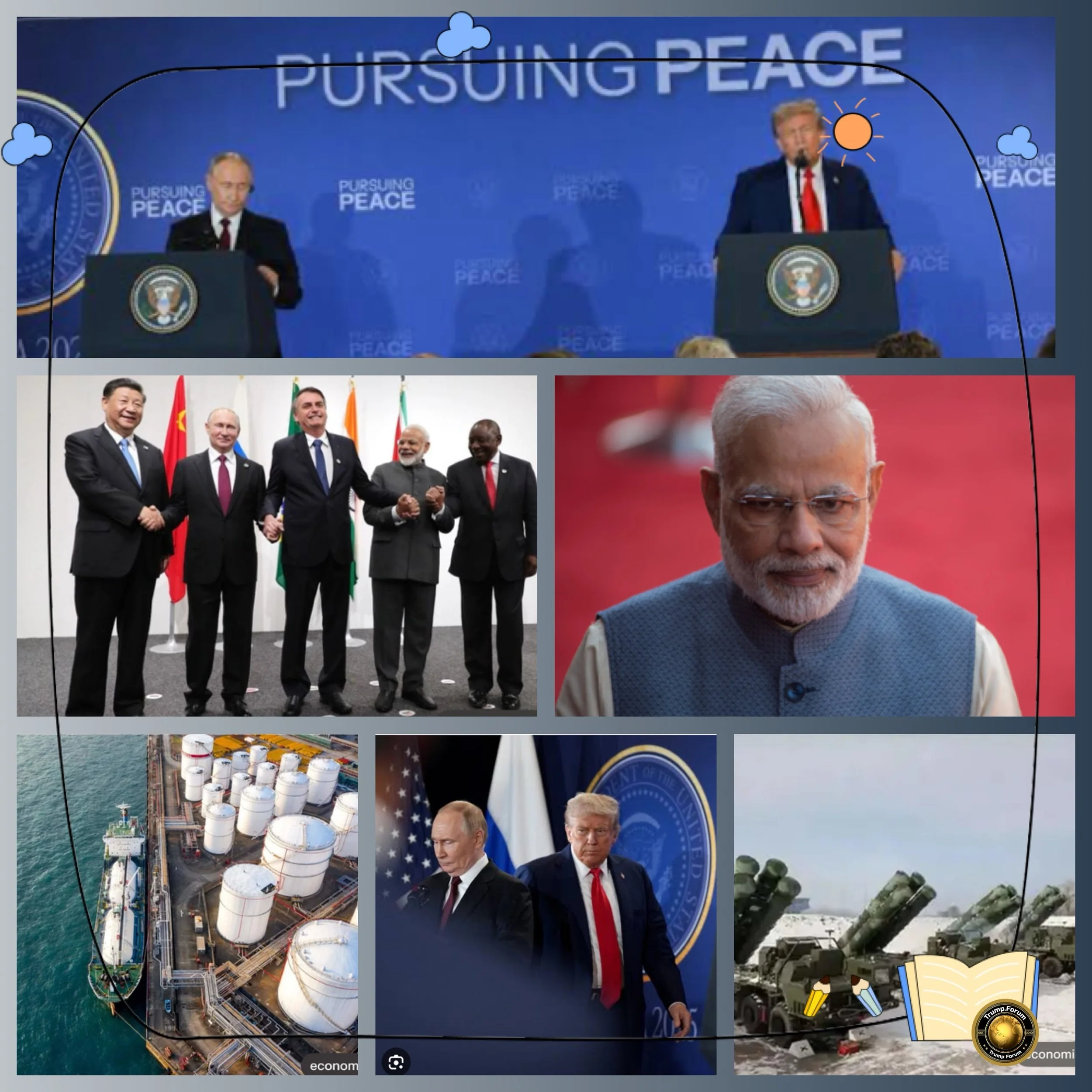
In August 2025, Trump imposed a 50 percent tariff on Indian exports—the highest globally applied tariff rate—ostensibly as retaliation for India’s continued procurement of Russian petroleum and petroleum products, which Trump characterized as financing Russian military operations in Ukraine.
These tariffs impacted critical Indian export sectors, including textiles, chemicals, pharmaceuticals, diamonds, and seafood, threatening millions of Indian workers and small enterprises that depend on American market access.
The 50 percent tariff rate represented an extraordinarily aggressive American trade posture toward a nation repeatedly described as a “strategic partner,” suggesting that Trump prioritized constraining India’s Russia engagement over maintaining cooperative relations with New Delhi.
However, by late 2025, tensions appeared to be diminishing as Modi and Trump spoke multiple times, with Modi describing the conversations as “warm and engaging” and emphasizing continued bilateral cooperation.
The apparent improvement in relations, coinciding with reports of consideration of India's C5 membership, suggests that Trump has determined that strategic cooperation with India against China outweighs the tariff leverage he previously wielded.
Concerns and Strategic Contradictions
Why Trump’s Core Five Could Redefine Global Power
The C5 proposal, while theoretically elegant from a specific American strategic perspective, presents substantial practical difficulties and strategic contradictions that raise questions about the concept’s viability and sustainability.
India’s Strategic Autonomy and Bloc Alignment Dilemmas
India’s foundational foreign policy principle since independence has emphasized “strategic autonomy”—the maintenance of independent decision-making authority unconstrained by alignment with competing power blocs.
This autonomy has permitted India to engage simultaneously with the United States, Russia, China, Japan, and other powers, extracting maximum benefit from each relationship while avoiding subjugation to any single power’s preferences.
India’s participation in the QUAD (Quadrilateral Security Dialogue) with the United States, Japan, and Australia exists alongside membership in BRICS (Brazil, Russia, India, China, South Africa) and the Shanghai Cooperation Organization, forums in which China and Russia exercise substantial influence.
The C5 concept, by grouping the United States, China, and Russia within a single decision-making forum, potentially compromises India’s ability to maintain equidistant relationships with these powers.
Should the C5 evolve into a binding arrangement with mutual obligations regarding security cooperation, military coordination, or diplomatic alignment, India would effectively be forced to choose between aligning with the United States or accommodating China and Russia.
This represents precisely the constraint that Indian strategic autonomy doctrine seeks to avoid.
Furthermore, India’s ongoing border dispute with China—involving contested territories along the India-China border and the status of Indian-controlled territory that China contests—could become acute within a configuration in which China, India, and the United States sit as co-equal members with ostensible mutual obligations regarding regional security.
China-Russia-India Relations and Latent Tensions
The triangular relationship among China, Russia, and India contains deep structural tensions that a C5 framework might exacerbate rather than ameliorate.
Russia and India maintain historical military and security partnerships dating to the Cold War, with India remaining substantially dependent upon Russian military technology and weaponry.
Simultaneously, India and China maintain unresolved border disputes and fundamentally competing regional aspirations in South Asia, Central Asia, and the Indian Ocean.
China has emerged as a dominant economic force in Asia, and India perceives Chinese economic expansion—particularly through the Belt and Road Initiative—as threatening India’s regional standing and limiting New Delhi’s ability to influence neighboring states.
Within a C5 framework, these latent tensions could surface more acutely.
Should the C5 evolve from a consultative forum into a genuine decision-making body where commitments are made and enforced, India would face pressure to align with either China or the United States against the other.
The historical precedent of the Concert of Europe suggests that arrangements intended to institutionalize great-power cooperation among fundamentally competing powers often collapse when interests diverge, rendering the framework either irrelevant or actively destructive to member relations.
European Exclusion and NATO Implications
The C5 proposal’s implicit exclusion of European powers—notably Britain, France, and Germany—has generated considerable concern among American allies and analysts regarding the future of transatlantic relationships and American commitments to European security.
The Trump administration’s strategic document allegedly criticizes the European Union, calling it a “civilizational crisis”.
It has signaled its intention to reduce the American military presence in Europe substantially and to redirect forces toward the Indo-Pacific region.
The C5 proposal, by elevating non-democratic Russia and China to co-equal status with the United States while excluding long-standing NATO allies, implicitly signals that European security concerns are secondary to American great power competition with China and accommodation with Russia.
This orientation alarms European leaders about the future of Article 5 collective defense commitments, NATO cohesion, and willingness to sustain the military presence necessary for European security against potential Russian aggression.
The explicit elevation of Russia within the C5 framework, while simultaneously announcing American force drawdowns in Europe, sends contradictory signals regarding whether the United States remains committed to European security or has effectively written off European concerns as subordinate to Indo-Pacific considerations.
Structural Contradictions Between C5 and Existing Institutions
The C5 proposal assumes that five great powers can develop sufficient consensus on global security questions to create a functional decision-making framework.
However, examining the positions of the five proposed members reveals substantial divergence on fundamental issues.
The United States and China maintain fundamentally competing economic and strategic interests with no clear resolution pathway for their ongoing trade tensions, technology competition, and geopolitical rivalry.
Russia and the United States remain adversaries regarding Ukraine, with Trump’s past suggestions that Russia should not have been excluded from the G7 clashing with actual Russian military aggression against Ukraine continuing at the time of the C5 proposal. India and China maintain unresolved border disputes and competing regional aspirations.
The assumption that these powers could function within a single decision-making framework while maintaining these fundamental conflicts appears doubtful.
The C5 risks becoming either a legitimization forum for authoritarian powers (Russia, China) that validates their spheres of influence and suppresses human rights advocacy or a venue for great-power conflict and disagreement that generates cynicism toward international cooperation.
Cause and Effect Analysis: Strategic Reorientation and American Pivot
From Partnership to Primacy: India in the Core Five
Understanding the C5 proposal requires examining the underlying strategic calculations and geopolitical shifts that have motivated Trump’s reorientation toward this alternative international architecture.
American Retrenchment from Europe and Rebalancing Toward Asia
The fundamental driver of the C5 proposal appears to be Trump’s conviction that the United States has historically overinvested in European security and multilateral institution-building while underinvesting in competition with China for strategic dominance in the Indo-Pacific region.
Trump views the post-World War II American commitment to European security as a historical legacy that no longer reflects American interests, particularly given that European economies have recovered substantially and can defend themselves without American security guarantees.
This reorientation reflects Trump’s judgment that American strategic interests are best served by focusing on competition with China, managing relations with Russia, and maintaining American dominance in the Western Hemisphere.
The C5 concept operationalizes this reorientation by creating a framework in which American strategic focus concentrates on managing relationships with the world’s most consequential powers rather than maintaining alliance structures with secondary actors.
By incorporating China and Russia directly into a decision-making framework alongside the United States, Trump apparently believes he can achieve negotiated settlements on Ukraine, Taiwan, and other contested issues through direct great-power negotiation rather than through alliance coordination or United Nations multilateral processes.
India’s Rising Economic and Geopolitical Salience
India’s inclusion reflects Trump’s recognition that India has become a significant economic power and that the trajectory of Indian economic growth, military modernization, and demographic expansion will establish India as one of the world’s three most consequential nations within two decades.
Bringing India into the C5 framework while it remains in developmental phases—rather than waiting until India has achieved wealth and power levels comparable to the United States or China—theoretically permits the United States to shape India’s strategic orientation, establish partnership frameworks, and create institutional relationships that will persist as India achieves superpower status.
This represents long-term strategic thinking: Trump apparently calculates that India will become substantially more powerful and independent within decades, making American cultivation of Indian partnership more valuable in the present than attempting to constrain India through tariffs or exclusion from great power forums.
The apparent moderation of tariff tensions and reports of C5 inclusion can be understood as Trump’s recalibration toward a strategy emphasizing Indian inclusion and partnership rather than coercive leverage.
Disillusionment with Multilateral Institutions and Return to Great Power Bilateralism
The C5 proposal reflects deep skepticism regarding the efficacy of multilateral institutions—the United Nations, the World Trade Organization, the World Bank, and regional organizations—in advancing American interests or in generating functional international governance.
Trump has historically viewed multilateral institution-building as constraining American power and redistributing American resources to undeserving nations through foreign aid, trade concessions, and military commitments.
The C5 concept represents a return to great-power bilateralism and small-group decision-making among the most powerful actors, presumed capable of determining international outcomes without requiring consensus from secondary powers or universal agreement through multilateral forums.
This orientation accords with Trump’s general skepticism toward institutional constraints on executive decision-making and his preference for transactional negotiations with other leaders whom he views as understanding power and capable of making expeditious decisions.
Future Steps: Potential Trajectories and Implementation Challenges
India’s Moment in Trump’s Grand Strategy
The C5 proposal remains in a preliminary form, and its ultimate trajectory will depend on multiple contingencies, including the Trump administration's follow-through, the willingness of the other four nations to participate, and evolving geopolitical circumstances that may render the concept more or less relevant.
Formal Institutional Development and Summit Mechanisms
Should the Trump administration proceed with substantive C5 development, the initial step would likely involve discrete diplomatic outreach to Chinese, Russian, Indian, and Japanese leadership, proposing regular summit mechanisms and thematic focus areas.
These summits would probably commence with limited agendas focused on specific regional security issues—initially perhaps the Middle East, subsequently potentially extending to Indo-Pacific maritime security, Central Asian stability, or nuclear nonproliferation.
The institutional architecture would likely remain deliberately minimal, avoiding extensive bureaucratic structures or binding multilateral conventions that might constrain American flexibility.
The C5 would function less as a permanent institution comparable to the United Nations and more as an occasional great power summit mechanism with flexible agendas and voluntary participation.
India’s Strategic Positioning and Autonomy Maintenance
India would face significant diplomatic challenges in managing C5 participation without compromising strategic autonomy or fracturing existing relationships within BRICS and SCO.
New Delhi’s diplomatic strategy would presumably emphasize that C5 participation represents issue-based cooperation rather than formal alliance membership, preserving India’s capacity to engage independently with other powers and avoid binding commitments that might restrict decision-making freedom.
India might particularly seek to ensure that C5 discussions regarding China remain consultative rather than producing binding commitments requiring India to support American pressure tactics against Beijing.
Similarly, India would likely insist that C5 deliberations regarding Russia acknowledge India’s historical security partnership with Moscow and respect India’s independent assessment of Russian policies rather than requiring alignment with American anti-Russian positions.
European Adaptation and NATO Reconfiguration
European powers would likely accelerate defense spending, military modernization, and institutional development to reduce dependence on American security guarantees.
The explicit elevation of Russia within American strategic thinking, coupled with suggested American force reductions in Europe, would probably stimulate European initiatives toward strategic autonomy, European-led defense capabilities, and recalibration of the NATO alliance toward European leadership rather than American dominance.
Britain, France, and Germany might simultaneously establish alternative multilateral forums focused on European security and values-based international governance, aiming to maintain some institutional embodiment of democratic governance and rule-of-law principles that are excluded from the C5 framework.
China’s Strategic Response and Regional Power Dynamics
China would likely view C5 participation as an opportunity to legitimize its regional spheres of influence, establish great-power parity with the United States in international forums, and potentially constrain American efforts to form anti-Chinese coalitions through the Quad or other mechanisms.
Chinese strategists might calculate that participation within the C5 requires the United States to acknowledge Chinese regional primacy in Asia and avoid unilateral action against Chinese interests.
Japan, as a C5 member, might find its role complicated by simultaneous participation in the Quad and its alliance with the United States, on the one hand, and its partnership within the C5 alongside China and Russia, on the other.
Japan would likely seek to leverage C5 membership to curb Chinese assertiveness in the East China Sea and Russian expansion in the Pacific, while avoiding an explicit anti-Chinese alignment that might threaten Japanese economic interests.
Conclusion
The Core Five and the Architecture of Emerging Power
The Trump administration’s Core Five proposal represents a revolutionary reimagining of global governance architecture and America’s role within international affairs.
The inclusion of India within this exclusive pentarchy elevates New Delhi to recognition as a consequential great power with the capacity to influence global security outcomes, representing a dramatic reversal of historical international systems in which power and wealth were concentrated overwhelmingly within the North Atlantic region.
India’s elevation simultaneously offers unprecedented international status and influence while posing substantial risks to the maintenance of strategic autonomy, a feature of Indian foreign policy since independence.
The Concept remains in draft form and may not advance beyond internal deliberations within the Trump administration.
However, the proposal’s existence signals a fundamental reorientation in American strategic thinking, away from multilateral institution-building toward great-power competition and bilateral negotiation among the most materially powerful actors.
The proposal simultaneously signals American abandonment of the post-World War II commitment to universal democratic governance as a criterion for international standing, instead embracing raw power calculations as the organizing principle of international relations/
Balancing Power and Autonomy: India’s Strategic Dilemma in the Emerging C5 Framework
For India, the C5 opportunity represents both extraordinary potential and genuine peril. Recognized at the highest levels of great-power diplomacy, India could shape outcomes that affect global security, economic governance, and the international distribution of power.
However, participation within a framework that includes both the United States and China—India’s greatest strategic rivals—threatens to compromise the strategic autonomy that has enabled India to maintain independent positions and to maximize benefits from relationships with multiple powers simultaneously.
The coming months will likely reveal whether the C5 concept advances from a draft proposal to a substantive diplomatic initiative, and, if so, how India navigates the extraordinary complexities of great-power participation while preserving the strategic independence that has defined Indian foreign policy for seven decades.