India Overtakes Japan to Become Fourth-Largest Global Economy
Introduction
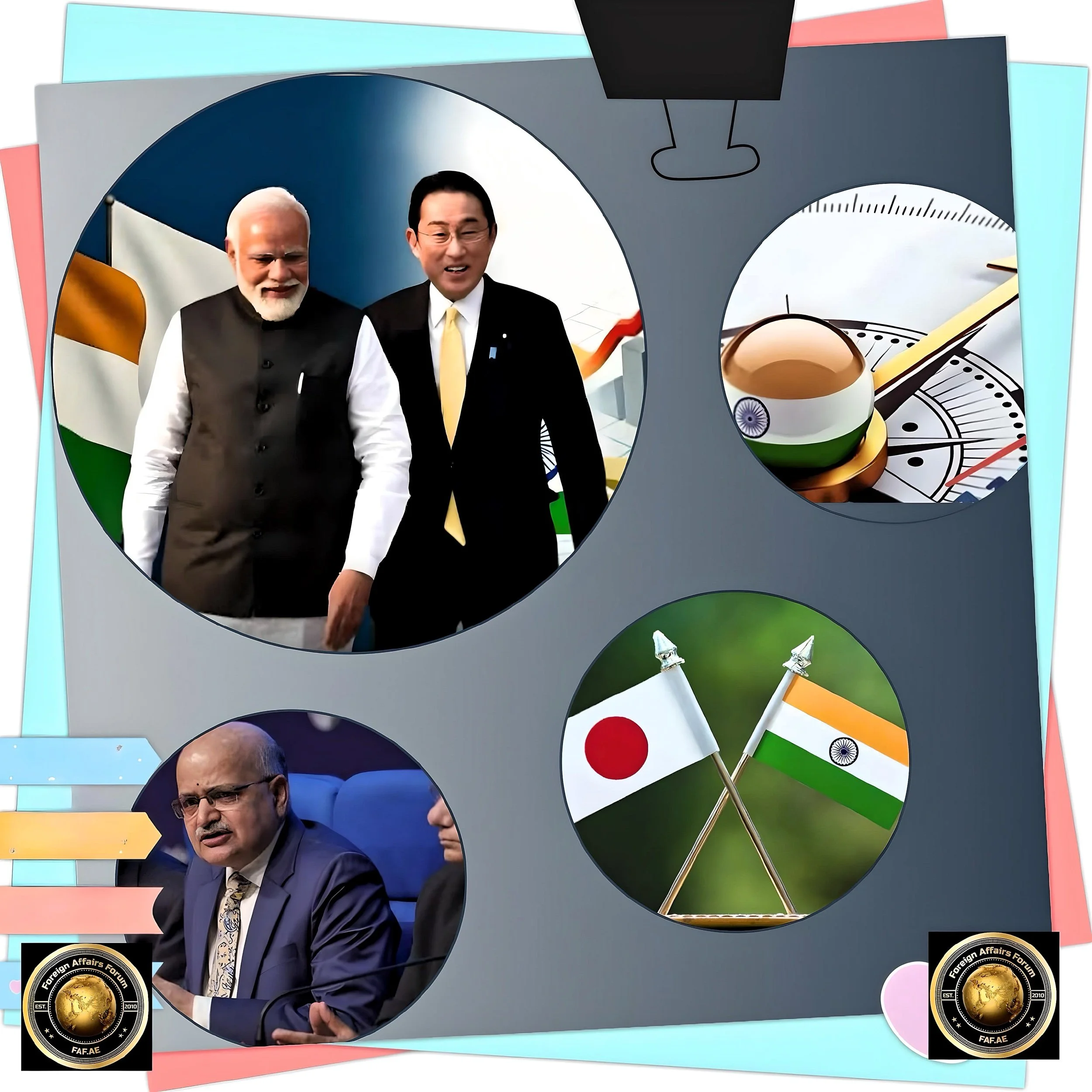
India has achieved a historic economic milestone by surpassing Japan to become the world’s fourth-largest economy, with its nominal GDP reaching the $4 trillion mark, according to International Monetary Fund (IMF) data.
This significant development was announced by NITI Aayog CEO BVR Subrahmanyam during a press conference on May 25, 2025, following the 10th NITI Aayog Governing Council Meeting.
FAF, Economy.Inc analyzes India’s achievement of moving ahead of Japan in the global economic hierarchy, with only the United States, China, and Germany maintaining larger economies.
This transformation reflects India’s sustained economic growth trajectory and reinforces its status as the world’s fastest-growing major economy.
Projections indicate that India could overtake Germany to become the third-largest economy within 2.5 to 3 years.
India’s Economic Ascension and Current Position
India’s rise to the fourth position in global economic rankings represents a remarkable transformation of its financial landscape.
According to the IMF’s April 2025 World Economic Outlook report, India’s nominal GDP for the fiscal year 2026 is projected to reach approximately $4,187.017 billion, marginally surpassing Japan’s estimated GDP of $4,186.431 billion.
This milestone marks a significant shift from India’s position as the fifth-largest economy in 2024.
The announcement by NITI Aayog CEO BVR Subrahmanyam emphasized that this achievement is based on official IMF data rather than domestic projections. “We are the fourth largest economy as I speak.
As I speak, we are a USD 4 trillion economy, and this is not my data. This is IMF data. India today is larger than Japan,” Subrahmanyam stated during the press conference.
The significance of this achievement extends beyond mere rankings, as it reflects India’s sustained economic momentum and structural improvements that have enabled it to maintain robust growth rates even amid global economic uncertainties.
The current global economic hierarchy places the United States at the top with a projected GDP of $30.51 trillion, followed by China at $19.23 trillion, Germany at $4.74 trillion, and now India at $4.19 trillion, with Japan relegated to the fifth position.
This positioning demonstrates India’s growing economic influence and its emergence as a major player in the global economy, particularly among emerging markets and developing economies.
Growth Trajectory and Economic Performance
India’s economic performance continues to outpace most major global economies, maintaining its position as the world’s fastest-growing large economy.
According to the IMF’s April 2025 World Economic Outlook, India’s economy is expected to grow by 6.2 percent in 2025 and 6.3 percent in 2026, maintaining a substantial lead over global and regional peers.
This growth rate significantly exceeds the global economic growth forecast of 2.8 percent in 2025 and 3.0 percent in 2026, highlighting India’s exceptional outperformance worldwide.
International financial institutions have consistently recognized the robustness of India’s economic fundamentals.
The IMF had previously upgraded India’s GDP growth forecast for FY2024-25 by 20 basis points to 7 percent, reflecting stronger domestic demand and improved prospects for private consumption, particularly in rural areas.
India’s GDP expanded at an impressive 8.2 percent in 2023-24, higher than the 7 percent recorded in 2022-23. A greater-than-expected 7.8 percent aided this expansion in the fourth quarter.
Several key factors support the sustained growth trajectory, including firm private consumption, government spending, investments, and exports.
Nearly 70 percent of India’s GDP is driven by domestic consumption, making the country the world’s fourth-largest consumer market.
This domestic demand-driven growth model protects against external economic shocks and ensures sustainable expansion.
Additionally, India’s working-age population and demographic dividend continue to support economic growth, maintaining favorable near-term demographics compared to other major economies.
Future Projections and Economic Outlook
The economic outlook for India remains remarkably positive, with projections indicating continued rapid growth and further advancement in global rankings.
NITI Aayog CEO Subrahmanyam projected India to become the third-largest economy within the next 2.5 to 3 years by overtaking Germany.
According to IMF estimates, India is expected to achieve a GDP of $5,584.476 billion by 2028, surpassing Germany and securing third in global economic rankings.
Germany’s economic challenges present an opportunity for India’s advancement.
Germany is projected to experience no GDP growth in 2025, followed by a modest 0.9 percent growth in 2026.
Forecasts suggest it will be among the hardest-hit European economies due to ongoing global trade tensions.
Germany’s GDP is anticipated to reach $5,251.928 billion by 2028, but given India’s superior growth rates, India will be able to overtake it.
Similarly, Japan is expected to face economic headwinds due to trade wars, with economic growth stagnating at 0.6 percent in 2025 and 2026.
The long-term economic projections position India as a sustained driver of global economic growth.
While other major economies face various challenges, including demographic transitions, trade tensions, and structural economic issues, India’s relatively favorable demographics and robust domestic market provide a foundation for continued expansion.
With its relatively favorable near-term demographics, the IMF has noted that India is projected to experience a smaller growth decline than other emerging economies, particularly China, which faces more acute demographic challenges.
Global Economic Context and Implications
India ascends to the fourth-largest economy within a complex global economic environment characterized by trade tensions, policy uncertainties, and varying growth trajectories across different regions.
The global economy has entered a phase of cautious stabilization following several years of overlapping shocks, but growth remains modest, and projections have been revised downward.
The IMF’s April 2025 World Economic Outlook shows a downward revision in the 2025 global forecast, reflecting the impact of heightened global trade tensions and growing uncertainty.
In this context, India’s economic resilience stands out prominently.
While the United States, the world’s largest economy, is projected to slow GDP growth to 1.8 percent in 2025 due to increased policy uncertainty and trade tensions, India maintains its robust growth trajectory.
China, the second-largest economy, faces its challenges. Its GDP growth forecast has been downgraded to 4.0 percent for 2025, down from 4.6 percent in the January 2025 edition of the World Economic Outlook.
These comparative performance metrics underscore India’s exceptional position in the current global economic landscape.
The implications of India’s economic rise extend beyond national boundaries, influencing global trade patterns, investment flows, and economic cooperation frameworks.
As India solidifies its position among the top global economies, it enhances its voice in international economic forums and multilateral institutions.
With its improved financial standing, the country’s membership in various international economic organizations, including the G7 observer status and OECD engagement, gains additional significance.
Furthermore, India’s economic growth contributes substantially to global economic expansion, particularly given the modest growth rates projected for other major economies.
Challenges and Structural Considerations
Despite the remarkable achievement of becoming the fourth-largest economy, India faces several structural challenges that require continued attention and policy intervention.
One of the most significant disparities lies in per capita income. India ranks 144th globally with a per capita GDP of approximately $2,850-$2,900.
This stark contrast between aggregate economic size and individual prosperity highlights the need for more inclusive growth strategies that ensure the benefits of economic expansion reach all segments of society.
The challenge of income inequality remains substantial, with India having one of the world’s highest numbers of billionaires alongside extreme income inequality.
This disparity underscores the importance of implementing policies that promote equitable distribution of economic gains while maintaining the growth momentum.
Additionally, India’s workforce productivity levels remain among the lowest globally despite having the world’s second-largest labor force with 586 million workers.
Addressing productivity challenges through skill development, technology adoption, and structural reforms will be crucial for sustaining long-term economic growth.
Infrastructure development and institutional strengthening remain priority areas supporting India’s economic expansion.
While India ranks 63rd on the Ease of Doing Business Index and 40th on the Global Competitiveness Index, significant scope remains for improvement in these areas.
The government’s focus on infrastructure development, digital transformation, and regulatory reforms will be essential for maintaining India’s competitive position and supporting continued economic growth in the coming years.
Conclusion
India's achievement of becoming the world’s fourth-largest economy is a historic milestone, showcasing the fruit of decades of economic reforms, strategic planning, and unwavering growth efforts.
With a nominal GDP soaring to $4 trillion and eclipsing Japan, India exemplifies remarkable resilience and boundless growth potential, establishing itself as a key player in the global economic landscape.
The projected growth rates of 6.2 percent in 2025 and 6.3 percent in 2026 significantly outperform global averages and major economies, solidifying India’s position as the world’s fastest-growing large economy.
Given the current growth trajectories and economic projections, the vision of India ascending to the third-largest economy within the next 2.5 to 3 years is not merely a dream but a tangible reality on the horizon.
However, to realize this potential, a steadfast commitment is required to tackle structural challenges like enhancing per capita income, boosting workforce productivity, and fostering inclusive growth.
The global economic landscape, marked by trade tensions and policy uncertainties, offers challenges and opportunities for India’s ongoing economic progression.
The journey from the fifth to the fourth-largest economy is a powerful testament to India's economic potential and the impact of sustained policy efforts.
As India forges ahead on this inspiring growth trajectory, its influence in shaping global economic dynamics will only become ever more significant, contributing to international stability and progress while striving to achieve its vision of becoming a developed nation by 2047.